















North America Aluminum Market Outlook to 2030
Region:North America
Author(s):Naman Rohilla
Product Code:KROD9552
December 2024
96
About the Report
North America Aluminum Market Overview
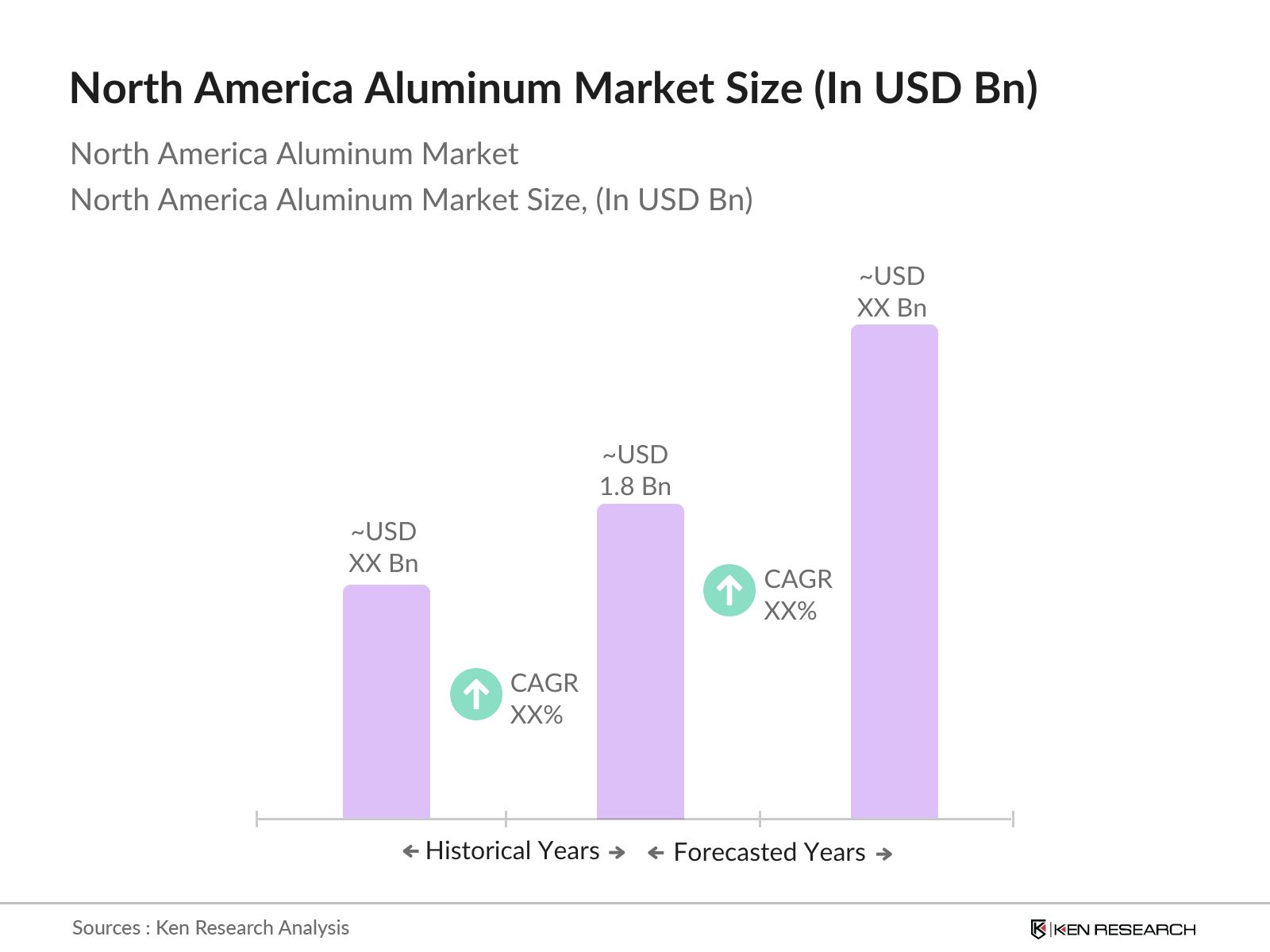
- The North America Aluminum Market is valued at USD 1.8 billion, based on a thorough analysis of the last five years. The growth in this market is fueled by heightened demand from the construction and automotive sectors, where aluminums lightweight properties reduce overall structural mass, thereby increasing energy efficiency. Increased investments in sustainable aluminum production have also contributed to market expansion, especially in manufacturing for renewable energy installations, thereby strengthening the markets foundation.
- The USA holds a dominant position in the North America Aluminum Market due to its robust automotive and aerospace industries, which have a high demand for lightweight materials. Additionally, Canadas aluminum market is strong due to its access to hydroelectric power, which supports eco-friendly, cost-effective aluminum production, further enhancing its market leadership. These countries are key players due to their advanced infrastructure and sustainability-focused industries, which contribute significantly to the market.
- North American environmental compliance standards mandate aluminum producers to adhere to strict regulations on emissions and waste management. The U.S. Environmental Protection Agency requires aluminum producers to adopt technologies that reduce CO2 emissions, which reached 2 billion metric tons in the U.S. industrial sector in 2023. These standards aim to mitigate environmental impact and drive adoption of cleaner production methods.
North America Aluminum Market Segmentation
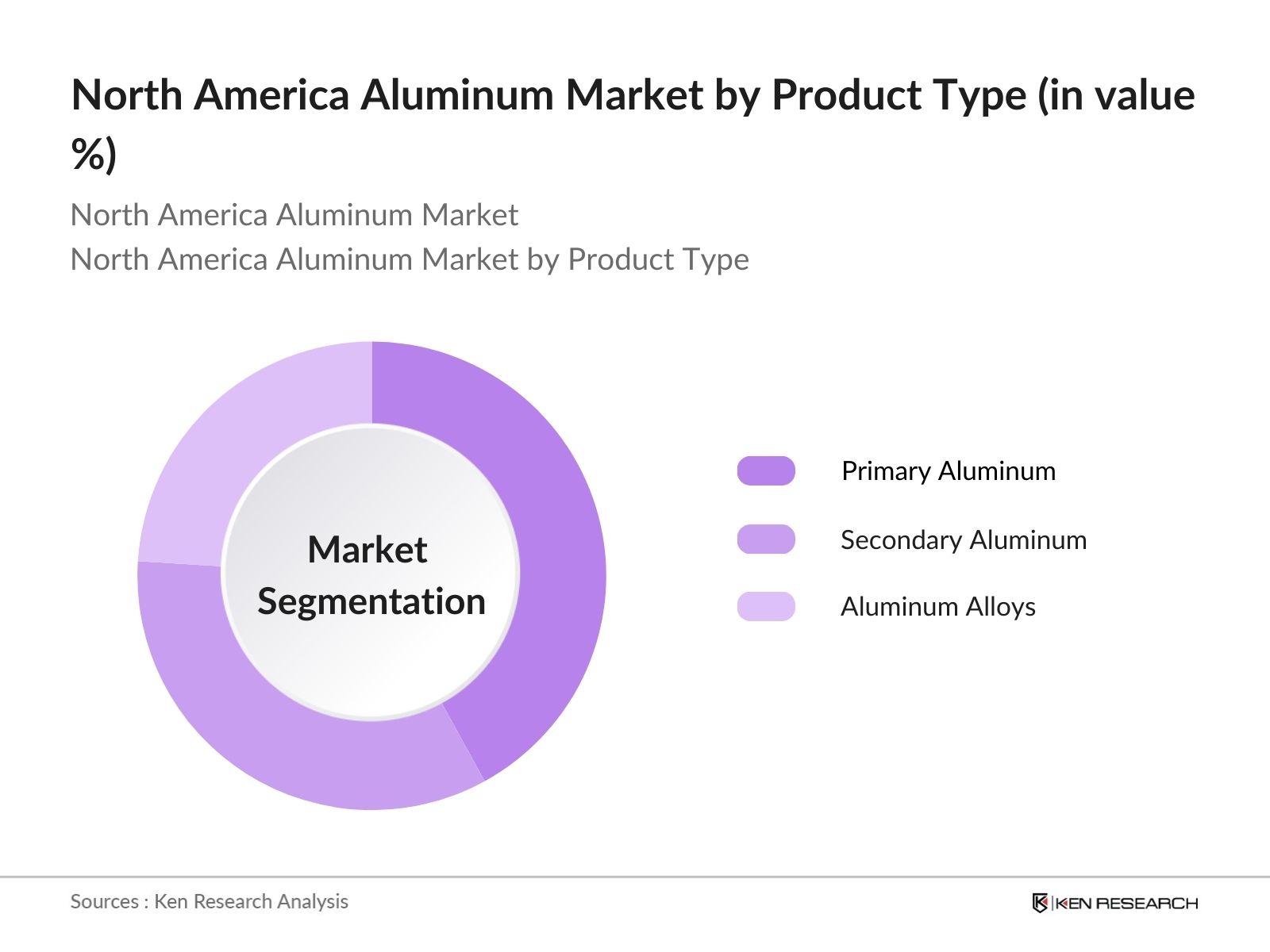
By Product Type: The market is segmented by product type into primary aluminum, secondary (recycled) aluminum, and aluminum alloys. Primary aluminum holds the leading market share under this segmentation due to its extensive applications in aerospace, automotive, and construction industries, where high-strength aluminum is crucial. The increased investment in sustainable practices and technological advancements has further reinforced the demand for primary aluminum products.
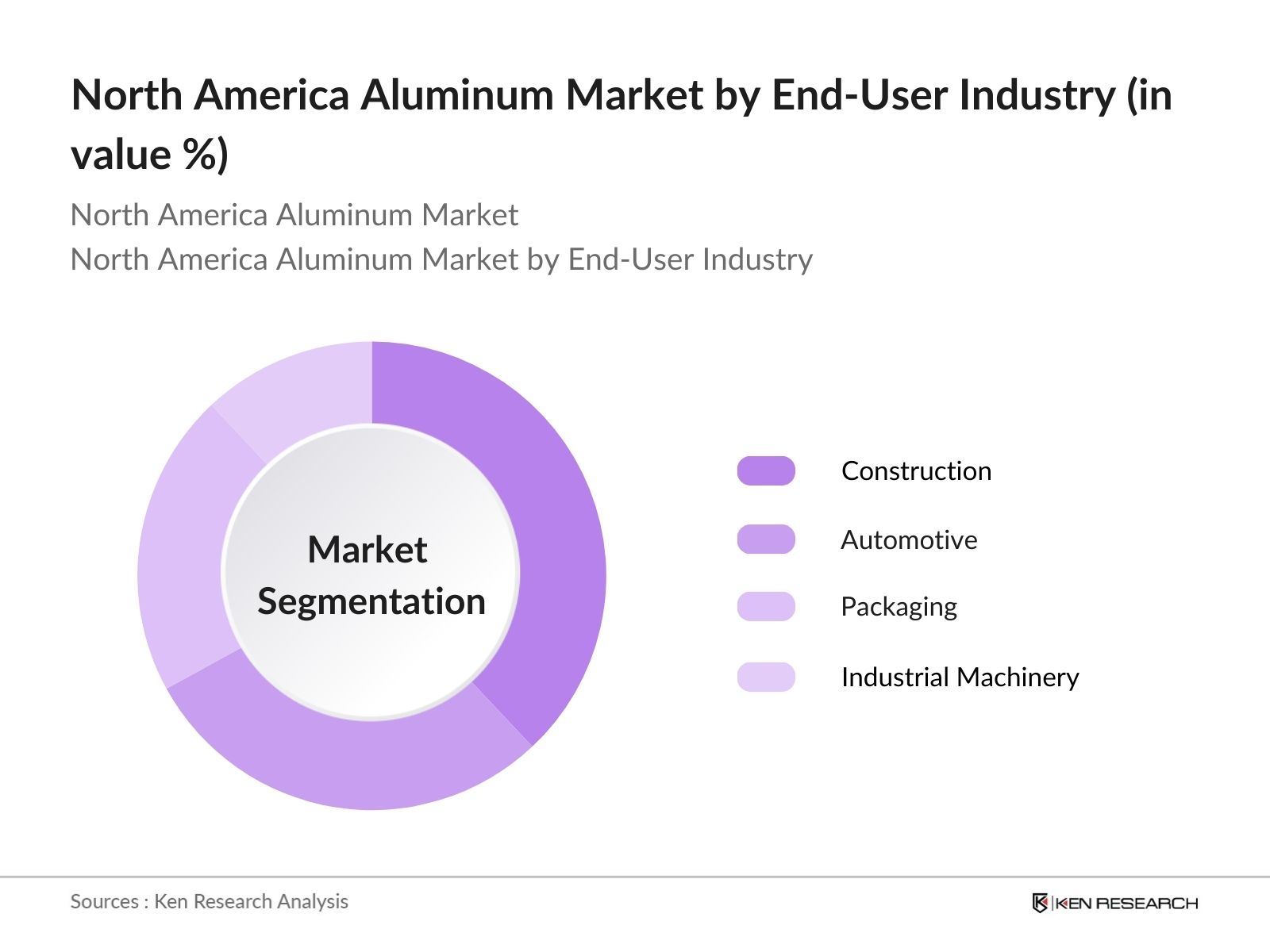
By End-User Industry: The market is segmented by end-user industry into construction, automotive, packaging, and industrial machinery. The construction sector dominates due to the increasing need for lightweight, durable materials in building projects and urban infrastructure. With stringent environmental regulations encouraging the use of sustainable materials, aluminums recyclable nature and strength make it the preferred choice, particularly in commercial and industrial construction.
North America Aluminum Market Competitive Landscape
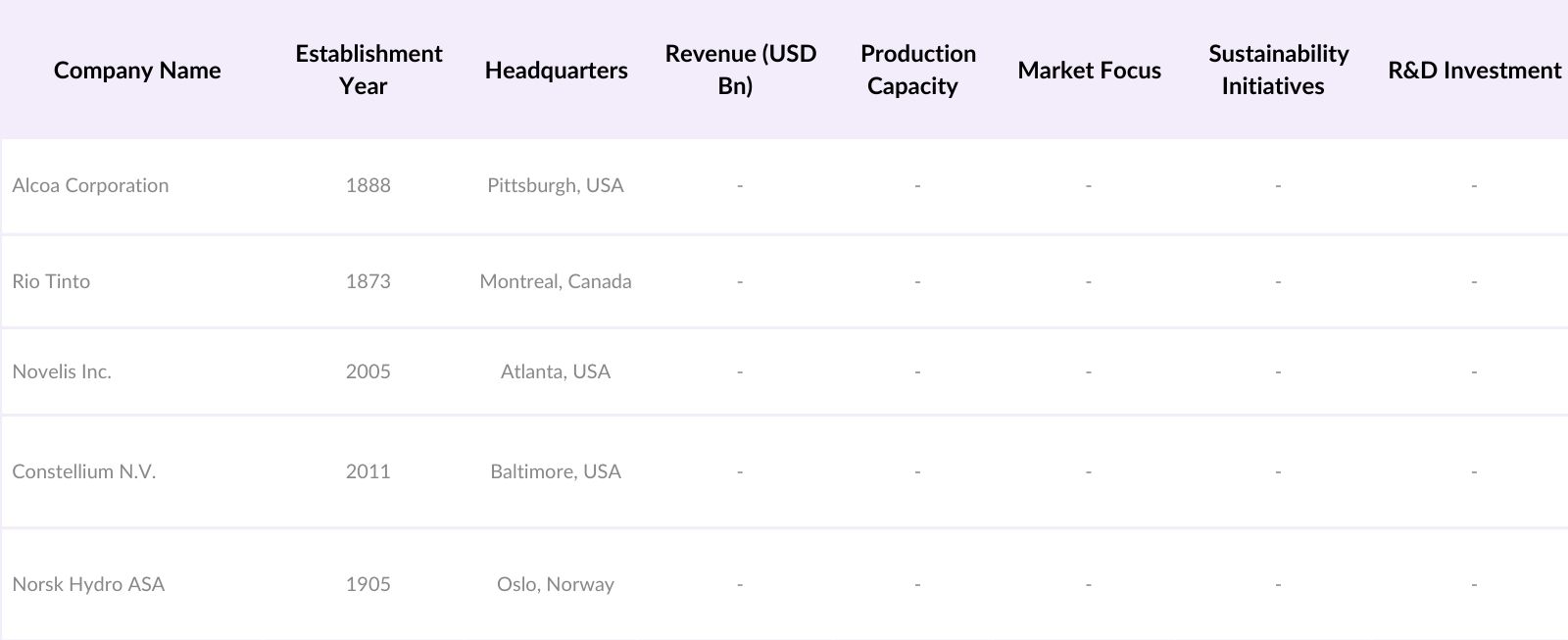
The North America Aluminum Market is characterized by significant market competition, with major players exerting a substantial influence through partnerships and sustainable practices.
North America Aluminum Market Analysis
Market Growth Drivers
- Construction Industry Demand: The North American construction sector has witnessed an increase in demand for aluminum, driven by the need for durable, lightweight materials. In 2023, the United States recorded construction spending of $1.6 trillion, a portion of which is allocated to aluminum-intensive projects in infrastructure and high-rise buildings, as aluminum provides corrosion resistance and design flexibility. Canadas construction sector also invested significantly in aluminum applications, with public sector infrastructure projects focusing on sustainable materials. Increased urbanization and government infrastructure investments have continued to solidify aluminums role in construction.
- Rise in Automotive Production: Aluminum usage in North America's automotive sector has surged, as car manufacturers aim to reduce vehicle weights and increase fuel efficiency. In 2023, approximately 10 million vehicles were produced in the U.S., with a notable portion using aluminum in components such as body panels and engine blocks due to its strength-to-weight ratio. Canadian automotive production also saw an uptake in aluminum for lightweighting purposes. The demand is further spurred by regulatory mandates for fuel economy standards across North America.
- Packaging Industry Expansion: Aluminum demand is reinforced by growth in the packaging industry, where the material's recyclability and durability are valued. In 2023, the U.S. beverage industry alone consumed over 100 billion aluminum cans, primarily driven by consumer preference for sustainable packaging. Aluminums light weight and barrier properties make it ideal for protecting food and beverage products. Canadas packaging sector has also observed an increase in aluminum use for similar reasons, amplifying the materials presence in the consumer goods market.
Market Challenges
- Volatile Aluminum Prices: The North American aluminum market faces price volatility, influenced by fluctuating global demand and supply constraints. The average global aluminum price fluctuated between $2,400 and $2,600 per metric ton in 2023, impacting the profitability of domestic manufacturers. Price variations are driven by changing energy costs, production disruptions, and international trade policies. North American manufacturers often encounter difficulties in stabilizing costs and production schedules due to these price shifts, affecting supply chain predictability.
- Environmental Regulations: Strict environmental regulations regarding aluminum production pose challenges for North American producers. The production of aluminum is energy-intensive and contributes to carbon emissions, with the U.S. accounting for over 2 billion tons of CO2 emissions in industrial sectors annually. Regulatory bodies like the Environmental Protection Agency (EPA) have implemented standards that necessitate energy-efficient and emission-controlled production, impacting operational costs and encouraging shifts toward renewable energy sources in smelting processes.
North America Aluminum Market Future Outlook
The North America Aluminum Market is set for robust growth over the coming years, driven by increasing demand in sustainable construction, advanced automotive manufacturing, and recycling efforts. Environmental mandates and an expanding focus on sustainable aluminum sources are key factors supporting this anticipated market expansion.
Market Opportunities
- Recycling and Sustainable Practices: Recycling has become a key opportunity in the North American aluminum market, as recycled aluminum uses only 5% of the energy required for primary production. In 2023, over 70% of aluminum used in North American packaging was recycled, reflecting a strong trend toward sustainability. Both the U.S. and Canada have implemented policies to encourage aluminum recycling, reducing the environmental footprint of the metal industry and providing a stable supply of secondary aluminum.
- Demand for Alloyed Aluminum: There is a rising demand for alloyed aluminum in industries that require enhanced material properties for specific applications. The North American automotive and aerospace sectors use alloyed aluminum in manufacturing for its improved strength and corrosion resistance. In 2023, alloyed aluminum comprised nearly 40% of the total aluminum usage in North Americas automotive sector, driven by the need for lightweight, high-strength materials. This demand is anticipated to support growth in specialty aluminum production facilities.
Scope of the Report
|
Product Type |
Primary Aluminum Secondary Aluminum Alloys Sheets & Plates Extrusions |
|
Application |
Construction Transportation Packaging Electrical Consumer Goods |
|
Processing Method |
Extrusion Rolling Casting Forging |
|
End-User Industry |
Automotive Aerospace Building & Construction Industrial Machinery |
|
Region |
USA Canada Mexico Other North America |
Products
Key Target Audience
Investor and Venture Capitalist Firms
Government and Regulatory Bodies (e.g., U.S. Environmental Protection Agency)
Aluminum Manufacturers and Processors
Banks and Financial Institutions
Automotive Manufacturing Companies
Construction Firms and Contractors
Renewable Energy Companies
Packaging Industry Stakeholders
Industrial Machinery and Equipment Manufacturers
Companies
Players Mentioned in the Report
Alcoa Corporation
Rio Tinto
Novelis Inc.
Constellium N.V.
Norsk Hydro ASA
Century Aluminum Company
Kaiser Aluminum Corporation
Arconic Corporation
Tri-Arrows Aluminum Inc.
JW Aluminum
Table of Contents
1. North America Aluminum Market Overview
1.1. Definition and Scope
1.2. Market Taxonomy
1.3. Key Applications
1.4. Market Growth Rate
2. North America Aluminum Market Size (In USD Bn)
2.1. Historical Market Size
2.2. Year-On-Year Growth Analysis
2.3. Key Market Developments and Milestones
3. North America Aluminum Market Analysis
3.1. Growth Drivers
3.1.1. Construction Industry Demand
3.1.2. Rise in Automotive Production
3.1.3. Packaging Industry Expansion
3.1.4. Lightweighting in Aerospace
3.2. Market Challenges
3.2.1. Volatile Aluminum Prices
3.2.2. Environmental Regulations
3.2.3. Energy-Intensive Production
3.2.4. Import Dependency
3.3. Opportunities
3.3.1. Recycling and Sustainable Practices
3.3.2. Technological Innovations in Processing
3.3.3. Demand for Alloyed Aluminum
3.3.4. Potential for Export Markets
3.4. Trends
3.4.1. Shift to Green Aluminum Production
3.4.2. Lightweighting in Automotive
3.4.3. Growth of Aluminum-Based Battery Materials
3.4.4. Increased Use in Renewable Energy Structures
3.5. Government Regulation
3.5.1. Environmental Compliance Standards
3.5.2. Trade Tariffs and Quotas
3.5.3. Recycling Policies
3.5.4. Carbon Emission Regulations
3.6. SWOT Analysis
3.7. Stakeholder Ecosystem
3.8. Porters Five Forces Analysis
3.9. Competitive Landscape Ecosystem
4. North America Aluminum Market Segmentation
4.1. By Product Type (In Value %)
4.1.1. Primary Aluminum
4.1.2. Secondary (Recycled) Aluminum
4.1.3. Alloys
4.1.4. Sheets & Plates
4.1.5. Extrusions
4.2. By Application (In Value %)
4.2.1. Construction
4.2.2. Transportation
4.2.3. Packaging
4.2.4. Electrical
4.2.5. Consumer Goods
4.3. By Processing Method (In Value %)
4.3.1. Extrusion
4.3.2. Rolling
4.3.3. Casting
4.3.4. Forging
4.4. By End-User Industry (In Value %)
4.4.1. Automotive
4.4.2. Aerospace
4.4.3. Building & Construction
4.4.4. Industrial Machinery
4.5. By Region (In Value %)
4.5.1. USA
4.5.2. Canada
4.5.3. Mexico
4.5.4. Others in North America
5. North America Aluminum Market Competitive Analysis
5.1. Profiles of Major Companies
5.1.1. Alcoa Corporation
5.1.2. Rio Tinto
5.1.3. Novelis Inc.
5.1.4. Constellium N.V.
5.1.5. Norsk Hydro ASA
5.1.6. Century Aluminum Company
5.1.7. Kaiser Aluminum Corporation
5.1.8. Arconic Corporation
5.1.9. Tri-Arrows Aluminum Inc.
5.1.10. JW Aluminum
5.1.11. Vimetco N.V.
5.1.12. Rusal
5.1.13. Hindalco Industries Ltd.
5.1.14. Vedanta Limited
5.1.15. Maaden Aluminum
5.2. Cross Comparison Parameters (Revenue, Employee Count, Headquarters, Production Capacity, Sustainability Initiatives, Product Range, R&D Investments, Strategic Alliances)
5.3. Market Share Analysis
5.4. Strategic Initiatives
5.5. Mergers and Acquisitions
5.6. Investment Landscape
5.7. Joint Ventures and Collaborations
5.8. Government Grants and Incentives
5.9. Private Equity Involvement
6. North America Aluminum Market Regulatory Framework
6.1. Environmental Regulations and Compliance
6.2. Trade Policies and Tariffs
6.3. Emissions and Sustainability Standards
6.4. Recycling and Waste Management Policies
7. North America Aluminum Future Market Size (In USD Bn)
7.1. Market Expansion Potential
7.2. Key Factors Influencing Future Demand
8. North America Aluminum Future Market Segmentation
8.1. By Product Type
8.2. By Application
8.3. By Processing Method
8.4. By End-User Industry
8.5. By Region
9. North America Aluminum Market Analysts Recommendations
9.1. TAM/SAM/SOM Analysis
9.2. Customer Segment Analysis
9.3. Emerging White Space Opportunities
9.4. Strategic Marketing Recommendations
Disclaimer Contact UsResearch Methodology
Step 1: Identification of Key Variables
The first step includes creating a comprehensive ecosystem map of all stakeholders in the North America Aluminum Market. Extensive desk research is conducted to identify primary variables that affect market performance, backed by secondary and proprietary data sources.
Step 2: Market Analysis and Construction
This phase involves compiling historical data, with a specific focus on industry penetration, production metrics, and supply chain dynamics. The data is cross-validated to ensure accuracy and precision in revenue estimates.
Step 3: Hypothesis Validation and Expert Consultation
In this step, market hypotheses are formulated and then verified through expert consultations with industry leaders. These discussions yield actionable insights and data, supporting data-driven validation of key market trends.
Step 4: Research Synthesis and Final Output
The last phase involves synthesizing all acquired insights, including direct consultations with aluminum manufacturers, to validate findings and ensure a comprehensive, data-backed market analysis.
Frequently Asked Questions
01. How big is the North America Aluminum Market?
The North America Aluminum Market was valued at USD 1.8 billion, driven by the automotive, construction, and packaging industries, which demand lightweight, durable materials for sustainable applications.
02. What are the key growth drivers in the North America Aluminum Market?
The demand for lightweight materials in automotive and aerospace manufacturing, along with increased investments in sustainable practices, primarily drives the growth of the North America Aluminum Market.
03. Who are the major players in the North America Aluminum Market?
Key players include Alcoa Corporation, Rio Tinto, Novelis Inc., Constellium N.V., and Norsk Hydro ASA. These companies lead the market with substantial production capacities, sustainable initiatives, and extensive global reach.
04. What challenges does the North America Aluminum Market face?
The primary challenges include fluctuating aluminum prices, compliance with environmental regulations, and the high energy costs associated with aluminum production, which impact profitability.
Why Buy From Us?

What makes us stand out is that our consultants follows Robust, Refine and Result (RRR) methodology. i.e. Robust for clear definitions, approaches and sanity checking, Refine for differentiating respondents facts and opinions and Result for presenting data with story

We have set a benchmark in the industry by offering our clients with syndicated and customized market research reports featuring coverage of entire market as well as meticulous research and analyst insights.

While we don't replace traditional research, we flip the method upside down. Our dual approach of Top Bottom & Bottom Top ensures quality deliverable by not just verifying company fundamentals but also looking at the sector and macroeconomic factors.

With one step in the future, our research team constantly tries to show you the bigger picture. We help with some of the tough questions you may encounter along the way: How is the industry positioned? Best marketing channel? KPI's of competitors? By aligning every element, we help maximize success.

Our report gives you instant access to the answers and sources that other companies might choose to hide. We elaborate each steps of research methodology we have used and showcase you the sample size to earn your trust.

If you need any support, we are here! We pride ourselves on universe strength, data quality, and quick, friendly, and professional service.