APAC Recycled Metal Market Outlook to 2030

Region:Asia

Author(s):Shambhavi Awasthi

Product Code:KROD7541

Published On

November 2024

Total pages

97

About the Report

APAC Recycled Metal Market Overview

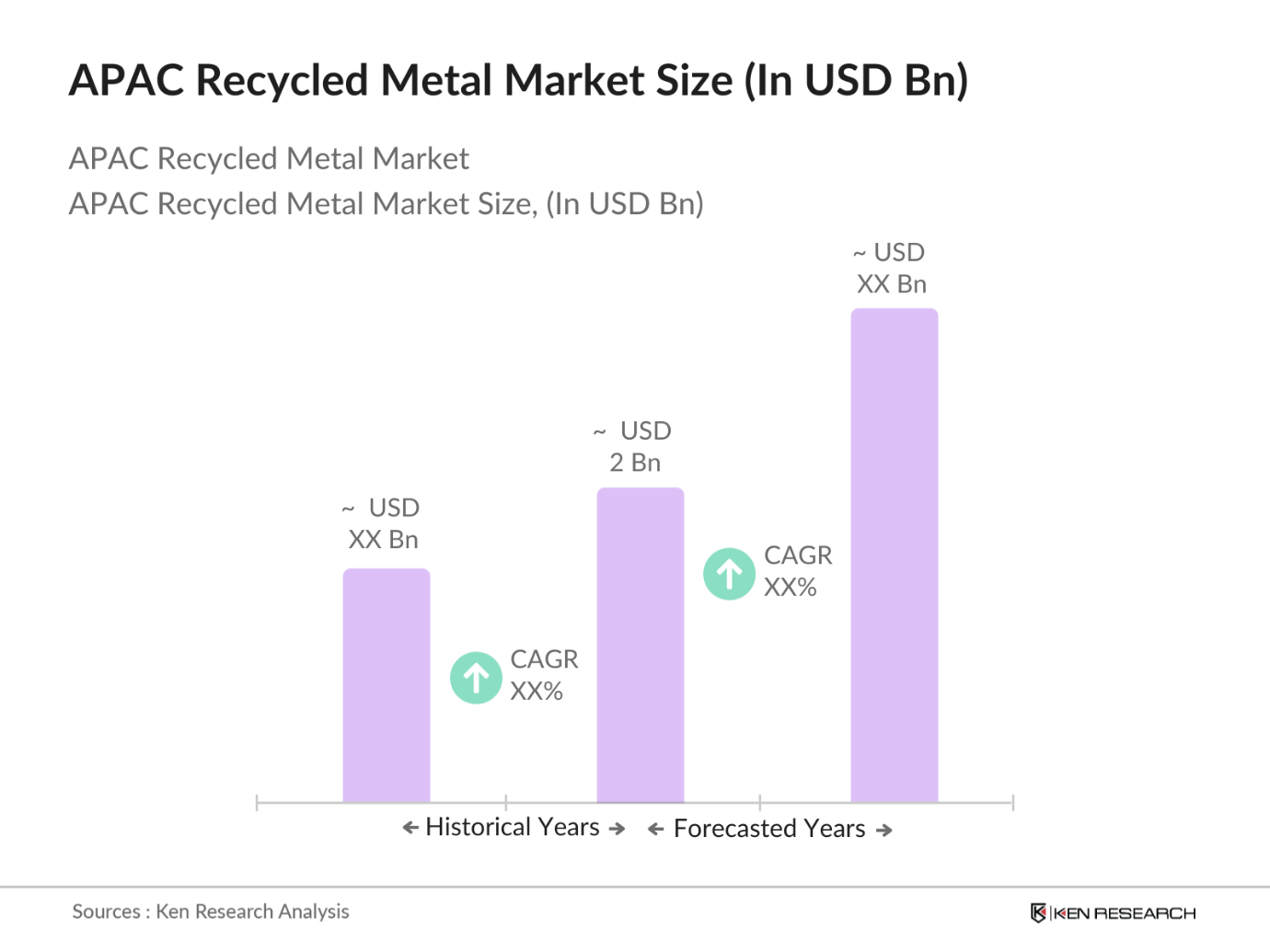
  • The APAC recycled metal market is valued at USD 2 billion, based on a five-year historical analysis. Driven by rising demand for sustainable materials, the regions recycling industry benefits from increased industrial and consumer efforts to reduce environmental impact. Metal recycling, particularly for metals like steel and aluminum, has gained momentum due to regulatory support promoting circular economy practices and reducing energy consumption associated with raw metal extraction. This has led to substantial industry growth, particularly in major economies across the APAC region.market overviews
  • Countries such as China, Japan, and India dominate the APAC recycled metal market. China's dominance is fueled by its large-scale manufacturing sector and government mandates on waste management and recycling standards. Japan, with advanced technology for recycling processes, has set high standards in the industry, making it a significant player. Indias market is also expanding due to its increasing urbanization and government initiatives that prioritize sustainable development, particularly through metal recovery from scrap materials in automotive and construction industries.
  • Governments across the Asia-Pacific (APAC) region are implementing comprehensive recycling strategies to enhance metal recovery rates. For instance, Japan has established a national framework that promotes efficient recycling practices and sets clear targets for metal recovery, aiming to reduce dependence on imported raw materials. In 2022, Japan's recycling rate for aluminum was approximately 90%, reflecting the effectiveness of these strategies.

APAC Recycled Metal Market Segmentation

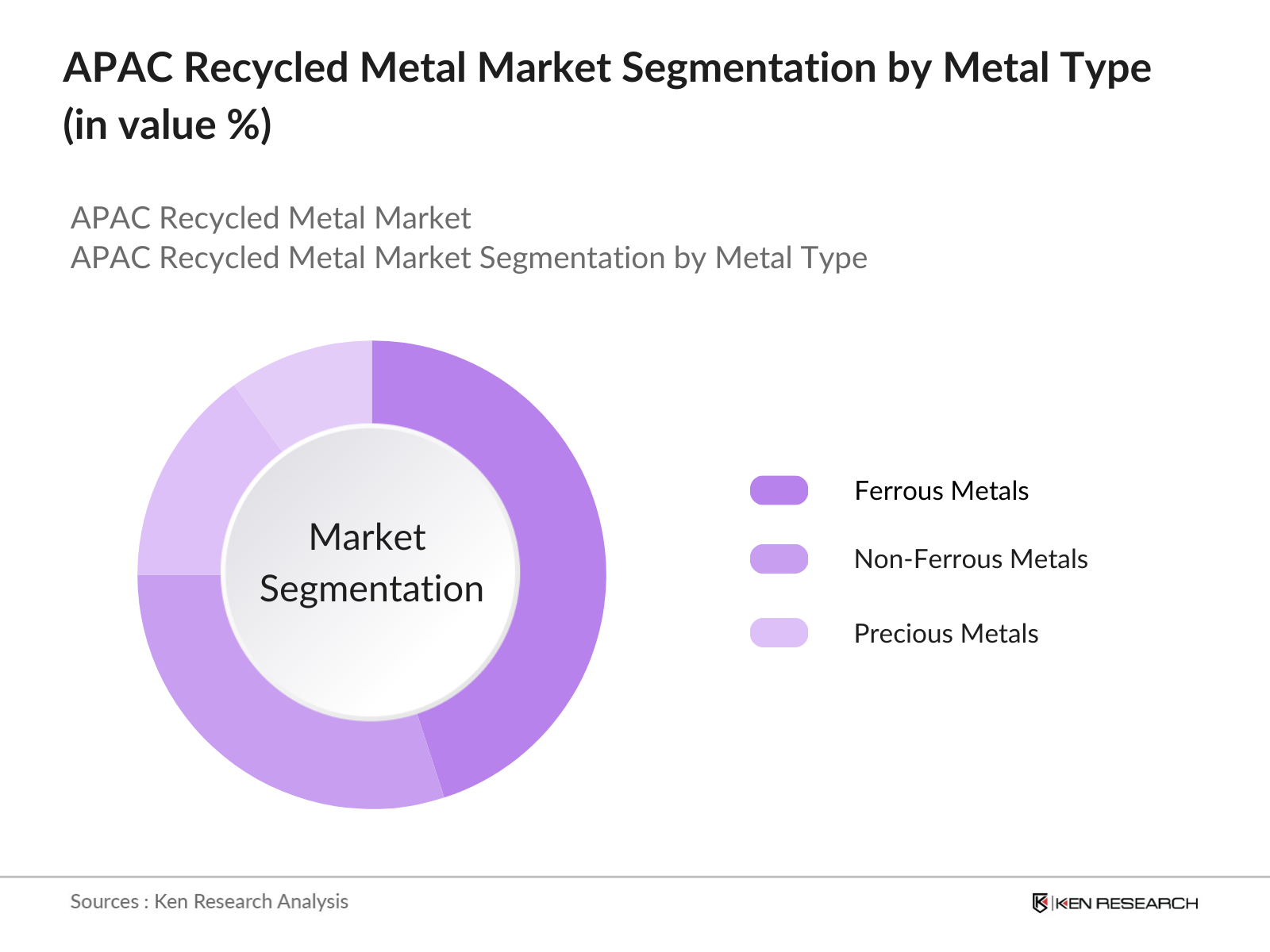
  • By Metal Type:: The APAC recycled metal market is segmented by metal type into ferrous metals, non-ferrous metals, and precious metals. Ferrous metals hold a dominant market share due to their high recyclability and demand across construction and automotive industries. The preference for ferrous metals, such as steel and iron, stems from their lower recycling costs and widespread usage in infrastructure development and industrial applications across APAC. The durability and strength of ferrous metals make them a primary material in heavy industries and urban development projects.

market overviews

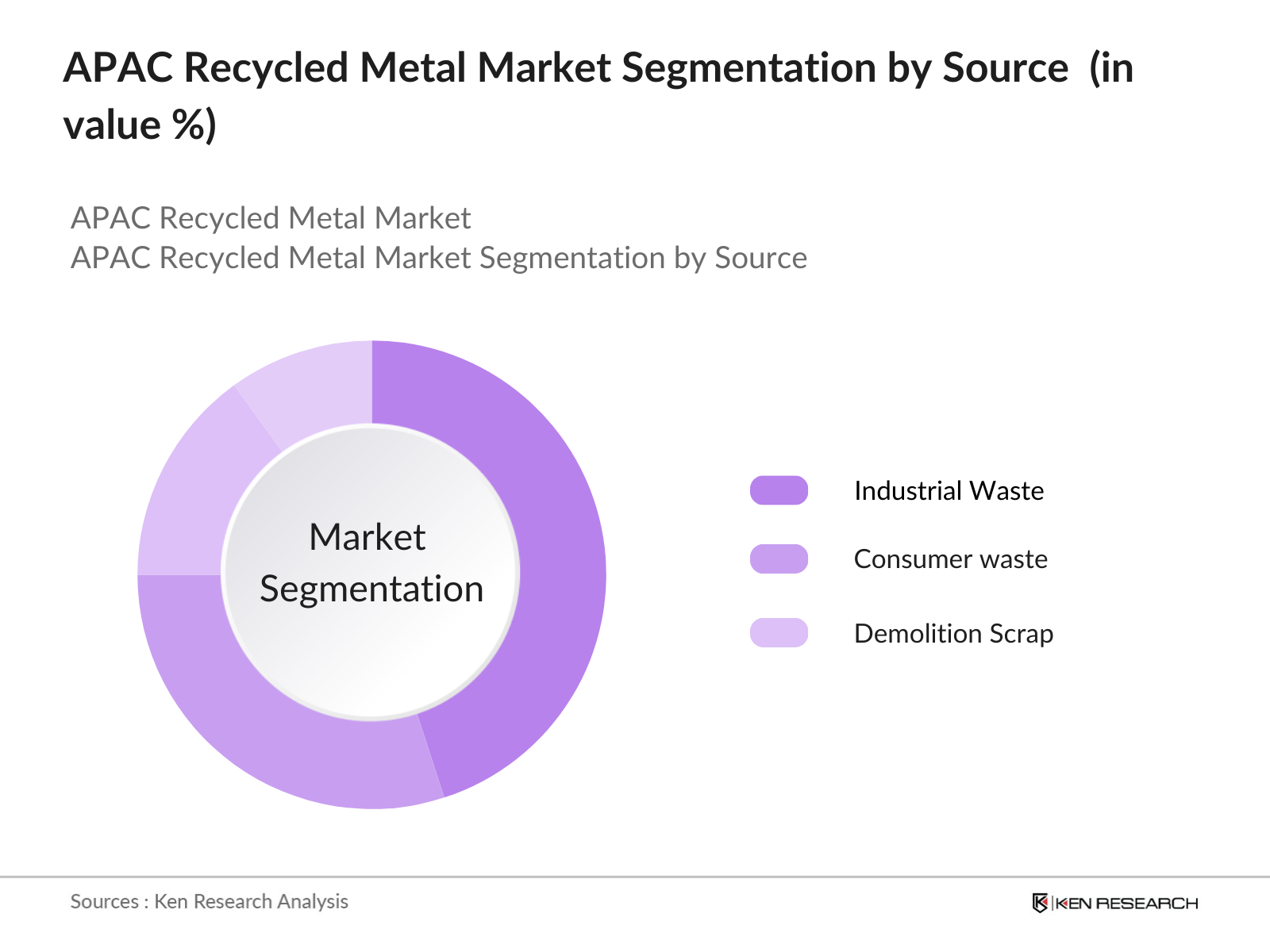
  • By Source: The recycled metal market by source is segmented into industrial waste, consumer waste, and demolition scrap. Industrial waste dominates the source segmentation, mainly due to its consistent and regulated availability. Large industrial setups, especially in countries like China and Japan, contribute significantly to the supply chain by providing a steady stream of recyclable metal waste. This availability is supplemented by strong regulatory support, ensuring that industrial metal waste is managed sustainably to meet the industrys growing demand.

market overviews

APAC Recycled Metal Market Competitive Landscape

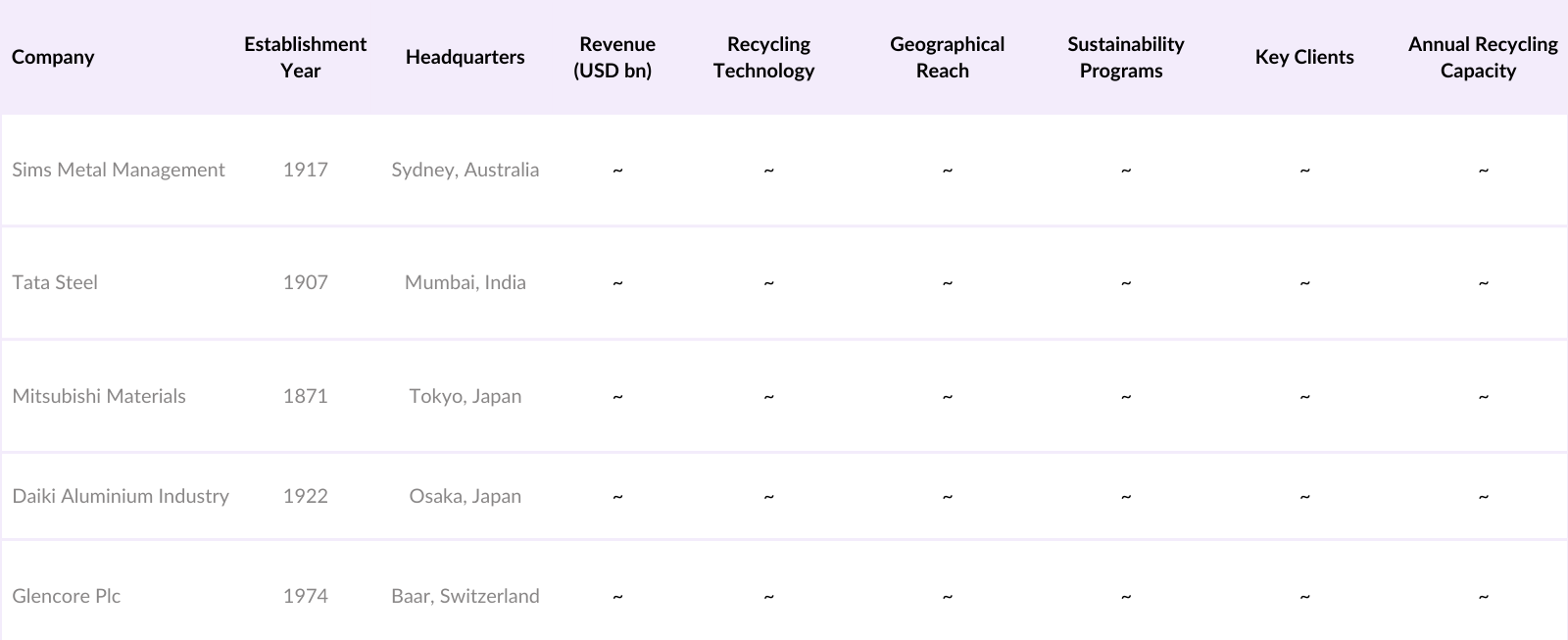
The APAC recycled metal market is dominated by several key players, each leveraging its strengths in processing and distribution. This consolidation highlights the significant influence of these key companies, shaping the markets growth trajectory and innovation.
market overviews

APAC Recycled Metal Industry Analysis

  • Rising Demand for Sustainable Materials: The push for sustainable materials is evident, with global consumption of recycled metals projected to grow significantly as industries seek eco-friendly alternatives. For instance, the global push towards achieving carbon neutrality has led to increased metal recycling efforts, with many countries aiming for a 50% increase in recycled content in manufacturing by 2025. In Asia, the demand for recycled steel alone is expected to reach over 200 million tons annually, driven by the construction and automotive sectors which are major consumers of recycled metals.
  • Government Incentives for Recycling: Many APAC nations are implementing robust policies to encourage recycling. For instance, Japan's government provides financial incentives for companies that adopt recycling technologies and practices, targeting a 25% increase in metal recycling rates by 2025. Such initiatives not only boost the recycling industry but also align with the broader sustainability goals set by governments across the region. The Indian government has also introduced a 'Scrap Policy' aimed at achieving higher recycling rates in metals, which is projected to contribute significantly to the overall recycling capacity in the country.
  • Global Commodity Prices: Fluctuations in global commodity prices significantly impact the recycled metals market. As primary metal prices rise, the demand for recycled metals increases as manufacturers look for cost-effective alternatives. In 2023, the price of aluminum and copper saw an uptick of 15%, prompting industries to increase their reliance on recycled sources. The expected price trends suggest that manufacturers will continue to seek out recycled materials as viable substitutes, enhancing market dynamics for the recycled metals sector.

Market Challenges

  • Quality Control Issues: Ensuring quality in recycled metals remains a significant challenge. Variability in the quality of input materials can lead to inconsistencies in the final product, which affects customer satisfaction and marketability. The lack of standardized testing and certification processes for recycled metals often results in skepticism from manufacturers. Reports indicate that approximately 20% of recycled metal produced does not meet industry standards, leading to substantial financial losses for producers and limiting market growth.
  • Regulatory Compliance: Regulatory compliance poses a challenge for many players in the recycled metals market. Different countries in the APAC region have varying regulations regarding recycling processes, waste management, and environmental standards. Navigating these regulations requires significant resources, and non-compliance can lead to hefty fines and reputational damage. Companies must invest in compliance training and technology to ensure they meet local and international standards, which can be a substantial financial burden.

APAC Recycled Metal Market Future Outlook

Over the next five years, the APAC recycled metal market is expected to expand significantly. This growth will be driven by increased regional emphasis on environmental sustainability, technological advancements in metal recycling, and heightened demand for recycled materials across industries. Strategic initiatives by governments, such as incentivizing recycling operations and strengthening waste management regulations, will further support market expansion, particularly in emerging economies in APAC. Key players are anticipated to invest in advanced recycling technologies to meet the increased demand for high-quality recycled metals.

Market Opportunities

  • Advancements in Recycling Technologies: The APAC region is witnessing significant technological innovations in metal recycling processes. For instance, Japan has developed advanced sorting and processing technologies that enhance the efficiency and quality of recycled metals. These advancements present opportunities for companies to invest in state-of-the-art facilities, leading to higher recovery rates and reduced environmental impact.
  • Increased Collaboration between Public and Private Sectors: Governments across APAC are fostering partnerships with private enterprises to boost recycling initiatives. In South Korea, the government has implemented policies that encourage private sector participation in recycling programs, resulting in improved infrastructure and increased recycling rates. Such collaborations can lead to shared resources, expertise, and expanded market reach.

Scope of the Report

Segment

Sub-Segments

By Material Type

Ferrous Metals
 Non-Ferrous Metals

By End-Use Industry

 Construction
 Automotive
 Electronics

By Recycling Process

 Mechanical Recycling
 Pyrometallurgical Recycling

By Region

 East Asia
 Southeast Asia
 South Asia
 Central Asia
 Oceania

By Source

 Industrial Scrap
 Post-Consumer Waste

Products

Key Target Audience

  • Metal Recycling Facilities

  • Government and Regulatory Bodies (Ministry of Environment, Ministry of Industry)

  • Automotive and Electronics Manufacturers

  • Industrial Waste Management Companies

  • Construction Firms

  • Investors and Venture Capitalist Firms

  • Sustainability and Environmental NGOs

  • Exporters and Importers of Recycled Metals

Companies

Players mentioned in the report

  • Sims Metal Management

  • Tata Steel

  • Mitsubishi Materials

  • Daiki Aluminium Industry

  • Glencore Plc

  • Dowa Holdings

  • Aurubis AG

  • Nucor Corporation

  • Commercial Metals Company

  • Kuusakoski Oy

  • Schnitzer Steel Industries

  • OmniSource Corporation

  • Sumitomo Metal Mining Co.

  • Hindalco Industries

  • European Metal Recycling (EMR)

Table of Contents

1. APAC Recycled Metal Market Overview

1.1. Definition and Scope

1.2. Market Taxonomy

1.3. Market Growth Rate

1.4. Market Segmentation Overview

2. APAC Recycled Metal Market Size (In USD Bn)

2.1. Historical Market Size

2.2. Year-On-Year Growth Analysis

2.3. Key Market Developments and Milestones

3. APAC Recycled Metal Market Analysis

3.1. Growth Drivers

3.1.1. Rising Demand for Sustainable Materials

3.1.2. Government Incentives for Recycling

3.1.3. Urbanization and Industrial Growth

3.1.4. Global Commodity Prices

3.2. Market Challenges

3.2.1. Quality Control Issues

3.2.2. Regulatory Compliance

3.2.3. Market Fragmentation

3.3. Opportunities

3.3.1. Advancements in Recycling Technologies

3.3.2. Increased Collaboration between Public and Private Sectors

3.3.3. Expansion of Circular Economy Initiatives

3.3.4. Growing Consumer Awareness and Demand

3.4. Trends

3.4.1. Adoption of Advanced Sorting Technologies

3.4.2. Integration with Smart Manufacturing Practices

3.4.3. Shift towards Urban Mining

3.5. Government Regulation

3.5.1. National Recycling Strategies

3.5.2. Extended Producer Responsibility (EPR) Policies

3.5.3. International Trade Agreements

3.6. SWOT Analysis

3.7. Stake Ecosystem

3.8. Porters Five Forces

3.9. Competition Ecosystem

4. APAC Recycled Metal Market Segmentation

4.1. By Material Type (In Value %)

4.1.1. Ferrous Metals

4.1.2. Non-Ferrous Metals

4.2. By End-Use Industry (In Value %)

4.2.1. Construction

4.2.2. Automotive

4.2.3. Electronics

4.3. By Recycling Process (In Value %)

4.3.1. Mechanical Recycling

4.3.2. Pyrometallurgical Recycling

4.4. By Region (In Value %)

4.4.1. East Asia

4.4.2. Southeast Asia

4.4.3. South Asia

4.5. By Source (In Value %)

4.5.1. Industrial Scrap

4.5.2. Post-Consumer Waste

5. APAC Recycled Metal Market Competitive Analysis

5.1. Detailed Profiles of Major Companies

5.1.1. Tata Steel Limited

5.1.2. Nucor Corporation

5.1.3. Schnitzer Steel Industries, Inc.

5.1.4. Novelis Inc.

5.1.5. Commercial Metals Company

5.1.6. Liberty Steel Group

5.1.7. Kahn Steel Co.

5.1.8. Sims Metal Management

5.1.9. Hanwa Co., Ltd.

5.1.10. OmniSource Corporation

5.1.11. Emirates Recycling

5.1.12. Pottawatomie Metal Recycling

5.1.13. Aleris Corporation

5.1.14. AURubis AG

5.1.15. JFE Holdings, Inc.

5.2. Cross Comparison Parameters (Market Share, Number of Employees, Headquarters, Inception Year, Revenue, Key Products, Sustainability Initiatives, Regional Presence)

5.3. Market Share Analysis

5.4. Strategic Initiatives

5.5. Mergers and Acquisitions

5.6. Investment Analysis

5.7. Venture Capital Funding

5.8. Government Grants

5.9. Private Equity Investments

6. APAC Recycled Metal Market Regulatory Framework

6.1. Environmental Standards

6.2. Compliance Requirements

6.3. Certification Processes

7. APAC Recycled Metal Market Future Market Size (In USD Bn)

7.1. Future Market Size Projections

7.2. Key Factors Driving Future Market Growth

8. APAC Recycled Metal Market Future Segmentation

8.1. By Material Type (In Value %)

8.2. By End-Use Industry (In Value %)

8.3. By Recycling Process (In Value %)

8.4. By Region (In Value %)

8.5. By Source (In Value %)

9.APAC Recycled Metal Market Analysts Recommendations

9.1. TAM/SAM/SOM Analysis

9.2. Customer Cohort Analysis

9.3. Marketing Initiatives

9.4. White Space Opportunity Analysis

Disclaimer

Contact Us

Research Methodology

Step 1: Identification of Key Variables

The initial phase involves creating an ecosystem map to include all major stakeholders in the APAC recycled metal market. This stage relies on desk research, utilizing secondary sources and proprietary databases to gather comprehensive industry data. Key variables that influence the market dynamics are identified and defined.

Step 2: Market Analysis and Construction

In this phase, we collect and analyze historical data on the APAC recycled metal market, examining market penetration, supply chain structures, and revenue generation. This analysis incorporates quality statistics to ensure accurate revenue estimations.

Step 3: Hypothesis Validation and Expert Consultation

Hypotheses are developed and validated through consultations with industry experts via computer-assisted telephone interviews (CATIs). These experts provide critical insights into operational and financial aspects, which refine and confirm market data.

Step 4: Research Synthesis and Final Output

The final phase engages directly with metal recycling facilities to acquire detailed insights on product segments, production capacities, and customer demand. This interaction corroborates findings derived from our bottom-up approach, ensuring a comprehensive and validated analysis.


Frequently Asked Questions

01. How big is the APAC Recycled Metal Market?

The APAC recycled metal market is valued at approximately USD 2 billion, driven by an increasing demand for sustainable and eco-friendly materials across the region.

02. What are the challenges in the APAC Recycled Metal Market?

Challenges include regulatory compliance complexities, fluctuating metal prices, and limited collection infrastructure, which impact the efficiency and growth of the recycling industry in the region.

03. Who are the major players in the APAC Recycled Metal Market?

Key players in the market include Sims Metal Management, Tata Steel, Mitsubishi Materials, and Glencore Plc, among others. These companies dominate due to their advanced technology, extensive recycling capacity, and wide-reaching supply chains.

04. What drives the growth of the APAC Recycled Metal Market?

Growth is propelled by rising environmental concerns, government mandates on sustainable waste management, and the increasing use of recycled metals in major sectors like automotive and construction.

05. Which metal type dominates the APAC Recycled Metal Market?

Ferrous metals dominate the market due to their extensive use in heavy industries and high recyclability. Their demand is particularly strong in infrastructure and automotive manufacturing across APAC.


Why Buy From Us?

RRR
Refine Robust Result (RRR) Framework

What makes us stand out is that our consultants follows Robust, Refine and Result (RRR) methodology. i.e. Robust for clear definitions, approaches and sanity checking, Refine for differentiating respondents facts and opinions and Result for presenting data with story

Our Reach Is Unmatched

We have set a benchmark in the industry by offering our clients with syndicated and customized market research reports featuring coverage of entire market as well as meticulous research and analyst insights.

Research
Shifting the Research Paradigm

While we don't replace traditional research, we flip the method upside down. Our dual approach of Top Bottom & Bottom Top ensures quality deliverable by not just verifying company fundamentals but also looking at the sector and macroeconomic factors.

Insite
More Insights-Better Decisions

With one step in the future, our research team constantly tries to show you the bigger picture. We help with some of the tough questions you may encounter along the way: How is the industry positioned? Best marketing channel? KPI's of competitors? By aligning every element, we help maximize success.

Trust
Transparency and Trust

Our report gives you instant access to the answers and sources that other companies might choose to hide. We elaborate each steps of research methodology we have used and showcase you the sample size to earn your trust.

support
Round the Clock Support

If you need any support, we are here! We pride ourselves on universe strength, data quality, and quick, friendly, and professional service.

Why Client Choose Us?

400000+ Reports in repository
150+ Consulting project a year
100+ Analysts
8000+ Client Queries in 2022