
What your customers think isn’t a mystery -
it’s ametric.
See your brand the way your customers do.





Rated by 1K+ Industry leaders
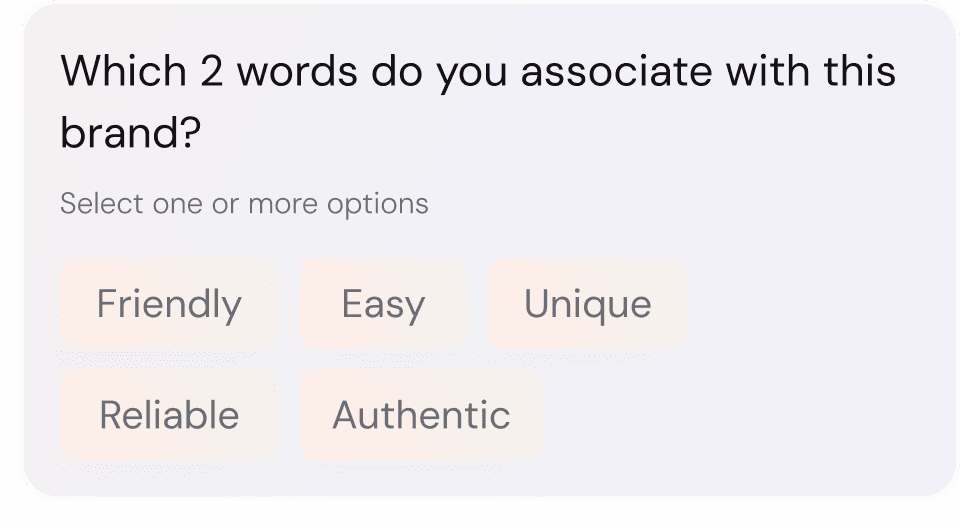
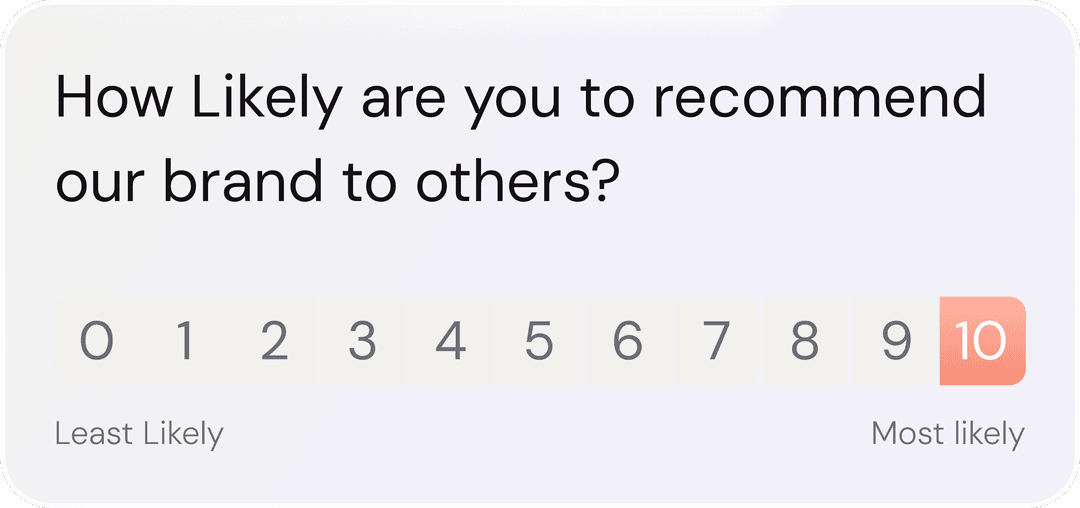
See Your Brand in Data.



ABOUT KEN SURVEY
Built on Reach, Research, and Real Voices
Use real feedback from real audiences to understand what drives decisions and act with confidence.
0+
Respondents Engaged Across 50+ Markets
0+
Brand Perception Survey Conducted
0+
C-Suite & Industry Experts in Our Network
Our Clients


Why It Matters
Your Brand positioning
What people think you do?
What you do?

What It Means for the Brand
Perception gaps create distrust, limiting customer advocacy and partner confidence.
How Ken Solves It
Identify root causes of negative sentiment and reshape perception through data-backed repositioning.
Pain points
Problem
Perception gaps create distrust, limiting customer advocacy and partner confidence.
Solution
Identify root causes of negative sentiment and reshape perception through data-backed repositioning.
How We Do It
Our 7-step approach turns feedback into focused, actionable brand strategy
Identify Brand Essence
Define the brand’s unique purpose, personality, and core message to establish a strong foundation.
Step 01

Identify Brand Essence
Map Audience Voices
Gather insights from your audience to understand their preferences, emotions, and engagement levels.
Step 02

Map Audience Voices
Perceptions in Real-Time
Monitor how customers perceive your brand using live data and sentiment analysis.
Step 03

Perceptions in Real-Time
Analyze Brand Metrics
Evaluate key performance indicators to measure awareness, loyalty, and overall brand strength.
Step 04

Analyze Brand Metrics
Compare Market Positioning
Benchmark your brand against competitors to identify unique strengths and opportunities.
Step 05

Compare Market Positioning
Track Brand Shifts
Observe changes in brand perception over time to adapt strategies and maintain relevance.
Step 06

Track Brand Shifts
Consulting Beyond Data
Turn insights into strategic actions with expert consulting and long-term growth planning.
Step 07

Consulting Beyond Data
Identify Brand Essence
Define the brand’s unique purpose, personality, and core message to establish a strong foundation.
Step 01

Identify Brand Essence
Map Audience Voices
Gather insights from your audience to understand their preferences, emotions, and engagement levels.
Step 02

Map Audience Voices
Perceptions in Real-Time
Monitor how customers perceive your brand using live data and sentiment analysis.
Step 03

Perceptions in Real-Time
Analyze Brand Metrics
Evaluate key performance indicators to measure awareness, loyalty, and overall brand strength.
Step 04

Analyze Brand Metrics
Compare Market Positioning
Benchmark your brand against competitors to identify unique strengths and opportunities.
Step 05

Compare Market Positioning
Track Brand Shifts
Observe changes in brand perception over time to adapt strategies and maintain relevance.
Step 06

Track Brand Shifts
Consulting Beyond Data
Turn insights into strategic actions with expert consulting and long-term growth planning.
Step 07

Consulting Beyond Data
What Sets Us Apart
01
North Star Anchoring
North Star Anchoring
Every insight is tied to business KPIs like sales uplift, NPS retention, or share of voice, making perception directly measurable against growth.
02
Competitor Benchmarking in the Same Dashboard
Competitor Benchmarking in the Same Dashboard
View your brand alongside 8–10 competitors on recall, equity, and consideration, all in one unified dashboard.
03
Always-On Brand Tracking
Always-On Brand Tracking
Move beyond one-time surveys with continuous micro-pulses and real-time dashboards that keep brand health visible year-round.
04
Layered with Social and Search Intelligence
Layered with Social and Search Intelligence
Blend survey data with social sentiment and search trends to create a 360° view of what audiences say and do.
05
Persona-Level Insight Mapping
Persona-Level Insight Mapping
Translate perception into segmented personas by age, income, and mindset, revealing who connects most and where you’re losing traction.
06
Predictive Perception Modeling
Predictive Perception Modeling
Use data to forecast outcomes, linking trust lifts to market-share growth or intent-to-buy probabilities.
07
Action-Ready Playbooks
Action-Ready Playbooks
Every study ends with a “What Now” roadmap with clear priorities for messaging, audience, and channels to act on immediately.
08
Storytelling-Ready Outputs
Storytelling-Ready Outputs
Boardroom-friendly dashboards, infographics, and short videos — designed so insights can be shared, not reworked.
09
Integrated Employee Perception Layer
Integrated Employee Perception Layer
Measure how employees view the brand versus customers, closing the inside-outside perception gap that shapes authenticity.
Our Impact
Real examples of how data and our strategies shaped stronger brands.
TESTIMONIALS
What Our Clients Say
FAQs
How do I know whether poor sales are caused by weak brand perception or other market factors?
We analyze three layers together:
- Market demand
- Brand perception
- Purchase behavior
If perception drops while the category grows then it’s a brand issue. If perception is strong but conversions lag then it’s pricing, distribution, or product.
Our survey isolates perception as a variable so you know whether the brand is the bottleneck or not.
Can a brand perception survey explain why marketing campaigns are underperforming?
Yes, often very clearly. Campaigns fail not because of execution, but because they conflict with existing brand beliefs.
If your communication claims something people do not already associate with your brand, it creates friction.
Brand perception surveys reveal this misalignment before significant media budgets are wasted.
Can a brand perception study quantify hidden biases customers have about my brand?
Yes. Using indirect questioning, association testing, brand mapping, and sentiment analysis, we decode latent biases people don’t openly express such as:
- This brand feels outdated.
- This looks premium but I don’t trust it.
- They’re good but not for people like me.
We uncover what people think, not just what they say.
How do you measure brand trust, relevance, and preference in a way that drives real business decisions?
We measure each component with multi-dimensional indicators:
- Trust – credibility, reliability, fairness, promise delivery
- Relevance – category fit, modernity, customer alignment
- Preference – likelihood of choosing the brand vs. alternatives
Then we link each score to sales uplift, market share, customer lifetime value, and switching behavior.
This makes perception actionable and not theoretical.
Can a Brand Perception Survey tell me why people choose my competitor even if they like my brand?
Absolutely. People may like your brand emotionally but choose competitors for functional reasons like:
- Price
- Distribution
- Features
- Convenience
- Peer influence
We map the difference between emotional liking and actual buying reasons, so you see where the real drop-off happens.
If my brand is new or mid-stage, will a perception study still give meaningful insights?
Yes, in fact, new brands benefit the most. You learn:
- Your early reputation
- First impressions
- What messaging works
- What positioning confuses people
- Where you already outperform incumbents
Can you benchmark my brand perception against competitors, even if the competitors are not large brands?
Yes. We can benchmark against:
- Direct competitors
- Regional players
- Category substitutes
- Digital-first brands
- Emerging challengers
Perception benchmarking doesn’t require competitors to be large but only relevant.
What frameworks or models do you use to analyze perception gaps?
- Perception Gap Analysis (Internal vs. Market view)
- Value Proposition Fit Matrix
- Trust–Relevance–Preference Model
- Emotional vs. Functional Attribute Mapping
- 4D Brand Strength Index
- Category Archetype Mapping
These frameworks show precisely where your brand is losing or gaining ground.
How is a Brand Perception Survey different from a Customer Satisfaction or NPS survey?
- Brand Perception – What they think about the brand overall
- Customer Satisfaction – How they feel after using your product
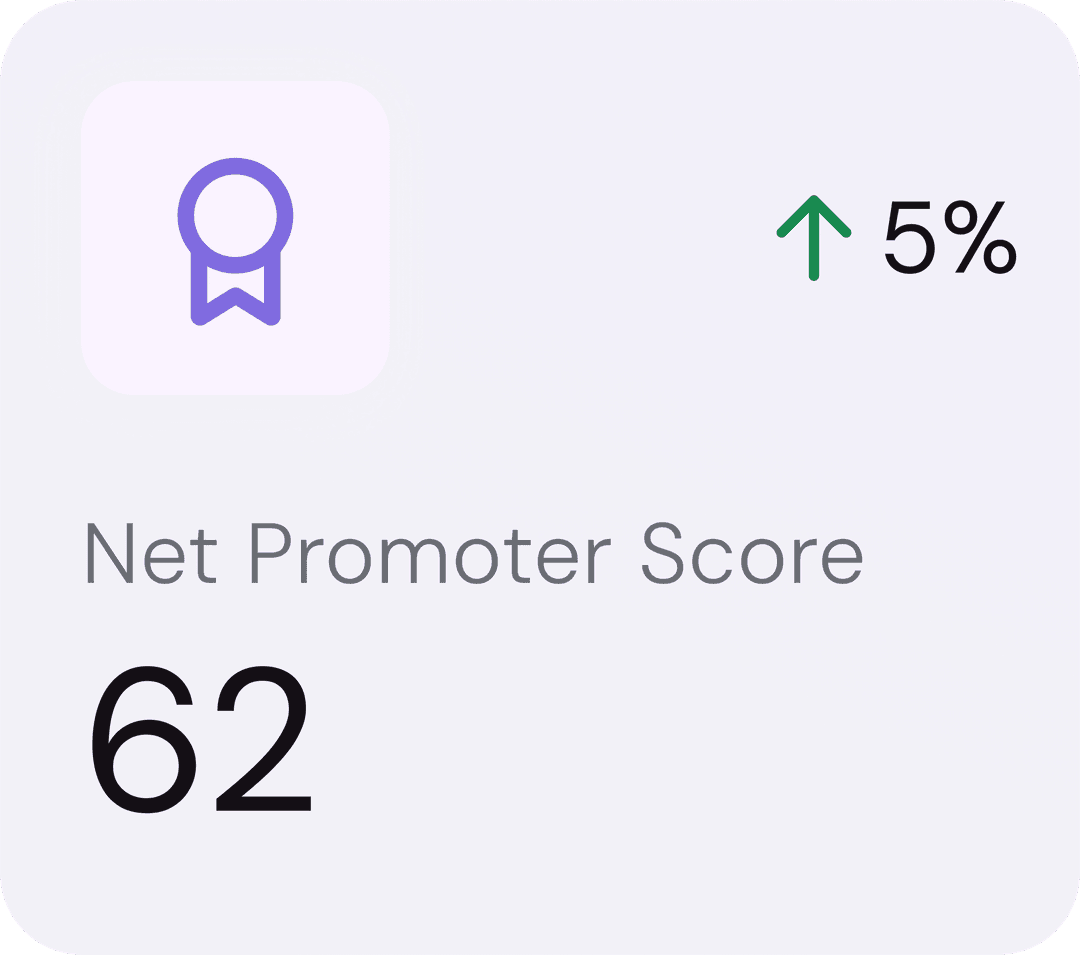
- NPS – How likely they are to recommend you
Perception is broader and includes non-users, competitors, and market views.
Can a perception study help me reposition or rebrand effectively?
Yes. It gives you a data-backed blueprint for:
- What to keep
- What to drop
- What to amplify
- Where perception is misaligned
- What the market is ready to accept
- What your new narrative should be
Repositioning without perception insights is guesswork.
Will the study help identify which channels damage or lift perception?
Yes. We map perception scores by channel to show:
- Where perception improves
- Where it deteriorates
- Which touchpoints build trust
- Which erode credibility
This tells you where to invest, reduce, or recalibrate visibility.
What does a complete brand perception dashboard look like?
- Brand Strength Score
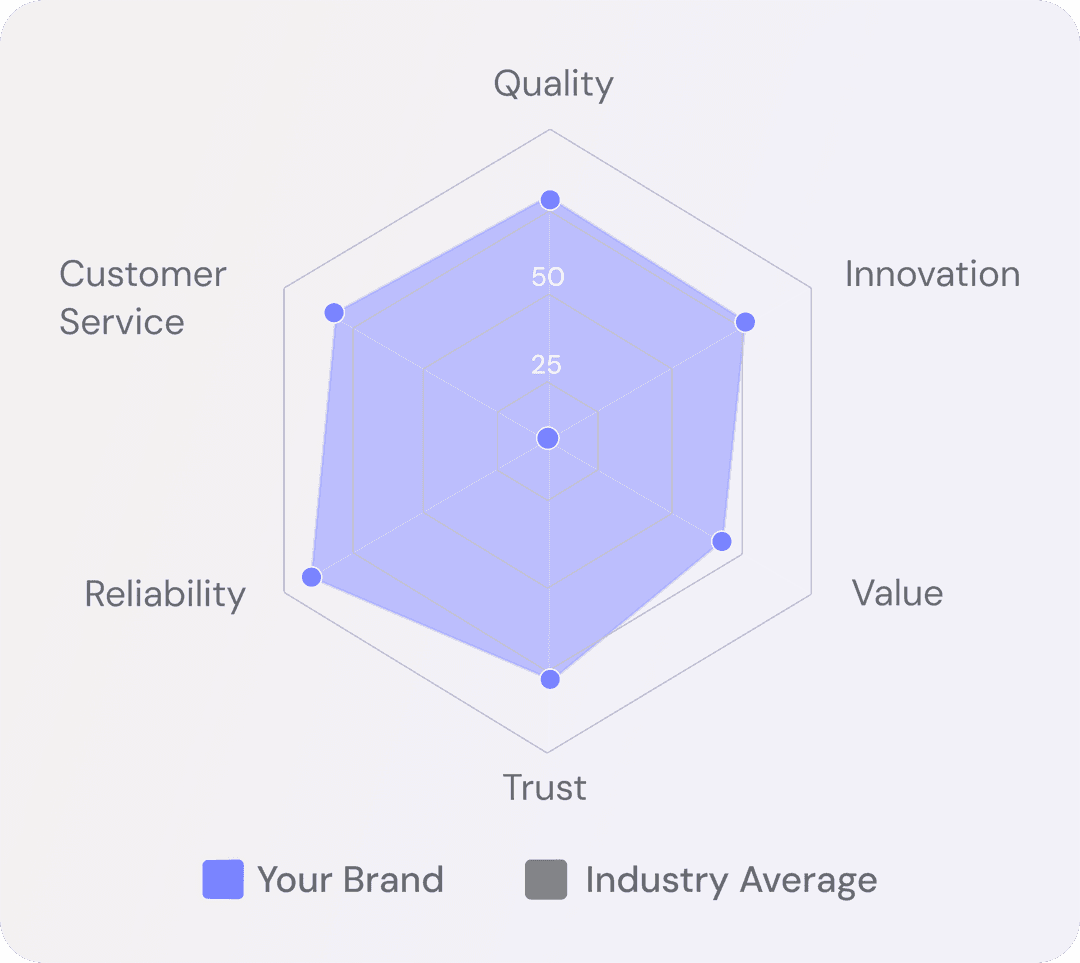
- Competitive positioning map
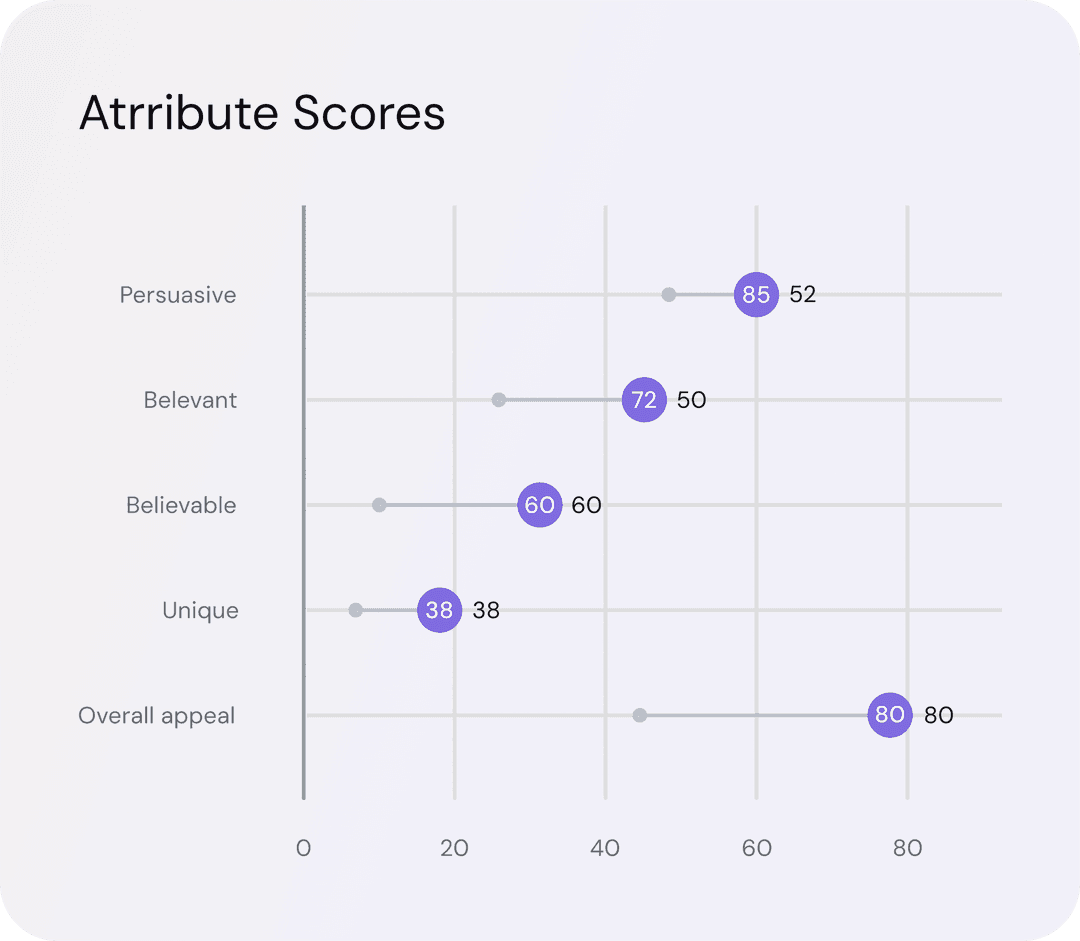
- Key attribute performance
- Messaging effectiveness
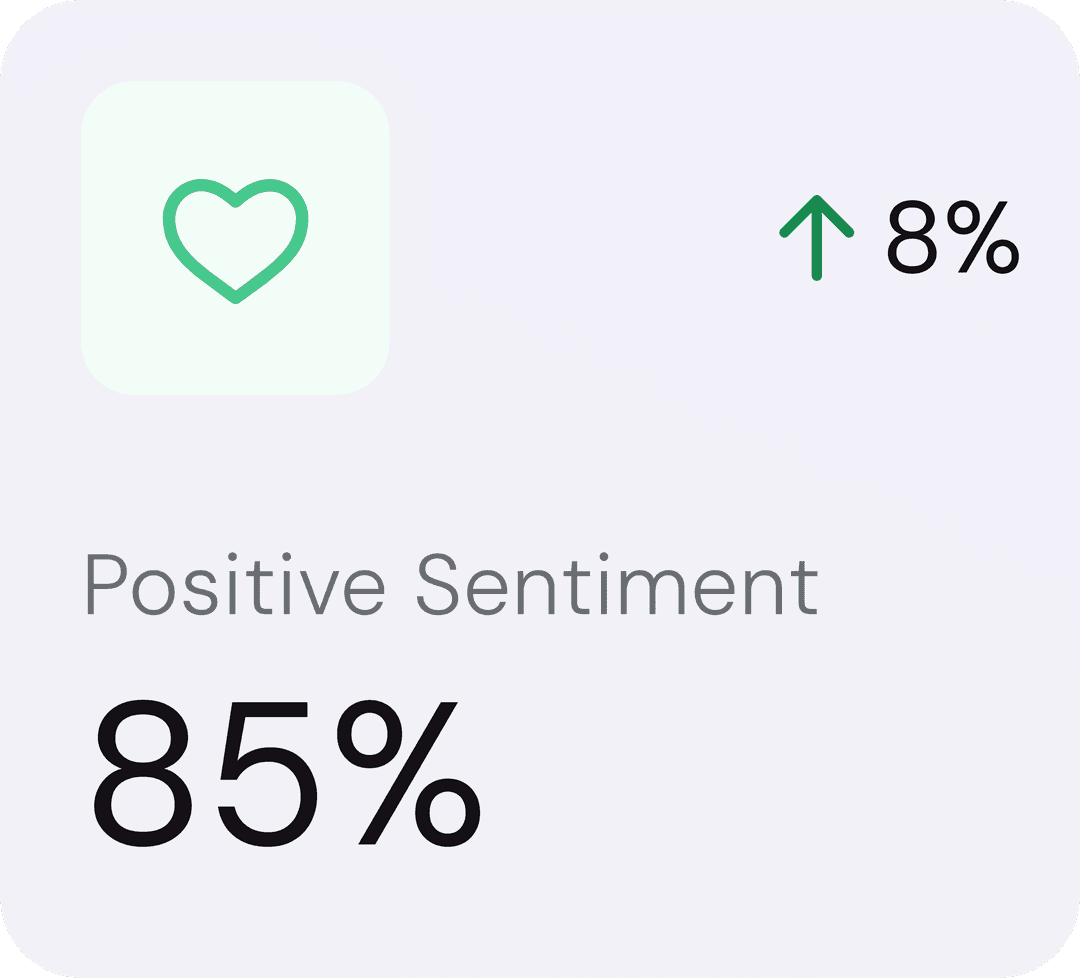
- Sentiment analysis
- Segment-wise perception scores
- Recommended actions
It acts as your brand control center.

Our Resources
Featured Post
Smell the Success in India’s Billion-Dollar Perfume Market
View More- All
- Blogs
- Case Studies
- Articles

Blog
What are Factors Influencing the Landscape of Energy Bars in India
September 11, 2024
8 min read

Blog
How Taxi Revolution of Al Fujairah Transforming the Transport Sector of UAE?
October 17, 2024
7 min read

Case Studies
Understanding Customer Preferences Across the Middle East Through Comprehensive Telecom Surveys
September 18, 2026
6 min read

Articles
The Global Food Delivery Market: How Digital Platforms Are Transforming Dining?
November 12, 2025
5 min read

Explore Other Surveys
Employee Engagement Surveys
Understand how your people feel, what keeps them motivated, and what they need to do their best every day.
Customer Satisfaction Surveys
Hear directly from your customers about what they love and what you could do better.
Dealer’s Voice Surveys
Get honest feedback from your channel partners to build stronger relationships and smoother operations.
Customer Demand, Needs & Pain Point Surveys
Find out what your customers really want next and how you can make their experience better.