Europe Bicycle Market 2025: From a 13% Sales Drop to a € 26.5 billion Recovery Driven by E-Bikes and Policy Push
Ken Research
December 30, 2025 - 8 min read
December 30, 2025
by Ken ResearchIn the last couple of years, the European bicycle industry has seen it all – from pandemic-driven demand euphoria to a cyclical downturn in 2023-24 marked by underutilization, rising costs, oversupply and economic headwinds that cumulatively dampened the industry’s momentum.
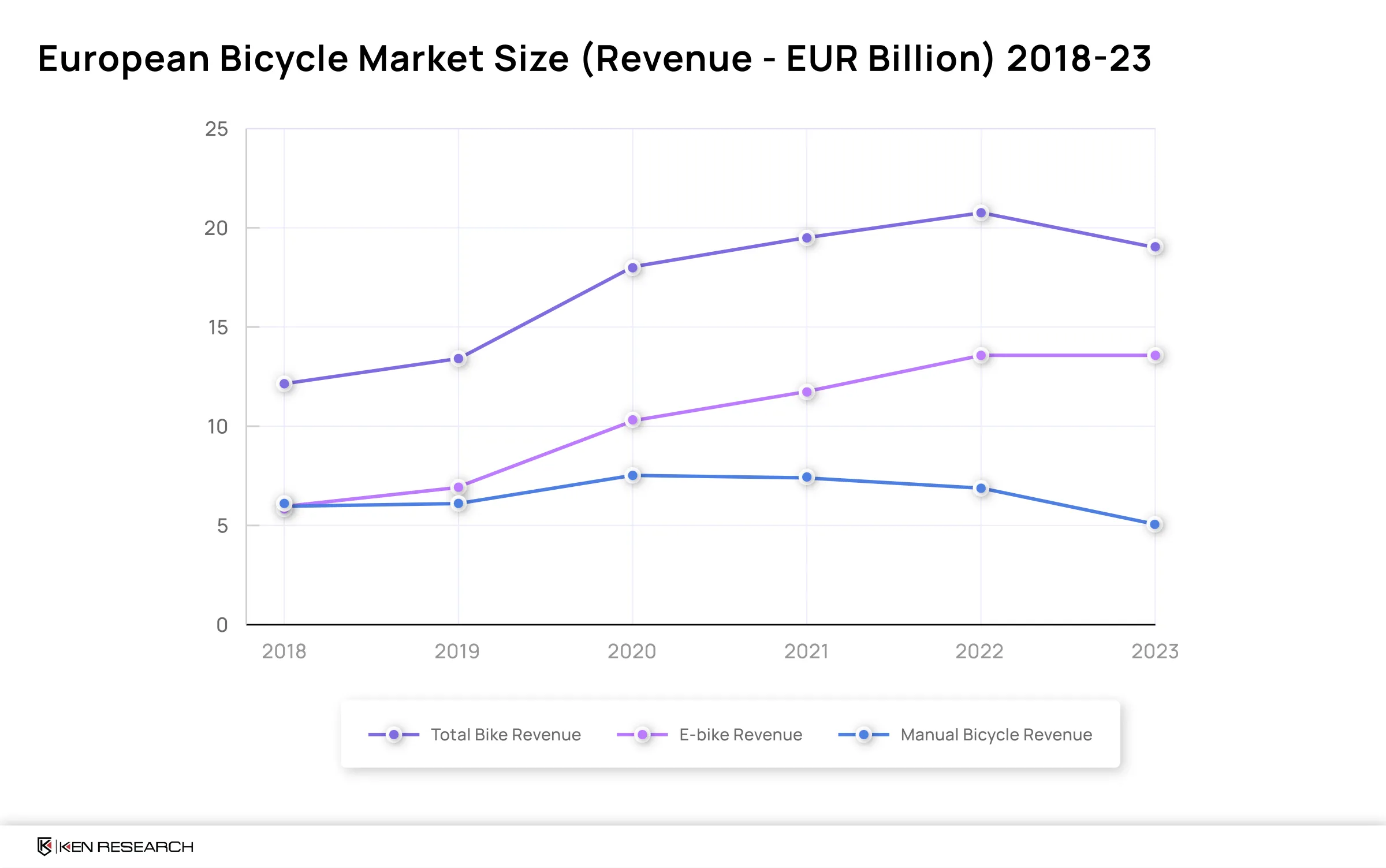
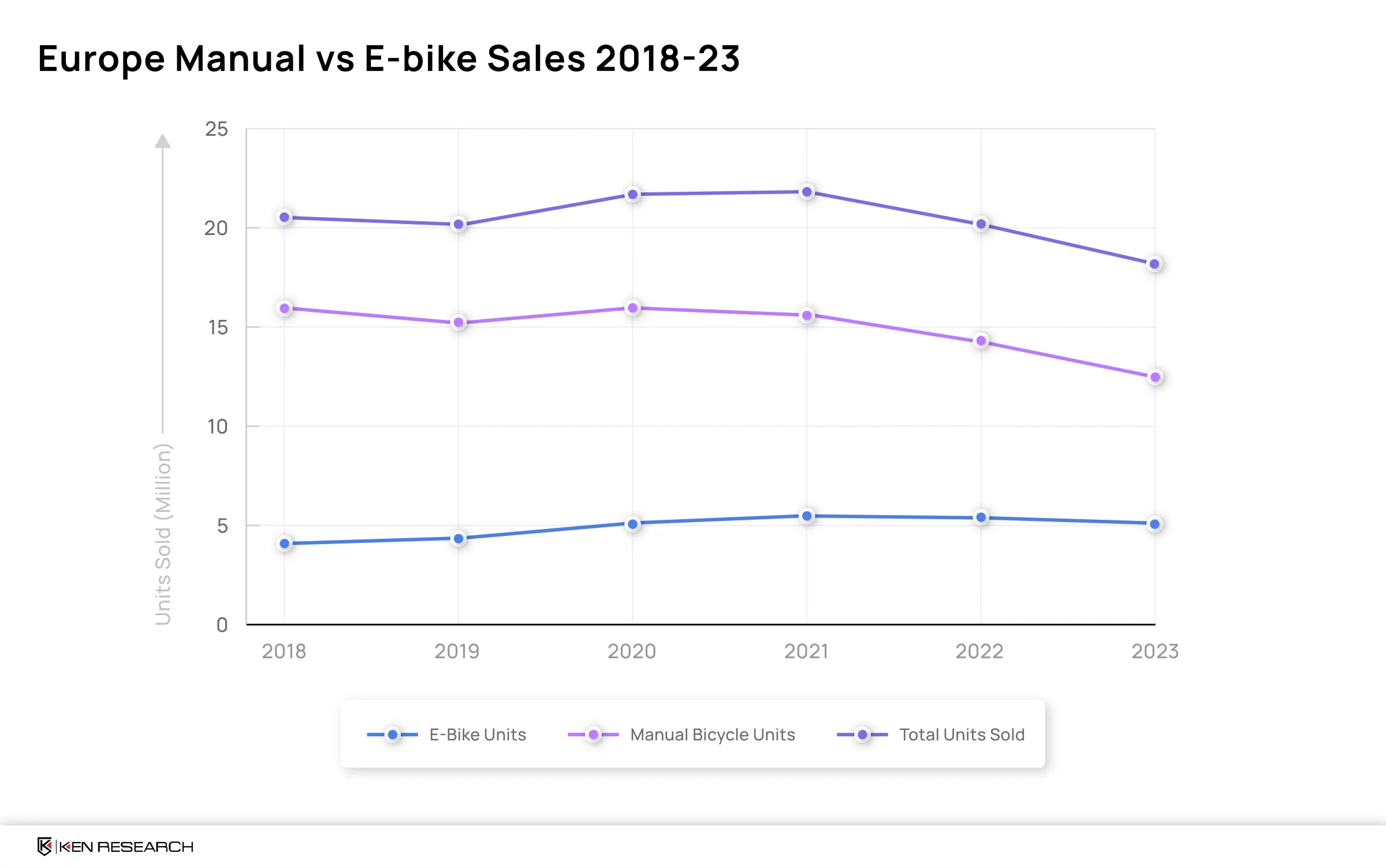
The demand for manual, non-electric bicycles continues to decline or remain flat, posing a threat to manufacturers who hesitate to adapt. Sales decreased by 13.2% in 2023 - Manufacturers and retailers were forced to rely on heavy discounting to release inventory, thereby incurring heavy losses and shrinking their profit margins. As global automotive manufacturers continue to tap into the growing demand for e-bikes, local manufacturers need to recalibrate in order to ensure high chances of survival amid volatility in demand, declining profits, and inventory burdens.
The Aftereffects of the Pandemic
The pandemic was marked with a surge in the demand for bicycles in Europe, causing manufacturers to place large orders, only to be burdened by high inventories as supply chains became functional, causing large inventory fulfilment - all at once, as the pandemic subsided!
EU bicycle exports fell by about 10% in 2023 compared to 2022, while production dropped nearly 24%, reflecting weaker overall market activity. High inflation and rising living costs reduced consumer spending on discretionary items like new bicycles, especially at full price. At the same time, increased use of second-hand bikes and shared mobility options such as bike-sharing further dampened demand for new bicycle sales.
High Inventory Burdens
European bicycle manufacturers, on average, had more than 7 months of inventory at a given time during mid-2024, as per studies. The result - full warehouses, overcapacity and depleted liquidity for many.
Heavy Discounting & Delayed Market Recovery
To bear the burden, manufacturers were forced to sell offerings at discounts that seized profits. PIERER Mobility AG, the Austrian-based mobility holding company, witnessed a 29% dip in revenues in 2024 as compared to the previous year, with a pre-tax loss of over EUR 1.28 billion. The company also announced its withdrawal from the bicycle business during FY25 as part of strategic restructuring.
The market took longer than expected to recover, thereby humbling key players in the European bicycle market. Manufacturers were forced to spend strictly and significantly reduce pre-orders for 2025.
Eurobike International Fair – Not so Fair!
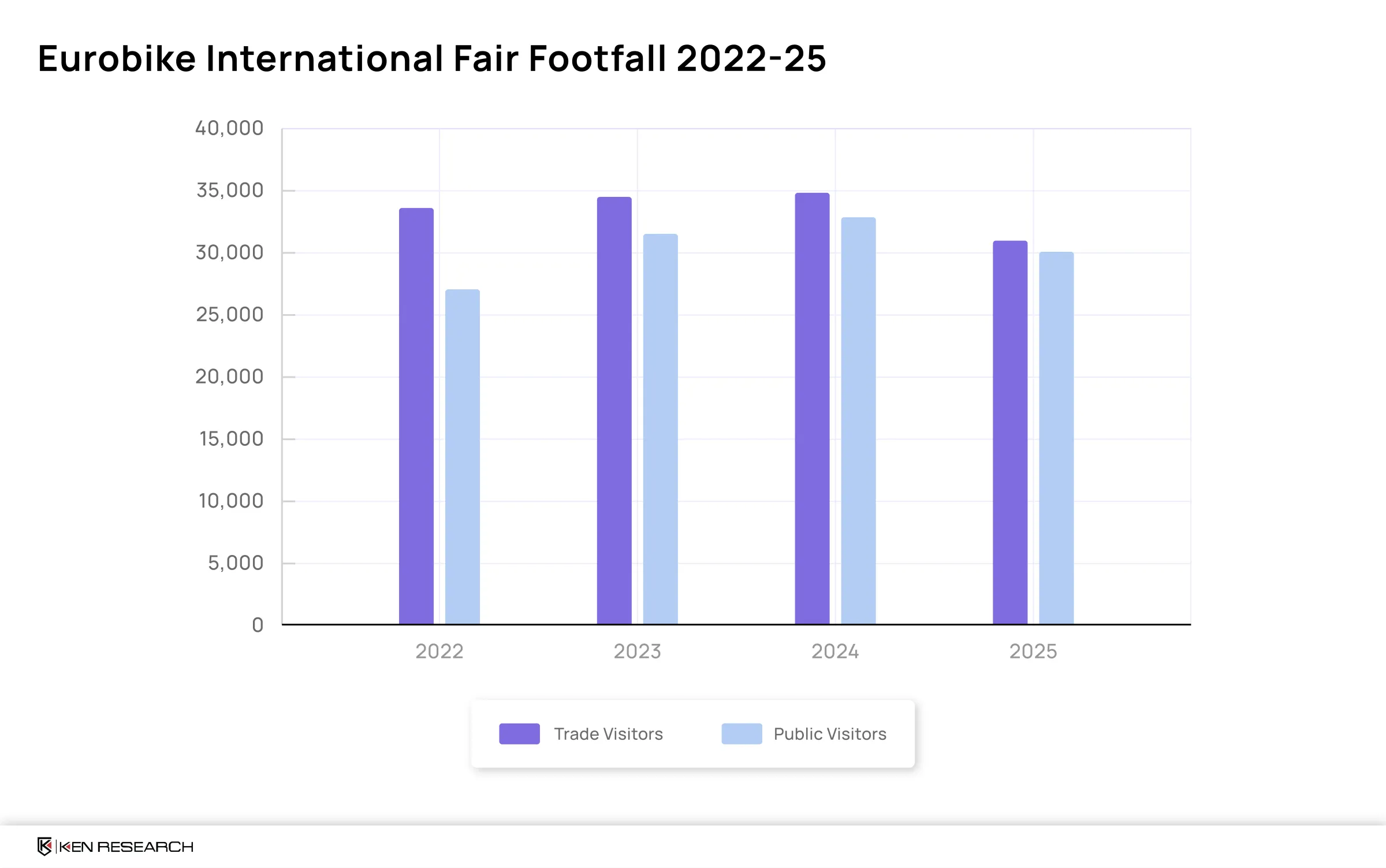
Manufacturers did expect the situation to improve through high demand generation from the 2024 Eurobike fair, but were instantly put off due to negative responses and declining sales despite higher footfall. Immediate on-site sales and near-term wholesale orders remained subdued, particularly for smaller and mid-tier brands. Erratic consumer behaviour, rising costs and decreased confidence were major factors driving this disconnect.
Market conditions in 2024 made survival difficult for many - Scott Sports, a Swiss bicycle manufacturer, required a loan of more than EUR 138 million to secure liquidity and survive amid rising ambiguity in the European market.
On the brighter side, manufacturers are cautiously optimistic about the future, supported by decarbonization efforts, government subsidies, increasing customer value recognition and strong Investment activity driven by growing demand for E-bikes and infrastructure developments across Europe.
How is the Market Recovering in 2025?
The period of 2023-24 was certainly a learning experience for bicycle manufacturers and retailers in Europe. While market challenges stretched to early 2025, conditions did improve - the market regained stability and hit a reset! By the end of 2025, the European bicycle market is estimated at approximately EUR 26.5 billion.
Conditions of manufacturers and retailers improved significantly because of:
- Working capital optimisation
- Reduction of SKUs
- Efficient management of inventory
- Maintenance of cash flow
Easing inflation strengthened consumer confidence, and non-discretionary spending rose gradually. Discounts were reduced significantly, brands regained pricing disciplines, and many could once again reclaim profit margins on the sale of premium and mid-premium bikes.
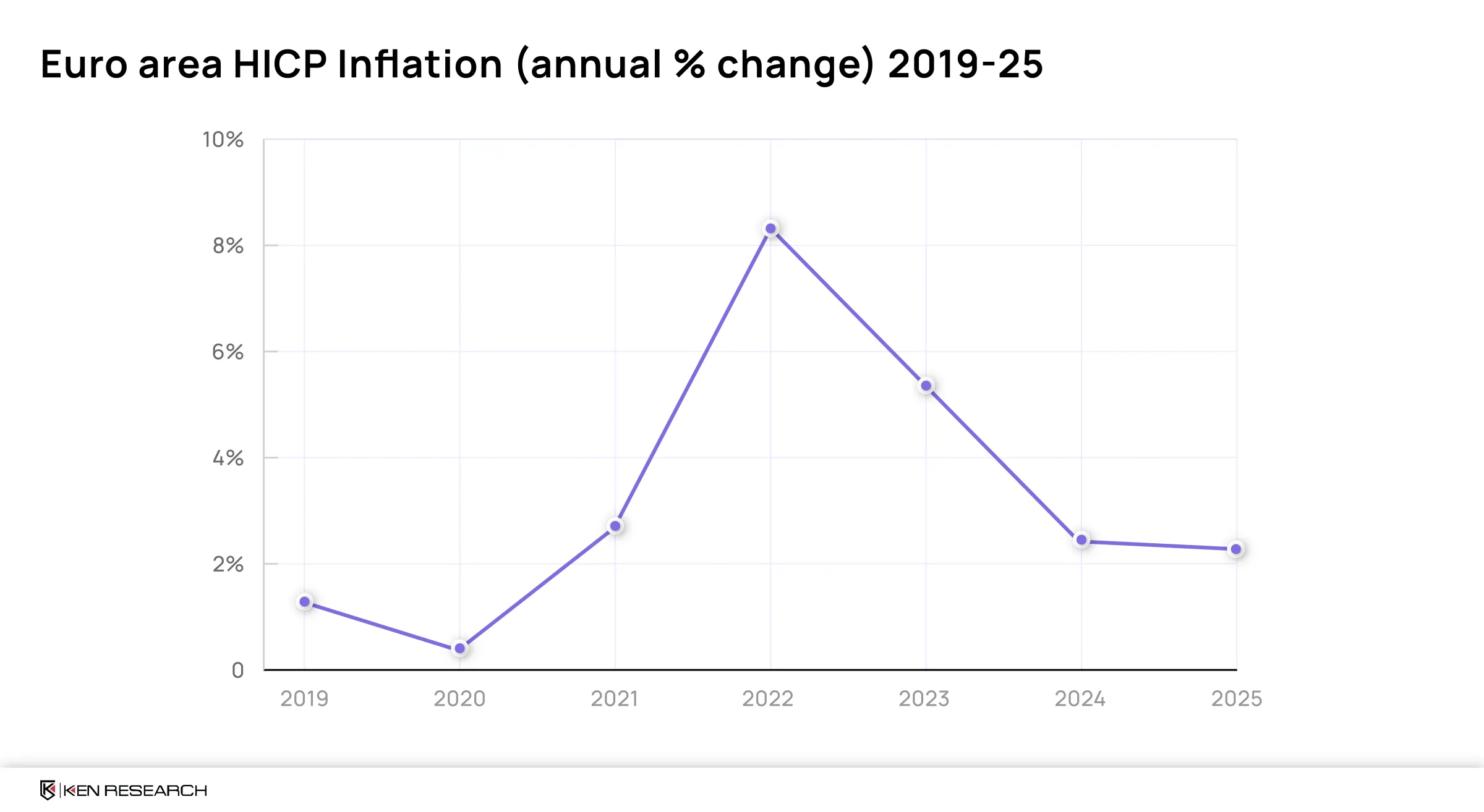
The European bicycle industry is expected to grow to approximately EUR 40 billion by 2030 at a CAGR of over 9% - 2025 was marked by structural demand, rising consumer sentiment, increased E-bike penetration and recovering margins.
Stock Level Normalisation
High inventory burdens eased out as manufacturers spent most of 2024 clearing stocks. As a result, normal ordering was restored in 2025, allowing manufacturers to plan their production efficiently and free themselves from forced discounting.
Consumer Demand Restoration
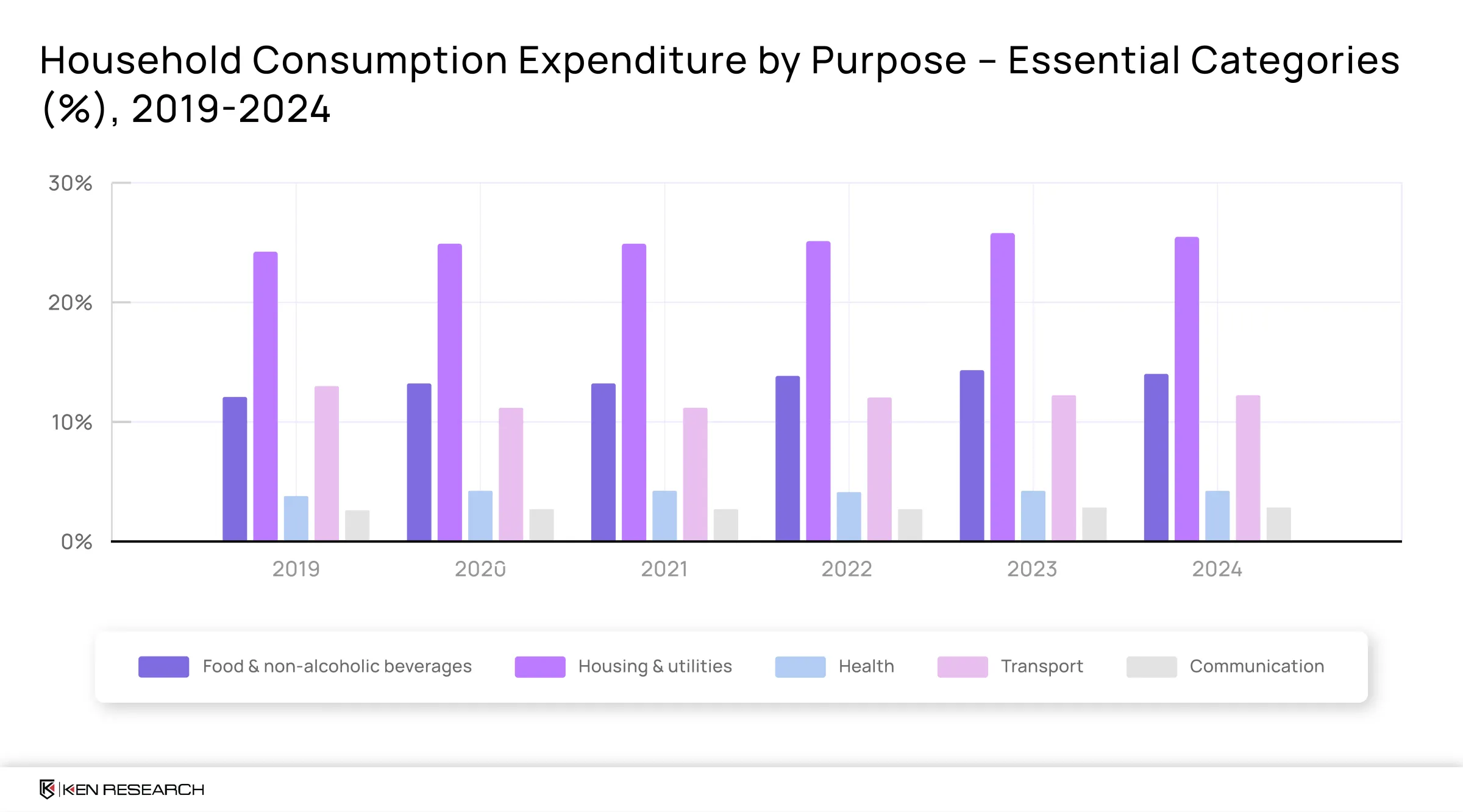
As inflation eased, consumers could once again allocate budgets to non-essential spending. This was also coupled with the rising preference for bicycle usage for everyday commute by the urban European population. This growth in demand is mainly driven by:
- Rising health consciousness
- Inclination towards environmental protection and sustainability
- Rising fuel costs
- Stabilisation of spending on non-discretionary categories to pre-inflation levels
Policy and Infrastructural Advancements
2025 was also marked by the measurable implementation of policies that consistently encouraged bicycle adoption, making cities smart and climate-neutral. The 2023 European Parliament resolution aims to double the number of kilometres cycled by 2030 through infrastructural advancements, subsidies and customisation of urban plans and transport networks to cycling, thereby promoting bike tourism.
A €4.5 billion budget has been allocated for cycling between 2021 and 2027, with €3.2 billion sourced from EU funds, to support the creation or enhancement of over 12,000 km of cycle paths. Furthermore, €1.3 billion from the recovery and resilience facility is dedicated to cycling-related initiatives.
Under the 2025 Annual Union Work Programme for European Standardisation, the EU has advanced standards for cycling networks, efficient traffic management protocols and systematic data collection on cycling usage and infrastructural coverage.
The European Commission has recommended that member states should consider cycling-related measures - cycling infrastructure, subsidies for purchase or lease of bicycles, e-bikes and cargo-bikes to support low-income transport users.
Regional initiatives such as Plan Mueve 2025 in Madrid and the eBici Programme in Galicia offer subsidies lowering the initial cost of bicycles and e-bikes, making them more affordable, particularly for price-conscious individuals. However, these schemes focus primarily on purchase subsidies rather than adopting leasing or subscription models.
Employer-supported leasing, particularly in Germany and Northern Europe, incorporates bicycles into workplace benefit packages, while tax incentives are helping make high-quality bikes more affordable, promoting their use as a common commuting option.
Growing E-Bike Demand
With an increasing share of the total market value, e-bikes are the fastest-growing segment. The e-bike market is expected to reach approximately EUR 30 billion by 2030, growing at a CAGR of around 11% in the next 5 years. The decline in e-bike sales in 2023 was tolerable compared to that of manual bicycles. This robust growth and resilience of the e-bike market can be attributed to:
Rising demand from older consumers: E-bikes are increasingly adopted by ageing populations seeking comfortable, assisted mobility.
Shift toward urban and last-mile travel: City congestion is accelerating e-bike use for daily commuting and short-distance trips.
Policy-led affordability: Government subsidies and tax benefits are making e-bikes more accessible and popular.
Growth of employer leasing models: Corporate bike-leasing programs are reducing upfront costs and boosting adoption.
Opportunities For Businesses – Insights from Ken Research
How can players in the European bicycle market keep their businesses riding amid economic and geopolitical headwinds?
Understanding the customer and its specific needs, building resilient supply chains, and adopting BaaS models can materially improve profitability and growth outcomes for businesses. Get a complete strategy plan customised to your business - Book a call with our Experts.
D2C Expansion
European manufacturers would agree that until recently, bicycles produced were not user-centric and did not cater to the specific needs of the customer. As bicycles gain traction as a daily mobility solution, utility-driven positioning can help brands stand out.
Weak branding and shaken consumer trust worsened conditions for manufacturers amid market instabilities, as seen in 2023-24. New-age consumer demand would be driven by personalisation, tech integration, and value-added after-sales services. As e-bike demand continues to penetrate major regions in Europe, integrating features like high motor efficiency, longer battery range, combined with a strong brand association, can help businesses increase customer retention.
A Pivot Towards E-Bikes
The European bicycle market is all set to transform into an E-bike mobility market - e-bikes will account for nearly all positive growth in the European bicycle industry.
E-bike penetration is the Highest in Northern & Western Europe, low but rising in Southern & Eastern Europe. Germany accounts for the largest e-bike market in Europe. The Netherlands, France, Denmark, Spain and Italy etc., are high-growth regions with rising e-bike penetration. There is growing demand from older and female consumers and an increasing preference for safety, tech integration, such as GPS, and theft protection.
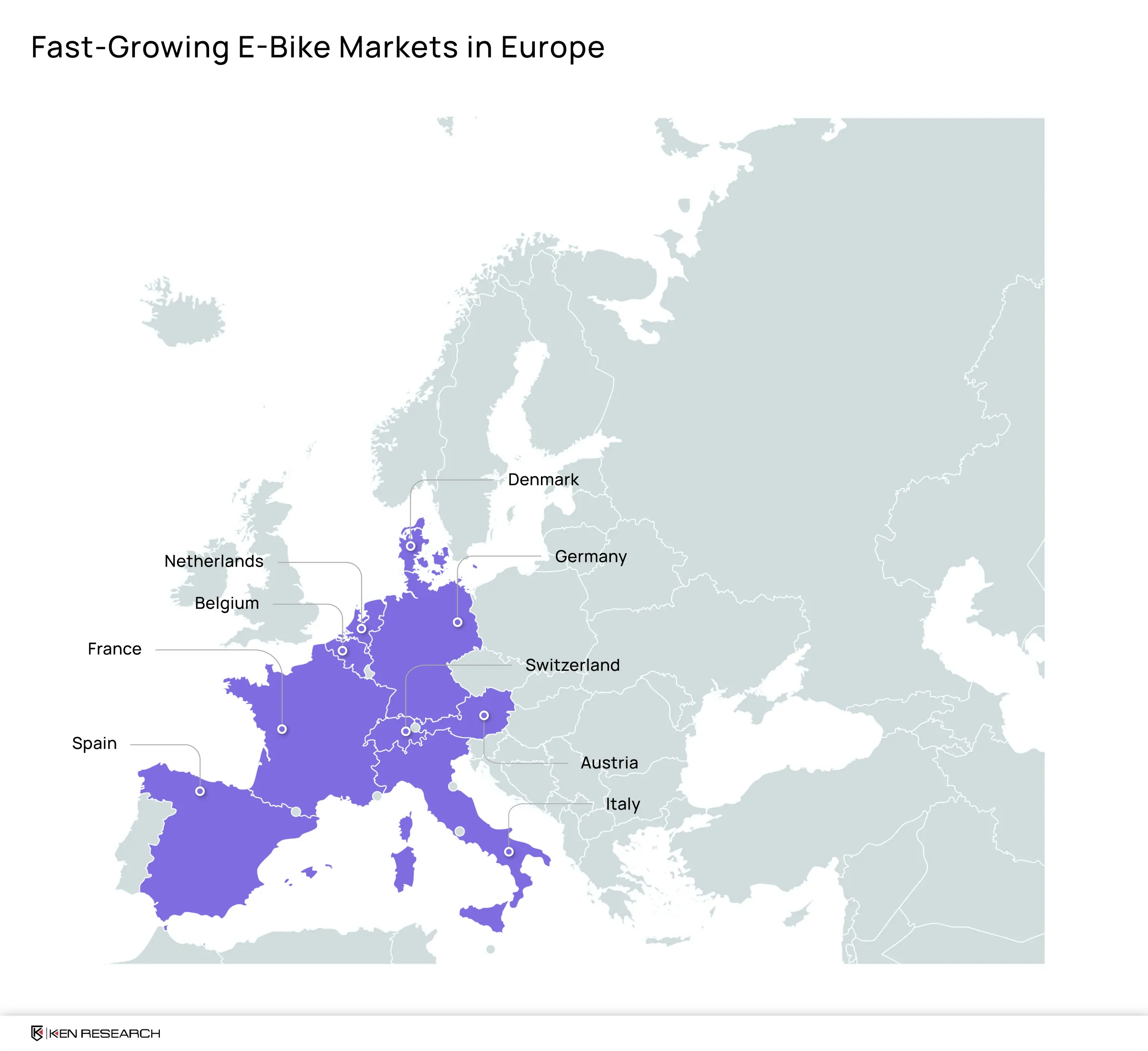
In established bicycle markets such as Germany, future growth is expected to come mainly from replacement and upgrade demand, as consumers shift to more efficient e-bikes. Corporate and government fleet purchases are also likely to support market growth over the coming years.
At the same time, cargo e-bikes are increasingly being used for delivery and logistics, particularly by retailers, courier companies, and postal services looking to reduce costs, emissions, and congestion in urban areas. While sales volumes are lower than standard commuter e-bikes, higher unit prices and bulk purchases mean these models contribute a larger share of overall revenue.
Get a detailed outlook of the European e-bike Market – download Ken Research’s free sample report.
Exploring Bike-as-a-Service Model
Although inflation has eased, the European market remains highly price-sensitive – customers struggle with the high upfront costs of buying bicycles and e-bikes, while still wishing to integrate them into their daily lifestyle. According to Ken Research, the BaaS model puts an end to this dilemma – effectively spreading costs for the consumer and creating recurring revenue for the provider.
The global e-bike subscription platform market was valued at around EUR 2.30 billion in 2024 and is projected to rise to EUR 8.1 billion by 2032, with a CAGR of approximately 17.5% through 2032. Bike-as-a-Service is shifting the bicycle market away from one-time product sales towards a service-driven mobility model. This approach encourages faster upgrades, supports demand for higher-quality standardised bikes, and delivers steady, recurring revenue for both operators and manufacturers.
Conclusion
The European bicycle market moved past the inventory-led slowdown of 2023–2024, with demand largely normalising by the end of 2025. Cooling inflation and improved purchasing power supported a rebound in urban and commuter bicycle sales. E-bikes continue to drive market value growth, even as unit growth moderated from earlier peaks. Public investment in cycling infrastructure and climate-led mobility policies continues to support baseline demand. In parallel, Bike-as-a-Service and subscription models are expanding, particularly among corporate and institutional buyers.
Related tags
Automotive, Transportation and Warehousing
Get started
We've helped companies around the world future-proof
their businesses - and we can do the same for you.