GCC Healthcare Market Outlook 2025: Inside the USD 100B Shift Reshaping Regional Care Models
Ken Research
December 18, 2025 - 5 min read

December 18, 2025
by Ken ResearchThe GCC healthcare market is entering its most consequential shift in decades. Healthcare expenditure reached USD 104.1 billion in 2022 and continues to rise as countries scale specialized care, expand insurance coverage, and build digitally enabled health systems.
According to Ken Research, 2025 represents the first year where rising utilization, demographic evolution, and system reform intersect, utilizing a new operating environment for healthcare delivery across the region.
Rising Utilisation Is Reshaping What GCC Health Systems Must Deliver Next
Healthcare activity across the GCC is deepening as countries broaden service offerings and invest in more complex care pathways. Saudi Arabia remains the region’s anchor market, but 2025 budget priorities across the GCC reveal a clear shift: governments are increasing allocations for tertiary care, emergency capacity, oncology, and advanced diagnostics. Saudi Arabia’s 10% uplift in 2025 health and social development spending reinforces this transition toward capability-led systems.
Utilization is growing not just in volume but in the variety of services consumed, ranging from cardiovascular interventions to preventive screenings and day-surgery procedures. The UAE is seeing rapid maturation of its multispecialty ecosystem, while Oman and Qatar are scaling early-detection programs that feed higher specialist throughput.
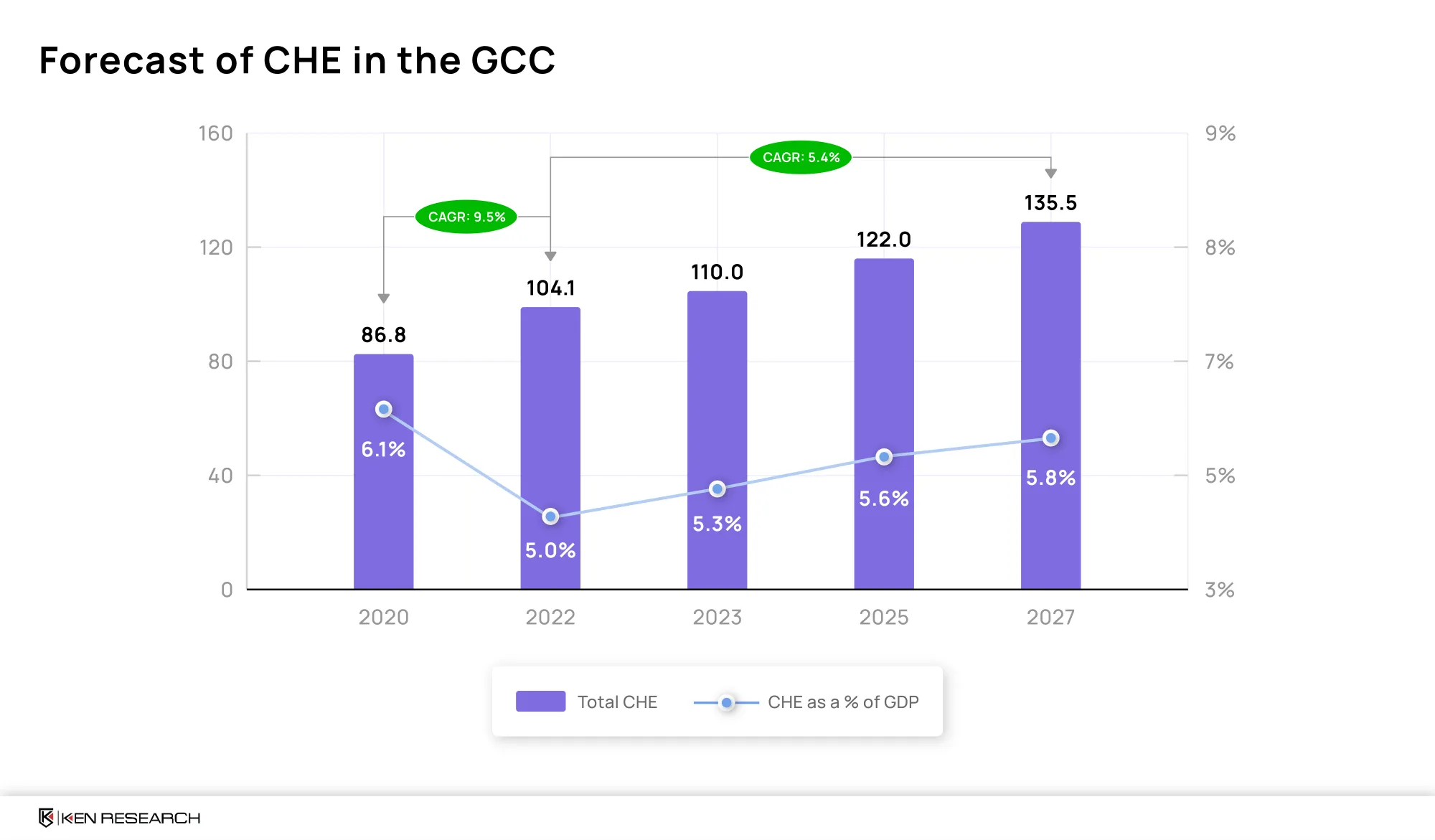
Depicts a steady upward trajectory in regional health spending, highlighting sustained structural demand. As utilisation expands, the primary catalyst behind this shift is the rapid evolution of mandatory coverage across the region.
Coverage Expansion Is Accelerating Demand in Ways the System Was Not Built For
Mandatory Insurance Reforms Are Rapidly Expanding the Insured Population
Mandatory insurance reforms continue to reshape demand across all GCC markets. Between late 2024 and early 2025, the UAE widened employer-linked insurance categories, bringing a substantial number of workers and dependents under formal coverage. Saudi Arabia rolled out enhanced digital compliance and monitoring systems in 2025, increasing access and reducing gaps in outpatient and diagnostic utilisation.
Care Patterns Are Shifting Toward Preventive, Chronic, and Episodic Services
As coverage widens, utilisation patterns are changing materially. Preventive visits, chronic-care follow-ups, and condition-management episodes are growing faster than acute-care admissions. Visitor insurance frameworks, especially in hubs such as Dubai, are also driving higher demand for episodic and urgent care, adding new layers of volume to the system.
Demand Growth Is Outpacing Clinical Capacity Expansion
While utilisation continues to rise across income groups and previously underserved segments, workforce and infrastructure growth remain constrained. This imbalance is placing unprecedented pressure on clinical capacity, exposing structural gaps in a healthcare system not designed to absorb sustained, broad-based demand expansion.
Workforce Constraints Are Now the Defining Pressure Point Across the Region
The GCC faces sustained workforce shortages, particularly in specialities that require advanced training. Bahrain’s ratios of 2.3 physicians per 1,000 people and 3.6 nurses per 1,000 people illustrate the region’s broader manpower constraints. Demand for critical specialities, oncology, cardiology, orthopaedics, and rehabilitation, continues to outpace recruitment cycles.
Multiple 2025 initiatives aim to reshape the talent pipeline:
- Saudi Arabia’s National Healthcare Workforce Localisation Program (2024–2027) is reducing dependency on expatriate clinicians.
- The UAE’s 2025 expansion of Golden Visa eligibility for doctors and specialised clinicians is strengthening retention.
- Qatar is scaling digital nursing and telehealth-support roles to extend chronic-care capacity.
Yet, even with these reforms, labour availability remains the single largest operational bottleneck. Providers are increasingly deploying AI-assisted triage, automated diagnostics, and hybrid virtual-care models to maintain service throughput.
As clinical labour remains constrained, GCC governments are rapidly accelerating healthcare infrastructure development to keep pace with rising complexity.
The region is experiencing one of the world’s most intensive healthcare buildout cycles. In the UAE alone, over 700 healthcare projects valued at USD60.9 billion are under development—spanning oncology centres, maternity hospitals, surgical hubs, long-term care facilities, and rehabilitation units.
Healthcare Infrastructure Scale-Up Is the GCC’s Primary Response to Service Pressure
Saudi Arabia’s national transformation agenda continues to expand specialised and tertiary-care capacity at scale, while Qatar is upgrading its hospital networks as part of its 2025–2030 health strategy frameworks.
Infrastructure priorities in 2025 focus on:
- Higher-acuity treatment capabilities
- Multi-specialty hospital configurations
- Ambulatory and day-surgery ecosystems
- Diagnostic and imaging expansion
- Rehabilitation and long-term care centres
This expanded physical footprint is essential—but infrastructure alone cannot resolve system-wide constraints. The next phase of transformation depends on the depth of digital integration. Digital health is becoming central to enabling scale, continuity, and efficiency across GCC systems.
Digital Health Is Emerging as the Only Scalable Solution to System Inefficiencies
Digital transformation is accelerating across the GCC as countries incorporate data-driven tools into care delivery and system management. In 2025, Saudi Arabia is deploying a unified Digital Health Exchange to interconnect hospitals, clinics, insurers, and pharmacies. The UAE expanded AI-driven radiology workflows across government hospitals after pilots showed up to 40% reductions in reporting times, significantly improving diagnostic throughput. Qatar strengthened its telemedicine frameworks in 2025 to support elderly care and chronic-disease management.
Key enablers include:
- Unified EMRs for cross-facility continuity
- AI-supported imaging, triage, and decision systems
- Remote monitoring for long-term care and post-acute care
- Automated claims and digital insurance integration
As population ageing accelerates and chronic disease prevalence rises, digital platforms are becoming essential for long-term system resilience.
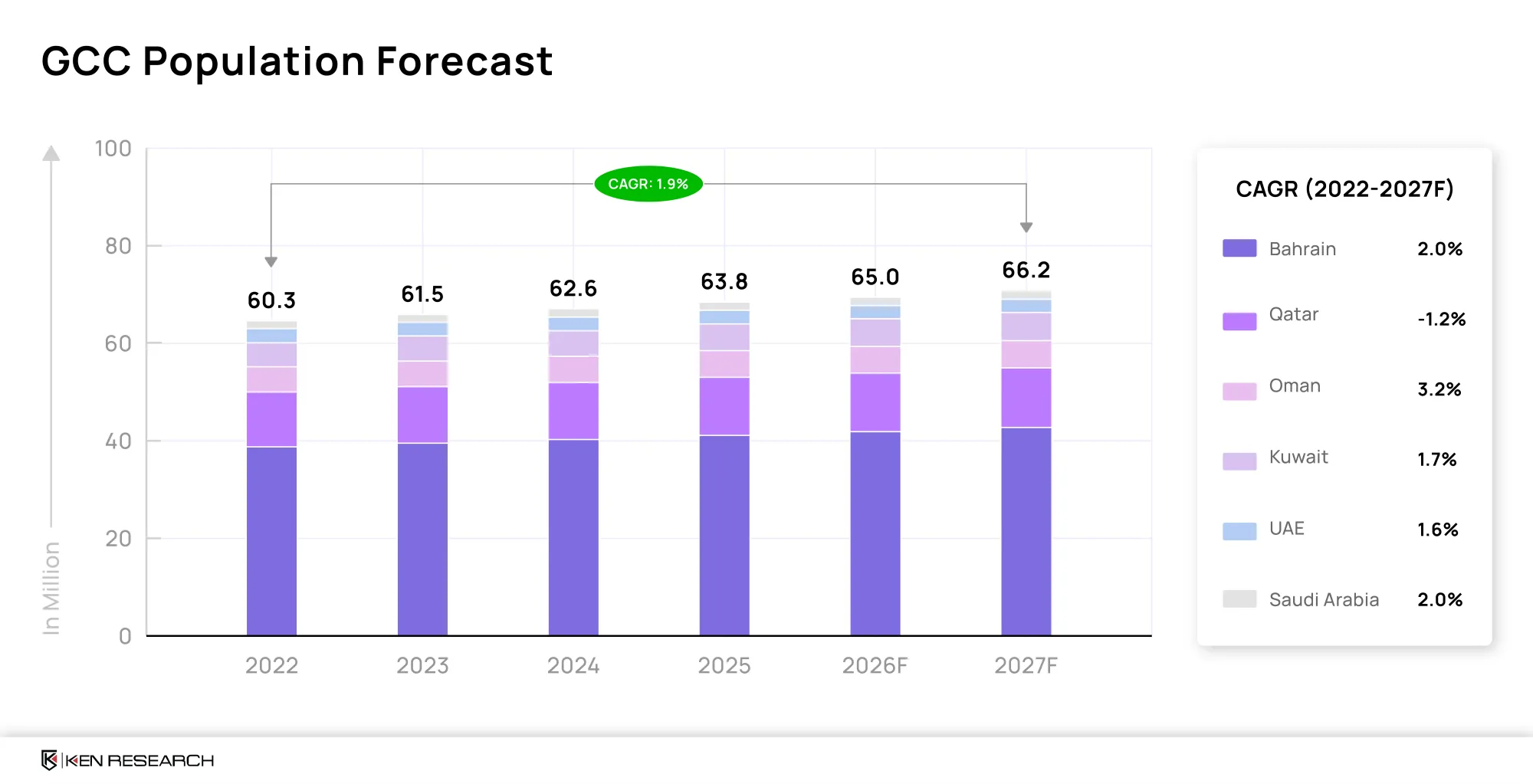
Ken Insight: Why 2025 Resets the GCC Healthcare Track?
As per Ken Research, 2025 is the defining year in which rising utilization, coverage reform, clinical workforce shortages, infrastructure expansion, and digital integration converge—reshaping how healthcare is delivered and scaled across the region.
This structural shift is characterized by:
- A move from volume-based expansion to capability-driven health systems
- The rise of hybrid-care models enabled by digital and AI-led workflows
- Greater alignment between national health strategies and long-term demographic needs
- Stronger emphasis on speciality care and multi-site delivery networks
- Increasing reliance on data platforms to manage population health at scale
These converging forces make 2025 not an incremental step but the foundational year in the GCC’s transition toward a more advanced, integrated, and resilient healthcare ecosystem.
Related tags
Healthcare
Get started
We've helped companies around the world future-proof
their businesses - and we can do the same for you.