How India’s Red Chillies Can Spice Up a INR 23,000 Cr Market by 2030
Ken Research
October 27, 2025 - 4 min read
October 27, 2025
by Rebecca MaryIndia’s red chilli sector sits at a critical inflection point—commanding the largest global footprint in terms of cultivation and output yet facing structural inefficiencies that hinder full value realization. With over 750,000 hectares under cultivation and nearly 38% share in global production, the sector is poised for continued growth, projected to reach close to INR 23,000 Cr by FY30. But rising domestic demand, fragmented export ecosystems, and climate-linked disruptions are reshaping the risk-reward equation.
Behind the impressive volume lies a complex reality: inconsistent quality, volatile pricing, and under-investment in infrastructure continue to cap margins. The opportunity is clear—modernising procurement models, expanding branded processing, and strengthening export linkages can move the sector beyond its current limitations.
This piece explores the deep structural shifts unfolding across the red chilli value chain. It decodes emerging trade patterns, evaluates gaps in value addition, and outlines the strategic imperatives needed to transform India’s chilli dominance into long-term competitive advantage. While India remains the world’s chilli capital by acreage, its journey from bulk supplier to branded exporter is only halfway complete.
Breaking the Bulk Trap: Branding, Traceability, and Value Chain Reinvention
India’s red chilli belt is geographically robust, dominated by Andhra Pradesh, Telangana, Karnataka, Tamil Nadu, and Maharashtra. At the epicenter lies Guntur, which alone drives over 30% of national production and anchors the country’s chilli trade.
Yet, the sector remains stuck in a bulk-supply loop. More than 80% of output is sold without processing or brand identity, resulting in low price realization and missed opportunities in high-margin segments like extracts, oils, and retail packs.
Unlocking growth now hinges on three strategic pivots:
- Branding & Traceability: GI-tagged cultivars—Byadgi (Karnataka), Guntur Sannam (AP), Kashmiri (J&K)—hold latent brand equity. Scaling traceable, graded supply with cold chains and quality testing infrastructure is essential.
- FPO Integration & Farmer Linkages: Formal procurement systems cover barely 12% of chilli farmers. Strengthening farmer collectives and digital auction platforms can widen access and reduce dependency on middlemen.
- Value-Added Exports: Oleoresins and spice oils are gaining global traction. India’s exports in this space are growing rapidly, fuelled by demand for natural colorants and bio actives across food, pharma, and cosmetics.
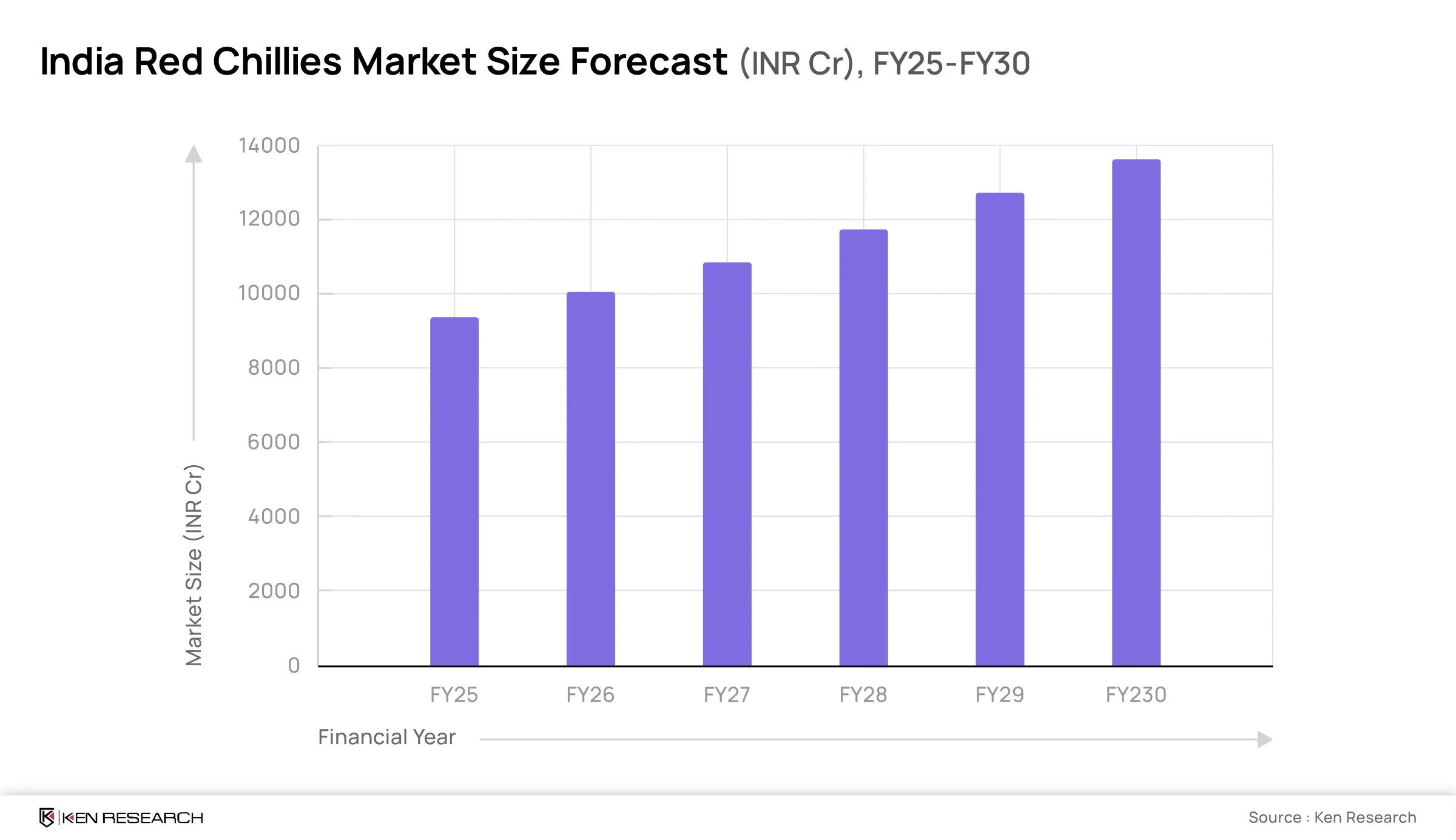
Export Advantage at Risk Need for Market Diversification
India is the world’s largest exporter of red chillies, accounting for over 45% of global shipments. Top destinations include China, Sri Lanka, Vietnam, the USA, and Bangladesh.
However, the over-reliance on a few buyers and dried chilli formats presents risks:
- China remains India’s largest red chilli export destination, making the trade flow highly sensitive to diplomatic shifts and regulatory friction.
- While most exports are still dominated by unprocessed whole chillies, value-added categories such as crushed flakes, sauces, and extracts offer untapped potential and remain significantly under-leveraged.
Key growth levers include:
- Expand market presence across the Middle East, ASEAN, and North African regions to diversify export destinations.
- Leverage contract manufacturing for global hot sauce and condiment brands seeking sourcing partners in India.
- Build branding alliances with Indian restaurant chains operating internationally to increase global visibility of Indian chilli varieties.
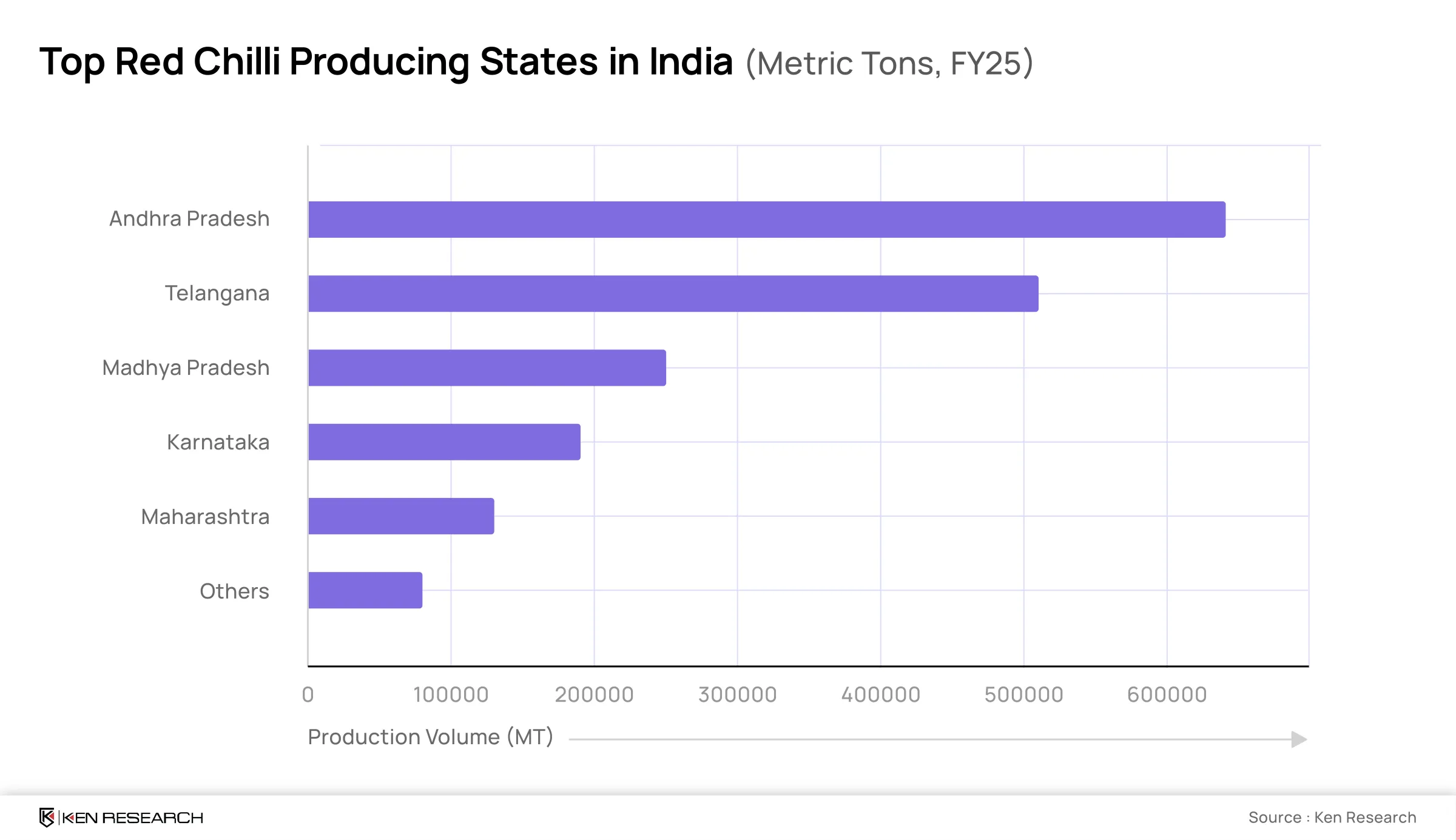
Input Volatility and Climate Threats Demand Technology Adoption
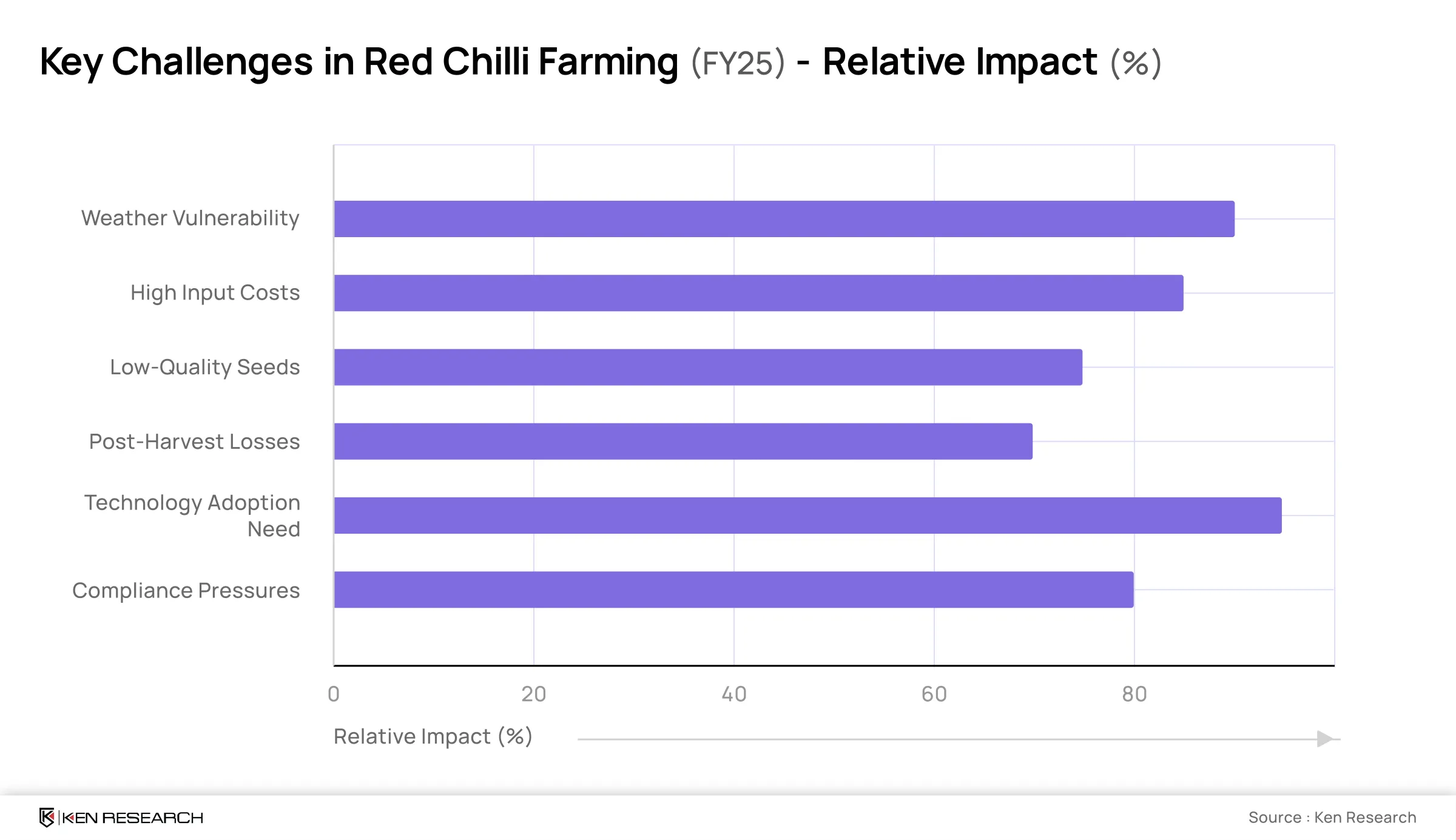
Red chilli farming is deeply vulnerable to weather anomalies. Excessive rainfall or drought reduces pungency levels and triggers fungal infections, such as anthracnose and wilt, which slash yields.
Cost structure insights:
- Seed and pesticide costs remain a major input burden, with many farmers dependent on low-quality hybrid varieties. This impacts yield consistency, pest resistance, and overall profitability.
- Post-harvest losses: Up to 20% due to poor drying and inadequate warehousing.
As per Ken Research analysis, the following strategic measures are recommended to enhance productivity and export-readiness in the chilli value chain:
- Adopt AI-enabled climate advisory and traceability platforms to optimize input cycles and improve farm-level decision-making.
- Promote integrated pest management (IPM) and biological solutions to reduce chemical reliance and meet evolving global compliance norms.
- Invest in solar-powered chilli dryers and warehouse digitization to minimize post-harvest losses and extend product shelf life effectively.
CONCLUSION: From Commodity to Competitive Edge – Reimagining India’s Red Chilli Sector
India’s red chilli sector has long commanded global volume leadership, but today it stands at a critical inflection point. While the foundations—cultivation strength, export legacy, and regional specializations—remain strong, the future will belong to those who modernize swiftly and decisively.
The market’s next leap will not be volume-driven, but value-driven—anchored in traceability, technology adoption, and brand differentiation. Integrated farm-to-fork models digitized post-harvest infrastructure, and premium positioning of GI-tagged varieties must define the next phase of growth. The next generation of India’s spice leadership will be written not in tonnes—but in trust, traceability, and technology.
As per Ken Research analysis, the red chilli sector has the potential to become a blueprint for modern Indian agribusiness. But this requires bold investment in Agri-Tech, global market alignment, and long-term ecosystem building. The way forward is clear: transform red chillies from a bulk commodity into a strategic, branded export engine—and in doing so, secure India’s position in the next generation of global spice leadership.
Related tags
General Food
Get started
We've helped companies around the world future-proof
their businesses - and we can do the same for you.