Southeast Asia E-Commerce 2025: Multi-Channel Demand Up 60–120% Reshapes Logistics
Ken Research
December 2, 2025 - 6 min read

December 2, 2025
by Khushi RastogiSoutheast Asia’s e-commerce sector is entering a more demanding growth phase, supported by strong digital adoption and rising consumer expectations. Recent regional digital economy assessments value Southeast Asia’s online economy at USD 218 billion in 2023, with e-commerce contributing USD 139 billion and projected to reach USD 186 billion by 2025.
The region now hosts over 460 million internet users, and more than 90% access the internet primarily through mobile, according to ASEAN ICT indicators. This mobile-first environment is accelerating multi-channel behaviors as consumers shift fluidly between marketplaces, social platforms, and brand-owned sites.
Yet digital acceleration is outpacing the region’s logistics readiness. World Bank Logistics Performance Index data highlights 20–40% performance gaps between major capitals and secondary provinces across Indonesia, Vietnam, Thailand, and the Philippines. As same-day and next-day delivery expectations spread beyond Singapore and Malaysia, logistics providers must build denser, more agile fulfillment networks to support increasingly complex e-commerce flows.
A Multi-Channel E-Commerce Era Creates New Demand Patterns
Southeast Asia’s e-commerce landscape is evolving rapidly, and as a result, logistics networks must now operate with far greater flexibility.
Recent regional trends from 2019 to 2024 show that mobile-driven browsing has expanded sharply, while at the same time, buyers increasingly navigate multiple online touchpoints before completing a purchase. This shift toward cross-platform behavior is reshaping demand across the region.
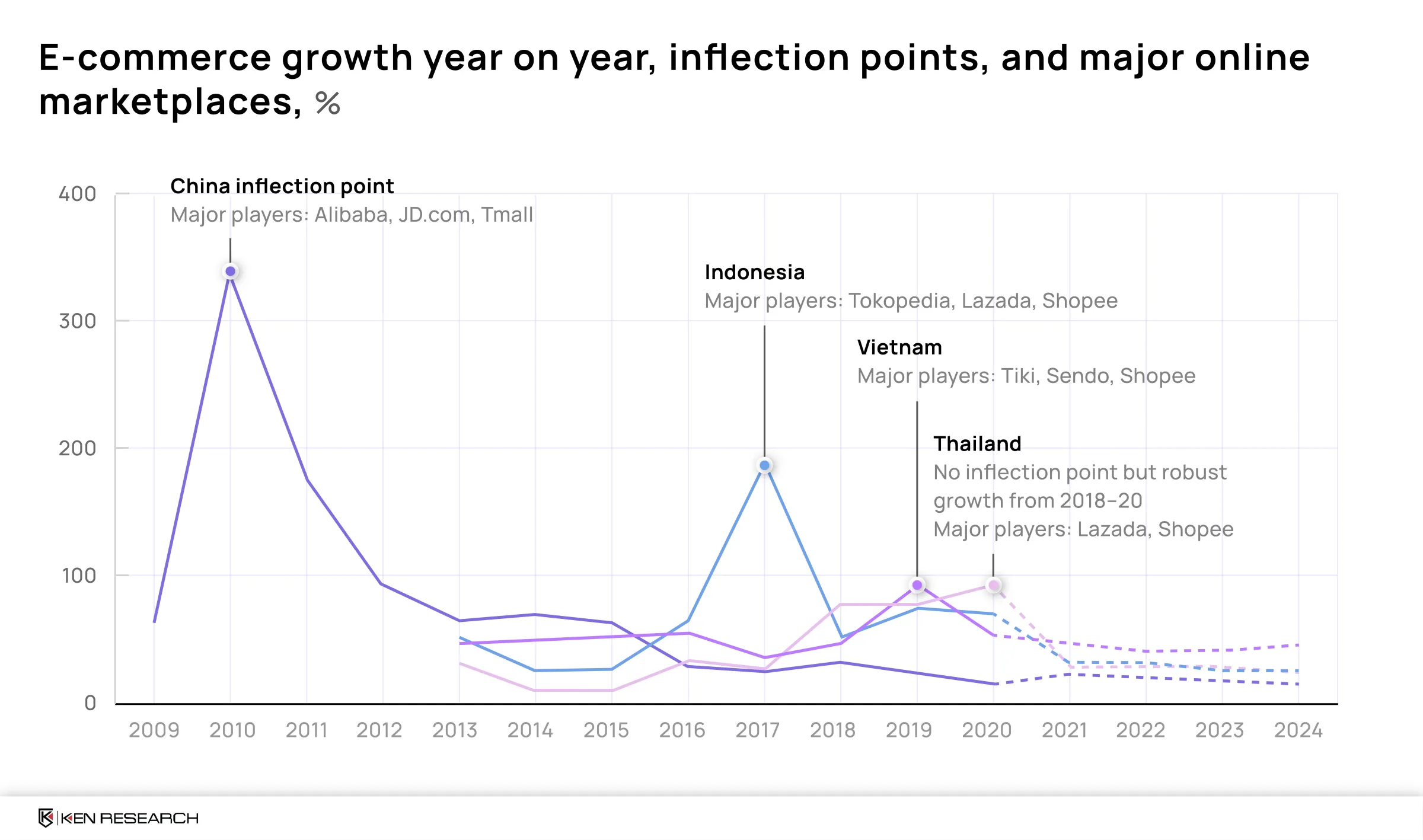
Shoppers now blend marketplaces, social commerce, brand.com platforms, and offline-to-online interactions within a single journey, thereby increasing complexity for logistics operators.
- Shoppers now blend marketplaces, social commerce, brand.com platforms, and offline-to-online interactions within a single journey, thereby increasing complexity for logistics operators.
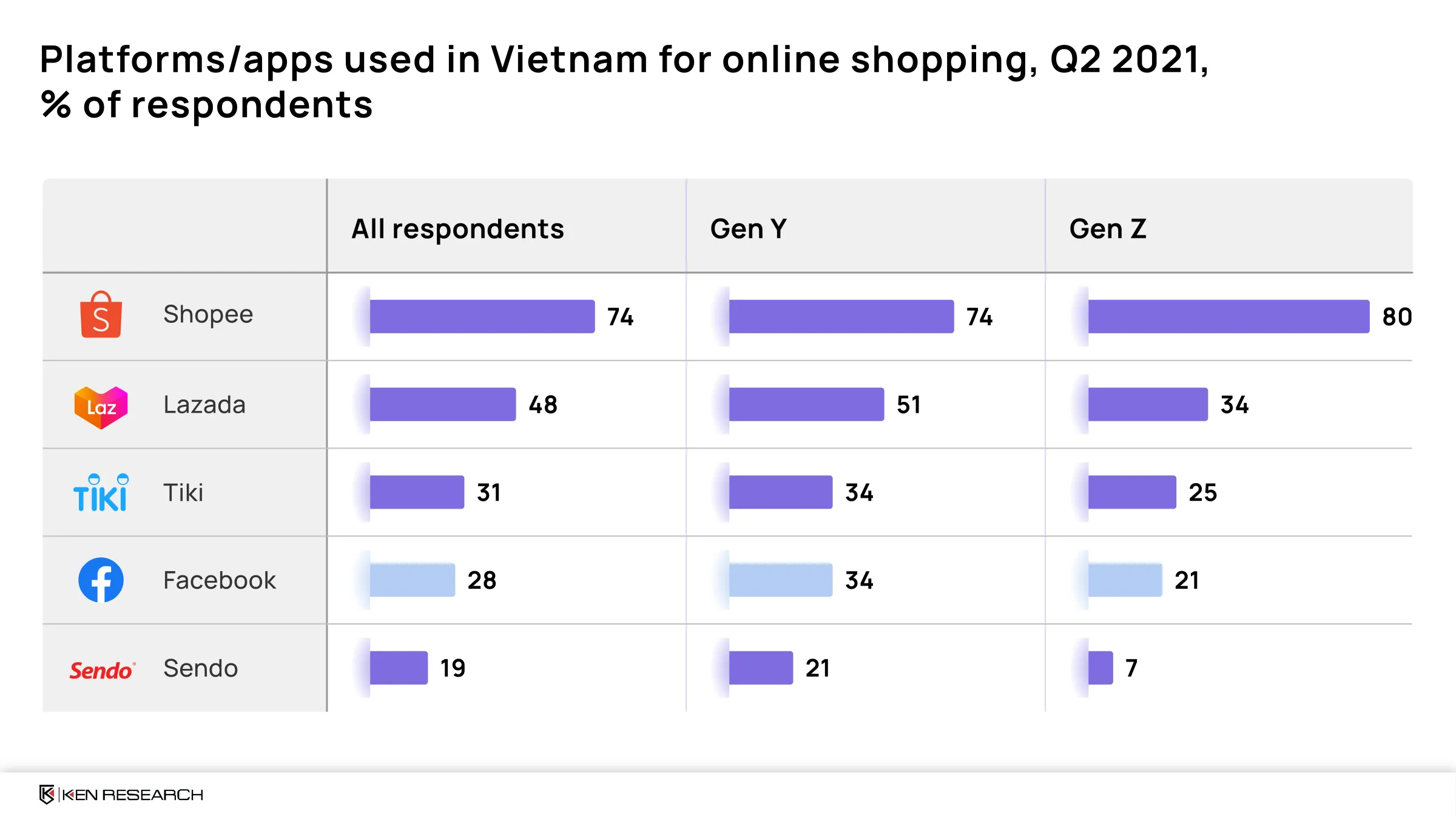
- Delivery expectations have accelerated; same-day and next-day speeds are now standard in Singapore, Malaysia, and Thailand, and increasingly, these expectations are spreading across Vietnam, Indonesia, and the Philippines.
- Meanwhile, the rapid rise of bulky categories such as appliances and furniture is exerting pressure on networks originally designed for small parcels.
Taken together, these shifts mark a turning point where consumer behavior is no longer predictable, setting the stage for greater volatility across fulfillment operations.
Social Commerce Acceleration Adds Volatility to Fulfillment Networks
As digital purchasing diversifies further, livestreaming and creator-led buying are fundamentally altering how orders flow across fulfillment networks.
Regional comparisons show that social commerce GMV is expanding unevenly, generating erratic, event-driven surges that differ across markets and categories. This shift has become a major operational variable for logistics players.
- Social commerce GMV grew 60–120% in markets like Vietnam and Indonesia. These category-level variations highlight why social-commerce-driven orders now move differently across channels, product types, and peak-event times.
- Livestream events compress peak ordering windows, driving thousands of orders within minutes. Warehouses built for steady marketplace flows struggle with these spikes, especially when lacking flexible labor, dynamic slotting, or real-time stock synchronization.
- As consumers split purchases across marketplaces, social platforms, and brand.com stores, sellers face rising unpredictability. Demand forecasting becomes more complex, pushing logistics players to support multi-channel visibility and operational agility.
Consequently, social-led demand is forcing sellers and logistics providers to rethink network responsiveness and real-time adaptability.
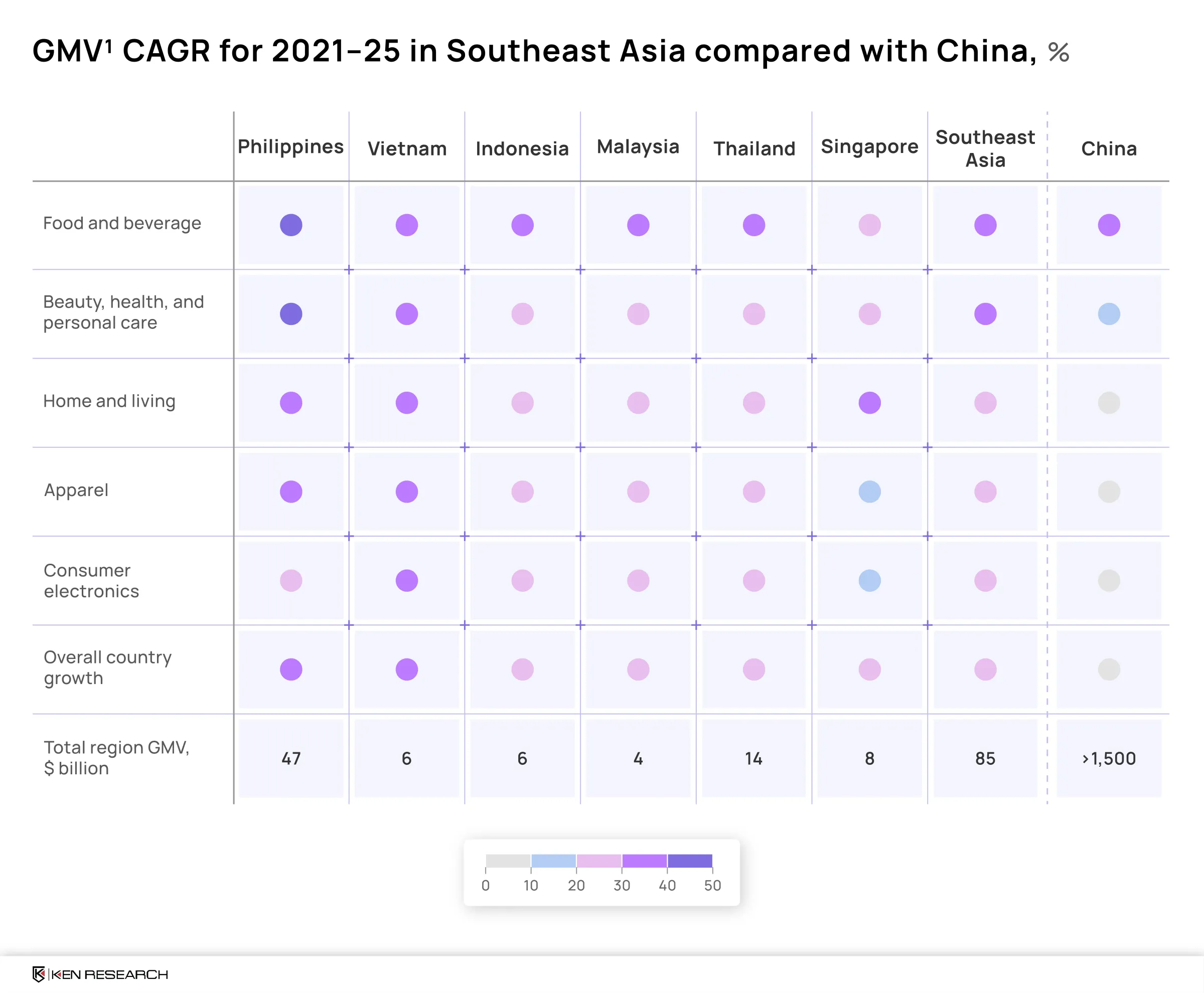
Marketplaces Lose Fulfillment Dominance as Sellers Go Multi-Channel
Merchants are moving from platform dependency to omnichannel control.
- Brand.com and D2C channels are expanding faster as sellers seek margin control and direct consumer relationships. This shift requires fulfillment infrastructure that can unify inventory and deliver consistent SLAs across platforms, capabilities marketplace-run networks rarely offer.
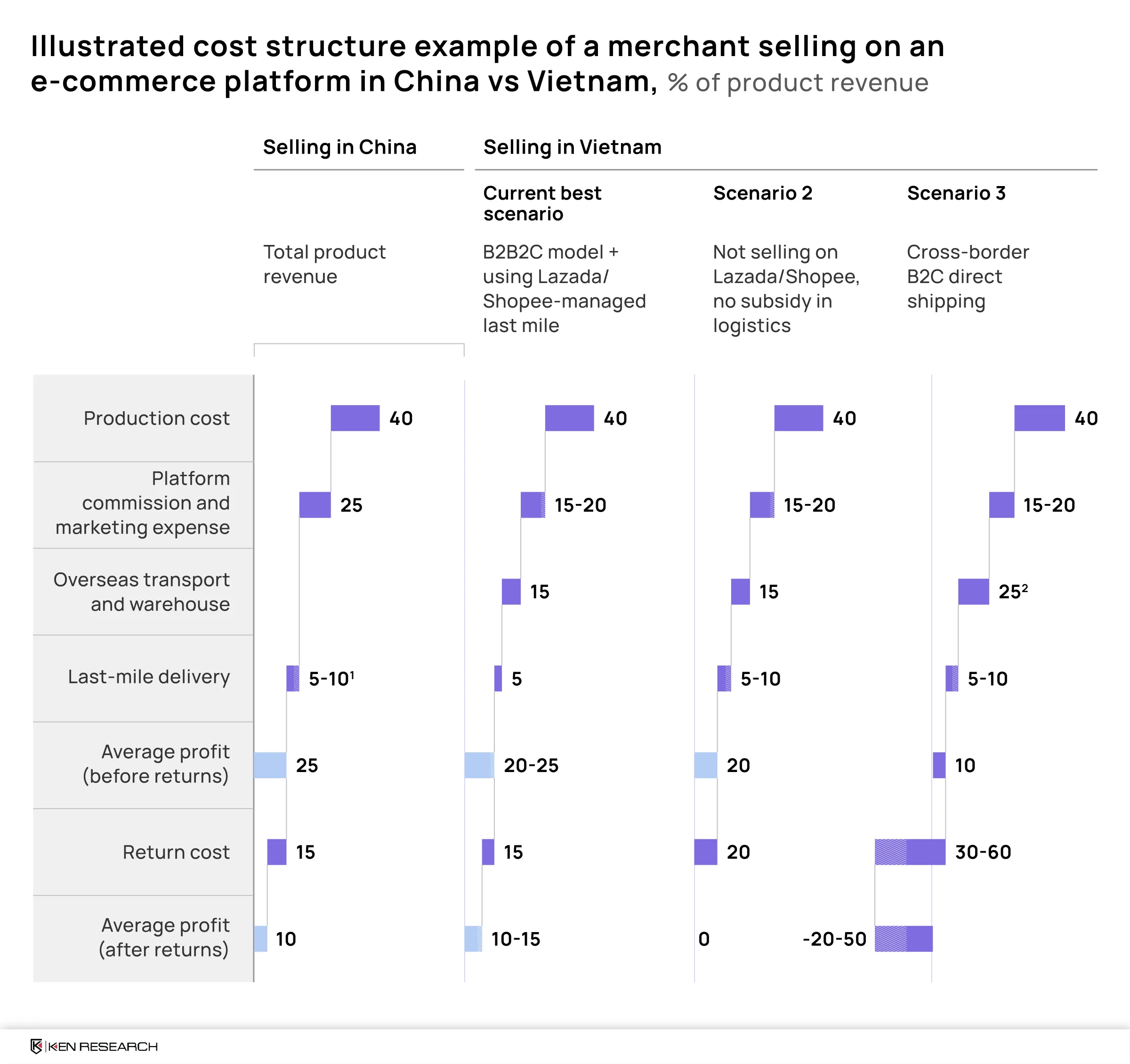
- Customer journey mapping across Southeast Asia confirms a rising mix of cross-category and cross-platform buying, reinforcing the need for integrated B2B2C fulfillment models.
- Local fulfillment is replacing cross-border parcel shipping. Bulk inbound plus domestic last-mile is now the dominant pattern in most SEA markets, lowering cost but increasing mid-mile and warehousing complexity, demanding denser, more distributed fulfillment nodes.
Network Density Constraints Drive Up Costs and Slow Delivery
Sparse physical networks hinder speed and reliability in emerging markets.
- Capital cities such as Jakarta, Bangkok, and Manila remain logistics hotspots, but tier-2/3 locations lack sufficient warehouses, cross-docks, and injection points, raising cost-to-serve by 35–60%. These disparities create inconsistent SLAs across the region, even as customer tolerance for delays shrinks.
- Delivery times in secondary towns lag by 1–3 days, widening performance gaps as e-commerce competition increases. These delays weaken seller conversion rates, especially during promotional events where delivery speed affects purchase decisions.
- Current density limitations also inflate operational costs due to repeated sorting and inefficient routing. Without scale across secondary areas, many logistics operators struggle to offer competitive pricing or maintain profitability during peak periods.
Weak Regional Interconnectedness and Bulky-Goods Gaps Slow Scalability
Southeast Asia’s infrastructure continues to operate as six loosely connected logistics systems, rather than a unified regional network.
- Cross-border interoperability remains uneven, with customs procedures, inspection capacity, and digital-document readiness varying widely across corridors. Although moves such as the Malaysia–Singapore Johor Economic Zone agreement (2025) signal stronger government alignment, operational outcomes differ sharply.
- According to the World Bank LPI 2023, border-compliance times on the Singapore–Malaysia route average 8–12 hours, compared with 30–60 hours on Malaysia–Thailand crossings and 24–48 hours along the Vietnam–Cambodia corridor. UNESCAP trade facilitation data from 2022 further shows over 40% variance in customs-release efficiency across ASEAN land routes, underscoring why logistics operators still require corridor-specific workflows to maintain reliability and scalability.
- Bulky-goods readiness remains a structural gap. Large appliances and furniture categories require specialized storage, value-added handling, appointment-based delivery, and installation capability services that many networks across Indonesia, Vietnam, Thailand, and the Philippines are not yet equipped to provide at scale.
- Failure rates for bulky deliveries remain disproportionately high, often 3–6× above parcel delivery levels, driven by route-access challenges, limited two-person delivery teams, and inadequate installation support. As online penetration of bulky categories rises, these gaps increasingly determine which operators can scale profitably across the region.
Conclusion: SEA E-Commerce Is Entering a Logistics Capability Race
Southeast Asia’s e-commerce ecosystem is no longer defined by marketplace adoption alone; it is now shaped by multi-channel fragmentation, rising service expectations, cross-border mismatches, and rapidly growing bulky-goods segments. These forces demand fulfillment networks that are denser, more interconnected, and more capable of handling complex categories. Logistics players who act early, building multi-node networks, unified inventory capabilities, and bulky-ready infrastructure will define the region’s next decade of digital growth.
Ken Research Insight: The Leaders Will Be Value-Handling Champions
Competitive advantage in Southeast Asia’s logistics sector will shift from scale to value-handling capability. By 2025, It will be reshaped by rising regulatory alignment, expanding digital trade infrastructure, and rapid category diversification. ASEAN’s 2025 digital-integration targets, particularly around paperless customs and cross-border data exchange, will elevate expectations for more predictable regional flows, even as cross-border efficiency still varies by over 40%.
Meanwhile, governments in Indonesia, Vietnam, and Malaysia are prioritizing bulky-goods logistics and domestic fulfillment capacity to support fast-growing online categories. In this environment, advantage will shift to operators capable of managing higher-value segments, orchestrating multi-market inventory, and deploying real-time intelligence across complex, interconnected 2025 e-commerce networks.
Related tags
Consumer Products and Retail
Get started
We've helped companies around the world future-proof
their businesses - and we can do the same for you.