UAE Cement Market: Oversupplied, Under Pressure But Ripe for Strategic Entry
Ken Research
July 13, 2025 - 7 min read
July 13, 2025
by Ken ResearchThe UAE Cement Industry Is Entering a Critical Decade
The UAE cement industry stands at a pivotal crossroads a sector once driven by construction booms and state-led infrastructure, now facing a convergence of structural overcapacity, thinning profit margins, and mounting environmental pressures. With more than 20 integrated and grinding units spread across the Emirates, the country produces over 14 million tons of cement and nearly 24 million tons of clinker annually a footprint that ranks among the most expansive in the Gulf Cooperation Council (GCC) region. However, scale alone is no longer a safeguard for success.
Despite sustained regional infrastructure demand and robust export linkages to South Asia and East Africa, several UAE-based producers are grappling with diminishing returns. High fixed costs, fluctuating coal prices, regulatory overhauls, and carbon targets are forcing a strategic rethink across the industry. While some players are operating at breakeven or below, the underlying shift in the market dynamic is also clearing the deck for leaner, more adaptive, and innovation-driven businesses. This churn is what makes the current decade critical — not just for survival, but for strategic entry and long-term positioning.
A Market That’s Running — But Not Thriving
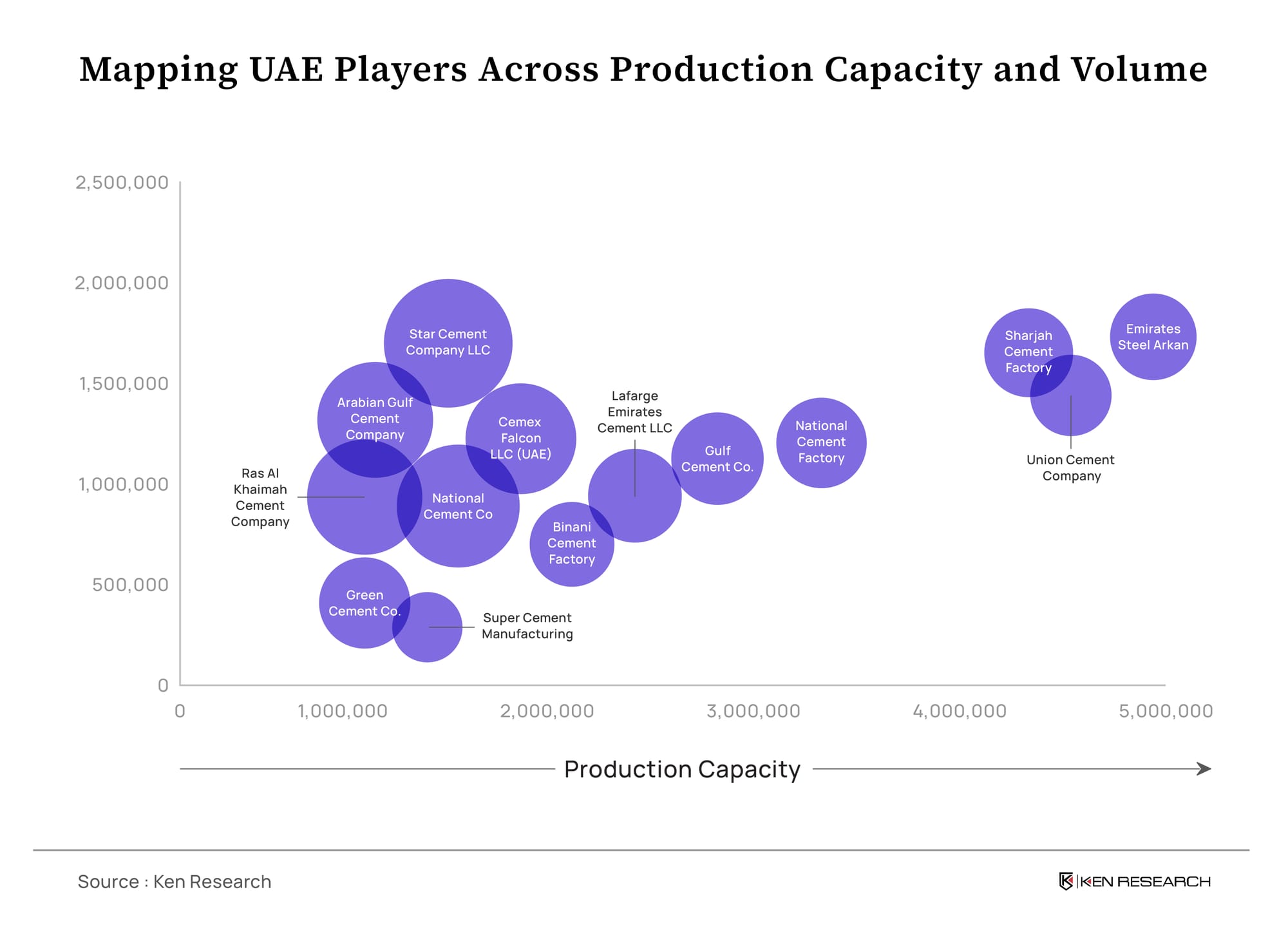
Production output remains stable, with most UAE cement producers operating at moderate utilization levels. Domestic demand, although not growing rapidly, has maintained a steady baseline driven by real estate recovery in Dubai, infrastructure builds in Abu Dhabi, and ongoing projects tied to the UAE Vision 2030. In parallel, export flows — primarily clinker — to South Asia, East Africa, and the Mediterranean continue to serve as a pressure-release valve for excess supply, as visible in the current production-to-capacity spreads.
Yet, profitability remains elusive. Cement prices have remained largely stagnant or in decline, squeezed by intense local competition and excess inventory. Even large vertically integrated companies have had to engage in significant cost rationalization, from mothballing kilns to renegotiating freight contracts. Energy costs and rising manpower wages under Emiratization policies have emerged as core cost pressures.
Meanwhile, foreign interest is on the rise. Indian giants like UltraTech Cement and JSW Cement are eyeing the region not only for its proximity and trade logistics but also for strategic diversification. These players are evaluating multiple approaches including acquiring underperforming assets, entering JV arrangements with local families, or acting as clinker traders feeding Indian and East African demand. But succeeding in the UAE is not a matter of scale — it’s about smart cost management, agility in operations, and readiness for a carbon-constrained future, as companies navigate a fragmented market where capacity does not always translate into output, and output does not always guarantee profitability.
Capacity vs. Production – A Market of Structural Overhang
The UAE cement industry continues to operate well below its installed capacity, reflecting a structural mismatch between supply and demand. While total clinker and cement capacity remains among the highest in the GCC, actual output has remained flat in recent years. This underutilization stems from stagnant domestic consumption, intense competition, and growing reliance on exports — all of which have put pressure on margins and operational efficiency.
Sustainability Is Becoming a Competitive Mandate
Environmental compliance is no longer a peripheral concern — it is fast becoming central to license-to-operate in the UAE cement space. The government, under its Net Zero 2050 strategy, has rolled out sector-specific emission benchmarks, mandating cement manufacturers to reduce their carbon intensity to between 0.4 and 0.5 kg of CO₂ per ton of cement within the next 4–5 years — a steep decline from current industry averages often hovering around 0.7 to 0.9 kg/ton.
Achieving this requires a multipronged investment and operational strategy: replacing fossil fuels with alternative options such as RDF, utilizing waste heat recovery systems, piloting carbon capture and utilization technologies, and redesigning product mixes to include blended cements or low-clinker substitutes. For firms without sufficient capital or technological partnerships, this shift could become a barrier. But for those equipped to meet these evolving norms, sustainability is not just a compliance issue — it is a market differentiator.
The shift is also being accelerated by global buyer preferences. Key export markets like Europe, the UK, and parts of Africa are beginning to implement carbon border tax frameworks or prefer suppliers with Environmental Product Declarations (EPDs). In this environment, green credentials are not merely ethical but directly impacting supplier selection, price realization, and contract viability.
UAE: Still a Clinker Powerhouse — But Cost Control Is Crucial
Clinker remains the UAE’s strategic lever. With ample capacity, proximity to deepwater ports, and access to competitively priced labor and land, UAE cement producers are well-placed to serve growing external markets. India’s clinker deficit, Bangladesh’s infrastructure boom, and East Africa’s urbanization offer long-term export growth lanes.
However, profitability in these markets is conditional — and increasingly fragile. The volatility in imported coal prices, driven by shifting global dynamics and geopolitical developments, has disrupted cost planning for UAE producers. Key sources — Russia, Indonesia, and South Africa — have been unreliable due to freight volatility, currency swings, and demand from competing Asian markets. This unpredictability has made long-term procurement contracts, hedging strategies, and port logistics optimization critical success factors.
Moreover, countries importing UAE clinker are becoming more cost sensitive. With India’s growing domestic clinker base and Bangladesh’s increasing cement integration, the margin between cost and landed price is thinning. This places pressure on UAE exporters to maintain not just output, but cost discipline — something that capital-heavy, outdated operations are struggling to achieve. Amid these shifts, exporters need to prioritize route economics and freight arbitrage opportunities while maintaining flexibility to redirect volumes as market signals evolve. Equally, aligning sustainability narratives with client countries’ decarbonization agendas will be critical to protect market access and premium positioning over the long term.
Export Markets Provide Critical Offtake Relief
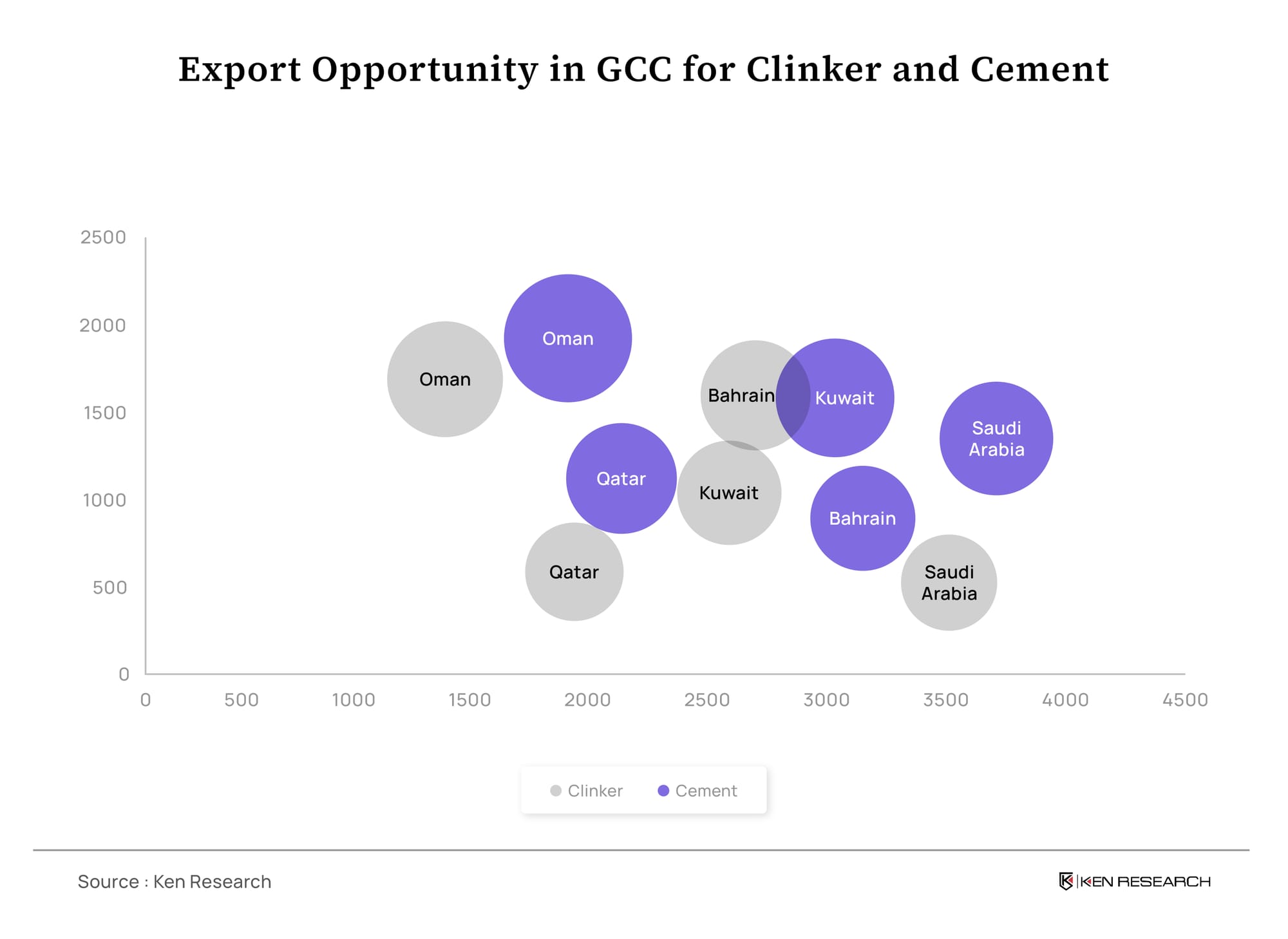
Clinker and cement exports have become a vital outlet for production, with outbound volumes to India, Bangladesh, and East Africa helping to stabilize plant utilization. However, these markets are also evolving, with tighter pricing, increasing domestic competition, and growing environmental scrutiny. Sustaining export competitiveness will require a sharper focus on logistics optimization, route economics, and alignment with buyer decarbonization goals.
Manpower Cost & Nationalization Pressures
While raw material and freight costs have long been under the spotlight, labor cost is fast emerging as a less visible but equally critical pressure point. As the UAE accelerates its nationalization agenda, mandating private-sector employers to recruit and retain Emirati professionals, the cost structure for several manufacturing businesses — cement included — is shifting upward.
For foreign investors, this underscores the importance of a hybrid manpower model one that balances localization mandates with automation, upskilling, and third-party outsourcing where feasible. A proactive regulatory engagement strategy particularly in free zones or with the Ministry of Human Resources and Emiratization — is equally essential to avoid future compliance roadblocks.
Consolidation Is Coming — But So Are Opportunities
The current turbulence in the UAE cement space is setting the stage for consolidation. Marginal players with aging assets, high leverage, and limited ESG-readiness are finding it difficult to sustain operations. Several have already begun scaling back capacity or exploring distressed exits. At the same time, international investors, regional conglomerates, and energy players are increasingly scouting for M&A and JV opportunities either to enter the cement value chain or to integrate waste management and energy recovery solutions.
This opens multiple strategic doors from acquiring brownfield units at discounted valuations, to repurposing older kilns for green cement production, to entering long-term offtake agreements with large infrastructure EPCs or government bodies. Additionally, there is scope for innovation-driven entrants especially those leveraging digital tools for plant optimization, carbon monitoring, or AI-based predictive maintenance to carve a niche.
What’s emerging is a dual-speed industry: one side composed of agile, ESG-aligned, export-focused entities that are scaling up; the other, comprised of outdated, capital-starved firms heading toward consolidation or closure. For strategic entrants, this is the window to shape the market's future.
Is Now the Right Time to Enter the UAE Cement Market?
From a timing perspective, the market is complex — but also compelling. The structural challenges, from high fixed costs to carbon transition pressures, are real. But so is the strategic opportunity: geographic access to Asia and Africa, established port infrastructure, relatively mature demand, and the emergence of value-accretive entry points via distressed assets or JVs.
However, entry without a sharply defined roadmap is risky. Understanding port logistics, carbon-linked pricing models, energy procurement strategies, labor regulations, and government alignment on Net Zero goals are all prerequisites for long-term success. It is equally important to develop a go-to-market approach that combines cost control, environmental compliance, and export agility.
For investors, manufacturers, or technology providers ready to navigate these complexities the UAE market offers not just volume, but influence. It’s a springboard into wider GCC and Indian Ocean markets, a proving ground for ESG-aligned operations, and a potential base for green cement innovation.
Let’s Talk Strategy — Turn Challenge into Opportunity
The UAE cement market is not an easy one. But it’s among the most strategically positioned in the region offering access, scale, and a clear policy trajectory. The next five years will shape not just the profitability, but the entire operating DNA of the industry.
If you're a clinker trader, an M&A-focused investment team, a sustainability innovator, or a cement brand eyeing regional expansion — we’re ready to help you navigate the complexities. From identifying undervalued targets, structuring equity or JV entry, to benchmarking your CO₂ cost advantage across export routes our team can build a tailored roadmap for success.
Let’s connect to explore how you can convert policy pressure, margin volatility, and asset churn into real strategic opportunity — before the next wave of consolidation closes the door.
About the Author – Rajat Goyal:
Rajat is a Project Lead at Ken Research with 3+ years of experience in project execution, market entry strategy, financial planning, and end-to-end project management. He has supported strategic research and consulting engagements across multiple industries, helping clients drive data-backed decisions and actionable insights.
From the Author:
“At Ken Research, our granular tracking of cement capacity, pricing dynamics, and export flows across the GCC reveals a telling shift—scale no longer guarantees survival. The firms gaining ground aren’t the largest, but the leanest—those recalibrating around carbon benchmarks, alternate fuels, and port-centric export strategies. This isn’t just a consolidation story it’s a test of ESG maturity, input cost control, and trade agility. In a market long driven by infrastructure, the next decade will be driven by operational intelligence.”
About Ken Research:
Ken Research is a market intelligence and strategy consulting firm delivering actionable insights across the various sectors in dynamic markets such as the GCC. We support OEMs and industry stakeholders with data-driven analysis on emerging trends, competitive benchmarking, pricing strategies, and shifting consumer preferences. Our expertise enables clients to refine market entry and penetration strategies, optimize product positioning, and respond effectively to evolving competitive landscapes.
Related tags
Cement
Manufacturing and Construction
Consulting
Get started
We've helped companies around the world future-proof
their businesses - and we can do the same for you.