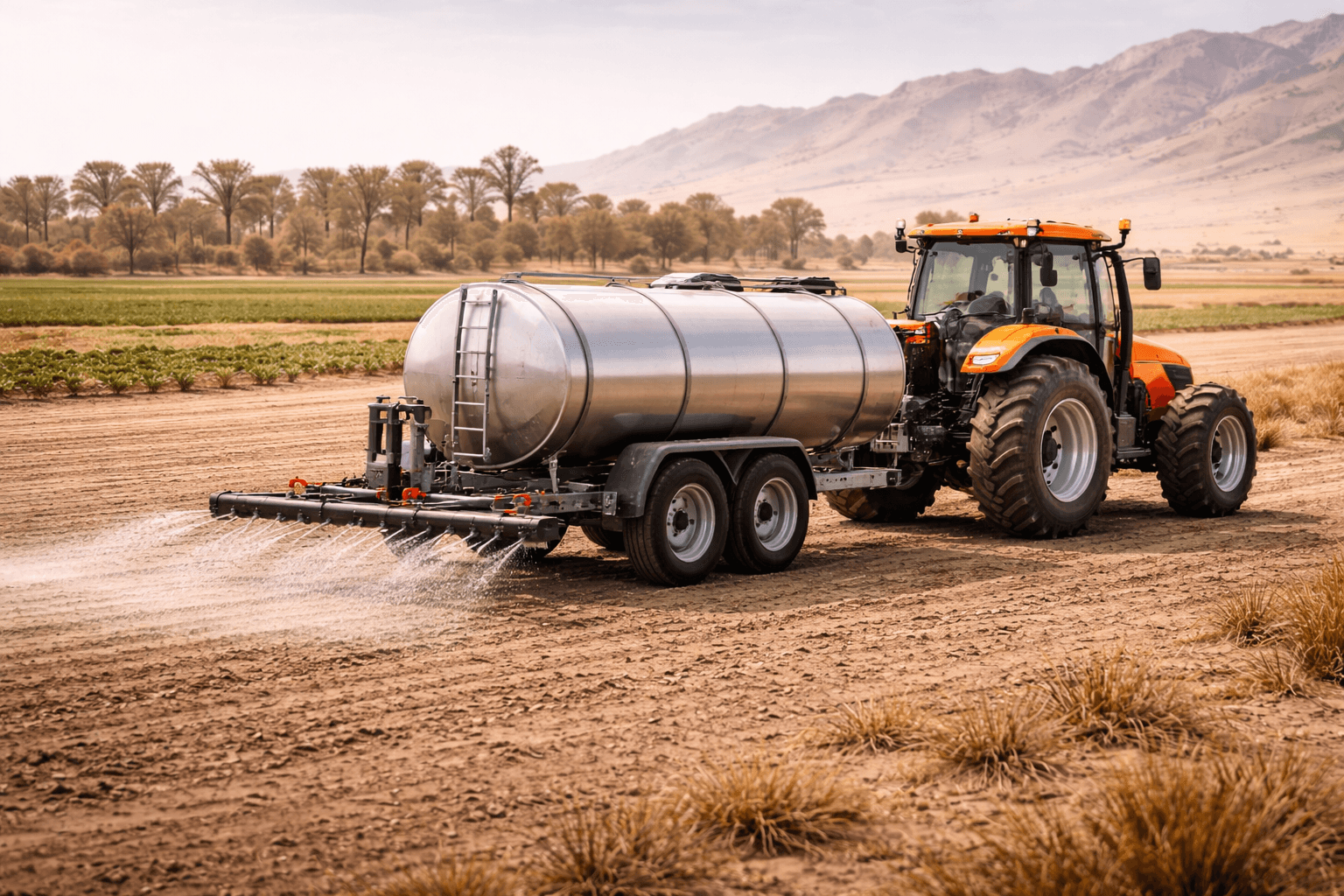
Bahrain Agricultural Equipment & Machinery Competition Benchmarking 2025: Product Portfolio, Dealer Network, Customer Segments & Company Performance
Published on: December 2025
Report Overview
Bahrain Agricultural Equipment Market Overview
Market Highlights
The Bahrain Agricultural Equipment Market showcases a diverse competitive structure, where multinational corporations, regional manufacturers, and local firms engage in a dynamic interplay. Multinationals leverage their extensive resources for efficiency, while regional players focus on tailored solutions that resonate with local agricultural practices, and local firms capitalize on agility and niche expertise to carve out market segments.
Innovation from global leaders is seamlessly integrated with localized adaptations, as companies customize agricultural technologies to meet Bahrain's unique environmental and operational conditions. This synergy fosters a robust ecosystem where international advancements are harmonized with local agricultural needs, ensuring relevance and effectiveness in the market.
The distribution and aftersales landscape is pivotal, with strategic collaborations among manufacturers, distributors, and service providers enhancing customer engagement and satisfaction. A focus on comprehensive aftersales support, including maintenance and training, strengthens brand loyalty and operational reliability, creating a competitive edge in a fragmented market.
Looking ahead, the market is poised for transformation driven by innovation, sustainability, and agility. Companies are increasingly adopting advanced technologies and sustainable practices, ensuring that their offerings not only meet current demands but also anticipate future agricultural challenges, thereby shaping a resilient and competitive landscape in Bahrain's agricultural sector.
Ecosystem Matrix
The Bahraini agricultural equipment ecosystem demonstrates a clear dominance of diversified conglomerates and large distributors, while medium players provide region-specific machinery solutions and after-sales support, shaping a balanced competitive environment across the sector.
Small-scale players contribute by serving localized needs, niche farm equipment supply, and specialized agro tools, ensuring market accessibility for smaller farmers and complementing the large and medium players’ expansive operations.
Leading Player Profiles
Company Profile Overview
The market exhibits a blend of long-established conglomerates such as Almoayyed and Al Zayani alongside emerging independent suppliers, indicating sustained sectoral resilience coupled with opportunities for localized entrepreneurial expansion.
Equipment portfolios are diversified, with most companies functioning primarily as distributors and traders, highlighting Bahrain’s import-reliant agricultural equipment market structure.
Key Operational Performance Metrics
Company Performance Overview
Unlock Market Insights
Dive deeper into production, distribution, and pricing intelligence.
Get Customized ReportCore operational metrics like dealer network strength, installed base, and pricing strategies are pivotal in influencing revenue generation, underlining the sector’s reliance on efficient distribution and after-sales support to maintain competitiveness.
Companies that can optimize pricing alongside strong after-sales and spare parts availability are better positioned to enhance customer loyalty and sustain long-term revenue growth in Bahrain’s agricultural equipment market.
Core Financial Performance Metrics
Financial performance in Bahrain’s agricultural equipment sector is influenced by high import reliance, with EBITDA margins and COGS volatility largely dependent on supply chain efficiency and currency fluctuations.
Larger diversified groups are better positioned to absorb cost fluctuations, while smaller independents face greater challenges in sustaining profitability under competitive pricing pressures.
Table of Contents
1. Ecosystem Matrix
1.1 Large Players
1.1.1 Y.K. Almoayyed & Sons
1.1.2 Al Zayani Investments
1.1.3 Behzad Agricultural Machinery
1.1.4 TRAFCO Group – Agricultural Division
1.1.5 Bahrain Agriculture Co.
1.1.6 Al Areen Agricultural Equipment
1.2 Medium Players
1.2.1 Al Mahroos
1.2.2 Awal Gulf Agricultural
1.2.3 Delmon Agricultural Machinery
1.2.4 Al Jazeera Equipment
1.2.5 Gulf Agricultural Systems
1.2.6 Bin Hindi AgriTech
1.3 Small Players
1.3.1 Al Hidd Agricultural Supplies
1.3.2 Al Noor Agro Machinery
1.3.3 Al Badi Trading Bahrain
1.3.4 Green Land Farm Solutions
1.3.5 Modern Agro Implements Bahrain
1.3.6 Al Baraka Agri Equipment
2. Leading Player Profiles
2.1 Company Name
2.2 Group Name
2.3 Headquarters
2.4 Established Year
2.5 Core Product Service
2.6 Mode of Functioning
3. Key Operational Performance Metrics
3.1 Production Capacity (Units/Year)
3.2 Dealer / Distribution Network
3.3 Installed Base (Units)
3.4 Annual Sales Volume (Units)
3.5 Pricing (USD)
3.6 After-Sales Service Coverage
3.7 Spare Parts Availability
3.8 Export Share (%)
4. Core Financial Performance Metrics
4.1 Parameters
4.1.1 Revenue (USD Mn)
4.1.2 Revenue Growth (%)
4.1.3 COGS (USD Mn)
4.1.4 COGS Growth (%)
4.1.5 EBITDA (USD Mn)
4.1.6 EBITDA Growth (%)
4.1.7 EBITDA Margin (%)
4.1.8 PAT (USD Mn)
4.1.9 PAT Margin (%)
5. Methodology
5.1 Approach
5.1.1 Desk Sources
5.1.2 Primary Interviews
5.1.3 Sanity Checking & Validation
5.2 Benchmarking Process
5.2.1 Data Collection
5.2.2 Primary Validation
5.2.3 Proxy KPI Modelling
5.2.4 Normalization & Indexing
5.2.5 Gap Analysis
5.2.6 Peer Review
5.3 Sample Composition
5.3.1 Scope Items
5.3.2 Sample Size
5.3.3 Target Respondents
Methodology
Ken Research will deploy its proprietary, multi-layered research framework—combining robust secondary research, targeted primary outreach, and rigorous data validation—to deliver an authoritative competitive landscape analysis of the Bahrain Agricultural Equipment Market. The approach ensures accuracy, depth, and actionable insights, leveraging proxy KPIs that align directly with the sector’s operational and financial realities.
Desk Sources
- Industry reports from proprietary databases and Ken Research archives
- Company annual reports and investor presentations
- Government and trade association publications, including the Bahrain Chamber of Commerce and the Ministry of Works, Municipalities Affairs & Urban Planning
- Trade magazines, industry journals, and online articles
- Financial databases including Bloomberg, Capital IQ, and Zawya
- Web traffic and digital engagement dashboards such as SimilarWeb and App Annie
Primary Interviews
- CATIs and structured online surveys with key industry stakeholders
- Category managers and R&D heads at agricultural equipment manufacturers
- Senior sales and marketing leaders at leading market players
- Distributors and channel partners across the agricultural machinery value chain
- Industry analysts and sector consultants
- Technology and service providers supporting digital engagement and performance metrics
Sanity Checking & Validation
- Triangulation of market estimates using secondary research, primary inputs, and proxy-based models
- Proxy KPI synthesis leveraging installed base, tractor sales volumes, number of implements distributed, dealer coverage, and spare-parts sales to approximate revenues or production capacity
- Outlier analysis to identify and reconcile anomalous data points through targeted follow-up discussions
- Assumption tracking via a structured log documenting all benchmarking assumptions, proxy KPI sources, and methodological limitations
- Internal peer review of research methodology, analytical models, and key outputs prior to report finalization
An Inside Look At Our Custom Insights
Take a look at ourcustomized insights, tailored to yourmarket and business needs. Our benchmarking reports deliver data-driven comparisons of key players, helping you uncover opportunities, assess performance, and make confident strategic decisions.


