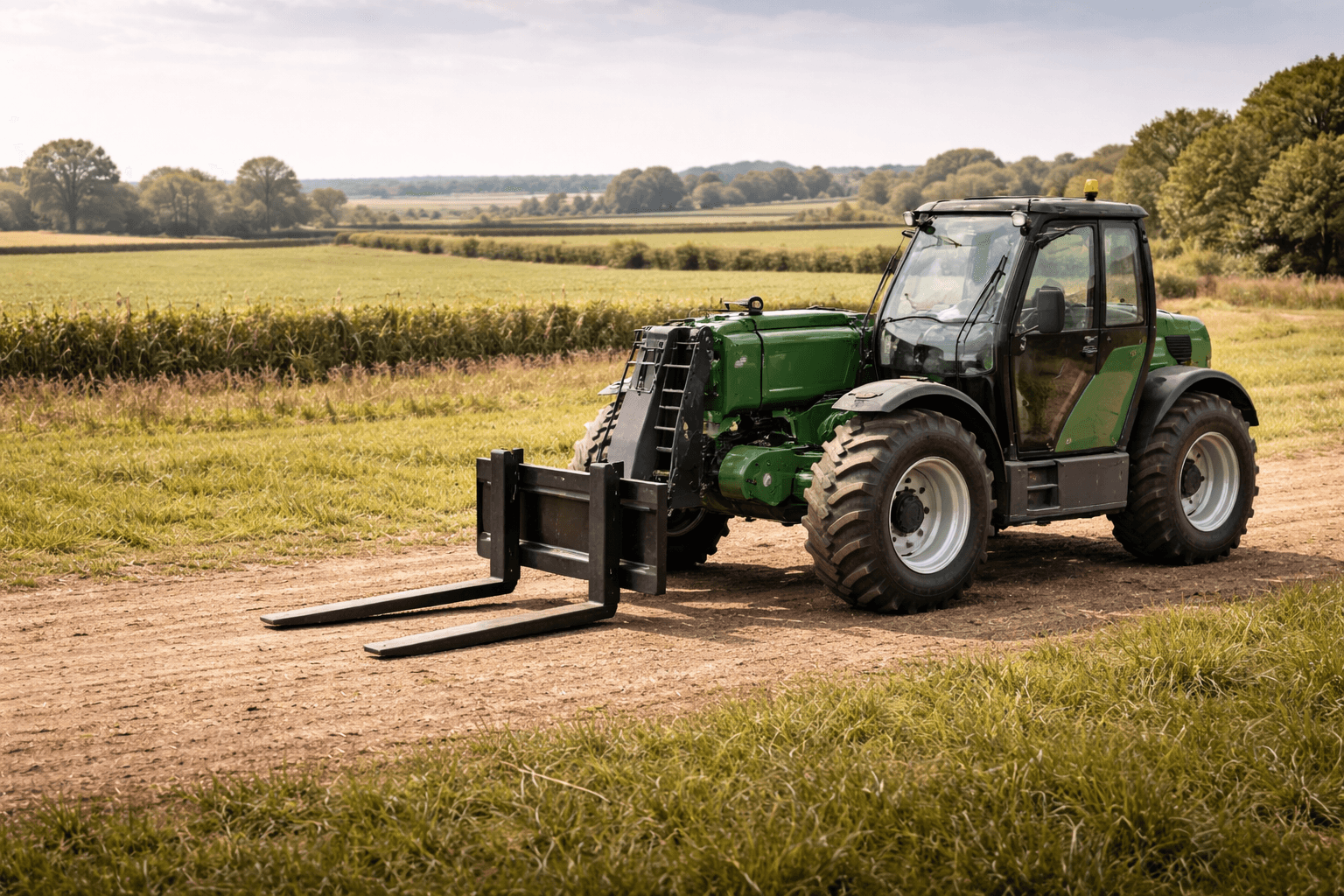
United Kingdom Agricultural Equipment & Machinery Competition Benchmarking 2025: Product Portfolio, Dealer Network, Customer Segments & Company Performance
Published on: December 2025
Report Overview
UK Agricultural Equipment Market Overview
Market Highlights
The UK Agricultural Equipment Market showcases a diverse competitive structure, where multinational corporations, regional manufacturers, and local firms each play pivotal roles. Multinationals leverage economies of scale and advanced supply chain efficiencies, while regional players focus on tailored solutions that resonate with local agricultural practices, and local firms capitalize on agility and niche expertise to address specific market needs.
Innovation on a global scale is harmoniously blended with localized adaptations, as companies refine their product offerings to meet the unique demands of the UK market. This includes the integration of cutting-edge technologies and sustainable practices, ensuring that solutions are not only innovative but also relevant to local agricultural conditions and consumer expectations.
The distribution and aftersales ecosystem is integral to the market's dynamics, with strategic partnerships enhancing service delivery and customer satisfaction. Collaborations among manufacturers, distributors, and service providers are essential for ensuring that equipment is supported by robust maintenance and service frameworks, thereby fostering long-term customer loyalty and operational reliability.
Looking ahead, the competitive landscape is increasingly shaped by a focus on innovation, localization, and operational agility. Companies are prioritizing sustainable practices and technology integration, which are critical for adapting to evolving market demands and regulatory frameworks, ultimately driving the future trajectory of the UK Agricultural Equipment Market.
Ecosystem Matrix
The UK agricultural equipment market demonstrates strong dominance of global heavyweights such as JCB, CNH, AGCO, and John Deere, all maintaining significant dealer networks, manufacturing presence, and large-scale distribution capabilities across the country.
Medium and small-sized domestic players bring specialization in niche machinery, precision farming solutions, and region-specific equipment categories, ensuring a balanced ecosystem and competition intensity within the UK market.
Leading Player Profiles
Company Profile Overview
The UK’s agricultural equipment market is a mix of long-established local firms and international subsidiaries with strong domestic footprints, allowing them to effectively address both mass-scale mechanization needs and specialized equipment categories.
Group affiliations such as AGCO, CNH, CLAAS, and Deere & Company indicate global scale advantages, while independents like Sumo and Teagle emphasize agility, customization, and niche equipment portfolios to remain competitive.
Key Operational Performance Metrics
Company Performance Overview
Unlock Market Insights
Dive deeper into production, distribution, and pricing intelligence.
Get Customized ReportRevenue-linked KPIs such as production capacity, annual sales volume, pricing, and installed base form the backbone of market competitiveness, directly determining share of market and profitability.
Players with extensive dealer networks and strong after-sales service coverage maintain a distinct edge in customer retention, pricing leverage, and recurring parts and service revenues.
Core Financial Performance Metrics
Financial performance analysis highlights differences in cost management, margin resilience, and profitability, providing clarity on long-term sustainability of players across sizes and product niches.
Larger integrated groups exhibit scale-driven EBITDA and PAT margins, while smaller independents rely on specialized portfolios and cost discipline to protect profitability.
Table of Contents
1. Ecosystem Matrix
1.1 Large Players
1.1.1 JCB Ltd.
1.1.2 AGCO (Massey Ferguson UK)
1.1.3 CNH Industrial UK
1.1.4 John Deere UK Ltd.
1.1.5 Kubota (UK) Ltd.
1.1.6 CLAAS UK Ltd.
1.1.7 SAME Deutz-Fahr UK Ltd.
1.2 Medium Players
1.2.1 Landini UK
1.2.2 McCormick Tractors UK Ltd.
1.2.3 Sumo UK Ltd.
1.2.4 Grimme UK Ltd.
1.2.5 Kuhn Farm Machinery (UK) Ltd.
1.2.6 Amazone Ltd.
1.3 Small Players
1.3.1 Opico Ltd.
1.3.2 Ransomes Jacobsen Ltd.
1.3.3 Simba International
1.3.4 Teagle Machinery Ltd.
1.3.5 Browns Agricultural Machinery Ltd.
2. Leading Player Profiles
2.1 Parameters
2.1.1 Company Name
2.1.2 Group Name
2.1.3 Headquarters
2.1.4 Established Year
2.1.5 Core Product Focus
2.1.6 Mode of Functioning
3. Key Operational Performance Metrics
3.1 Parameters
3.1.1 Production Capacity (Units/Year)
3.1.2 Dealer / Distribution Network
3.1.3 Installed Base (Units)
3.1.4 Annual Sales Volume (Units)
3.1.5 Pricing (USD)
3.1.6 After-Sales Service Coverage
3.1.7 Spare Parts Availability
3.1.8 Export Share (%)
4. Core Financial Performance Metrics
4.1 Parameters
4.1.1 Revenue (USD Mn)
4.1.2 Revenue Growth (%)
4.1.3 COGS (USD Mn)
4.1.4 COGS Growth (%)
4.1.5 EBITDA (USD Mn)
4.1.6 EBITDA Growth (%)
4.1.7 EBITDA Margin (%)
4.1.8 PAT (USD Mn)
4.1.9 PAT Margin (%)
5. Methodology
5.1 Approach
5.1.1 Desk Sources
5.1.2 Primary Interviews
5.1.3 Sanity Checking & Validation
5.2 Benchmarking Process
5.2.1 Data Collection
5.2.2 Primary Validation
5.2.3 Proxy KPI Modelling
5.2.4 Normalization & Indexing
5.2.5 Gap Analysis
5.2.6 Peer Review
5.3 Sample Composition
5.3.1 Scope Items
5.3.2 Sample Size
5.3.3 Target Respondents
Methodology
Ken Research will deploy its proprietary, multi layered research framework—combining robust secondary research, targeted primary outreach, and rigorous data validation—to deliver an authoritative competitive landscape analysis of theUK Agricultural Equipment Market.
Desk Sources
- Industry reports (proprietary databases, Ken Research archives)
- Company annual reports and investor presentations
- Government and trade association publications
- Trade magazines, journals, and e-articles
- Financial databases (Bloomberg, Capital IQ)
- Web traffic and app usage dashboards (SimilarWeb, App Annie)
Primary Interviews
- Category managers and R&D heads of market manufacturers
- Senior sales and marketing leads at leading players
- Distributors and channel partners
- Industry analysts and consultants
- Technology and service providers for digital metrics
Sanity Checking and Validation
- Triangulation: Cross-verification of estimates using secondary data, primary inputs, and proxy model outputs
- Proxy KPI Synthesis: Use of installed base, outlet counts, web traffic, and patent filings to approximate revenues or capacities
- Outlier Analysis: Identification and reconciliation of anomalous data points through follow-up discussions
- Assumption Tracking: Maintenance of a detailed log covering benchmarking assumptions, limitations, and proxy KPI sources
- Peer Review: Internal expert review of methodology, analytical models, and key outputs prior to finalization