About the Report
Base Year 2024Global Secondary Ticket Market Overview
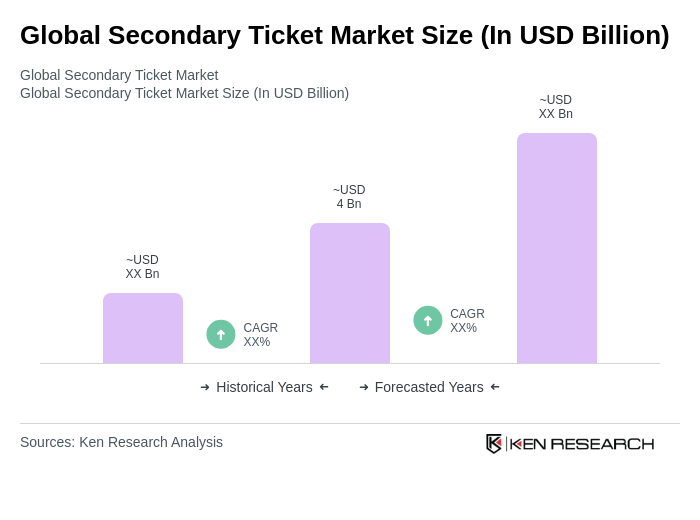
- The Global Secondary Ticket Market is valued at USD 4 billion, based on a five-year historical analysis. This market size reflects the latest available data and is driven by the increasing demand for live events and the proliferation of digital platforms that facilitate ticket resale. The sector has experienced notable growth as consumers prioritize experiences, particularly in sports and entertainment, over material goods. Enhanced mobile-first adoption and secure digital transactions have further accelerated market expansion.
- Key players in this market include the United States, the United Kingdom, and Germany. These countries maintain dominance due to their robust entertainment industries, high disposable incomes, and strong cultural emphasis on live events. The presence of major sports leagues, music festivals, and advanced digital infrastructure continues to attract both local and international audiences.
- In 2023, the U.S. government implemented regulations aimed at increasing transparency in ticket pricing and combating scalping practices. These measures require secondary ticket platforms to disclose all fees upfront, ensuring consumers are fully informed before making a purchase. The regulatory environment also includes enhanced enforcement of the BOTS Act, targeting automated software used for unfair ticket acquisition. These actions are designed to protect consumers and promote fair competition in the ticketing market.
Global Secondary Ticket Market Segmentation
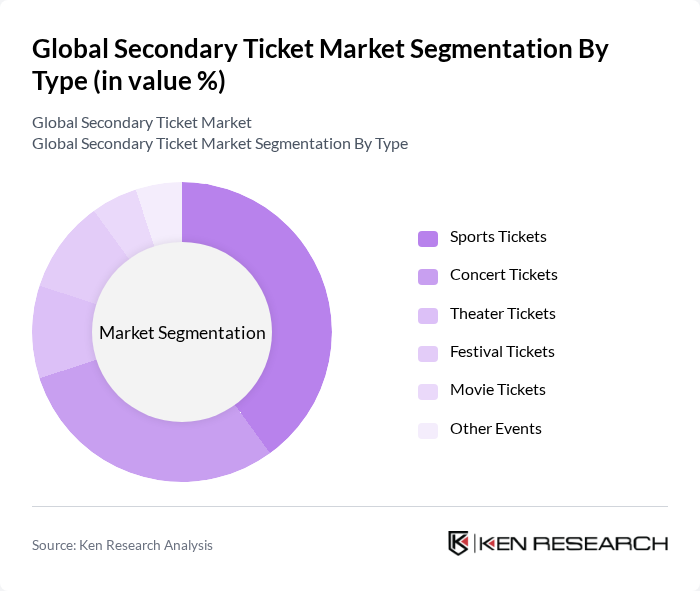
By Type:The market is segmented into sports tickets, concert tickets, theater tickets, festival tickets, movie tickets, and other events. Sports and concerts remain the most popular categories, driven by strong fan engagement and frequent high-profile events. Theater and festival tickets cater to niche audiences, while movie and other event tickets represent a smaller share of the secondary market. Digital platforms have streamlined access and broadened participation across all event types.
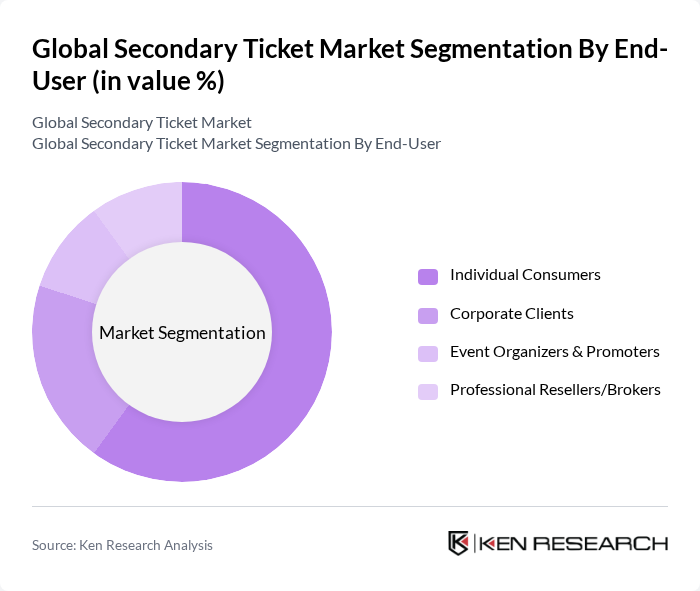
By End-User:The end-user segmentation includes individual consumers, corporate clients, event organizers & promoters, and professional resellers/brokers. Individual consumers represent the largest segment, reflecting the increasing trend of attending live events for personal enjoyment. Corporate clients leverage secondary ticket platforms for employee engagement and client entertainment. Event organizers and promoters utilize these channels to optimize attendance, while professional resellers/brokers facilitate market liquidity and event access.
Global Secondary Ticket Market Competitive Landscape
The Global Secondary Ticket Market is characterized by a dynamic mix of regional and international players. Leading participants such as StubHub, Viagogo, Ticketmaster, SeatGeek, Vivid Seats, TickPick, Eventbrite, AXS, Live Nation Entertainment Inc., TicketNetwork, Gametime, Tickets.com, Razorgator, See Tickets, CTS Eventim AG & Co. KGaA, Twickets Ltd., Ace Ticket LLC, Citizen Ticket Ltd., PrimeSport LLC, Ticket City Inc. contribute to innovation, geographic expansion, and service delivery in this space.
Global Secondary Ticket Market Industry Analysis
Growth Drivers
- Increasing Demand for Live Events:The global live events industry is projected to reach $1,135 billion in future, driven by a resurgence in consumer interest post-pandemic. This growth is fueled by a 20% increase in attendance at concerts and sports events, as reported by the International Live Events Association. The rising popularity of festivals and live performances is creating a robust demand for secondary ticketing, allowing consumers to access sold-out events and enhancing market dynamics.
- Rise of Digital Platforms:The proliferation of digital platforms has transformed ticket purchasing, with online sales accounting for over 70% of total ticket sales in future. According to Statista, the number of mobile ticketing users is expected to exceed 500 million globally, reflecting a shift towards convenience and accessibility. This trend is driving the growth of secondary ticket markets, as consumers increasingly prefer digital solutions for buying and reselling tickets.
- Consumer Preference for Flexible Ticketing:A significant 65% of consumers now prefer flexible ticketing options, allowing for easy rescheduling or refunds. This shift is supported by a 30% increase in demand for tickets that offer such flexibility, as reported by Eventbrite. The growing emphasis on consumer rights and satisfaction is pushing secondary ticket platforms to adapt, thereby enhancing their appeal and driving market growth in the None region.
Market Challenges
- Regulatory Restrictions:The secondary ticket market faces stringent regulatory scrutiny, with anti-scalping laws enacted in various regions. For instance, in future, New York's regulations limit resale prices to face value plus a small service fee. Such restrictions can hinder market growth, as they limit the potential profit margins for resellers and create barriers to entry for new platforms, impacting overall market dynamics.
- Competition from Primary Ticket Sellers:Primary ticket sellers, such as Ticketmaster, dominate the market, controlling approximately 80% of ticket sales. Their established relationships with event organizers and exclusive access to tickets create significant competition for secondary platforms. This competitive landscape can lead to price undercutting and reduced margins for secondary sellers, challenging their sustainability and growth prospects in the None region.
Global Secondary Ticket Market Future Outlook
The future of the secondary ticket market appears promising, driven by technological advancements and evolving consumer preferences. As mobile ticketing and digital platforms continue to gain traction, the market is likely to see increased participation from both consumers and resellers. Additionally, the integration of AI for pricing optimization and personalized experiences will enhance customer satisfaction, further propelling market growth. The focus on improving security measures against fraud will also play a crucial role in building consumer trust and expanding market reach.
Market Opportunities
- Expansion into Emerging Markets:Emerging markets, particularly in Asia and Africa, present significant growth opportunities, with ticket sales projected to increase by 40% in future. The rising middle class and increased disposable income in these regions are driving demand for live events, creating a fertile ground for secondary ticket platforms to establish a presence and capture new customers.
- Partnerships with Event Organizers:Collaborating with event organizers can enhance the credibility and reach of secondary ticket platforms. By forming strategic partnerships, platforms can gain access to exclusive ticket inventories and improve customer offerings. This approach is expected to increase sales by 25% in future, as reported by industry analysts, thereby strengthening market positioning.
Scope of the Report
| Segment | Sub-Segments |
|---|---|
| By Type | Sports Tickets Concert Tickets Theater Tickets Festival Tickets Movie Tickets Other Events |
| By End-User | Individual Consumers Corporate Clients Event Organizers & Promoters Professional Resellers/Brokers |
| By Sales Channel | Online Marketplaces Mobile Applications Physical Retail Outlets Social Media Platforms |
| By Price Range | Budget Tickets Mid-Range Tickets Premium Tickets |
| By Customer Demographics | Age Groups Income Levels Geographic Regions |
| By Event Type | Music Events Sports Events Performing Arts & Theater Cultural & Community Events |
| By Region | North America Europe Asia-Pacific Middle East & Africa Latin America |
Key Target Audience
Investors and Venture Capitalist Firms
Government and Regulatory Bodies (e.g., Federal Trade Commission, Department of Justice)
Event Organizers and Promoters
Ticketing Platforms and Resale Websites
Sports Teams and Franchise Owners
Live Entertainment Venues and Stadium Operators
Payment Processors and Financial Technology Companies
Marketing and Advertising Agencies
Players Mentioned in the Report:
StubHub
Viagogo
Ticketmaster
SeatGeek
Vivid Seats
TickPick
Eventbrite
AXS
Live Nation Entertainment Inc.
TicketNetwork
Gametime
Tickets.com
Razorgator
See Tickets
CTS Eventim AG & Co. KGaA
Twickets Ltd.
Ace Ticket LLC
Citizen Ticket Ltd.
PrimeSport LLC
Ticket City Inc.
Table of Contents
Market Assessment Phase
1. Executive Summary and Approach
2. Global Secondary Ticket Market Overview
2.1 Key Insights and Strategic Recommendations
2.2 Global Secondary Ticket Market Overview
2.3 Definition and Scope
2.4 Evolution of Market Ecosystem
2.5 Timeline of Key Regulatory Milestones
2.6 Value Chain & Stakeholder Mapping
2.7 Business Cycle Analysis
2.8 Policy & Incentive Landscape
3. Global Secondary Ticket Market Analysis
3.1 Growth Drivers
3.1.1 Increasing Demand for Live Events
3.1.2 Rise of Digital Platforms
3.1.3 Consumer Preference for Flexible Ticketing
3.1.4 Growth in Mobile Ticketing Solutions
3.2 Market Challenges
3.2.1 Regulatory Restrictions
3.2.2 Competition from Primary Ticket Sellers
3.2.3 Fraud and Scalping Issues
3.2.4 Market Saturation in Key Regions
3.3 Market Opportunities
3.3.1 Expansion into Emerging Markets
3.3.2 Partnerships with Event Organizers
3.3.3 Development of Secondary Market Platforms
3.3.4 Integration of Blockchain Technology
3.4 Market Trends
3.4.1 Personalization of Ticketing Experiences
3.4.2 Use of AI for Pricing Optimization
3.4.3 Growth of Subscription-Based Ticketing
3.4.4 Increased Focus on Customer Experience
3.5 Government Regulation
3.5.1 Anti-Scalping Laws
3.5.2 Consumer Protection Regulations
3.5.3 Taxation Policies on Resale
3.5.4 Licensing Requirements for Resellers
4. SWOT Analysis
5. Stakeholder Analysis
6. Porter's Five Forces Analysis
7. Global Secondary Ticket Market Market Size, 2019-2024
7.1 By Value
7.2 By Volume
7.3 By Average Selling Price
8. Global Secondary Ticket Market Segmentation
8.1 By Type
8.1.1 Sports Tickets
8.1.2 Concert Tickets
8.1.3 Theater Tickets
8.1.4 Festival Tickets
8.1.5 Movie Tickets
8.1.6 Other Events
8.2 By End-User
8.2.1 Individual Consumers
8.2.2 Corporate Clients
8.2.3 Event Organizers & Promoters
8.2.4 Professional Resellers/Brokers
8.3 By Sales Channel
8.3.1 Online Marketplaces
8.3.2 Mobile Applications
8.3.3 Physical Retail Outlets
8.3.4 Social Media Platforms
8.4 By Price Range
8.4.1 Budget Tickets
8.4.2 Mid-Range Tickets
8.4.3 Premium Tickets
8.5 By Customer Demographics
8.5.1 Age Groups
8.5.2 Income Levels
8.5.3 Geographic Regions
8.6 By Event Type
8.6.1 Music Events
8.6.2 Sports Events
8.6.3 Performing Arts & Theater
8.6.4 Cultural & Community Events
8.7 By Region
8.7.1 North America
8.7.2 Europe
8.7.3 Asia-Pacific
8.7.4 Middle East & Africa
8.7.5 Latin America
9. Global Secondary Ticket Market Competitive Analysis
9.1 Market Share of Key Players
9.2 Cross Comparison of Key Players
9.2.1 Company Name
9.2.2 Company Size (by revenue or ticket volume)
9.2.3 Annual Revenue (USD)
9.2.4 Revenue Growth Rate (%)
9.2.5 Gross Merchandise Value (GMV)
9.2.6 Number of Active Users/Buyers
9.2.7 Customer Acquisition Cost (CAC)
9.2.8 Average Ticket Price (USD)
9.2.9 Market Penetration Rate (%)
9.2.10 Customer Retention Rate (%)
9.2.11 Inventory Turnover Ratio
9.2.12 User Engagement (sessions/user/month)
9.2.13 Brand Recognition/Net Promoter Score (NPS)
9.2.14 Mobile App Downloads/Usage
9.2.15 International Presence (number of countries)
9.3 SWOT Analysis of Top Players
9.4 Pricing Analysis
9.5 Detailed Profile of Major Companies
9.5.1 StubHub
9.5.2 Viagogo
9.5.3 Ticketmaster
9.5.4 SeatGeek
9.5.5 Vivid Seats
9.5.6 TickPick
9.5.7 Eventbrite
9.5.8 AXS
9.5.9 Live Nation Entertainment Inc.
9.5.10 TicketNetwork
9.5.11 Gametime
9.5.12 Tickets.com
9.5.13 Razorgator
9.5.14 See Tickets
9.5.15 CTS Eventim AG & Co. KGaA
9.5.16 Twickets Ltd.
9.5.17 Ace Ticket LLC
9.5.18 Citizen Ticket Ltd.
9.5.19 PrimeSport LLC
9.5.20 Ticket City Inc.
10. Global Secondary Ticket Market End-User Analysis
10.1 Procurement Behavior of Key Ministries
10.1.1 Budget Allocation for Events
10.1.2 Decision-Making Processes
10.1.3 Preferred Ticketing Solutions
10.2 Corporate Spend on Infrastructure & Energy
10.2.1 Investment in Event Sponsorships
10.2.2 Spending on Employee Engagement Events
10.2.3 Budgeting for Corporate Hospitality
10.3 Pain Point Analysis by End-User Category
10.3.1 Accessibility Issues
10.3.2 Pricing Concerns
10.3.3 Availability of Tickets
10.4 User Readiness for Adoption
10.4.1 Familiarity with Online Platforms
10.4.2 Willingness to Pay Premium Prices
10.4.3 Trust in Secondary Market Transactions
10.5 Post-Deployment ROI and Use Case Expansion
10.5.1 Measurement of Customer Satisfaction
10.5.2 Analysis of Repeat Purchases
10.5.3 Expansion into New Event Types
11. Global Secondary Ticket Market Future Size, 2025-2030
11.1 By Value
11.2 By Volume
11.3 By Average Selling Price
Go-To-Market Strategy Phase
1. Whitespace Analysis + Business Model Canvas
1.1 Market Gaps Identification
1.2 Value Proposition Development
1.3 Revenue Streams Analysis
1.4 Cost Structure Evaluation
1.5 Key Partnerships Exploration
1.6 Customer Segmentation
1.7 Channels of Distribution
2. Marketing and Positioning Recommendations
2.1 Branding Strategies
2.2 Product USPs
2.3 Target Audience Identification
2.4 Marketing Channels Selection
2.5 Campaign Effectiveness Metrics
3. Distribution Plan
3.1 Urban Retail Strategies
3.2 Rural NGO Tie-Ups
3.3 Online Distribution Channels
3.4 Partnerships with Local Vendors
4. Channel & Pricing Gaps
4.1 Underserved Routes
4.2 Pricing Bands Analysis
4.3 Competitor Pricing Comparison
4.4 Customer Feedback on Pricing
5. Unmet Demand & Latent Needs
5.1 Category Gaps Identification
5.2 Consumer Segments Analysis
5.3 Emerging Trends Exploration
5.4 Future Demand Projections
6. Customer Relationship
6.1 Loyalty Programs Development
6.2 After-Sales Service Strategies
6.3 Customer Feedback Mechanisms
6.4 Engagement Strategies
7. Value Proposition
7.1 Sustainability Initiatives
7.2 Integrated Supply Chains
7.3 Customer-Centric Approaches
7.4 Competitive Differentiation
8. Key Activities
8.1 Regulatory Compliance
8.2 Branding Initiatives
8.3 Distribution Setup
8.4 Marketing Campaigns
9. Entry Strategy Evaluation
9.1 Domestic Market Entry Strategy
9.1.1 Product Mix Considerations
9.1.2 Pricing Band Strategy
9.1.3 Packaging Options
9.2 Export Entry Strategy
9.2.1 Target Countries Identification
9.2.2 Compliance Roadmap Development
10. Entry Mode Assessment
10.1 Joint Ventures
10.2 Greenfield Investments
10.3 Mergers & Acquisitions
10.4 Distributor Model Evaluation
11. Capital and Timeline Estimation
11.1 Capital Requirements Analysis
11.2 Timelines for Market Entry
12. Control vs Risk Trade-Off
12.1 Ownership vs Partnerships
12.2 Risk Mitigation Strategies
13. Profitability Outlook
13.1 Breakeven Analysis
13.2 Long-Term Sustainability Strategies
14. Potential Partner List
14.1 Distributors Identification
14.2 Joint Ventures Opportunities
14.3 Acquisition Targets
15. Execution Roadmap
15.1 Phased Plan for Market Entry
15.1.1 Market Setup
15.1.2 Market Entry
15.1.3 Growth Acceleration
15.1.4 Scale & Stabilize
15.2 Key Activities and Milestones
15.2.1 Milestone Planning
15.2.2 Activity Tracking
Research Methodology
Phase 1: Approach1
Desk Research
- Analysis of industry reports from leading market research firms focusing on the secondary ticket market
- Review of online ticketing platforms and their transaction data to understand market dynamics
- Examination of regulatory frameworks and policies affecting ticket resale in various regions
Primary Research
- Interviews with executives from major secondary ticketing platforms to gather insights on market trends
- Surveys with event organizers and promoters to assess their perspectives on ticket resale
- Focus groups with consumers to understand their buying behavior and preferences in the secondary market
Validation & Triangulation
- Cross-validation of findings through multiple data sources, including sales data and consumer surveys
- Triangulation of insights from primary interviews with secondary data trends
- Sanity checks conducted through expert panel reviews comprising industry veterans
Phase 2: Market Size Estimation1
Top-down Assessment
- Estimation of total ticket sales across primary and secondary markets to gauge overall market size
- Segmentation of the market by event type (concerts, sports, theater) to identify key revenue drivers
- Incorporation of demographic data to understand consumer spending patterns in the secondary ticket market
Bottom-up Modeling
- Collection of transaction data from leading secondary ticket platforms to establish baseline metrics
- Analysis of average ticket prices and resale rates to model revenue potential
- Volume estimates based on historical sales data and projected growth rates in the entertainment sector
Forecasting & Scenario Analysis
- Multi-factor regression analysis incorporating economic indicators and consumer sentiment trends
- Scenario modeling based on potential changes in regulations affecting ticket resale practices
- Development of baseline, optimistic, and pessimistic forecasts through 2030
Phase 3: CATI Sample Composition1
| Scope Item/Segment | Sample Size | Target Respondent Profiles |
|---|---|---|
| Concert Ticket Resale | 120 | Event Promoters, Ticketing Platform Managers |
| Sports Event Resale | 90 | Sports Team Executives, Venue Managers |
| Theater Ticket Resale | 60 | Theater Owners, Marketing Directors |
| Consumer Buying Behavior | 100 | Frequent Ticket Buyers, Casual Attendees |
| Regulatory Impact Assessment | 40 | Legal Advisors, Policy Makers |
Frequently Asked Questions
What is the current value of the Global Secondary Ticket Market?
The Global Secondary Ticket Market is valued at approximately USD 4 billion, reflecting a significant growth driven by the increasing demand for live events and the rise of digital platforms facilitating ticket resale.
What factors are driving the growth of the secondary ticket market?
Which countries dominate the Global Secondary Ticket Market?
What regulations have been implemented in the U.S. regarding secondary ticket sales?
Other Regional/Country Reports
Indonesia Secondary Ticket Market
Malaysia Secondary Ticket Market
APAC Secondary Ticket Market
SEA Secondary Ticket Market
Why Buy From Us?

What makes us stand out is that our consultants follow Robust, Refine and Result (RRR) methodology. Robust for clear definitions, approaches and sanity checking, Refine for differentiating respondents' facts and opinions, and Result for presenting data with story.

We have set a benchmark in the industry by offering our clients with syndicated and customized market research reports featuring coverage of entire market as well as meticulous research and analyst insights.

While we don't replace traditional research, we flip the method upside down. Our dual approach of Top Bottom & Bottom Top ensures quality deliverable by not just verifying company fundamentals but also looking at the sector and macroeconomic factors.

With one step in the future, our research team constantly tries to show you the bigger picture. We help with some of the tough questions you may encounter along the way: How is the industry positioned? Best marketing channel? KPI's of competitors? By aligning every element, we help maximize success.

Our report gives you instant access to the answers and sources that other companies might choose to hide. We elaborate each steps of research methodology we have used and showcase you the sample size to earn your trust.

If you need any support, we are here! We pride ourselves on universe strength, data quality, and quick, friendly, and professional service.