
APAC Dialysis Market Outlook to 2030
Region:Afganistan
Author(s):Meenakshi Bisht
Product Code:KROD6392
Region:Afganistan
Author(s):Meenakshi Bisht
Product Code:KROD6392
December 2024
81
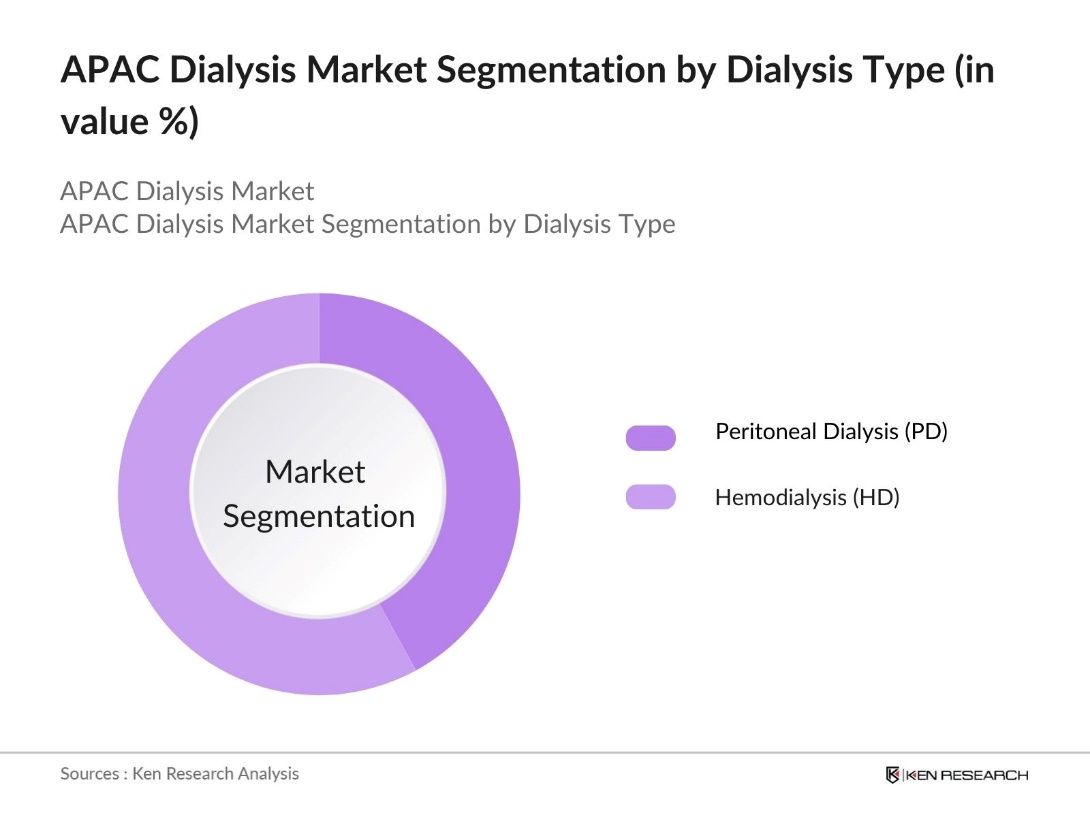
By Dialysis Type: The APAC Dialysis Market is segmented by dialysis type into Peritoneal Dialysis (PD) and Hemodialysis (HD). Hemodialysis holds a larger market share, mainly due to its widespread adoption in hospitals and clinics. HD is a preferred option because of the availability of highly advanced equipment and skilled healthcare professionals. Moreover, HD is often chosen for patients with acute kidney failure, as the treatment is performed under medical supervision, ensuring safety.
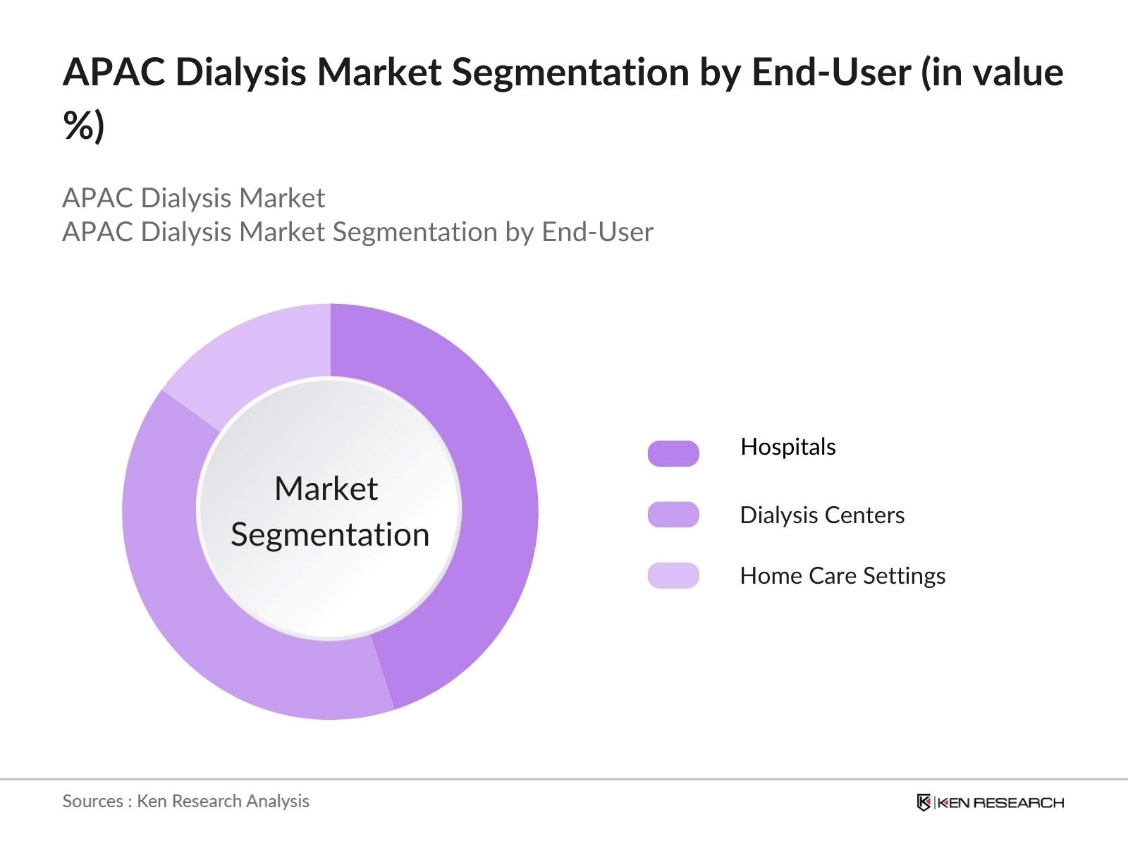
By End-User: The APAC Dialysis Market is segmented by end-user into Hospitals, Dialysis Centers, and Home Care Settings. Dialysis centers dominate this segment, as they offer both peritoneal and hemodialysis services with specialized healthcare professionals. The accessibility of these centers and the advanced infrastructure available for dialysis procedures make them the primary choice for many patients. Moreover, healthcare policies in many APAC countries incentivize the setup of dialysis centers in urban and semi-urban areas.
The market is highly competitive, with both global and regional players contributing to market development. Major companies focus on innovation, R&D, and expanding their product portfolios to maintain their market presence. The industry is marked by strategic partnerships, mergers, and acquisitions aimed at enhancing product offerings and geographical reach. For instance, Baxter International, Fresenius Medical Care, and B. Braun have a strong foothold in both peritoneal and hemodialysis markets in APAC, largely due to their well-established supply chains and advanced dialysis technologies .
|
Company Name |
Establishment Year |
Headquarters |
Revenue (USD) |
Employees |
R&D Investment |
Product Portfolio |
Geographic Reach |
Recent M&A Activity |
|
Baxter International Inc. |
1931 |
Deerfield, USA |
||||||
|
Fresenius Medical Care |
1996 |
Bad Homburg, Germany |
||||||
|
B. Braun Melsungen AG |
1839 |
Melsungen, Germany |
||||||
|
Nipro Corporation |
1954 |
Osaka, Japan |
||||||
|
Terumo Corporation |
1921 |
Tokyo, Japan |
The APAC dialysis market is expected to see substantial growth in the coming years, driven by increasing incidences of kidney diseases, rising healthcare investments, and technological advancements in dialysis solutions. With the growing adoption of telemedicine, home-based dialysis systems are becoming more popular, particularly in countries with large rural populations. Government policies supporting better access to healthcare and dialysis reimbursement programs are also key contributors to the expected market expansion.
|
By Dialysis Type |
Peritoneal Dialysis (CAPD, APD) Hemodialysis (Conventional, Nocturnal, Home-Based) |
|
By End-User |
Dialysis Centers Hospitals Home Care Settings |
|
By Modality |
Continuous Ambulatory Peritoneal Dialysis (CAPD) Automated Peritoneal Dialysis (APD) Conventional Hemodialysis Home-Based Hemodialysis |
|
By Patient Age Group |
Pediatric Adult Geriatric |
|
By Region |
China South Korea Japan India Australia Rest of APAC |
1.1. Definition and Scope
1.2. Market Taxonomy
1.3. Market Growth Rate
1.4. Market Segmentation Overview
2.1. Historical Market Size
2.2. Year-on-Year Growth Analysis
2.3. Key Market Developments and Milestones
3.1. Growth Drivers
3.1.1. Rising Incidence of End-Stage Renal Disease (ESRD)
3.1.2. Increasing Aging Population
3.1.3. Technological Advancements in Dialysis Systems
3.1.4. Government Health Programs and Subsidies
3.2. Market Challenges
3.2.1. High Cost of Dialysis Treatment
3.2.2. Inadequate Healthcare Infrastructure in Emerging Economies
3.2.3. Complexity in Home-Based Peritoneal Dialysis Systems
3.3. Opportunities
3.3.1. Growth in Telemedicine for Remote Monitoring
3.3.2. Advances in Automated Peritoneal Dialysis Systems
3.3.3. Rising Demand for Portable Hemodialysis Devices
3.4. Trends
3.4.1. Adoption of Wearable Artificial Kidneys
3.4.2. Growth of At-Home Hemodialysis Treatment
3.4.3. Integration of AI in Dialysis Treatment Management
3.5. Government Regulation
3.5.1. Healthcare Reimbursement Policies
3.5.2. Medical Device Regulatory Frameworks
3.5.3. Guidelines for Dialysis Treatment Standards
3.6. SWOT Analysis
3.7. Stakeholder Ecosystem
3.8. Porters Five Forces Analysis
3.9. Competition Ecosystem
4.1. By Dialysis Type (In Value %)
4.1.1. Peritoneal Dialysis (CAPD, APD)
4.1.2. Hemodialysis (Conventional, Nocturnal, Home-Based)
4.2. By End-User (In Value %)
4.2.1. Dialysis Centers
4.2.2. Hospitals
4.2.3. Home Care Settings
4.3. By Modality (In Value %)
4.3.1. Continuous Ambulatory Peritoneal Dialysis (CAPD)
4.3.2. Automated Peritoneal Dialysis (APD)
4.3.3. Conventional Hemodialysis
4.3.4. Home-Based Hemodialysis
4.4. By Patient Age Group (In Value %)
4.4.1. Pediatric
4.4.2. Adult
4.4.3. Geriatric
4.5. By Region (In Value %)
4.5.1. China
4.5.2. South Korea
4.5.3. Japan
4.5.4. India
4.5.5. Australia
4.5.6. Rest of APAC
5.1. Detailed Profiles of Major Competitors
5.1.1. Baxter International Inc.
5.1.2. Fresenius Medical Care AG & Co. KGaA
5.1.3. Nipro Corporation
5.1.4. B. Braun Melsungen AG
5.1.5. DaVita Inc.
5.1.6. Diaverum
5.1.7. Asahi Kasei Medical Co., Ltd.
5.1.8. Medtronic plc
5.1.9. Terumo Corporation
5.1.10. NxStage Medical, Inc.
5.1.11. Kawasumi Laboratories, Inc.
5.1.12. Toray Medical Co., Ltd.
5.1.13. JMS Co., Ltd.
5.1.14. Quanta Dialysis Technologies
5.1.15. Outset Medical, Inc.
5.2. Cross Comparison Parameters (Company Revenue, Employee Size, Operational Markets, Product Portfolio, Innovation Index, R&D Investment, Manufacturing Locations, Strategic Partnerships)
5.3. Market Share Analysis
5.4. Strategic Initiatives
5.5. Mergers and Acquisitions
5.6. Investment Analysis
5.7. Government Grants and Funding
5.8. Private Equity and Venture Capital Investment
6.1. Healthcare Standards and Dialysis Equipment Approval
6.2. Compliance Requirements for Dialysis Centers
6.3. Safety Protocols for Home-Based Dialysis Systems
7.1. Future Market Size Projections
7.2. Key Factors Driving Future Market Growth
8.1. By Dialysis Type (In Value %)
8.2. By End-User (In Value %)
8.3. By Modality (In Value %)
8.4. By Patient Age Group (In Value %)
8.5. By Region (In Value %)
9.1. TAM/SAM/SOM Analysis
9.2. White Space Opportunity Identification
9.3. Strategic Marketing Initiatives
9.4. Partnerships and Collaborations Recommendations
Disclaimer Contact UsWe start by identifying the critical variables that influence the APAC dialysis market, including incidence rates of chronic kidney disease, technological advancements in dialysis equipment, and healthcare reimbursement policies. This involves extensive desk research utilizing secondary databases.
We analyze historical market data for peritoneal and hemodialysis, focusing on the penetration rates of different treatment types and the revenue generated across the APAC region. A detailed evaluation of patient demographics and treatment preferences is included.
Our hypotheses are validated through interviews with leading healthcare professionals and dialysis experts. These consultations provide operational insights that are cross-verified with quantitative data from industry reports.
In the final stage, we engage with dialysis equipment manufacturers and healthcare providers to gather insights into emerging trends and future growth opportunities. This ensures a comprehensive and validated report.
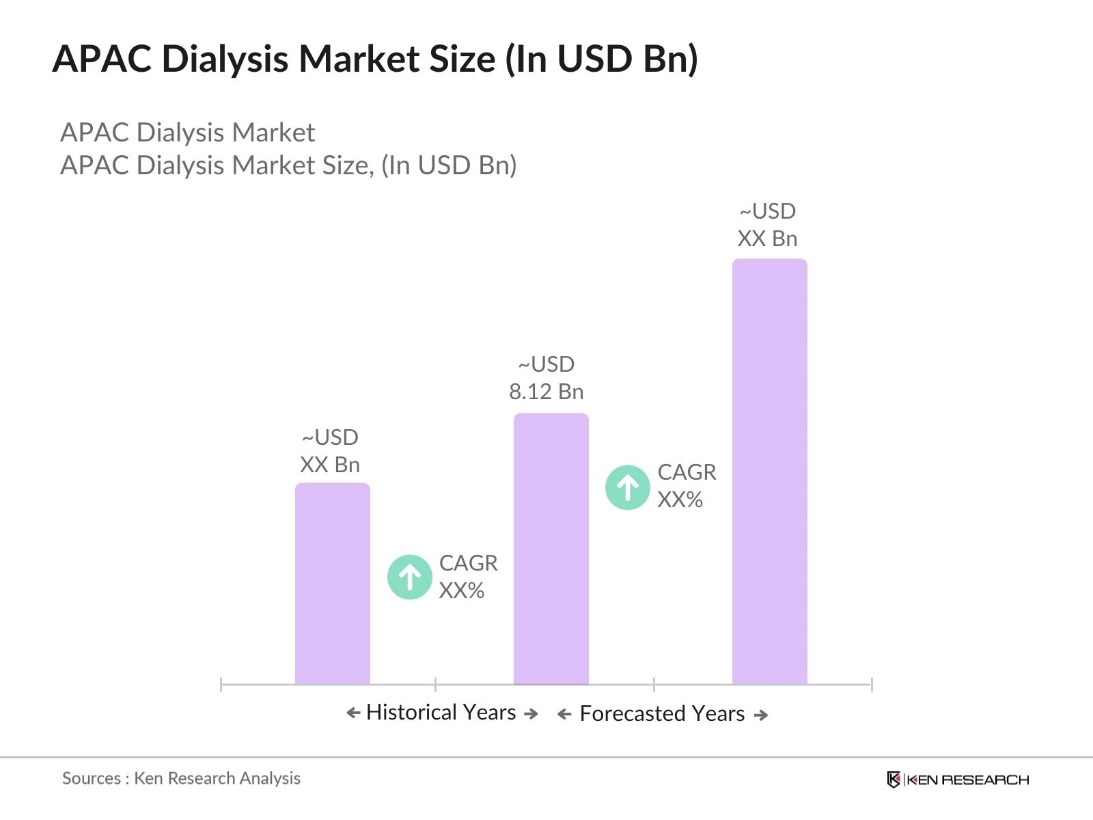
The APAC Dialysis Market is valued at USD 8.12 billion, driven by rising cases of end-stage renal disease and the increasing adoption of both peritoneal and hemodialysis treatments.
Key challenges in APAC dialysis market include the high cost of treatment, limited access to healthcare infrastructure in rural areas, and a shortage of trained healthcare professionals, especially for peritoneal dialysis procedures.
Major players in APAC dialysis market include Baxter International, Fresenius Medical Care, B. Braun Melsungen, Nipro Corporation, and Terumo Corporation, who dominate the market due to their extensive product offerings and established global presence.
The APAC dialysis market growth is driven by increasing healthcare investments, rising cases of kidney diseases, and advancements in home-based dialysis systems. Governments in the region are also offering subsidies and improving healthcare infrastructure.

What makes us stand out is that our consultants follows Robust, Refine and Result (RRR) methodology. i.e. Robust for clear definitions, approaches and sanity checking, Refine for differentiating respondents facts and opinions and Result for presenting data with story

We have set a benchmark in the industry by offering our clients with syndicated and customized market research reports featuring coverage of entire market as well as meticulous research and analyst insights.

While we don't replace traditional research, we flip the method upside down. Our dual approach of Top Bottom & Bottom Top ensures quality deliverable by not just verifying company fundamentals but also looking at the sector and macroeconomic factors.

With one step in the future, our research team constantly tries to show you the bigger picture. We help with some of the tough questions you may encounter along the way: How is the industry positioned? Best marketing channel? KPI's of competitors? By aligning every element, we help maximize success.

Our report gives you instant access to the answers and sources that other companies might choose to hide. We elaborate each steps of research methodology we have used and showcase you the sample size to earn your trust.

If you need any support, we are here! We pride ourselves on universe strength, data quality, and quick, friendly, and professional service.