
APAC Humanoid Robot Market Outlook to 2030
Region:Asia
Author(s):Shubham Kashyap
Product Code:KROD4890
December 2024
88
About the Report
APAC Humanoid Robot Market Overview
- The APAC humanoid robot market is currently valued at USD 290 million, driven by rapid advancements in AI, automation, and robotics integration across multiple sectors, including healthcare, education, and industrial automation. The surge in demand for automation to address labor shortages and improve efficiency has accelerated the adoption of humanoid robots across the region. Japan, South Korea, and China are at the forefront of this trend, leveraging their technological prowess and government-backed initiatives to lead innovation in humanoid robotics.
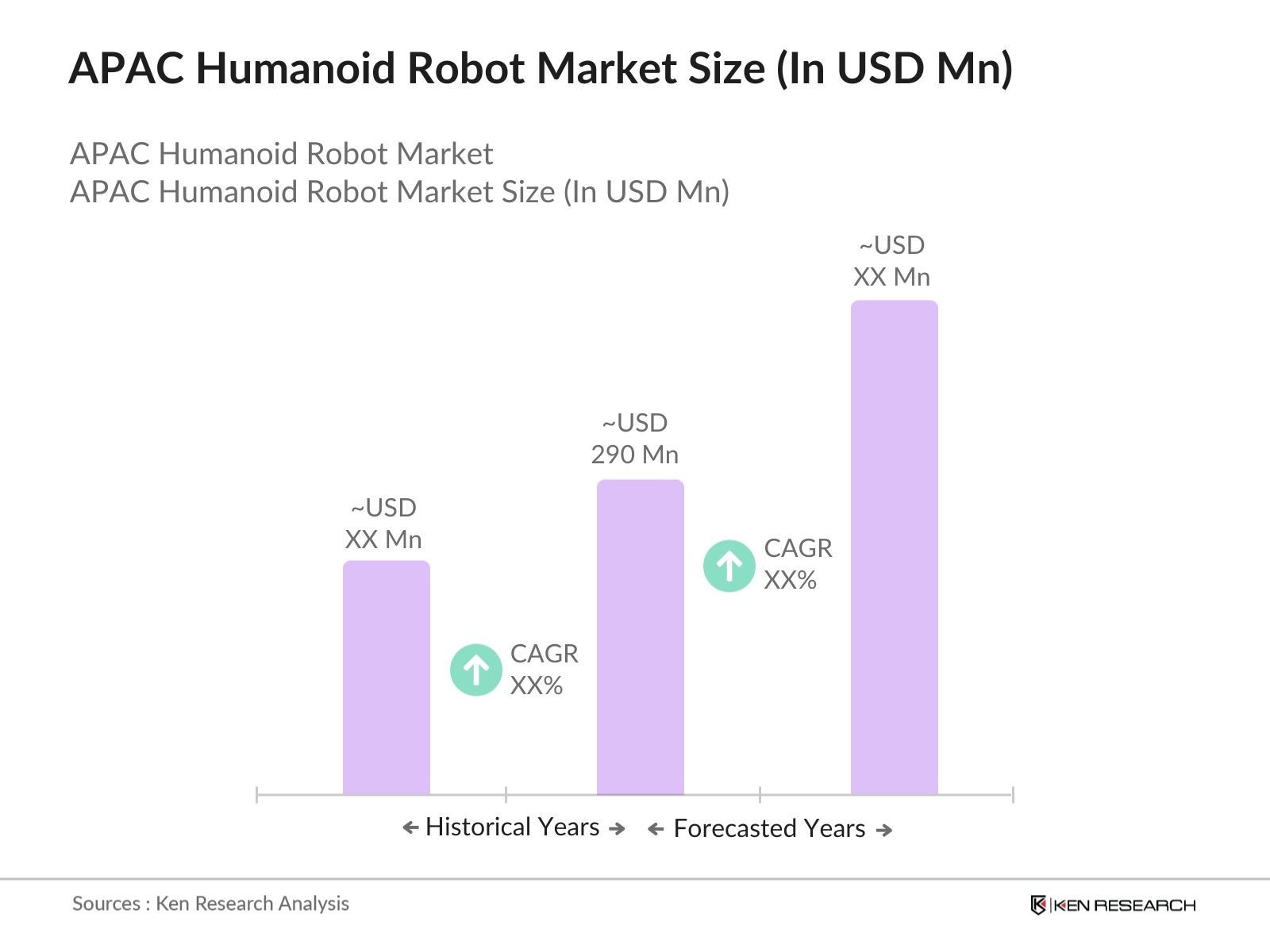
- Major markets such as Japan and South Korea dominate the humanoid robot sector due to their advanced technological infrastructure, strong government support, and significant investments in R&D. Japan's longstanding leadership in robotics, combined with South Korea's focus on AI and automation in healthcare and retail, has solidified their positions as key players. China, with its massive manufacturing capabilities and governmental backing for robotics projects, is also rapidly expanding its humanoid robotics sector, particularly in industrial automation and service robotics.
- Several APAC governments have established regulatory frameworks to govern the integration of AI in humanoid robotics. In 2023, South Koreas Ministry of Science and ICT implemented guidelines to ensure the ethical use of AI in robots, including safety protocols for human-robot interaction. Japans "AI Utilization Act" also introduced regulatory measures to ensure that humanoid robots meet strict safety and functionality standards before they can be deployed in public spaces. These frameworks are critical in ensuring that robots are safe for widespread use in society.
APAC Humanoid Robot Market Segmentation
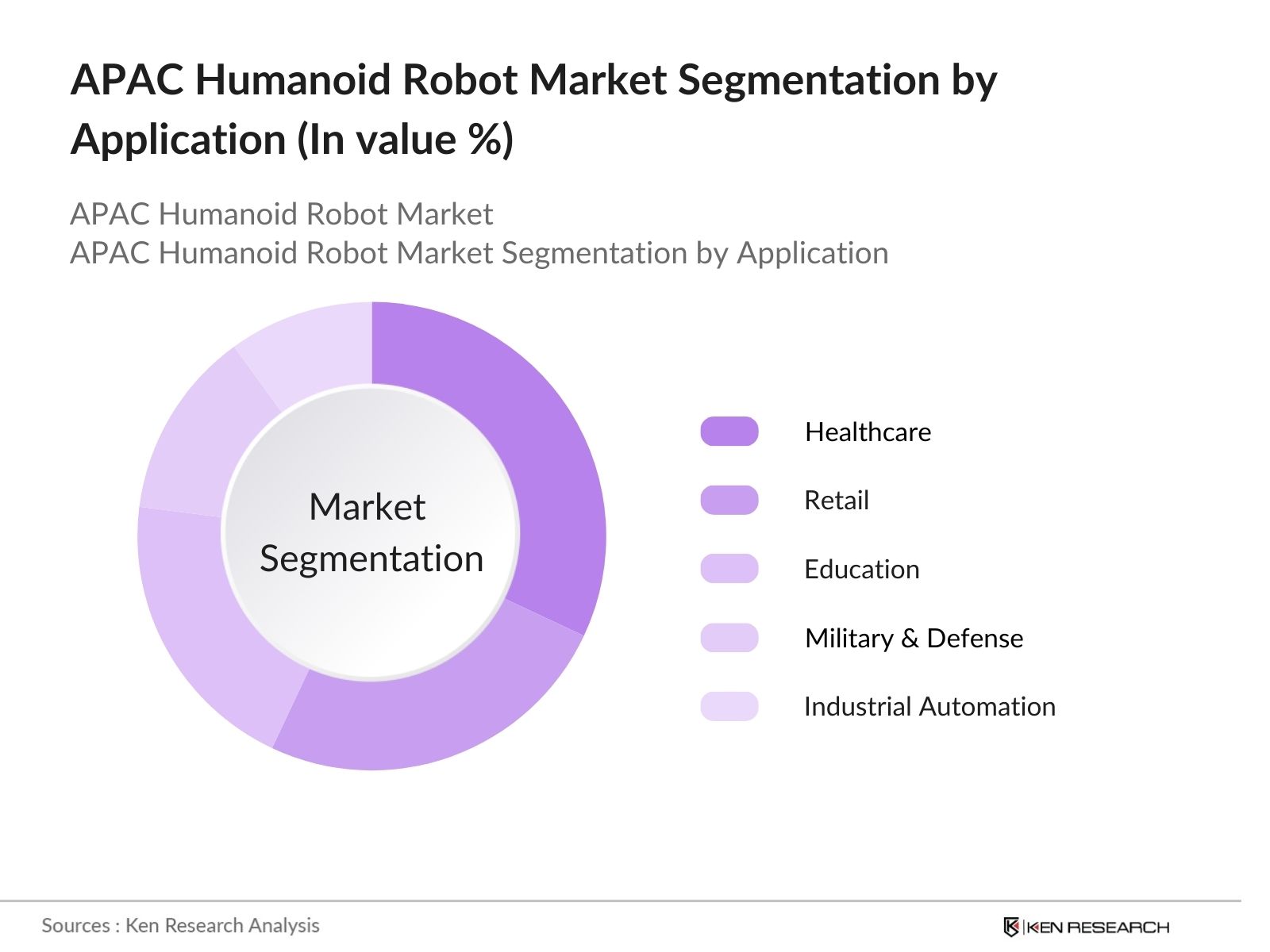
- By Application: The market is segmented by application into healthcare, retail, education, military & defense, and industrial automation. Healthcare is the dominant application, representing the largest share due to the aging population in countries like Japan and South Korea, where humanoid robots are increasingly used for elder care, patient interaction, and rehabilitation. The healthcare industry is leveraging humanoid robots to address the shortage of medical staff, streamline operations, and provide personalized care for patients, thus driving demand.
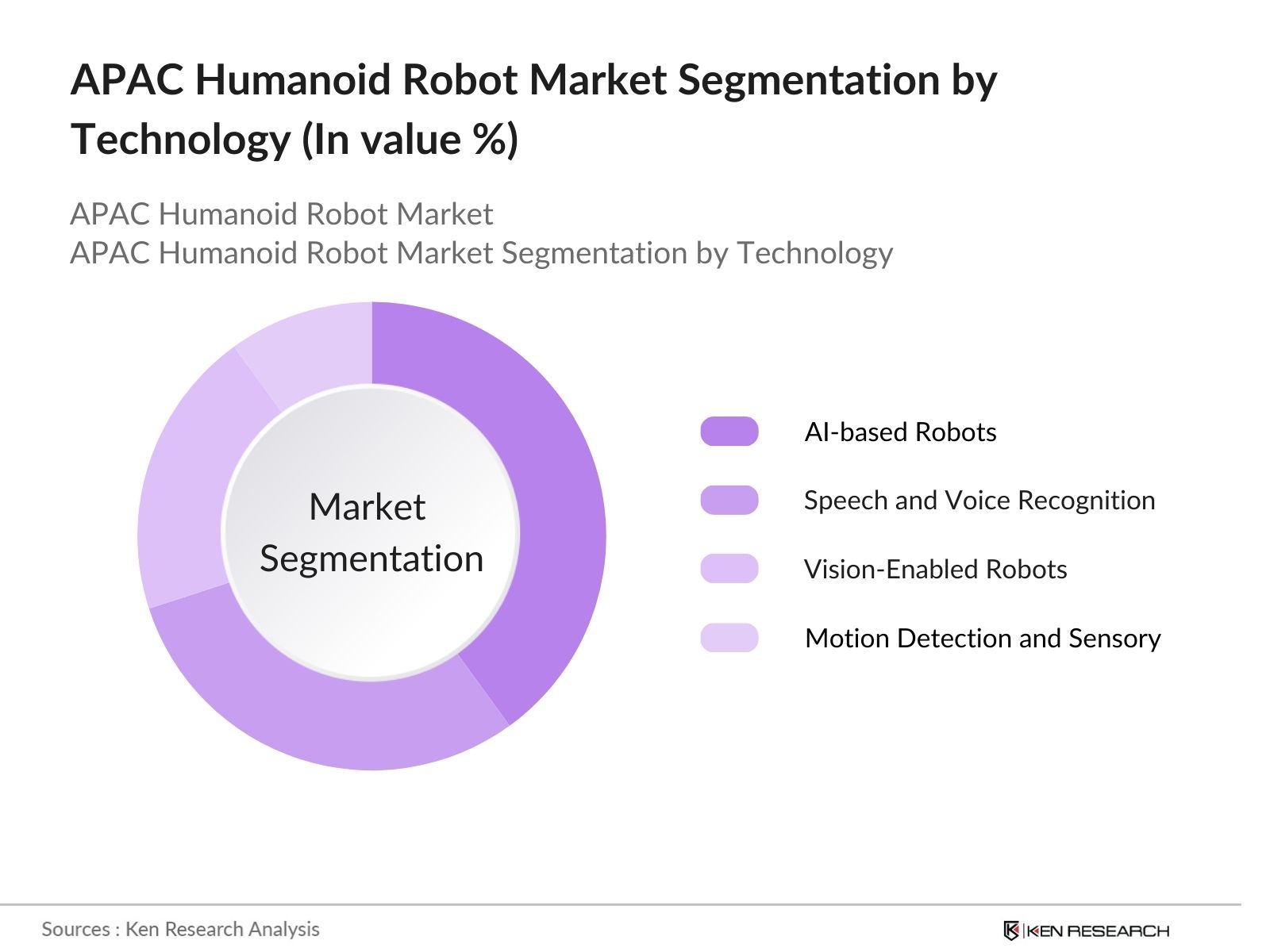
- By Technology: The market is further segmented by technology into AI-based robots, speech and voice recognition robots, vision-enabled robots, and motion detection robots. AI-based robots dominate the segment due to their ability to process complex information and deliver responsive, intelligent interactions. The growing demand for these robots in customer service, healthcare, and industrial sectors is driving the dominance of this sub-segment. These robots are utilized for personalized care, educational purposes, and public service roles where advanced decision-making and interaction are essential.
APAC Humanoid Robot Market Competitive Landscape
The APAC humanoid robot market is highly competitive, with both global and regional players competing through partnerships, innovations, and technological advancements. Companies like SoftBank Robotics, Hanson Robotics, and UBTECH Robotics lead the market with their advanced humanoid robot solutions for healthcare, retail, and industrial applications. The competitive landscape is marked by significant R&D investments and strategic collaborations with AI companies to develop cutting-edge humanoid robots.
|
Company Name |
Establishment Year |
Headquarters |
R&D Expenditure |
Regional Presence |
Revenue (2023) |
Patents Owned |
Robotics Segments |
Strategic Partnerships |
|
SoftBank Robotics |
1981 |
Tokyo, Japan |
||||||
|
Hanson Robotics |
2013 |
Hong Kong, China |
||||||
|
UBTECH Robotics |
2012 |
Shenzhen, China |
||||||
|
Toyota Research Institute |
2015 |
Tokyo, Japan |
||||||
|
Kawada Robotics |
1927 |
Tokyo, Japan |
APAC Humanoid Robot Industry Analysis
Growth Drivers
- Increasing Need for Workforce Automation: The need for workforce automation across the Asia-Pacific region is driving the adoption of humanoid robots. For example, in Japan, the Ministry of Economy, Trade, and Industry (METI) reported that the countrys aging workforce prompted a $1.5 billion investment into automation technologies in 2023 to bridge the labor gap. Similarly, South Koreas manufacturing sector is projected to adopt 50,000 robots for factory automation by 2025 to maintain competitiveness in global markets. These figures reflect a growing reliance on automation in response to labor shortages and rising labor costs in the region.
- Integration of AI and Robotics: AI integration into humanoid robots is evolving rapidly, enhancing their capabilities. The Government of Singapore has allocated over $110 million in AI and robotics initiatives to modernize its industries by 2024. Meanwhile, Japan's "AI in Society 5.0" strategy is pushing $20 billion towards AI research, part of which is designated for robotics applications. The inclusion of machine learning algorithms and advanced AI is enabling robots to perform complex tasks, making them integral to labor automation in industries like retail, healthcare, and logistics.
- Rising Investments in AI and Robotics R&D: Countries in the APAC region are significantly investing in AI and robotics research. For instance, China is leading with over $8 billion invested in AI research in 2023, with robotics being a key focus area, as per data from the Chinese Ministry of Industry and Information Technology. South Korea is following suit, with over $3 billion directed towards AI-based robotics R&D. These investments aim to boost technological advancements, improving the capabilities and commercial viability of humanoid robots in industrial and service sectors.
Market Challenges
- High Initial Costs of Humanoid Robots: One of the major challenges in the APAC humanoid robot market is the high cost associated with developing and deploying advanced humanoid robots. These robots require substantial investment in AI, machine learning, and robotics hardware, which can be prohibitive for smaller companies.
- Lack of Skilled Workforce for Robotics Deployment: The shortage of skilled professionals capable of developing, maintaining, and operating humanoid robots is a significant barrier to market growth, particularly in emerging markets within the APAC region.
APAC Humanoid Robot Market Future Outlook
The APAC humanoid robot market is expected to witness significant growth over the next five years, driven by advancements in AI, government support for robotics development, and increasing demand for humanoid robots across healthcare, retail, and industrial automation sectors. As industries in Japan, South Korea, and China continue to adopt robotics to improve efficiency and manage labor shortages, the market will expand significantly. Furthermore, the integration of AI into humanoid robots will create new opportunities for personalized and autonomous robotic solutions in various sectors.
Future Market Opportunities
- Technological Collaborations between AI Firms and Robotics Companies: Technological collaborations are creating significant growth opportunities for the APAC humanoid robot market. In 2023, Japans SoftBank Robotics entered into a partnership with NVIDIA to develop AI-powered robots for various industries. Such collaborations are fostering innovation by combining AI and robotics expertise, leading to the development of more efficient humanoid robots capable of complex tasks. China has also seen several collaborations between AI startups and large robotics firms, accelerating the integration of AI into humanoid robots.
- Growing Focus on Human-Robot Collaboration in Healthcare: The healthcare sector is emerging as a key area for humanoid robot adoption, particularly in elderly care and rehabilitation. In 2023, Japans healthcare industry invested over USD 300 million in humanoid robots for elderly care facilities, aiming to enhance patient care and reduce the burden on human workers. These robots are equipped with AI capabilities to assist patients with daily activities and monitor their health. This focus on human-robot collaboration is creating new opportunities for growth in the healthcare sector across the APAC region
Scope of the Report
|
By Application |
Healthcare Retail and Hospitality Education Military & Defense Industrial Automation |
|
By End-User |
Corporate Enterprises Research and Academic Institutions Government Bodies Hospitals and Medical Centers Retail Stores |
|
By Technology |
AI-based Robots Speech and Voice Recognition Integrated Robots Vision-Enabled Robots Motion Detection and Sensory Robotics |
|
By Mobility Type |
Stationary Humanoids Mobile Humanoids |
|
By Region |
China Japan South Korea Rest of the APAC |
Products
Key Target Audience
Investors and Venture Capitalist Firms
Government and Regulatory Bodies (Ministry of Economy, Trade, and Industry - Japan, Ministry of Science and ICT - South Korea)
Healthcare Providers and Institutions
Retail Chains and Commercial Enterprises
Robotics Manufacturers and Suppliers
Military and Defense Organizations
Technology and AI Development Firms
Educational and Academic Institutions
Banks and Financial Institutions
Companies
Major Players Mentioned in the Report
SoftBank Robotics
Hanson Robotics
UBTECH Robotics
Toyota Research Institute
Kawada Robotics
Hitachi Robotics
Fujitsu Laboratories
Hyundai Robotics
CloudMinds Technology
Engineered Arts Ltd.
PAL Robotics
RoboThespian
F&P Robotics AG
AI-Business Robotics Solutions
Robotis
Table of Contents
01 APAC Humanoid Robot Market Overview
1.1. Definition and Scope
1.2. Market Taxonomy
1.3. Market Dynamics Overview
1.4. Competitive Landscape Overview
02 APAC Humanoid Robot Market Size (In USD Mn)
2.1. Current Market Size
2.2. Year-On-Year Growth Analysis
2.3. Key Market Developments and Milestones
2.4. Market Growth Forecast
03 APAC Humanoid Robot Market Analysis
3.1. Growth Drivers (Adoption Rate, Research Investments, Technological Evolution, Labor Automation) 3.1.1. Increasing Need for Workforce Automation
3.1.2. Integration of AI and Robotics
3.1.3. Rising Investments in AI and Robotics R&D
3.1.4. Expansion of Service Robotics in Retail & Healthcare
3.2. Market Challenges (Initial High Capital, Technology Maturity, Regulatory Frameworks) 3.2.1. High Initial Investment and Operating Costs
3.2.2. Lack of Technological Maturity in Certain Regions
3.2.3. Regulatory and Safety Concerns for Human Interaction
3.2.4. Limited Adoption in Developing Markets
3.3. Opportunities (Partnerships, AI Integration, Human-Robot Collaboration) 3.3.1. Technological Collaborations between AI Firms and Robotics Companies
3.3.2. Growing Focus on Human-Robot Collaboration in Healthcare
3.3.3. Expanding Application in Education and Entertainment Industries
3.3.4. Supportive Government Initiatives for Robotics Development
3.4. Trends (AI Integration, Machine Learning, Personalized Robotics) 3.4.1. Increased Integration of AI and Machine Learning
3.4.2. Growth in Personalized Humanoid Robots for Elderly Care
3.4.3. Use of Humanoid Robots in Retail for Customer Service
3.4.4. Enhanced Human-Robot Interactions through Machine Vision
3.5. Government Regulation (AI Safety, Standardization, Certification Requirements) 3.5.1. Regulatory Frameworks Governing AI Integration in Robotics
3.5.2. Standardization of Humanoid Robotics Design and Functionality
3.5.3. Certification for Safety Compliance in Public Spaces
3.5.4. Funding Programs for Robotics Startups and AI Integration
3.6. SWOT Analysis
3.7. Stakeholder Ecosystem Analysis (Manufacturers, Distributors, End-Users)
3.8. Porters Five Forces Analysis (Threat of New Entrants, Power of Suppliers, Competition) 3.9. Competitive Ecosystem Analysis (Market Leader Strategies, Growth Tactics)\
04 APAC Humanoid Robot Market Segmentation
4.1. By Application (In Value %)
4.1.1. Healthcare
4.1.2. Retail and Hospitality
4.1.3. Education
4.1.4. Military & Defense
4.1.5. Industrial Automation
4.2. By End-User (In Value %)
4.2.1. Corporate Enterprises
4.2.2. Research and Academic Institutions
4.2.3. Government Bodies
4.2.4. Hospitals and Medical Centers
4.2.5. Retail Stores
4.3. By Technology (In Value %)
4.3.1. AI-based Robots
4.3.2. Speech and Voice Recognition Integrated Robots
4.3.3. Vision-Enabled Robots
4.3.4. Motion Detection and Sensory Robotics
4.4. By Mobility Type (In Value %)
4.4.1. Stationary Humanoids
4.4.2. Mobile Humanoids
4.5. By Region (In Value %)
4.5.1. East Asia
4.5.2. Southeast Asia
4.5.3. South Asia
4.5.4. Oceania
05 APAC Humanoid Robot Market Competitive Analysis
5.1. Detailed Profiles of Major Companies 5.1.1. SoftBank Robotics
5.1.2. Hanson Robotics
5.1.3. Toyota Research Institute
5.1.4. UBTECH Robotics
5.1.5. Kawada Robotics
5.1.6. Hitachi Robotics
5.1.7. Fujitsu Laboratories
5.1.8. Hyundai Robotics
5.1.9. Engineered Arts Ltd.
5.1.10. PAL Robotics
5.1.11. RoboThespian
5.1.12. AI-Business Robotics Solutions
5.1.13. F&P Robotics AG
5.1.14. CloudMinds Technology
5.1.15. Robotis
5.2. Cross Comparison Parameters (Revenue, Market Share, R&D Expenditure, Patents Owned, Regional Presence, Technological Capabilities, Product Portfolio, Strategic Collaborations)
5.3. Market Share Analysis
5.4. Strategic Initiatives (Product Launches, Collaborations, Mergers & Acquisitions)
5.5. Investment Analysis (R&D Expenditure, Joint Ventures)
5.6. Mergers and Acquisitions
5.7. Private Equity and Venture Capital Funding
5.8. Government Grants and Support Programs
06 APAC Humanoid Robot Market Regulatory Framework
6.1. Regional Robotics Safety Standards
6.2. Government Policies for AI Integration
6.3. Ethical Considerations in Human-Robot Interaction
6.4. Certification Requirements for Robotic Products
07 APAC Humanoid Robot Market Future Size (In USD Mn)
7.1. Future Market Size Projections
7.2. Key Factors Driving Future Market Growth
08 APAC Humanoid Robot Market Future Segmentation
8.1. By Application (In Value %)
8.2. By End-User (In Value %)
8.3. By Technology (In Value %)
8.4. By Mobility Type (In Value %)
8.5. By Region (In Value %)
09 APAC Humanoid Robot Market Analysts Recommendations
9.1. TAM/SAM/SOM Analysis
9.2. Customer Cohort Analysis
9.3. Marketing and Positioning Strategy
9.4. White Space Opportunity Analysis
Research Methodology
Step 1: Identification of Key Variables
In the initial phase, we construct a comprehensive ecosystem map to identify key stakeholders within the APAC Humanoid Robot Market. This includes extensive desk research using secondary databases, proprietary resources, and direct engagement with industry leaders to define the critical factors influencing market dynamics.
Step 2: Market Analysis and Construction
Historical data regarding market penetration, adoption rates, and revenue generation within the humanoid robot market are gathered and analyzed. This step focuses on identifying patterns and trends that support future market growth predictions.
Step 3: Hypothesis Validation and Expert Consultation
Hypotheses regarding market dynamics are validated through consultations with experts from leading robotics companies. These interviews provide valuable insights into product developments, consumer preferences, and market challenges, further refining our data.
Step 4: Research Synthesis and Final Output
The final phase involves synthesizing data obtained from manufacturers, industry experts, and AI development firms to generate an accurate and comprehensive analysis of the APAC humanoid robot market.
Frequently Asked Questions
01. How big is the APAC Humanoid Robot Market?
The APAC humanoid robot market was valued at USD 290 million, driven by advancements in AI and increasing adoption of humanoid robots across healthcare, retail, and industrial sectors.
02. What are the challenges in the APAC Humanoid Robot Market?
Challenges include high initial costs of development, slow adoption in emerging markets, and a shortage of skilled professionals capable of operating and maintaining advanced humanoid robots.
03. Who are the major players in the APAC Humanoid Robot Market?
Key players include SoftBank Robotics, Hanson Robotics, UBTECH Robotics, Toyota Research Institute, and Kawada Robotics. These companies dominate the market due to their technological expertise and strong R&D investment.
04. What are the growth drivers in the APAC Humanoid Robot Market?
Growth drivers include the increasing need for automation in healthcare and retail, advancements in AI technologies, and government support for robotics research and development.
Why Buy From Us?

What makes us stand out is that our consultants follows Robust, Refine and Result (RRR) methodology. i.e. Robust for clear definitions, approaches and sanity checking, Refine for differentiating respondents facts and opinions and Result for presenting data with story

We have set a benchmark in the industry by offering our clients with syndicated and customized market research reports featuring coverage of entire market as well as meticulous research and analyst insights.

While we don't replace traditional research, we flip the method upside down. Our dual approach of Top Bottom & Bottom Top ensures quality deliverable by not just verifying company fundamentals but also looking at the sector and macroeconomic factors.

With one step in the future, our research team constantly tries to show you the bigger picture. We help with some of the tough questions you may encounter along the way: How is the industry positioned? Best marketing channel? KPI's of competitors? By aligning every element, we help maximize success.

Our report gives you instant access to the answers and sources that other companies might choose to hide. We elaborate each steps of research methodology we have used and showcase you the sample size to earn your trust.

If you need any support, we are here! We pride ourselves on universe strength, data quality, and quick, friendly, and professional service.