
APAC Paint and Coatings Market Outlook to 2030
Region:Afganistan
Author(s):Shubham Kashyap
Product Code:KROD3470
Region:Afganistan
Author(s):Shubham Kashyap
Product Code:KROD3470
November 2024
96
The APAC Paint and Coatings market is highly competitive, with both global and regional players vying for market share through product innovation, strategic partnerships, and the expansion of their manufacturing capacities. Leading companies such as Nippon Paint, Kansai Paint, and Asian Paints dominate the market with their extensive product portfolios and strong regional presence. These companies are investing heavily in research and development to create more sustainable, eco-friendly products in response to increasing regulatory pressures.
|
Company Name |
Establishment Year |
Headquarters |
Key Products |
Revenue (2023) |
R&D Investment |
Key Markets |
Partnerships |
Sustainability Initiatives |
Market Share (2023) |
|
Nippon Paint |
1881 |
Tokyo, Japan |
|||||||
|
Kansai Paint |
1918 |
Osaka, Japan |
|||||||
|
Asian Paints |
1942 |
Mumbai, India |
|||||||
|
AkzoNobel |
1792 |
Amsterdam, Netherlands |
|||||||
|
BASF Coatings |
1865 |
Ludwigshafen, Germany |
Industrial, Automotive |
$7 billion |
$90 million |
China, Japan |
Automotive Manufacturers |
Energy-efficient Coatings |
12% |
The APAC paint and coatings market is expected to witness sustained growth over the next five years, driven by continued infrastructure development, rising environmental awareness, and technological advancements. The demand for sustainable and high-performance coatings will continue to rise as governments across the region implement stricter regulations on VOC emissions and promote green building practices. Furthermore, emerging markets such as Vietnam, Indonesia, and the Philippines are expected to play a significant role in driving market growth, offering new opportunities for both local and international manufacturers.
|
Application |
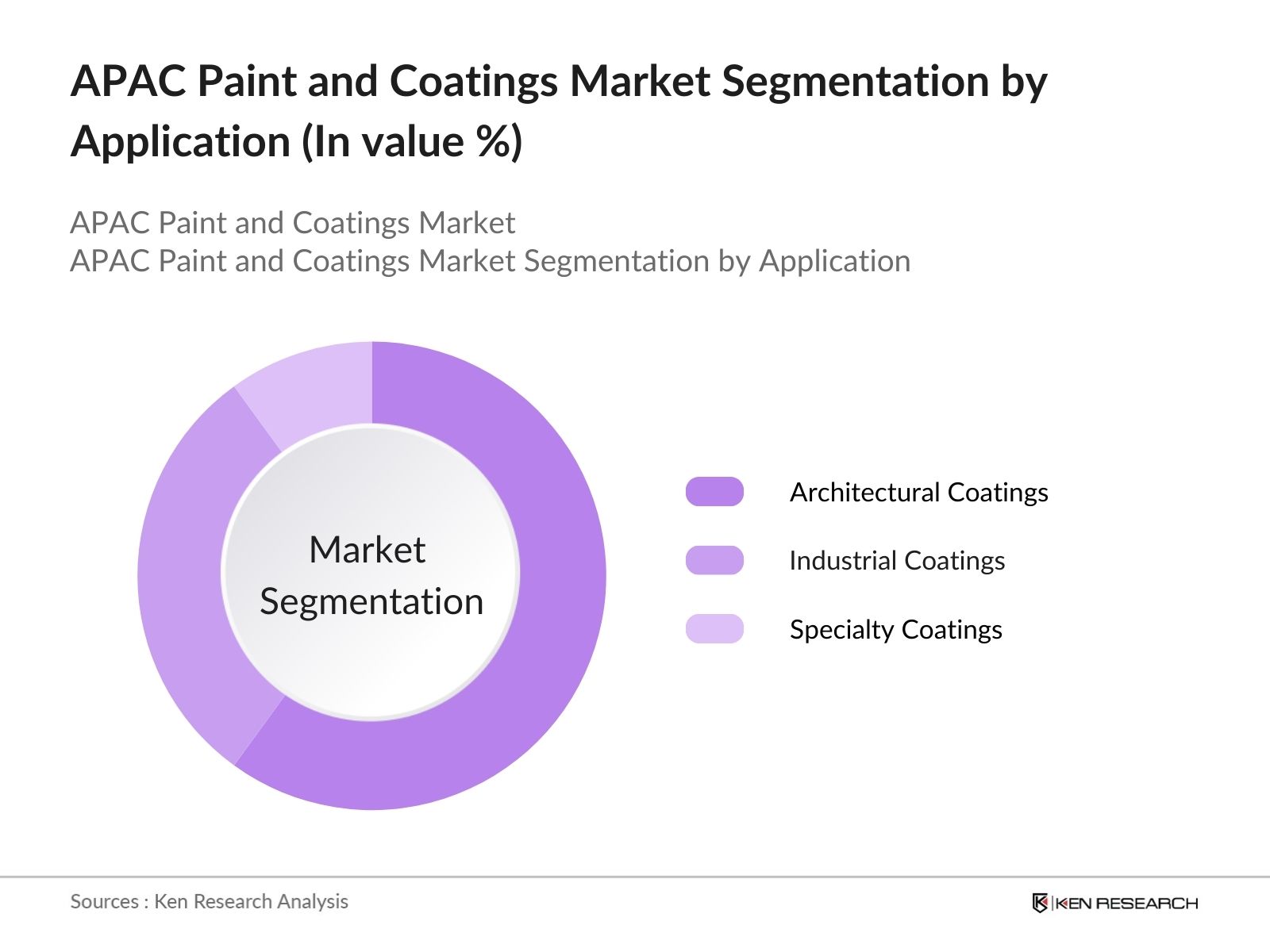
Architectural Coatings Industrial Coatings Specialty Coatings |
|
Resin Type |
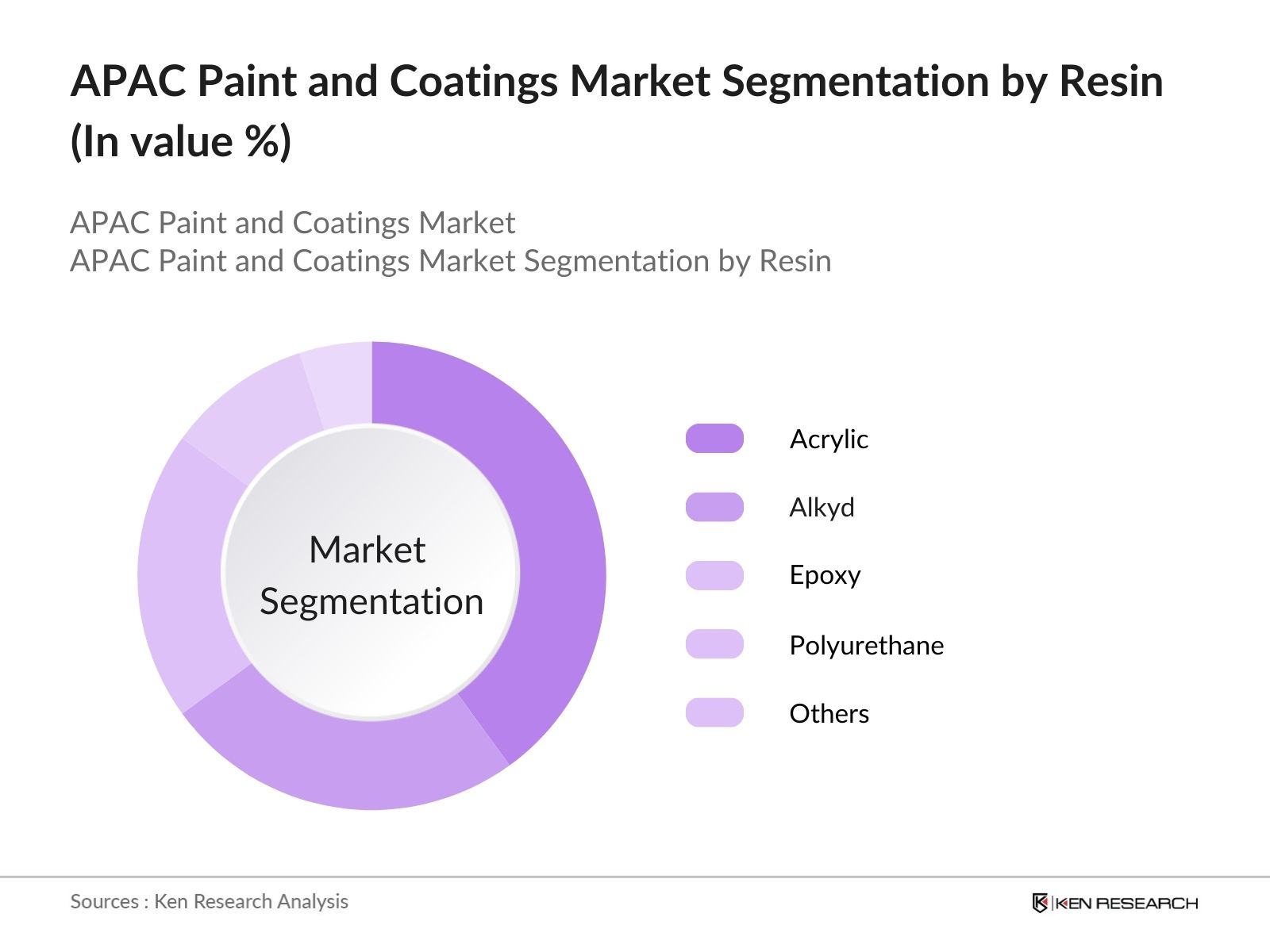
Acrylic Alkyd Epoxy Polyurethane Others |
|
Technology |
Water-Based Solvent-Based Powder Coatings UV-Cured Coatings |
|
End-User |
Residential Commercial Industrial Automotive |
|
Region |
China India Japan South Korea Rest of the APAC |
1.1. Definition and Scope
1.2. Market Taxonomy
1.3. Market Growth Rate
1.4. Market Segmentation Overview
2.1. Historical Market Size
2.2. Year-On-Year Growth Analysis
2.3. Key Market Developments and Milestones
3.1. Growth Drivers
3.1.1. Urbanization and Infrastructure Expansion (Infrastructure Projects, Smart City Initiatives)
3.1.2. Increased Automotive Production (Automotive Coatings, Advanced Paint Technologies)
3.1.3. Rising Demand for Eco-friendly Coatings (Low-VOC, Water-based Coatings)
3.1.4. Booming Industrial Sector (Protective Coatings, Heat-resistant Coatings)
3.2. Market Challenges
3.2.1. Fluctuations in Raw Material Prices (Crude Oil, Pigments)
3.2.2. Strict Environmental Regulations (VOC Emission Standards, Compliance Costs)
3.2.3. Supply Chain Disruptions (Global Trade Issues, Pandemic Impact)
3.2.4. Limited Access to High-Performance Coating Technologies (Technological Barriers, Investment Needs)
3.3. Opportunities
3.3.1. Technological Advancements in Coatings (Nanotechnology, Smart Coatings)
3.3.2. Increasing Adoption of Sustainable Materials (Green Building Certifications, Government Incentives)
3.3.3. Emerging Markets in Southeast Asia (Vietnam, Indonesia, Thailand)
3.3.4. Expansion into Specialty Coatings (Corrosion Protection, Thermal Insulation)
3.4. Trends
3.4.1. Adoption of Digital Tools in Paint Manufacturing (IoT, Automation)
3.4.2. Growing Popularity of Decorative Paints (Interior Design, DIY Trends)
3.4.3. Rise in Demand for Antimicrobial Coatings (Health & Safety, Post-Pandemic Needs)
3.4.4. Increased Focus on High-performance Coatings (Automotive, Aerospace, Marine)
3.5. Government Regulations
3.5.1. Environmental Standards on VOC Emissions (Country-Specific Policies)
3.5.2. Compliance with Green Building Certifications (LEED, BREEAM)
3.5.3. Import/Export Tariffs on Raw Materials (Trade Policies, Duties)
3.5.4. Government Incentives for Sustainable Paints (Tax Benefits, R&D Support)
3.6. SWOT Analysis
3.7. Stake Ecosystem
3.8. Porters Five Forces
3.9. Competition Ecosystem
4.1. By Application (In Value %)
4.1.1. Architectural Coatings
4.1.2. Industrial Coatings
4.1.3. Specialty Coatings
4.2. By Resin Type (In Value %)
4.2.1. Acrylic
4.2.2. Alkyd
4.2.3. Epoxy
4.2.4. Polyurethane
4.2.5. Others
4.3. By Technology (In Value %)
4.3.1. Water-Based
4.3.2. Solvent-Based
4.3.3. Powder Coatings
4.3.4. UV-Cured Coatings
4.4. By End-User (In Value %)
4.4.1. Residential
4.4.2. Commercial
4.4.3. Industrial
4.4.4. Automotive
4.5. By Region (In Value %)
4.5.1. China
4.5.2. India
4.5.3. Japan
4.5.4. South Korea
4.5.5. Southeast Asia (Vietnam, Indonesia, Thailand)
5.1 Detailed Profiles of Major Companies
5.1.1. Nippon Paint
5.1.2. Kansai Paint
5.1.3. Asian Paints
5.1.4. AkzoNobel
5.1.5. BASF Coatings
5.1.6. Sherwin-Williams
5.1.7. PPG Industries
5.1.8. Jotun
5.1.9. Berger Paints
5.1.10. DuluxGroup
5.1.11. Tikkurila
5.1.12. RPM International
5.1.13. Fosroc
5.1.14. Beckers Group
5.1.15. Hempel
5.2 Cross Comparison Parameters (No. of Employees, Headquarters, Inception Year, Revenue, Product Portfolio, R&D Investments, Market Share, Key Regions)
5.3. Market Share Analysis
5.4. Strategic Initiatives
5.5. Mergers and Acquisitions
5.6. Investment Analysis
5.7. Venture Capital Funding
5.8. Government Grants
5.9. Private Equity Investments
6.1. Environmental Standards
6.2. Compliance Requirements
6.3. Certification Processes
7.1. Future Market Size Projections
7.2. Key Factors Driving Future Market Growth
8.1. By Application (In Value %)
8.2. By Resin Type (In Value %)
8.3. By Technology (In Value %)
8.4. By End-User (In Value %)
8.5. By Region (In Value %)
9.1. TAM/SAM/SOM Analysis
9.2. Customer Cohort Analysis
9.3. Marketing Initiatives
9.4. White Space Opportunity Analysis
The first step in our research methodology is to identify the key variables influencing the APAC Paint and Coatings market. This is achieved through extensive secondary research, consulting industry reports, government publications, and proprietary databases to gather relevant industry data. The aim is to define the key drivers, challenges, and opportunities shaping the market.
In this phase, we analyze historical data to construct a detailed market model for the APAC Paint and Coatings market. This involves assessing the market size, product segmentation, and competitive landscape. The evaluation is further refined by assessing industry trends and technological advancements that influence product adoption and sales performance.
To validate our market hypotheses, we conduct expert interviews through phone consultations and online surveys. This step allows us to cross-check our data with industry professionals, including manufacturers, distributors, and other key stakeholders. Their insights provide crucial information regarding product innovation, market dynamics, and future growth trends.
Finally, all the collected data is synthesized to produce a comprehensive market report. This includes quantitative and qualitative analysis, with insights into consumer preferences, competitive strategies, and emerging trends. The report is designed to provide actionable recommendations for business professionals.
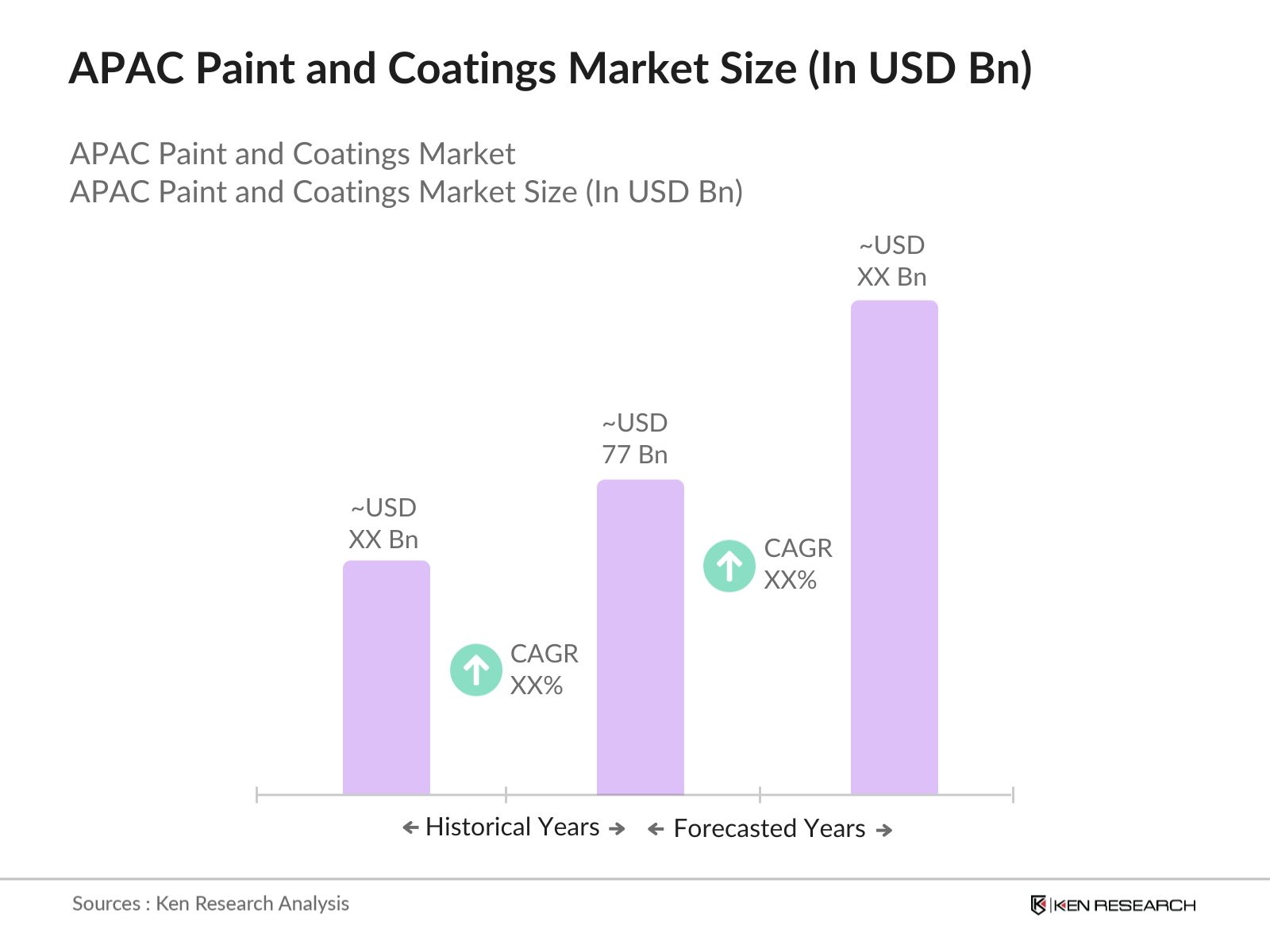
The APAC Paint and Coatings market is valued at USD 77 billion, driven by the rapid urbanization and industrialization across key countries like China and India. The growing demand for eco-friendly products is also contributing to the markets growth.
Challenges in the APAC Paint and Coatings market include fluctuating raw material prices, strict environmental regulations, and supply chain disruptions. The need for eco-friendly and low-VOC paints adds additional cost pressures on manufacturers in the region.
Key players in the APAC Paint and Coatings market include Nippon Paint, Kansai Paint, Asian Paints, AkzoNobel, and BASF Coatings. These companies dominate due to their strong regional presence, extensive product portfolios, and continuous investment in R&D.
The APAC Paint and Coatings market is driven by rapid infrastructure development, rising demand for sustainable coatings, and technological advancements in high-performance paints, particularly for industrial applications.

What makes us stand out is that our consultants follows Robust, Refine and Result (RRR) methodology. i.e. Robust for clear definitions, approaches and sanity checking, Refine for differentiating respondents facts and opinions and Result for presenting data with story

We have set a benchmark in the industry by offering our clients with syndicated and customized market research reports featuring coverage of entire market as well as meticulous research and analyst insights.

While we don't replace traditional research, we flip the method upside down. Our dual approach of Top Bottom & Bottom Top ensures quality deliverable by not just verifying company fundamentals but also looking at the sector and macroeconomic factors.

With one step in the future, our research team constantly tries to show you the bigger picture. We help with some of the tough questions you may encounter along the way: How is the industry positioned? Best marketing channel? KPI's of competitors? By aligning every element, we help maximize success.

Our report gives you instant access to the answers and sources that other companies might choose to hide. We elaborate each steps of research methodology we have used and showcase you the sample size to earn your trust.

If you need any support, we are here! We pride ourselves on universe strength, data quality, and quick, friendly, and professional service.