APAC Solid Oxide Fuel Cell Market Outlook to 2030

Region:Asia

Author(s):Shubham

Product Code:KROD5895

Published On

November 2024

Total pages

88

About the Report

APAC Solid Oxide Fuel Cell Market Overview
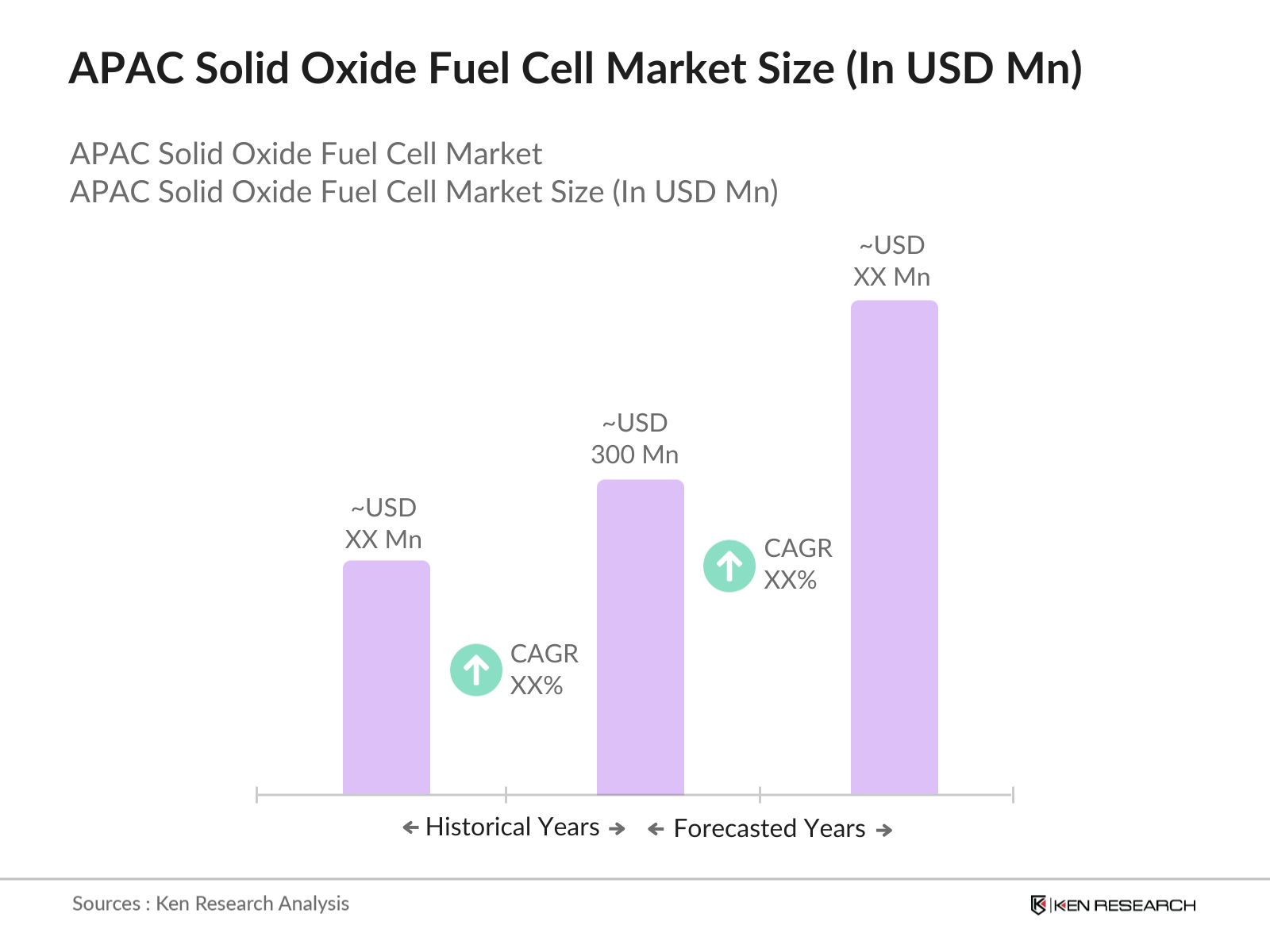
  • The APAC Solid Oxide Fuel Cell (SOFC) market is experiencing significant growth, with a market valuation of USD 300 million, driven by increasing adoption of clean energy solutions and government support for alternative energy sources. The SOFC market is supported by stringent emission regulations, urging industries and utilities to reduce carbon footprints, while the demand for high-efficiency power sources among industrial and commercial sectors contributes to its expansion. Furthermore, advancements in fuel cell technology, which offer reliable and eco-friendly energy solutions, are encouraging widespread adoption across the region.

market overviews

  • Japan, South Korea, and China are leading in SOFC adoption within the APAC region. Japan has invested heavily in fuel cell research and infrastructure, making it a global leader in hydrogen technology. South Koreas government-backed initiatives, including its hydrogen roadmap, promote fuel cell integration across industrial and residential applications. China, with its focus on environmental protection, has set up policies favoring renewable and clean energy projects, accelerating the use of SOFC technology in public and industrial sectors.
  • APAC governments are implementing subsidy programs and environmental standards to encourage SOFC use. Japans Green Growth Strategy mandates a 25% reduction in carbon emissions by 2025, with incentives for low-emission fuel cell technologies like SOFC. South Korea introduced stricter environmental regulations in 2023, reducing reliance on coal and oil, thus incentivizing SOFC in industrial power applications. These regulatory measures align with UN environmental norms and regional targets

APAC Solid Oxide Fuel Cell Market Segmentation
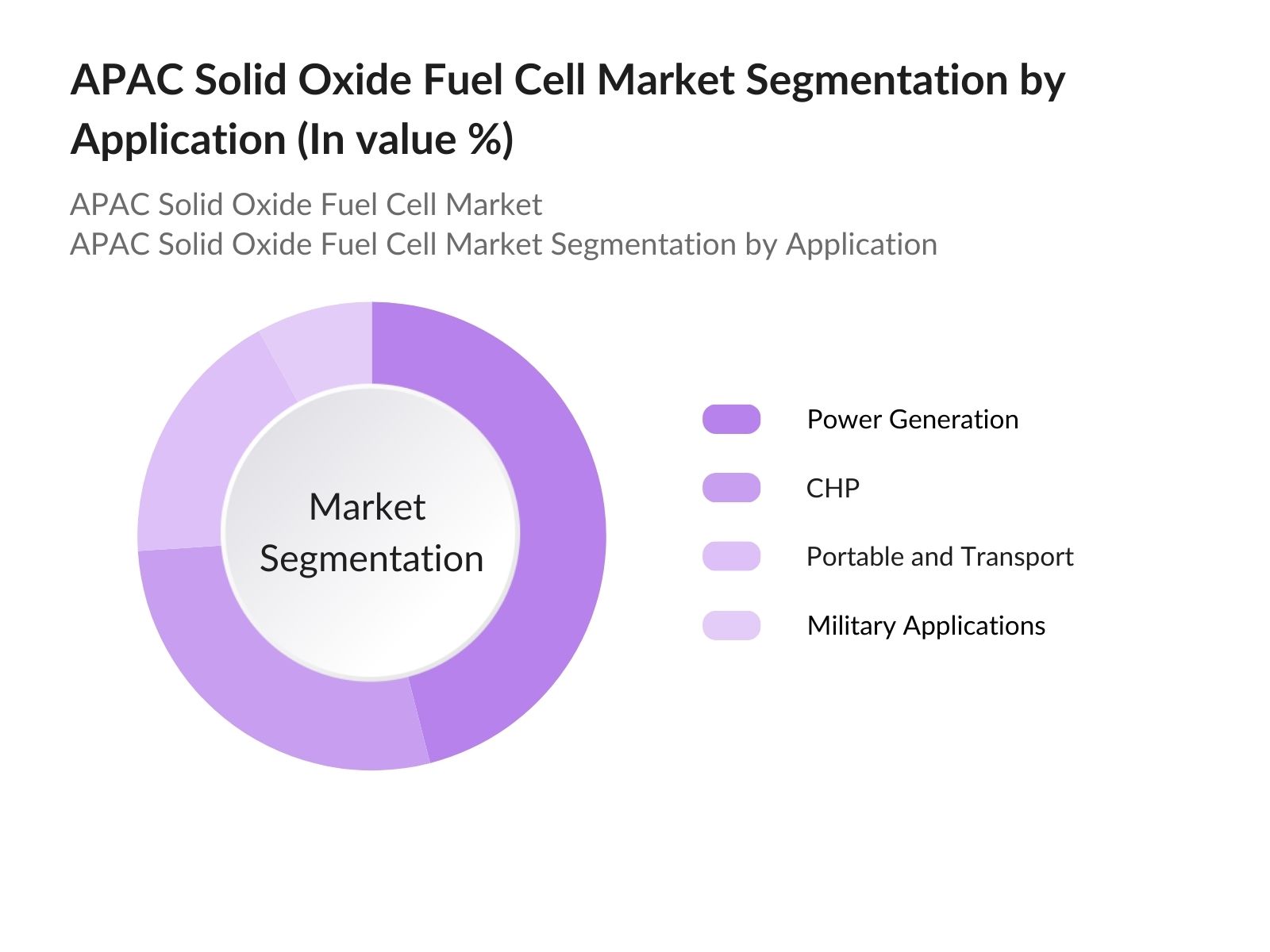
  • By Application: The market is segmented by application into Power Generation, CHP (Combined Heat and Power), Portable and Transport, and Military Applications. Power Generation holds the dominant market share within this segment, largely due to its broad utility across industrial and commercial sectors. The high efficiency of SOFC systems, their ability to operate at elevated temperatures, and their reliability make them ideal for large-scale power generation. Countries such as Japan and South Korea have witnessed an increased adoption of SOFC systems for power generation due to government support and energy efficiency targets, ensuring stable growth in this segment. market overviews
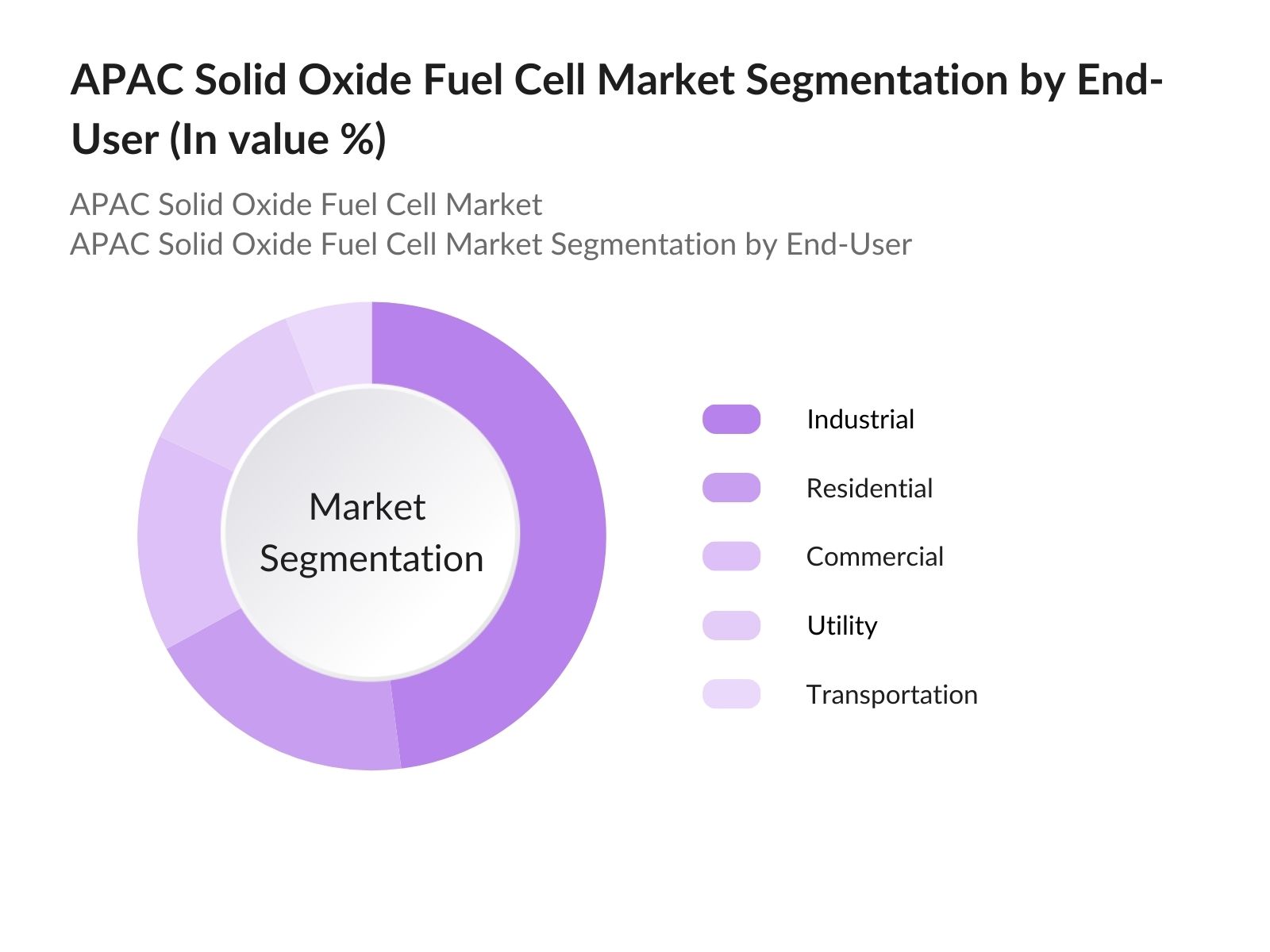
  • End-User: The market is further segmented by end-user into Industrial, Residential, Commercial, Utility, and Transportation. Industrial applications dominate this segment due to the substantial demand for high-efficiency power solutions that SOFC technology provides. SOFC systems are integrated into industrial facilities to meet large-scale energy demands and reduce greenhouse gas emissions. Countries like China, Japan, and South Korea, with extensive manufacturing sectors and government incentives for clean energy, are driving the use of SOFC technology in industrial settings.

market overviews

APAC Solid Oxide Fuel Cell Market Competitive Landscape

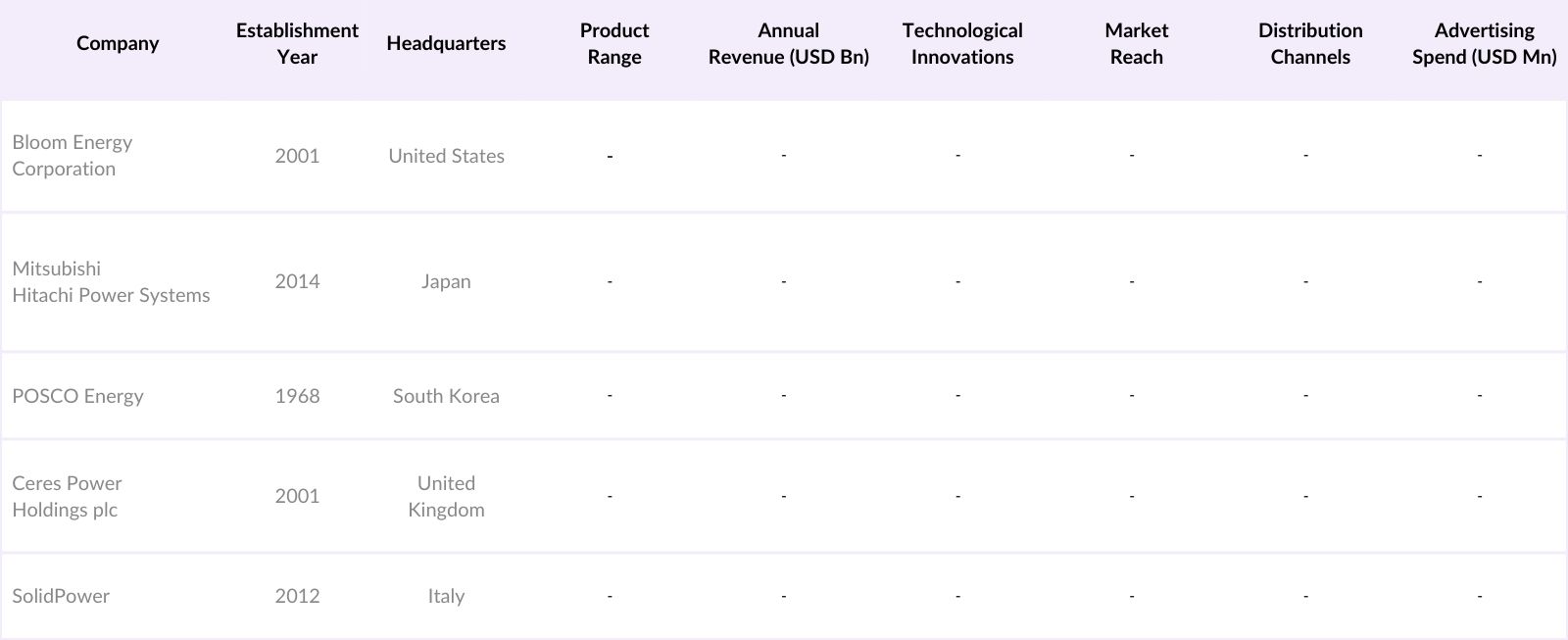
The APAC Solid Oxide Fuel Cell market is competitive, with prominent players investing in R&D to enhance efficiency and reduce costs. Leading companies like Mitsubishi Hitachi Power Systems, Bloom Energy, and POSCO Energy dominate the market with a diverse portfolio and strong regional presence, while local players in China and Japan are focusing on government collaborations to increase their market share. market overviews

APAC Solid Oxide Fuel Cell Market Industry Analysis

Growth Drivers

  • Energy Efficiency Demand Solid oxide fuel cells (SOFCs) have gained traction as APAC countries seek energy-efficient solutions. In 2023, APAC's industrial energy consumption was recorded at 8100 TWh, with efficiency improvements valued for potential savings across sectors like manufacturing and transport. SOFCs, offering up to 60% efficiency in direct electricity production, have been identified by the International Energy Agency (IEA) as key to reducing energy losses, aligning with government targets across APAC for better resource utilization and energy security.
  • Decarbonization Goals: Many APAC nations, including Japan and South Korea, are prioritizing SOFCs for decarbonization targets. Japans Green Growth Strategy has highlighted SOFCs as critical in reaching its 2050 carbon neutrality commitment, with CO reduction in industries like steel and chemicals forecast to impact emissions by over 30 million tons annually through technology adoption in 2024. Similarly, South Koreas hydrogen strategy seeks industrial adoption of SOFCs for a greener grid, supported by policies emphasizing low-emission technologies.
  • Energy Storage Needs Energy storage needs are expanding across the APAC region due to grid demand and supply fluctuations, notably in renewable-heavy markets like India and China. In 2024, APACs intermittent renewable energy capacity is expected to account for over 320 GW. SOFCs provide reliable backup power while storing energy efficiently. The World Bank has noted an increase in energy storage installations in APAC, emphasizing SOFCs' role in stabilization within evolving energy systems, addressing peak demands and supporting sustainable urban growth.

Market Challenges

  • High Initial Costs APACs adoption of SOFC technology faces economic barriers due to high upfront costs. While SOFC systems are energy-efficient, current implementations require significant capital, as illustrated by projects in South Korea where per-unit costs have been observed to range in the higher quintiles for energy projects, creating an entry challenge for smaller markets. This cost challenge may hinder widespread installation without further subsidies or cost reductions in production processes.
  • Technological Constraints Technological limitations in SOFCs impact durability, with many systems requiring advanced materials for longevity in high-temperature operations. In APAC, industrial SOFC units face material degradation issues, with studies from Japan's METI showing average system life reductions after three years of constant use. Addressing these constraints necessitates further R&D to meet operational demands in sectors like telecommunications and heavy industry.

APAC Solid Oxide Fuel Cell Market Future Outlook

The APAC Solid Oxide Fuel Cell market is projected to see robust growth over the next five years, driven by enhanced government support, rising industrial demand for efficient energy sources, and technological advancements in SOFC systems. As APAC economies prioritize sustainable energy goals, the market is expected to grow, with significant opportunities emerging in regions like Southeast Asia where infrastructure is rapidly developing.

Future Market Opportunities

  • Technological Innovations in SOFC: The APAC region is seeing advances in SOFC technology aimed at extending lifespan and reducing production costs. Japan's 2023 R&D funding exceeded USD 18.2 billion for SOFC advancements, focusing on alternative ceramic materials to enhance durability. Such investments are expected to bring about substantial operational improvements, ensuring reliable SOFC performance and aligning with APACs energy security objectives.
  • Green Hydrogen Adoption: Green hydrogen, a renewable energy source complementary to SOFC technology, is on the rise in APAC. Australias green hydrogen output is projected to reach 2 million tons by the end of 2024, creating opportunities for SOFC integration in renewable-focused projects. Such adoption enables clean energy solutions for industries with high energy demand, positioning SOFCs as a primary power source in sustainable energy ecosystems.

Scope of the Report

Application

Power Generation

CHP

Portable and Transport

Military Applications

Others

End-User

Industrial

Residential

Commercial

Utility

Transportation

Power Capacity

Up to 100 kW

100-250 kW

250-500 kW

Above 500 kW

Component Type

Electrolyte

Interconnectors

Anode

Cathode

Others

Region

East Asia

South Asia

Southeast Asia

Oceania

Rest of APAC

Products


Key Target Audience

  1. Investors and Venture Capitalist Firms

  2. Banks and Financial Institutions

  3. Government and Regulatory Bodies (e.g., Ministry of Economy, Trade, and Industry - Japan)

  4. Hydrogen and Fuel Cell Manufacturers

  5. Utility and Energy Providers

  6. Industrial Manufacturing Companies

  7. Environmental and Sustainability Organizations

  8. Oil and Gas Sector Companies

Companies

Players Mentioned in the Report

  • Bloom Energy Corporation

  • Mitsubishi Hitachi Power Systems

  • POSCO Energy

  • Ceres Power Holdings plc

  • SolidPower

  • Aisin Seiki Co., Ltd.

  • Hexis AG

  • Sunfire GmbH

  • Protonex

  • Elcogen AS

  • Convion Ltd.

  • AVL List GmbH

  • SOFCMAN Energy Technology Co., Ltd.

  • Watt Fuel Cell Corporation

  • FuelCell Energy, Inc.

Table of Contents

1. APAC Solid Oxide Fuel Cell Market Overview

1.1 Definition and Scope

1.2 Market Taxonomy

1.3 Market Growth Rate

1.4 Market Segmentation Overview

2. APAC Solid Oxide Fuel Cell Market Size (In USD Billion)

2.1 Historical Market Size

2.2 Year-On-Year Growth Analysis

2.3 Key Market Developments and Milestones

3. APAC Solid Oxide Fuel Cell Market Dynamics

3.1 Growth Drivers (Energy Efficiency Demand, Decarbonization Goals, Energy Storage Needs)

3.2 Market Challenges (High Initial Costs, Technological Constraints, Supply Chain Complexity)

3.3 Opportunities (Government Subsidies, Technological Innovations, Green Hydrogen Adoption)

3.4 Trends (Hybrid Power Systems Integration, Adoption in Data Centers, Portable Power Units)

3.5 Government Regulations (Subsidy Programs, Environmental Norms, Renewable Energy Targets)

3.6 SWOT Analysis

3.7 Stakeholder Ecosystem

3.8 Porters Five Forces Analysis

3.9 Competitive Ecosystem

4. APAC Solid Oxide Fuel Cell Market Segmentation
4.1 By Application (In Value %)

Power Generation

CHP (Combined Heat and Power)

Portable and Transport

Military Applications

Others

4.2 By End-User (In Value %)

Industrial

Residential

Commercial

Utility

Transportation

4.3 By Power Capacity (In Value %)

Up to 100 kW

100-250 kW

250-500 kW

Above 500 kW

4.4 By Component Type (In Value %)

Electrolyte

Interconnectors

Anode

Cathode

Others

4.5 By Region (In Value %)

East Asia

South Asia

Southeast Asia

Oceania

Rest of APAC

5. APAC Solid Oxide Fuel Cell Market Competitive Analysis

5.1 Detailed Profiles of Major Companies

Bloom Energy Corporation

Ceres Power Holdings plc

Mitsubishi Hitachi Power Systems

FuelCell Energy, Inc.

SolidPower

Elcogen AS

Sunfire GmbH

Aisin Seiki Co., Ltd.

Convion Ltd.

Hexis AG

AVL List GmbH

Protonex

POSCO Energy

Watt Fuel Cell Corporation

SOFCMAN Energy Technology Co., Ltd.

5.2 Cross Comparison Parameters (Headquarters Location, Revenue, Employee Count, Inception Year, Market Penetration, R&D Investments, Patent Holdings, Product Portfolio Strength)

5.3 Market Share Analysis

5.4 Strategic Initiatives

5.5 Mergers and Acquisitions

5.6 Investment Analysis

5.7 Joint Ventures and Partnerships

5.8 Government Grants and Funding

5.9 Private Equity and Venture Capital

6. APAC Solid Oxide Fuel Cell Market Regulatory Framework

6.1 Environmental Standards and Compliance

6.2 Certification Processes

6.3 Regional Policy Initiatives

7. APAC Solid Oxide Fuel Cell Market Future Size (In USD Billion)

7.1 Projected Market Size and Future Outlook

7.2 Key Factors Influencing Future Market Growth

8. APAC Solid Oxide Fuel Cell Market Future Size (In USD Billion)

8.1 By Application (In Value %)

8.2 By End-User (In Value %)

8.3 By Power Capacity (In Value %)

8.4 By Component Type (In Value %)

8.5 By Region (In Value %)

9. APAC Solid Oxide Fuel Cell Market Analysts Recommendations

8.1 TAM/SAM/SOM Analysis

8.2 Competitive Positioning

8.3 Target Market Strategy

8.4 White Space Opportunity Analysis

Disclaimer Contact Us

Research Methodology

Step 1: Identification of Key Variables


This phase mapped stakeholders and conducted comprehensive desk research to gather detailed industry data. It included an analysis of regulatory frameworks and market dynamics for the APAC Solid Oxide Fuel Cell Market.

Step 2: Market Analysis and Construction


Historical data analysis was conducted, focusing on SOFC technology adoption rates and power generation metrics, leading to accurate revenue estimates.

Step 3: Hypothesis Validation and Expert Consultation


Hypotheses were validated through interviews with industry experts from leading SOFC companies, providing insights on growth factors and industry challenges.

Step 4: Research Synthesis and Final Output


The data was synthesized using both top-down and bottom-up approaches to ensure a comprehensive analysis, resulting in a validated report on the APAC Solid Oxide Fuel Cell Market.


Frequently Asked Questions

How big is the APAC Solid Oxide Fuel Cell Market?

The APAC Solid Oxide Fuel Cell market is valued at USD 300 million, driven by increased demand for high-efficiency power solutions in industrial and commercial sectors.

What are the challenges in the APAC Solid Oxide Fuel Cell Market?

Key challenges in the APAC Solid Oxide Fuel Cell market include the high cost of SOFC systems and limited infrastructure for hydrogen distribution, impacting the adoption rate in emerging APAC economies.

Who are the major players in the APAC Solid Oxide Fuel Cell Market?

Prominent players in the APAC Solid Oxide Fuel Cell market include Bloom Energy Corporation, Mitsubishi Hitachi Power Systems, POSCO Energy, and Ceres Power Holdings, leading with advanced technology and government collaborations.

What drives the APAC Solid Oxide Fuel Cell Market?

Government incentives, technological advancements, and industrial demand for sustainable power solutions drive market growth in APAC Solid Oxide Fuel Cell market .

Why Buy From Us?

RRR
Refine Robust Result (RRR) Framework

What makes us stand out is that our consultants follows Robust, Refine and Result (RRR) methodology. i.e. Robust for clear definitions, approaches and sanity checking, Refine for differentiating respondents facts and opinions and Result for presenting data with story

Our Reach Is Unmatched

We have set a benchmark in the industry by offering our clients with syndicated and customized market research reports featuring coverage of entire market as well as meticulous research and analyst insights.

Research
Shifting the Research Paradigm

While we don't replace traditional research, we flip the method upside down. Our dual approach of Top Bottom & Bottom Top ensures quality deliverable by not just verifying company fundamentals but also looking at the sector and macroeconomic factors.

Insite
More Insights-Better Decisions

With one step in the future, our research team constantly tries to show you the bigger picture. We help with some of the tough questions you may encounter along the way: How is the industry positioned? Best marketing channel? KPI's of competitors? By aligning every element, we help maximize success.

Trust
Transparency and Trust

Our report gives you instant access to the answers and sources that other companies might choose to hide. We elaborate each steps of research methodology we have used and showcase you the sample size to earn your trust.

support
Round the Clock Support

If you need any support, we are here! We pride ourselves on universe strength, data quality, and quick, friendly, and professional service.

Why Client Choose Us?

400000+ Reports in repository
150+ Consulting project a year
100+ Analysts
8000+ Client Queries in 2022