
Asia Pacific Ammunition Market Outlook to 2030
Region:Asia
Author(s):Abhinav kumar
Product Code:KROD8459
Region:Asia
Author(s):Abhinav kumar
Product Code:KROD8459
November 2024
88
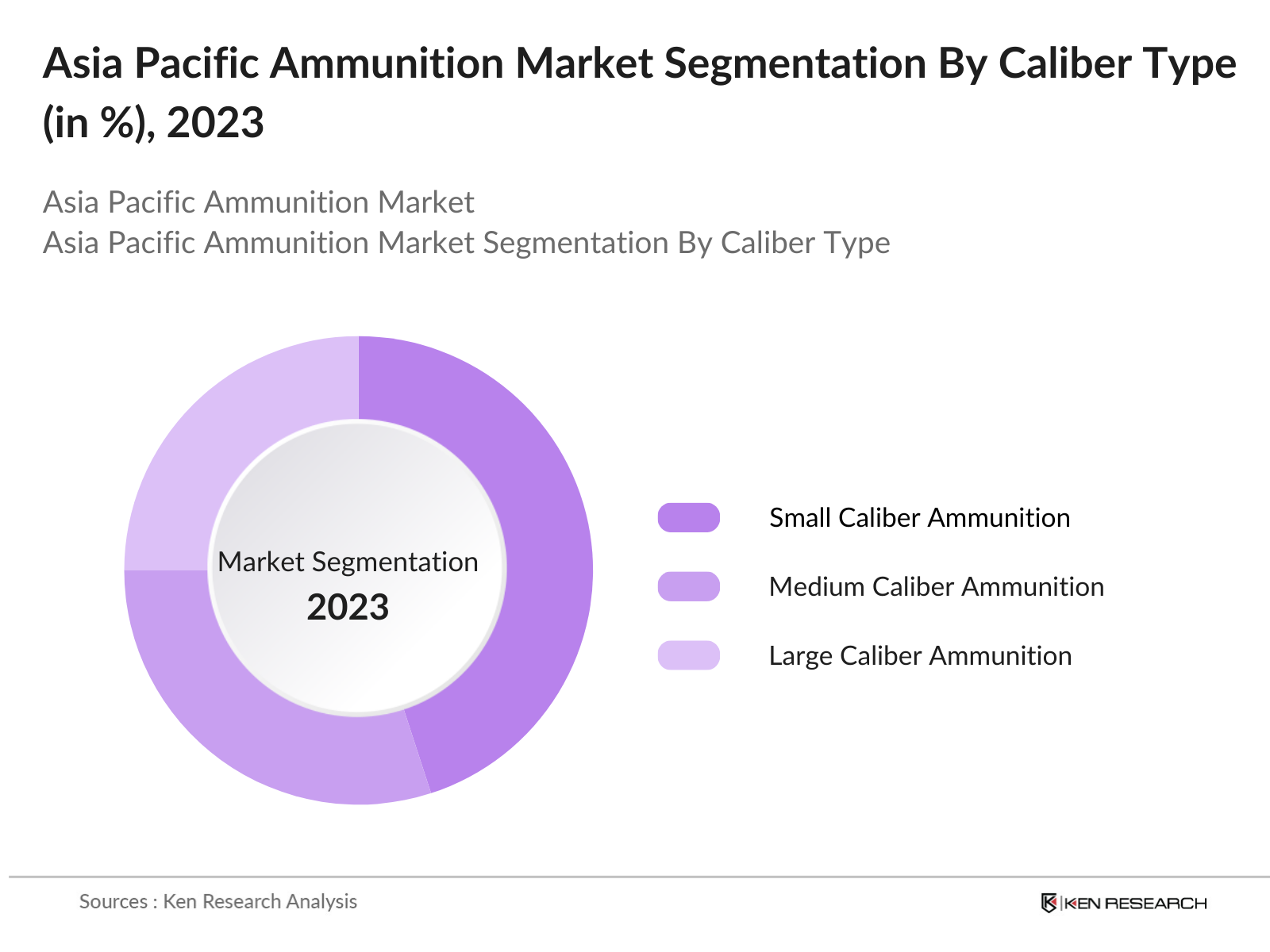
By Caliber Type: The Asia Pacific Ammunition market is segmented by caliber type into small, medium, and large-caliber ammunition. Recently, small-caliber ammunition holds the dominant market share, driven by its extensive use in both defense and law enforcement agencies across the region. Small caliber ammunition, such as 5.56mm and 7.62mm rounds, is widely adopted for personal firearms, automatic rifles, and light machine guns. The increasing need for counter-terrorism operations and police modernization initiatives in countries like India and Indonesia also propels this segment's growth.
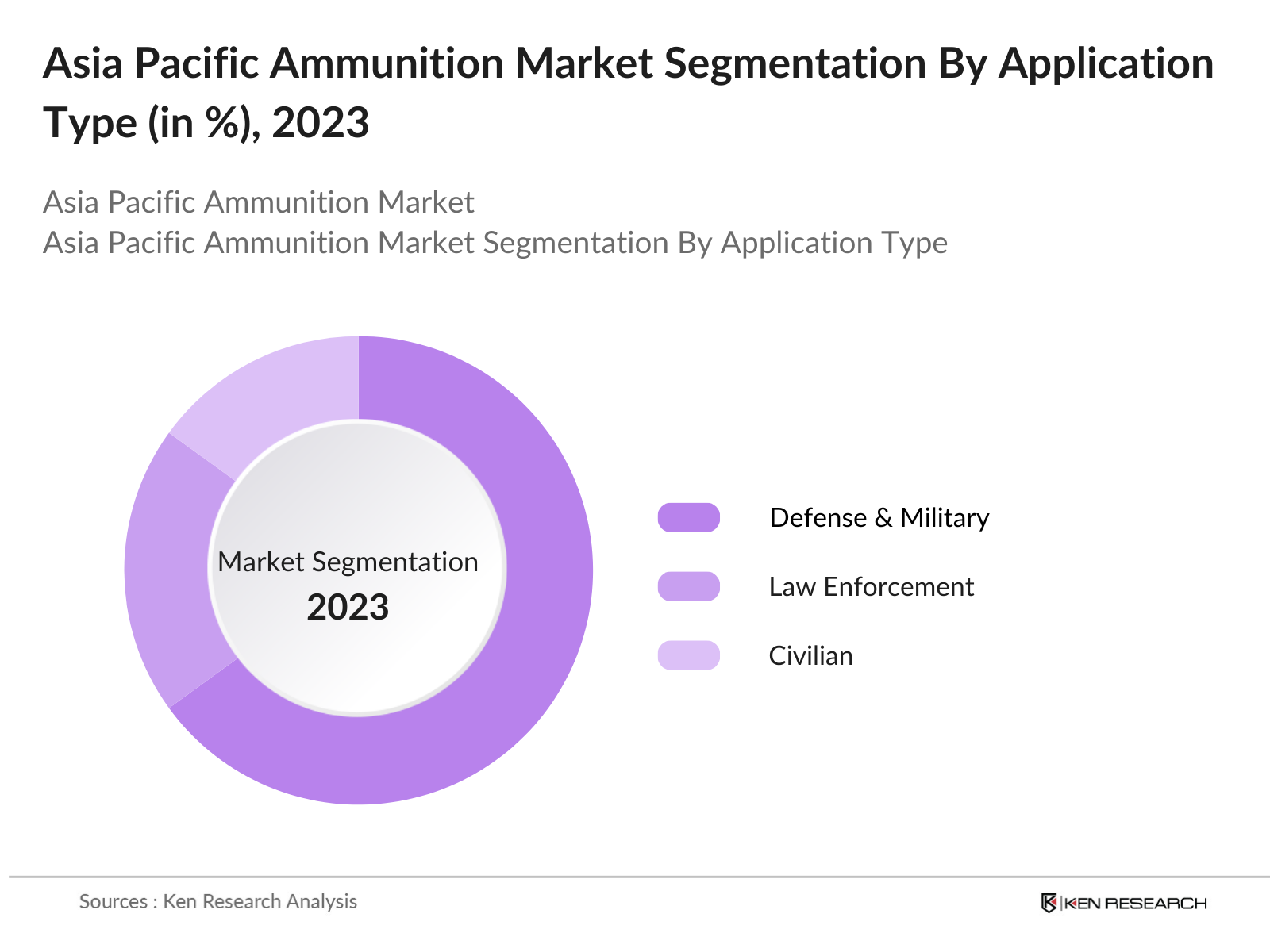
By Application: The market is segmented by application into Defense & Military, Law Enforcement, and Civilian Use. The Defense & Military segment dominates the application category, mainly due to ongoing conflicts, territorial disputes, and government efforts to bolster national security. In particular, countries such as China, India, and South Korea are investing heavily in ammunition procurement to meet their defense modernization goals. The use of various caliber ammunition across different military divisions, including infantry, artillery, and naval forces, adds to the significant demand for military-grade ammunition.
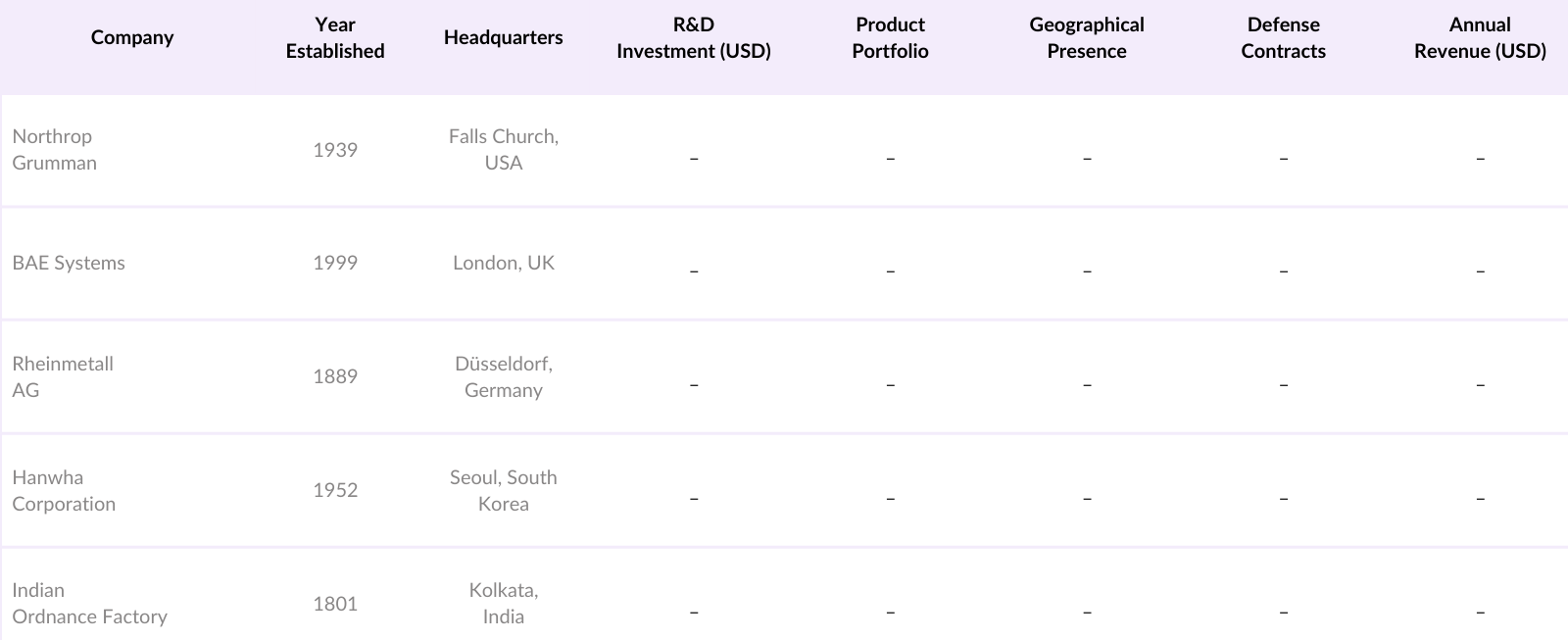
The Asia Pacific Ammunition Market is dominated by several key players, both global and regional, which shape the competitive dynamics. Companies like Northrop Grumman and BAE Systems have a robust presence in this market due to their extensive portfolios and R&D initiatives. The market also sees competition from local manufacturers in countries like India and South Korea, which are strengthening their domestic capabilities. This blend of global and local competition leads to a highly competitive and innovative market environment.
Over the next five years, the Asia Pacific Ammunition Market is expected to witness sustained growth, driven by continuous defense modernization initiatives and increased defense budgets across the region. Countries like China and India will continue to invest in state-of-the-art ammunition technologies, including smart and guided ammunition, to enhance their military capabilities. Furthermore, rising geopolitical tensions and the need for border security will bolster demand for ammunition, particularly in the small and medium-caliber segments. In addition to defense, the law enforcement sector is poised to increase its demand for non-lethal ammunition, driven by urbanization and growing security concerns. The region is also expected to see a rise in local manufacturing capabilities, reducing dependence on imports, and creating more competitive local markets.
|
Caliber Type |
Small Caliber Ammunition Medium Caliber Ammunition Large Caliber Ammunition |
|
Application |
Defense & Military Law Enforcement Civilian |
|
Product Type |
Bullets Shells Cartridges Mortars Others |
|
Technology |
Guided Ammunition Conventional Ammunition |
|
Region |
China India Japan South Korea Australia |
1.1. Definition and Scope
1.2. Market Taxonomy
1.3. Market Growth Rate (in USD Mn)
1.4. Market Segmentation Overview
2.1. Historical Market Size
2.2. Year-On-Year Growth Analysis (Ballistic Performance, Caliber Type)
2.3. Key Market Developments and Milestones (Defense Expenditures, Regional Geopolitical Tensions)
3.1. Growth Drivers
3.1.1. Increased Military Spending
3.1.2. Growing Demand for Ammunition from Law Enforcement
3.1.3. Expansion in Domestic Manufacturing Capabilities
3.1.4. Ongoing Regional Conflicts and Border Tensions
3.2. Market Challenges
3.2.1. Stringent Government Regulations
3.2.2. High Production Costs and Raw Material Price Volatility
3.2.3. Supply Chain Disruptions
3.2.4. Import/Export Restrictions
3.3. Opportunities
3.3.1. Technological Advancements in Ammunition
3.3.2. Rising Export Opportunities
3.3.3. Private Sector Participation and Foreign Direct Investment (FDI) in Ammunition Manufacturing
3.3.4. Adoption of Non-Lethal Ammunition for Law Enforcement
3.4. Trends
3.4.1. Modernization of Armed Forces
3.4.2. Increasing Usage of Lightweight Ammunition
3.4.3. Growing Adoption of Training Ammunition
3.5. Government Regulations
3.5.1. National Defense Procurement Policies
3.5.2. Ammunition Standardization Programs
3.5.3. Environmental Compliance (Lead-Free Ammunition Mandates)
3.5.4. Bilateral Defense Cooperation Frameworks
3.6. SWOT Analysis
3.7. Stakeholder Ecosystem
3.8. Porters Five Forces
3.9. Competition Ecosystem
4.1. By Caliber Type (In Value %)
4.1.1. Small Caliber Ammunition (9mm, 5.56mm, 7.62mm)
4.1.2. Medium Caliber Ammunition (20mm, 30mm, 40mm)
4.1.3. Large Caliber Ammunition (120mm, 155mm, Artillery)
4.2. By Application (In Value %)
4.2.1. Defense & Military (Army, Navy, Air Force)
4.2.2. Law Enforcement (Police, Special Forces)
4.2.3. Civilian (Hunting, Sports Shooting)
4.3. By Product Type (In Value %)
4.3.1. Bullets
4.3.2. Shells
4.3.3. Cartridges
4.3.4. Mortars
4.3.5. Others (Missiles, Bombs)
4.4. By Technology (In Value %)
4.4.1. Guided Ammunition (Precision-Guided)
4.4.2. Conventional Ammunition
4.5. By Region (In Value %)
4.5.1. China
4.5.2. India
4.5.3. Japan
4.5.4. South Korea
4.5.5. Australia
5.1. Detailed Profiles of Major Companies
5.1.1. Northrop Grumman Corporation
5.1.2. BAE Systems
5.1.3. Rheinmetall AG
5.1.4. General Dynamics
5.1.5. Nexter Systems
5.1.6. Hanwha Corporation
5.1.7. Elbit Systems
5.1.8. Indian Ordnance Factory
5.1.9. Denel SOC Ltd
5.1.10. ST Engineering
5.1.11. Thales Group
5.1.12. Poongsan Corporation
5.1.13. Rosoboronexport
5.1.14. Ruag Ammotec
5.1.15. CBC Defense
5.2. Cross Comparison Parameters (Annual Revenue, R&D Expenditure, Product Portfolio, Geographical Presence, Strategic Initiatives, M&A Activity, Innovation Capabilities, Market Share)
5.3. Market Share Analysis (Key Players' Market Shares in Ammunition Segments)
5.4. Strategic Initiatives (Joint Ventures, Partnerships, Defense Contracts)
5.5. Mergers and Acquisitions (Key Transactions in the Ammunition Market)
5.6. Investment Analysis (Private Equity, Venture Capital)
5.7. Government Grants and Subsidies
5.8. Private Sector Investments
6.1. Import and Export Controls (ITAR, Defense Export Control Laws)
6.2. Licensing Requirements (Manufacturing, Import, and Export)
6.3. Certification Standards (NATO Standards, ISO)
7.1. Future Market Size Projections
7.2. Key Factors Driving Future Market Growth (Defense Modernization, Cross-border Conflicts)
8.1. By Caliber Type
8.2. By Application
8.3. By Product Type
8.4. By Technology
8.5. By Region
9.1. TAM/SAM/SOM Analysis (Total Addressable Market, Serviceable Available Market, Serviceable Obtainable Market)
9.2. Customer Cohort Analysis (Key Buyers' Segments, Usage Patterns)
9.3. Marketing Initiatives (Branding, Strategic Partnerships)
9.4. White Space Opportunity Analysis (Emerging Markets, Unaddressed Segments)
Disclaimer Contact UsThe initial phase involves mapping the entire stakeholder ecosystem, focusing on defense ministries, procurement departments, and ammunition manufacturers in the Asia Pacific Ammunition Market. Extensive secondary research is performed using proprietary and public databases to determine the critical factors driving market growth.
In this step, we analyze historical data from reliable government databases and defense reports to evaluate market penetration across various regions. This also includes assessing demand from the defense and law enforcement sectors, which are the primary consumers of ammunition.
We conduct interviews with key industry experts through CATI, gathering insights from executives in top defense manufacturing companies and government procurement offices. This ensures the accuracy of the data collected and its alignment with industry trends.
The final stage involves compiling and synthesizing the gathered data. Inputs from defense manufacturers and law enforcement agencies are incorporated to provide a comprehensive analysis. The findings are validated to present an accurate picture of the Asia Pacific Ammunition Market.
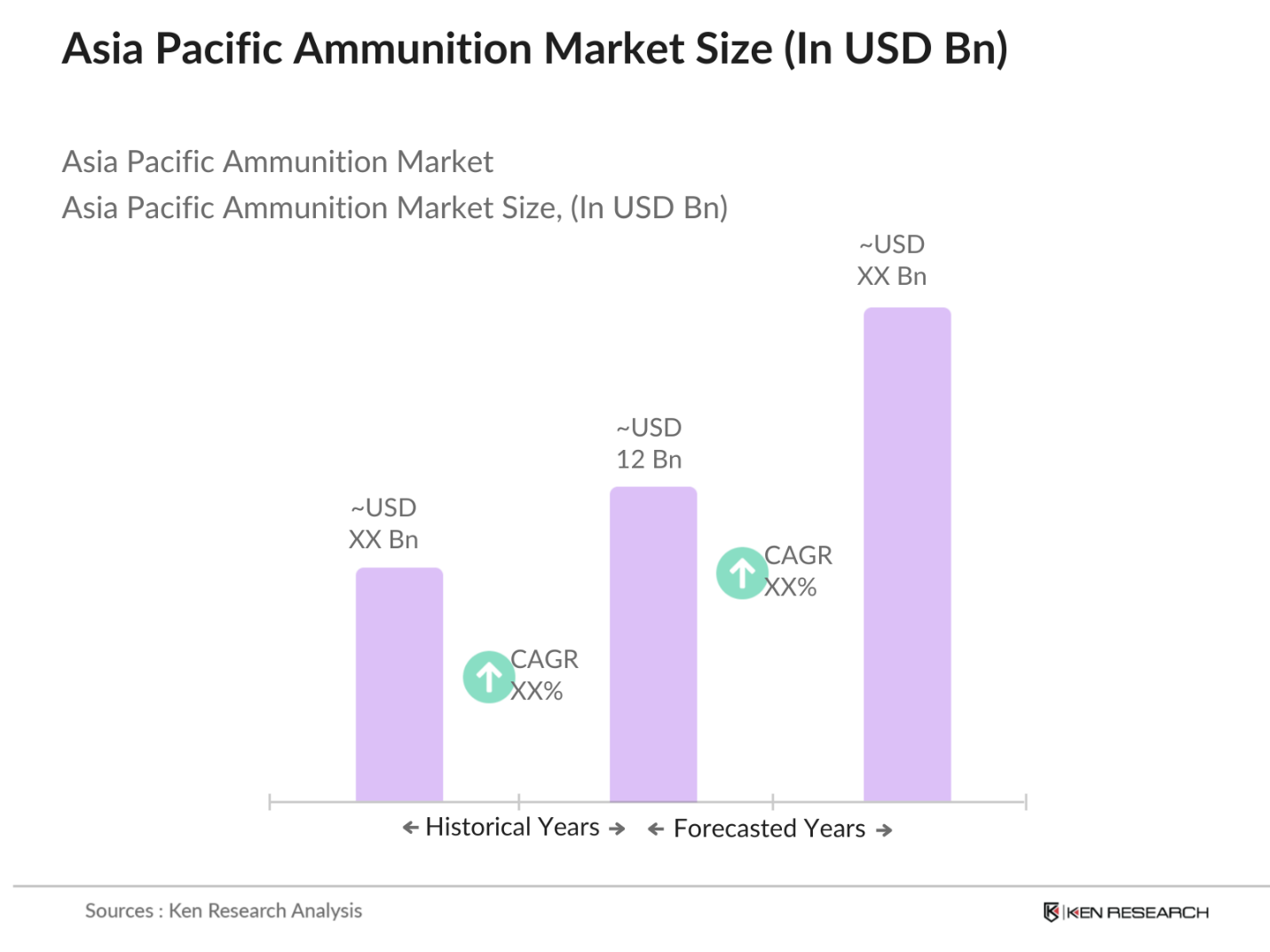
The Asia Pacific Ammunition Market is valued at USD 12 billion, driven by increased military expenditure and modernization initiatives across key regional economies like China and India.
Key challenges include high production costs, supply chain disruptions due to geopolitical factors, and stringent regulatory requirements for ammunition manufacturing and trade.
Major players include Northrop Grumman, BAE Systems, Rheinmetall AG, Hanwha Corporation, and Indian Ordnance Factory. These companies dominate due to their extensive portfolios, government contracts, and local manufacturing capabilities.
The market is driven by rising defense budgets, ongoing regional conflicts, and modernization efforts by the military and law enforcement agencies in key countries such as China, India, and South Korea.

What makes us stand out is that our consultants follows Robust, Refine and Result (RRR) methodology. i.e. Robust for clear definitions, approaches and sanity checking, Refine for differentiating respondents facts and opinions and Result for presenting data with story

We have set a benchmark in the industry by offering our clients with syndicated and customized market research reports featuring coverage of entire market as well as meticulous research and analyst insights.

While we don't replace traditional research, we flip the method upside down. Our dual approach of Top Bottom & Bottom Top ensures quality deliverable by not just verifying company fundamentals but also looking at the sector and macroeconomic factors.

With one step in the future, our research team constantly tries to show you the bigger picture. We help with some of the tough questions you may encounter along the way: How is the industry positioned? Best marketing channel? KPI's of competitors? By aligning every element, we help maximize success.

Our report gives you instant access to the answers and sources that other companies might choose to hide. We elaborate each steps of research methodology we have used and showcase you the sample size to earn your trust.

If you need any support, we are here! We pride ourselves on universe strength, data quality, and quick, friendly, and professional service.