
Asia Pacific Biodegradable Plastics Market Outlook to 2030
Region:Afganistan
Author(s):Abhinav kumar
Product Code:KROD2914
Region:Afganistan
Author(s):Abhinav kumar
Product Code:KROD2914
November 2024
92
By Product Type: The Asia Pacific Biodegradable Plastics Market is segmented by product type into Polylactic Acid (PLA), Polybutylene Adipate Terephthalate (PBAT), Polyhydroxyalkanoates (PHA), Starch Blends, and Other Biodegradable Plastics. PLA currently dominates the product type segment due to its high suitability for packaging and ease of manufacturing from renewable resources like corn and sugarcane. Leading companies focus on PLAs applications, as it offers a cost-effective, compostable alternative to traditional plastics and aligns with sustainability goals in packaging for food, beverage, and e-commerce industries.
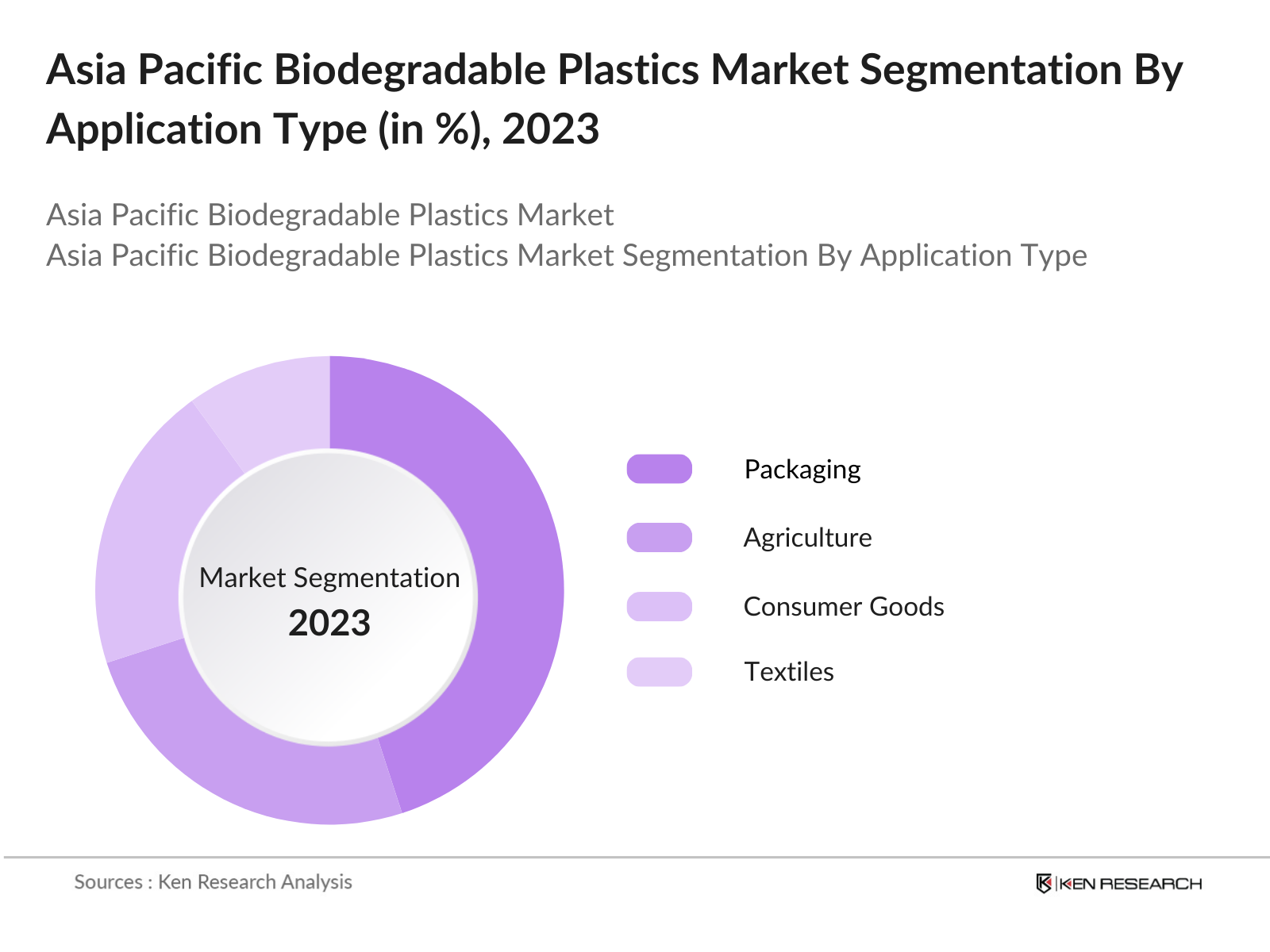
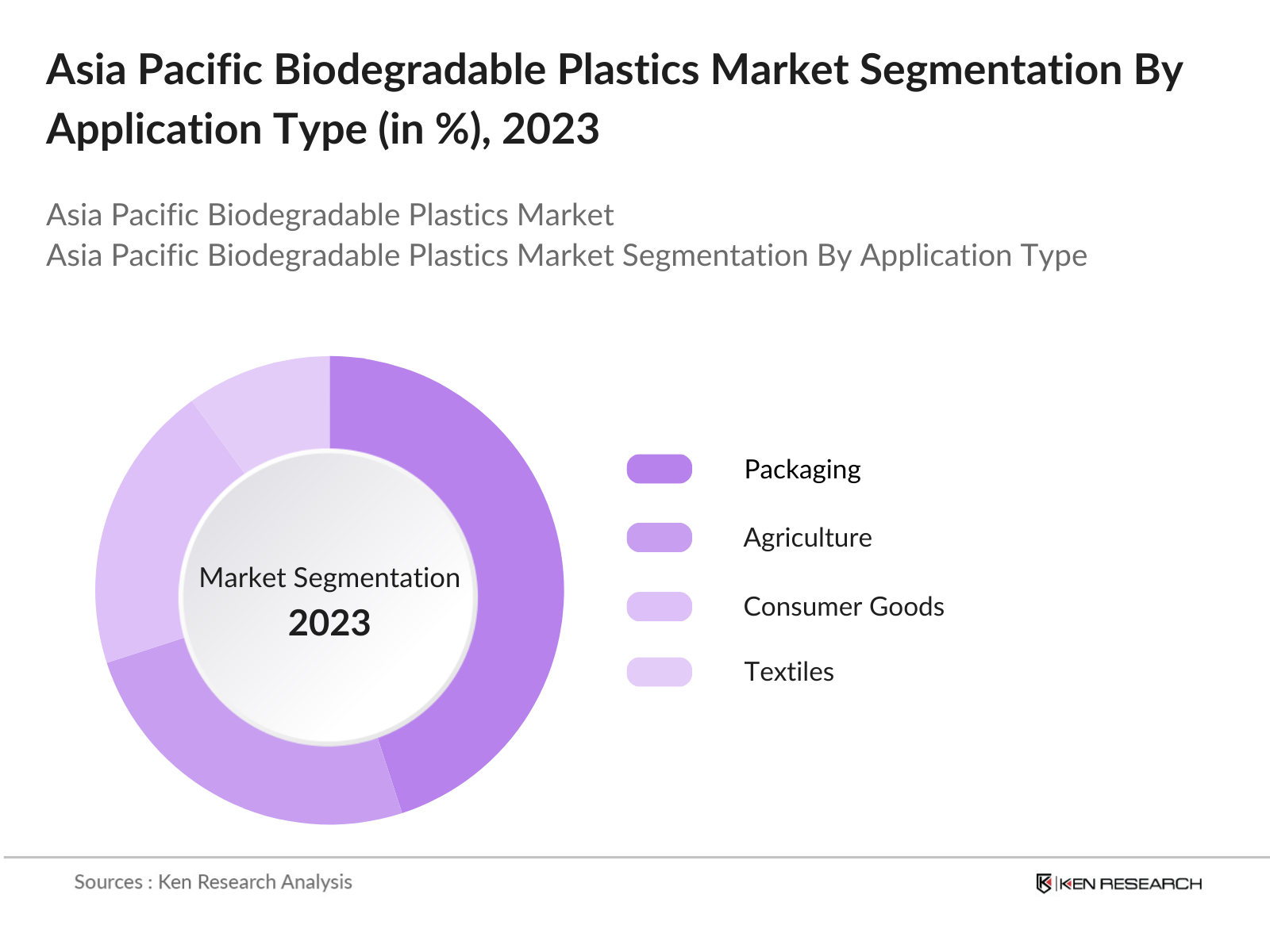
By Application: The market is further segmented by application into Packaging, Agriculture, Consumer Goods, Textiles, and Medical & Healthcare. Packaging remains the leading segment, driven by rising consumer awareness and corporate demand for sustainable packaging options. The growing e-commerce sector has intensified the need for biodegradable packaging materials, positioning it as a dominant sub-segment. Additionally, the shift toward eco-friendly packaging aligns with environmental policies, supporting the adoption of biodegradable plastics in this application.
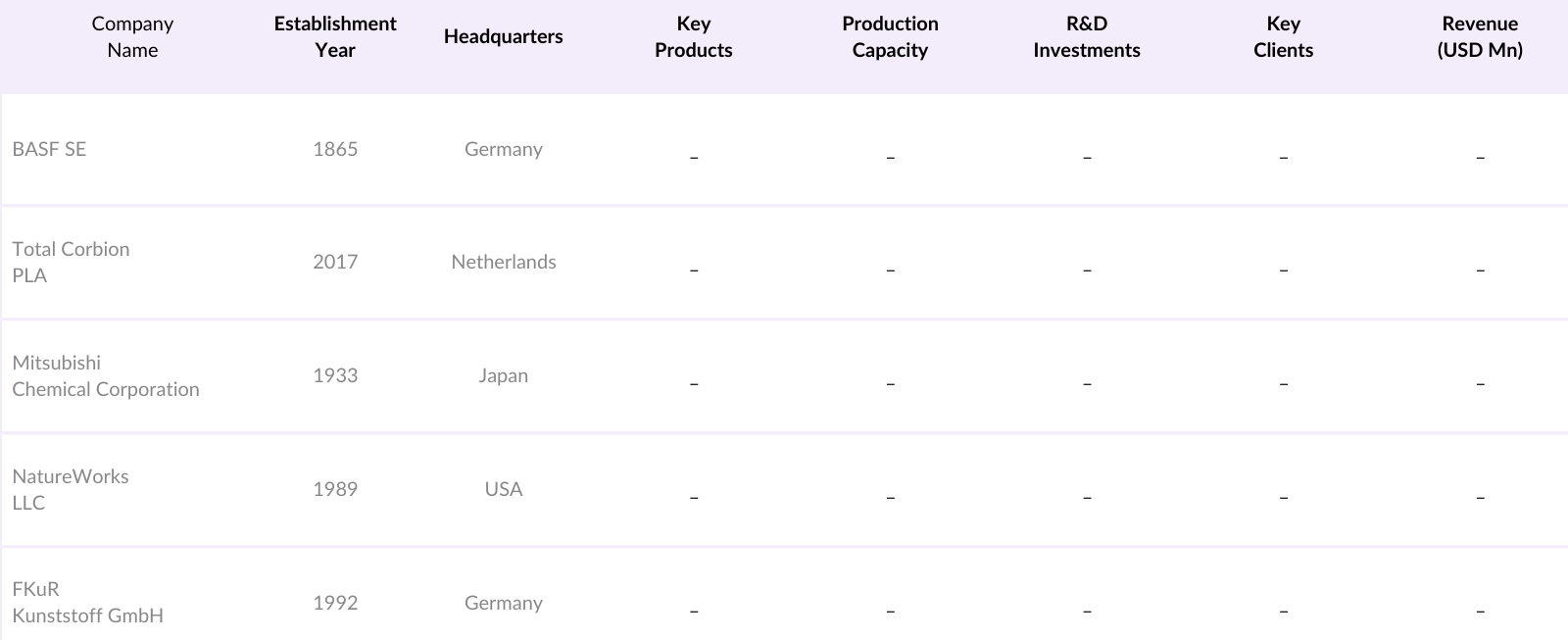
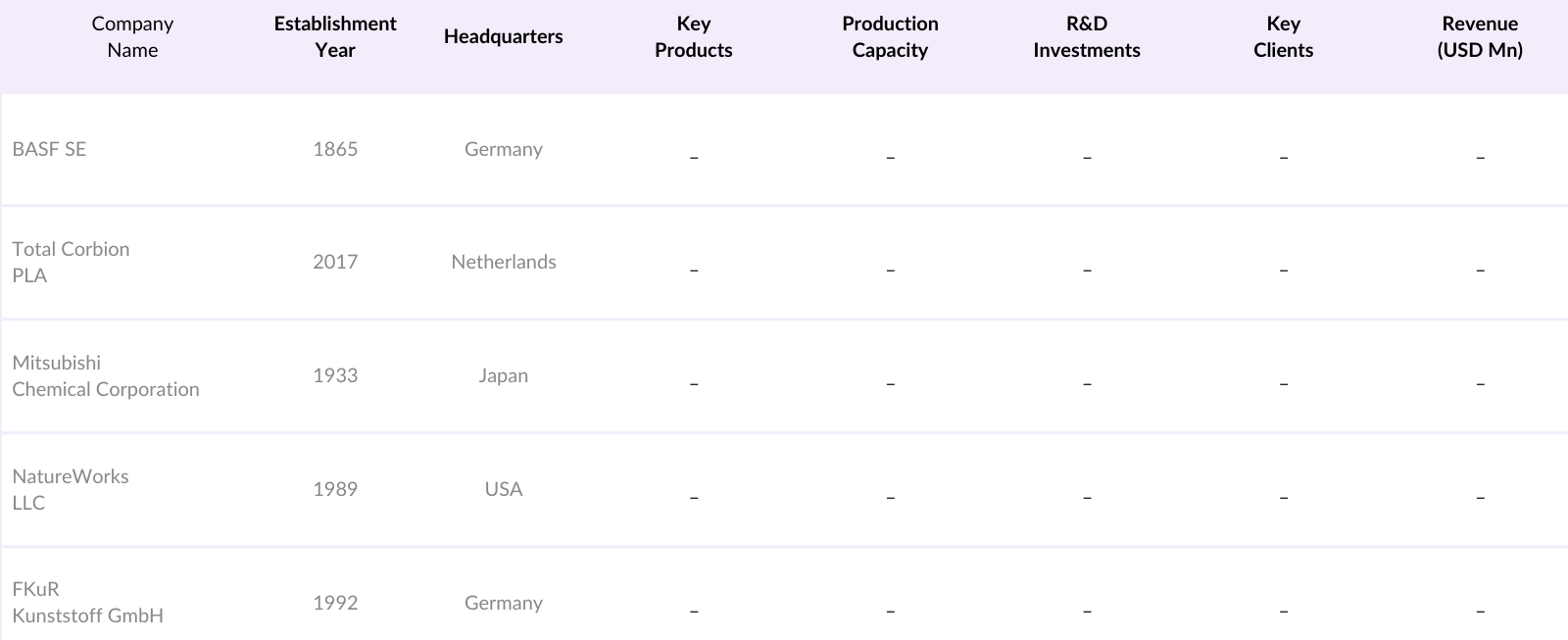
The Asia Pacific Biodegradable Plastics Market is led by prominent players such as BASF SE, Total Corbion PLA, and Mitsubishi Chemical Corporation. These companies leverage advanced bioplastic technologies and strategic collaborations to maintain a strong market position, focusing on sustainability and eco-friendly product lines. This consolidation underscores the industrys reliance on key players to innovate and cater to the growing demand for biodegradable alternatives.
Over the next five years, the Asia Pacific Biodegradable Plastics Market is anticipated to grow significantly, driven by increasing regulatory pressures, technological advancements in bio-based polymers, and rising consumer preference for sustainable products. Key countries within the region are likely to enhance their production capacities and invest in R&D to improve the performance and cost-efficiency of biodegradable plastics.
|
Product Type |
PLA PBAT PHA Starch Blends Other Biodegradable Plastics |
|
Application |
Packaging Agriculture Consumer Goods Textiles, Medical & Healthcare |
|
End User |
Food and Beverage Agriculture and Horticulture Retail and E-commerce Pharmaceuticals Personal Care |
|
Raw Material |
Corn Starch Sugarcane Soy Protein Cellulose Derivatives Vegetable Oils |
|
Region |
China India Japan Southeast Asia Rest of Asia Pacific |
1.1 Definition and Scope
1.2 Market Taxonomy
1.3 Market Growth Rate
1.4 Market Segmentation Overview
2.1 Historical Market Size
2.2 Year-On-Year Growth Analysis
2.3 Key Market Developments and Milestones
3.1 Growth Drivers
3.1.1 Rising Environmental Awareness
3.1.2 Government Regulations on Plastic Use
3.1.3 Consumer Preference for Sustainable Products
3.1.4 Advancements in Biodegradable Polymer Technologies
3.2 Market Challenges
3.2.1 High Production Costs
3.2.2 Limited Infrastructure for Biodegradation
3.2.3 Consumer Misconceptions About Biodegradable Plastics
3.2.4 Competition from Recyclable Plastics
3.3 Opportunities
3.3.1 Expansion in Emerging Markets
3.3.2 Integration with Circular Economy Initiatives
3.3.3 Innovations in Bio-based Feedstocks
3.3.4 Demand from E-commerce Packaging
3.4 Trends
3.4.1 Growth in Compostable Packaging Demand
3.4.2 Increased R&D in Bio-based Alternatives
3.4.3 Shift Toward PLA and PBAT-based Materials
3.4.4 Adoption by Major FMCG and Retail Brands
3.5 Government Regulation
3.5.1 Single-Use Plastic Bans in Key Regions
3.5.2 Subsidies and Grants for Bioplastic Development
3.5.3 Certification Requirements for Biodegradable Products
3.5.4 Regional Policies on Plastic Waste Management
3.6 SWOT Analysis
3.7 Stakeholder Ecosystem
3.8 Porters Five Forces
3.9 Competitive Landscape and Ecosystem
4.1 By Product Type (In Value %)
4.1.2 Polylactic Acid (PLA)
4.1.3 Polybutylene Adipate Terephthalate (PBAT)
4.1.4 Polyhydroxyalkanoates (PHA)
4.1.5 Starch Blends
4.1.6 Other Biodegradable Plastics
4.2 By Application (In Value %)
4.2.1 Packaging
4.2.2 Agriculture
4.2.3 Consumer Goods
4.2.4 Textiles
4.2.5 Medical & Healthcare
4.3 By End User (In Value %)
4.3.1 Food and Beverage Industry
4.3.2 Agriculture and Horticulture
4.3.3 Retail and E-commerce
4.3.4 Pharmaceuticals
4.3.4 Personal Care
4.4 By Raw Material (In Value %)
4.4.1 Corn Starch
4.4.2 Sugarcane
4.4.3 Soy Protein
4.4.4 Cellulose Derivatives
4.4.5 Vegetable Oils
4.5 By Region (In Value %)
4.5.1 China
4.5.2 India
4.5.3 Japan
4.5.4 Southeast Asia
4.5.5 Rest of Asia Pacific
5.1 Detailed Profiles of Major Companies
5.1.1 BASF SE
5.1.2 Total Corbion PLA
5.1.3 Mitsubishi Chemical Corporation
5.1.4 NatureWorks LLC
5.1.5 Biome Bioplastics
5.1.6 FKuR Kunststoff GmbH
5.1.7 Danimer Scientific
5.1.8 Green Dot Bioplastics
5.1.9 Plantic Technologies Ltd
5.1.10 Novamont S.p.A.
5.2 Cross Comparison Parameters (Revenue, Production Capacity, Raw Material Usage, Headquarters, Environmental Impact, Market Presence, Technological Innovations, Strategic Partnerships)
5.3 Market Share Analysis
5.4 Strategic Initiatives
5.5 Mergers and Acquisitions
5.6 Investment Analysis
5.7 Venture Capital Funding
5.8 Government Grants and Subsidies
5.9 Private Equity Investments
6.1 Environmental Standards for Biodegradable Plastics
6.2 Compliance with International Standards
6.3 Certification Processes for Product Approval
7.1 Future Market Size Projections
7.2 Key Factors Driving Future Market Growth
8.1 By Product Type (In Value %)
8.2 By Application (In Value %)
8.3 By End User (In Value %)
8.4 By Raw Material (In Value %)
8.5 By Region (In Value %)
9.1 TAM/SAM/SOM Analysis
9.2 Customer Cohort Analysis
9.3 Marketing Initiatives
9.4 White Space Opportunity Analysis
Disclaimer Contact UsThe initial phase involved creating a comprehensive ecosystem map of the Asia Pacific Biodegradable Plastics Market, identifying key stakeholders and their roles. A combination of secondary research and proprietary databases helped define essential variables impacting market dynamics.
The second phase involved analyzing historical data to assess market penetration, the ratio of product types, and revenue generation. This stage included data validation using quality assessments to ensure accuracy.
Hypotheses were developed regarding market growth, which were subsequently validated through expert interviews, providing industry-specific insights that were instrumental in refining the market analysis.
The final phase included gathering insights from leading manufacturers to gain detailed perspectives on production, distribution, and consumer trends, which were used to complement the bottom-up approach, ensuring a holistic market view.
The Asia Pacific Biodegradable Plastics Market is valued at USD 2.3 billion, with increasing demand driven by regulatory pressures and consumer demand for sustainable alternatives.
Challenges include high production costs, limited biodegradation infrastructure, and competition from non-biodegradable but recyclable plastics.
Key players include BASF SE, Total Corbion PLA, Mitsubishi Chemical Corporation, NatureWorks LLC, and FKuR Kunststoff GmbH, dominating due to innovation and production capacity.
Growth is driven by government regulations, technological advancements, and increasing demand for sustainable packaging solutions across various sectors.

What makes us stand out is that our consultants follows Robust, Refine and Result (RRR) methodology. i.e. Robust for clear definitions, approaches and sanity checking, Refine for differentiating respondents facts and opinions and Result for presenting data with story

We have set a benchmark in the industry by offering our clients with syndicated and customized market research reports featuring coverage of entire market as well as meticulous research and analyst insights.

While we don't replace traditional research, we flip the method upside down. Our dual approach of Top Bottom & Bottom Top ensures quality deliverable by not just verifying company fundamentals but also looking at the sector and macroeconomic factors.

With one step in the future, our research team constantly tries to show you the bigger picture. We help with some of the tough questions you may encounter along the way: How is the industry positioned? Best marketing channel? KPI's of competitors? By aligning every element, we help maximize success.

Our report gives you instant access to the answers and sources that other companies might choose to hide. We elaborate each steps of research methodology we have used and showcase you the sample size to earn your trust.

If you need any support, we are here! We pride ourselves on universe strength, data quality, and quick, friendly, and professional service.