
Asia-Pacific Border Security Market Outlook to 2030
Region:Afganistan
Author(s):Abhinav kumar
Product Code:KROD5548
Region:Afganistan
Author(s):Abhinav kumar
Product Code:KROD5548
November 2024
99
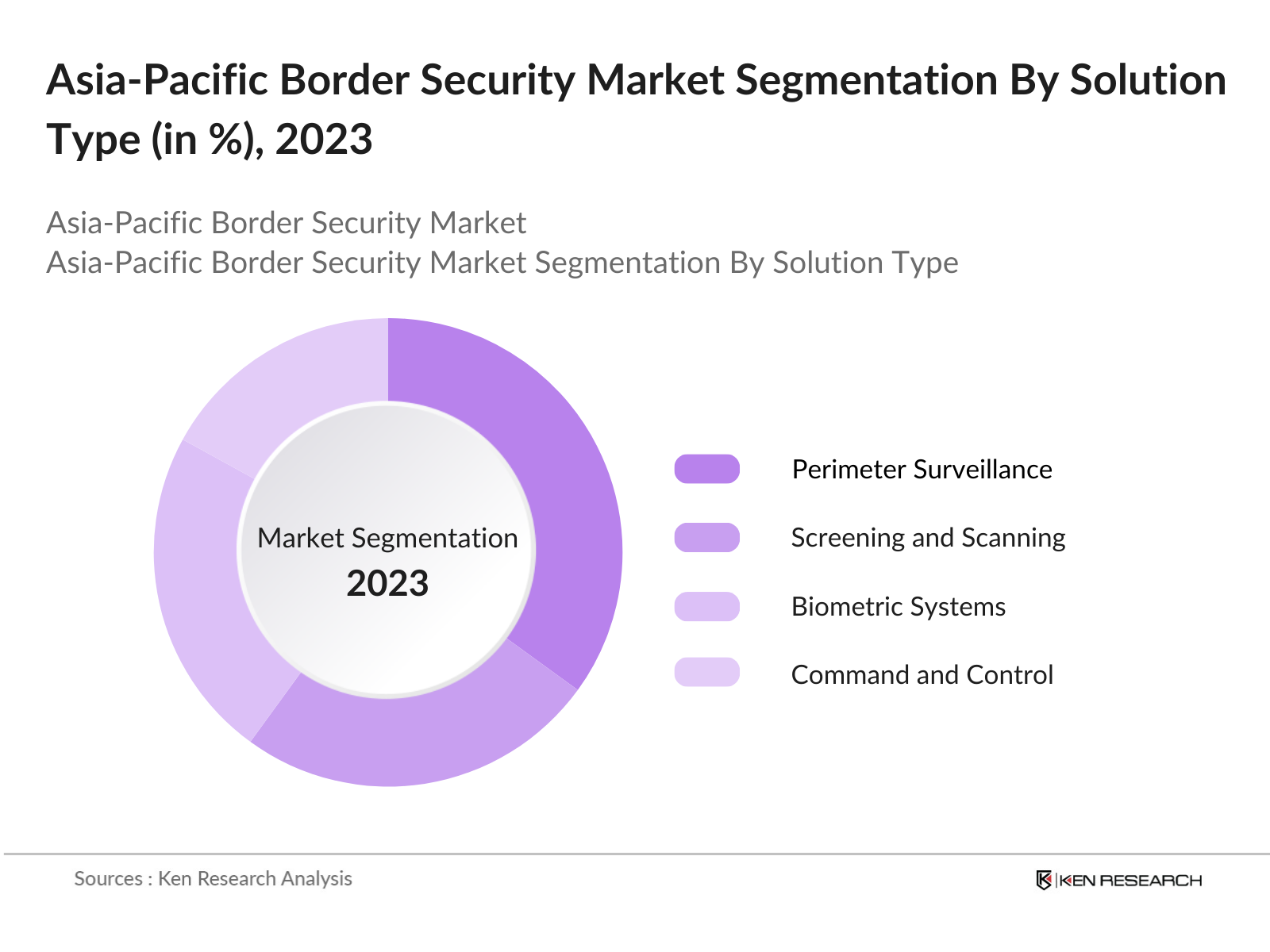
By Solution Type: The Asia-Pacific Border Security Market is segmented by solution type into perimeter surveillance, screening and scanning systems, biometric systems, command and control systems, and unmanned systems. Perimeter Surveillance has been the dominant segment due to the rising need for comprehensive monitoring of borders in regions prone to infiltration. The use of radar systems, drones, and advanced sensor technologies has been pivotal in preventing unauthorized crossings. Additionally, the increased adoption of thermal imaging and ground-based surveillance has further cemented its market dominance.
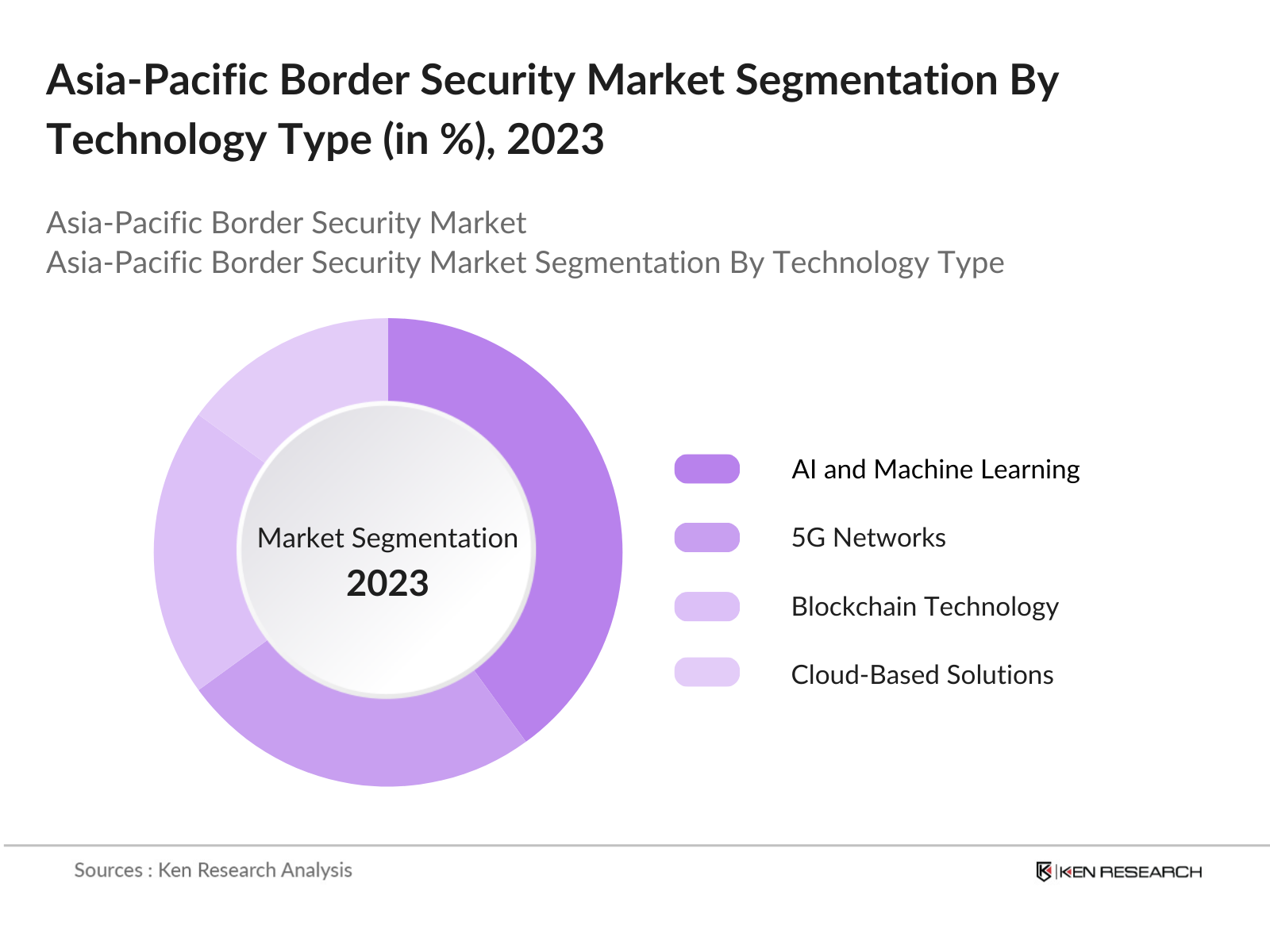
By Technology: The market is also segmented by technology, which includes artificial intelligence and machine learning, blockchain technology, 5G networks, and cloud-based border security solutions. Artificial Intelligence and Machine Learning lead this segment, with AI-enabled systems being critical for identifying potential security threats in real-time. Countries across the region are investing in machine learning algorithms for data analysis and threat detection, reducing the need for manual intervention and increasing the efficiency of border patrol forces.
The Asia-Pacific Border Security Market is dominated by a few major international and local players. The market features a mix of defense companies providing full-suite border security solutions and technology firms specializing in cutting-edge surveillance technologies. The market is seeing consolidation with these key players leading through significant investment in research and development (R&D) and technological innovation, primarily focused on artificial intelligence, unmanned systems, and advanced surveillance capabilities.
|
Company |
Year Established |
Headquarters |
Key Solutions |
No. of Employees |
Market Share |
Product Innovation |
R&D Expenditure |
Strategic Partnerships |
|
Thales Group |
1893 |
Paris, France |
_ |
_ |
_ |
_ |
_ |
_ |
|
Lockheed Martin Corporation |
1995 |
Maryland, USA |
_ |
_ |
_ |
_ |
_ |
_ |
|
BAE Systems PLC |
1999 |
London, UK |
_ |
_ |
_ |
_ |
_ |
_ |
|
Elbit Systems Ltd. |
1966 |
Haifa, Israel |
_ |
_ |
_ |
_ |
_ |
_ |
|
Leonardo S.p.A. |
1948 |
Rome, Italy |
_ |
_ |
_ |
_ |
_ |
_ |
The Asia-Pacific Border Security Market is expected to grow steadily over the next few years, driven by increasing geopolitical complexities, technological advancements, and an ongoing demand for enhanced national security. Key factors propelling this market include the integration of AI and machine learning into surveillance systems, the adoption of 5G for real-time data transmission, and rising government spending on national security measures. Many nations in the region, such as China and India, are expected to expand their investments in smart border technologies, especially unmanned aerial vehicles (UAVs) and AI-powered analytics tools, which will help secure not only land borders but also maritime and air borders. As cross-border trade expands, countries will focus on bolstering both digital and physical security measures.
|
Solution Type |
Perimeter Surveillance Screening and Scanning Systems Biometric Systems Command and Control Systems Unmanned Systems |
|
Application |
Land Border Security Air Border Security Maritime Border Security |
|
Technology |
Artificial Intelligence and Machine Learning Blockchain Technology 5G Networks Cloud-Based Solutions |
|
End-User |
Defense Agencies Homeland Security Intelligence Agencies |
|
Region |
East Asia, Southeast Asia Oceania South Asia Rest of Asia-Pacific |
1.1. Definition and Scope
1.2. Market Taxonomy
1.3. Market Growth Rate (CAGR)
1.4. Market Segmentation Overview
2.1. Historical Market Size
2.2. Year-On-Year Growth Analysis
2.3. Key Market Developments and Milestones
3.1. Growth Drivers
3.1.1. Rising Geopolitical Tensions
3.1.2. Increased Government Spending on Defense
3.1.3. Technological Advancements in Surveillance
3.1.4. Strengthening Cross-Border Trade and Security Infrastructure
3.2. Market Challenges
3.2.1. High Deployment Costs
3.2.2. Political Instability in Certain Countries
3.2.3. Cybersecurity Risks to Border Security Systems
3.3. Opportunities
3.3.1. Integration of AI and Machine Learning in Border Security
3.3.2. Expansion into Emerging Economies
3.3.3. Rising Demand for Smart Borders and Automated Solutions
3.4. Trends
3.4.1. Adoption of Unmanned Aerial Vehicles (UAVs)
3.4.2. Cross-Border Collaboration for Integrated Systems
3.4.3. Growing Demand for Biometric Verification Systems
3.5. Government Regulation
3.5.1. National Border Security Programs
3.5.2. International Border Agreements
3.5.3. Compliance with Data Protection and Privacy Laws
3.5.4. Public-Private Partnerships for Security Infrastructure
3.6. SWOT Analysis
3.7. Stakeholder Ecosystem
3.8. Porters Five Forces
3.9. Competition Ecosystem
4.1. By Solution Type (In Value %)
4.1.1. Perimeter Surveillance
4.1.2. Screening and Scanning Systems
4.1.3. Biometric Systems
4.1.4. Command and Control Systems
4.1.5. Unmanned Systems
4.2. By Application (In Value %)
4.2.1. Land Border Security
4.2.2. Air Border Security
4.2.3. Maritime Border Security
4.3. By Technology (In Value %)
4.3.1. Artificial Intelligence and Machine Learning
4.3.2. Blockchain Technology
4.3.3. 5G Networks
4.3.4. Cloud-Based Border Security Solutions
4.4. By End-User (In Value %)
4.4.1. Defense Agencies
4.4.2. Homeland Security
4.4.3. Intelligence Agencies
4.5. By Region (In Value %)
4.5.1. East Asia
4.5.2. Southeast Asia
4.5.3. Oceania
4.5.4. South Asia
4.5.5. Rest of Asia-Pacific
5.1. Detailed Profiles of Major Competitors
5.1.1. Thales Group
5.1.2. BAE Systems PLC
5.1.3. Lockheed Martin Corporation
5.1.4. Raytheon Technologies Corporation
5.1.5. Elbit Systems Ltd.
5.1.6. Northrop Grumman Corporation
5.1.7. Leonardo S.p.A.
5.1.8. Boeing Defense, Space & Security
5.1.9. General Dynamics Corporation
5.1.10. Saab AB
5.1.11. Israel Aerospace Industries
5.1.12. Indra Sistemas S.A.
5.1.13. Hikvision Digital Technology Co. Ltd.
5.1.14. FLIR Systems Inc.
5.1.15. L3Harris Technologies
5.2. Cross Comparison Parameters (Revenue, Headquarters, Employees, Product Portfolio, Market Share, Strategic Partnerships, R&D Investments, Technology Integration)
5.3. Market Share Analysis
5.4. Strategic Initiatives
5.5. Mergers and Acquisitions
5.6. Investment Analysis
5.7. Government Contracts and Grants
5.8. Venture Capital Funding
5.9. Private Equity Investments
6.1. Border Control Regulations by Country
6.2. Cybersecurity Standards for Border Systems
6.3. Certification Processes for Border Security Technologies
6.4. International Compliance and Cooperation Agreements
7.1. Future Market Size Projections
7.2. Key Factors Driving Future Market Growth
8.1. By Solution Type (In Value %)
8.2. By Application (In Value %)
8.3. By Technology (In Value %)
8.4. By End-User (In Value %)
8.5. By Region (In Value %)
9.1. TAM/SAM/SOM Analysis
9.2. Strategic Partnerships & Market Entry Strategy
9.3. Customer Segment Analysis
9.4. Marketing and Positioning Initiatives
9.5. White Space Opportunity Analysis
This phase focuses on creating a comprehensive ecosystem map for the Asia-Pacific Border Security Market, identifying key stakeholders, including government bodies, defense contractors, and security solution providers. Extensive desk research is employed to define the critical variables impacting market trends.
This stage involves the collection of historical market data and analysis of market penetration, identifying revenue trends and market saturation across different regions in Asia-Pacific. Service providers and government bodies' data are assessed to ensure accurate forecasting.
To ensure accuracy, the market hypothesis is validated through expert interviews with professionals from the defense and security sectors. This helps to verify market estimates and gain insights into operational and financial trends.
The final phase compiles and validates the findings through direct engagement with industry players, enabling a comprehensive analysis of the market's current state and future trajectory. Data is synthesized into a final report, providing a complete understanding of the Asia-Pacific Border Security Market.
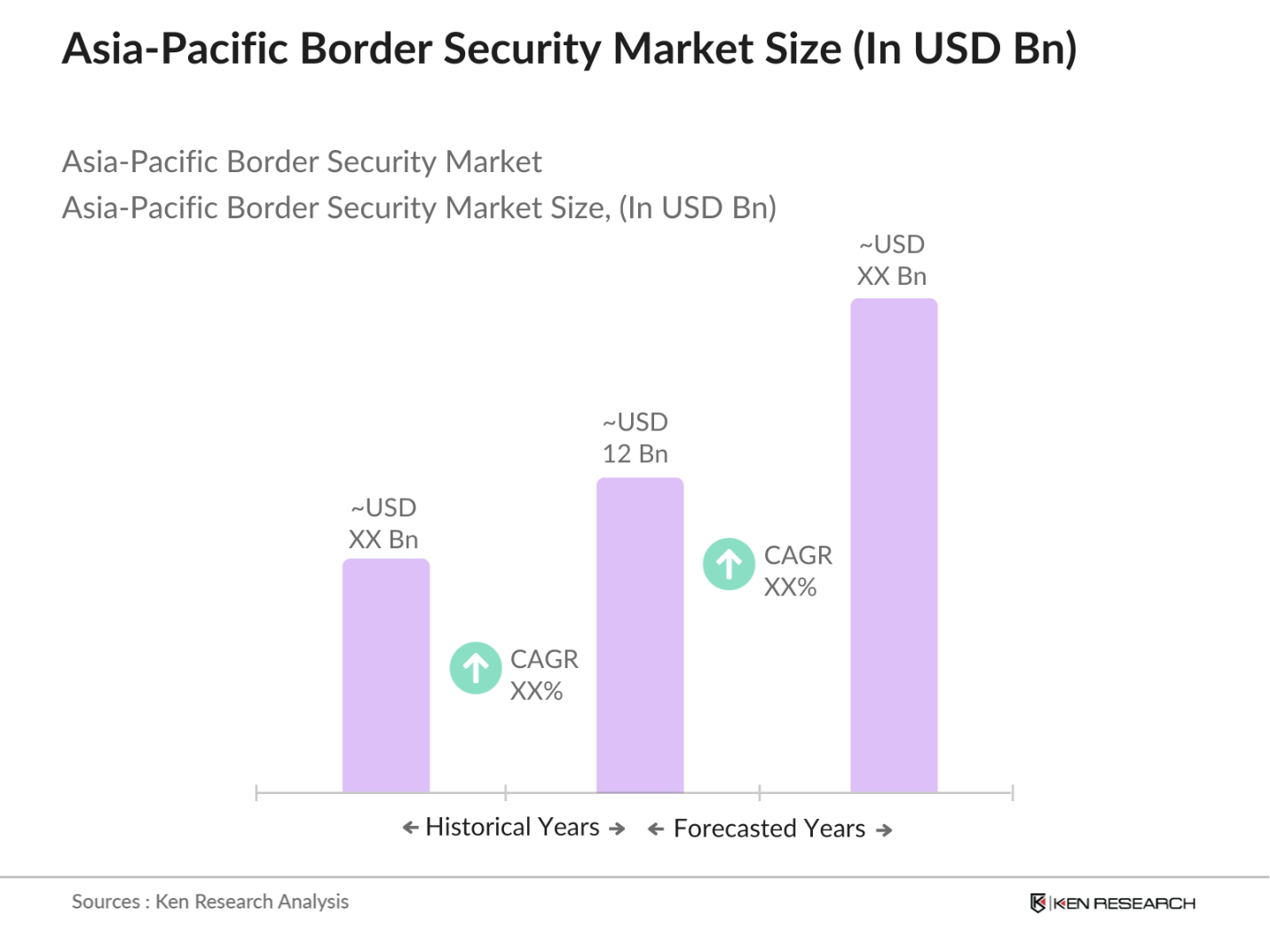
The Asia-Pacific Border Security Market is valued at USD 12 billion and is driven by increasing government investments in national security infrastructure.
Key challenges include high costs of advanced surveillance systems, cybersecurity vulnerabilities, and political instability in certain countries.
Major players include Thales Group, Lockheed Martin Corporation, BAE Systems PLC, Elbit Systems Ltd., and Leonardo S.p.A., all known for their cutting-edge technologies and solutions.
The market is primarily driven by increasing geopolitical tensions, rising investments in defense technologies, and the demand for enhanced security at air, land, and maritime borders.

What makes us stand out is that our consultants follows Robust, Refine and Result (RRR) methodology. i.e. Robust for clear definitions, approaches and sanity checking, Refine for differentiating respondents facts and opinions and Result for presenting data with story

We have set a benchmark in the industry by offering our clients with syndicated and customized market research reports featuring coverage of entire market as well as meticulous research and analyst insights.

While we don't replace traditional research, we flip the method upside down. Our dual approach of Top Bottom & Bottom Top ensures quality deliverable by not just verifying company fundamentals but also looking at the sector and macroeconomic factors.

With one step in the future, our research team constantly tries to show you the bigger picture. We help with some of the tough questions you may encounter along the way: How is the industry positioned? Best marketing channel? KPI's of competitors? By aligning every element, we help maximize success.

Our report gives you instant access to the answers and sources that other companies might choose to hide. We elaborate each steps of research methodology we have used and showcase you the sample size to earn your trust.

If you need any support, we are here! We pride ourselves on universe strength, data quality, and quick, friendly, and professional service.