
Asia Pacific Breast Pumps Market Outlook to 2030
Region:Asia
Author(s):Sanjeev
Product Code:KROD8763
November 2024
87
About the Report
Asia Pacific Breast Pumps Market Overview
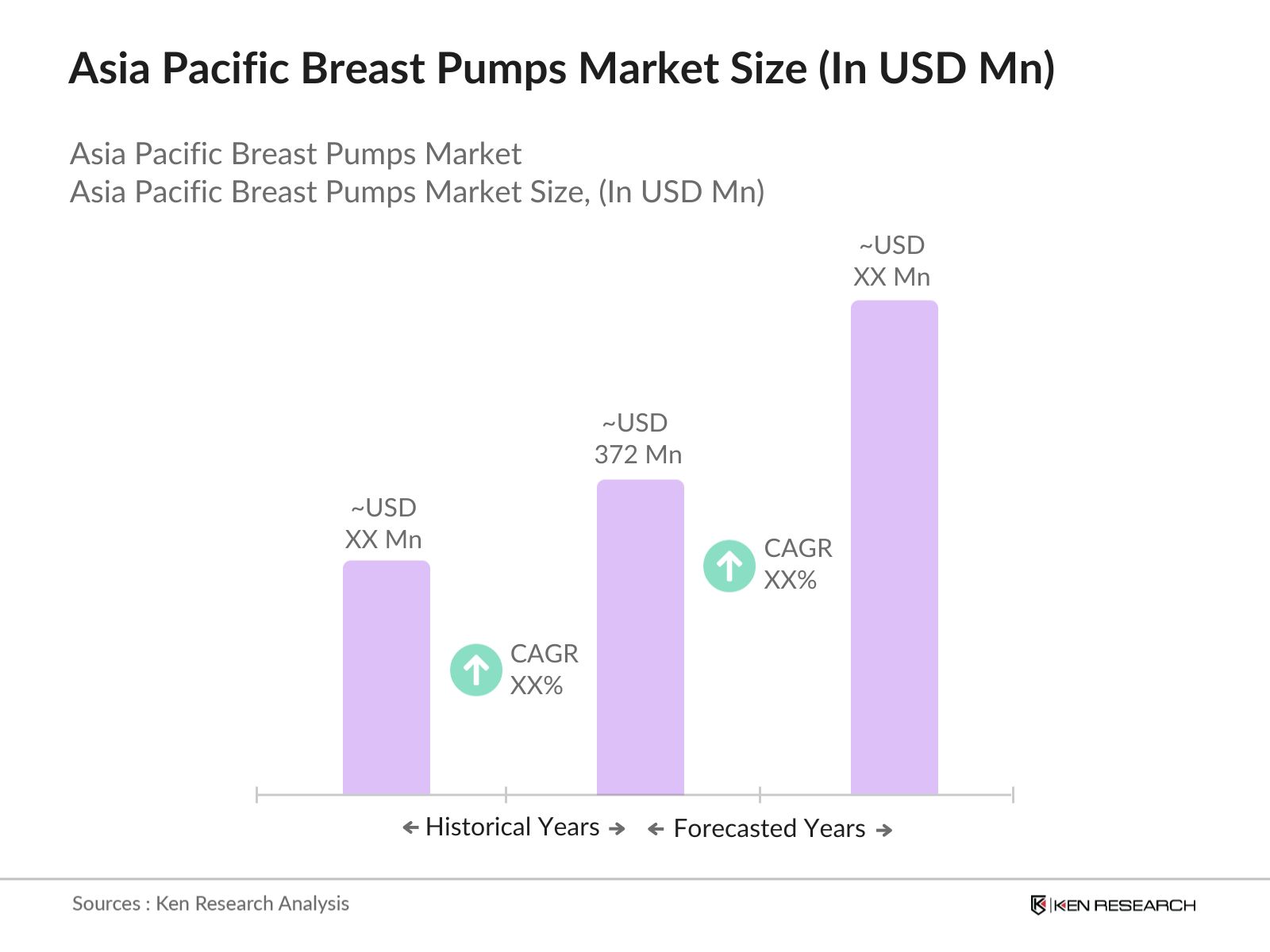
- The Asia Pacific breast pumps market is valued at USD 372 million, driven by the increasing working women population and rising awareness of the importance of breastfeeding. Countries such as China and India have seen significant growth in the demand for breast pumps due to increasing maternal employment rates and government initiatives promoting breastfeeding. Furthermore, technological advancements in breast pumps, including portable and smart pumps, have boosted consumer adoption, particularly in urban areas.
- The market is dominated by countries like China and Japan due to their well-established healthcare infrastructure and high disposable income, which allows greater access to high-quality breast pumps. China leads in production and consumption, fueled by a large population base, rapid urbanization, and growing awareness regarding infant nutrition. Japans dominance is supported by its aging population, high birth rate policies, and healthcare support for working mothers.
- Healthcare initiatives aimed at improving maternal and infant care have been a focus of governments in India, Vietnam, and Thailand. In 2023, Thailand launched the Healthy Mothers, Healthy Babies program, which included the distribution of breast pumps to low-income mothers as part of its broader maternal health initiatives. These initiatives demonstrate government commitment to improving breastfeeding rates and overall maternal health.
Asia Pacific Breast Pumps Market Segmentation
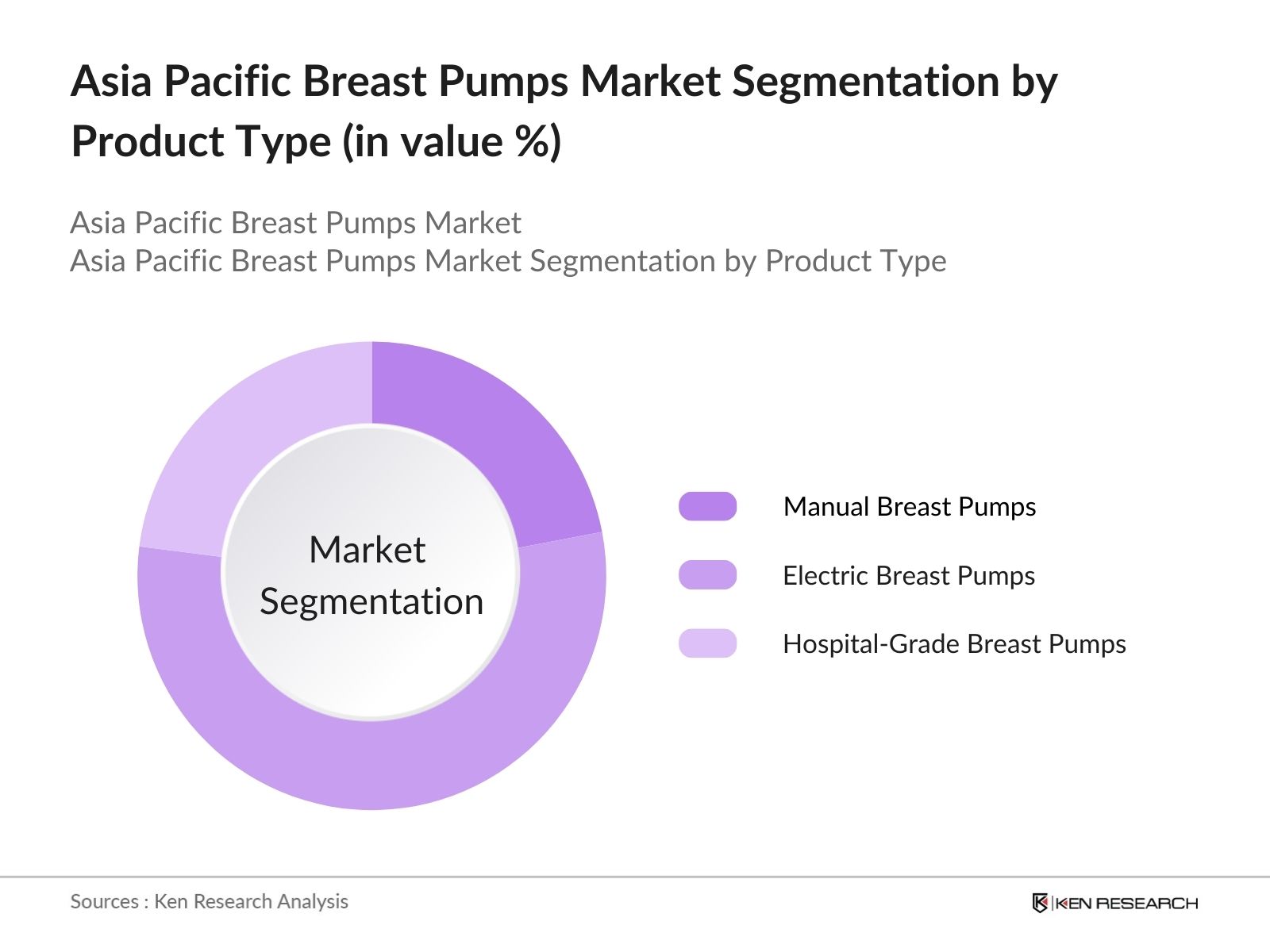
- By Product Type: The market is segmented by product type into manual breast pumps, electric breast pumps (single and double), and hospital-grade breast pumps. Electric breast pumps, particularly double electric pumps, have a dominant market share due to their convenience and efficiency for working mothers. The growing number of women in the workforce and the convenience offered by electric pumps, especially double pumps that save time, has significantly increased their adoption. Additionally, the technological advancements in electric breast pumps, such as noise reduction and mobile connectivity, have further propelled their popularity in the market.
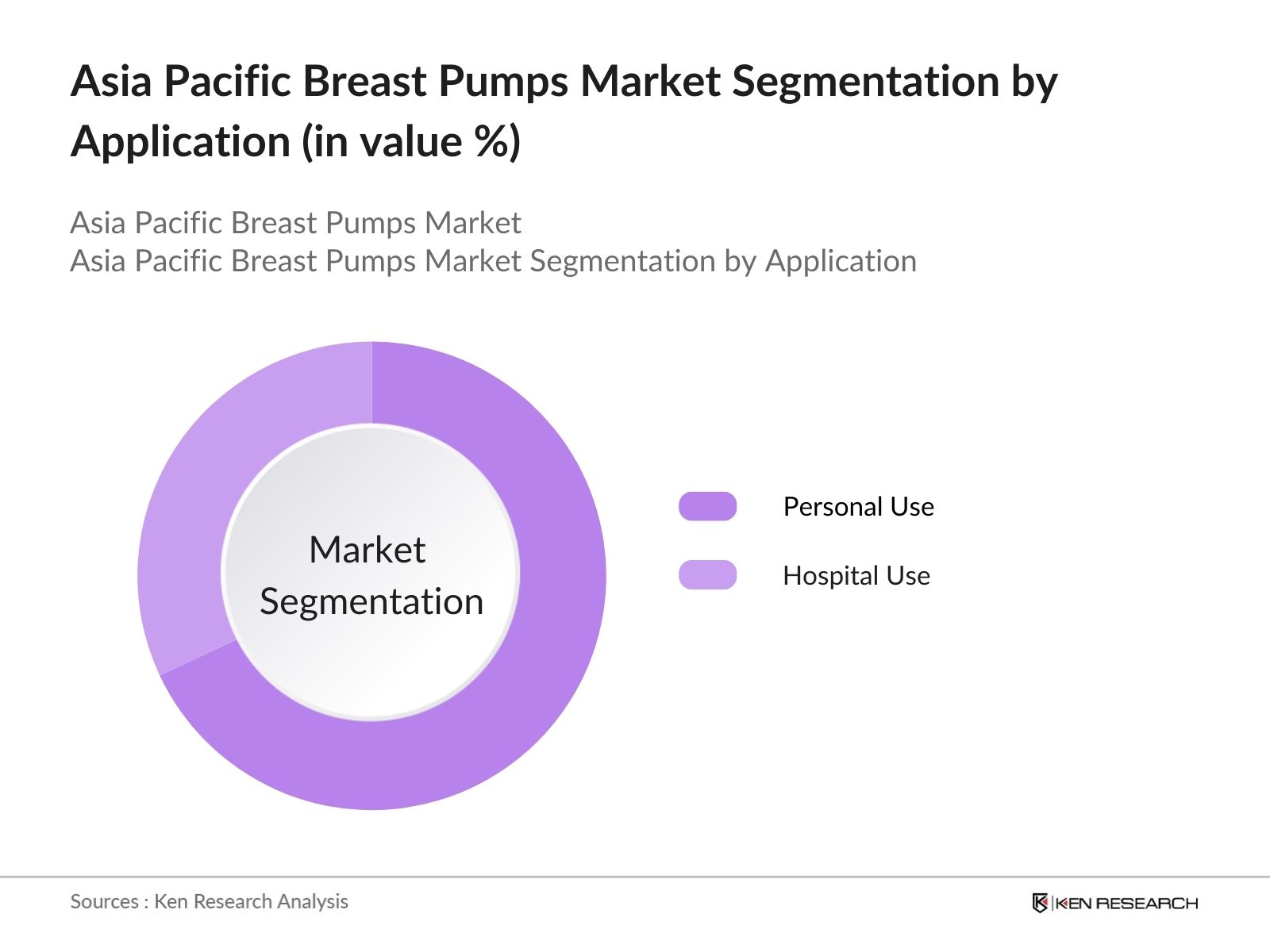
- By Application: The market is also segmented by application into personal use and hospital use. Personal use breast pumps dominate the market share, driven by increasing consumer awareness and the rising number of working mothers opting for breast pumps to balance work and child care. The personal use segment's dominance is attributed to the affordability and availability of portable, easy-to-use breast pumps that are tailored for individual needs, compared to hospital-grade pumps which are used primarily in medical facilities.
Asia Pacific Breast Pumps Market Competitive Landscape
The Asia Pacific breast pumps market is dominated by several global and regional players. These companies are leveraging innovation, product development, and strategic partnerships to strengthen their presence in the market.
The competitive landscape is characterized by a mix of multinational and regional companies offering diverse product portfolios, ranging from manual to advanced electric breast pumps. Companies such as Philips Avent and Medela AG have established strong brand recognition due to their high-quality products and widespread distribution networks.
|
Company Name |
Establishment Year |
Headquarters |
Product Range |
Revenue |
R&D Investments |
|
Philips Avent |
1891 |
Netherlands |
|||
|
Medela AG |
1961 |
Switzerland |
|||
|
Spectra Baby USA |
1998 |
South Korea |
|||
|
Pigeon Corporation |
1957 |
Japan |
|||
|
Ardo Medical AG |
1995 |
Switzerland |
Asia Pacific Breast Pumps Industry Analysis
Market Growth Drivers
- Increasing Women Workforce Participation: The Asia-Pacific region has seen a steady rise in womens workforce participation, with Japan reporting 30 million women employed in 2022 and South Korea at 12.5 million in the same year. This increase in economic participation boosts the demand for breast pumps as more working mothers require efficient breastfeeding solutions. Governments across the region, such as in China and Singapore, have focused on supporting female employment through extended maternity leave and workplace breastfeeding accommodations, making breast pumps a crucial tool for balancing work and childcare.
- Rising Awareness of Infant Nutrition: Public health campaigns in countries like India and Thailand have driven awareness of the importance of breastfeeding for infant nutrition, resulting in an increase in breast pump adoption. The Indian governments Poshan Abhiyaan program reached over 100 million households in 2023, promoting better maternal and infant health practices. This campaign underscores the growing awareness in urban and semi-urban areas, where breast pumps are now seen as an essential tool for ensuring continuous breastfeeding.
- Technological Advancements in Breast Pumps: Investment in R&D for breast pump technology across the Asia-Pacific region saw a rise, with Japan alone dedicating $3 billion to healthcare-related research in 2022. These investments have led to the development of quieter, more efficient pumps with features like suction personalization and Bluetooth integration. Technological innovation is helping overcome barriers related to comfort and convenience, providing working mothers with smart, portable solutions.
Market Challenges
- High Cost of Breast Pumps: Despite advancements, the high cost of breast pumps remains a challenge, particularly in lower-income regions. The Consumer Affordability Index for countries like Indonesia and Vietnam, which sits at around $3,800 and $3,100 per capita income in 2023, limits widespread adoption. Families in rural or lower-income areas find it difficult to justify the investment in advanced breast pumps, which can cost several hundred dollars.
- Cultural Barriers in Certain Regions: Cultural attitudes in countries like Indonesia and rural India continue to pose challenges for the adoption of breast pumps. In many conservative areas, there is still a stigma attached to breastfeeding in public or using devices to express milk. This, coupled with traditional beliefs about maternal care, limits the spread of breast pump usage. Studies conducted by government agencies highlight that approximately 60% of mothers in rural regions are hesitant to use breast pumps due to cultural constraints.
Asia Pacific Breast Pumps Market Future Outlook
Over the next five years, the Asia Pacific breast pumps market is expected to experience substantial growth, driven by rising maternal employment rates, technological innovations in breast pump design, and increasing healthcare awareness across the region. Additionally, the expansion of e-commerce platforms and the availability of portable breast pumps are anticipated to further fuel market growth. Government initiatives in countries like India and China that support breastfeeding through subsidies and maternity leaves will also play a pivotal role in market expansion. Urbanization and the availability of advanced healthcare facilities in cities are key factors influencing the future of this market.
Future Market Opportunities
- Growth of E-commerce Channels for Breast Pumps: E-commerce has surged across the Asia-Pacific region, especially in markets like China and India, where online sales for healthcare products, including breast pumps, have increased by 45% in 2023. Platforms like Alibaba and Amazon have made breast pumps more accessible to urban and semi-urban populations. Consumers prefer online shopping due to the convenience of home delivery and access to international brands.
- Partnerships with Hospitals and Healthcare Providers: Collaborations between breast pump manufacturers and healthcare providers present significant growth opportunities. Hospitals in South Korea, Japan, and Australia have started partnering with breast pump companies to provide rental services or supply breast pumps to new mothers as part of postnatal care. In 2023, approximately 150 hospitals in Australia offered breast pump rentals through these partnerships.
Scope of the Report
|
By Product Type |
Manual Breast Pumps Electric Breast Pumps (Single & Double) Hospital-Grade Breast Pumps |
|
By Application |
Personal Use Hospital Use |
|
By Technology |
Closed System Breast Pumps Open System Breast Pumps |
|
By Sales Channel |
E-commerce Platforms Retail Pharmacies Hospital Pharmacies Specialty Stores |
|
By Region |
China India Japan Rest of Asia Pacific |
Products
Key Target Audience
Breast Pump Manufacturers
Medical Device Distributors
Hospitals and Healthcare Providers
Banks and Financial Institutes
Government and Regulatory Bodies (e.g., Ministry of Health, APAC)
Retail Pharmacies and E-commerce Platforms
Maternity and Childcare Organizations
Insurance Companies and Healthcare Financiers
Investment and Venture Capitalist Firms
Companies
Asia Pacific Breast Pumps Market Major Players
Philips Avent
Medela AG
Spectra Baby USA
Pigeon Corporation
Ardo Medical AG
Ameda Inc.
Lansinoh Laboratories
Tommee Tippee
Freemie
Willow Pump
Chicco
Evenflo Feeding
Hygeia Medical
Baby Buddha
Mayborn Group
Table of Contents
1. Asia Pacific Breast Pumps Market Overview
1.1. Definition and Scope
1.2. Market Taxonomy
1.3. Market Growth Rate
1.4. Market Segmentation Overview
2. Asia Pacific Breast Pumps Market Size (In USD Bn)
2.1. Historical Market Size
2.2. Year-On-Year Growth Analysis
2.3. Key Market Developments and Milestones
3. Asia Pacific Breast Pumps Market Analysis
3.1. Growth Drivers
3.1.1. Increasing Women Workforce Participation (Labor Force Participation Rates, APAC)
3.1.2. Rising Awareness of Infant Nutrition (Public Health Campaigns, Maternal Health Initiatives)
3.1.3. Technological Advancements in Breast Pumps (R&D Expenditure, New Product Innovations)
3.1.4. Government Programs Supporting Maternity and Childcare (APAC Government Policies, Maternity Leaves)
3.2. Market Challenges
3.2.1. High Cost of Breast Pumps (Consumer Affordability Index, Disposable Income Trends)
3.2.2. Cultural Barriers in Certain Regions (Breastfeeding Stigma, Traditional Beliefs)
3.2.3. Low Awareness in Rural Areas (Access to Healthcare, Education Penetration Rates)
3.3. Opportunities
3.3.1. Growth of E-commerce Channels for Breast Pumps (Online Sales Penetration, Consumer Preferences)
3.3.2. Partnerships with Hospitals and Healthcare Providers (Collaborations, Supply Chain Ecosystem)
3.3.3. Emerging Markets with Low Penetration (Regional Healthcare Expansion, Accessibility Initiatives)
3.4. Trends
3.4.1. Smart and Portable Breast Pumps (Integration with Mobile Apps, IoT in Breast Pumps)
3.4.2. Personalization of Breastfeeding Equipment (Customization, User Experience Enhancements)
3.4.3. Subscription Models for Breast Pump Rentals (Service-based Models, Subscription Services in APAC)
3.5. Government Regulation
3.5.1. Breastfeeding Support Policies (Maternity Leave Laws, Subsidy Programs)
3.5.2. Regulatory Standards for Breast Pump Devices (Medical Device Regulations, Quality Certifications)
3.5.3. Healthcare Initiatives for Maternal and Childcare (National Health Missions, Infant Health Programs)
3.6. SWOT Analysis
3.7. Stakeholder Ecosystem
3.8. Porters Five Forces
3.9. Competition Ecosystem
4. Asia Pacific Breast Pumps Market Segmentation
4.1. By Product Type (In Value %)
4.1.1. Manual Breast Pumps
4.1.2. Electric Breast Pumps (Single & Double)
4.1.3. Hospital-Grade Breast Pumps
4.2. By Application (In Value %)
4.2.1. Personal Use
4.2.2. Hospital Use
4.3. By Technology (In Value %)
4.3.1. Closed System Breast Pumps
4.3.2. Open System Breast Pumps
4.4. By Sales Channel (In Value %)
4.4.1. E-commerce Platforms
4.4.2. Retail Pharmacies
4.4.3. Hospital Pharmacies
4.4.4. Specialty Stores
4.5. By Region (In Value %)
4.5.1. China
4.5.2. India
4.5.3. Japan
4.5.4. Australia & New Zealand
4.5.5. Rest of Asia Pacific
5. Asia Pacific Breast Pumps Market Competitive Analysis
5.1. Detailed Profiles of Major Companies
5.1.1. Philips Avent
5.1.2. Medela AG
5.1.3. Pigeon Corporation
5.1.4. Spectra Baby
5.1.5. Ardo Medical
5.1.6. Ameda, Inc.
5.1.7. Tommee Tippee
5.1.8. Lansinoh Laboratories
5.1.9. Willow Pump
5.1.10. Hygeia Medical
5.1.11. Evenflo Feeding
5.1.12. Mayborn Group
5.1.13. Freemie
5.1.14. Baby Buddha
5.1.15. Chicco
5.2. Cross Comparison Parameters
(No. of Employees, Headquarters, Inception Year, Revenue, Product Offerings, R&D Investments, Market Share, Geographic Presence)
5.3. Market Share Analysis
5.4. Strategic Initiatives
5.5. Mergers and Acquisitions
5.6. Investment Analysis
5.7. Venture Capital Funding
5.8. Government Grants
5.9. Private Equity Investments
6. Asia Pacific Breast Pumps Market Regulatory Framework
6.1. Medical Device Regulatory Frameworks (FDA, CE Marking)
6.2. Compliance Requirements (Safety Standards, ISO Certifications)
6.3. Certification Processes
7. Asia Pacific Breast Pumps Future Market Size (In USD Bn)
7.1. Future Market Size Projections
7.2. Key Factors Driving Future Market Growth
8. Asia Pacific Breast Pumps Future Market Segmentation
8.1. By Product Type (In Value %)
8.2. By Application (In Value %)
8.3. By Technology (In Value %)
8.4. By Sales Channel (In Value %)
8.5. By Region (In Value %)
9. Asia Pacific Breast Pumps Market Analysts Recommendations
9.1. TAM/SAM/SOM Analysis
9.2. Customer Cohort Analysis
9.3. Marketing Initiatives
9.4. White Space Opportunity Analysis
Disclaimer
Contact Us
Research Methodology
Step 1: Identification of Key Variables
This phase involves identifying the major stakeholders in the Asia Pacific breast pumps market. Comprehensive desk research is conducted, utilizing proprietary and secondary databases to gather relevant market information, including market drivers, challenges, and competitive factors. This helps define the key variables that impact the market.
Step 2: Market Analysis and Construction
In this step, historical data and growth patterns of the breast pump market are analyzed. Sales data from various distributors, online platforms, and healthcare facilities are evaluated to estimate market performance. This phase also involves understanding the factors that drive market growth and mapping out potential growth opportunities.
Step 3: Hypothesis Validation and Expert Consultation
Market hypotheses are validated through interviews with industry experts, including manufacturers, distributors, and healthcare providers. This process includes both qualitative and quantitative analysis, ensuring that the data gathered is aligned with real-world market conditions and expectations.
Step 4: Research Synthesis and Final Output
In the final stage, insights from manufacturers and key stakeholders are integrated to compile a comprehensive and accurate analysis. The data is validated through a bottom-up approach, ensuring that the report provides a detailed understanding of the breast pumps market, with a focus on product innovations, customer preferences, and distribution channels.
Frequently Asked Questions
01. How big is the Asia Pacific Breast Pumps Market?
The Asia Pacific breast pumps market is valued at USD 372 million, with a strong growth trajectory driven by increasing working women populations and advancements in healthcare infrastructure across the region.
02. What are the challenges in the Asia Pacific Breast Pumps Market?
Key challenges in Asia Pacific breast pumps market include the high cost of advanced breast pumps, low awareness in rural areas, and cultural barriers in certain regions. Limited access to healthcare in less developed areas also hampers market penetration.
03. Who are the major players in the Asia Pacific Breast Pumps Market?
The major players in this Asia Pacific breast pumps market include Philips Avent, Medela AG, Spectra Baby USA, Pigeon Corporation, and Ardo Medical AG. These companies dominate the market through innovation, wide distribution networks, and strong brand recognition.
04. What are the growth drivers of the Asia Pacific Breast Pumps Market?
The Asia Pacific breast pumps market is driven by the increasing participation of women in the workforce, rising awareness about the benefits of breastfeeding, government support for maternal healthcare, and the growing trend of portable and smart breast pumps.
05. What are the opportunities in the Asia Pacific Breast Pumps Market?
Key opportunities in Asia Pacific breast pumps market include the growth of e-commerce channels, technological advancements in breast pump designs, and the increasing demand for affordable breast pumps in emerging markets like India and China.
Why Buy From Us?

What makes us stand out is that our consultants follows Robust, Refine and Result (RRR) methodology. i.e. Robust for clear definitions, approaches and sanity checking, Refine for differentiating respondents facts and opinions and Result for presenting data with story

We have set a benchmark in the industry by offering our clients with syndicated and customized market research reports featuring coverage of entire market as well as meticulous research and analyst insights.

While we don't replace traditional research, we flip the method upside down. Our dual approach of Top Bottom & Bottom Top ensures quality deliverable by not just verifying company fundamentals but also looking at the sector and macroeconomic factors.

With one step in the future, our research team constantly tries to show you the bigger picture. We help with some of the tough questions you may encounter along the way: How is the industry positioned? Best marketing channel? KPI's of competitors? By aligning every element, we help maximize success.

Our report gives you instant access to the answers and sources that other companies might choose to hide. We elaborate each steps of research methodology we have used and showcase you the sample size to earn your trust.

If you need any support, we are here! We pride ourselves on universe strength, data quality, and quick, friendly, and professional service.