
Asia Pacific Flow Cytometry Market Outlook to 2030
Region:Asia
Author(s):Shreya Garg
Product Code:KROD3690
November 2024
88
About the Report
Asia Pacific Flow Cytometry Market Overview
- The Asia Pacific flow cytometry market, valued at USD 855 million, is driven by the increasing prevalence of chronic diseases such as cancer, diabetes, and cardiovascular disorders. The growing patient population in countries like China, India, and Japan has led to a heightened demand for advanced diagnostic tools, including flow cytometry, to facilitate early detection and effective treatment strategies.
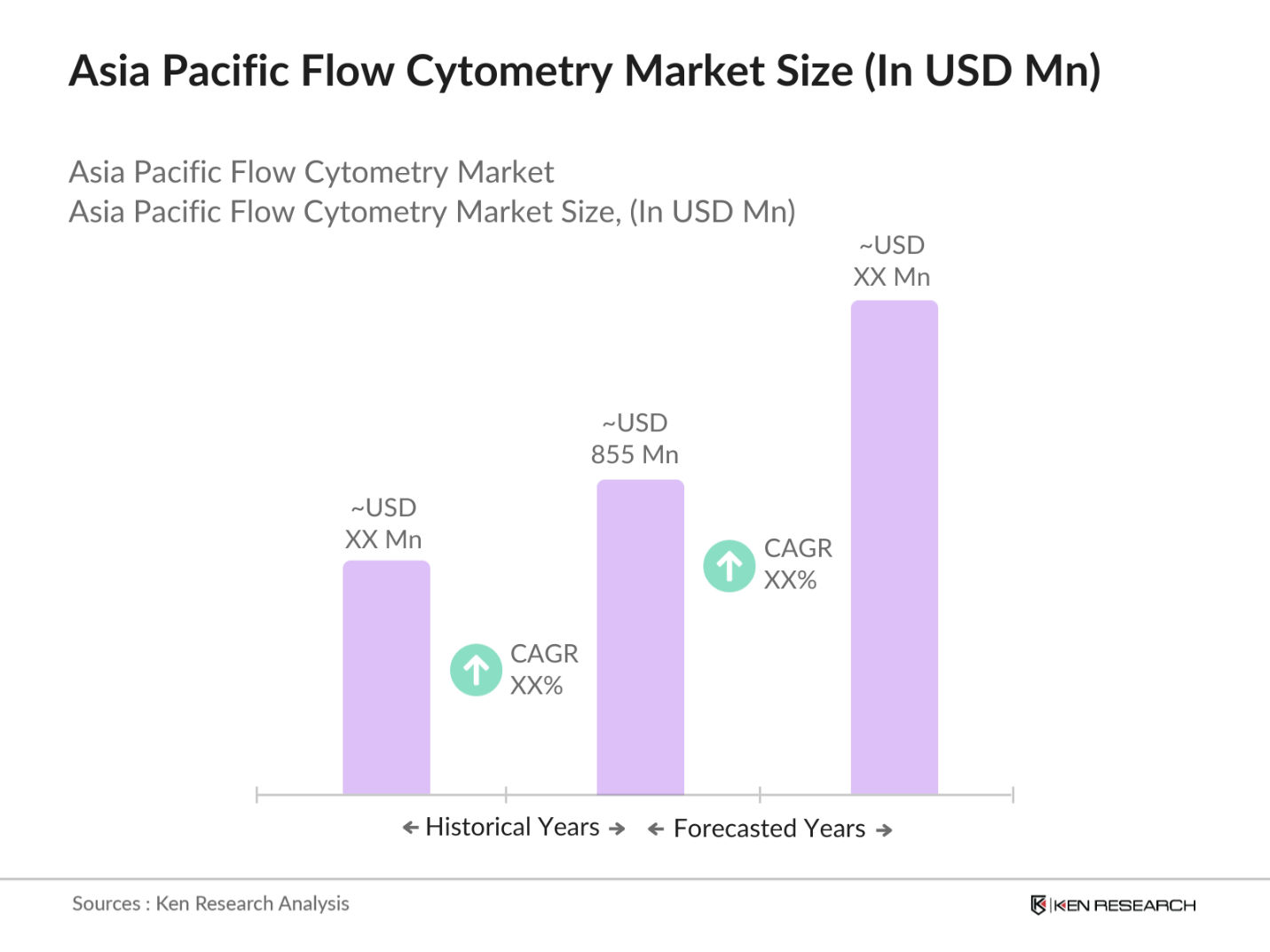
- China and Japan are dominant players in the Asia Pacific flow cytometry market. China's dominance is attributed to substantial investments in research and development, a robust healthcare infrastructure, and a large patient base requiring diagnostic services. Japan's leadership stems from its advanced technological capabilities, a strong focus on innovation, and a well-established healthcare system that readily adopts cutting-edge diagnostic tools.
- Government policies promoting advanced diagnostics positively influence the flow cytometry market. Many countries implement health strategies prioritizing early disease detection. The United States' Cancer Moonshot initiative, relaunched in 2022, aims to accelerate cancer research, including improving diagnostics. China's Healthy China 2030 plan emphasizes precision medicine and advanced diagnostics development. These policies often include funding for healthcare infrastructure and subsidies for adopting advanced equipment like flow cytometers. Supportive regulatory environments facilitate integrating flow cytometry into standard practices, promoting market growth.
Asia Pacific Flow Cytometry Market Segmentation
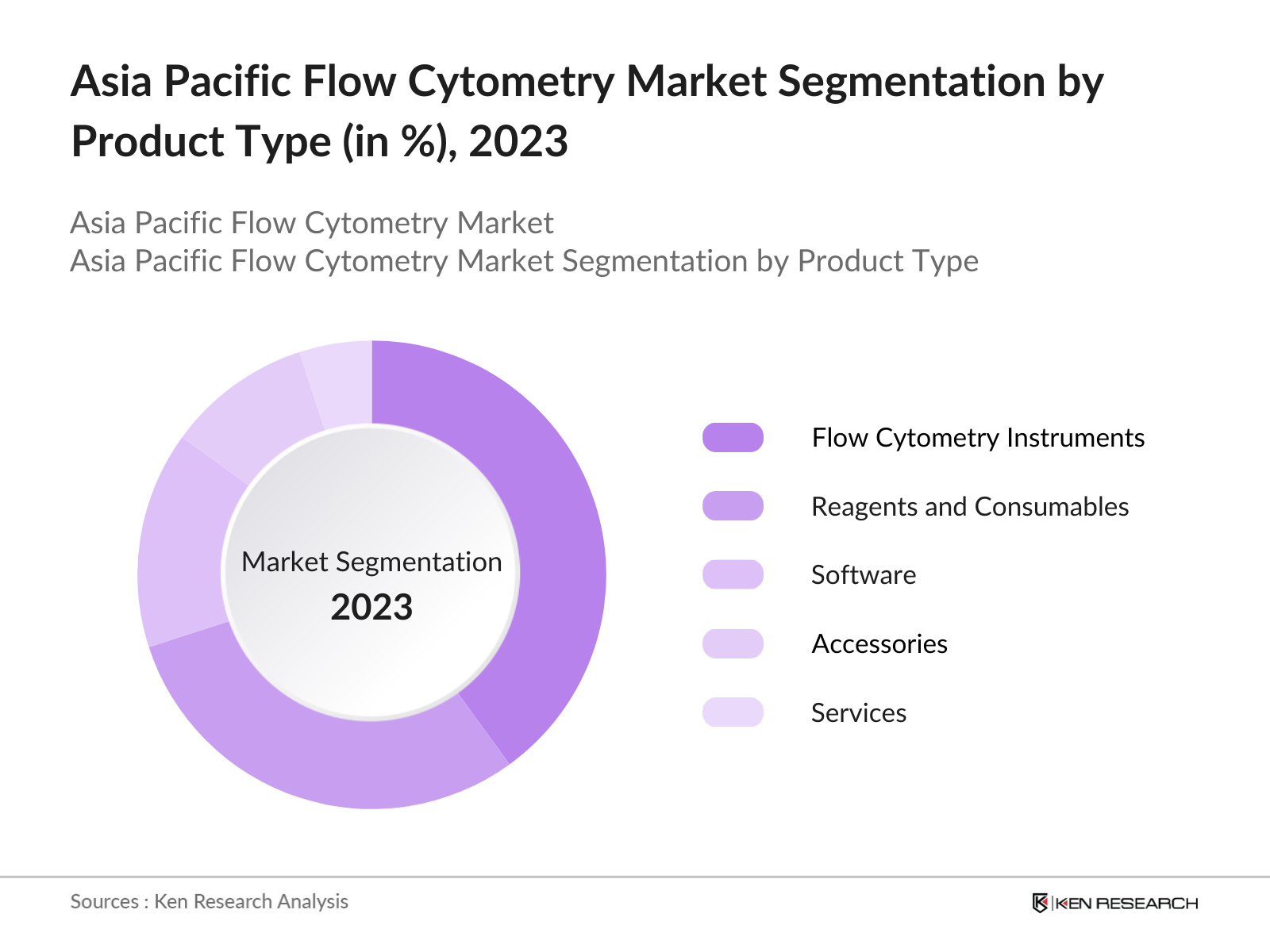
- By Product Type: The market is segmented by product type into flow cytometry instruments, reagents and consumables, software, accessories, and services. Reagents and consumables hold a dominant market share due to their recurring usage in various diagnostic and research applications. The continuous need for these products in laboratories and clinical settings ensures a steady demand, reinforcing their leading position in the market.
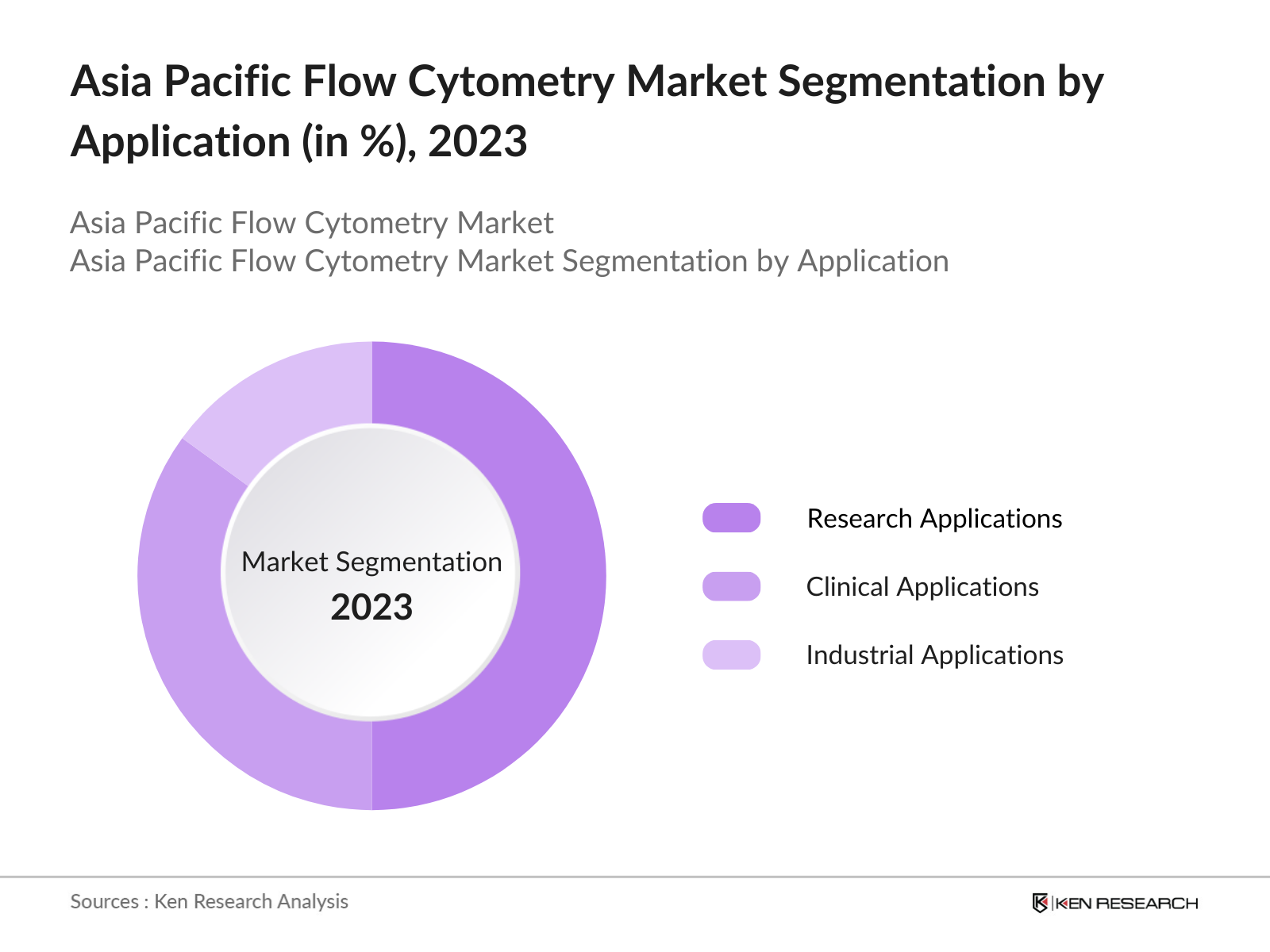
- By Application: The market is also segmented by application into research applications, clinical applications, and industrial applications. Clinical applications dominate the market share, driven by the increasing utilization of flow cytometry in disease diagnosis, monitoring, and treatment planning. The technology's ability to provide rapid and precise analysis of cellular characteristics makes it indispensable in clinical settings, thereby sustaining its dominance in this segment.
Asia Pacific Flow Cytometry Market Competitive Landscape
The Asia Pacific flow cytometry market is characterized by the presence of several key players who contribute to its competitive dynamics. These companies leverage their extensive product portfolios, technological innovations, and strategic initiatives to maintain and enhance their market positions. 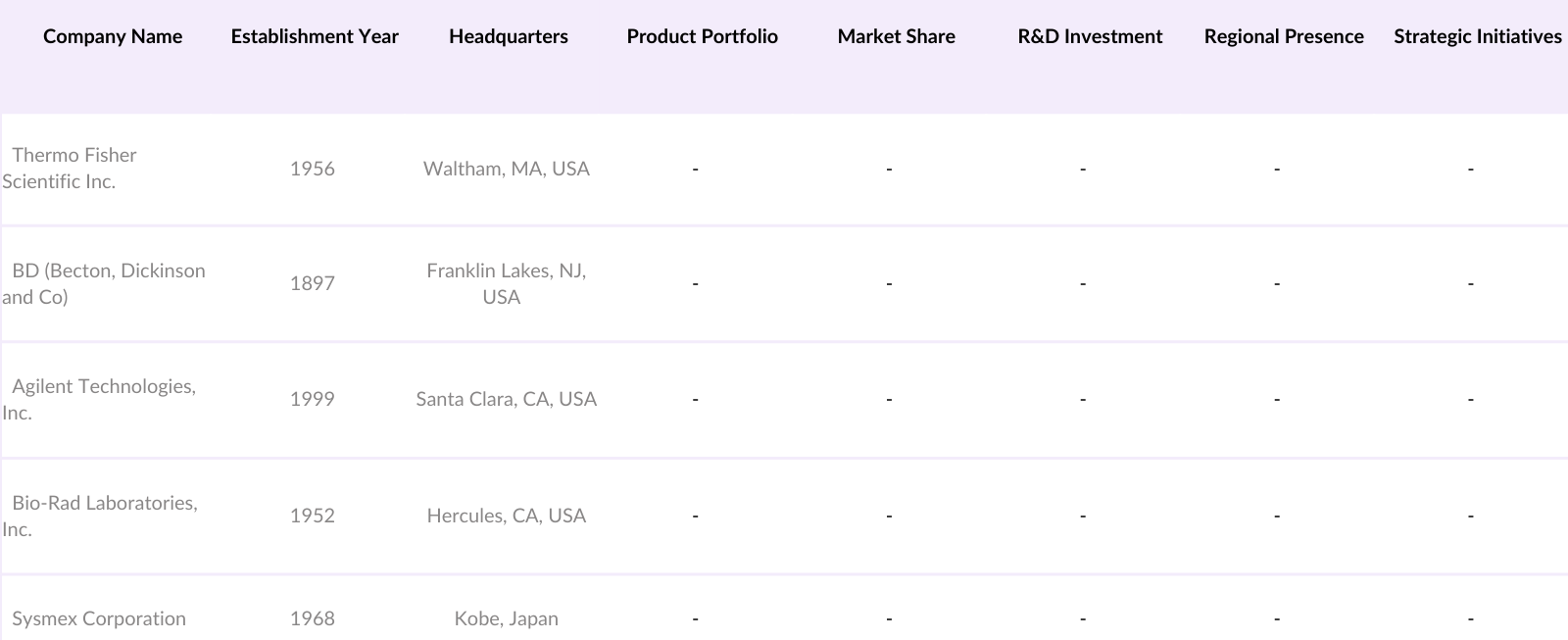
Asia Pacific Flow Cytometry Industry Analysis
Growth Drivers
- Rising Prevalence of Chronic Diseases: In recent years, the global prevalence of chronic diseases has escalated, significantly impacting healthcare systems worldwide. According to the World Health Organization (WHO), non-communicable diseases were responsible for approximately 41 million deaths in 2022, accounting for 74% of all deaths globally. Cardiovascular diseases led to 17.9 million deaths, while cancers caused 9.3 million deaths. Additionally, the International Diabetes Federation reported that in 2022, about 537 million adults aged 20 to 79 were living with diabetes globally, an increase of 16% from 2019.
- Technological Advancements in Flow Cytometry: Technological advancements have significantly enhanced the capabilities of flow cytometry, driving market growth. Innovations like spectral flow cytometry allow simultaneous detection of over 40 parameters, vastly improving cellular analysis depth. According to a 2022 publication by the National Institutes of Health (NIH), spectral flow cytometry has revolutionized immunophenotyping by enabling the analysis of complex cell populations. Advancements in microfluidics have led to the development of portable flow cytometers, expanding their use in point-of-care diagnostics.
- Increasing Research and Development Activities: The surge in research and development (R&D) activities in life sciences propels the flow cytometry market forward. Governments and private entities are investing heavily in projects utilizing flow cytometry for cell analysis, immunology, and oncology research. For instance, the National Institutes of Health (NIH) allocated over $42 billion for medical research in 2022, supporting numerous flow cytometry projects. The European Union's Horizon Europe program earmarked 95.5 billion for 2021-2027 to fund research and innovation, including biotechnology sectors.
Market Challenges
- High Cost of Instruments and Reagents: A significant challenge in the flow cytometry market is the high cost associated with instruments and reagents. Advanced flow cytometers require substantial investment, which can be prohibitive for many laboratories, especially in developing regions. Consumables and specialized reagents add to the operational expenses, making routine use expensive. According to the World Health Organization (WHO), financial constraints in low-income countries limit access to advanced medical technologies like flow cytometry.
- Lack of Skilled Professionals: The effective operation of flow cytometry instruments and accurate data interpretation require highly skilled professionals. There's a global shortage of trained personnel proficient in flow cytometry techniques. The WHO reported a deficit of approximately 7.2 million healthcare workers worldwide in 2021, including laboratory technicians and specialists. This shortage is more acute in low- and middle-income countries, where educational resources are limited. The lack of skilled professionals hampers the utilization of flow cytometry, as improper handling can lead to inaccurate results.
Asia Pacific Flow Cytometry Market Future Outlook
Over the next five years, the Asia Pacific flow cytometry market is expected to experience significant growth, driven by continuous advancements in flow cytometry technology, increasing applications in clinical diagnostics, and expanding research activities in the life sciences sector. The integration of artificial intelligence and machine learning with flow cytometry is anticipated to enhance data analysis capabilities, further propelling market growth.
Future Market Opportunities
- Emerging Markets in Asia Pacific: The Asia Pacific region offers significant growth opportunities for the flow cytometry market. Countries like China, India, and Japan are heavily investing in healthcare infrastructure and research. According to the World Bank, China's healthcare expenditure reached over $930 billion in 2021, reflecting a commitment to advanced medical technologies. India's government allocated approximately $30 billion to healthcare in its 2021-2022 budget to improve diagnostic facilities. The rising prevalence of chronic diseases and increasing awareness of advanced diagnostics drive demand for flow cytometry.
- Integration with Artificial Intelligence and Machine Learning: Integrating artificial intelligence (AI) and machine learning (ML) with flow cytometry data analysis presents a significant opportunity for market growth. AI and ML algorithms can handle large datasets, enhancing accuracy and efficiency in data interpretation. A 2021 NIH report highlighted that AI applications in flow cytometry improve rare cell population identification and automate complex data analysis. This integration reduces manual errors and increases throughput, making flow cytometry more accessible and effective.
Scope of the Report
|
Product Type |
Flow Cytometry Instruments |
|
Technology |
Cell-Based Flow Cytometry |
|
Application |
Research Applications |
|
End User |
Academic and Research Institutes |
|
Distribution Channel |
Direct Tenders |
Products
Key Target Audience
Pharmaceutical and Biotechnology Companies
Clinical Research Organizations
Hospitals and Diagnostic Laboratories
Academic and Research Institutes
Government and Regulatory Bodies (e.g., Ministry of Health)
Medical Device Manufacturers
Healthcare IT Companies
Investor and Venture Capitalist Firms
Companies
Major Players
Thermo Fisher Scientific Inc.
BD (Becton, Dickinson and Company)
Agilent Technologies, Inc.
Bio-Rad Laboratories, Inc.
Sysmex Corporation
Beckman Coulter, Inc. (a subsidiary of Danaher Corporation)
Cytek Biosciences
bioMrieux SA
Q2 Solutions (a subsidiary of IQVIA)
Cytonome/ST, LLC
Merck KGaA
Sony Biotechnology Inc.
Cell Signaling Technology, Inc.
Enzo Biochem Inc.
Takara Bio Inc.
Table of Contents
Asia Pacific Flow Cytometry Market Overview
Definition and Scope
Market Taxonomy
Market Growth Rate
Market Segmentation Overview
Asia Pacific Flow Cytometry Market Size (USD Million)
Historical Market Size
Year-On-Year Growth Analysis
Key Market Developments and Milestones
Market Analysis
Growth Drivers
Rising Prevalence of Chronic Diseases
Technological Advancements in Flow Cytometry
Increasing Research and Development Activities
Expanding Applications in Clinical Diagnostics
Market Challenges
High Cost of Instruments and Reagents
Lack of Skilled Professionals
Regulatory and Compliance Issues
Opportunities
Emerging Markets in Asia-Pacific
Integration with Artificial Intelligence and Machine Learning
Development of User-Friendly and Cost-Effective Systems
Trends
Adoption of High-Throughput Flow Cytometry
Shift Towards Personalized Medicine
Growth in Stem Cell Research
Government Regulations
Regional Regulatory Frameworks
Compliance Standards
Impact of Government Initiatives on Market Growth
SWOT Analysis
Stakeholder Ecosystem
Porters Five Forces Analysis
Competitive Landscape
Asia Pacific Flow Cytometry Market Segmentation
By Product Type (Value %)
Flow Cytometry Instruments
Reagents and Consumables
Software
Accessories
Services
By Technology (Value %)
Cell-Based Flow Cytometry
Bead-Based Flow Cytometry
By Application (Value %)
Research Applications
Clinical Applications
Industrial Applications
By End User (Value %)
Academic and Research Institutes
Hospitals
Pharmaceutical and Biotechnology Companies
Clinical Testing Laboratories
Blood Banks
Others
By Distribution Channel (Value %)
Direct Tenders
Retail Sales
Asia Pacific Flow Cytometry Market Competitive Analysis
Detailed Profiles of Major Companies
Becton, Dickinson and Company (BD)
Beckman Coulter, Inc. (Danaher Corporation)
Thermo Fisher Scientific Inc.
Agilent Technologies, Inc.
Bio-Rad Laboratories, Inc.
Sysmex Corporation
Luminex Corporation
Sony Biotechnology Inc.
Merck KGaA
Miltenyi Biotec
Apogee Flow Systems Ltd.
Cytek Biosciences
bioMrieux SA
Takara Bio Inc.
Q2 Solutions
Asia Pacific Flow Cytometry Market Cross Comparison Parameters
Number of Employees
Headquarters Location
Year of Inception
Revenue
Product Portfolio
Market Share
Recent Developments
Strategic Initiatives
Market Share Analysis
Strategic Initiatives
Mergers and Acquisitions
Investment Analysis
Venture Capital Funding
Government Grants
Private Equity Investments
Asia Pacific Flow Cytometry Market Regulatory Framework
Regional Regulatory Standards
Compliance Requirements
Certification Processes
Asia Pacific Flow Cytometry Future Market Size (USD Million)
Future Market Size Projections
Key Factors Driving Future Market Growth
Asia Pacific Flow Cytometry Future Market Segmentation
By Product Type (Value %)
By Technology (Value %)
By Application (Value %)
By End User (Value %)
By Distribution Channel (Value %)
Asia Pacific Flow Cytometry Market Analysts Recommendations
Total Addressable Market (TAM), Serviceable Available Market (SAM), and Serviceable Obtainable Market (SOM) Analysis
Customer Cohort Analysis
Marketing Initiatives
White Space Opportunity Analysis
Disclaimer
Contact Us
Research Methodology
Step 1: Identification of Key Variables
The initial phase involves constructing an ecosystem map encompassing all major stakeholders within the Asia Pacific Flow Cytometry Market. This step is underpinned by extensive desk research, utilizing a combination of secondary and proprietary databases to gather comprehensive industry-level information. The primary objective is to identify and define the critical variables that influence market dynamics.
Step 2: Market Analysis and Construction
In this phase, we compile and analyze historical data pertaining to the Asia Pacific Flow Cytometry Market. This includes assessing market penetration, the ratio of marketplaces to service providers, and the resultant revenue generation. Furthermore, an evaluation of service quality statistics is conducted to ensure the reliability and accuracy of the revenue estimates.
Step 3: Hypothesis Validation and Expert Consultation
Market hypotheses are developed and subsequently validated through computer-assisted telephone interviews (CATIs) with industry experts representing a diverse array of companies. These consultations provide valuable operational and financial insights directly from industry practitioners, which are instrumental in refining and corroborating the market data.
Step 4: Research Synthesis and Final Output
The final phase involves direct engagement with multiple flow cytometry manufacturers to acquire detailed insights into product segments, sales performance, consumer preferences, and other pertinent factors. This interaction serves to verify and complement the statistics derived from the bottom-up approach, thereby ensuring a comprehensive, accurate, and validated analysis of the Asia Pacific Flow Cytometry Market.
Frequently Asked Questions
01 How big is the Asia Pacific Flow Cytometry Market?
The Asia Pacific flow cytometry market is valued at USD 855 million, driven by the increasing prevalence of chronic diseases and the growing demand for advanced diagnostic tools.
02 What are the challenges in the Asia Pacific Flow Cytometry Market?
Challenges include the high cost of instruments and reagents, a shortage of skilled professionals, and stringent regulatory and compliance requirements that impact the adoption of flow cytometry technology across the region. These factors necessitate continued investment in training and regulatory compliance to overcome market challenges.
03 Who are the major players in the Asia Pacific Flow Cytometry Market?
The Asia Pacific flow cytometry market includes prominent players like Thermo Fisher Scientific Inc., BD (Becton, Dickinson and Company), Agilent Technologies, Sysmex Corporation, and Beckman Coulter. These companies lead due to their strong R&D investments, advanced product offerings, and established distribution networks.
04 What drives the growth of the Asia Pacific Flow Cytometry Market?
Growth drivers in the Asia Pacific flow cytometry market include the rising demand for precise diagnostic tools, technological advancements, increasing R&D activities, and expanding applications in clinical and research fields. The integration of AI and machine learning is also enhancing the data analysis capabilities of flow cytometry, driving further adoption.
05 Which application dominates the Asia Pacific Flow Cytometry Market?
Clinical applications hold the dominant share in the Asia Pacific flow cytometry market due to the technology's crucial role in disease diagnosis and monitoring. Its capacity for detailed cellular analysis supports a wide array of diagnostic and therapeutic applications, particularly for complex diseases like cancer and autoimmune disorders.
Why Buy From Us?

What makes us stand out is that our consultants follows Robust, Refine and Result (RRR) methodology. i.e. Robust for clear definitions, approaches and sanity checking, Refine for differentiating respondents facts and opinions and Result for presenting data with story

We have set a benchmark in the industry by offering our clients with syndicated and customized market research reports featuring coverage of entire market as well as meticulous research and analyst insights.

While we don't replace traditional research, we flip the method upside down. Our dual approach of Top Bottom & Bottom Top ensures quality deliverable by not just verifying company fundamentals but also looking at the sector and macroeconomic factors.

With one step in the future, our research team constantly tries to show you the bigger picture. We help with some of the tough questions you may encounter along the way: How is the industry positioned? Best marketing channel? KPI's of competitors? By aligning every element, we help maximize success.

Our report gives you instant access to the answers and sources that other companies might choose to hide. We elaborate each steps of research methodology we have used and showcase you the sample size to earn your trust.

If you need any support, we are here! We pride ourselves on universe strength, data quality, and quick, friendly, and professional service.