
Asia Pacific Genome Editing Market Outlook to 2030
Region:Asia
Author(s):Mukul
Product Code:KROD2811
October 2024
84
About the Report
Asia Pacific Genome Editing Market Overview
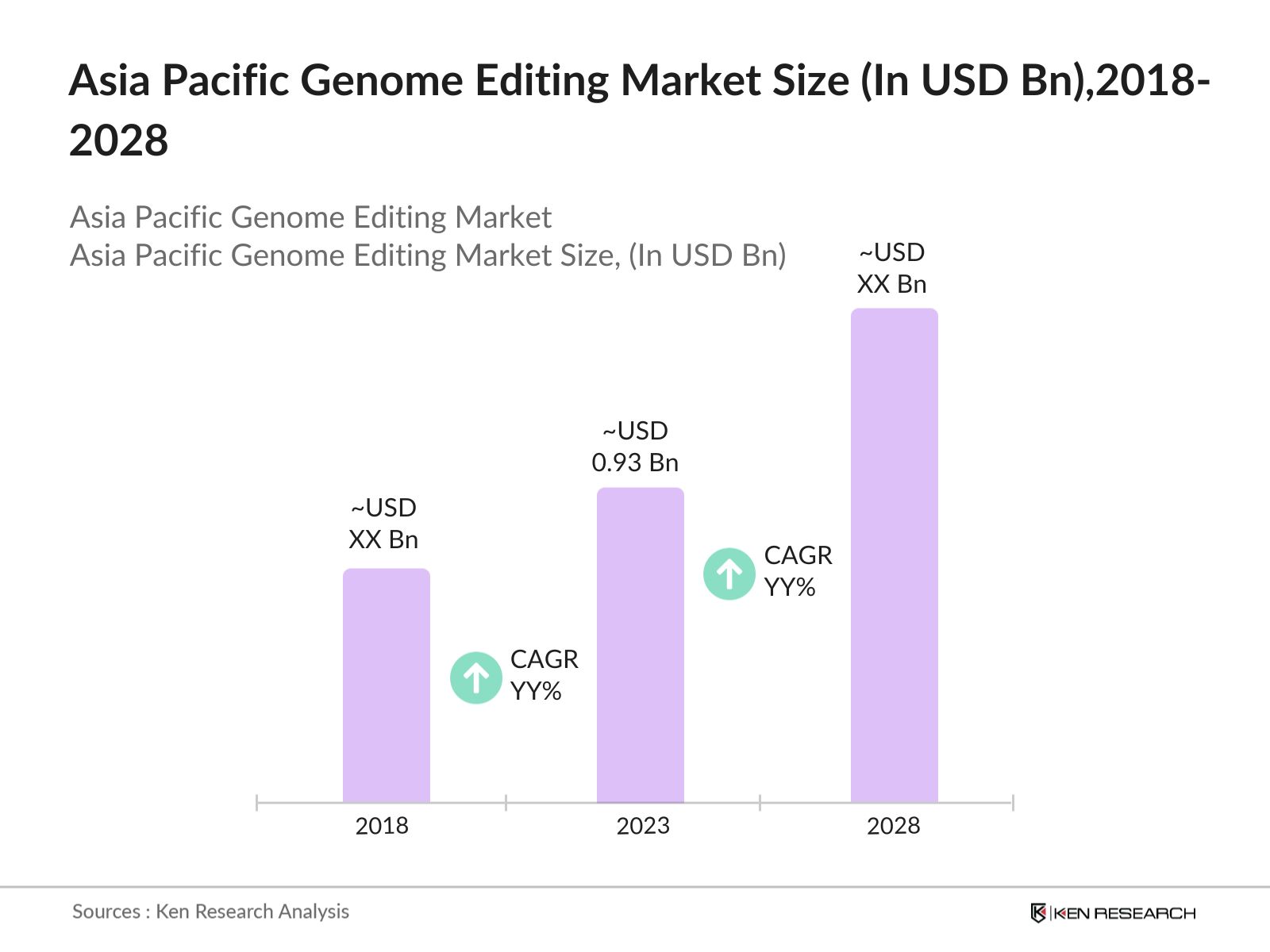
- In 2023, the Asia Pacific genome editing market was valued at USD 0.93 billion. The market is driven by advancements in CRISPR technology, rising demand for precision medicine, and government initiatives supporting biotechnology innovation. Genome editing technologies are playing an increasingly important role in healthcare, agriculture, and environmental sustainability across the region.
- Key players in the Asia-Pacific genome editing market include CRISPR Therapeutics, Thermo Fisher Scientific, Editas Medicine, and Sangamo Therapeutics. These companies dominate the market through their advanced gene editing tools and strategic partnerships. Additionally, regional firms like Takara Bio in Japan play a significant role due to their local presence and innovative research capabilities.
- Shanghai, Beijing, Tokyo, and Bengaluru are dominant cities driving the genome editing market in Asia-Pacific. These cities host prominent biotechnology hubs, benefiting from government-funded research initiatives and robust academic-industry collaborations. For example, Shanghai and Beijing have invested heavily in research parks and facilities, supporting biotech innovation.
- In January 2024, China's BGI Genomics announced a groundbreaking collaboration with the Australian government to establish a genome editing center in Sydney. The facility will focus on applying CRISPR technology to agriculture, enhancing crop resilience. This collaboration, funded with an initial USD 50 million investment, reflects the growing importance of cross-border partnerships in leveraging genome editing technology in various sectors beyond healthcare, including agriculture and environmental sustainability.
Asia Pacific Genome Editing Market Segmentation
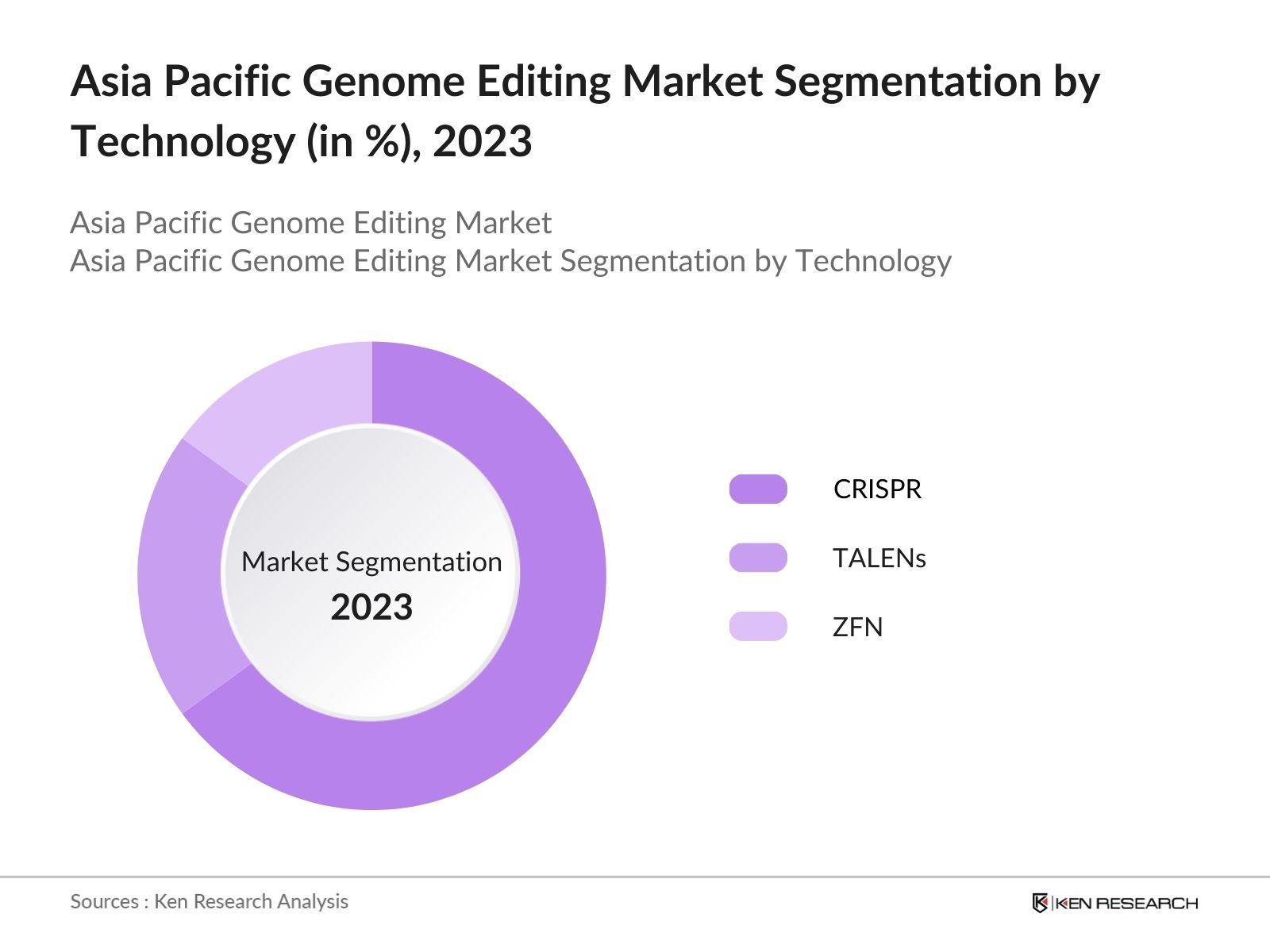
- By Technology: The Asia Pacific genome editing market is segmented by technology into CRISPR, TALENs, and ZFN. In 2023, CRISPR dominated the market due to its widespread use in healthcare and agricultural applications. CRISPRs cost-effectiveness and high precision have made it the dominant technology in genome editing.
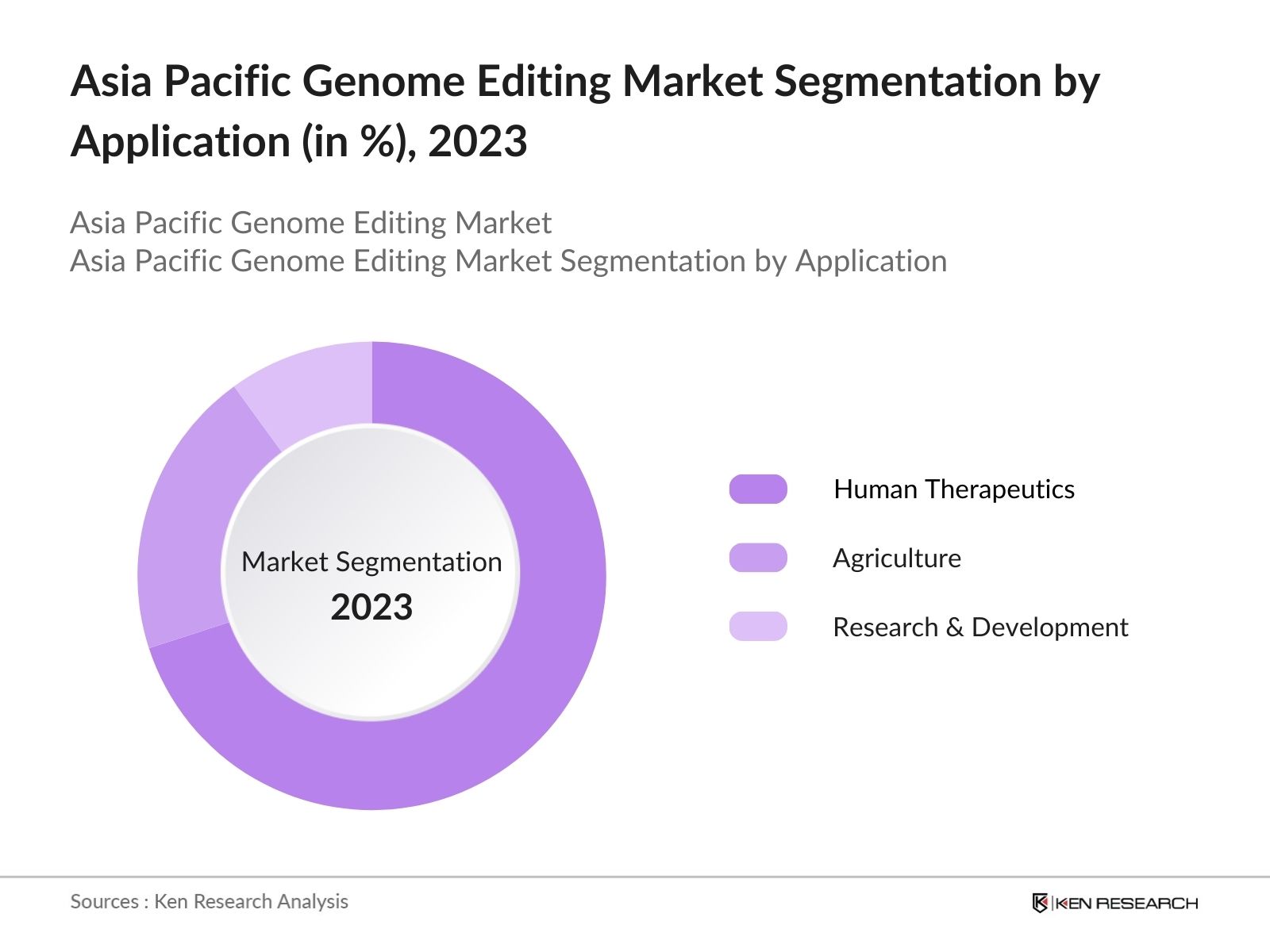
- By Application: The Asia Pacific genome editing market is segmented by application into human therapeutics, agriculture, and research & development. Human therapeutics dominated the market in 2023, driven by increasing investments in gene therapies for genetic disorders and cancer treatments. The growing demand for personalized medicine and advancements in gene therapies are key factors for its dominance.
- By Region: The Asia Pacific genome editing market is segmented into China, Japan, South Korea, India, and Australia. China led the market in 2023, driven by significant government investments in biotechnology and advanced healthcare research. Chinas focus on reducing its reliance on foreign technologies and developing indigenous solutions has strengthened its position in the genome editing sector.
Asia Pacific Genome Editing Market Competitive Landscape
|
Company |
Establishment Year |
Headquarters |
|
CRISPR Therapeutics |
2013 |
Zug, Switzerland |
|
Thermo Fisher Scientific |
1956 |
Waltham, Massachusetts |
|
Editas Medicine |
2013 |
Cambridge, Massachusetts |
|
Sangamo Therapeutics |
1995 |
Brisbane, California |
|
Takara Bio |
1967 |
Shiga, Japan |
- Thermo Fisher Scientific: In2023, Thermo Fisher Scientific released new gene synthesis and genome editing products tailored for the Asia Pacific market. This expansion aims to meet the growing demand for synthetic biology applications in the region, particularly in research and development initiatives related to genetic diseases and cancer therapies.
- Sangamo Therapeutics: OnMay 9, 2024, Sangamo Therapeutics presented its new Modular Integrase Technology (MINT) platform, designed to enable large-scale genome editing. This platform utilizes a serine recombinase to integrate large DNA constructs into the genome, potentially addressing challenges in precise gene integration.
Asia Pacific Genome Editing Industry Analysis
Asia Pacific Genome Editing Market Growth Drivers
- Rising Demand for Precision Medicine: The increasing prevalence of genetic disorders and the demand for personalized medicine are propelling the growth of the genome editing market. By 2028, the market is projected to reach USD 1.96 billion, reflecting the growing need for targeted therapies that address specific genetic conditions.
- Trials for EDIT-301: Editas Medicine is actively advancing its clinical trials for EDIT-301, which is focused on treating severe sickle cell disease (SCD) and transfusion-dependent beta thalassemia (TDT). As ofAugust 2, 2023, the company was on track to dose a total of 20 patients in the RUBY trial for SCD and provide a clinical update by the end of the year. They also commenced parallel patient dosing in the EDITHAL trial for TDT, with updates expected by year-end 2023
- Agricultural Innovations: The application of genome editing in agriculture, particularly in improving crop resilience and yield, is a significant growth driver. In 2024, the market is expected to benefit from initiatives in countries like India and China, where genome editing is being used to enhance food security in response to climate change.
Asia Pacific Genome Editing Market Challenges
- Regulatory and Ethical Concerns: Ethical concerns related to human gene editing continue to pose challenges in countries like China. In 2023, the Chinese government introduced new regulations requiring stricter oversight of genome editing research involving human subjects, slowing the approval process for clinical trials and limiting the pace of innovation.
- Lack of Skilled Workforce: The shortage of trained professionals in genome editing is a growing challenge in developing markets like India and Vietnam. According to the Indian Council of Medical Research, the country faces a significant gap in skilled talent, requiring an additional 10,000 professionals by 2025 to meet the growing demand for genetic research.
Asia Pacific Genome Editing Market Government Initiatives
- India's New Guidelines for Gene-Edited Plants (2022): India released new guidelines in March 2022 that deregulate genome-edited plants (SDN1 and SDN2 products without transgenes) while regulating SDN3 products as GMOs. This regulatory framework aims to encourage innovation in agricultural biotechnology and facilitate the development of crops that can address food security challenges.
- Philippines' Regulatory System for GM Crops: The Philippines has established an operational regulatory system for GM crops and has released guidelines for plant products derived from new breeding techniques (NBTs). This flexible regulatory framework supports the development of genome-edited crops, positioning the Philippines as a leader in agricultural biotechnology in Southeast Asia
Asia Pacific Genome Editing Future Market Outlook
The Asia Pacific genome editing market is expected to grow significantly by 2028, driven by advancements in CRISPR technology and the expanding application of genome editing in healthcare, agriculture, and environmental sustainability.
Future Market Trends
- Expansion of Genome Editing in Agriculture: Over the next five years, CRISPR applications in agriculture will expand, particularly in China and India. These technologies will improve crop resilience, making them more resistant to environmental challenges. Governments are likely to increase funding to support sustainable agricultural practices.
- Rising Adoption of Gene Therapies in Cancer Treatment: Personalized gene therapies targeting cancer will become more common across the region by 2028. Japan and South Korea will lead the charge in integrating genome editing into oncology treatment plans, driven by the growing demand for precision medicine solutions.
Scope of the Report
|
China India Japan South Korea Australia |
|
|
By Technology |
CRISPR TALENs ZFN |
|
By Application |
Human Therapeutics Agriculture Research & Development |
|
By Product Type |
Gene Therapy Tools Diagnostic Tools Agricultural Genome Editing Tools |
|
By End-User |
Hospitals & Clinics Research Institutions Biotech Firms |
Products
Key Target Audience Organizations and Entities Who Can Benefit by Subscribing This Report:
Government and Regulatory Bodies (Indias Department of Biotechnology, Chinas National Health Commission)
Genome Editing Tool Developers
Biotechnology Firms
Pharmaceutical Companies
Hospitals and Diagnostic Centers
Agricultural Research Institutions
Healthcare Providers
Investment and Venture Capitalist Firms
Genetic Research Laboratories
Precision Medicine Companies
Time Period Captured in the Report:
Historical Period: 2018-2023
Base Year: 2023
Forecast Period: 2023-2028
Companies
Players Mentioned in the Report:
CRISPR Therapeutics
Thermo Fisher Scientific
Editas Medicine
Sangamo Therapeutics
Takara Bio
Intellia Therapeutics
Beam Therapeutics
Horizon Discovery
Merck KGaA
Agilent Technologies
GenScript
Cellectis
Caribou Biosciences
Precision BioSciences
Egenesis Bio
Table of Contents
Asia Pacific Genome Editing Market Overview
1.1. Definition and Scope
1.2. Market Taxonomy
1.3. Market Growth Rate
1.4. Market Segmentation Overview
Asia Pacific Genome Editing Market Size (in USD Bn), 2018-2023
2.1. Historical Market Size
2.2. Year-on-Year Growth Analysis
2.3. Key Market Developments and Milestones
Asia Pacific Genome Editing Market Analysis
3.1. Growth Drivers
3.1.1. Rising Demand for Precision Medicine
3.1.2. Expanding Agricultural Applications
3.1.3. Increasing Government Investments in Biotech R&D
3.2. Challenges
3.2.1. Regulatory and Ethical Concerns
3.2.2. High Costs of Genome Editing Technologies
3.2.3. Lack of Skilled Workforce
3.3. Opportunities
3.3.1. Advances in CRISPR Technology
3.3.2. Growing Collaborations Between Academia and Industry
3.3.3. Expanding Genome Editing in Agriculture
3.4. Trends
3.4.1. Increasing Adoption of Genome Editing in Healthcare
3.4.2. Government Focus on Biotech Innovations
3.4.3. Integration with AI for Better Accuracy
3.5. Government Initiatives
3.5.1. Indias National Biotechnology Development Strategy (2023)
3.5.2. Health China 2030 Plan (2024)
3.5.3. South Koreas K-Bio 2030 Initiative (2023)
3.6. SWOT Analysis
3.7. Stake Ecosystem
3.8. Competition Ecosystem
Asia Pacific Genome Editing Market Segmentation, 2023
4.1. By Technology (in Value %)
4.1.1. CRISPR
4.1.2. TALENs
4.1.3. ZFN
4.2. By Application (in Value %)
4.2.1. Human Therapeutics
4.2.2. Agriculture
4.2.3. Research & Development
4.3. By Region (in Value %)
4.3.1. China
4.3.2. Japan
4.3.3. South Korea
4.3.4. India
4.3.5. Australia
4.4. By End-User (in Value %)
4.4.1. Hospitals & Clinics
4.4.2. Research Institutions
4.4.3. Biotech Firms
Asia Pacific Genome Editing Market Cross Comparison
5.1. Detailed Profiles of Major Companies
5.1.1. CRISPR Therapeutics
5.1.2. Thermo Fisher Scientific
5.1.3. Editas Medicine
5.1.4. Sangamo Therapeutics
5.1.5. Takara Bio
5.2. Cross Comparison Parameters (No. of Employees, Headquarters, Inception Year, Revenue)
Asia Pacific Genome Editing Market Competitive Landscape
6.1. Market Share Analysis
6.2. Strategic Initiatives
6.3. Mergers and Acquisitions
6.4. Investment Analysis
6.4.1. Venture Capital Funding
6.4.2. Government Grants
6.4.3. Private Equity Investments
Asia Pacific Genome Editing Market Regulatory Framework
7.1. Government Regulations
7.2. Compliance Requirements
7.3. Certification Processes
Asia Pacific Genome Editing Future Market Size (in USD Bn), 2023-2028
8.1. Future Market Size Projections
8.2. Key Factors Driving Future Market Growth
Asia Pacific Genome Editing Future Market Segmentation, 2028
9.1. By Technology (in Value %)
9.2. By Application (in Value %)
9.3. By Region (in Value %)
9.4. By End-User (in Value %)
Asia Pacific Genome Editing Market Analysts Recommendations
10.1. TAM/SAM/SOM Analysis
10.2. Customer Cohort Analysis
10.3. Marketing Initiatives
10.4. White Space Opportunity Analysis
Research Methodology
Step: 1 Identifying Key Variables
The first step involves identifying key variables within the ecosystem, focusing on major entities such as genome editing tool providers, biotech firms, and regulatory bodies. Desk research is conducted using multiple secondary and proprietary databases to gather industry-level information.
Step: 2 Market Building
In this step, data is collated on the Asia Pacific genome editing market over the years, including the adoption rates of genome editing tools, investment in biotech R&D, and penetration of various market segments. The research also reviews government policies and healthcare infrastructure development to understand how these factors contribute to revenue generation.
Step: 3 Validating and Finalizing
The third step involves building a market hypothesis and validating it through consultations with industry experts and stakeholders. Computer-assisted telephonic interviews (CATIs) with representatives from biotech firms, hospitals, and research institutions provide operational and financial insights.
Step: 4 Research Output
In the final step, key genome editing companies, research institutions, and hospitals are approached to gather in-depth information on product segments, research priorities, and consumer preferences. This bottom-up approach ensures that the data collected is validated and reflects real-world market conditions.
Frequently Asked Questions
1.How big is the Asia Pacific Genome Editing Market?
The Asia Pacific genome editing market was valued at USD 0.93 billion in 2023. The market is driven by advancements in CRISPR technology, increased demand for personalized medicine, and significant R&D investments across healthcare and agriculture sectors.
2.What are the challenges in the Asia Pacific Genome Editing Market?
Challenges include ethical and regulatory concerns, high costs of genome editing technologies, and a lack of skilled professionals. Regulatory frameworks in countries like China have slowed down research involving human gene editing, and the cost barrier remains high for smaller firms.
3.Who are the major players in the Asia Pacific Genome Editing Market?
Key players in the market include CRISPR Therapeutics, Thermo Fisher Scientific, Editas Medicine, Sangamo Therapeutics, and Takara Bio. These companies lead the market due to their innovative gene-editing tools and strategic collaborations with regional governments and research institutions.
4.What are the growth drivers of the Asia Pacific Genome Editing Market?
The market is driven by increasing demand for personalized medicine, government R&D investments, and the expanding applications of genome editing in agriculture. Countries like Japan, China, and South Korea have introduced initiatives to foster genome editing research and development.
Why Buy From Us?

What makes us stand out is that our consultants follows Robust, Refine and Result (RRR) methodology. i.e. Robust for clear definitions, approaches and sanity checking, Refine for differentiating respondents facts and opinions and Result for presenting data with story

We have set a benchmark in the industry by offering our clients with syndicated and customized market research reports featuring coverage of entire market as well as meticulous research and analyst insights.

While we don't replace traditional research, we flip the method upside down. Our dual approach of Top Bottom & Bottom Top ensures quality deliverable by not just verifying company fundamentals but also looking at the sector and macroeconomic factors.

With one step in the future, our research team constantly tries to show you the bigger picture. We help with some of the tough questions you may encounter along the way: How is the industry positioned? Best marketing channel? KPI's of competitors? By aligning every element, we help maximize success.

Our report gives you instant access to the answers and sources that other companies might choose to hide. We elaborate each steps of research methodology we have used and showcase you the sample size to earn your trust.

If you need any support, we are here! We pride ourselves on universe strength, data quality, and quick, friendly, and professional service.