
Asia Pacific Ground Control Station Market Outlook to 2030
Region:Asia
Author(s):Vijay Kumar
Product Code:KROD6243
November 2024
85
About the Report
Asia Pacific Ground Control Station Market Overview
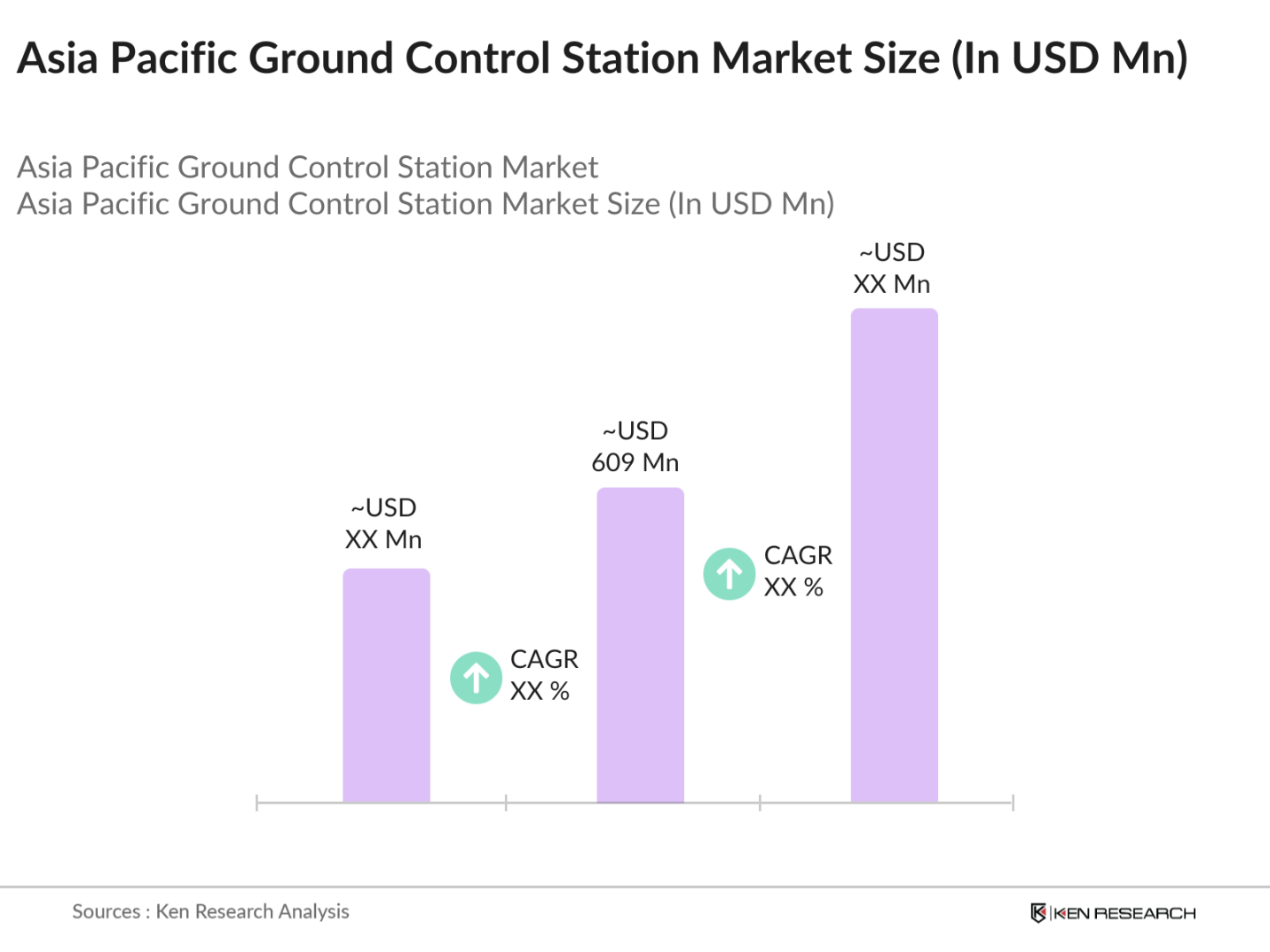
- The Asia Pacific Ground Control Station (GCS) market is valued at USD 609 million, based on a five-year historical analysis. This growth is primarily driven by increasing defense budgets and the rising demand for UAVs in military operations, particularly for surveillance, reconnaissance, and intelligence gathering. The adoption of advanced UAV technology, supported by governments across the region, has fueled the demand for sophisticated ground control systems, enabling better mission control, data processing, and real-time coordination for both defense and commercial applications.
- Countries like China and India dominate the market due to their large-scale investments in military UAV technology and modernization initiatives. China's well-established defense manufacturing sector and ongoing investments in research and development for autonomous systems strengthen its position as a key player. Similarly, India is experiencing rapid growth due to its modernization of defense infrastructure and government focus on increasing the use of UAVs for both military and civilian applications.
- Governments in the Asia Pacific region is implementing defense acquisition programs that promote the procurement of advanced GCS technologies. In 2023, Indias Ministry of Defense announced a $20 billion procurement program, with a focus on GCS technology for UAVs. Similarly, South Korea has signed technology transfer agreements with international defense companies to acquire and domestically produce cutting-edge GCS systems for its military.
Asia Pacific Ground Control Station Market Segmentation
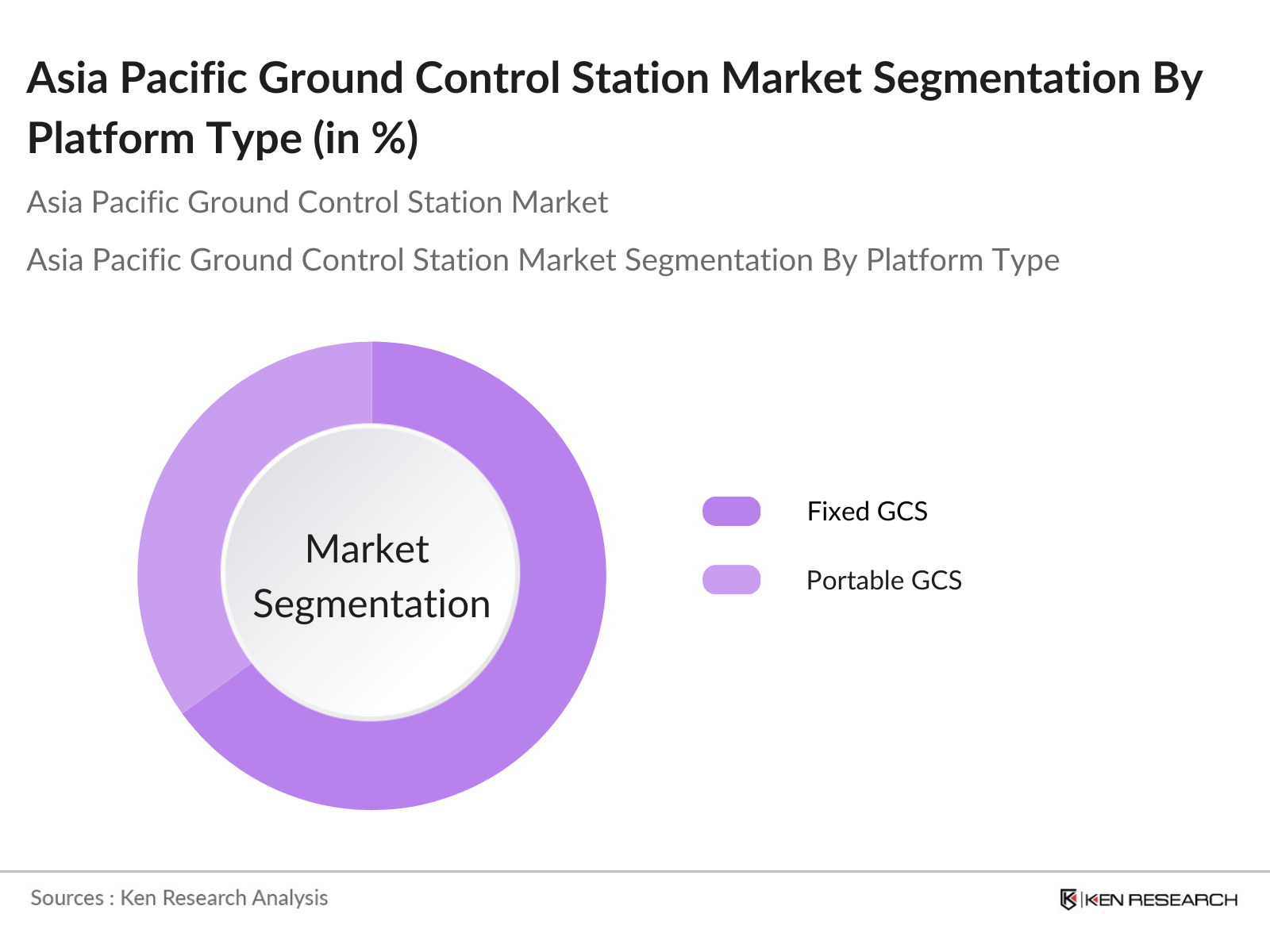
By Platform Type: The Asia Pacific Ground Control Station market is segmented by platform type into fixed GCS and portable GCS. Recently, fixed GCS systems have dominated the market share due to their extensive use in military applications, particularly in large-scale UAV operations that require robust infrastructure for controlling long-endurance drones.
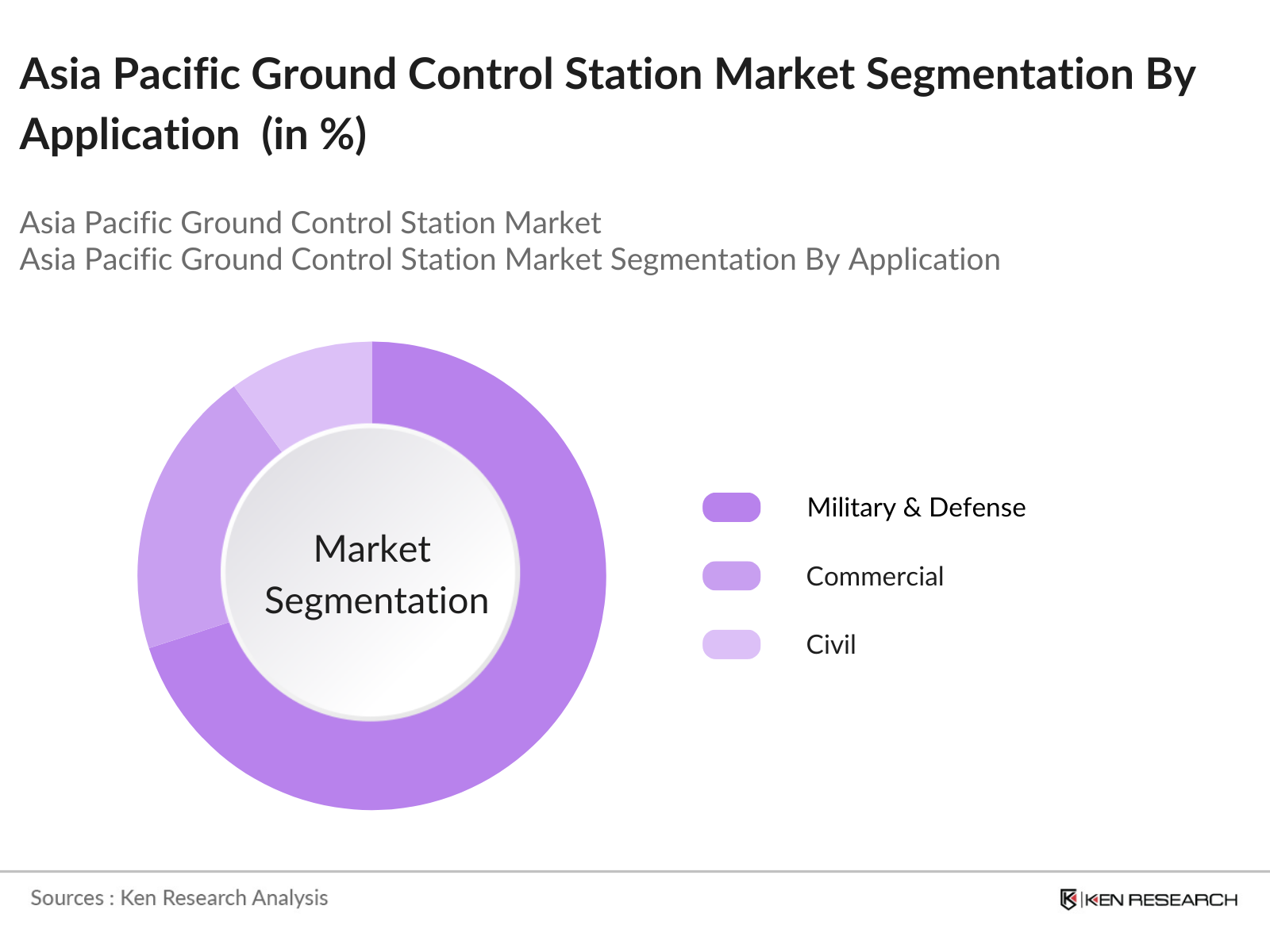
By Application: The market is also segmented by application into military & defense, commercial, and civil uses. Military & defense applications hold a dominant share due to the growing importance of UAVs in defense strategies, including surveillance, border control, and intelligence gathering. Military GCS systems are critical for executing missions remotely, controlling UAV fleets, and ensuring data security.
Asia Pacific Ground Control Station Market Competitive Landscape
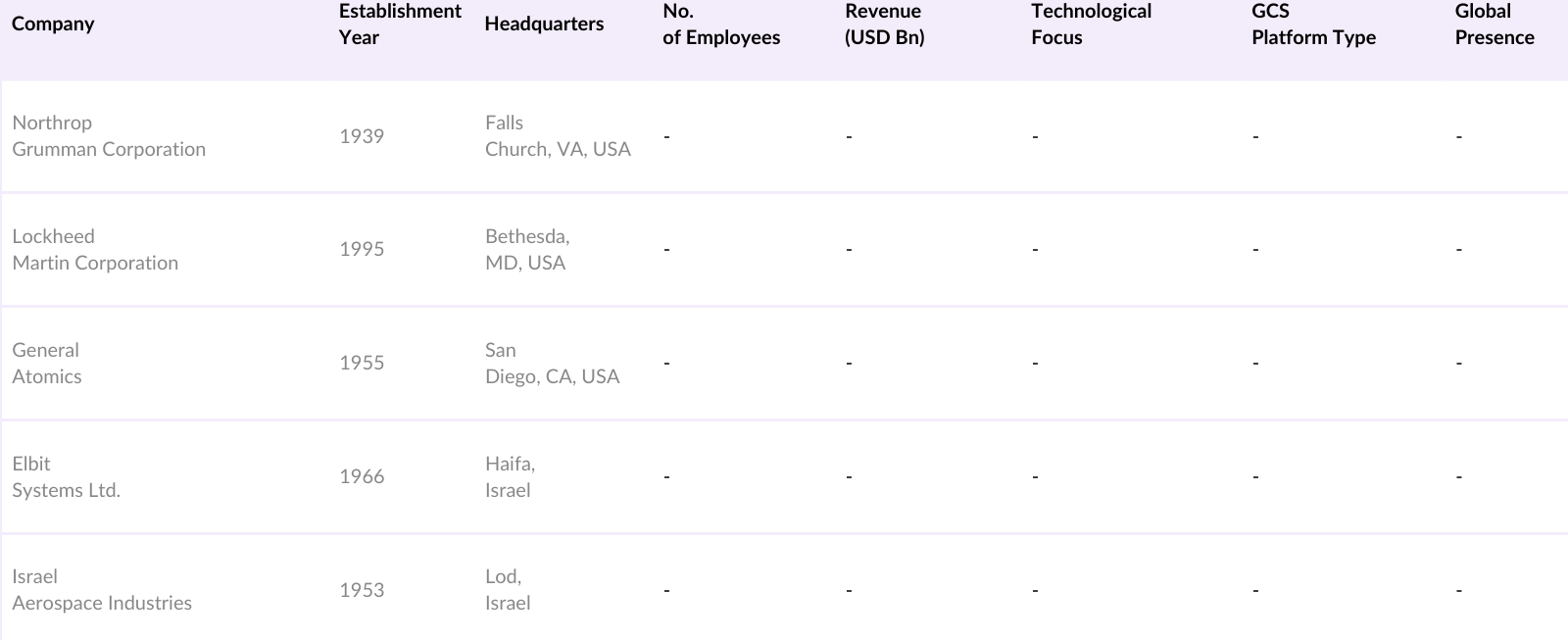
The Asia Pacific Ground Control Station market is dominated by both local and global players. The consolidation of market share among these key companies is driven by their advanced technological capabilities, strong defense relationships, and significant investments in research and development. For instance, Northrop Grumman and Lockheed Martin maintain strong partnerships with defense ministries across the region, while local companies such as Elbit Systems and Israel Aerospace Industries are gaining market share through innovation and cost-effective solutions.
Asia Pacific Ground Control Station Industry Analysis
Growth Drivers
- Increasing Military Expenditure (Defense Budget Allocation, Technology Modernization): The Asia Pacific region has seen a significant surge in military expenditure, particularly driven by countries like China, India, and Japan. According to the Stockholm International Peace Research Institute (SIPRI), military spending in the region amounted to $534 billion in 2022, with China alone allocating over $293 billion. The increased defense budget is geared towards modernizing technologies, including Ground Control Stations (GCS) for UAVs.
- Rising Demand for Unmanned Aerial Vehicles (UAV Utilization, Mission Criticality): Unmanned Aerial Vehicles (UAVs) are increasingly being used for mission-critical operations, with UAV deployment growing rapidly in the Asia Pacific. China leads the region with over 16,000 registered drones in military use by 2023, according to the Chinese Ministry of Defense. The Indian government has also commissioned UAV integration into defense strategies, deploying over 4,000 drones for border surveillance and military operations.
- Growing Need for Enhanced Surveillance and Reconnaissance (Border Security, Disaster Management): With over 60% of the worlds population living in the Asia Pacific, the need for enhanced surveillance and reconnaissance is paramount. Countries like India and China, which share extensive border regions, are heavily investing in GCS systems for UAV surveillance. In 2023, India allocated $10 billion for border surveillance technologies, with GCS being a primary component.
Market Challenges
- High Initial Capital Investment (Hardware, Software Integration Costs): Ground Control Station systems require significant upfront investments, particularly in terms of hardware and software integration. The cost of deploying a comprehensive GCS can exceed $2 million, depending on the size and complexity of the UAV operations. Additionally, integrating advanced AI/ML capabilities and autonomous technologies into GCS further raises costs, presenting a challenge to smaller organizations and countries with limited defense budgets.
- Regulatory Complexities (Civil Aviation Laws, Restricted Zones): Civil aviation regulations across Asia Pacific remain fragmented, with countries like India, China, and Japan having varying rules on UAV operations and GCS deployments. In India, the Directorate General of Civil Aviation (DGCA) has restricted UAV flights in certain zones, limiting commercial drone operations. Similarly, Chinas civil aviation authority imposes strict airspace control, complicating UAV missions near urban centers.
Asia Pacific Ground Control Station Market Future Outlook
Over the next five years, the Asia Pacific Ground Control Station market is poised to experience significant growth. The market will be driven by continued government support for defense modernization programs, rapid advancements in UAV technologies, and the increasing use of GCS in commercial sectors such as agriculture and energy.
Market Opportunities
- Technological Advancements in GCS (Autonomous Systems, AI/ML Integration): Autonomous systems and AI/ML integration offer significant growth opportunities for GCS development. In 2023, China led AI integration into UAV systems, with over 1,200 AI-powered GCS deployed in military applications. Meanwhile, Japans defense ministry is investing in AI/ML capabilities for autonomous drone missions, earmarking $1.5 billion for technological advancement in its 2023 defense budget.
- Integration with 5G Networks (Low Latency Communications, Remote Operations): The rollout of 5G networks across Asia Pacific, particularly in countries like South Korea, Japan, and China, creates significant opportunities for GCS systems. 5G enables low-latency communications and real-time data exchange between UAVs and GCS. By the end of 2023, China had established over 2 million 5G base stations, facilitating high-speed, remote GCS operations.
Scope of the Report
|
Platform Type |
Fixed GCS Portable GCS |
|
Application |
Military & Defense Commercial Civil |
|
System Type |
Hardware Software |
|
Technology |
Autonomous Semi-Autonomous Manual Control |
|
Region |
China Japan South Korea India Southeast Asia |
Products
Key Target Audience
Defense Ministries (China Ministry of Defense, Indian Ministry of Defense)
UAV Manufacturers
Technology Providers
Government and Regulatory Bodies (Civil Aviation Authorities, APAC Aviation Safety Agencies)
Commercial Drone Operators
Agricultural and Infrastructure Sectors
Investments and Venture Capitalist Firms
Energy and Utility Companies
Companies
Players Mentioned in the Report
Northrop Grumman Corporation
Lockheed Martin Corporation
General Atomics
Boeing Company
Thales Group
Leonardo S.p.A
Elbit Systems Ltd.
Raytheon Technologies Corporation
BAE Systems plc
Textron Inc.
Table of Contents
1. Asia Pacific Ground Control Station Market Overview
1.1. Definition and Scope
1.2. Market Taxonomy
1.3. Market Growth Rate
1.4. Market Segmentation Overview
2. Asia Pacific Ground Control Station Market Size (In USD Bn)
2.1. Historical Market Size
2.2. Year-On-Year Growth Analysis
2.3. Key Market Developments and Milestones
3. Asia Pacific Ground Control Station Market Analysis
3.1. Growth Drivers
3.1.1. Increasing Military Expenditure (Defense Budget Allocation, Technology Modernization)
3.1.2. Rising Demand for Unmanned Aerial Vehicles (UAV Utilization, Mission Criticality)
3.1.3. Growing Need for Enhanced Surveillance and Reconnaissance (Border Security, Disaster Management)
3.1.4. Expansion of Commercial Drone Applications (Agriculture, Infrastructure, Energy Sector)
3.2. Market Challenges
3.2.1. High Initial Capital Investment (Hardware, Software Integration Costs)
3.2.2. Regulatory Complexities (Civil Aviation Laws, Restricted Zones)
3.2.3. Cybersecurity Risks (Data Breach Vulnerability, Network Attacks)
3.3. Opportunities
3.3.1. Technological Advancements in GCS (Autonomous Systems, AI/ML Integration)
3.3.2. Integration with 5G Networks (Low Latency Communications, Remote Operations)
3.3.3. Collaborative Government Initiatives (Public-Private Partnerships, Defense Collaborations)
3.4. Trends
3.4.1. Miniaturization of GCS Systems (Portable Ground Stations, Mobility Solutions)
3.4.2. Use of Hybrid and Modular GCS (Scalable Systems, Multi-Platform Integration)
3.4.3. Integration with Cloud-Based Platforms (Real-Time Data Processing, Remote Piloting)
3.5. Government Regulation
3.5.1. Defense Acquisition Programs (Military Procurement Policies, Technology Transfer Agreements)
3.5.2. UAV Operational Guidelines (Airspace Restrictions, Compliance Framework)
3.5.3. Commercial Drone Regulations (Licensing, Safety Norms)
3.6. SWOT Analysis
3.7. Stakeholder Ecosystem (Military Contractors, Commercial Vendors, Technology Providers)
3.8. Porters Five Forces Analysis
3.9. Competition Ecosystem
4. Asia Pacific Ground Control Station Market Segmentation
4.1. By Platform Type (In Value %)
4.1.1. Fixed GCS
4.1.2. Portable GCS
4.2. By Application (In Value %)
4.2.1. Military & Defense
4.2.2. Commercial
4.2.3. Civil
4.3. By System Type (In Value %)
4.3.1. Hardware
4.3.2. Software
4.4. By Technology (In Value %)
4.4.1. Autonomous
4.4.2. Semi-Autonomous
4.4.3. Manual Control
4.5. By Region (In Value %)
4.5.1. China
4.5.2. Japan
4.5.3. South Korea
4.5.4. India
4.5.5. Southeast Asia
5. Asia Pacific Ground Control Station Market Competitive Analysis
5.1. Detailed Profiles of Major Companies
5.1.1. Northrop Grumman Corporation
5.1.2. General Atomics Aeronautical Systems
5.1.3. Lockheed Martin Corporation
5.1.4. Boeing Company
5.1.5. Thales Group
5.1.6. Leonardo S.p.A
5.1.7. Elbit Systems Ltd.
5.1.8. Raytheon Technologies Corporation
5.1.9. BAE Systems plc
5.1.10. Textron Inc.
5.1.11. SAAB AB
5.1.12. Kratos Defense & Security Solutions
5.1.13. Embraer Defense & Security
5.1.14. Harris Corporation
5.1.15. Israel Aerospace Industries Ltd.
5.2. Cross Comparison Parameters (No. of Employees, Headquarters, Inception Year, Revenue, GCS System Type, Market Share, Technological Collaboration, Global Presence)
5.3. Market Share Analysis
5.4. Strategic Initiatives
5.5. Mergers and Acquisitions
5.6. Investment Analysis
5.7. Venture Capital Funding
5.8. Government Grants
5.9. Private Equity Investments
6. Asia Pacific Ground Control Station Market Regulatory Framework
6.1. National Defense Acquisition Standards
6.2. UAV Operational Compliance Requirements
6.3. International Export Control Regulations
7. Asia Pacific Ground Control Station Future Market Size (In USD Bn)
7.1. Future Market Size Projections
7.2. Key Factors Driving Future Market Growth
8. Asia Pacific Ground Control Station Future Market Segmentation
8.1. By Platform Type (In Value %)
8.2. By Application (In Value %)
8.3. By System Type (In Value %)
8.4. By Technology (In Value %)
8.5. By Region (In Value %)
9. Asia Pacific Ground Control Station Market Analyst's Recommendations
9.1. TAM/SAM/SOM Analysis
9.2. Customer Cohort Analysis
9.3. Marketing Initiatives
9.4. White Space Opportunity Analysis
Research Methodology
Step 1: Identification of Key Variables
The first step involved mapping the Asia Pacific Ground Control Station market ecosystem, focusing on key stakeholders such as UAV manufacturers, technology providers, and defense agencies. We utilized desk research and proprietary databases to define critical variables, including market dynamics, technological trends, and regulatory influences.
Step 2: Market Analysis and Construction
In this phase, historical data was analyzed to assess GCS penetration in the Asia Pacific region. Market segmentation was thoroughly examined, including an analysis of military versus commercial use cases. The evaluation process also considered regional differences in terms of technology adoption and defense spending.
Step 3: Hypothesis Validation and Expert Consultation
Key market hypotheses were validated through expert interviews with professionals from UAV technology companies and defense contractors. These consultations provided insight into the practical challenges and opportunities in the GCS market, ensuring data accuracy and relevance.
Step 4: Research Synthesis and Final Output
The final phase involved synthesizing the research findings to produce a comprehensive report. Direct consultations with GCS manufacturers allowed us to verify key data points, ensuring that our analysis was aligned with both top-down and bottom-up market approaches.
Frequently Asked Questions
1. How big is the Asia Pacific Ground Control Station market?
The Asia Pacific Ground Control Station (GCS) market is valued at USD 609 million, based on a five-year historical analysis. This growth is primarily driven by increasing defense budgets and the rising demand for UAVs in military operations, particularly for surveillance, reconnaissance, and intelligence gathering.
2. What are the challenges in the Asia Pacific Ground Control Station market?
Challenges include high initial costs for GCS systems, complex regulatory environments, and cybersecurity risks. Additionally, the need for skilled personnel to operate advanced systems poses operational difficulties.
3. Who are the major players in the Asia Pacific Ground Control Station market?
Key players include Northrop Grumman, Lockheed Martin, General Atomics, Elbit Systems, and Israel Aerospace Industries. These companies dominate due to their technological advancements and strong relationships with defense agencies.
4. What are the growth drivers of the Asia Pacific Ground Control Station market?
Growth drivers include increasing defense expenditure, rising demand for UAVs, and government initiatives to modernize military capabilities. The use of GCS in commercial applications, such as agriculture and energy, is also contributing to market expansion.
Why Buy From Us?

What makes us stand out is that our consultants follows Robust, Refine and Result (RRR) methodology. i.e. Robust for clear definitions, approaches and sanity checking, Refine for differentiating respondents facts and opinions and Result for presenting data with story

We have set a benchmark in the industry by offering our clients with syndicated and customized market research reports featuring coverage of entire market as well as meticulous research and analyst insights.

While we don't replace traditional research, we flip the method upside down. Our dual approach of Top Bottom & Bottom Top ensures quality deliverable by not just verifying company fundamentals but also looking at the sector and macroeconomic factors.

With one step in the future, our research team constantly tries to show you the bigger picture. We help with some of the tough questions you may encounter along the way: How is the industry positioned? Best marketing channel? KPI's of competitors? By aligning every element, we help maximize success.

Our report gives you instant access to the answers and sources that other companies might choose to hide. We elaborate each steps of research methodology we have used and showcase you the sample size to earn your trust.

If you need any support, we are here! We pride ourselves on universe strength, data quality, and quick, friendly, and professional service.