
Asia Pacific Hydrogen Market Outlook to 2030
Region:Afganistan
Author(s):Sanjna
Product Code:KROD10317
Region:Afganistan
Author(s):Sanjna
Product Code:KROD10317
December 2024
96
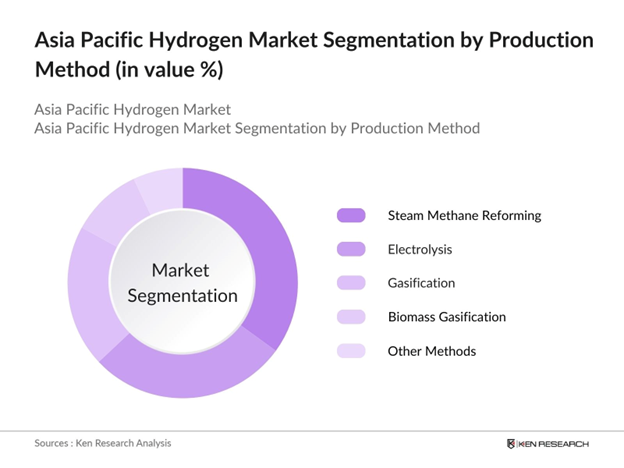
By Production Method: The Asia Pacific Hydrogen Market is segmented by production method into Steam Methane Reforming, Electrolysis, Gasification, Biomass Gasification, and other methods. Electrolysis, due to its alignment with green hydrogen goals, holds a dominant market share in this segmentation. The high demand for zero-emission hydrogen production methods, especially in regions prioritizing renewable energy, has increased investments in electrolysis. This method is popular in Japan and South Korea, where government initiatives encourage green hydrogen production.
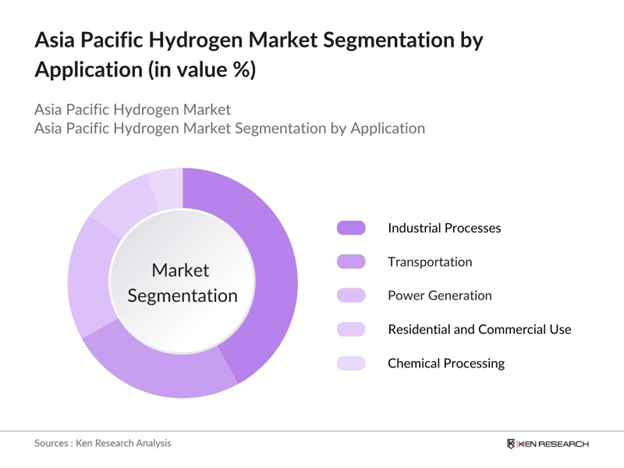
By Application: The market is further segmented by application, including Industrial Processes, Transportation, Power Generation, Residential and Commercial Use, and Chemical Processing. Industrial Processes dominate the market due to their longstanding reliance on hydrogen, especially in refineries and chemical production. Large industries in China and Japan continue to incorporate hydrogen to minimize carbon footprints and comply with emission regulations.
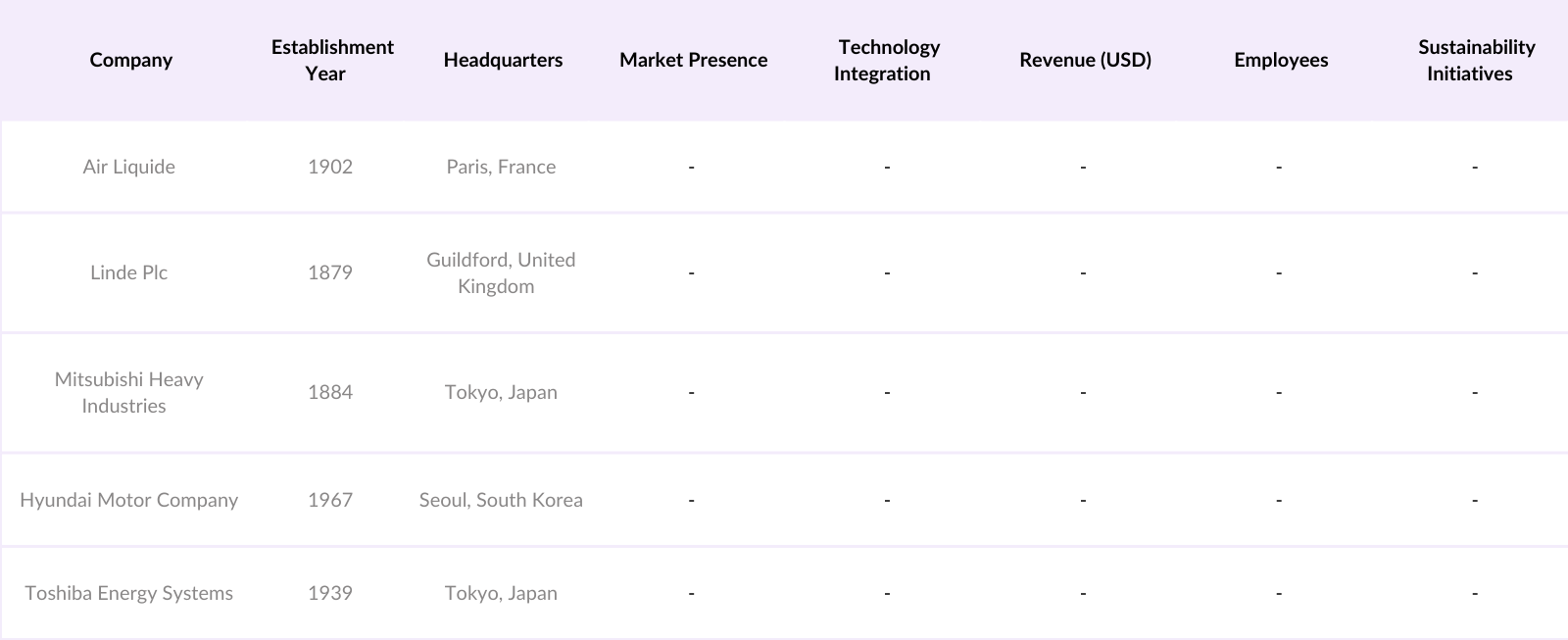
The Asia Pacific Hydrogen Market is shaped by a few major players, including global leaders such as Air Liquide and Linde Plc, alongside local champions like Mitsubishi Heavy Industries and Hyundai Motor Company. This consolidation reflects the influence of these companies strategic investments and partnerships, often in alignment with governmental hydrogen policies.
Asia Pacific Hydrogen Market is expected to experience robust growth, primarily driven by government support, advancements in hydrogen production and storage technologies, and rising demand for clean energy solutions across industrial and transportation sectors. Key countries are also anticipated to broaden their renewable energy strategies to include hydrogen, fostering a supportive environment for sustainable hydrogen production and integration across multiple applications.
|
Segment |
Sub-Segments |
|
Production Method |
Steam Methane Reforming Electrolysis Gasification Biomass Gasification Other Methods |
|
Application |
Industrial Processes Transportation Power Generation Residential and Commercial Use Chemical Processing |
|
State |
Liquid Hydrogen Gaseous Hydrogen |
|
Storage Type |
High-Pressure Tanks Low-Temperature Liquid Hydrogen Tanks Hydrogen Pipelines |
|
Region |
China Japan South Korea India ASEAN |
1.1. Definition and Scope
1.2. Market Taxonomy
1.3. Market Growth Rate
1.4. Market Segmentation Overview
2.1. Historical Market Size
2.2. Year-On-Year Growth Analysis
2.3. Key Market Developments and Milestones
3.1. Growth Drivers
3.1.1. Adoption of Clean Energy Initiatives (Government Policy)
3.1.2. Rising Investments in Hydrogen Production Facilities (Investment Trends)
3.1.3. Expansion of Hydrogen Applications in Various Industries (Industrial Demand)
3.1.4. Technological Advancements in Electrolysis and Storage (Innovation)
3.2. Market Challenges
3.2.1. High Production Costs (Economic Barriers)
3.2.2. Limited Infrastructure for Storage and Distribution (Infrastructure Gaps)
3.2.3. Regulatory Uncertainties (Regulatory Constraints)
3.3. Opportunities
3.3.1. Partnerships with Renewable Energy Providers (Strategic Alliances)
3.3.2. Expansion into Emerging Markets in Southeast Asia (Regional Expansion)
3.3.3. Innovations in Carbon-Free Hydrogen Production (Green Hydrogen)
3.4. Trends
3.4.1. Increased Investment in Green Hydrogen Projects (Sustainability Trend)
3.4.2. Advancements in Hydrogen Fuel Cell Technology (Technological Evolution)
3.4.3. Integration of Hydrogen with Renewable Energy Grids (Energy Integration)
3.5. Government Regulations
3.5.1. National Hydrogen Strategies (Policy Directives)
3.5.2. Emission Reduction Targets (Environmental Compliance)
3.5.3. Public-Private Partnerships for Hydrogen Infrastructure (Collaborative Initiatives)
3.6. SWOT Analysis
3.7. Stakeholder Ecosystem
3.8. Porters Five Forces
3.9. Competition Ecosystem
4.1. By Production Method (In Value %)
4.1.1. Steam Methane Reforming
4.1.2. Electrolysis
4.1.3. Gasification
4.1.4. Biomass Gasification
4.1.5. Other Methods
4.2. By Application (In Value %)
4.2.1. Industrial Processes
4.2.2. Transportation
4.2.3. Power Generation
4.2.4. Residential and Commercial Use
4.2.5. Chemical Processing
4.3. By State (In Value %)
4.3.1. Liquid Hydrogen
4.3.2. Gaseous Hydrogen
4.4. By Storage Type (In Value %)
4.4.1. High-Pressure Tanks
4.4.2. Low-Temperature Liquid Hydrogen Tanks
4.4.3. Hydrogen Pipelines
4.5. By Region (In Value %)
4.5.1. China
4.5.2. Japan
4.5.3. South Korea
4.5.4. India
4.5.5. ASEAN
5.1. Detailed Profiles of Major Companies
5.1.1. Air Liquide
5.1.2. Linde Plc
5.1.3. Mitsubishi Heavy Industries
5.1.4. Toshiba Energy Systems & Solutions
5.1.5. Plug Power Inc.
5.1.6. ITM Power
5.1.7. Nel ASA
5.1.8. Hyundai Motor Company
5.1.9. Panasonic Corporation
5.1.10. Sumitomo Corporation
5.2. Cross Comparison Parameters (Revenue, Headquarters, Inception Year, Production Capacity, Key Partnerships, Regional Presence, Technology Focus, ESG Commitments)
5.3. Market Share Analysis
5.4. Strategic Initiatives
5.5. Mergers and Acquisitions
5.6. Investment Analysis
5.7. Venture Capital Funding
5.8. Government Grants
5.9. Private Equity Investments
6.1. Environmental Standards
6.2. Compliance Requirements
6.3. Certification Processes
7.1. Future Market Size Projections
7.2. Key Factors Driving Future Market Growth
8.1. By Production Method (In Value %)
8.2. By Application (In Value %)
8.3. By State (In Value %)
8.4. By Storage Type (In Value %)
8.5. By Region (In Value %)
9.1. TAM/SAM/SOM Analysis
9.2. Customer Cohort Analysis
9.3. Marketing Initiatives
9.4. White Space Opportunity Analysis
This initial step involves mapping major stakeholders within the Asia Pacific Hydrogen Market. Extensive desk research and the use of secondary and proprietary databases allow for the identification and definition of critical variables influencing the markets dynamics.
In this phase, we analyze historical data relevant to the Asia Pacific Hydrogen Market. This includes market penetration rates, revenue generation trends, and service quality metrics to ensure precise estimates and reliable conclusions.
Hypotheses developed during market research are validated through CATIs with industry experts representing diverse companies. This consultation provides practical insights that are essential for refining the gathered data.
The final stage involves engagement with key industry players to collect product-specific data, sales performance, and consumer preferences. This approach ensures comprehensive and validated findings for a conclusive analysis of the Asia Pacific Hydrogen Market.
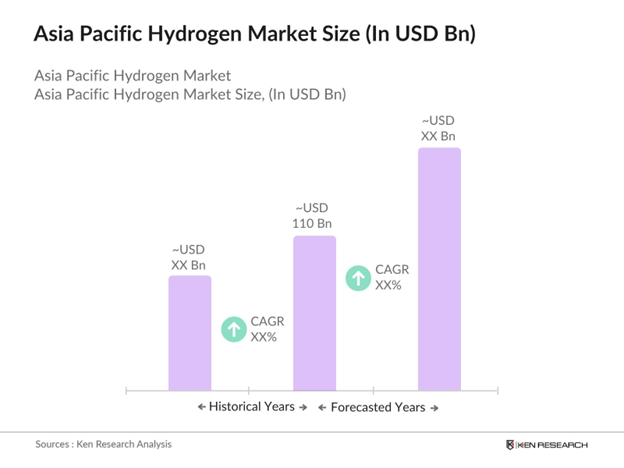
The Asia Pacific Hydrogen Market is valued at USD 110 billion, largely supported by governmental clean energy initiatives and industrial demand across the region.
Challenges in Asia Pacific Hydrogen Market include high hydrogen production costs, limited infrastructure for storage and distribution, and regulatory uncertainties, especially concerning green hydrogen standards.
Key players in Asia Pacific Hydrogen Market include Air Liquide, Linde Plc, Mitsubishi Heavy Industries, Toshiba Energy Systems, and Hyundai Motor Company. These companies lead due to their extensive production capabilities and partnerships with regional governments.
The primary growth drivers in Asia Pacific Hydrogen Market are government incentives, technological advancements in hydrogen production and storage, and increased demand from industrial sectors aiming for carbon neutrality.

What makes us stand out is that our consultants follows Robust, Refine and Result (RRR) methodology. i.e. Robust for clear definitions, approaches and sanity checking, Refine for differentiating respondents facts and opinions and Result for presenting data with story

We have set a benchmark in the industry by offering our clients with syndicated and customized market research reports featuring coverage of entire market as well as meticulous research and analyst insights.

While we don't replace traditional research, we flip the method upside down. Our dual approach of Top Bottom & Bottom Top ensures quality deliverable by not just verifying company fundamentals but also looking at the sector and macroeconomic factors.

With one step in the future, our research team constantly tries to show you the bigger picture. We help with some of the tough questions you may encounter along the way: How is the industry positioned? Best marketing channel? KPI's of competitors? By aligning every element, we help maximize success.

Our report gives you instant access to the answers and sources that other companies might choose to hide. We elaborate each steps of research methodology we have used and showcase you the sample size to earn your trust.

If you need any support, we are here! We pride ourselves on universe strength, data quality, and quick, friendly, and professional service.