
Asia Pacific Lawn Care Market Outlook to 2030
Region:Asia
Author(s):Abhinav kumar
Product Code:KROD6318
Region:Asia
Author(s):Abhinav kumar
Product Code:KROD6318
November 2024
80
Listen to the audio summary
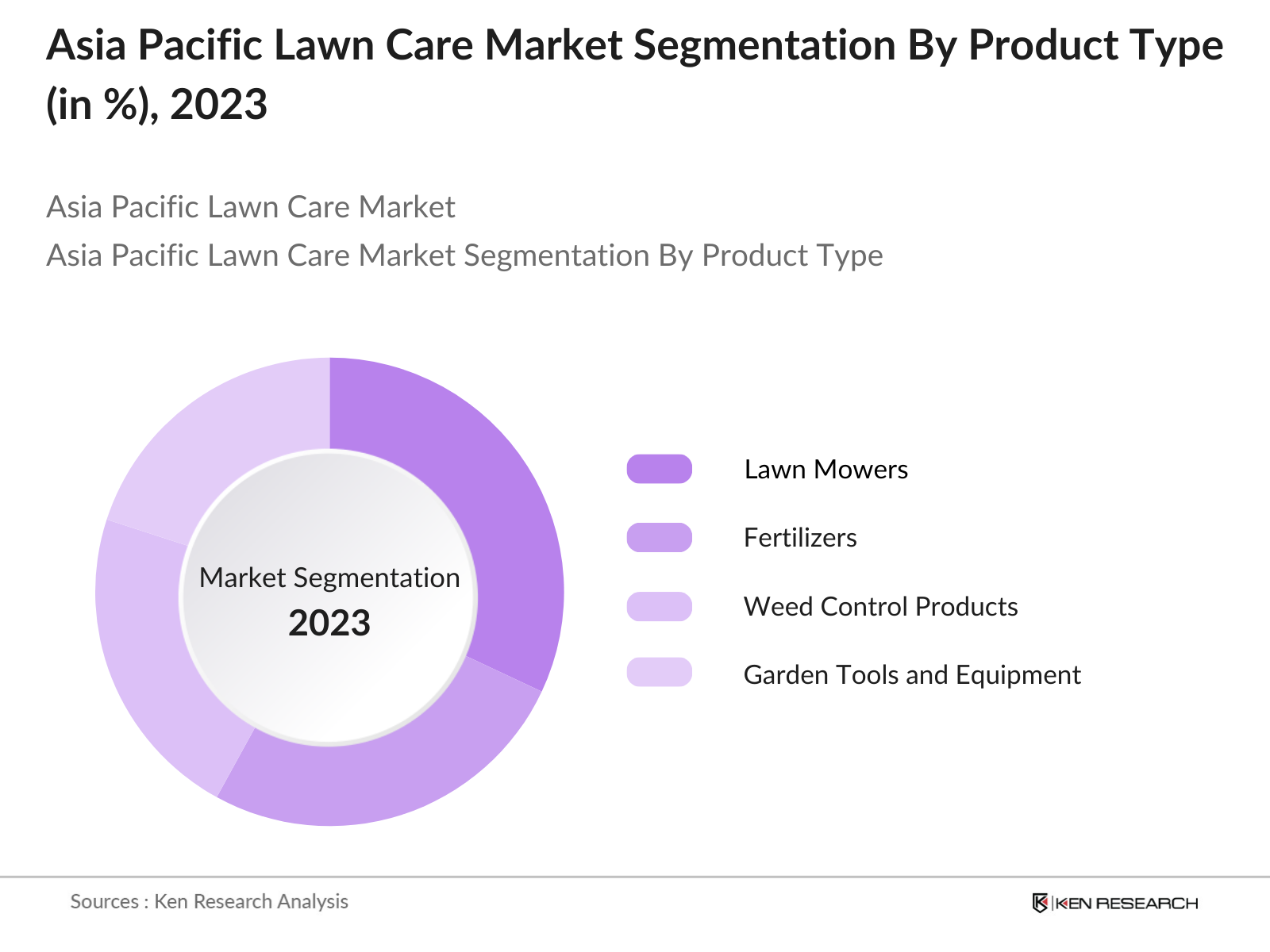
By Product Type: The Asia Pacific Lawn Care Market is segmented by product type into Lawn Mowers, Fertilizers, Weed Control Products, Garden Tools and Equipment, and Pest Control Products. Recently, Lawn Mowers have dominated the product type segment. This is primarily due to the rising adoption of advanced mowers, such as robotic and electric lawn mowers, which offer improved efficiency and sustainability. Countries like Japan and Australia are seeing a significant uptake in these products due to their ease of use, energy efficiency, and growing consumer preference for automated, smart gardening solutions.
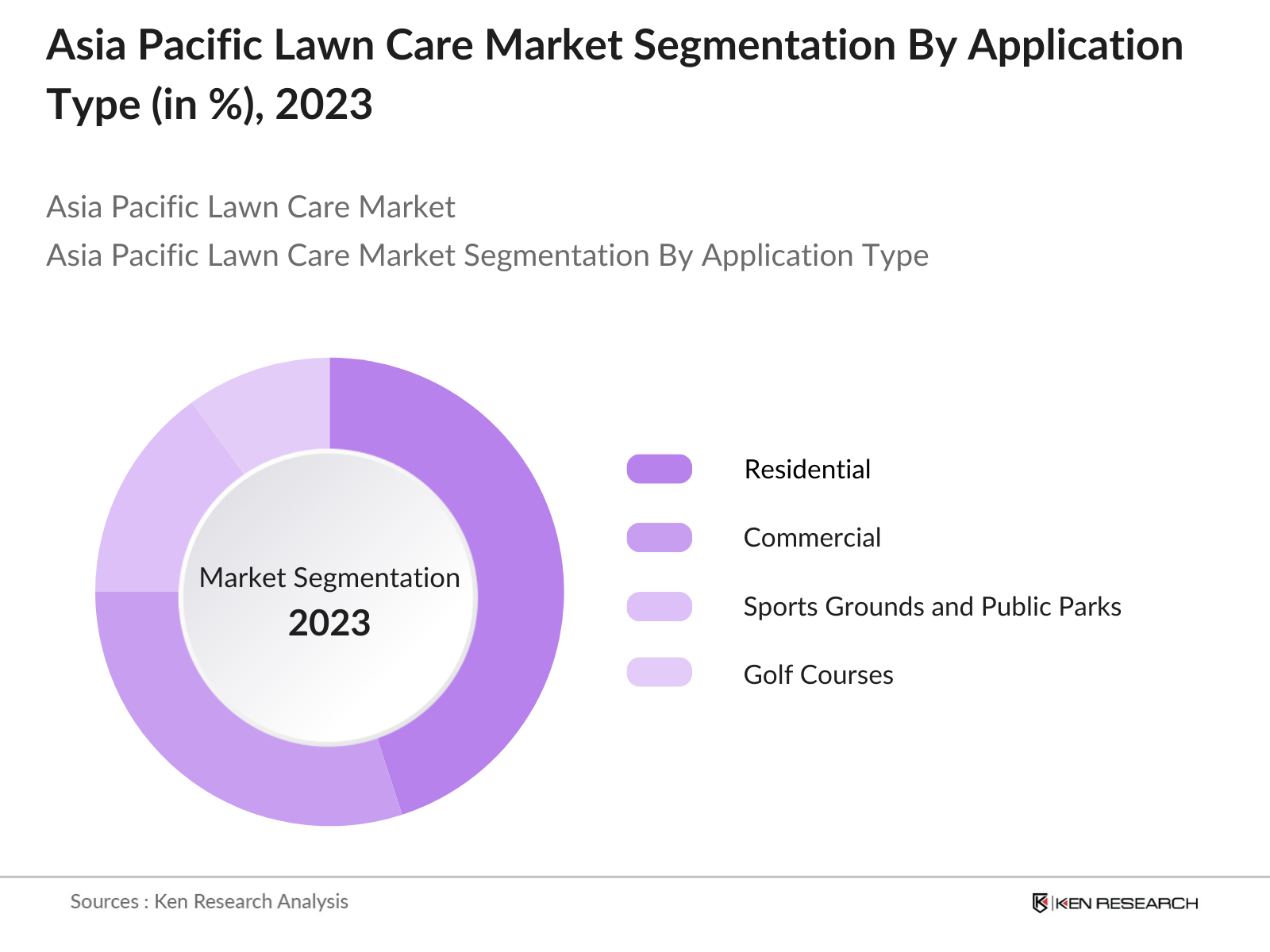
By Application: The market is segmented by application into Residential, Commercial, Sports Grounds and Public Parks, Golf Courses, and Institutional Grounds. Within this segment, Residential Applications lead the market share due to the increasing preference for personal green spaces in urban areas. With rapid urbanization, especially in countries like China and India, residential lawns have become a key element in modern home designs. Additionally, government initiatives promoting green spaces in housing projects further boost demand for lawn care products in this segment.
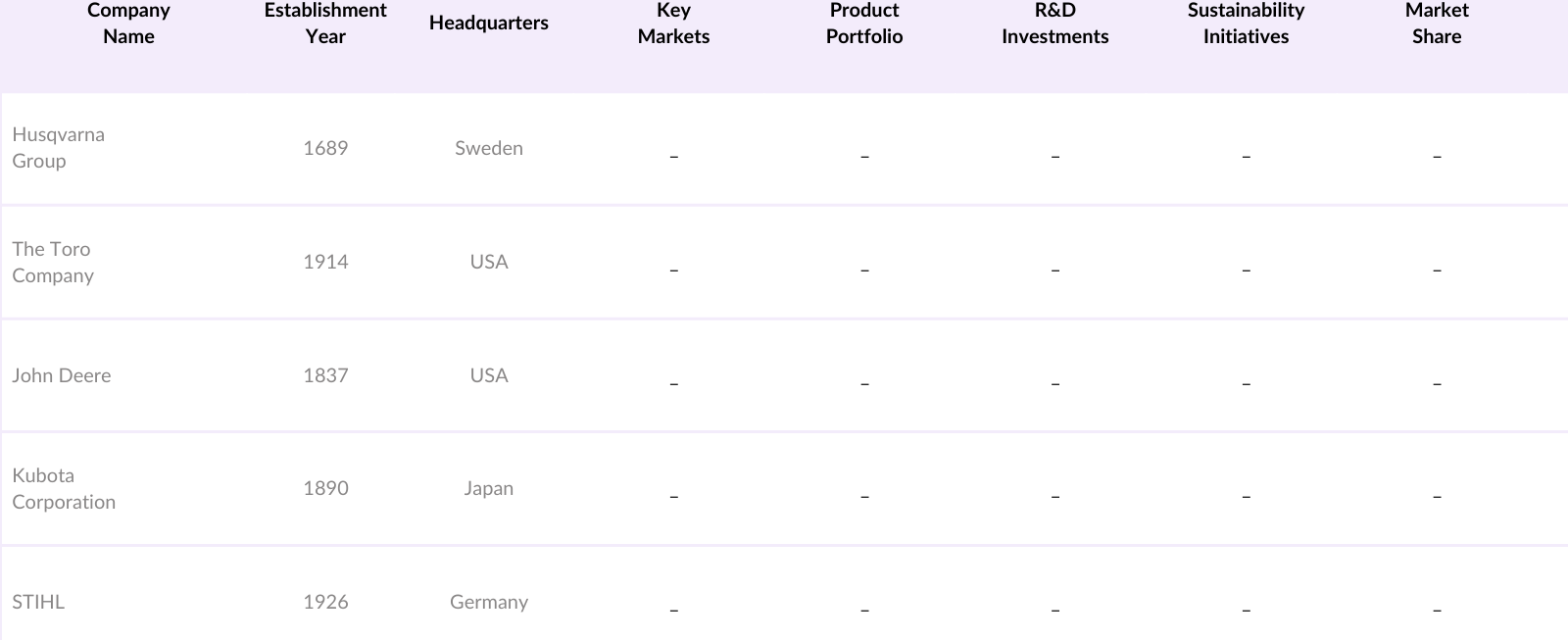
The Asia Pacific Lawn Care Market is characterized by a mix of global giants and strong regional players. Companies like Husqvarna Group, The Toro Company, and John Deere have established themselves as key players due to their broad portfolios, advanced technology, and strong distribution networks. Regional players such as Kubota Corporation and STIHL have gained market share through localized product offerings and tailored lawn care solutions for diverse climatic conditions.
Over the next five years, the Asia Pacific Lawn Care Market is expected to experience significant growth, driven by a combination of urbanization, rising disposable incomes, and growing environmental awareness. As more cities across Asia promote the creation of public green spaces, demand for lawn care products, especially sustainable and water-efficient solutions, is expected to rise. Additionally, advancements in smart gardening tools and the growing trend of DIY lawn care are likely to support continued market expansion. Smart irrigation systems, robotic lawn mowers, and eco-friendly products are expected to be at the forefront of this growth, with major players investing heavily in R&D to meet the evolving needs of consumers. Countries like India and China, which are still emerging in the landscaping sector, present lucrative opportunities for both regional and global companies.
|
By Product Type |
Lawn Mowers Fertilizers Weed Control Products Garden Tools and Equipment Pest Control Products |
|
By Application |
Residential Commercial Sports Grounds and Public Parks Golf Courses Institutional Grounds |
|
By Distribution Channel |
Online Stores Supermarkets and Hypermarkets, Specialty Stores Hardware Stores Direct-to-Consumer |
|
By Technology |
Conventional Lawn Care Products Robotic Lawn Mowers Smart Irrigation Systems Organic Lawn Care Solutions Lawn Care Analytics Platforms |
|
By Region |
China India Australia Japan Southeast Asia |
1.1. Definition and Scope
1.2. Market Taxonomy
1.3. Market Growth Rate
1.4. Market Segmentation Overview
2.1. Historical Market Size
2.2. Year-On-Year Growth Analysis
2.3. Key Market Developments and Milestones
3.1. Growth Drivers
3.1.1. Urban Expansion and Green Spaces
3.1.2. Rising Disposable Income
3.1.3. Growing Environmental Awareness
3.1.4. Increasing Demand for Organic Lawn Products
3.2. Market Challenges
3.2.1. High Competition from Alternatives (Artificial Turf)
3.2.2. Water Scarcity and Drought Regulations
3.2.3. Seasonal Dependency in Key Regions
3.2.4. Limited Product Adoption in Rural Areas
3.3. Opportunities
3.3.1. Innovation in Eco-friendly Lawn Care Products
3.3.2. Technological Integration (Robotic Mowers, Smart Irrigation)
3.3.3. Expansion in Emerging Markets (India, Southeast Asia)
3.3.4. Government Initiatives for Greening Cities
3.4. Trends
3.4.1. Sustainable and Organic Lawn Care Solutions
3.4.2. Increase in DIY Lawn Care Kits
3.4.3. Growth in Digital Lawn Care Platforms
3.4.4. Partnerships Between Landscapers and Tech Companies
3.5. Government Regulation
3.5.1. Environmental Standards for Chemical Use
3.5.2. Water Usage Regulations in Drought-prone Areas
3.5.3. Restrictions on Synthetic Pesticides
3.5.4. Public-Private Initiatives for Urban Greenery
3.6. SWOT Analysis
3.6.1. Strengths
3.6.2. Weaknesses
3.6.3. Opportunities
3.6.4. Threats
3.7. Stakeholder Ecosystem
3.8. Porters Five Forces
3.9. Competition Ecosystem
4.1. By Product Type (In Value %)
4.1.1. Lawn Mowers
4.1.2. Fertilizers
4.1.3. Weed Control Products
4.1.4. Garden Tools and Equipment
4.1.5. Pest Control Products
4.2. By Application (In Value %)
4.2.1. Residential
4.2.2. Commercial
4.2.3. Sports Grounds and Public Parks
4.2.4. Golf Courses
4.2.5. Institutional Grounds
4.3. By Distribution Channel (In Value %)
4.3.1. Online Stores
4.3.2. Supermarkets and Hypermarkets
4.3.3. Specialty Stores
4.3.4. Hardware Stores
4.3.5. Direct-to-Consumer
4.4. By Technology (In Value %)
4.4.1. Conventional Lawn Care Products
4.4.2. Robotic Lawn Mowers
4.4.3. Smart Irrigation Systems
4.4.4. Organic Lawn Care Solutions
4.4.5. Lawn Care Analytics Platforms
4.5. By Region (In Value %)
4.5.1. China
4.5.2. India
4.5.3. Australia
4.5.4. Japan
4.5.5. Southeast Asia
5.1. Detailed Profiles of Major Companies
5.1.1. Husqvarna Group
5.1.2. The Toro Company
5.1.3. STIHL
5.1.4. Honda Motor Co. Ltd.
5.1.5. Robert Bosch GmbH
5.1.6. Deere & Company
5.1.7. Kubota Corporation
5.1.8. MTD Products Inc.
5.1.9. The Scotts Miracle-Gro Company
5.1.10. Briggs & Stratton Corporation
5.1.11. Stanley Black & Decker
5.1.12. Makita Corporation
5.1.13. Garden Care Group Pty Ltd.
5.1.14. TTI (Techtronic Industries)
5.1.15. Ariens Company
5.2. Cross Comparison Parameters (No. of Employees, Revenue, Headquarters, Key Markets, Product Portfolio, R&D Investments, Sustainability Initiatives, Market Share)
5.3. Market Share Analysis
5.4. Strategic Initiatives
5.5. Mergers and Acquisitions
5.6. Investment Analysis
5.7. Venture Capital Funding
5.8. Government Grants
5.9. Private Equity Investments
6.1. Environmental Standards
6.2. Compliance Requirements
6.3. Certification Processes
7.1. Future Market Size Projections
7.2. Key Factors Driving Future Market Growth
8.1. By Product Type (In Value %)
8.2. By Application (In Value %)
8.3. By Technology (In Value %)
8.4. By Distribution Channel (In Value %)
8.5. By Region (In Value %)
9.1. TAM/SAM/SOM Analysis
9.2. Customer Cohort Analysis
9.3. Marketing Initiatives
9.4. White Space Opportunity Analysis
Disclaimer Contact UsThe first step in our research involves creating an in-depth ecosystem map that captures all stakeholders in the Asia Pacific Lawn Care Market. We used both proprietary databases and secondary sources to gather comprehensive data, focusing on market dynamics, pricing trends, and key product categories.
We collected and analyzed historical market data to build a robust model for the Asia Pacific Lawn Care Market. This included assessing product penetration, customer preferences, and market drivers. Revenue projections were cross-verified using multiple data points to ensure accuracy.
Our market hypotheses were validated through consultations with industry experts and company representatives. These in-depth interviews provided insights into operational challenges and market trends, helping to refine our understanding of the competitive landscape and growth opportunities.
The final step involved synthesizing the research data into a cohesive report, cross-verifying our findings with input from manufacturers, distributors, and end-users. This multi-faceted approach ensured that our analysis was both comprehensive and reliable, allowing for a deep dive into key market segments.
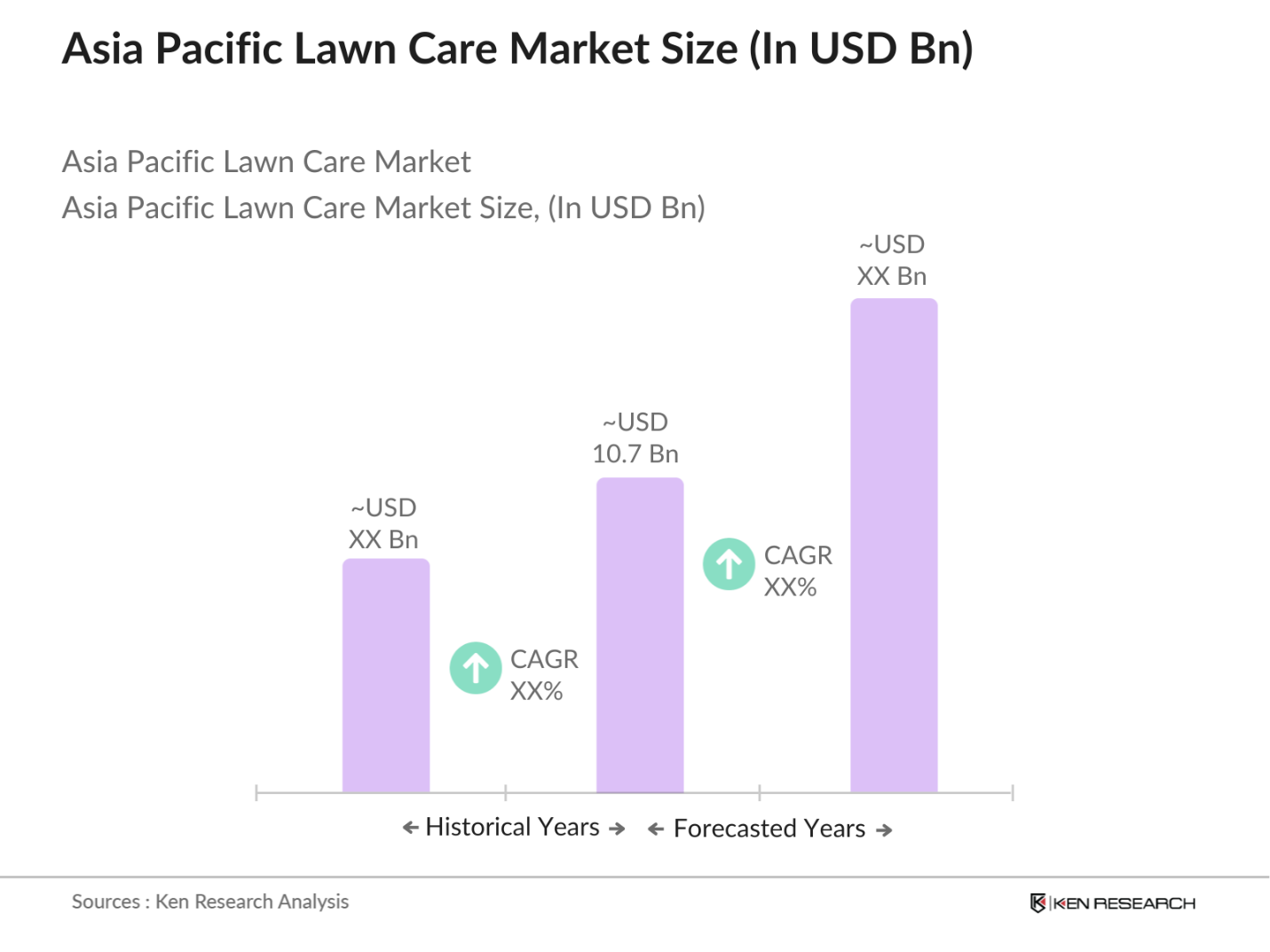
The Asia Pacific Lawn Care Market is valued at USD 10.7 billion, driven by rising consumer interest in green spaces, urbanization, and increased awareness around eco-friendly products.
Key challenges include water scarcity, stringent environmental regulations, and competition from alternative landscaping solutions such as artificial turf. Additionally, market penetration remains limited in rural areas.
Major players include Husqvarna Group, The Toro Company, John Deere, Kubota Corporation, and STIHL. These companies dominate due to their strong product portfolios, global presence, and innovation in eco-friendly and automated lawn care solutions.
The market is driven by increasing consumer interest in sustainable landscaping, rising disposable incomes, and growing urbanization. The demand for automated, smart lawn care products is also a major growth driver.

What makes us stand out is that our consultants follows Robust, Refine and Result (RRR) methodology. i.e. Robust for clear definitions, approaches and sanity checking, Refine for differentiating respondents facts and opinions and Result for presenting data with story

We have set a benchmark in the industry by offering our clients with syndicated and customized market research reports featuring coverage of entire market as well as meticulous research and analyst insights.

While we don't replace traditional research, we flip the method upside down. Our dual approach of Top Bottom & Bottom Top ensures quality deliverable by not just verifying company fundamentals but also looking at the sector and macroeconomic factors.

With one step in the future, our research team constantly tries to show you the bigger picture. We help with some of the tough questions you may encounter along the way: How is the industry positioned? Best marketing channel? KPI's of competitors? By aligning every element, we help maximize success.

Our report gives you instant access to the answers and sources that other companies might choose to hide. We elaborate each steps of research methodology we have used and showcase you the sample size to earn your trust.

If you need any support, we are here! We pride ourselves on universe strength, data quality, and quick, friendly, and professional service.