
Asia Pacific Military Planes Market Outlook to 2030
Region:Afganistan
Author(s):Sanjna
Product Code:KROD10521
Region:Afganistan
Author(s):Sanjna
Product Code:KROD10521
November 2024
90
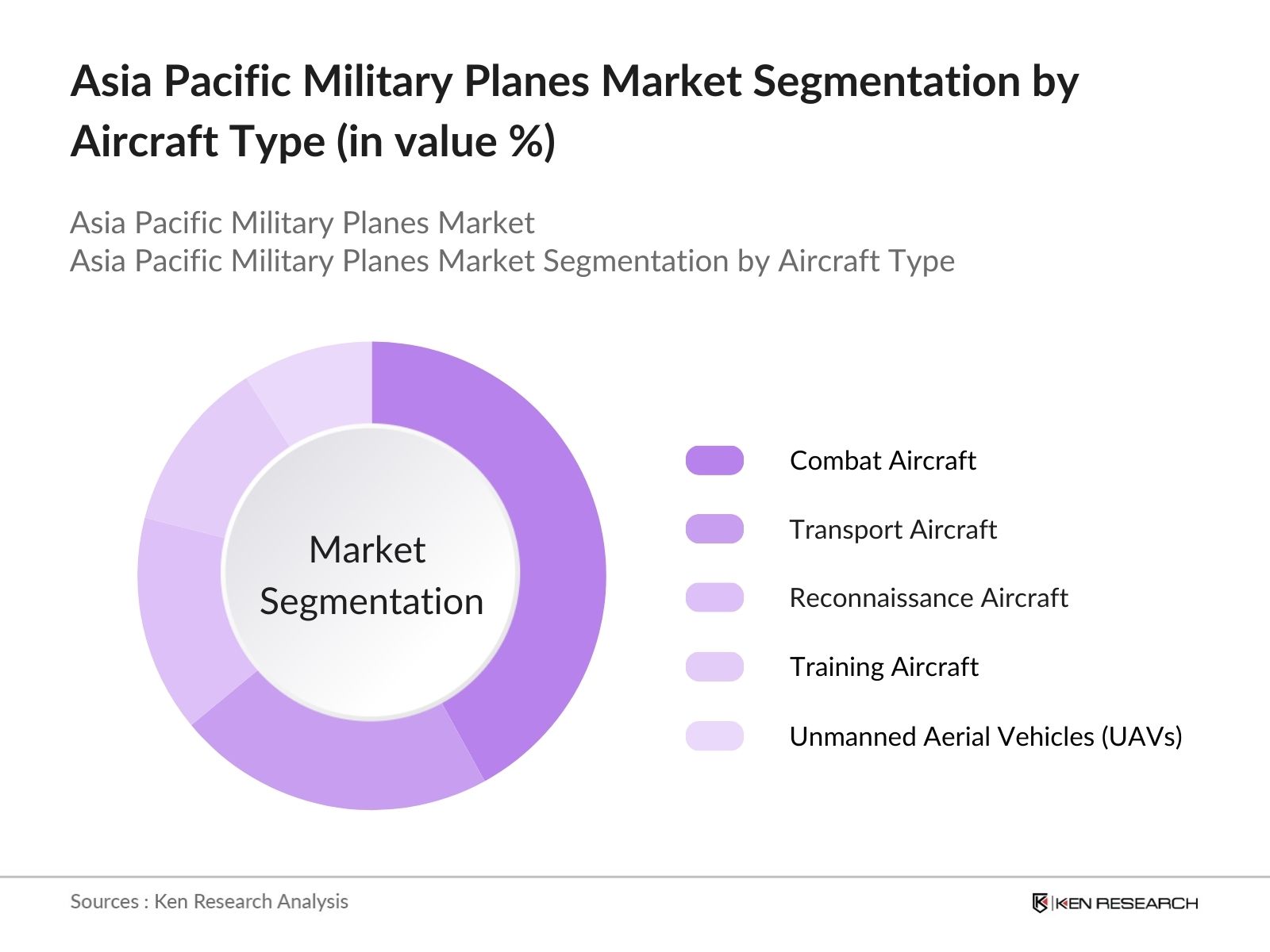
By Aircraft Type: The market is segmented by aircraft type into combat aircraft, transport aircraft, reconnaissance aircraft, training aircraft, and UAVs. Currently, combat aircraft holds a dominant share due to its critical role in ensuring air superiority and its advanced technological applications in stealth and precision targeting. Countries such as China and India heavily invest in combat aircraft to fortify their air defenses, with models like Chinas J-20 and Indias Rafale contributing to the growth of this segment.
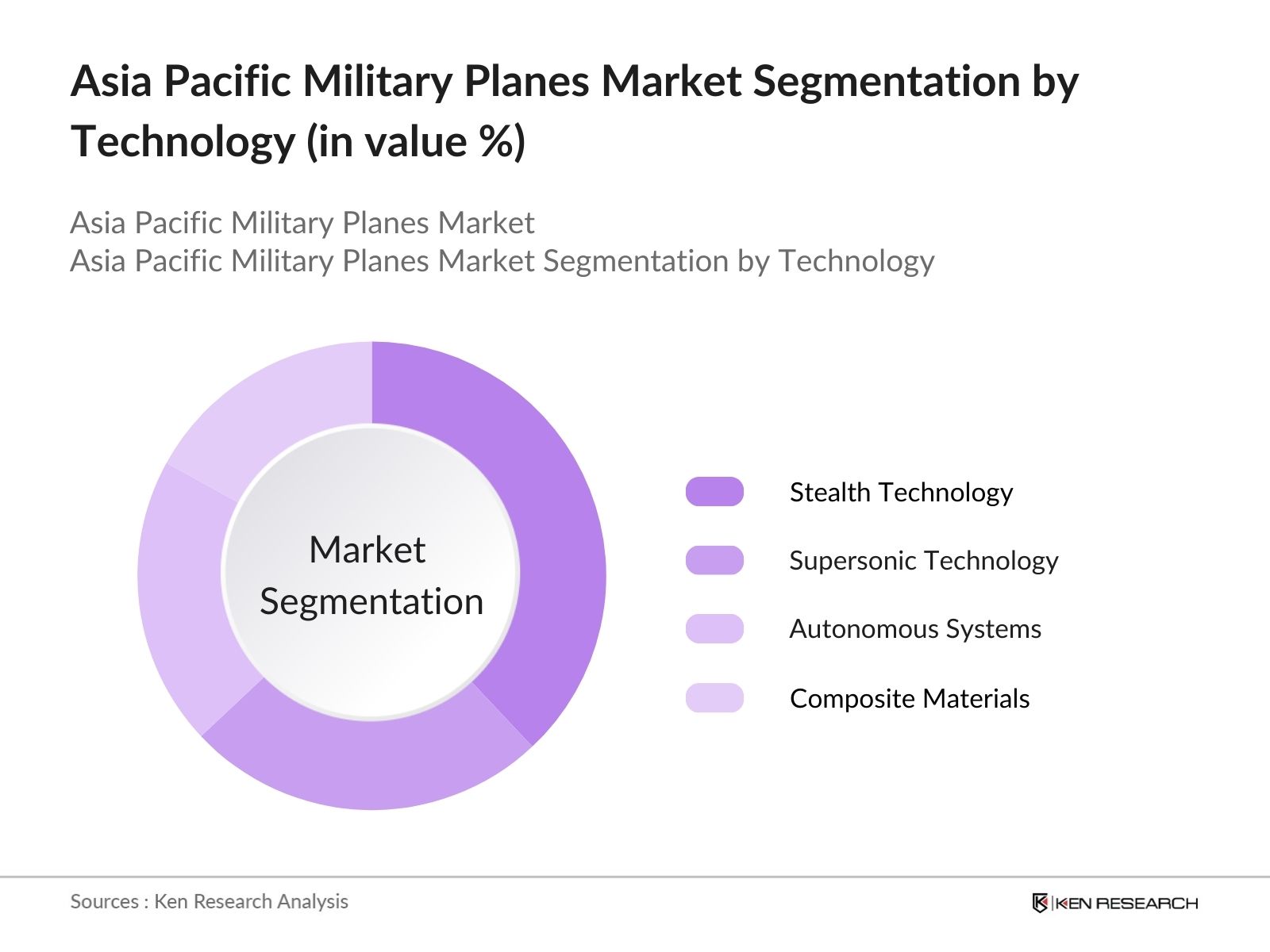
By Technology: The market is segmented by technology into stealth technology, supersonic technology, autonomous systems, and composite materials. Stealth technology is the leading sub-segment, driven by the strategic necessity for undetectable and high-performance aircraft. With rising concerns over radar detection, many nations are adopting stealth capabilities to enhance operational safety and strategic advantage. Chinas development of the J-20 stealth fighter is a key example of the emphasis on this technology.
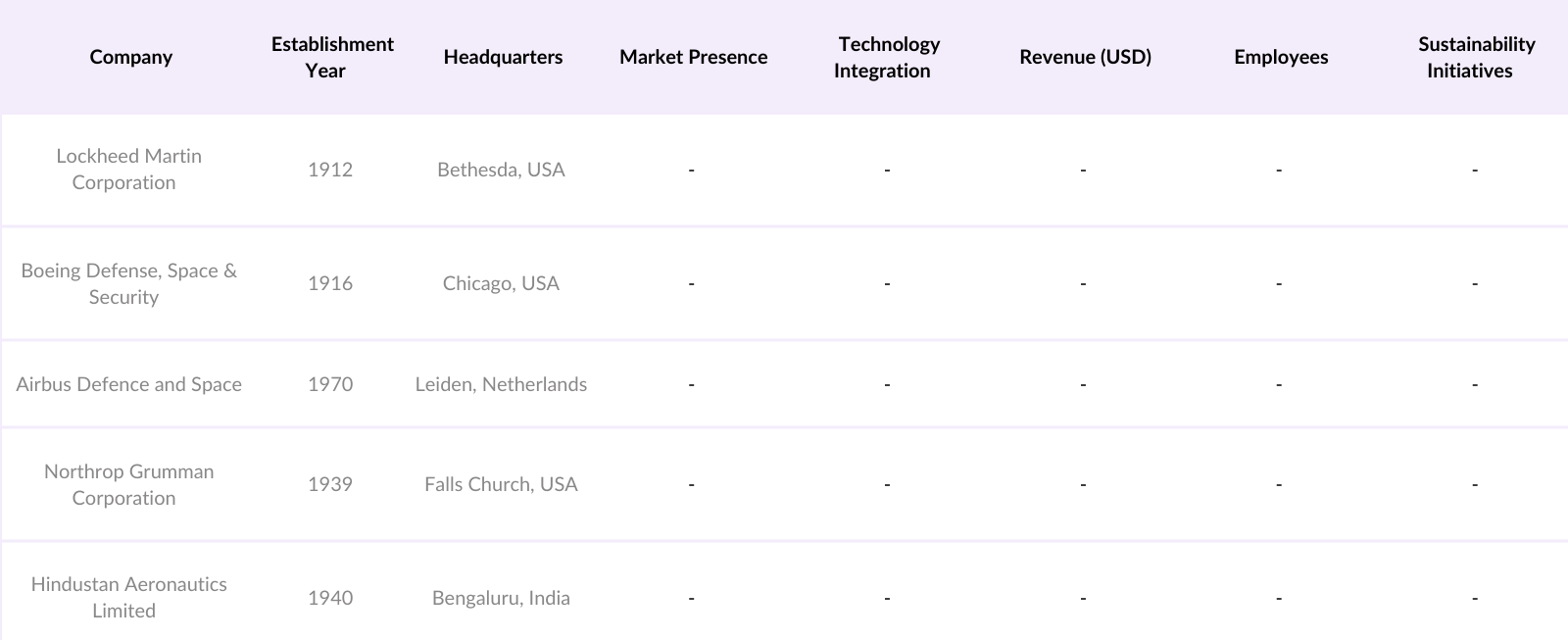
The Asia Pacific Military Planes Market is dominated by established players including major aerospace giants like Lockheed Martin and Airbus. These companies play a vital role in shaping the market with cutting-edge technologies and strategic alliances that enhance their market presence.
Growth Drivers
Challenges
The Asia Pacific Military Planes Market is projected to experience notable growth driven by government initiatives for defense modernization and the adoption of advanced military technologies. Increasing demand for enhanced aerial capabilities and the geopolitical focus on regional security are expected to drive this growth trajectory, making the market a key area of defense investment over the next five years.
Market Opportunities
|
Segment |
Sub-Segments |
|
Aircraft Type |
Combat Aircraft Transport Aircraft Surveillance and Reconnaissance Aircraft Training Aircraft Unmanned Aerial Vehicles (UAVs) |
|
Application |
Combat Operations Surveillance and Reconnaissance Transport and Logistics Training and Simulation |
|
Technology |
Stealth Technology Supersonic Technology Autonomous Systems Composite Materials |
|
End-User |
Air Force Navy Ground Forces |
|
Region |
China India Japan South Korea Australia |
1.1 Definition and Scope
1.2 Market Taxonomy
1.3 Market Growth Rate
1.4 Market Segmentation Overview
2.1 Historical Market Size
2.2 Year-On-Year Growth Analysis
2.3 Key Market Developments and Milestones
3.1 Growth Drivers (Budget Allocation, Geopolitical Tensions, Modernization Programs, Technological Advancements)
3.1.1 Defense Budget Increases
3.1.2 Rising Geopolitical Tensions
3.1.3 Increasing Modernization Programs
3.1.4 Focus on Advanced Technologies
3.2 Market Challenges (Regulatory Compliance, High Development Costs, Technology Transfer Restrictions)
3.2.1 Strict Regulatory Requirements
3.2.2 High Development and Maintenance Costs
3.2.3 Technology Transfer Restrictions
3.3 Opportunities (Regional Collaborations, Indigenization, Aftermarket Services, Technological Innovations)
3.3.1 Cross-Regional Collaborations
3.3.2 Increasing Indigenization Efforts
3.3.3 Growth in Aftermarket Services
3.4 Trends (Stealth Technology, Autonomous Systems, Digitalization, Sustainable Practices)
3.4.1 Advancements in Stealth Technology
3.4.2 Growth of Autonomous Military Aircraft
3.4.3 Digital Transformation in Maintenance and Training
3.5 Government Regulation (Defense Policies, Trade Agreements, Localization Mandates)
3.5.1 National Defense Policies
3.5.2 Trade and Export Control Agreements
3.5.3 Localization and Offset Mandates
3.6 SWOT Analysis
3.7 Stakeholder Ecosystem
3.8 Porters Five Forces Analysis
3.9 Competition Ecosystem
4.1 By Aircraft Type (In Value %)
4.1.1 Combat Aircraft
4.1.2 Transport Aircraft
4.1.3 Surveillance and Reconnaissance Aircraft
4.1.4 Training Aircraft
4.1.5 Unmanned Aerial Vehicles (UAVs)
4.2 By Application (In Value %)
4.2.1 Combat Operations
4.2.2 Surveillance and Reconnaissance
4.2.3 Transport and Logistics
4.2.4 Training and Simulation
4.3 By Technology (In Value %)
4.3.1 Stealth Technology
4.3.2 Supersonic Technology
4.3.3 Autonomous Systems
4.3.4 Composite Materials
4.4 By End-User (In Value %)
4.4.1 Air Force
4.4.2 Navy
4.4.3 Ground Forces
4.5 By Region (In Value %)
4.5.1 China
4.5.2 India
4.5.3 Japan
4.5.4 South Korea
4.5.5 Australia
5.1 Detailed Profiles of Major Companies
5.1.1 Lockheed Martin Corporation
5.1.2 Boeing Defense, Space & Security
5.1.3 Airbus Defence and Space
5.1.4 Northrop Grumman Corporation
5.1.5 BAE Systems plc
5.1.6 Dassault Aviation
5.1.7 Saab AB
5.1.8 Hindustan Aeronautics Limited (HAL)
5.1.9 Mitsubishi Heavy Industries
5.1.10 Korea Aerospace Industries (KAI)
5.2 Cross Comparison Parameters (Fleet Size, Technological Innovations, R&D Investments, Regional Presence, Strategic Alliances, Market Share, Revenue, Employee Count)
5.3 Market Share Analysis
5.4 Strategic Initiatives and Collaborations
5.5 Mergers and Acquisitions
5.6 Investment Analysis
5.7 Defense Funding Sources
5.8 Private Equity and Government Investments
6.1 Defense Policy Regulations
6.2 Export Control Regulations
6.3 Certification and Standards Compliance
7.1 Future Market Size Projections
7.2 Key Factors Driving Future Market Growth
8.1 By Aircraft Type (In Value %)
8.2 By Application (In Value %)
8.3 By Technology (In Value %)
8.4 By End-User (In Value %)
8.5 By Region (In Value %)
9.1 Total Addressable Market (TAM) Analysis
9.2 Serviceable Available Market (SAM) Analysis
9.3 Strategic Market Entry and Expansion Initiatives
9.4 Market Opportunity Identification
Disclaimer Contact UsAn extensive ecosystem map encompassing all key stakeholders was constructed, leveraging both secondary research and proprietary databases. This preliminary step identified critical variables impacting market trends, including budget allocation patterns, technological advancements, and defense procurement policies.
Historical data relevant to the Asia Pacific Military Planes Market was analyzed, with a focus on growth trends, defense budgets, and the strategic priorities of major countries in the region. This data was cross-verified to ensure reliable revenue estimates and market penetration rates.
Industry experts across the Asia Pacific region were consulted through structured interviews. These experts provided insights into emerging trends, technology adoption, and the competitive landscape, supporting hypothesis validation through direct industry feedback.
A comprehensive synthesis of the findings was conducted, integrating primary insights from defense officials and manufacturers. This approach ensured that the final analysis represented an accurate and well-rounded perspective of the Asia Pacific Military Planes Market.
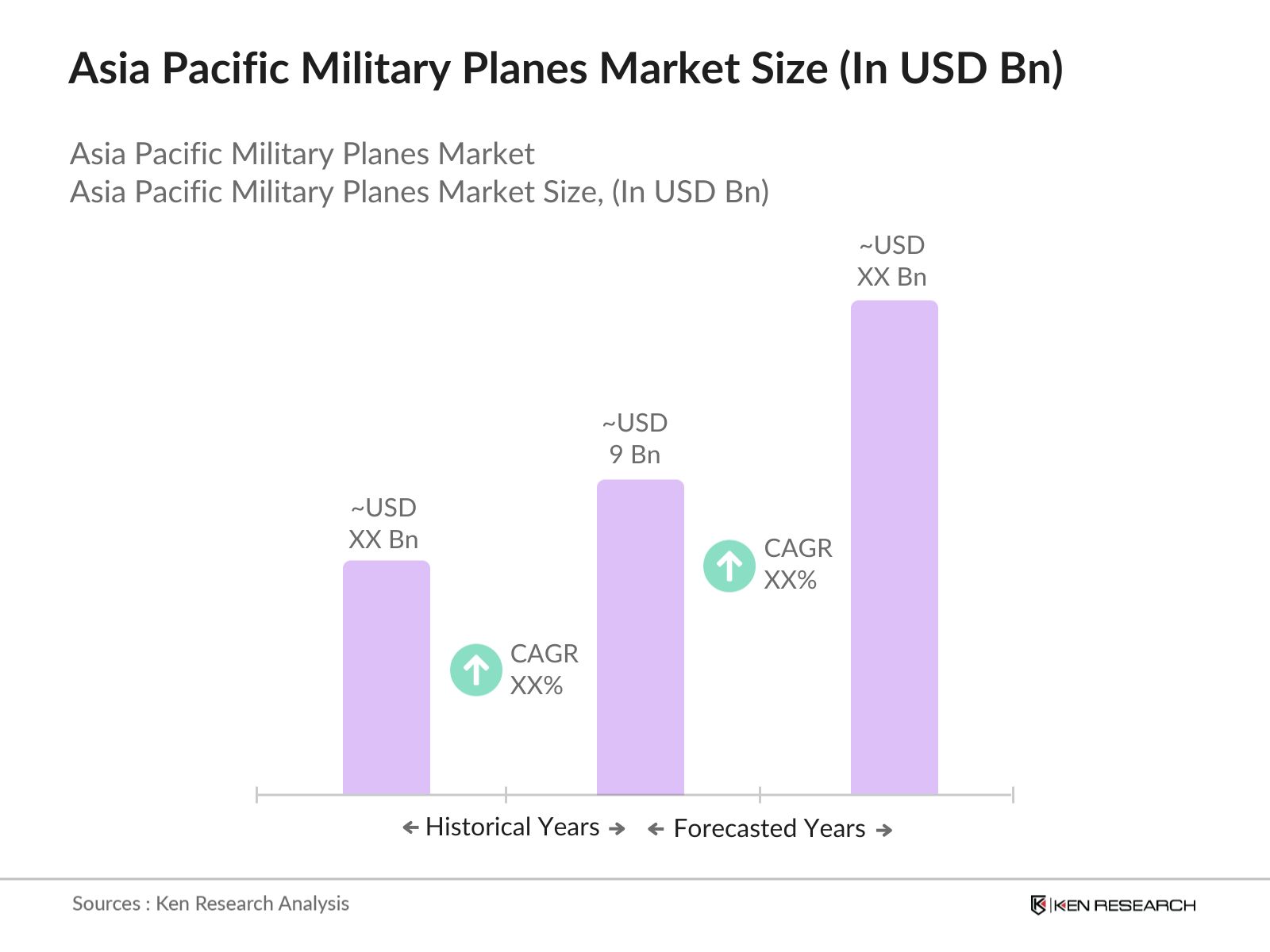
The Asia Pacific Military Planes Market is valued at USD 9 billion, driven by substantial defense budget allocations and the strategic importance of air defense in the region.
Key challenges in Asia Pacific Military Planes Market include high development and operational costs, stringent regulatory compliance requirements, and technology transfer restrictions that impact market expansion.
Major playersin Asia Pacific Military Planes Market include Lockheed Martin, Boeing Defense, Airbus Defence and Space, Northrop Grumman, and Hindustan Aeronautics Limited, with strong market presence due to their advanced technology integration and strategic partnerships.
Growth in Asia Pacific Military Planes Market is driven by increased defense budgets, modernization efforts, and the adoption of advanced technologies like stealth and autonomous systems, particularly in response to regional security concerns.

What makes us stand out is that our consultants follows Robust, Refine and Result (RRR) methodology. i.e. Robust for clear definitions, approaches and sanity checking, Refine for differentiating respondents facts and opinions and Result for presenting data with story

We have set a benchmark in the industry by offering our clients with syndicated and customized market research reports featuring coverage of entire market as well as meticulous research and analyst insights.

While we don't replace traditional research, we flip the method upside down. Our dual approach of Top Bottom & Bottom Top ensures quality deliverable by not just verifying company fundamentals but also looking at the sector and macroeconomic factors.

With one step in the future, our research team constantly tries to show you the bigger picture. We help with some of the tough questions you may encounter along the way: How is the industry positioned? Best marketing channel? KPI's of competitors? By aligning every element, we help maximize success.

Our report gives you instant access to the answers and sources that other companies might choose to hide. We elaborate each steps of research methodology we have used and showcase you the sample size to earn your trust.

If you need any support, we are here! We pride ourselves on universe strength, data quality, and quick, friendly, and professional service.