
Asia-Pacific Oat Milk Market Outlook to 2030
Region:Asia
Author(s):Abhinav kumar
Product Code:KROD5800
Region:Asia
Author(s):Abhinav kumar
Product Code:KROD5800
November 2024
90
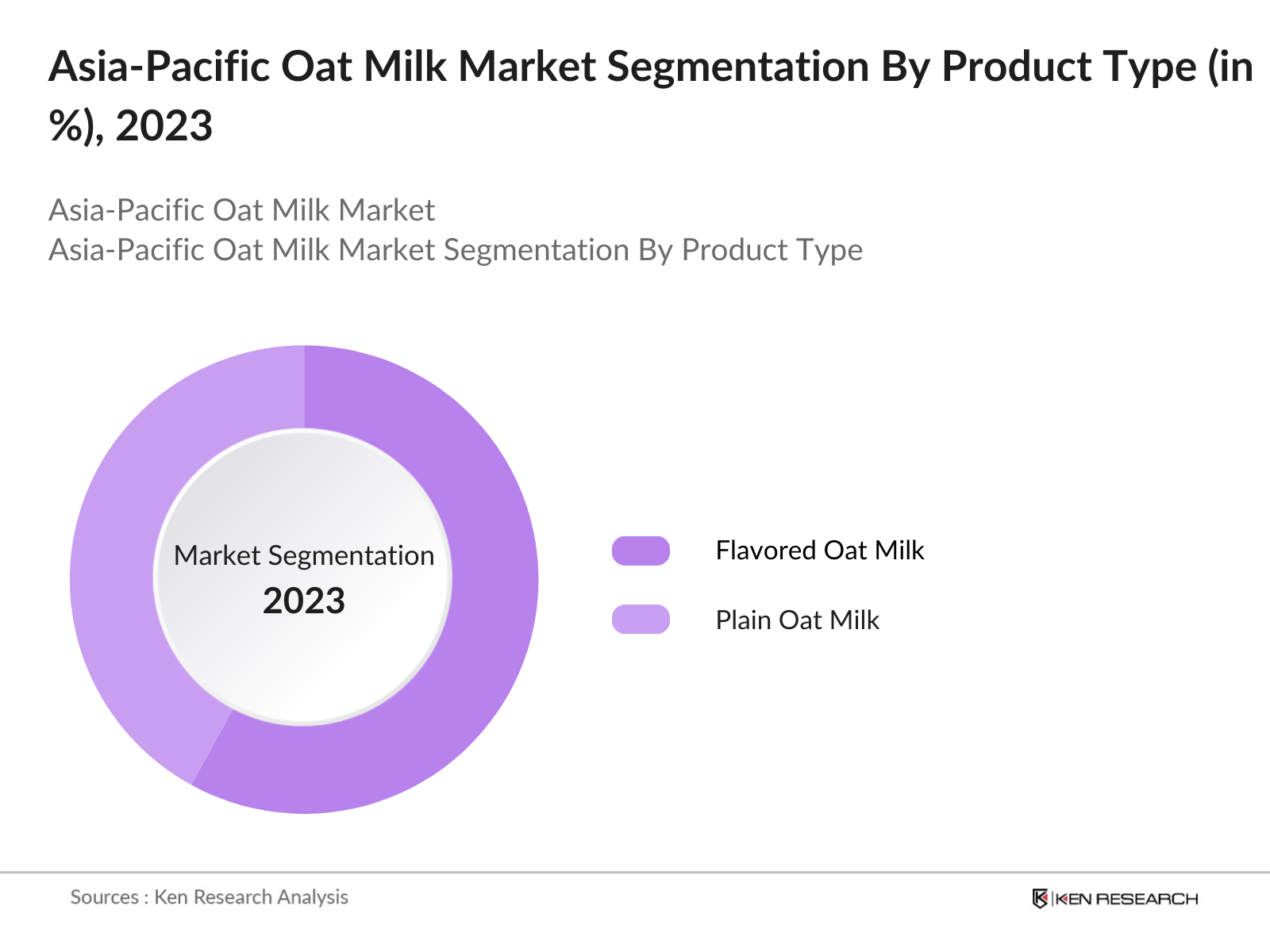
By Product Type: The Asia-Pacific oat milk market is segmented by product type into plain oat milk and flavored oat milk. Flavored oat milk, especially variants like chocolate and vanilla, dominates this segment. This can be attributed to consumer preferences for taste and versatility in smoothies, coffees, and desserts. The rising health consciousness has further driven demand for flavored varieties that appeal to both adults and children. This segment benefits from the innovation in flavors, which attract a broader range of consumers.
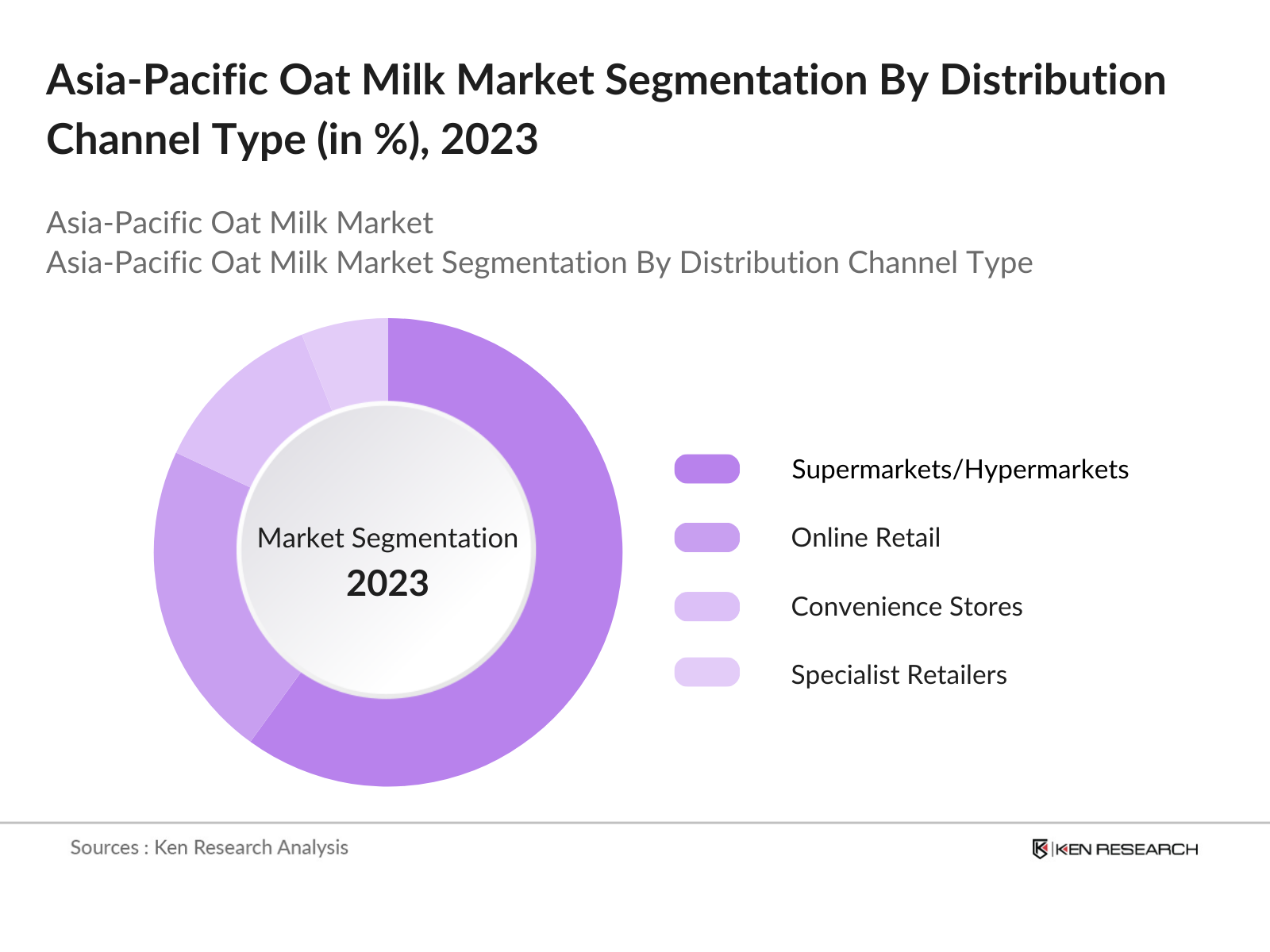
By Distribution Channel: The distribution channel is divided into supermarkets and hypermarkets, online retail, convenience stores, and specialist retailers. Supermarkets and hypermarkets hold the dominant market share due to the convenience they offer, wide product availability, and the ability to compare brands. Promotional campaigns and competitive pricing strategies in these stores also contribute to their dominance. Online retail is a growing segment due to the increasing penetration of e-commerce and the convenience of home delivery, particularly during the COVID-19 pandemic.
The Asia-Pacific oat milk market is characterized by a mix of global and regional players who are leveraging strategic initiatives like partnerships, product innovation, and sustainability initiatives to capture market share. The competitive landscape is dominated by companies like Oatly Group AB, Nestl SA, and Freedom Foods Group Ltd. These companies invest heavily in product development, marketing, and expanding distribution channels.
|
Company Name |
Establishment Year |
Headquarters |
Market Focus |
Product Portfolio |
Sustainability Initiatives |
Key Regions |
Annual Revenue |
Recent Developments |
|
Oatly Group AB |
1994 |
Malm, Sweden |
_ |
_ |
_ |
_ |
_ |
_ |
|
Nestl SA |
1867 |
Vevey, Switzerland |
_ |
_ |
_ |
_ |
_ |
_ |
|
Freedom Foods Group Ltd |
1990 |
Sydney, Australia |
_ |
_ |
_ |
_ |
_ |
_ |
|
PureHarvest |
1970 |
Victoria, Australia |
_ |
_ |
_ |
_ |
_ |
_ |
|
Sanitarium Health and Wellbeing |
1898 |
New South Wales, Australia |
_ |
_ |
_ |
_ |
_ |
_ |
Over the next five years, the Asia-Pacific oat milk market is expected to experience significant growth, driven by increasing consumer demand for sustainable and plant-based products. The market's positive outlook is underpinned by strong vegan population growth, particularly in countries like Australia and South Korea, and rising awareness about lactose intolerance and environmental issues. Additionally, product innovation, including new flavors and fortified oat milk, and expanding distribution channels will further stimulate growth.
|
Product Type |
Plain Flavored |
|
Packaging Type |
Carton Plastic Bottles |
|
Distribution Channel |
Supermarkets Online Convenience Stores |
|
Application |
Beverages Dairy Substitutes Bakery |
|
Region |
China Japan Australia South Korea |
1.1. Definition and Scope
1.2. Market Taxonomy
1.3. Growth Rate & Trends
1.4. Market Segmentation Overview
2.1. Historical Market Size
2.2. Year-On-Year Growth Analysis
2.3. Key Market Developments and Milestones
3.1. Growth Drivers (Rising vegan population, lactose intolerance, sustainability trends)
3.2. Market Challenges (Price sensitivity, competition from other plant-based milk, limited consumer awareness in rural regions)
3.3. Opportunities (New product formulations, health benefits, growing demand for allergen-free alternatives)
3.4. Emerging Trends (Use in coffee houses, rise of oat-based creamers, packaging innovations)
4.1. Government Regulations (Food safety standards, environmental policies for sustainable sourcing)
4.2. Compliance and Certification Requirements (Organic certification, GMO-free claims)
5.1. Market Share Analysis
5.2. Company Profiles of Major Competitors
5.2.1. Oatly Group AB
5.2.2. Nestl SA
5.2.3. Freedom Foods Group Ltd
5.2.4. PureHarvest
5.2.5. Sanitarium Health and Wellbeing Company
5.2.6. Minor Figures
5.2.7. Califia Farms
5.2.8. Danone SA
5.2.9. Milkin Oats
5.2.10. SunOpta Inc.
5.2.11. Ripple Foods
5.2.12. Vitasoy International
5.2.13. The Hain Celestial Group
5.2.14. Planet Oat
5.2.15. Elmhurst
5.3. Strategic Initiatives (Partnerships, product innovations, market entry strategies)
6.1. By Product Type (In Value %)
6.1.1. Plain/Unflavored Oat Milk
6.1.2. Flavored Oat Milk (Chocolate, Vanilla, etc.)
6.2. By Packaging Type (In Value %)
6.2.1. Carton Packaging
6.2.2. Plastic Bottles
6.3. By Distribution Channel (In Value %)
6.3.1. Supermarkets/Hypermarkets
6.3.2. Convenience Stores
6.3.3. Online Retail
6.4. By Application (In Value %)
6.4.1. Beverages (Coffee, Smoothies)
6.4.2. Bakery & Confectionery
6.4.3. Dairy Substitutes (Yogurt, Creamers)
6.5. By Region (In Value %)
6.5.1. China
6.5.2. Japan
6.5.3. Australia
6.5.4. South Korea
6.5.5. India
6.5.6. Indonesia
7.1. Revenue Growth
7.2. Market Penetration
7.3. Consumer Preferences (Vegan, Lactose-Intolerant Population)
7.4. Product Innovation (Flavors, Packaging Types)
7.5. Sustainability Initiatives (Carbon footprint reduction, eco-friendly packaging)
7.6. Price Sensitivity
7.7. Market Share
7.8. Distribution Reach
8.1. Future Market Size Projections
8.2. Key Factors Driving Future Market Growth
9.1. TAM/SAM/SOM Analysis (Total, Serviceable, and Obtainable Market)
9.2. Marketing Initiatives
9.3. Consumer Behavior Insights
9.4. White Space Opportunity Analysis
The initial phase involves mapping out the oat milk market ecosystem in the Asia-Pacific region. This step includes comprehensive desk research utilizing proprietary databases and secondary research to define key market variables such as market size, key players, and distribution channels.
In this phase, historical data on oat milk consumption, revenue generation, and product trends in the Asia-Pacific region are compiled. The data analysis helps to construct market growth models, estimate market penetration, and validate projections.
To ensure accuracy, market hypotheses are tested through consultations with industry experts. Interviews with oat milk manufacturers and suppliers provide insights into product innovation, market strategies, and customer preferences.
The final step integrates the findings from expert consultations with quantitative analysis to provide a validated and comprehensive outlook of the Asia-Pacific oat milk market. The synthesis is geared towards delivering actionable insights to stakeholders.
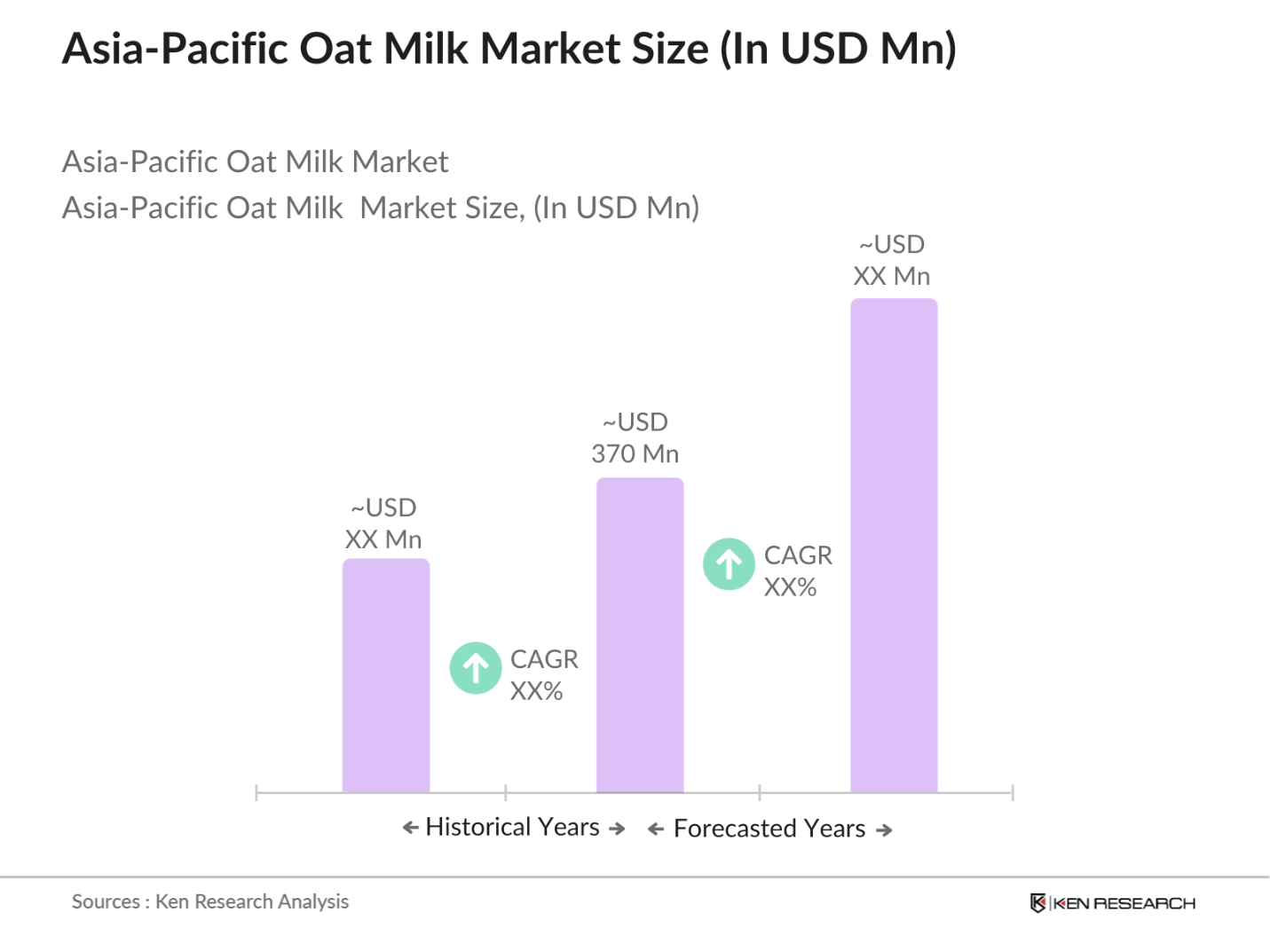
The Asia-Pacific oat milk market is valued at USD 370 million, driven by rising demand for plant-based alternatives, particularly among vegan and lactose-intolerant consumers.
Key challenges include price sensitivity among consumers and competition from other plant-based milks such as almond and soy milk. Limited awareness in rural areas also hinders market expansion.
The market includes key players like Oatly Group AB, Nestl SA, Freedom Foods Group Ltd, PureHarvest, and Sanitarium Health and Wellbeing Company, all of which have strong regional and global presence.
The market is propelled by increasing health consciousness, the rise of veganism, and environmental sustainability concerns. Oat milks nutritional benefits and versatility in beverages are also significant drivers.

What makes us stand out is that our consultants follows Robust, Refine and Result (RRR) methodology. i.e. Robust for clear definitions, approaches and sanity checking, Refine for differentiating respondents facts and opinions and Result for presenting data with story

We have set a benchmark in the industry by offering our clients with syndicated and customized market research reports featuring coverage of entire market as well as meticulous research and analyst insights.

While we don't replace traditional research, we flip the method upside down. Our dual approach of Top Bottom & Bottom Top ensures quality deliverable by not just verifying company fundamentals but also looking at the sector and macroeconomic factors.

With one step in the future, our research team constantly tries to show you the bigger picture. We help with some of the tough questions you may encounter along the way: How is the industry positioned? Best marketing channel? KPI's of competitors? By aligning every element, we help maximize success.

Our report gives you instant access to the answers and sources that other companies might choose to hide. We elaborate each steps of research methodology we have used and showcase you the sample size to earn your trust.

If you need any support, we are here! We pride ourselves on universe strength, data quality, and quick, friendly, and professional service.