
Asia Pacific Probiotics Market Outlook to 2030
Region:China
Author(s):Shubham Kashyap
Product Code:KROD696
Region:China
Author(s):Shubham Kashyap
Product Code:KROD696
October 2024
87
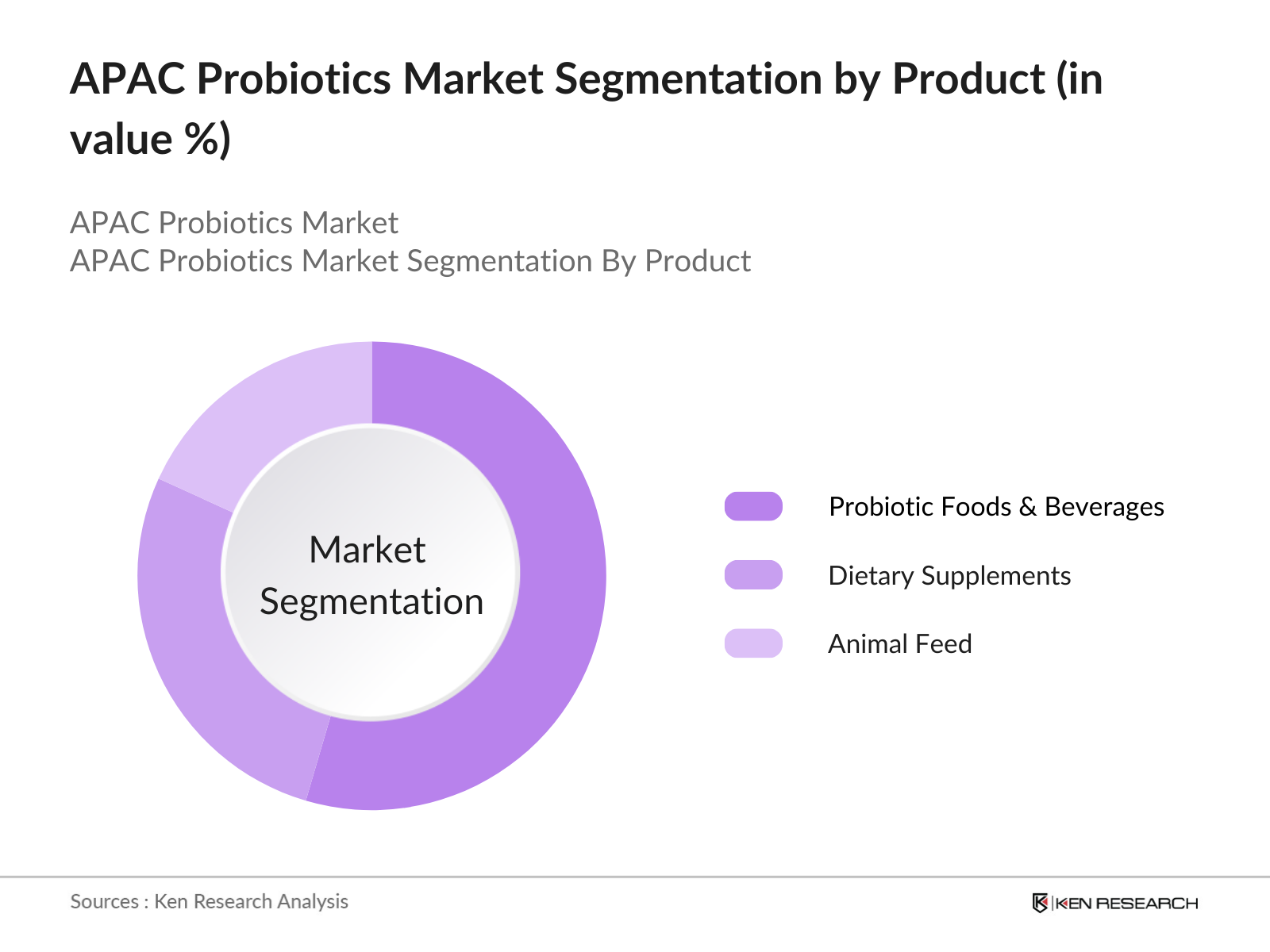
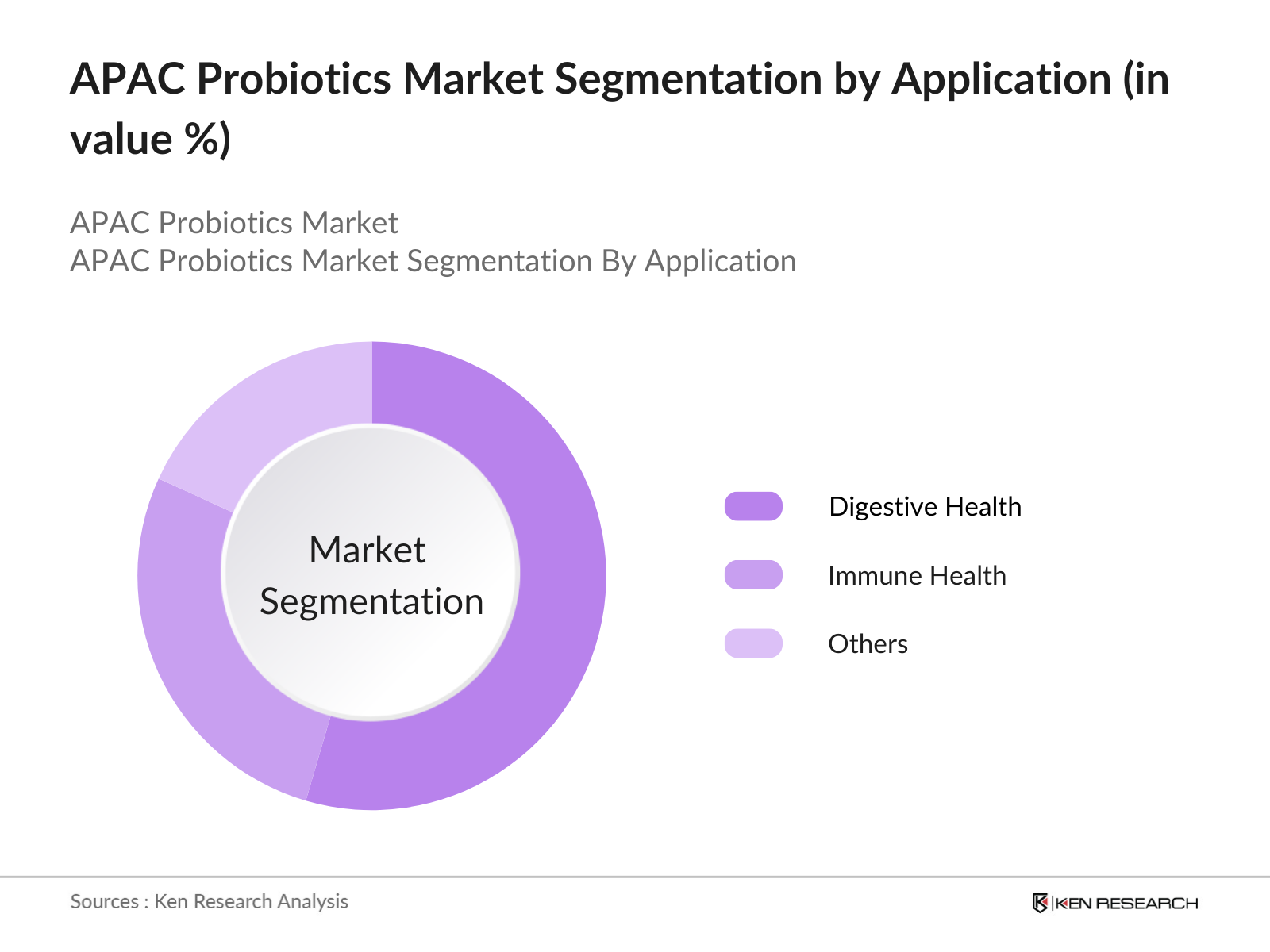
The APAC Probiotics Market can be segmented based on product type, application, and region:
|
Company Name |
Establishment Year |
Headquarters |
|
Yakult Honsha Co., Ltd. |
1935 |
Tokyo, Japan |
|
Danone S.A. |
1919 |
Paris, France |
|
Nestl S.A. |
1867 |
Vevey, Switzerland |
|
Meiji Holdings Co., Ltd. |
1916 |
Tokyo, Japan |
|
Chr. Hansen Holding A/S |
1874 |
Hrsholm, Denmark |
Rising Consumer Awareness of Gut Health and Immunity: The Asia-Pacific probiotics market is experiencing substantial growth driven by increased consumer awareness of the benefits of gut health and immunity. According to the Ministry of Food and Drug Safety in South Korea, probiotic products accounted for 19% of the South Korean health functional food market in 2021, showing an increase from around 15.8% in the previous year. This rising awareness has led to a surge in demand for probiotic-enriched foods and supplements, particularly in countries like Japan, China, and India, where traditional diets already emphasize the importance of fermented foods.
High Cost of Probiotic Products: The relatively high cost of probiotic products poses an important challenge to the market, particularly in developing countries within the APAC region. A 2023 report by the Indian Ministry of Consumer Affairs highlighted that the average price of probiotic supplements is nearly double that of traditional dietary supplements, limiting their accessibility to a broader consumer base. This price disparity is particularly pronounced in rural areas, where disposable income is lower, and consumers are less likely to invest in premium health products.
Promotion of Functional Foods by APAC Governments: Governments in the APAC region is actively promoting the consumption of functional foods, including probiotics, as part of broader public health initiatives. In 2023, the Japanese Ministry of Health, Labour, and Welfare launched a nationwide campaign to educate the public about the benefits of functional foods, including probiotics, to combat lifestyle-related diseases. This campaign was supported by a government-funded study that found a substantial reduction in gastrointestinal disorders among participants who regularly consumed probiotic-enriched foods.
The Asia Pacific Probiotics Market is expected to witness remarkable growth during the forecast period (2023-2028), driven by the increasing demand for functional foods, advancements in probiotic technology, and supportive government policies.
Growth in Probiotic-Enhanced Functional Foods: The market is projected to see substantial growth in the demand for probiotic-enhanced functional foods over the next five years. This increase is driven by rising consumer awareness of the health benefits of probiotics. Governments in countries like China and Japan are expected to continue promoting the consumption of functional foods as part of national health initiatives, further supporting market growth.
|
By Product Type |
Probiotic Foods & Beverages Dietary Supplements Animal Feed. |
|
By Application |
Digestive Health Immune Health Others |
|
By Distribution Channel |
Supermarkets & Hypermarkets Pharmacies & Drugstores Online Channel |
|
By End-User |
Human Animal |
|
By Region |
China Japan South Korea India others |
1.1. Definition and Scope
1.2. Market Taxonomy
1.3. Market Growth Rate
1.4. Market Segmentation Overview
2.1. Historical Market Size
2.2. Year-on-Year Growth Analysis
2.3. Key Market Developments and Milestones
3.1. Growth Drivers
3.1.1. Rising Consumer Awareness of Gut Health and Immunity
3.1.2. Increasing Demand for Functional Foods
3.1.3. Expansion of E-commerce Platforms
3.2. Restraints
3.2.1. High Cost of Probiotic Products
3.2.2. Regulatory Complexity Across Different Countries
3.3. Opportunities
3.3.1. Technological Advancements in Probiotics
3.3.2. Expansion into New Health Segments (e.g., Mental Health)
3.4. Trends
3.4.1. Growth in Probiotic-Enhanced Functional Foods
3.4.2. Increasing Focus on Sustainable Probiotic Production
3.4.3. Expansion of Probiotic Applications in Animal Nutrition
3.5. Government Regulation
3.5.1. Japans Probiotic Quality and Safety Guidelines
3.5.2. Chinas Functional Food Regulatory Framework
3.5.3. South Koreas Probiotic Labeling Requirements
3.6. SWOT Analysis
3.7. Stake Ecosystem
3.8. Competition Ecosystem
4.1. By Product Type (in Value %)
4.1.1. Probiotic Foods & Beverages
4.1.2. Dietary Supplements
4.1.3. Animal Feed
4.2. By Application (in Value %)
4.2.1. Digestive Health
4.2.2. Immune Health
4.2.3. Mental Health
4.3. By Region (in Value %)
4.3.1. China
4.3.2. Japan
4.3.3. South Korea
4.3.4. India
4.3.5. Others
4.4. By End-User Industry (in Value %)
4.4.1. Food & Beverage Industry
4.4.2. Pharmaceutical Industry
4.4.3. Animal Nutrition
4.4.4. Academic and Research Institutions
4.5 By Distribution Channel
4.5.1 Supermarkets & Hypermarkets
4.5.2 Pharmacies
4.5.3 Online Retail
4.5.4 Specialty Stores
4.4.5 Direct Sales
5.1. Detailed Profiles of Major Companies
5.1.1. Yakult Honsha Co., Ltd.
5.1.2. Danone S.A.
5.1.3. Nestl S.A.
5.1.4. Meiji Holdings Co., Ltd.
5.1.5. Chr. Hansen Holding A/S
5.2. Cross Comparison Parameters (No. of Employees, Headquarters, Inception Year, Revenue)
6.1. Market Share Analysis
6.2. Strategic Initiatives
6.3. Mergers and Acquisitions
6.4. Investment Analysis
6.4.1. Venture Capital Funding
6.4.2. Government Grants
6.4.3. Private Equity Investments
7.1. Regulatory Policies
7.2. Compliance Requirements
7.3. Certification Processes
8.1. Future Market Size Projections
8.2. Key Factors Driving Future Market Growth
9.1. By Product Type (in Value %)
9.2. By Application (in Value %)
9.3. By Region (in Value %)
9.4. By End-User Industry (in Value %)
9.5 By Distribution Channel
10.1. TAM/SAM/SOM Analysis
10.2. Customer Cohort Analysis
10.3. Marketing Initiatives
10.4. White Space Opportunity Analysis
Ecosystem creation for all the major entities and referring to multiple secondary and proprietary databases to perform desk research around market to collate industry level information.
Collating statistics on APAC probiotics market over the years, penetration of marketplaces and service providers ratio to compute revenue generated for APAC probiotics market. We will also review service quality statistics to understand revenue generated which can ensure accuracy behind the data points shared.
Building market hypothesis and conducting CATIs with industry experts belonging to different companies to validate statistics and seek operational and financial information from company representatives.
Our team will approach multiple essential probiotics companies and understand nature of product segments and sales, consumer preference and other parameters, which will support us validate statistics derived through bottom to top approach from probiotics companies.
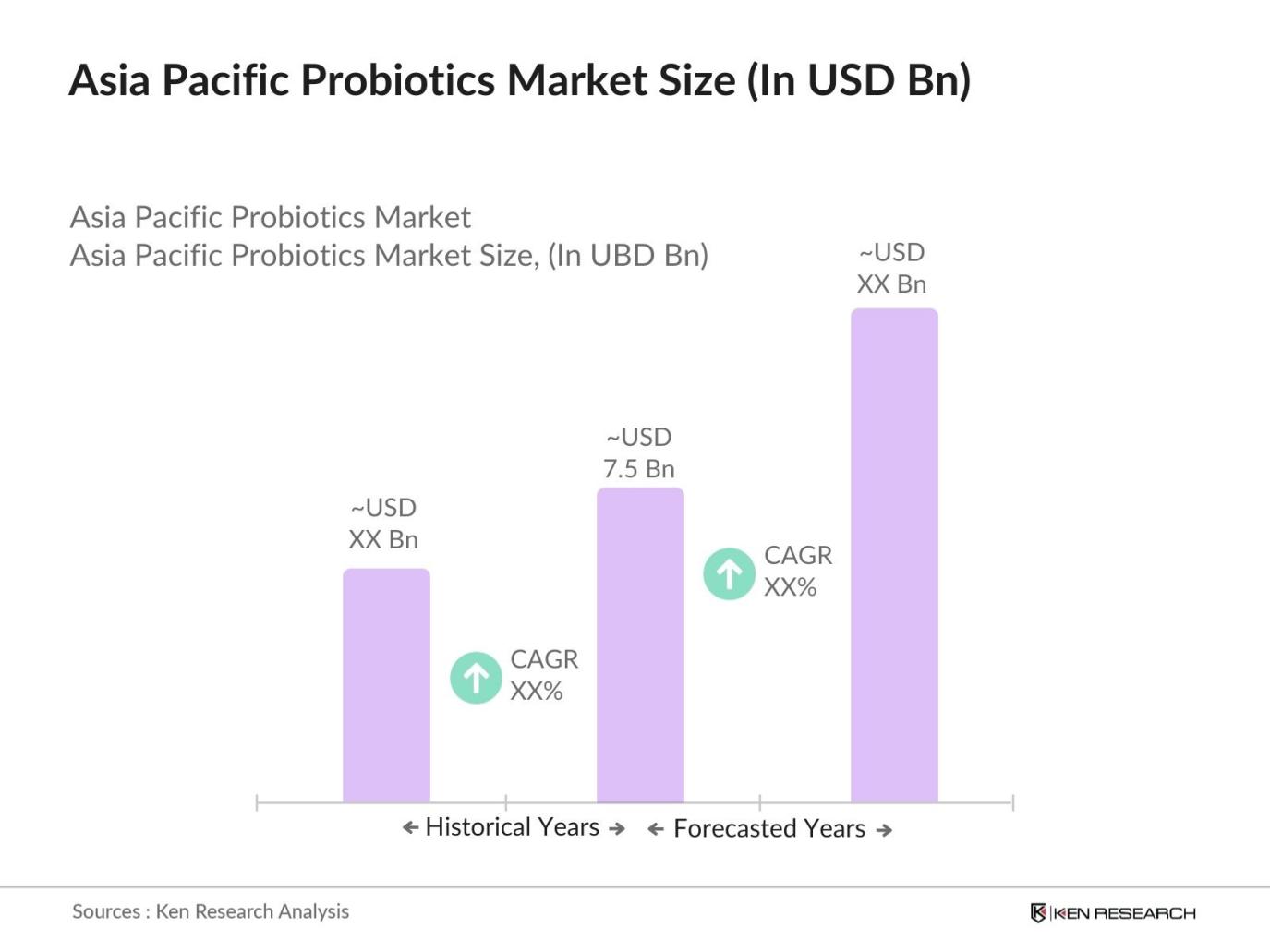
The APAC probiotics market was valued at USD 7.5 billion in 2023, driven by rising consumer awareness of gut health, increasing demand for functional foods, and strong government support for health and wellness initiatives.
Challenges in the APAC probiotics market include high production costs, varying regulatory standards across countries, and supply chain disruptions affecting the availability of raw materials and finished products.
Key players in the APAC probiotics market include Yakult Honsha Co., Ltd., Danone S.A., Nestl S.A., Meiji Holdings Co., Ltd., and Chr. Hansen Holding A/S. These companies are known for their extensive product offerings, strong research and development capabilities, and robust distribution networks.
The APAC probiotics market is driven by increasing consumer awareness of the health benefits of probiotics, government support for health and wellness initiatives, and the expansion of probiotic-enhanced product offerings by major companies.

What makes us stand out is that our consultants follows Robust, Refine and Result (RRR) methodology. i.e. Robust for clear definitions, approaches and sanity checking, Refine for differentiating respondents facts and opinions and Result for presenting data with story

We have set a benchmark in the industry by offering our clients with syndicated and customized market research reports featuring coverage of entire market as well as meticulous research and analyst insights.

While we don't replace traditional research, we flip the method upside down. Our dual approach of Top Bottom & Bottom Top ensures quality deliverable by not just verifying company fundamentals but also looking at the sector and macroeconomic factors.

With one step in the future, our research team constantly tries to show you the bigger picture. We help with some of the tough questions you may encounter along the way: How is the industry positioned? Best marketing channel? KPI's of competitors? By aligning every element, we help maximize success.

Our report gives you instant access to the answers and sources that other companies might choose to hide. We elaborate each steps of research methodology we have used and showcase you the sample size to earn your trust.

If you need any support, we are here! We pride ourselves on universe strength, data quality, and quick, friendly, and professional service.