
Asia Pacific Small Mobile Food Truck Market Outlook to 2030
Region:Afganistan
Author(s):Paribhasha Tiwari
Product Code:KROD7911
Region:Afganistan
Author(s):Paribhasha Tiwari
Product Code:KROD7911
December 2024
92
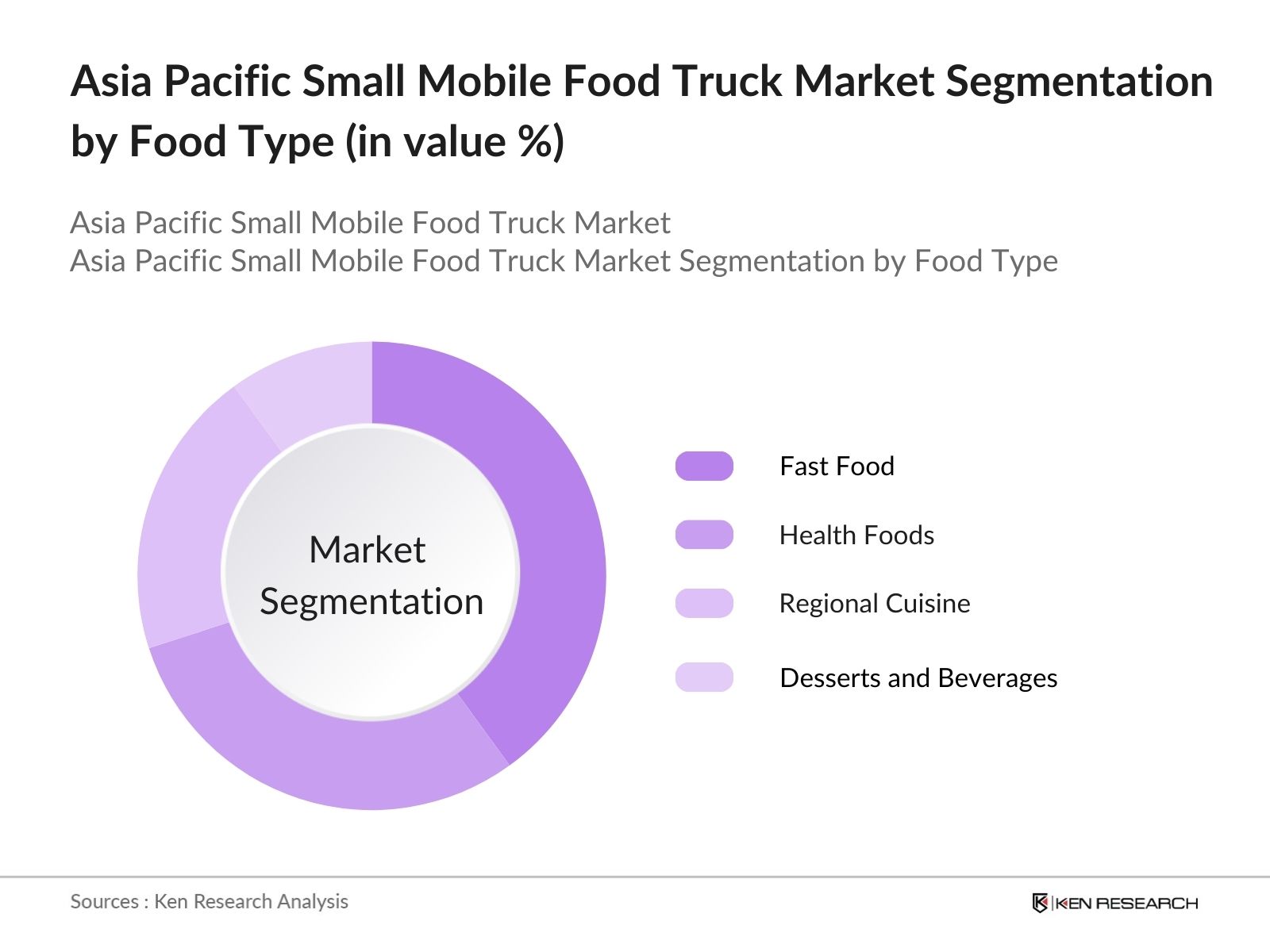
By Food Type: The Asia Pacific Small Mobile Food Truck Market is segmented by food type into fast food, health foods, regional cuisine, and desserts and beverages. Recently, fast food holds a dominant market share in this segmentation, owing to its convenience and high demand among urban consumers looking for quick meal options. Chains specializing in burgers, sandwiches, and other fast foods continue to see high patronage due to their established presence and competitive pricing.
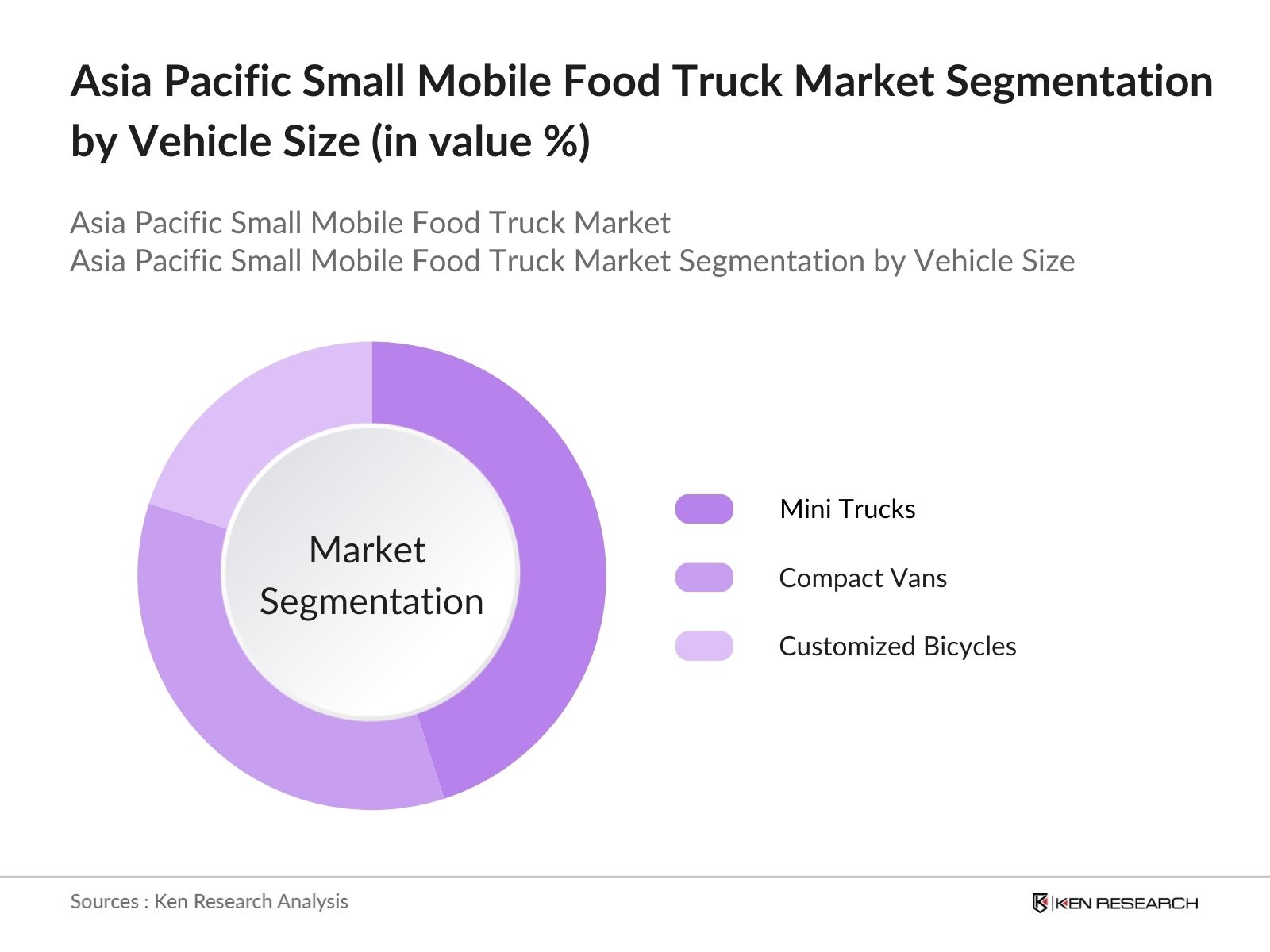
By Vehicle Size: This segment divides the market by vehicle size, including mini trucks, compact vans, and customized bicycles. Mini trucks lead in this segmentation, benefiting from the flexibility and capacity to serve a wide range of menu options while easily navigating through city streets. Their relatively higher storage capacity and adaptability make them popular among operators, especially in urban areas with limited space but high foot traffic.
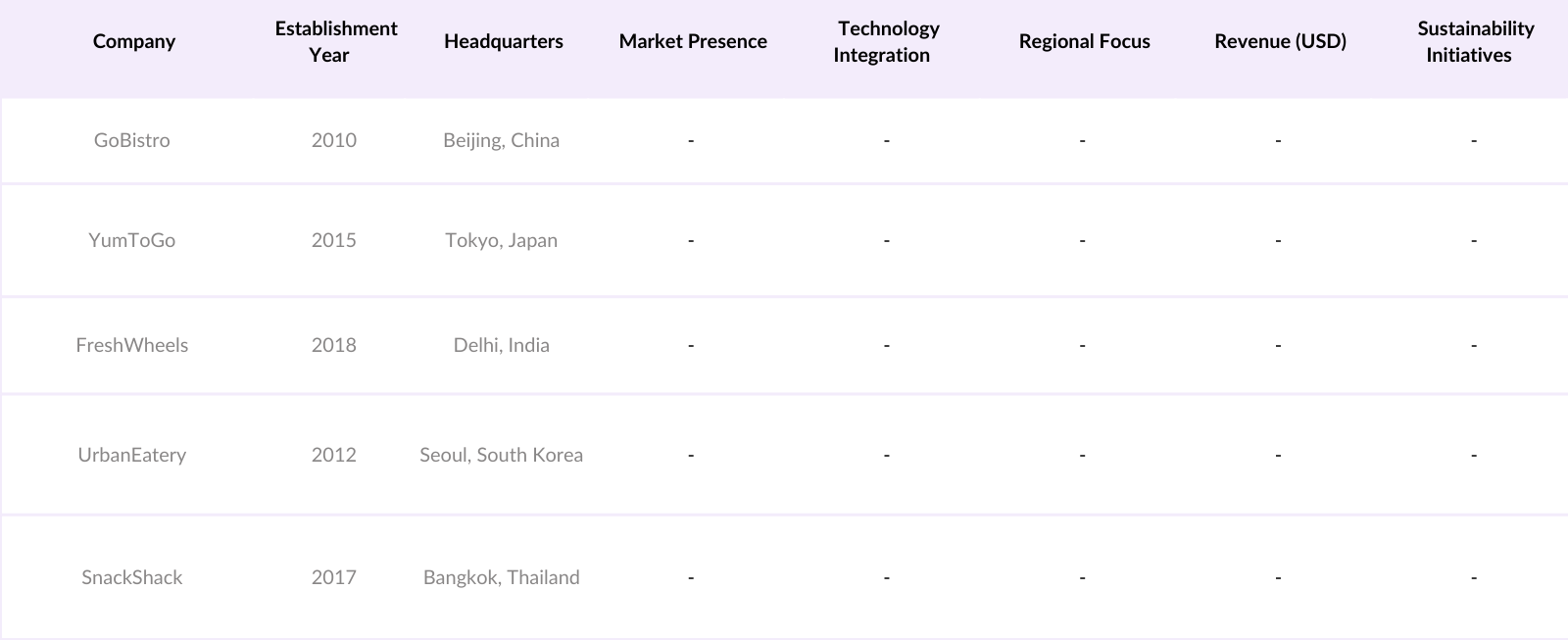
The Asia Pacific Small Mobile Food Truck Market is led by both local operators and established regional chains, fostering healthy competition in terms of menu variety, service quality, and digital integration. The market is distinguished by its adaptability, as competitors consistently innovate with eco-friendly vehicles and regionally-inspired menus to capture a diverse customer base.
Over the next five years, the Asia Pacific Small Mobile Food Truck Market is anticipated to maintain steady growth as urbanization continues, and consumers increasingly seek convenient, high-quality, and diverse dining options. Factors such as the rising adoption of eco-friendly food trucks, expansion into suburban markets, and supportive government initiatives promoting small businesses are likely to fuel further growth in this sector.
|
By Food Type |
Fast Food Health Foods Regional Cuisine Desserts and Beverages |
|
By Vehicle Size |
Mini Trucks Compact Vans Customized Bicycles |
|
By Operation Mode |
Independent Operators Franchise-Based |
|
By Serving Type |
Single Cuisine Multi-cuisine Offerings |
|
By Region |
China India Japan Australia ASEAN Countries |
1.1 Definition and Scope
1.2 Market Taxonomy
1.3 Market Growth Rate
1.4 Market Segmentation Overview
2.1 Historical Market Size
2.2 Year-On-Year Growth Analysis
2.3 Key Market Developments and Milestones
3.1 Growth Drivers
3.1.1 Urbanization Trends
3.1.2 Consumer Preference for Street Food
3.1.3 Low Capital Investment Requirements
3.1.4 Digital Payment Adoption (Market Specific Parameter)
3.2 Market Challenges
3.2.1 Regulatory Hurdles
3.2.2 Limited Infrastructure Support
3.2.3 Intense Competition and Low Margins
3.3 Opportunities
3.3.1 Expansion into Suburban Markets
3.3.2 Government Support for Small Businesses
3.3.3 Mobile Technology Integration (Market Specific Parameter)
3.4 Trends
3.4.1 Rise of Eco-friendly Trucks
3.4.2 Health-Conscious Menu Innovations
3.4.3 Collaborative Marketing with Local Brands
3.5 Government Regulation
3.5.1 Food Safety and Quality Standards
3.5.2 Licensing Requirements
3.5.3 Zoning and Parking Regulations
3.6 SWOT Analysis
3.7 Value Chain Analysis
3.8 Porters Five Forces Analysis
3.9 Competition Ecosystem
4.1 By Food Type (in Value %)
4.1.1 Fast Food
4.1.2 Health Foods
4.1.3 Regional Cuisine
4.1.4 Desserts and Beverages
4.2 By Vehicle Size (in Value %)
4.2.1 Mini Trucks
4.2.2 Compact Vans
4.2.3 Customized Bicycles
4.3 By Operation Mode (in Value %)
4.3.1 Independent Operators
4.3.2 Franchise-Based
4.4 By Serving Type (in Value %)
4.4.1 Single Cuisine
4.4.2 Multi-cuisine Offerings
4.5 By Region (in Value %)
4.5.1 China
4.5.2 India
4.5.3 Japan
4.5.4 Australia
4.5.5 ASEAN Countries
5.1 Detailed Profiles of Major Competitors
5.1.1 GoBistro
5.1.2 YumToGo
5.1.3 GreenTruck
5.1.4 AsiaStreetEats
5.1.5 FreshWheels
5.1.6 QuickGrill
5.1.7 UrbanEatery
5.1.8 FoodFusion
5.1.9 MobileMunchies
5.1.10 FastServe
5.1.11 SnackShack
5.1.12 LiteBites
5.1.13 GourmetToGo
5.1.14 WheelsOnMeals
5.1.15 StreetEatsAsia
5.2 Cross Comparison Parameters (Fleet Size, Digital Integration Level, Market Share, Food Offerings, Price Range, Location Versatility, Customization Options, Environmental Certifications)
5.3 Market Share Analysis
5.4 Strategic Initiatives
5.5 Mergers and Acquisitions
5.6 Investment Analysis
5.7 Private Equity Investments
6.1 Health and Safety Standards Compliance
6.2 Licensing and Permits
6.3 Environmental Impact Standards
6.4 Taxation Policies
7.1 Future Market Size Projections
7.2 Key Factors Driving Future Market Growth
8.1 TAM/SAM/SOM Analysis
8.2 Customer Segmentation and Cohort Analysis
8.3 Marketing and Growth Initiatives
8.4 White Space Opportunity Analysis
Disclaimer Contact UsIn the initial phase, we construct a comprehensive ecosystem map encompassing all major stakeholders within the Asia Pacific Small Mobile Food Truck Market. Extensive desk research, secondary databases, and industry reports are used to identify critical variables impacting market growth and dynamics.
We analyze historical data on market penetration, market size, and vendor distribution within the market. This phase includes a detailed assessment of service quality, which aids in refining our revenue estimates for the industry.
Key hypotheses on market growth are validated through industry expert consultations and computer-assisted telephone interviews (CATIs). These discussions with industry practitioners provide invaluable operational insights and enhance the accuracy of our findings.
Direct engagement with food truck operators enables data triangulation, complementing bottom-up market analysis. This ensures the reliability and accuracy of our final estimates and analysis for the Asia Pacific Small Mobile Food Truck Market.
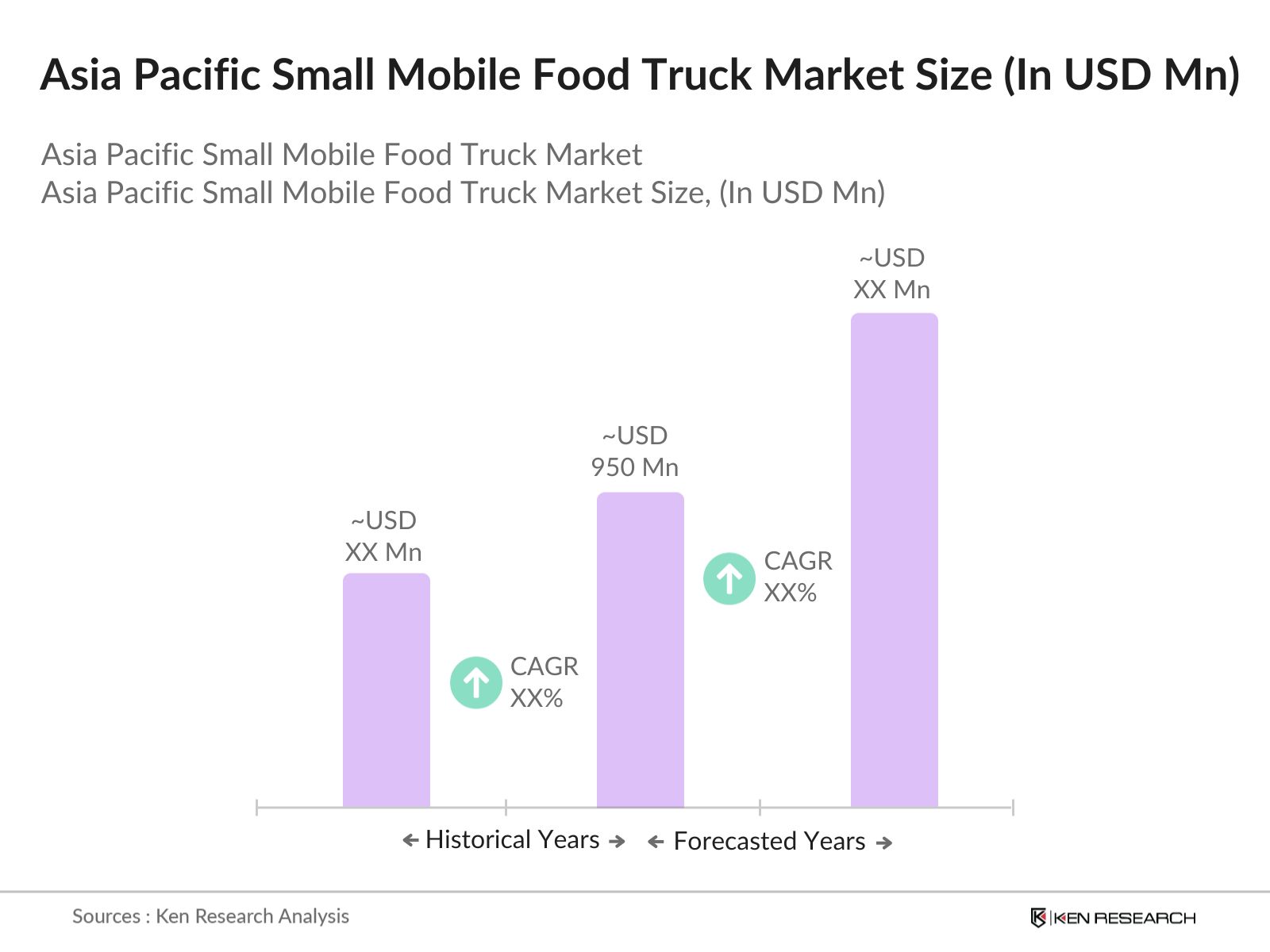
The Asia Pacific Small Mobile Food Truck Market was valued at USD 950 million, driven by urban demand for diverse and convenient food options, alongside growth in mobile payment adoption.
Key challenges in the Asia Pacific Small Mobile Food Truck Market include regulatory compliance, zoning restrictions, and competition from brick-and-mortar restaurants, which can limit growth and operational flexibility for food truck operators.
Major players in the Asia Pacific Small Mobile Food Truck Market include GoBistro, YumToGo, and UrbanEatery, which are known for their strong brand presence, innovative menus, and adaptability to market trends.
Growth of the Asia Pacific Small Mobile Food Truck Market is fueled by increasing urbanization, consumer preference for accessible dining options, and supportive government initiatives aimed at promoting small businesses in the food industry.

What makes us stand out is that our consultants follows Robust, Refine and Result (RRR) methodology. i.e. Robust for clear definitions, approaches and sanity checking, Refine for differentiating respondents facts and opinions and Result for presenting data with story

We have set a benchmark in the industry by offering our clients with syndicated and customized market research reports featuring coverage of entire market as well as meticulous research and analyst insights.

While we don't replace traditional research, we flip the method upside down. Our dual approach of Top Bottom & Bottom Top ensures quality deliverable by not just verifying company fundamentals but also looking at the sector and macroeconomic factors.

With one step in the future, our research team constantly tries to show you the bigger picture. We help with some of the tough questions you may encounter along the way: How is the industry positioned? Best marketing channel? KPI's of competitors? By aligning every element, we help maximize success.

Our report gives you instant access to the answers and sources that other companies might choose to hide. We elaborate each steps of research methodology we have used and showcase you the sample size to earn your trust.

If you need any support, we are here! We pride ourselves on universe strength, data quality, and quick, friendly, and professional service.