
Asia Pacific Solar Panel Market Outlook to 2030
Region:Afganistan
Author(s):Shreya Garg
Product Code:KROD3638
Region:Afganistan
Author(s):Shreya Garg
Product Code:KROD3638
November 2024
98
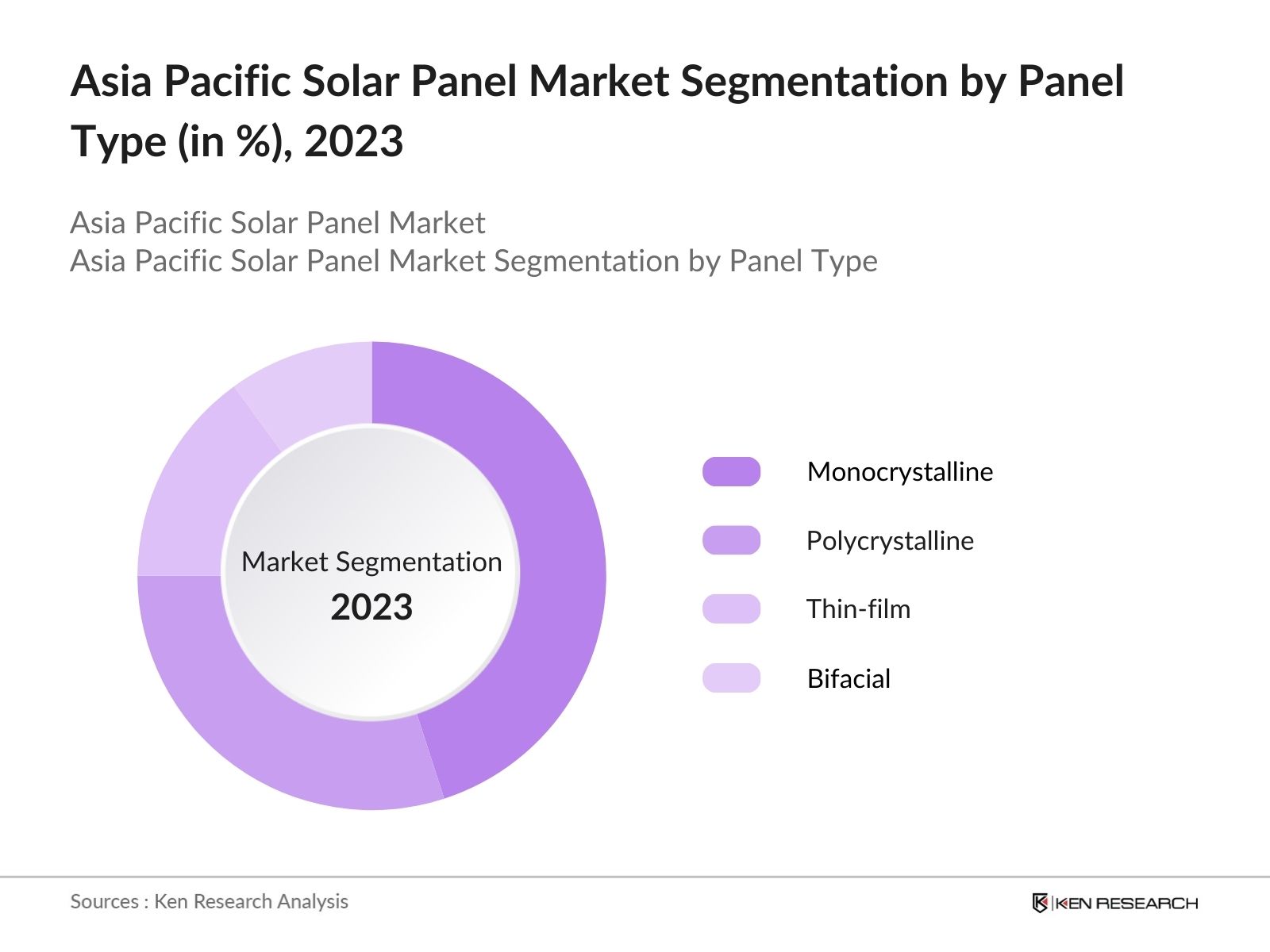
By Panel Type: The market is segmented by panel type into monocrystalline, polycrystalline, thin-film, and bifacial panels. Recently, monocrystalline panels have held a dominant market share due to their higher efficiency and longer lifespan. Monocrystalline technology, while more expensive to produce, offers superior energy output in smaller spaces, making it ideal for residential and commercial rooftop installations. As urban areas in Asia Pacific seek energy efficiency and space optimization, this sub-segment continues to lead the market.
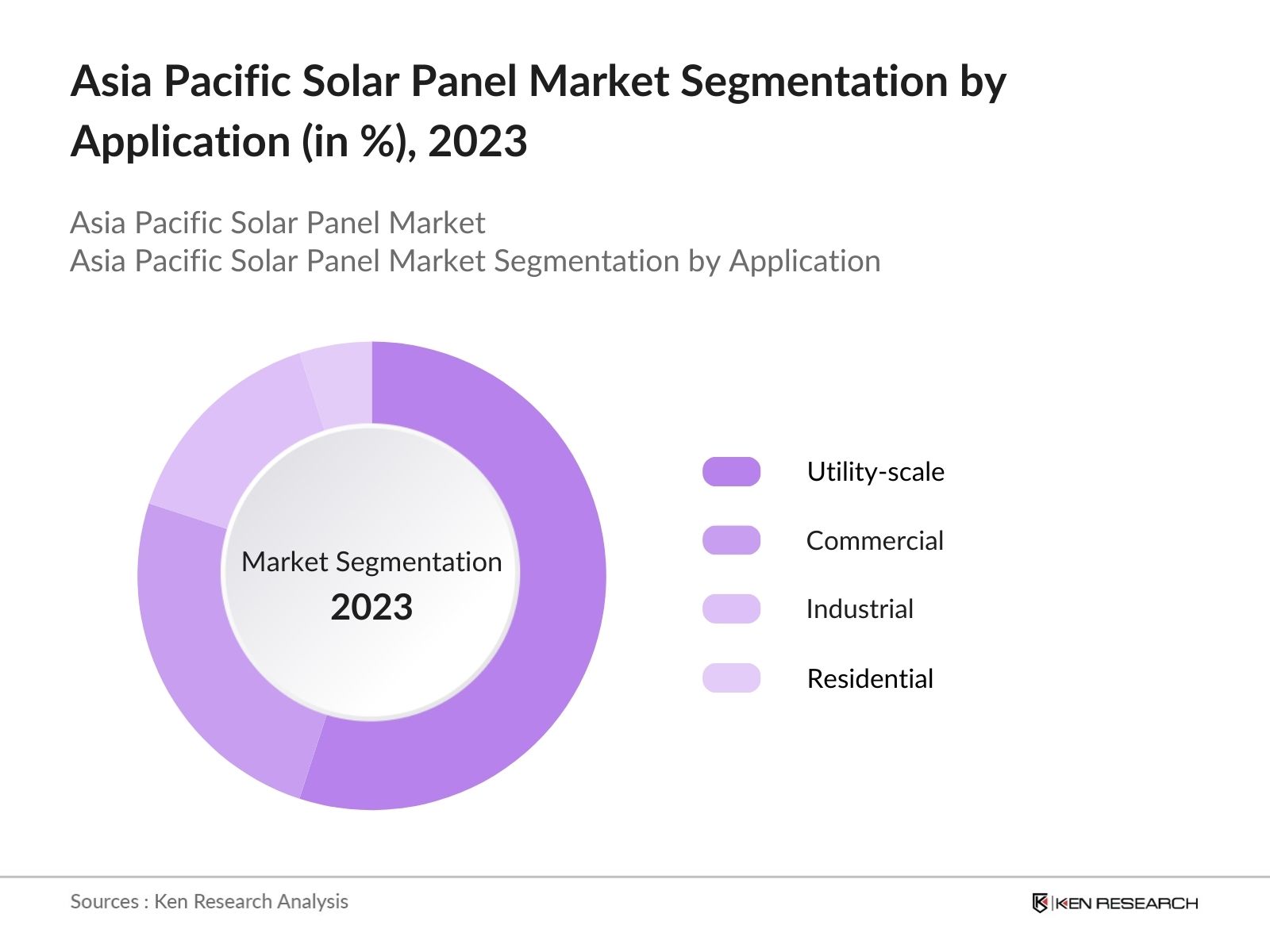
By Application: The market is also segmented by application into residential, commercial, industrial, and utility-scale projects. Utility-scale projects dominate the market share, mainly due to government-driven initiatives aimed at developing large solar farms to meet national energy demands. Countries like China and India have witnessed growth in utility-scale installations, supported by favorable policies and access to vast amounts of land in rural and semi-urban areas. These large projects are crucial in fulfilling renewable energy goals, making this segment a key driver in the solar panel market.
The Asia Pacific solar panel market is dominated by major manufacturers, including both local and global companies. The landscape is marked by intense competition, with companies differentiating through innovations in panel efficiency, strategic partnerships, and manufacturing scalability. Key players like Trina Solar and JinkoSolar dominate due to their high production capacities and strong export networks, while regional players such as Tata Power Solar capitalize on local government support and expanding domestic demand.
|
Company |
Establishment Year |
Headquarters |
Annual Production Capacity (GW) |
No. of Employees |
R&D Investment (USD) |
Patent Ownership |
Global Installations (MW) |
Market Revenue (USD) |
|
Trina Solar |
1997 |
Changzhou, China |
||||||
|
JinkoSolar |
2006 |
Shanghai, China |
||||||
|
LONGi Solar |
2000 |
Xian, China |
||||||
|
Tata Power Solar |
1989 |
Mumbai, India |
||||||
|
Canadian Solar |
2001 |
Guelph, Canada |
Over the next few years, the Asia Pacific solar panel market is expected to experience robust growth driven by increasing government support, advancements in solar cell technology, and the growing need for sustainable energy solutions. As countries in the region aim to reduce their carbon footprints and meet renewable energy targets, investments will be made in expanding solar infrastructure. This will especially be evident in utility-scale solar farms, commercial rooftop installations, and advancements in storage technologies such as solar-plus-battery systems.
|
Panel Type |
Monocrystalline Polycrystalline Thin-film Bifacial Panels |
|
Application |
Residential Commercial Industrial Utility-Scale Projects |
|
Installation Type |
Ground-mounted Rooftop Floating |
|
Technology |
Photovoltaic Systems Concentrated Solar Power (CSP) |
|
Country |
China South Korea India Japan Australia |
1.1. Definition and Scope
1.2. Market Taxonomy (By panel type, efficiency rating, application)
1.3. Market Growth Rate (In KWp/GW per year)
1.4. Market Segmentation Overview
2.1. Historical Market Size
2.2. Year-On-Year Growth Analysis
2.3. Key Market Developments and Milestones
3.1. Growth Drivers
3.1.1. Government Incentives (Feed-in Tariffs, Subsidies)
3.1.2. Decreasing Cost of Solar PV (per Watt)
3.1.3. Increasing Demand for Clean Energy (GHG Reduction Goals)
3.1.4. Technological Advancements in Solar Cells (Efficiency and Durability)
3.2. Market Challenges
3.2.1. High Initial Capital Costs (In USD per KWp)
3.2.2. Grid Integration Challenges (Intermittency Issues)
3.2.3. Lack of Adequate Infrastructure for Storage and Distribution
3.3. Opportunities
3.3.1. Expansion in Emerging Markets (APAC Regional Policies, Renewable Targets)
3.3.2. Investment in Solar Storage Solutions (Battery Integration)
3.3.3. Integration with Smart Grids and Microgrids
3.4. Trends
3.4.1. Increasing Adoption of Bifacial Solar Panels
3.4.2. Floating Solar Farms (Space Optimization)
3.4.3. Use of AI and IoT in Solar Panel Monitoring Systems
3.5. Government Regulation
3.5.1. Renewable Energy Targets (National Solar Policies)
3.5.2. Tax Benefits and Incentives (Country-wise Incentives)
3.5.3. Import Tariffs on Solar Panels
3.5.4. Net Metering Regulations
3.6. SWOT Analysis
3.7. Stakeholder Ecosystem (Government, Manufacturers, Installers, Financiers)
3.8. Porters Five Forces
3.9. Competitive Landscape
4.1. By Panel Type (In Value %)
4.1.1. Monocrystalline
4.1.2. Polycrystalline
4.1.3. Thin-film
4.1.4. Bifacial Panels
4.2. By Application (In Value %)
4.2.1. Residential
4.2.2. Commercial
4.2.3. Industrial
4.2.4. Utility-Scale Projects
4.3. By Installation Type (In Value %)
4.3.1. Ground-mounted
4.3.2. Rooftop
4.3.3. Floating
4.4. By Technology (In Value %)
4.4.1. Photovoltaic Systems
4.4.2. Concentrated Solar Power (CSP)
4.5. By Country (In Value %)
4.5.1. China
4.5.2. India
4.5.3. Japan
4.5.4. Australia
4.5.5. South Korea
5.1 Detailed Profiles of Major Companies
5.1.1. Trina Solar
5.1.2. JinkoSolar
5.1.3. LONGi Solar
5.1.4. Canadian Solar
5.1.5. JA Solar
5.1.6. First Solar
5.1.7. Hanwha Q Cells
5.1.8. Risen Energy
5.1.9. SunPower Corporation
5.1.10. Tata Power Solar
5.1.11. Adani Solar
5.1.12. REC Group
5.1.13. GCL System Integration
5.1.14. Waaree Energies
5.1.15. Shunfeng International Clean Energy
5.2 Cross Comparison Parameters (No. of Employees, Headquarters, Inception Year, Solar Panel Production Capacity (GW), Revenue, Market Share, Patent Ownership, Global Installations)
5.3 Market Share Analysis
5.4 Strategic Initiatives (R&D Investments, Partnerships)
5.5 Mergers and Acquisitions
5.6 Investment Analysis
5.7 Venture Capital Funding
5.8 Government Grants
5.9 Private Equity Investments
6.1. Solar Installation Standards
6.2. Compliance Requirements (Environmental Impact Assessments, ISO Certifications)
6.3. Certification Processes
7.1. Future Market Size Projections
7.2. Key Factors Driving Future Market Growth
8.1. By Panel Type (In Value %)
8.2. By Application (In Value %)
8.3. By Installation Type (In Value %)
8.4. By Technology (In Value %)
8.5. By Country (In Value %)
9.1 TAM/SAM/SOM Analysis
9.2 Customer Cohort Analysis
9.3 Marketing Initiatives
9.4 White Space Opportunity Analysis
The first step involves mapping out the Asia Pacific Solar Panel Market ecosystem, focusing on key stakeholders such as manufacturers, suppliers, and regulators. Secondary data from reliable sources like industry reports and government publications are analyzed to determine key variables impacting the market. These include production capacity, panel efficiency, government incentives, and regional demand trends.
This phase involves analyzing historical data, production trends, and market penetration. A detailed examination of solar installation growth rates, energy policies, and technological developments is carried out. This helps in constructing a comprehensive market overview and projections based on solid industry data.
The hypotheses developed in the market analysis stage are validated through interviews with industry professionals. These include manufacturers, energy providers, and government officials involved in solar energy projects. These consultations provide insights into market dynamics, technological trends, and consumer behavior.
The final phase synthesizes the collected data with inputs from industry experts. This involves validating market size estimates, competitive landscape analysis, and future projections. The insights gained through this process are used to finalize the report, ensuring it reflects the most accurate and current market conditions.
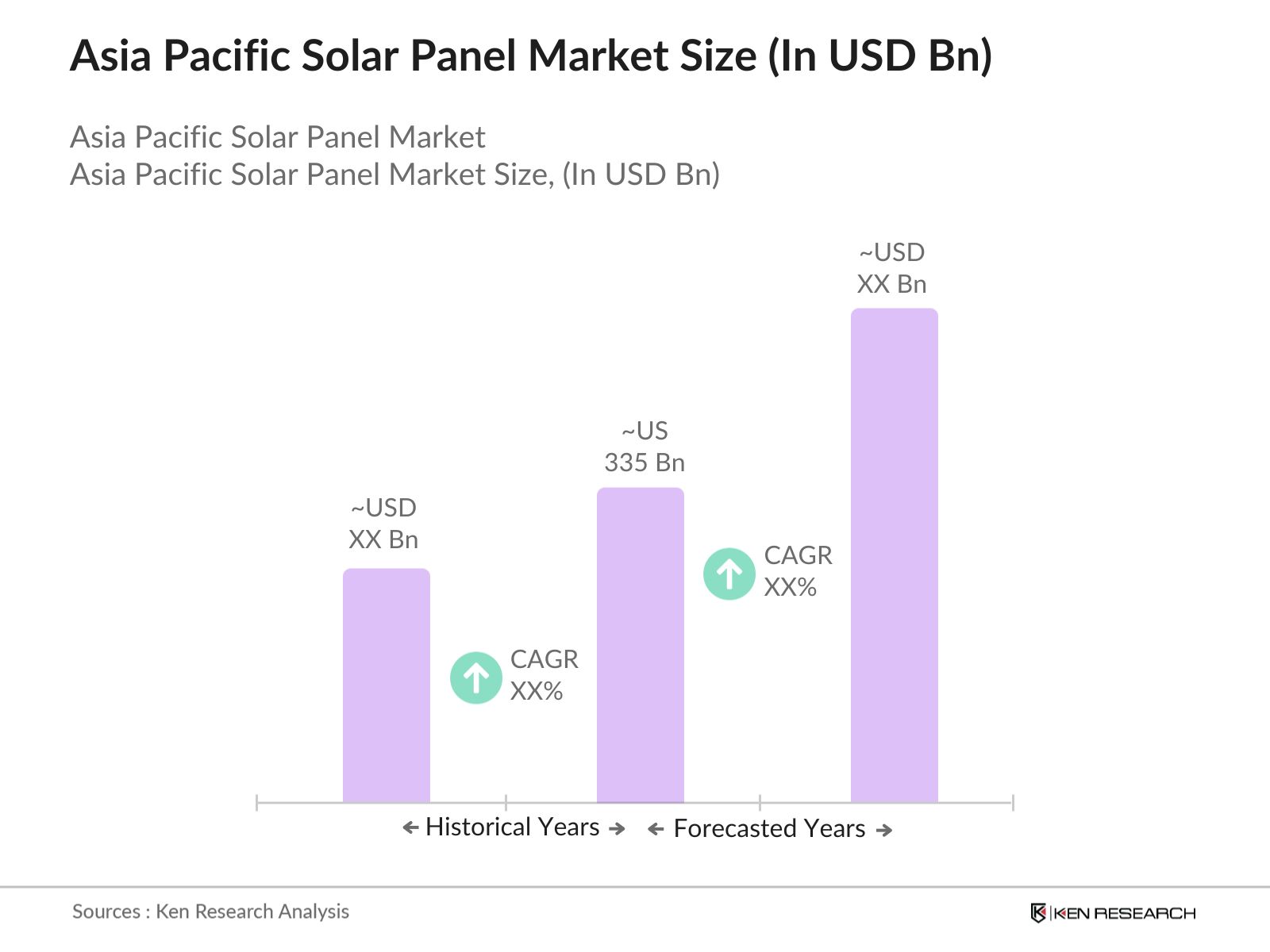
The Asia Pacific Solar Panel Market is valued at USD 335 billion, driven by government incentives and the increasing demand for renewable energy sources across the region.
Challenges in the Asia Pacific Solar Panel Market include high initial installation costs, intermittent issues with solar energy production, and the need for better grid integration and storage solutions.
Key players in the Asia Pacific Solar Panel Market include Trina Solar, JinkoSolar, LONGi Solar, Canadian Solar, and Tata Power Solar. These companies dominate due to their extensive production capacities and advanced technologies.
The Asia Pacific Solar Panel Market is driven by increasing government support for renewable energy, advancements in solar technology, and the growing demand for clean and sustainable energy sources across the region.
Key trends in the Asia Pacific Solar Panel Market include the adoption of bifacial panels, floating solar farms, and the integration of artificial intelligence (AI) and the Internet of Things (IoT) in solar panel monitoring and maintenance.

What makes us stand out is that our consultants follows Robust, Refine and Result (RRR) methodology. i.e. Robust for clear definitions, approaches and sanity checking, Refine for differentiating respondents facts and opinions and Result for presenting data with story

We have set a benchmark in the industry by offering our clients with syndicated and customized market research reports featuring coverage of entire market as well as meticulous research and analyst insights.

While we don't replace traditional research, we flip the method upside down. Our dual approach of Top Bottom & Bottom Top ensures quality deliverable by not just verifying company fundamentals but also looking at the sector and macroeconomic factors.

With one step in the future, our research team constantly tries to show you the bigger picture. We help with some of the tough questions you may encounter along the way: How is the industry positioned? Best marketing channel? KPI's of competitors? By aligning every element, we help maximize success.

Our report gives you instant access to the answers and sources that other companies might choose to hide. We elaborate each steps of research methodology we have used and showcase you the sample size to earn your trust.

If you need any support, we are here! We pride ourselves on universe strength, data quality, and quick, friendly, and professional service.