
China Night Vision Market Outlook to 2030
Region:Asia
Author(s):Sanjna
Product Code:KROD8629
December 2024
95
About the Report
China Night Vision Market Overview
- The China Night Vision Market, valued at USD 2.5 billion, is driven by significant advancements in defense technologies and increasing adoption across commercial applications, particularly in surveillance and security sectors. Military modernization and a growing demand for night vision technology in security and law enforcement have propelled the market, supported by government investment in these sectors. The markets expansion reflects rising awareness of night vision's benefits, particularly in enhancing safety and operational efficiency.
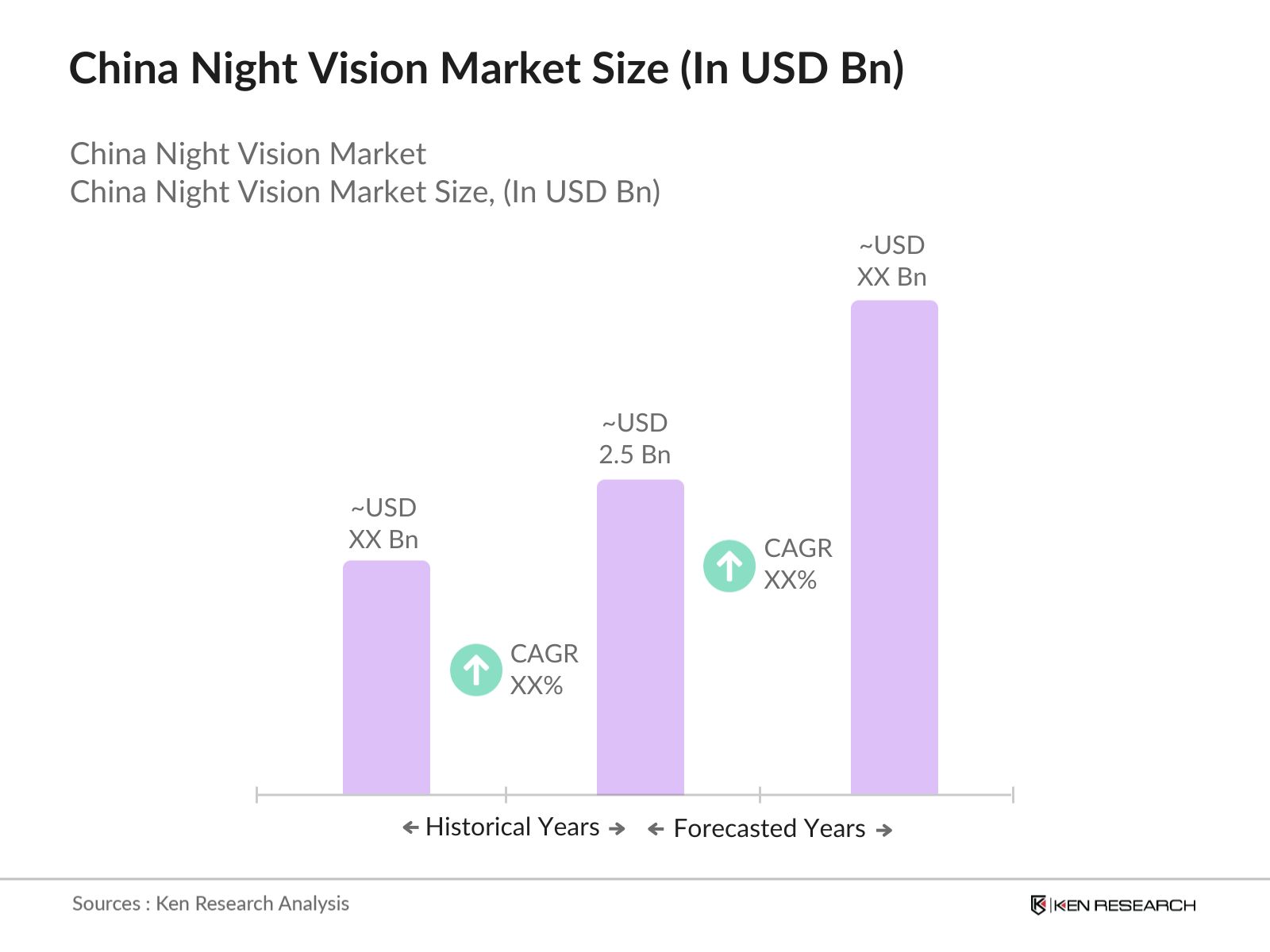
- Major cities such as Beijing and Shenzhen are prominent in the night vision market due to their focus on technological advancements and the presence of key manufacturers. The concentration of defense operations and tech-savvy commercial enterprises in these regions further drives demand, making them dominant players in the market. These cities are known for rapid innovation and adoption of sophisticated surveillance technologies, cementing their leading roles in the industry.
- Chinese defense technology standards require compliance with strict protocols for night vision used in military applications. These standards ensure that all night vision equipment in use by the PLA meets rigorous durability, resolution, and operational criteria. In 2024, government-issued certifications validated over 10,000-night vision units specifically for defense. Such standards influence product design and innovation, setting benchmarks that affect the entire industry and steering market growth in line with national defense objectives.
China Night Vision Market Segmentation
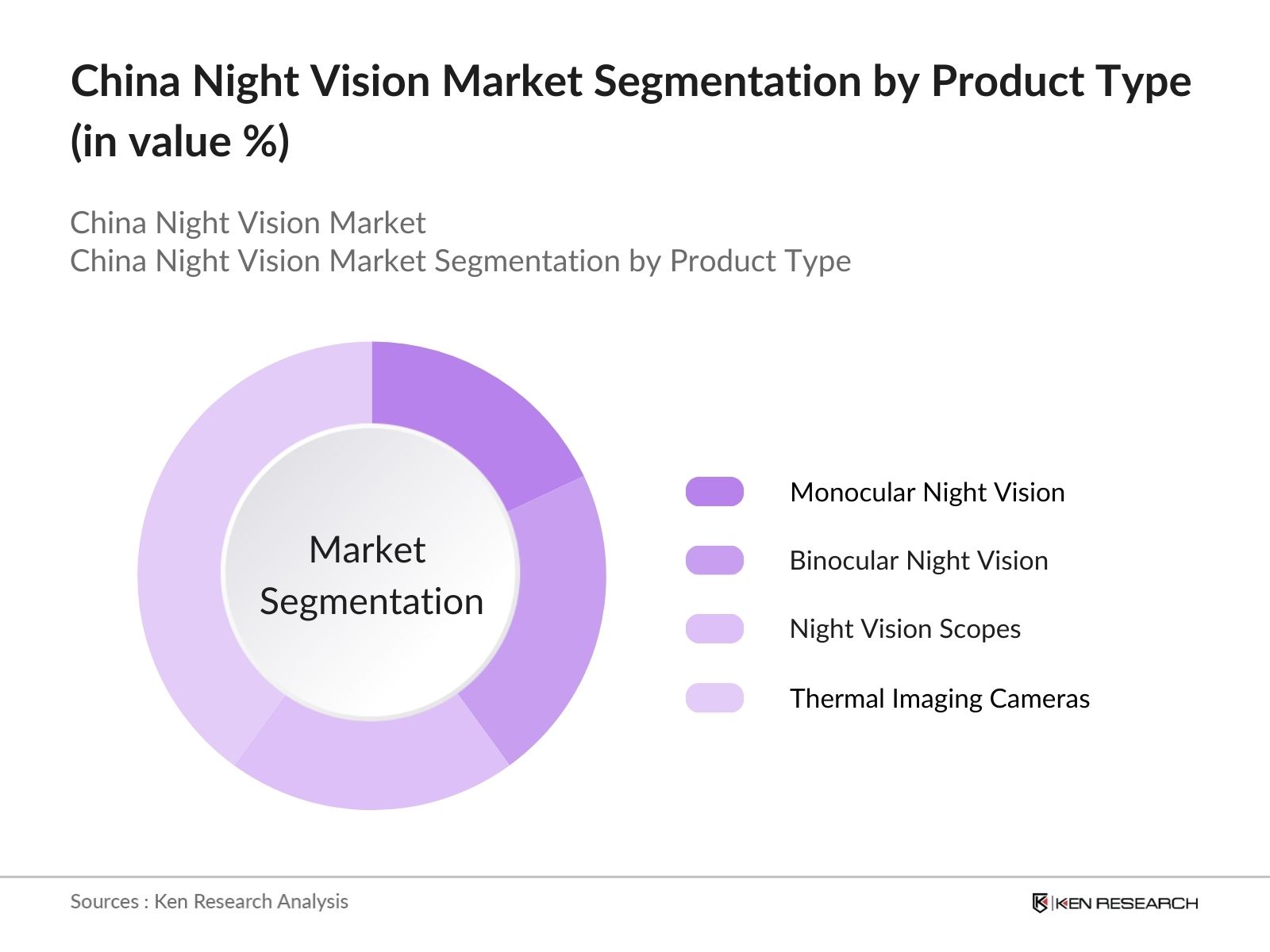
By Product Type: The China Night Vision Market is segmented by product type into monocular night vision devices, binocular night vision goggles, night vision scopes, and thermal imaging cameras. Recently, thermal imaging cameras have gained a dominant market share under the product type segmentation, mainly due to their effectiveness in detecting heat signatures even in low-visibility conditions. This technology is highly valued across military and commercial applications, where identifying threats or operational efficiency in complete darkness is critical.
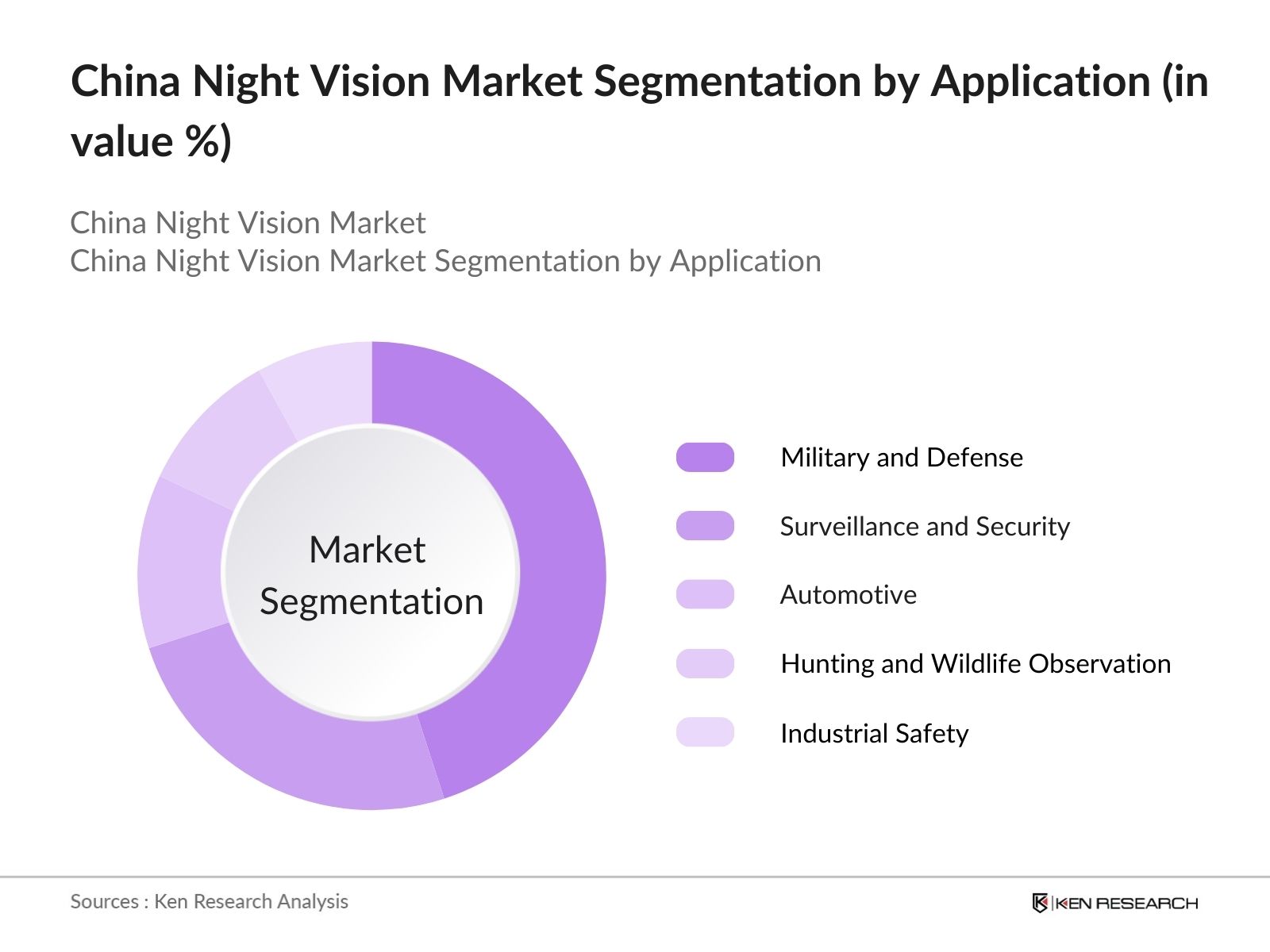
By Application: China Night Vision Market is segmented by application into military and defense, surveillance and security, automotive, hunting and wildlife observation, and industrial safety. Military and defense applications hold the largest market share due to significant government investment in night vision technology for national security purposes. The advanced capabilities required for tactical operations demand the highest level of precision, driving adoption in this segment and making it a leading application area.
China Night Vision Market Competitive Landscape
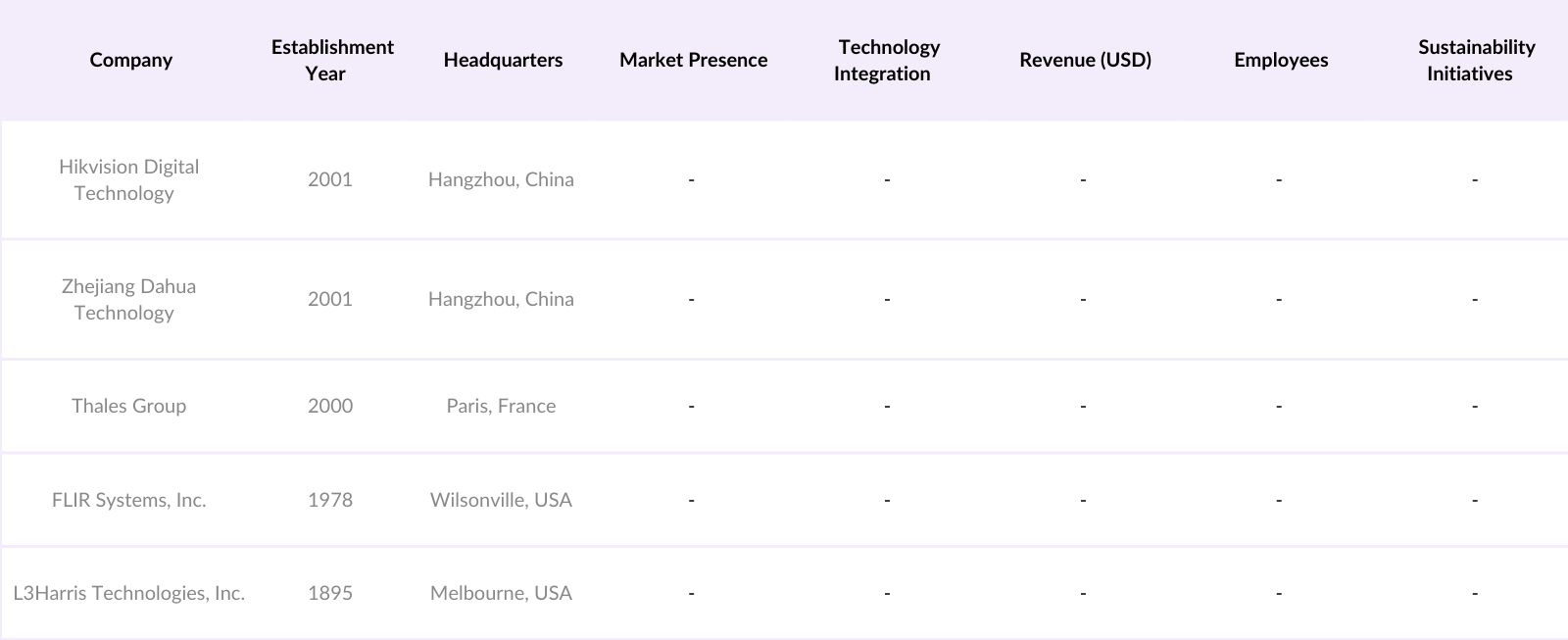
The China Night Vision Market is dominated by a handful of prominent players, including Hikvision and Dahua, who lead due to their established expertise in imaging and surveillance technology. This competitive landscape is further influenced by international companies like FLIR Systems and L3Harris, leveraging their innovation in night vision and thermal imaging.
China Night Vision Market Analysis
Growth Drivers
- Military and Defense Advancements: Military and defense investment in China reached a record $293 billion in 2024, underpinned by a national emphasis on modernizing defense capabilities (World Bank). This investment supports a higher allocation toward night vision technologies, essential for border security and tactical operations. The Peoples Liberation Army (PLA) has consistently incorporated thermal imaging and advanced resolution night vision tools into its arsenal, aligning with global standards in military technology (IMF). This military expansion is central to driving the night vision market, as each upgrade in defense technology necessitates new or improved night vision devices for enhanced operational efficiency.
- Expansion in Surveillance and Security Applications: China has seen a rapid deployment of surveillance technology, with over 540 million CCTV cameras active in urban centers by 2024 (source: China Ministry of Public Security). Integrating night vision with existing surveillance technology has gained traction due to the high demand for around-the-clock monitoring in critical locations like airports, industrial zones, and urban perimeters. This requirement for advanced night vision cameras supports market growth, as government spending on internal security infrastructure reinforces the demand for devices capable of clear imaging in low-light conditions.
- Adoption in Automotive Industry (Autonomous Vehicles, ADAS): Chinas automotive sector has integrated night vision in autonomous and ADAS-equipped vehicles, with over 5 million ADAS-enabled vehicles on the road in 2024 (source: China Ministry of Industry and Information Technology). This integration enhances driver safety and facilitates clearer vision in adverse weather or low-visibility situations, driving consumer interest in high-end vehicles featuring night vision. The automotive industry's rapid shift toward electric and autonomous vehicles, coupled with government subsidies supporting these technologies, further incentivizes the adoption of night vision systems.
Challenges
- High Manufacturing Costs: Night vision device manufacturing involves complex materials and technology, including infrared sensors and thermographic components. In 2024, manufacturing costs in China remained high due to increased raw material expenses, with semiconductor costs rising by 18% from 2022. This expense translates to a high unit price for night vision equipment, making it less accessible for budget-sensitive industries, particularly in civilian markets. Consequently, this high production cost restricts market scalability in segments where affordability is crucial.
- Export Limitations and Trade Restrictions: Chinese night vision equipment faces stringent export restrictions, especially for military-grade devices, due to global regulations and political considerations. Restrictions on advanced technologies limit international growth potential, particularly in markets that rely on imports for defense or security. With trade limitations enforced by international partners, exporting advanced night vision components faces regulatory challenges that impact revenue from foreign markets, creating barriers for Chinese manufacturers aiming for global expansion.
China Night Vision Market Future Outlook
The China Night Vision Market is anticipated to grow significantly in the coming years, driven by increased applications in civilian and industrial sectors and advances in night vision technology. Growing consumer awareness regarding the benefits of night vision for safety and security, coupled with government support in the defense sector, will likely continue to drive the market forward. The future landscape is expected to see a shift towards digital night vision solutions and enhanced resolution devices, enabling broader applications.
Market Opportunities
- Integration with IoT and AI Systems: In 2024, China had more than 6 billion IoT-connected devices, forming a foundation for AI-integrated night vision solutions in sectors like security, transportation, and manufacturing. The integration of AI for real-time image processing and enhanced analytics within night vision systems presents opportunities to expand into smart city projects. This growing digital infrastructure allows for the development of interconnected night vision solutions, which benefit from AIs capability to interpret and predict based on imaging data, fostering growth in urban safety and industrial monitoring.
- Growing Demand for Compact, Lightweight Night Vision Devices: With a trend toward portability in 2024, demand has surged for lightweight, wearable night vision devices in sectors such as fieldwork, law enforcement, and outdoor recreation (source: China National Sporting Goods Association). Enhanced materials technology and compact design trends are supporting this shift, especially as industries look for ergonomic, easy-to-carry devices that do not compromise functionality. This demand for compact devices reflects a broader market opportunity to cater to mobile, on-ground professionals in security, wildlife monitoring, and other rugged field applications.
Scope of the Report
|
Segment |
Sub-Segments |
|
Product Type |
Monocular Night Vision Devices |
|
Technology |
Image Intensification |
|
Application |
Military and Defense |
|
End-User |
Government and Defense Agencies |
|
Region |
East |
Products
Key Target Audience
Night Vision Equipment Manufacturers
Security and Surveillance Service Providers
Automotive Manufacturers
Defense Contractors
Industrial Safety Solution Providers
Wildlife and Outdoor Equipment Suppliers
Investors and Venture Capitalist Firms
Government and Regulatory Bodies (Ministry of Defense, Public Security Bureau)
Companies
Players Mentioned in the Report
Hikvision Digital Technology Co., Ltd.
Zhejiang Dahua Technology Co., Ltd.
Thales Group
FLIR Systems, Inc.
L3Harris Technologies, Inc.
BAE Systems Plc
Raytheon Technologies Corporation
Bushnell Outdoor Products
Night Owl Optics
American Technologies Network Corporation (ATN)
Table of Contents
1. China Night Vision Market Overview
1.1. Definition and Scope
1.2. Market Taxonomy
1.3. Market Growth Rate
1.4. Market Segmentation Overview
2. China Night Vision Market Size (In USD Mn)
2.1. Historical Market Size
2.2. Year-On-Year Growth Analysis
2.3. Key Market Developments and Milestones
3. China Night Vision Market Analysis
3.1. Growth Drivers
3.1.1. Military and Defense Advancements
3.1.2. Expansion in Surveillance and Security Applications
3.1.3. Adoption in Automotive Industry (Autonomous Vehicles, ADAS)
3.1.4. Technological Improvements (Thermal Imaging, Enhanced Resolution)
3.2. Market Challenges
3.2.1. High Manufacturing Costs
3.2.2. Export Limitations and Trade Restrictions
3.2.3. Limited Adoption in Civilian Markets
3.3. Opportunities
3.3.1. Integration with IoT and AI Systems
3.3.2. Expansion in Rural and Industrial Safety Applications
3.3.3. Growing Demand for Compact, Lightweight Night Vision Devices
3.4. Trends
3.4.1. Transition to Digital Night Vision Technologies
3.4.2. Increasing Demand for Wearable Night Vision Devices
3.4.3. Rising Interest in Multi-Spectral Imaging
3.5. Regulatory Landscape
3.5.1. National Defense Technology Standards
3.5.2. Import and Export Control Measures
3.5.3. Compliance with Civilian and Commercial Use Regulations
3.6. SWOT Analysis
3.7. Stakeholder Ecosystem (Military, Commercial, Industrial)
3.8. Porters Five Forces Analysis
3.9. Competitive Ecosystem
4. China Night Vision Market Segmentation
4.1. By Product Type (In Value %)
4.1.1. Monocular Night Vision Devices
4.1.2. Binocular Night Vision Goggles
4.1.3. Night Vision Scopes
4.1.4. Thermal Imaging Cameras
4.2. By Technology (In Value %)
4.2.1. Image Intensification
4.2.2. Thermal Imaging
4.2.3. Infrared Illumination
4.3. By Application (In Value %)
4.3.1. Military and Defense
4.3.2. Surveillance and Security
4.3.3. Automotive (ADAS, Autonomous Vehicles)
4.3.4. Hunting and Wildlife Observation
4.3.5. Industrial Safety
4.4. By End-User (In Value %)
4.4.1. Government and Defense Agencies
4.4.2. Commercial Entities
4.4.3. Civilian Market
4.5. By Region (In Value %)
4.5.1. East China
4.5.2. North China
4.5.3. South China
4.5.4. Central China
4.5.5. West China
5. China Night Vision Market Competitive Analysis
5.1. Detailed Profiles of Major Companies
5.1.1. Hikvision Digital Technology Co., Ltd.
5.1.2. Zhejiang Dahua Technology Co., Ltd.
5.1.3. Thales Group
5.1.4. FLIR Systems, Inc.
5.1.5. L3Harris Technologies, Inc.
5.1.6. BAE Systems Plc
5.1.7. Raytheon Technologies Corporation
5.1.8. Bushnell Outdoor Products
5.1.9. Night Owl Optics
5.1.10. American Technologies Network Corporation (ATN)
5.2. Cross Comparison Parameters (Product Range, Manufacturing Base, Market Presence, Revenue, Technological Capabilities, Customer Base, Strategic Partnerships, Innovation Focus)
5.3. Market Share Analysis
5.4. Strategic Initiatives
5.5. Mergers and Acquisitions
5.6. Investment Analysis
5.7. Government Contracts and Funding
6. China Night Vision Market Regulatory Framework
6.1. Industry Standards (ISO, Military Standards)
6.2. Compliance Requirements (Civilian and Commercial Night Vision Usage)
6.3. Export Control and Import Restrictions
6.4. Licensing and Certification Processes
7. China Night Vision Market Future Market Size (In USD Mn)
7.1. Future Market Size Projections
7.2. Key Factors Driving Future Market Growth
8. China Night Vision Market Future Segmentation
8.1. By Product Type (In Value %)
8.2. By Technology (In Value %)
8.3. By Application (In Value %)
8.4. By End-User (In Value %)
8.5. By Region (In Value %)
9. China Night Vision Market Analysts Recommendations
9.1. TAM/SAM/SOM Analysis
9.2. Customer Segment Analysis
9.3. Strategic Marketing Initiatives
9.4. Opportunity Assessment
Research Methodology
Step 1: Identification of Key Variables
The initial phase involved mapping out the stakeholders in the China Night Vision Market. Key variables such as product adoption rates, technology advancements, and regulatory landscape were identified, relying on comprehensive secondary research and proprietary databases for information.
Step 2: Market Analysis and Construction
Historical data on the China Night Vision Market was analyzed to identify trends in product distribution and usage rates across various sectors. This phase assessed market growth, particularly in military applications, with emphasis on data reliability and revenue generation.
Step 3: Hypothesis Validation and Expert Consultation
Through telephone interviews with industry experts, hypotheses regarding product trends and application distribution were tested. Insights from night vision manufacturers and end-users were gathered to validate and refine data.
Step 4: Research Synthesis and Final Output
In the final stage, multiple sources from key industry players were consolidated to ensure data accuracy. This process provided deep insights into each segment and verified findings using a bottom-up approach to deliver a comprehensive view of the China Night Vision Market.
Frequently Asked Questions
01. How big is the China Night Vision Market?
The China Night Vision Market was valued at USD 2.5 billion, supported by robust demand in defense and increasing civilian applications in surveillance and security.
02. What are the challenges in the China Night Vision Market?
Challenges in China Night Vision Market include high manufacturing costs, restricted civilian access, and technological barriers limiting widespread adoption outside military and government sectors.
03. Who are the major players in the China Night Vision Market?
Key players in China Night Vision Market include Hikvision, Dahua, FLIR Systems, L3Harris, and Thales Group, driven by their strong R&D capabilities and market presence in surveillance and defense technologies.
04. What are the growth drivers of the China Night Vision Market?
Growth drivers in China Night Vision Market include military modernization, the rise of smart cities, and increased adoption of advanced surveillance systems by law enforcement agencies.
Why Buy From Us?

What makes us stand out is that our consultants follows Robust, Refine and Result (RRR) methodology. i.e. Robust for clear definitions, approaches and sanity checking, Refine for differentiating respondents facts and opinions and Result for presenting data with story

We have set a benchmark in the industry by offering our clients with syndicated and customized market research reports featuring coverage of entire market as well as meticulous research and analyst insights.

While we don't replace traditional research, we flip the method upside down. Our dual approach of Top Bottom & Bottom Top ensures quality deliverable by not just verifying company fundamentals but also looking at the sector and macroeconomic factors.

With one step in the future, our research team constantly tries to show you the bigger picture. We help with some of the tough questions you may encounter along the way: How is the industry positioned? Best marketing channel? KPI's of competitors? By aligning every element, we help maximize success.

Our report gives you instant access to the answers and sources that other companies might choose to hide. We elaborate each steps of research methodology we have used and showcase you the sample size to earn your trust.

If you need any support, we are here! We pride ourselves on universe strength, data quality, and quick, friendly, and professional service.