
Europe Activated Carbon Market Outlook to 2030
Region:Albania
Author(s):Meenakshi Bisht
Product Code:KROD6113
Region:Albania
Author(s):Meenakshi Bisht
Product Code:KROD6113
December 2024
98
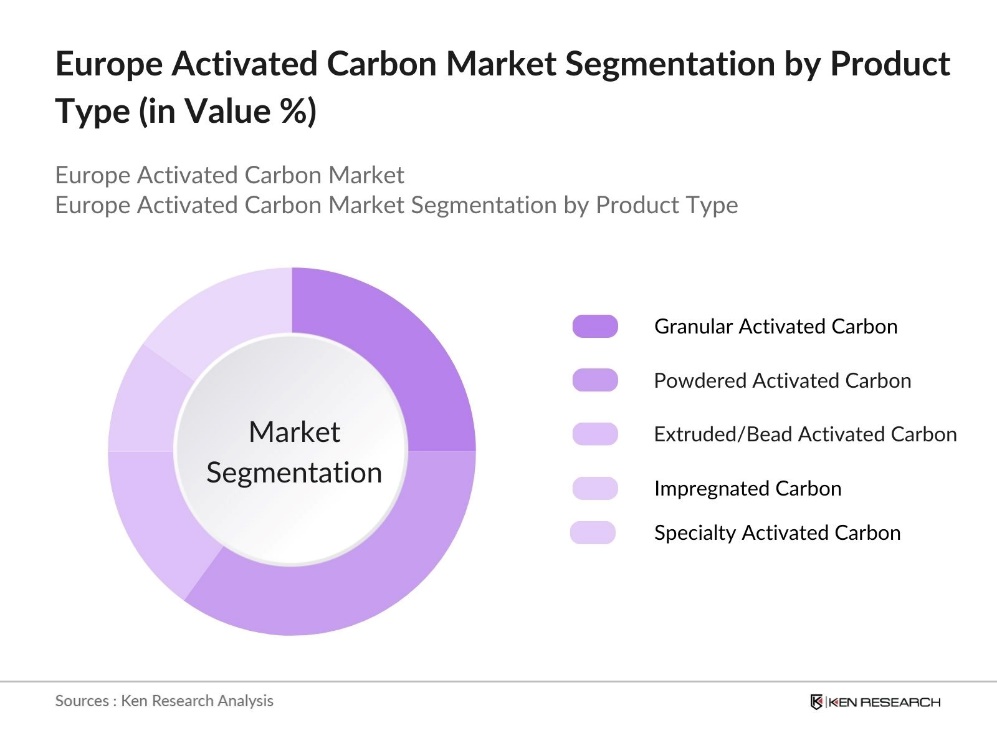
By Product Type: The market is segmented by product type into granular activated carbon, powdered activated carbon, extruded/bead activated carbon, impregnated carbon, and specialty activated carbon. Recently, powdered activated carbon has a dominant market share in Europe due to its high absorption efficiency and versatile applications in water and air purification. Its ease of use and effectiveness in treating pollutants make it a preferred choice across industries, especially in the water treatment and environmental sectors.
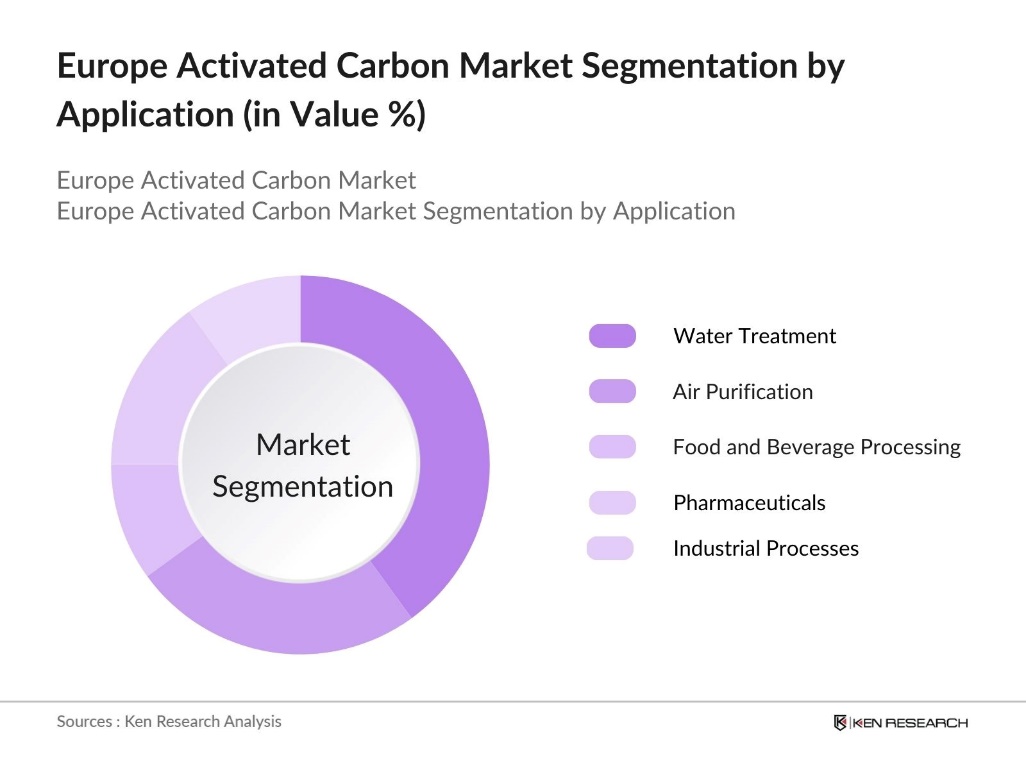
By Application: The market is segmented by application into water treatment, air purification, food and beverage processing, pharmaceuticals, and industrial processes. Water treatment applications hold a leading share due to increased regulatory focus on clean water standards and the use of activated carbon to remove contaminants effectively. This segment is also bolstered by the European Unions water quality initiatives, which drive higher demand for activated carbon in municipal and industrial water purification systems.
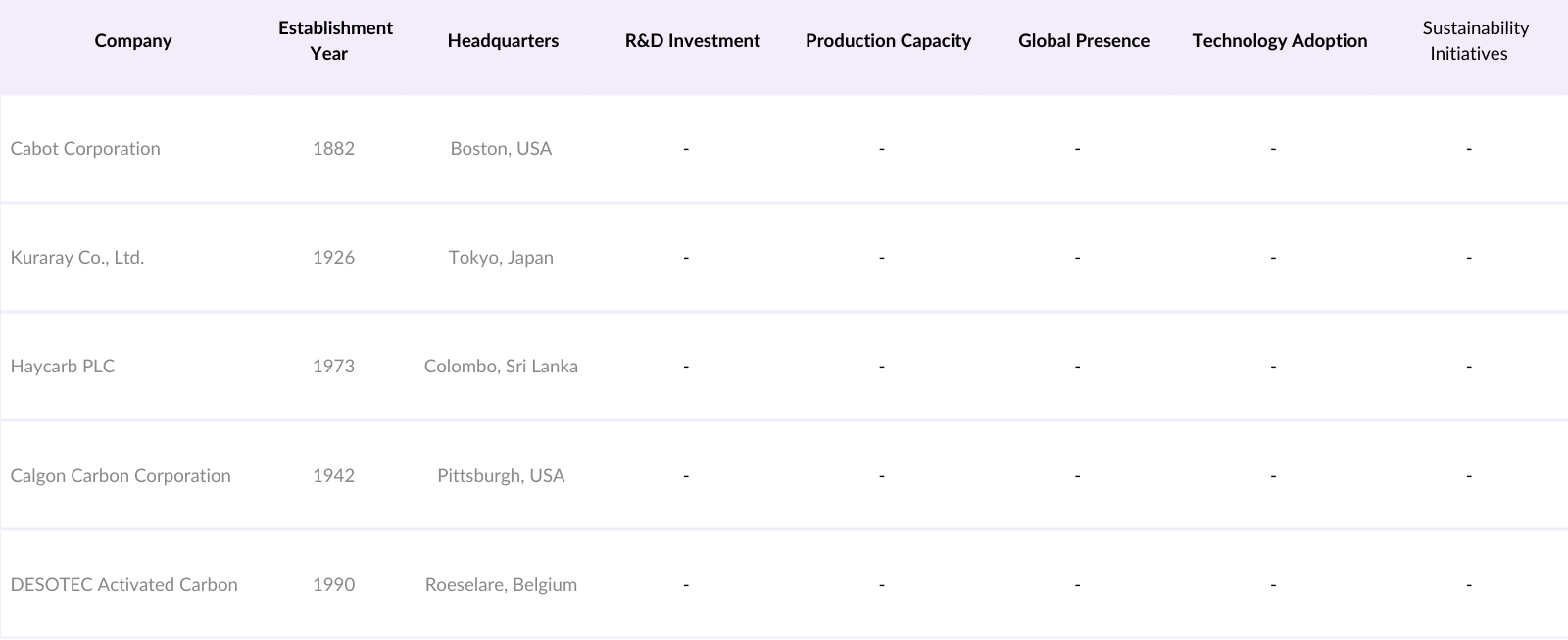
The Europe Activated Carbon market is dominated by several key players with strong market influence. These companies drive competition through strategic partnerships, innovation, and regulatory compliance. The market's consolidation underscores the influence of established players, each bringing advanced R&D and technology-driven sustainability solutions that set high standards in the activated carbon industry.
Over the next five years, the Europe Activated Carbon market is expected to experience steady growth. Driven by stringent regulatory standards, ongoing advancements in adsorption technology, and increasing demand for clean air and water, this market is poised to expand further. Environmental awareness among consumers and industrial bodies will continue to fuel demand for activated carbon products in Europe. Additionally, technological advancements in manufacturing and carbon regeneration processes are anticipated to improve efficiency and product quality.
|
By Product Type |
Granular Activated Carbon Powdered Activated Carbon Extruded/Bead Activated Carbon Impregnated Carbon Specialty Activated Carbon |
|
By Application |
Water Treatment Air Purification Food and Beverage Processing Pharmaceuticals Industrial Processes |
|
By End-User Industry |
Chemical and Petrochemical Food and Beverage Healthcare Automotive Agriculture |
|
By Raw Material |
Coal-Based Coconut Shell-Based Wood-Based |
|
By Country |
Germany France United Kingdom Italy Spain |
1.1. Definition and Scope
1.2. Market Taxonomy
1.3. Key Market Dynamics
1.4. Market Segmentation Overview
2.1. Historical Market Size Analysis
2.2. Year-On-Year Growth Trends
2.3. Major Market Developments and Innovations
3.1. Growth Drivers
3.1.1. Increasing Demand in Water Treatment (Volume Demand, Quality Standards)
3.1.2. Rising Applications in Air Purification (Indoor Air Quality, Industrial Emissions Control)
3.1.3. Stringent Environmental Regulations (EU Directives, Compliance Requirements)
3.1.4. Expanding Use in Pharmaceuticals and Chemicals (Adsorption Efficiency, Safety Standards)
3.2. Market Challenges
3.2.1. High Cost of Raw Materials (Activated Carbon Production Cost, Resource Scarcity)
3.2.2. Limitations in Regeneration and Reuse (Durability, Regeneration Technology)
3.2.3. Environmental Impact of Manufacturing Processes (Carbon Emissions, Water Usage)
3.3. Opportunities
3.3.1. Technological Advancements in Activated Carbon Production (Advanced Filtration, New Materials)
3.3.2. Increasing Adoption in Automotive Emission Control (Emission Standards, Automotive Market Growth)
3.3.3. Growing Demand for Carbon Capture and Storage (CCS Technology, Industrial Applications)
3.4. Trends
3.4.1. Shift to Renewable Raw Materials (Coconut Shell-Based, Biochar-Based Carbon)
3.4.2. Integration of Nano-Activated Carbon in Filtration (Nano-Materials, Enhanced Adsorption)
3.5. Regulatory Landscape
3.5.1. REACH Compliance (Registration, Evaluation, Authorization of Chemicals)
3.5.2. EU Water Framework Directive (Industrial Standards, Water Treatment Protocols)
3.6. Competitive Landscape (Market Share, Competitive Strategies)
3.7. Porters Five Forces Analysis
3.8. Value Chain Analysis (Upstream Suppliers, Downstream Customers)
4.1. By Product Type (In Value %)
4.1.1. Granular Activated Carbon
4.1.2. Powdered Activated Carbon
4.1.3. Extruded/Bead Activated Carbon
4.1.4. Impregnated Carbon
4.1.5. Specialty Activated Carbon
4.2. By Application (In Value %)
4.2.1. Water Treatment
4.2.2. Air Purification
4.2.3. Food and Beverage Processing
4.2.4. Pharmaceuticals
4.2.5. Industrial Processes
4.3. By End-User Industry (In Value %)
4.3.1. Chemical and Petrochemical
4.3.2. Food and Beverage
4.3.3. Healthcare
4.3.4. Automotive
4.3.5. Agriculture
4.4. By Raw Material (In Value %)
4.4.1. Coal-Based
4.4.2. Coconut Shell-Based
4.4.3. Wood-Based
4.5. By Country (In Value %)
4.5.1. Germany
4.5.2. France
4.5.3. United Kingdom
4.5.4. Italy
4.5.5. Spain
5.1. Profiles of Major Competitors
5.1.1. Cabot Corporation
5.1.2. Kuraray Co., Ltd.
5.1.3. Haycarb PLC
5.1.4. Jacobi Carbons AB
5.1.5. Osaka Gas Chemicals Co., Ltd.
5.1.6. Calgon Carbon Corporation
5.1.7. Evoqua Water Technologies
5.1.8. CPL Activated Carbons
5.1.9. Carbon Activated Corporation
5.1.10. DESOTEC Activated Carbon
5.1.11. MeadWestvaco Corporation
5.1.12. Donau Carbon GmbH
5.1.13. CarboTech AC GmbH
5.1.14. Silcarbon Aktivkohle GmbH
5.1.15. Eurocarb Products Limited
5.2. Cross Comparison Parameters (Revenue, Headquarters, R&D Spend, Production Capacity, Product Portfolio, Market Presence, Technology Partnerships, Product Quality Certifications)
5.3. Market Share Analysis
5.4. Strategic Initiatives (Product Innovations, Joint Ventures)
5.5. Mergers and Acquisitions
5.6. Investment Analysis
5.7. R&D Focus and Technology Adoption
5.8. Sustainability and Green Initiatives
6.1. Environmental Compliance Standards (Air Emission Control, Water Quality Regulations)
6.2. Industry Certifications (ISO, NSF Certification, FDA Approval for Food and Beverage Use)
6.3. Trade Policies (Import/Export Regulations, Tariffs)
7.1. Future Market Size Projections
7.2. Key Drivers of Future Market Growth
8.1. Addressable Market Analysis
8.2. Key Consumer Cohorts
8.3. Strategic Product Positioning
8.4. White Space and Market Expansion Opportunities
Disclaimer Contact UsThe research process begins with mapping the activated carbon market ecosystem in Europe, identifying stakeholders across various industries such as water treatment, air purification, and automotive sectors. Extensive secondary research is conducted to gather initial data on market dynamics and key variables impacting demand and supply.
Historical data for the Europe Activated Carbon market is compiled and analyzed, focusing on penetration across industrial applications and the impact of environmental regulations. The findings from this phase provide a foundational understanding of market performance and key growth areas.
Market hypotheses are validated through consultations with industry experts, leveraging computer-assisted telephone interviews (CATIs) to gain insights into operational challenges, product adoption rates, and emerging trends. This expert validation ensures the data's reliability and relevance to the current market environment.
The final stage involves synthesizing data from multiple sources to construct a comprehensive market analysis. Engagements with activated carbon manufacturers provide additional insights into product specifications, manufacturing processes, and end-user requirements, ensuring the report is accurate and actionable.
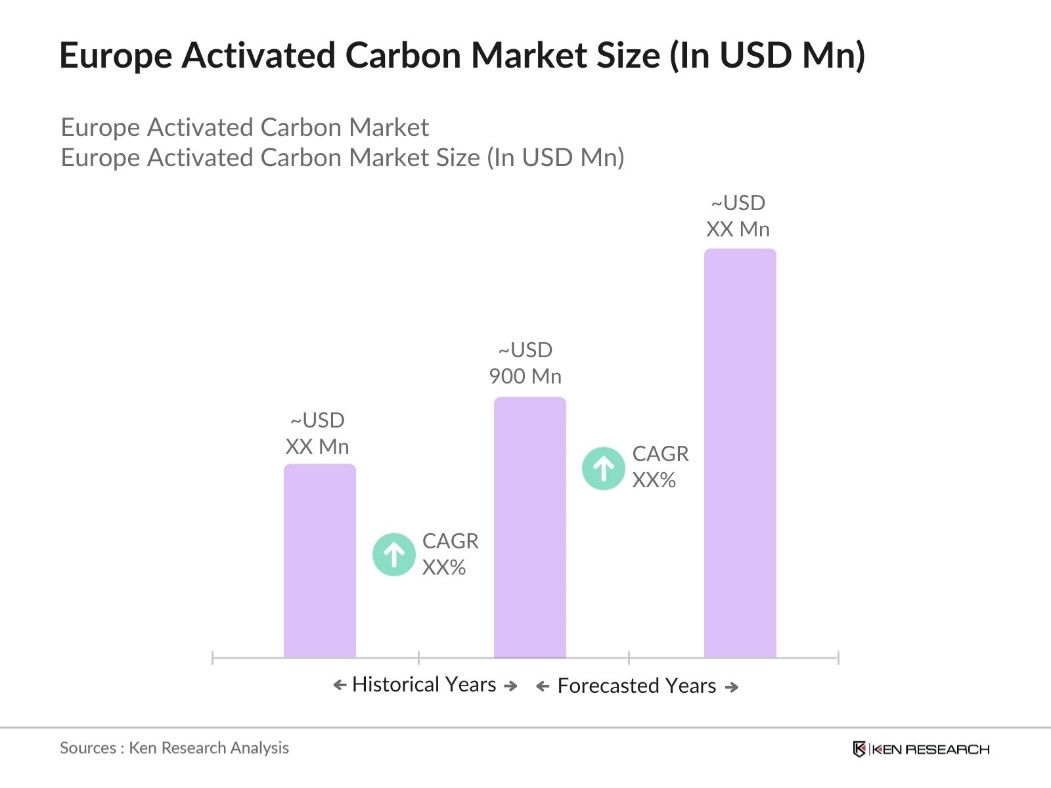
The Europe Activated Carbon Market is valued at USD 900 million, driven by regulatory mandates for clean water and air across European industries, especially in the chemical, pharmaceutical, and automotive sectors.
Challenges in Europe Activated Carbon Market include high costs of raw materials and limitations in regeneration processes, which impact production costs. Compliance with environmental regulations also adds to operational expenses, posing challenges to profitability.
Key players in the Europe Activated Carbon Market include Cabot Corporation, Kuraray Co., Ltd., Haycarb PLC, Calgon Carbon Corporation, and DESOTEC Activated Carbon, known for their technological advancements and strong European market presence.
The Europe Activated Carbon Market is driven by increasing environmental regulations, demand for clean air and water, and growth in the pharmaceutical and food industries, where activated carbon is used extensively in filtration and purification processes.

What makes us stand out is that our consultants follows Robust, Refine and Result (RRR) methodology. i.e. Robust for clear definitions, approaches and sanity checking, Refine for differentiating respondents facts and opinions and Result for presenting data with story

We have set a benchmark in the industry by offering our clients with syndicated and customized market research reports featuring coverage of entire market as well as meticulous research and analyst insights.

While we don't replace traditional research, we flip the method upside down. Our dual approach of Top Bottom & Bottom Top ensures quality deliverable by not just verifying company fundamentals but also looking at the sector and macroeconomic factors.

With one step in the future, our research team constantly tries to show you the bigger picture. We help with some of the tough questions you may encounter along the way: How is the industry positioned? Best marketing channel? KPI's of competitors? By aligning every element, we help maximize success.

Our report gives you instant access to the answers and sources that other companies might choose to hide. We elaborate each steps of research methodology we have used and showcase you the sample size to earn your trust.

If you need any support, we are here! We pride ourselves on universe strength, data quality, and quick, friendly, and professional service.