
Europe Battery Management System (BMS) Market Outlook to 2030
Region:Europe
Author(s):Shreya
Product Code:KROD2907
November 2024
89
About the Report
Europe Battery Management System (BMS) Market Overview
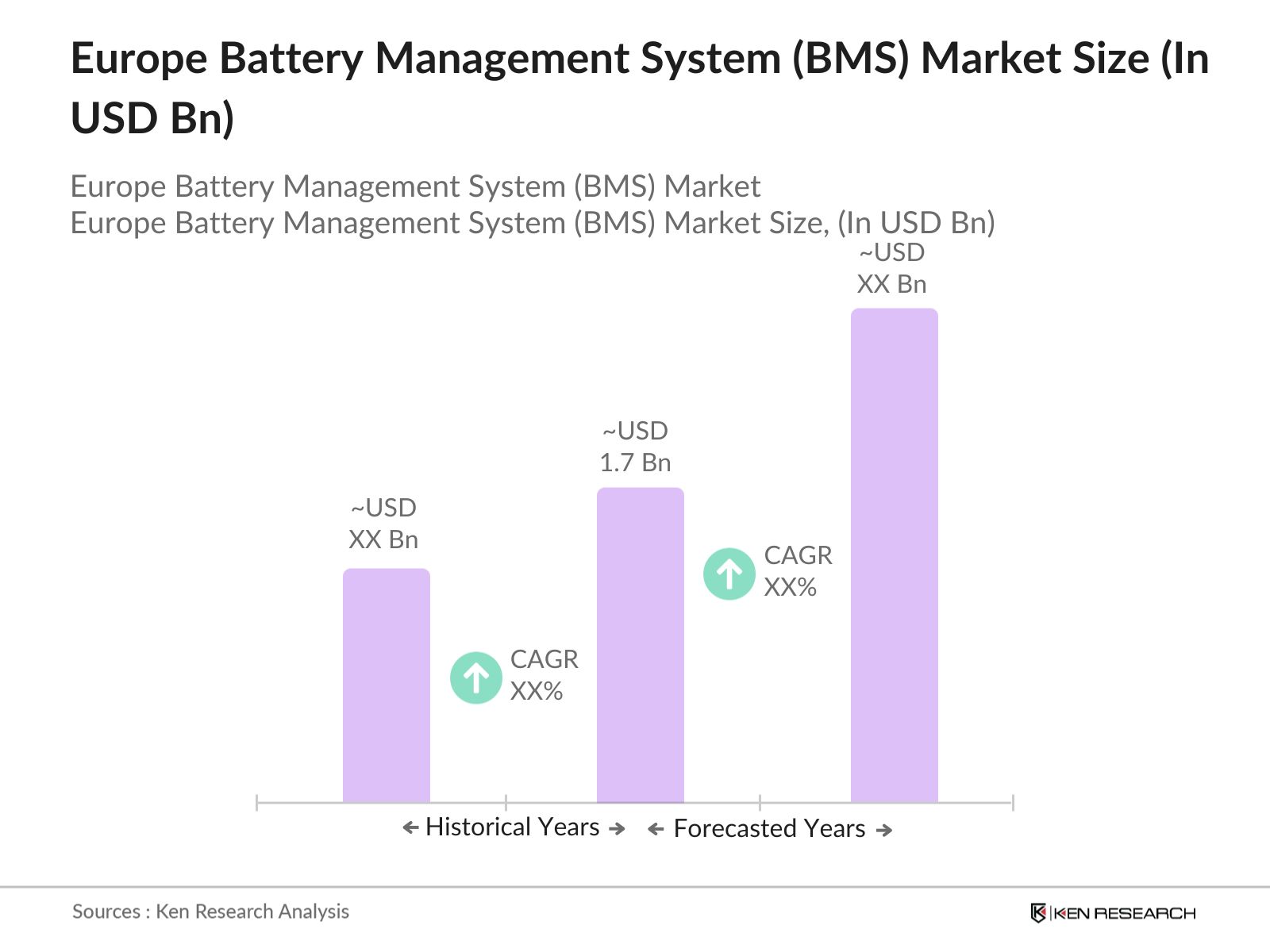
The Europe Battery Management System (BMS) market was valued at USD 1.7 billion, driven by the increasing adoption of electric vehicles (EVs), renewable energy storage systems, and consumer electronics. This growth is primarily driven by the demand for efficient power management in the rapidly growing electric vehicle sector and the adoption of renewable energy storage solutions.
Key players operating in the Europe Battery Management System market include Continental AG, Robert Bosch GmbH, NXP Semiconductors N.V., Infineon Technologies AG, and Analog Devices, Inc. These companies are recognized for their innovations in energy management and advanced BMS solutions, catering to both EVs and energy storage applications. Their extensive R&D efforts have ensured leadership positions in the European market.
In 2023, Infineon Technologies AG launched its next-generation BMS solution, designed for high-performance electric vehicles. The system features AI-powered predictive maintenance, reducing battery failure rates and improving the overall safety of the EV battery. Infineons new product is expected to be installed in more than 200,000 electric vehicles by the end of 2024, setting a new benchmark for intelligent BMS technology.
Germany is the dominant player in the European market in 2023. The countrys leadership is attributed to its well-established automotive industry, which has aggressively adopted electric vehicles. The German governments commitment to the EV transition, through programs like KfW Electric Vehicle Grants, and a robust R&D infrastructure in energy storage systems have cemented Germanys position as the leading market for BMS solutions.
Europe Battery Management System (BMS) Market Segmentation
The Europes Battery Management System Market is segmented into various factors such as product type, Application and region etc.
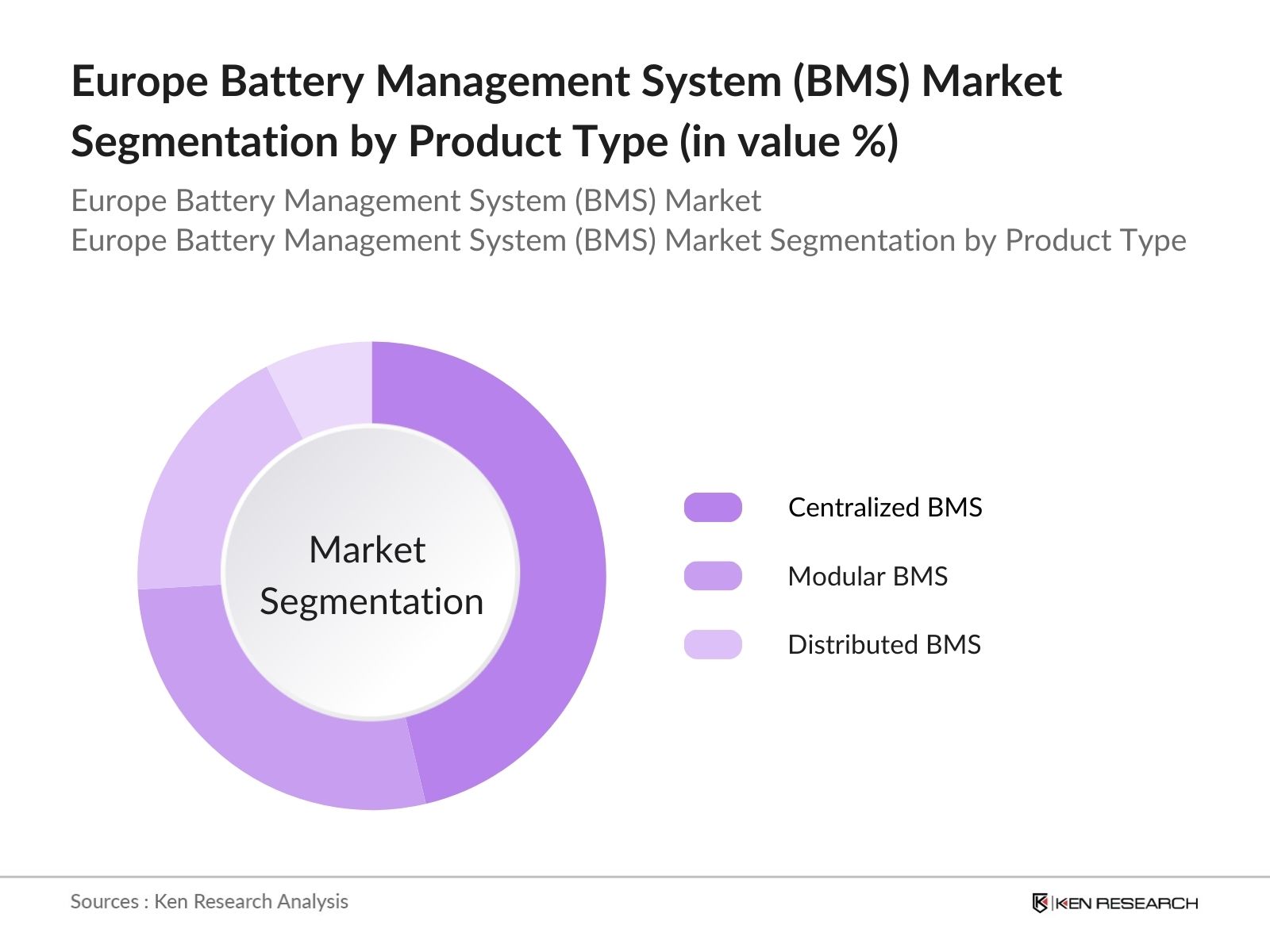
By Product Type: The Market is segmented by product type into Centralized, Modular, And Distributed BMS. In 2023, the centralized BMS segment held the dominant market share due to its widespread use in automotive applications. The centralized system offers advantages such as cost-efficiency and ease of implementation, which are highly favored by the growing electric vehicle sector.
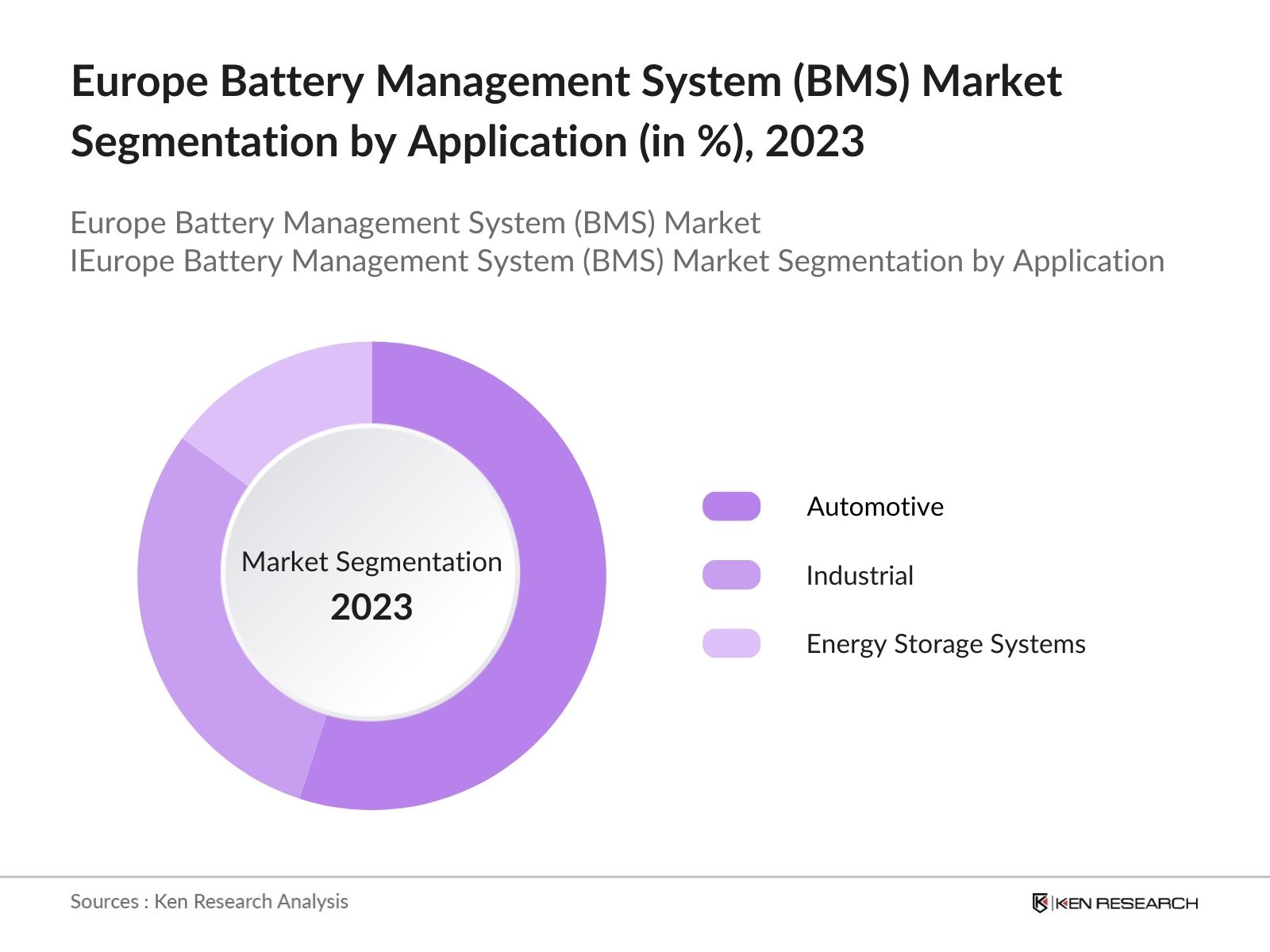
By Application: The market is segmented by application into Automotive, Industrial, And Energy Storage Systems. The automotive segment led the market share in 2023, driven by the increasing penetration of electric vehicles in Europe. This dominance is due to stringent EU regulations on CO2 emissions and significant investments by governments and companies in electric mobility. 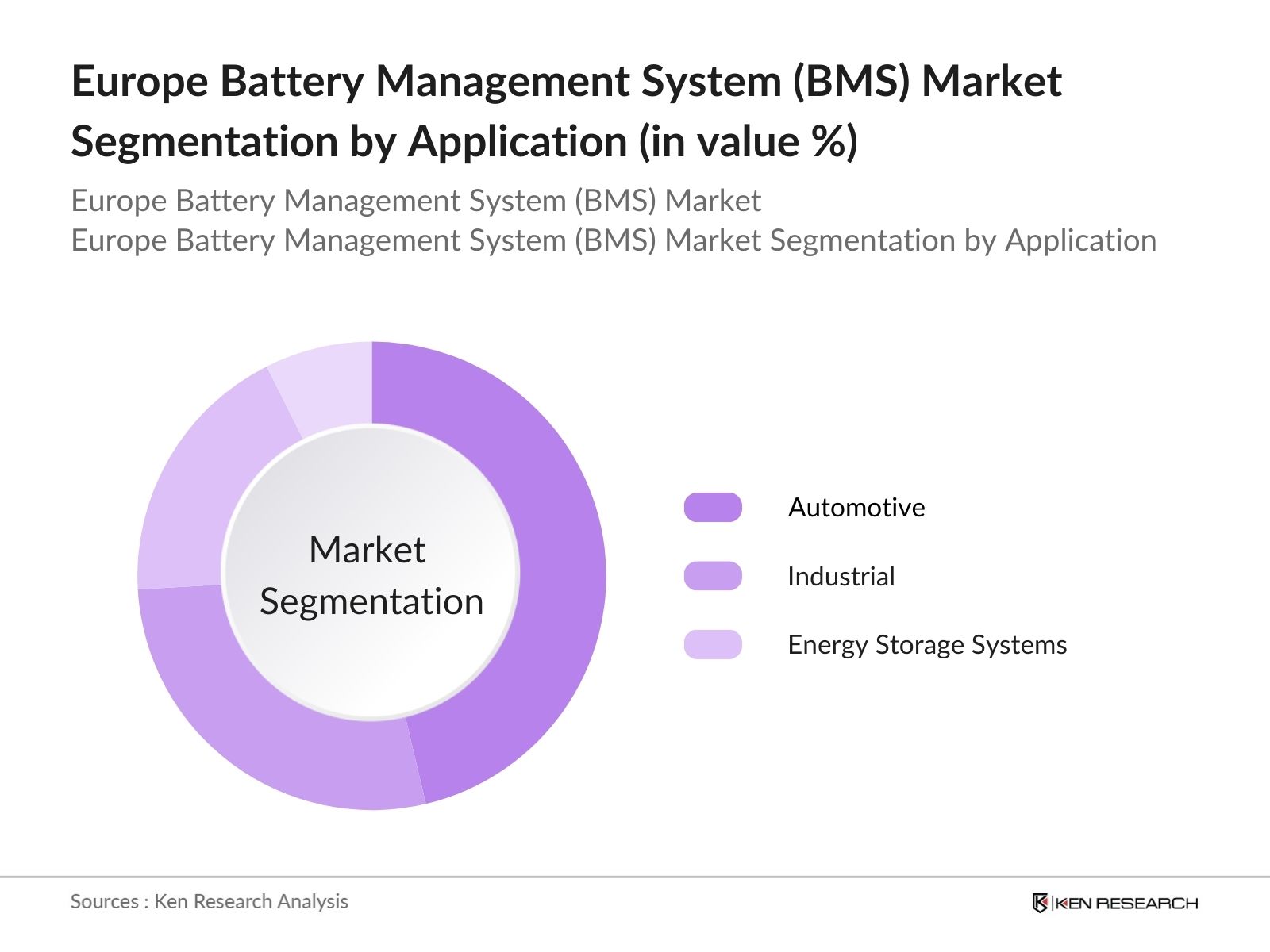
By Region: The Market is segmented by region into Germany, France, UK, Sweden, Italy and Rest of Europe. Germany holds the dominant position in the Europe Battery Management System market share. This is due to its robust automotive industry, heavy investment in electric vehicle infrastructure, and government support through initiatives like the KfW Electric Vehicle Grants, which foster the development of advanced battery technologies and BMS solutions.
Europe Battery Management System (BMS) Market Competitive Landscape
|
Company Name |
Year of Establishment |
Headquarters |
|---|---|---|
|
Continental AG |
1871 |
Hanover, Germany |
|
Robert Bosch GmbH |
1886 |
Gerlingen, Germany |
|
NXP Semiconductors N.V. |
1953 |
Eindhoven, Netherlands |
|
Infineon Technologies AG |
1999 |
Neubiberg, Germany |
|
Analog Devices, Inc. |
1965 |
Norwood, USA |
- Partnership between Continental AG and Volkswagen: For the Volkswagen ID. Buzz, Continental played a crucial role in its design and development, providing technologies such as the In-Car Application Server (ICAS 1), thermal management systems, and advanced tire technologies. Continental is a collaborative and development partner to Volkswagen, contributing vital technology covering nearly all aspects of the ID. Buzz, including software, central computer architecture, brakes, and thermal management systems
- Bosch's Investment in Battery Recycling Infrastructure
In 2023, Bosch announced an investment of EUR 200 million into battery recycling technologies to support the growing number of electric vehicles in Europe. Bosch's development of recycling systems that integrate with BMS will help reduce the environmental impact of battery disposal and contribute to a circular economy for EV batteries.
Europe Battery Management System (BMS) Industry Analysis
Growth Drivers
- Increased Electric Vehicle Adoption: In 2023, more than 2.4 million EVs were sold across Europe, primarily driven by governmental subsidies and incentives for adopting cleaner energy. In 2024, the EU is expected to spend EUR 7 billion on green transportation infrastructure, which will further increase the need for efficient battery management systems to ensure battery longevity and safety.
- Expanding Renewable Energy Infrastructure: The installation of renewable energy systems such as solar and wind power across Europe is contributing to the demand for BMS, especially for energy storage systems (ESS). In 2024, Europe is projected to invest over USD 30 billion in renewable energy storage systems to enhance grid stability and energy efficiency. Battery storage systems, supported by advanced BMS, are vital for the reliability of renewable energy projects.
- Technological Advancements in Battery Storage Solutions: Technological improvements in battery storage solutions, particularly in lithium-ion battery technology, are increasing the efficiency and safety of battery systems in various industries. BMS is becoming an essential component to manage more advanced, high-capacity batteries. These advancements improve energy density, charging rates, and overall battery health, making the adoption of BMS systems.
Challenges
- Raw Material Supply Chain Disruptions: One of the major challenges in the Europe battery management system industry is the disruption in the supply of essential raw materials, such as lithium and cobalt. The price of lithium surged in 2023 due to supply chain constraints and geopolitical tensions, impacting the cost of battery manufacturing. This volatility in raw material prices directly affects the production cost of BMS systems.
- Lack of Standardization in BMS Technology: Different countries have varying safety and efficiency standards for BMS technologies, which complicates the manufacturing and deployment process. This is expected to cause project delays in several energy storage installations, as manufacturers have to adapt their solutions to different regional standards, increasing both time and costs.
Government Initiatives
- EU Battery Regulation: In 2023, the European Commission introduced the EU Battery Regulation, which sets mandatory sustainability requirements for batteries, including performance, durability, and recycling. The regulation will be fully implemented by 2027, with a EUR 5 billion funding allocation for battery recycling infrastructure. This regulatory framework encourages battery manufacturers to adopt BMS solutions that enhance battery performance.
- Green Energy Transition in Germany: Germany has been at the forefront of the green energy transition in Europe, with government initiatives aimed at expanding renewable energy infrastructure. In 2024, Germany committed EUR 15 billion toward renewable energy storage projects, with a significant portion allocated to the development of battery management systems for solar and wind power integration.
Europe Battery Management System (BMS) Market Future Outlook
The Europe Battery Management System market is expected to grow exponentially by 2028. The rising adoption of electric vehicles, coupled with stringent government regulations on carbon emissions, will be critical growth factors. The ongoing development in smart grids and energy storage systems is expected to further bolster market demand.
Future Trends
- Increasing Investments in Solid-State Batteries: Solid-state batteries are expected to become the next big breakthrough in battery technology, and their adoption will drive the need for specialized BMS systems. By 2027, Europe is projected to invest on the development and commercialization of solid-state batteries. These batteries require advanced BMS solutions for optimal performance and safety, providing new opportunities for innovation in the BMS market.
- Enhanced Energy Storage Solutions for Smart Grids: The rise of smart grid technologies across Europe will create a market for energy storage solutions powered by BMS. Europe is expected to invest heavily in smart grid infrastructure, requiring large-scale energy storage systems with sophisticated BMS to ensure efficient power management. These systems will play a critical role in stabilizing renewable energy sources like wind and solar.
Scope of the Report
|
By Product Type |
Centralized BMS Modular BMS Distributed BMS |
|
By Application |
Automotive Industrial energy storage systems |
|
By Region |
Germany France United Kingdom Sweden Italy Rest of Europe |
Products
Key Target Audience Organizations and Entities Who Can Benefit by Subscribing This Report:
Automotive Manufacturers
Battery Manufacturers
Energy Storage System Providers
Renewable Energy Companies
Government Institutions (EU Battery Alliance)
Battery Recycling Firms
Electric Vehicle Manufacturers
Industrial Equipment Manufacturers
Investors and VC Firms
Banks and Financial Institutions
Time Period Captured in the Report:
Historical Period: 2018-2023
Base Year: 2023
Forecast Period: 2023-2028
Step: 1 Identifying Key Variables:
Ecosystem creation for all the major entities and referring to multiple secondary and proprietary databases to perform desk research around market to collate industry level information.
Step: 2 Market Building:
Collating statistics on Europe battery management system market over the years, penetration of marketplaces and service providers ratio to compute revenue generated for Europe battery management system market. We will also review service quality statistics to understand revenue generated which can ensure accuracy behind the data points shared.
Step: 3 Validating and Finalizing:
Building market hypothesis and conducting CATIs with industry experts belonging to different battery management system companies to validate statistics and seek operational and financial information from company representatives.
Step: 4 Research Output:
Our team will approach multiple battery management system manufacturers and understand nature of product segments and sales, consumer preference and other parameters, which will support us validate statistics derived through bottom to top approach from battery management system companies.
Companies
Players Mentioned in the Report:
Continental AG
Robert Bosch GmbH
NXP Semiconductors N.V.
Infineon Technologies AG
Analog Devices, Inc.
ABB Ltd
Tesla Inc.
LG Chem Ltd.
Panasonic Corporation
Valeo S.A.
Siemens AG
STMicroelectronics N.V.
Samsung SDI Co. Ltd.
BYD Company Ltd.
Eaton Corporation
Table of Contents
1. Europe Battery Management System Market Overview
1.1. Definition and Scope
1.2. Market Taxonomy
1.3. Market Growth Rate
1.4. Market Segmentation Overview
2. Europe Battery Management System Market Size (in USD Bn), 2018-2023
2.1. Historical Market Size
2.2. Year-on-Year Growth Analysis
2.3. Key Market Developments and Milestones
3. Europe Battery Management System Market Analysis
3.1. Growth Drivers
3.1.1. Electric Vehicle Adoption
3.1.2. Renewable Energy Expansion
3.1.3. Government Emission Reduction Targets
3.1.4. Technological Advancements
3.2. Restraints
3.2.1. Raw Material Supply Chain Issues
3.2.2. High Initial Costs
3.2.3. Lack of Standardization
3.2.4. Battery Waste and Environmental Concerns
3.3. Opportunities
3.3.1. Innovations in Battery Technology
3.3.2. Expansion into Energy Storage
3.3.3. AI and IoT Integration
3.3.4. Increasing Demand for Solid-State Batteries
3.4. Trends
3.4.1. AI Integration in BMS
3.4.2. Modular and Scalable BMS Solutions
3.4.3. Enhanced Safety Features in EV Batteries
3.4.4. Energy Storage for Smart Grids
3.5. Government Regulation
3.5.1. EU Green Deal Initiatives
3.5.2. European Battery Alliance (EBA)
3.5.3. National Electric Vehicle Policies
3.5.4. Battery Recycling Regulations
3.6. SWOT Analysis
3.7. Stakeholder Ecosystem
3.8. Competition Ecosystem
4. Europe Battery Management System Market Segmentation, 2023
4.1. By Product Type (in Value %)
4.1.1. Centralized BMS
4.1.2. Modular BMS
4.1.3. Distributed BMS
4.2. By Application (in Value %)
4.2.1. Automotive
4.2.2. Industrial
4.2.3. Energy Storage Systems
4.3. By Region (in Value %)
4.3.1. Germany
4.3.2. France
4.3.3. United Kingdom
4.3.4. Sweden
4.3.5. Italy
4.3.6. Rest of Europe
5. Europe Battery Management System Market Cross Comparison
5.1. Detailed Profiles of Major Companies
5.1.1. Continental AG
5.1.2. Robert Bosch GmbH
5.1.3. NXP Semiconductors N.V.
5.1.4. Infineon Technologies AG
5.1.5. Analog Devices, Inc.
5.2. Cross Comparison Parameters (No. of Employees, Headquarters, Inception Year, Revenue)
6. Europe Battery Management System Market Competitive Landscape
6.1. Market Share Analysis
6.2. Strategic Initiatives
6.3. Mergers and Acquisitions
6.4. Investment Analysis
6.4.1. Venture Capital Funding
6.4.2. Government Grants
6.4.3. Private Equity Investments
7. Europe Battery Management System Market Regulatory Framework
7.1. Battery Performance and Sustainability Standards
7.2. Compliance Requirements
7.3. Certification Processes
8. Europe Battery Management System Future Market Size (in USD Bn), 2023-2028
8.1. Future Market Size Projections
8.2. Key Factors Driving Future Market Growth
9. Europe Battery Management System Future Market Segmentation, 2028
9.1. By Product Type (in Value %)
9.2. By Application (in Value %)
9.3. By Region (in Value %)
10. Europe Battery Management System Market Analysts Recommendations
10.1. TAM/SAM/SOM Analysis
10.2. Customer Cohort Analysis
10.3. Marketing Initiatives
10.4. White Space Opportunity Analysis
Frequently Asked Questions
1. How big is the Europe Battery Management System Market?
The Europe Battery Management System (BMS) market was valued at USD 1.7 billion, driven by the growing adoption of electric vehicles, expansion of renewable energy infrastructure, and government initiatives promoting sustainable energy solutions.
2. What are the challenges in the Europe Battery Management System Market?
Challenges in the Europe Battery Management System (BMS) market include disruptions in the supply of raw materials like lithium and cobalt, high initial costs of implementing advanced BMS solutions, lack of standardization across regions, and the environmental impact of growing battery waste.
3. Who are the major players in the Europe Battery Management System Market?
Key players in the Europe Battery Management System (BMS) market include Continental AG, Robert Bosch GmbH, NXP Semiconductors N.V., Infineon Technologies AG, and Analog Devices, Inc. These companies lead the market through their innovations in energy storage solutions and extensive market reach.
4. What are the growth drivers of the Europe Battery Management System Market?
The Europe Battery Management System (BMS) market is driven by the increasing adoption of electric vehicles, expanding renewable energy infrastructure, governmental targets for reducing carbon emissions, and advancements in battery storage technology.
Why Buy From Us?

What makes us stand out is that our consultants follows Robust, Refine and Result (RRR) methodology. i.e. Robust for clear definitions, approaches and sanity checking, Refine for differentiating respondents facts and opinions and Result for presenting data with story

We have set a benchmark in the industry by offering our clients with syndicated and customized market research reports featuring coverage of entire market as well as meticulous research and analyst insights.

While we don't replace traditional research, we flip the method upside down. Our dual approach of Top Bottom & Bottom Top ensures quality deliverable by not just verifying company fundamentals but also looking at the sector and macroeconomic factors.

With one step in the future, our research team constantly tries to show you the bigger picture. We help with some of the tough questions you may encounter along the way: How is the industry positioned? Best marketing channel? KPI's of competitors? By aligning every element, we help maximize success.

Our report gives you instant access to the answers and sources that other companies might choose to hide. We elaborate each steps of research methodology we have used and showcase you the sample size to earn your trust.

If you need any support, we are here! We pride ourselves on universe strength, data quality, and quick, friendly, and professional service.