
Europe Fraud Detection and Prevention Market Outlook to 2030
Region:Europe
Author(s):Paribhasha Tiwari
Product Code:KROD6680
November 2024
96
About the Report
Europe Fraud Detection and Prevention Market Overview
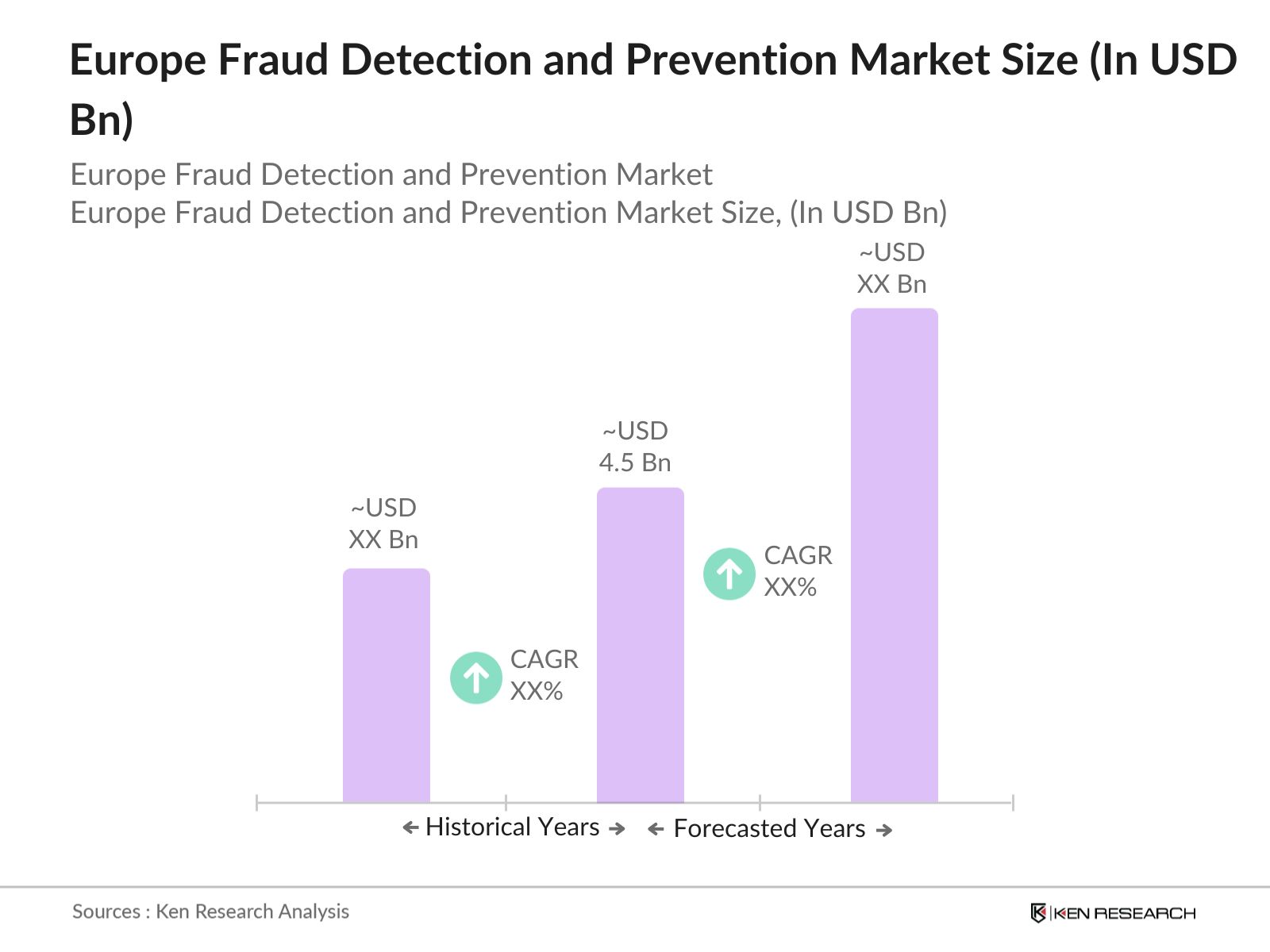
- The Europe fraud detection and prevention market is valued at USD 4.5 billion, driven by the increasing number of cyberattacks and the heightened demand for enhanced security measures in industries like finance, retail, and government. Companies across Europe are implementing advanced technologies such as artificial intelligence (AI) and machine learning (ML) to detect fraudulent activities and protect digital transactions. The proliferation of digital payments and the rise in e-commerce transactions have significantly contributed to the markets growth.
- Countries like the United Kingdom, Germany, and France dominate the Europe fraud detection and prevention market due to their advanced digital infrastructures and high adoption of financial technologies. The UK, being a financial hub, experiences a large number of digital transactions, leading to a higher risk of fraud and thereby driving the demand for fraud prevention solutions. Similarly, Germany's robust industrial base and France's large e-commerce sector make these countries critical players in fraud detection solutions.
- The EU Cybersecurity Act, which aims to establish a cybersecurity certification framework across member states, is expected to have a significant impact on the fraud detection market in 2024. The initiative promotes higher security standards for digital products and services, leading to increased demand for certified fraud detection systems across industries.
Europe Fraud Detection and Prevention Market Segmentation
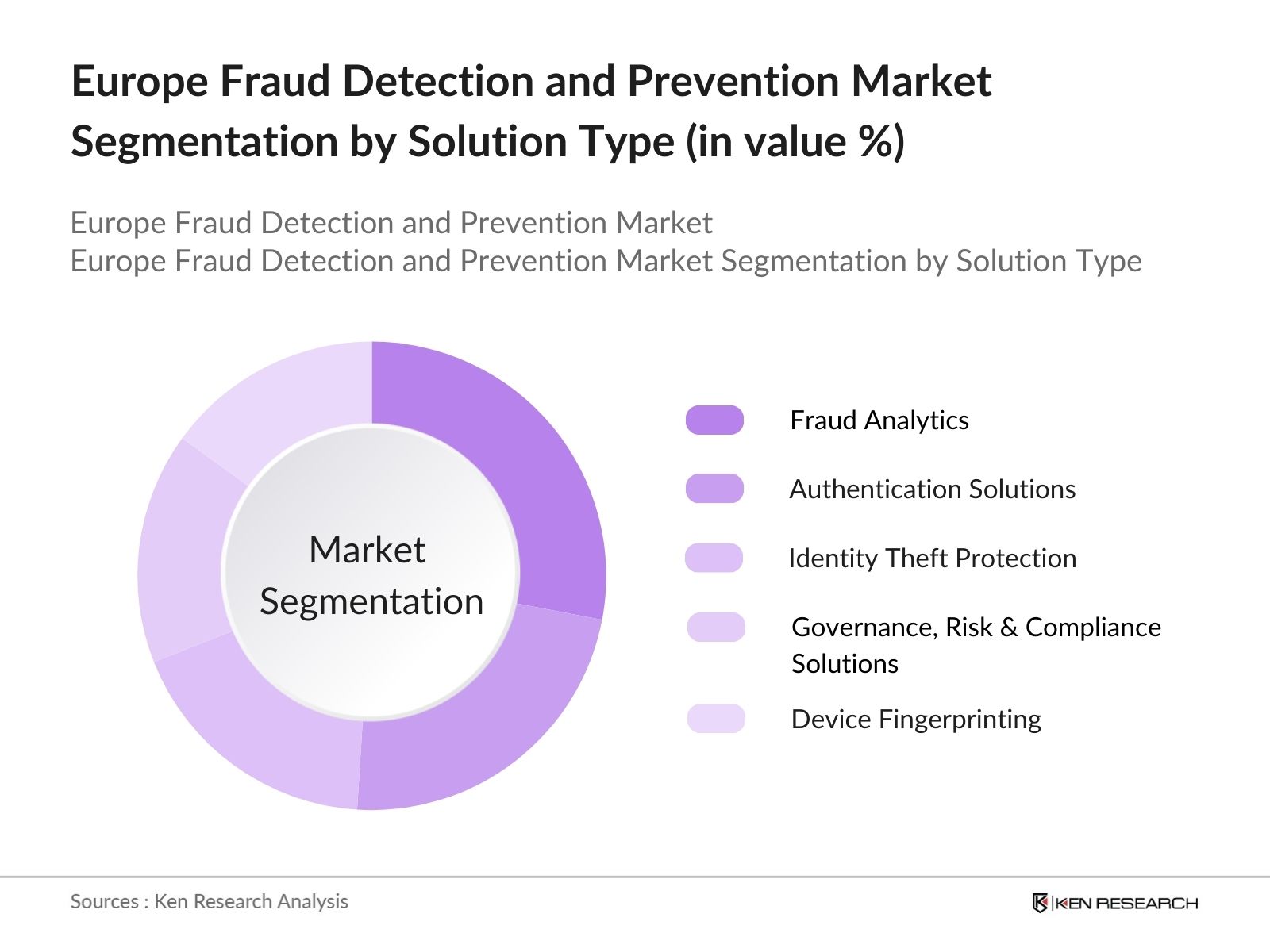
- By Solution Type: The Europe fraud detection and prevention market is segmented by solution type into fraud analytics, authentication solutions, identity theft protection, governance, risk & compliance (GRC) solutions, and device fingerprinting. Recently, fraud analytics has maintained a dominant market share due to its ability to detect fraudulent activities in real-time by leveraging big data analytics and machine learning algorithms. Companies are investing heavily in analytics solutions as they offer predictive models that help prevent fraudulent transactions before they occur.
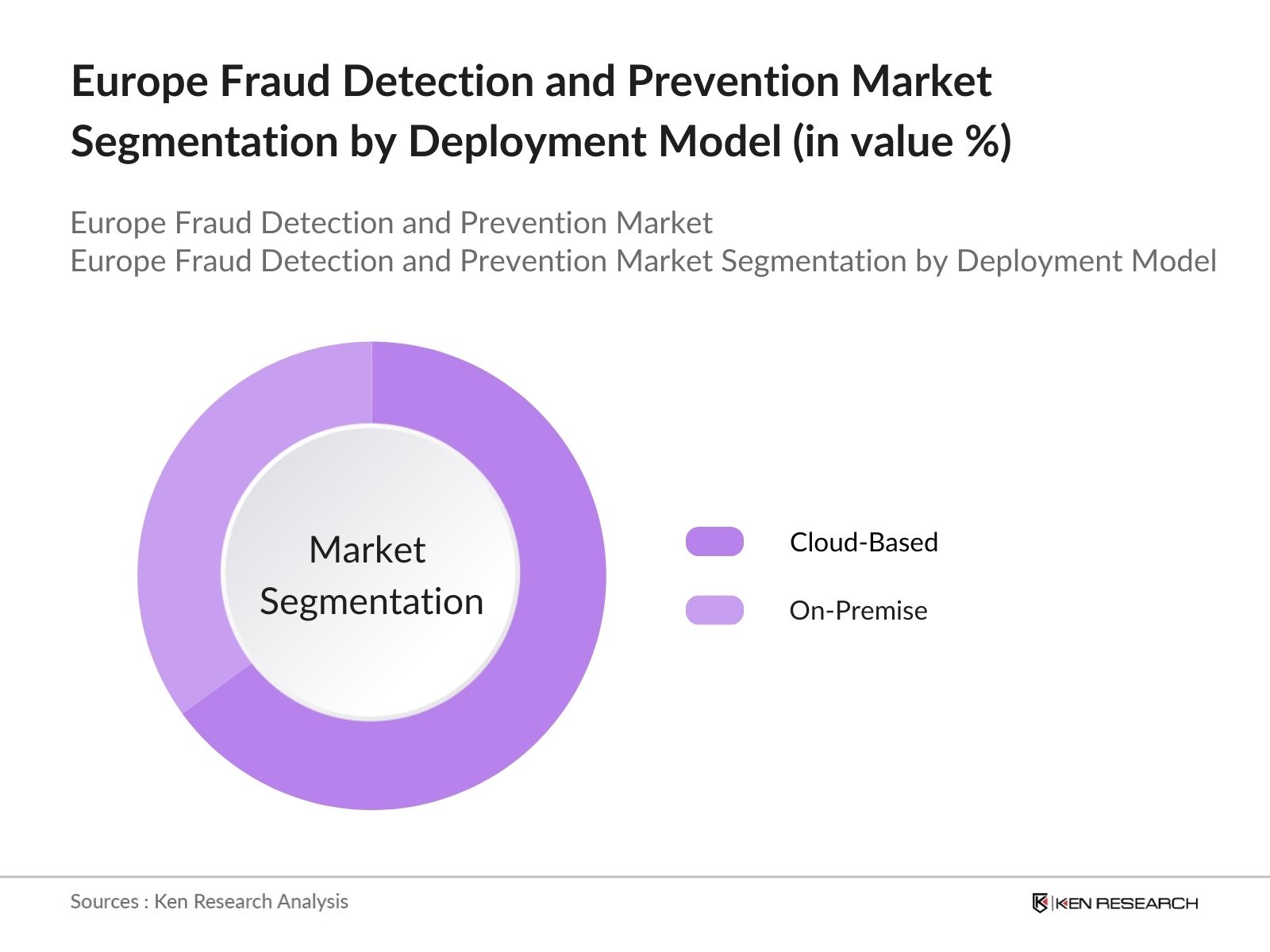
- By Deployment Mode: The market is segmented by deployment mode into cloud-based and on-premise solutions. Cloud-based solutions hold a dominant share of the market due to their cost-effectiveness, scalability, and ease of implementation. Organizations across Europe are increasingly opting for cloud-based fraud detection solutions as they offer flexible integration with existing systems and ensure seamless updates to address evolving fraud tactics.
Europe Fraud Detection and Prevention Market Competitive Landscape
The Europe fraud detection and prevention market is dominated by both global and regional players, with significant consolidation among the top companies. These companies are investing in research and development to create innovative solutions that address the evolving landscape of cyber threats.
|
Company Name |
Establishment Year |
Headquarters |
Product Innovation |
Customer Base |
Industry Expertise |
Revenue from Fraud Solutions |
Technology Integration |
Global Presence |
Patent Portfolio |
|
IBM Corporation |
1911 |
New York, USA |
- | - | - | - | - | - | - |
|
SAS Institute Inc. |
1976 |
North Carolina, USA |
- | - | - | - | - | - | - |
|
FICO |
1956 |
California, USA |
- | - | - | - | - | - | - |
|
Oracle Corporation |
1977 |
Texas, USA |
- | - | - | - | - | - | - |
|
NICE Systems Ltd. |
1986 |
Ra'anana, Israel |
- | - | - | - | - | - | - |
Europe Fraud Detection and Prevention Market Analysis
Makret Growth Drivers
- Increasing Incidents of Cybercrime (Fraud Type, Cybersecurity Breaches): The rising incidents of cybercrime across Europe have significantly fueled the demand for fraud detection and prevention solutions. In 2024, cybercrime damages in Europe are driven by the growing sophistication of cyber-attacks and increased connectivity. The surge in phishing, identity theft, and financial fraud incidents is prompting businesses to adopt advanced technologies for fraud detection and prevention.
- Stringent Government Regulations (Compliance, Data Privacy Laws): European countries have implemented strict regulations, such as the General Data Protection Regulation (GDPR) and the Payment Services Directive 2 (PSD2), which mandate stringent security measures for personal data and financial transactions. In 2024, regulatory fines for non-compliance in the European Union are encouraging organizations to invest in robust fraud detection systems to avoid penalties.
- Adoption of AI and Machine Learning (Technology Integration, Predictive Analytics): The integration of artificial intelligence (AI) and machine learning (ML) technologies has been a significant growth driver for the fraud detection and prevention market in Europe. By 2024, the AI and ML market in Europe is projected to contribute over EUR 45 billion in value to the technology sector, enhancing the capabilities of fraud detection systems. Predictive analytics is increasingly being used to detect suspicious patterns and prevent fraud before it occurs.
Market Challenges
- High Implementation Costs (Technology Costs, Integration Challenges): The cost of implementing advanced fraud detection systems remains a significant challenge for organizations, particularly small and medium-sized enterprises (SMEs). In 2024, the average cost of deploying an AI-based fraud detection solution in Europe is expected to be around EUR 2.5 million for large enterprises. The initial investment, coupled with the costs of integration with existing systems, continues to be a barrier for widespread adoption among smaller businesses.
- Evolving Fraud Tactics (Sophistication in Cyberattacks, Threat Landscape): Fraud tactics are continually evolving, making it difficult for businesses to stay ahead of potential threats. The sophistication of cyberattacks has increased, with fraudsters using advanced methods such as deepfake technology and artificial intelligence to commit fraud. In 2024, Europol estimates that 70,000 sophisticated cybercrime cases will be reported in the region, challenging existing fraud detection systems to adapt rapidly.
Europe Fraud Detection and Prevention Market Future Outlook
Over the next five years, the Europe fraud detection and prevention market is expected to grow steadily, driven by advancements in AI and machine learning technologies, stricter government regulations, and the rising adoption of digital transactions. Key industries such as banking, insurance, and retail are likely to continue investing in fraud prevention solutions to protect their customers and mitigate financial losses. The integration of blockchain technology and real-time analytics will further strengthen fraud detection mechanisms.
Market Opportunities
- Growth of Cloud-based Solutions (Scalability, Lower Costs): The shift towards cloud-based fraud detection and prevention solutions presents a major opportunity for businesses, offering scalability and cost efficiency. In 2024, the European cloud computing market is forecast to grow by EUR 50 billion, providing organizations with access to scalable fraud detection solutions without the need for substantial upfront investment. Cloud-based systems also offer real-time monitoring and updates, ensuring that businesses can respond to emerging fraud threats quickly.
- Collaboration with Financial Institutions (Public-Private Partnerships): Collaborations between technology providers and financial institutions present significant growth opportunities for fraud detection companies. The European Central Bank is expected to partner with over 400 financial institutions in 2024 to strengthen fraud prevention mechanisms in digital banking. These partnerships facilitate the sharing of fraud intelligence and enhance the development of industry-wide standards for fraud detection.
Scope of the Report
|
By Solution Type |
Fraud Analytics Authentication Solutions Governance Risk & Compliance Solutions Identity Theft Protection Device Fingerprinting |
|
By Deployment Mode |
Cloud-based On-premise |
|
By Application |
Banking and Financial Services Insurance, Government Retail and E-commerce Telecommunication |
|
By Organization Size |
Large Enterprises SMEs |
|
By Region |
West East North South |
Products
Key Target Audience
Fraud Detection Technology Providers
Banks and Financial Institutions
Cybersecurity Companies
Payment Service Providers
Retail and E-Commerce Platforms
Investors and Venture Capitalist Firms
Government and Regulatory Bodies (GDPR Commission, European Central Bank)
Insurance Companies
Companies
Players mentioned in the report:
IBM Corporation
SAS Institute Inc.
FICO
Oracle Corporation
NICE Systems Ltd.
ACI Worldwide Inc.
BAE Systems
LexisNexis Risk Solutions
Experian PLC
RSA Security LLC
Table of Contents
1. Europe Fraud Detection and Prevention Market Overview
1.1. Definition and Scope
1.2. Market Taxonomy
1.3. Market Growth Rate
1.4. Market Segmentation Overview
2. Europe Fraud Detection and Prevention Market Size (In USD Bn)
2.1. Historical Market Size
2.2. Year-on-Year Growth Analysis
2.3. Key Market Developments and Milestones
3. Europe Fraud Detection and Prevention Market Analysis
3.1. Growth Drivers
3.1.1. Increasing Incidents of Cybercrime (Fraud Type, Cybersecurity Breaches)
3.1.2. Stringent Government Regulations (Compliance, Data Privacy Laws)
3.1.3. Adoption of AI and Machine Learning (Technology Integration, Predictive Analytics)
3.1.4. Rising Digital Payments (Transaction Volume, E-commerce Growth)
3.2. Market Challenges
3.2.1. High Implementation Costs (Technology Costs, Integration Challenges)
3.2.2. Evolving Fraud Tactics (Sophistication in Cyberattacks, Threat Landscape)
3.2.3. Data Privacy Concerns (GDPR Compliance, Data Sovereignty)
3.3. Opportunities
3.3.1. Growth of Cloud-based Solutions (Scalability, Lower Costs)
3.3.2. Collaboration with Financial Institutions (Public-Private Partnerships)
3.3.3. Expansion into SMEs (Underserved Market, Affordable Solutions)
3.3.4. Rising Focus on Identity Verification Solutions (Digital Identity, KYC)
3.4. Trends
3.4.1. Increased Adoption of Multi-Factor Authentication (Authentication Types, Biometrics)
3.4.2. Emergence of Blockchain Technology (Blockchain Use, Fraud Prevention)
3.4.3. Integration of Real-time Analytics (Fraud Detection Speed, Real-time Monitoring)
3.4.4. Growing Use of Behavioral Analytics (Fraud Patterns, User Behavior)
3.5. Government Regulation
3.5.1. EU GDPR Compliance (Data Protection, Consumer Rights)
3.5.2. PSD2 Directive (Strong Customer Authentication, Financial Transparency)
3.5.3. National Cybersecurity Strategies (Security Measures, Cyber Defense)
3.5.4. AML Directives (Anti-Money Laundering, Financial Fraud Detection)
3.6. SWOT Analysis
3.7. Stakeholder Ecosystem
3.8. Porters Five Forces
3.9. Competition Ecosystem
4. Europe Fraud Detection and Prevention Market Segmentation
4.1. By Solution Type (In Value %)
4.1.1. Fraud Analytics
4.1.2. Authentication Solutions
4.1.3. Governance, Risk & Compliance Solutions
4.1.4. Identity Theft Protection
4.1.5. Device Fingerprinting
4.2. By Deployment Mode (In Value %)
4.2.1. Cloud-based
4.2.2. On-premise
4.3. By Application (In Value %)
4.3.1. Banking and Financial Services
4.3.2. Insurance
4.3.3. Government
4.3.4. Retail and E-commerce
4.3.5. Telecommunication
4.4. By Organization Size (In Value %)
4.4.1. Large Enterprises
4.4.2. SMEs
4.5. By Region (In Value %)
4.5.1. Western Europe
4.5.2. Eastern Europe
4.5.3. Northern Europe
4.5.4. Southern Europe
5. Europe Fraud Detection and Prevention Market Competitive Analysis
5.1. Detailed Profiles of Major Companies
5.1.1. IBM Corporation
5.1.2. SAS Institute Inc.
5.1.3. FICO
5.1.4. Oracle Corporation
5.1.5. ACI Worldwide Inc.
5.1.6. NICE Systems Ltd.
5.1.7. BAE Systems
5.1.8. LexisNexis Risk Solutions
5.1.9. DXC Technology
5.1.10. RSA Security LLC
5.1.11. Experian PLC
5.1.12. ThreatMetrix
5.1.13. Kount Inc.
5.1.14. Actimize (NICE Ltd.)
5.1.15. Fiserv, Inc.
5.2. Cross Comparison Parameters
5.2.1. Technology Adoption Rate
5.2.2. Industry Vertical Penetration
5.2.3. Security Features Offering
5.2.4. Fraud Detection Speed
5.2.5. Cost of Implementation
5.2.6. No. of Patents/Innovations
5.2.7. Revenue from Fraud Solutions
5.2.8. Regional Footprint
5.3. Market Share Analysis
5.4. Strategic Initiatives
5.5. Mergers and Acquisitions
5.6. Investment Analysis
5.7. Venture Capital Funding
5.8. Government Grants
5.9. Private Equity Investments
6. Europe Fraud Detection and Prevention Market Regulatory Framework
6.1. Cybersecurity Standards
6.2. Compliance Requirements
6.3. Certification Processes
7. Europe Fraud Detection and Prevention Future Market Size (In USD Bn)
7.1. Future Market Size Projections
7.2. Key Factors Driving Future Market Growth
8. Europe Fraud Detection and Prevention Future Market Segmentation
8.1. By Solution Type (In Value %)
8.2. By Deployment Mode (In Value %)
8.3. By Application (In Value %)
8.4. By Organization Size (In Value %)
8.5. By Region (In Value %)
9. Europe Fraud Detection and Prevention Market Analysts Recommendations
9.1. TAM/SAM/SOM Analysis
9.2. Customer Cohort Analysis
9.3. Marketing Initiatives
9.4. White Space Opportunity Analysis
Disclaimer Contact UsResearch Methodology
Step 1: Identification of Key Variables
The first step in our research methodology involves identifying the key variables affecting the Europe fraud detection and prevention market. This includes understanding the market dynamics, regulatory environment, and key technological trends. Extensive secondary research is conducted to gather data from credible sources such as industry reports and government publications.
Step 2: Market Analysis and Construction
In this step, historical market data is analyzed to understand market growth patterns and the impact of fraud incidents on the market. Both top-down and bottom-up approaches are used to estimate market size and growth. Additionally, we analyze the penetration of different fraud detection solutions in various industry verticals to determine their adoption levels.
Step 3: Hypothesis Validation and Expert Consultation
After gathering and analyzing data, we validate our findings through consultations with industry experts and stakeholders. These consultations provide valuable insights into market trends, challenges, and opportunities, helping us refine our analysis and ensure its accuracy.
Step 4: Research Synthesis and Final Output
The final stage involves synthesizing the collected data and insights to create a comprehensive market report. This includes detailed analysis on market segmentation, competitive landscape, and future trends. The final report provides actionable insights for stakeholders and industry players.
Frequently Asked Questions
01. How big is the Europe Fraud Detection and Prevention Market?
The Europe fraud detection and prevention market is valued at USD 4.5 billion, driven by the rise in cyber threats and digital payments. Financial institutions, government bodies, and e-commerce platforms are heavily investing in fraud prevention solutions.
02. What are the key challenges in the Europe Fraud Detection and Prevention Market?
The key challenges in the Europe fraud detection and prevention market include high implementation costs of advanced fraud detection systems, evolving cyber threats that require continuous innovation, and data privacy regulations like GDPR that complicate data handling and storage.
03. Who are the major players in the Europe Fraud Detection and Prevention Market?
Key players in the Europe fraud detection and prevention market include IBM Corporation, SAS Institute Inc., FICO, Oracle Corporation, and NICE Systems Ltd. These companies lead the market with their innovative solutions and strong customer bases.
04. What are the growth drivers of the Europe Fraud Detection and Prevention Market?
The Europe fraud detection and prevention market is driven by the increasing number of cyberattacks, the rise in digital transactions, and the adoption of AI and machine learning technologies to detect and prevent fraud in real-time.
Why Buy From Us?

What makes us stand out is that our consultants follows Robust, Refine and Result (RRR) methodology. i.e. Robust for clear definitions, approaches and sanity checking, Refine for differentiating respondents facts and opinions and Result for presenting data with story

We have set a benchmark in the industry by offering our clients with syndicated and customized market research reports featuring coverage of entire market as well as meticulous research and analyst insights.

While we don't replace traditional research, we flip the method upside down. Our dual approach of Top Bottom & Bottom Top ensures quality deliverable by not just verifying company fundamentals but also looking at the sector and macroeconomic factors.

With one step in the future, our research team constantly tries to show you the bigger picture. We help with some of the tough questions you may encounter along the way: How is the industry positioned? Best marketing channel? KPI's of competitors? By aligning every element, we help maximize success.

Our report gives you instant access to the answers and sources that other companies might choose to hide. We elaborate each steps of research methodology we have used and showcase you the sample size to earn your trust.

If you need any support, we are here! We pride ourselves on universe strength, data quality, and quick, friendly, and professional service.