
Europe Intraocular Lens Market Outlook to 2030
Region:Europe
Author(s):Shreya Garg
Product Code:KROD3586
November 2024
99
About the Report
Europe Intraocular Lens Market Overview
The Europe Intraocular Lens (IOL) market is valued at USD 1.7 billion based on a five-year historical analysis. The growth of the market is driven by the increasing prevalence of cataract surgeries, which account for a significant portion of ophthalmic procedures in Europe. This rise in surgeries, coupled with technological advancements in IOL designs, such as multifocal and Toric lenses, continues to push the demand for premium intraocular lenses across various demographics. The aging population further fuels growth, as age-related vision impairments like cataracts are a leading cause of surgery.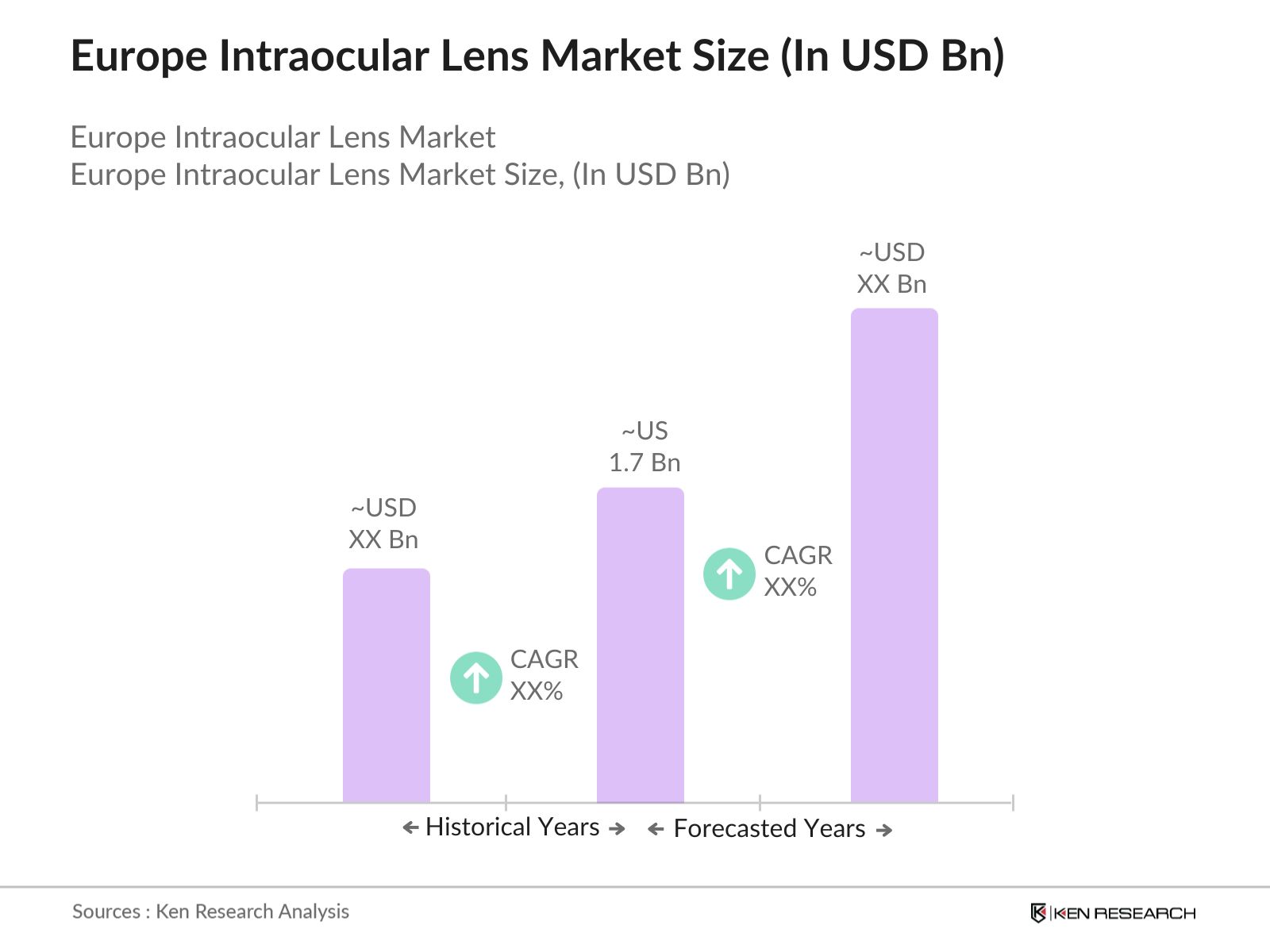
Germany and France dominate the intraocular lens market in Europe due to their advanced healthcare systems and high rate of cataract surgeries. These countries benefit from well-established ophthalmic centers, comprehensive insurance coverage for procedures, and an increasing adoption of premium lenses. The rise of outpatient surgical procedures and access to cutting-edge medical technologies further contribute to their dominance in the region.
The European Medical Device Regulation (MDR), which came into full effect in 2021, has reshaped the landscape for intraocular lens manufacturers. By 2024, all IOLs must meet stringent MDR requirements, which include robust clinical evidence and safety standards. This regulatory framework has led to longer approval times for new lenses, but also ensures higher safety and efficacy standards for patients across Europe. MDR compliance has become a critical factor for manufacturers looking to introduce new products to the market
Europe Intraocular Lens Market Segmentation
By Product Type: The market is segmented by product type into monofocal lenses, multifocal lenses, toric lenses, and accommodative lenses. Recently, monofocal intraocular lenses have held a dominant market share due to their lower costs and widespread use in standard cataract surgeries. These lenses are typically preferred for basic vision correction, making them the go-to option for most patients undergoing cataract removal procedures. Additionally, their consistent performance and high reimbursement coverage in many countries make them an attractive choice for both patients and healthcare providers.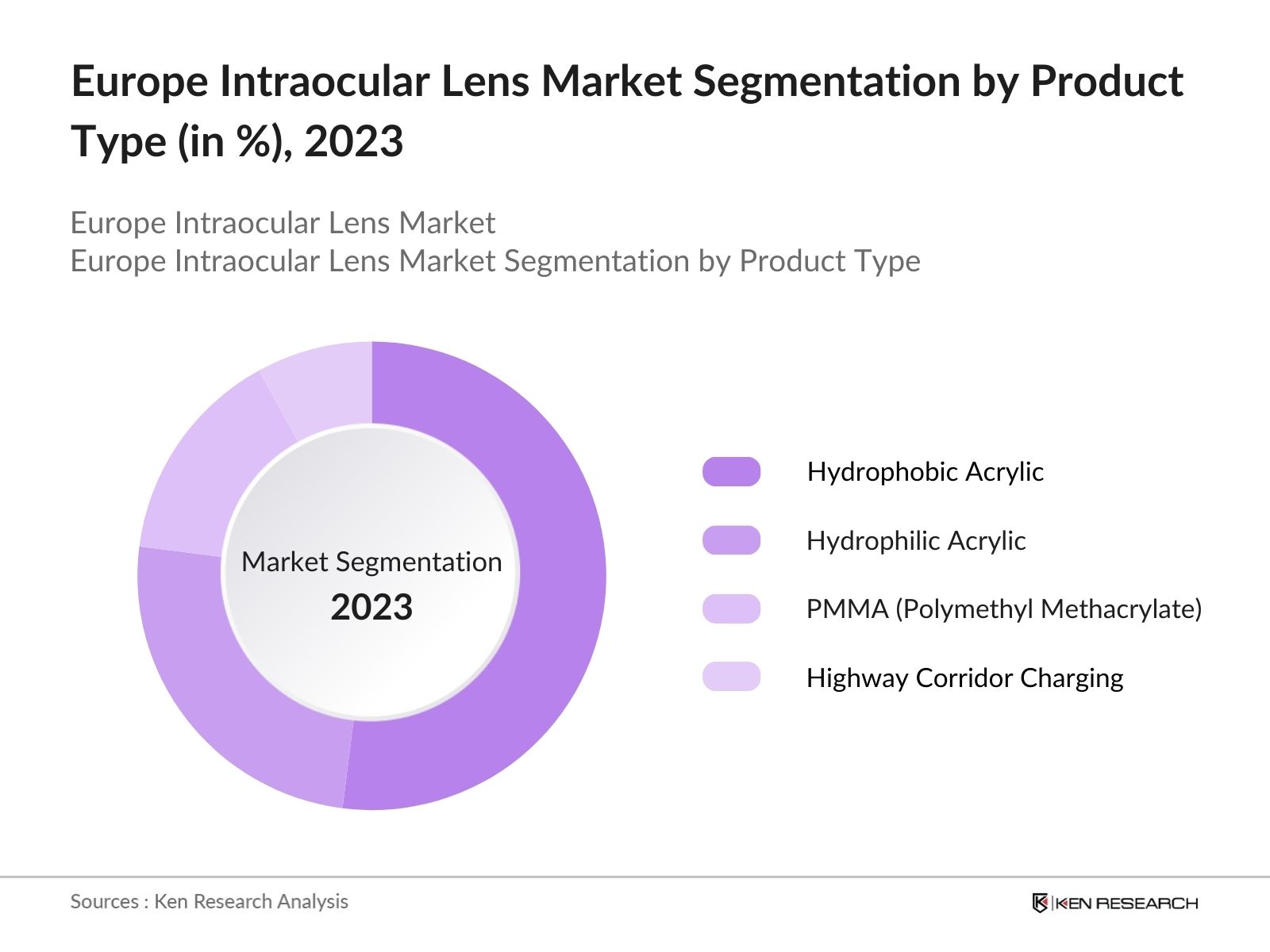
By Material Type: In terms of material, the market is segmented into hydrophobic acrylic, hydrophilic acrylic, and PMMA (Polymethyl Methacrylate). The hydrophobic acrylic segment has emerged as the leading sub-segment due to its high biocompatibility, minimal postoperative complications, and reduced risk of posterior capsule opacification (PCO). These factors contribute to its growing preference by ophthalmologists, particularly for premium intraocular lenses, ensuring a strong position in the market.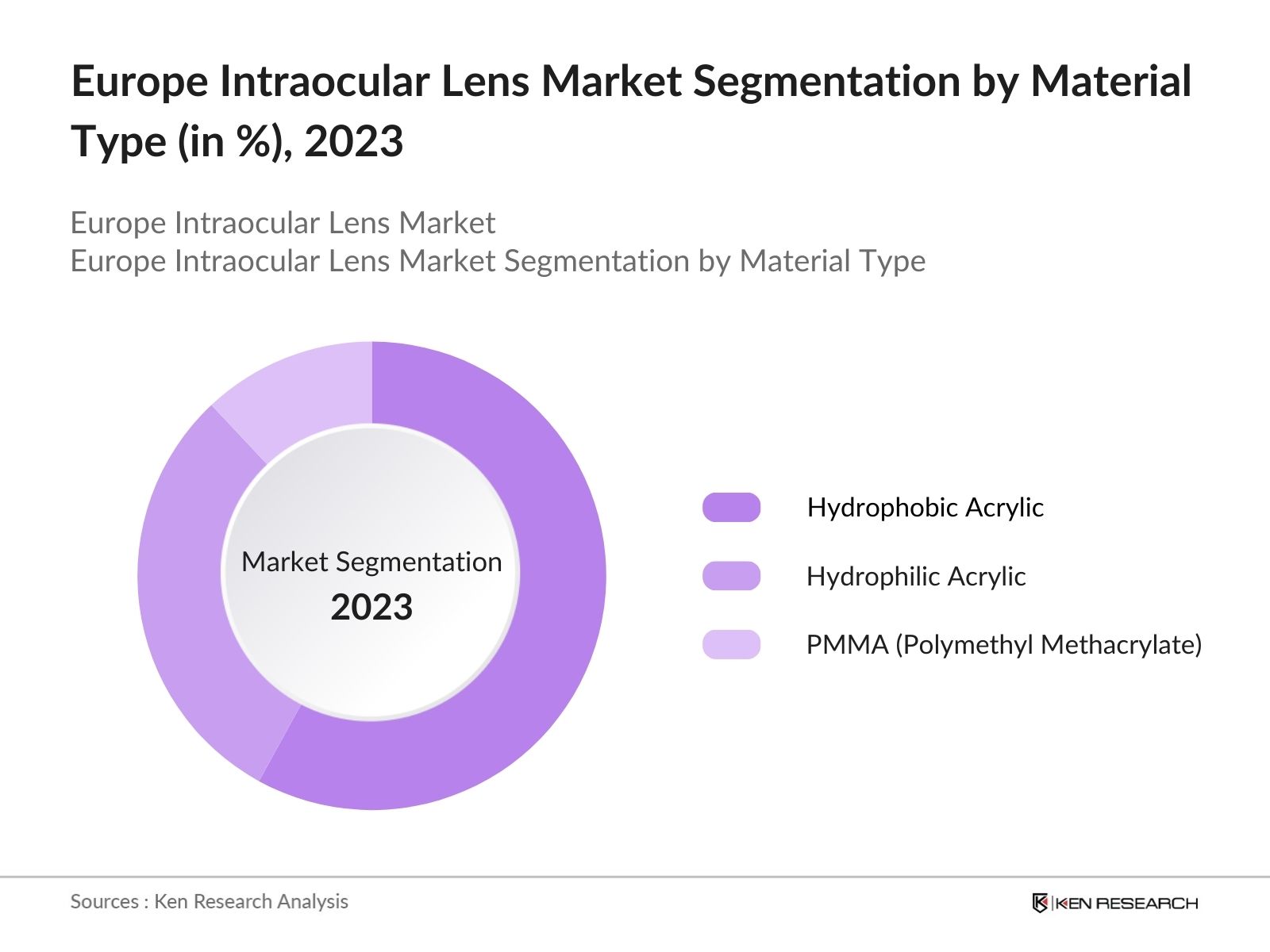
Europe Intraocular Lens Companies Market Competitive Landscape
The Europe intraocular lens market is highly competitive, with several key players leading innovation in lens design and surgical techniques. Major players are focusing on product differentiation, including the introduction of multifocal and toric lenses designed to address astigmatism and presbyopia. The market is also witnessing strategic partnerships and acquisitions aimed at expanding product portfolios and improving geographic reach. Smaller firms, such as Rayner Intraocular Lenses Limited, are leveraging their local expertise and reputation in niche markets.
|
Company |
Establishment Year |
Headquarters |
Revenue (USD Bn) |
Employees |
Product Portfolio |
R&D Spending |
Geographical Presence |
Strategic Partnerships |
|
Alcon |
1945 |
Geneva, Switzerland |
||||||
|
Johnson & Johnson Vision |
1959 |
Jacksonville, USA |
||||||
|
Bausch + Lomb |
1853 |
New York, USA |
||||||
|
Carl Zeiss Meditec AG |
1846 |
Jena, Germany |
||||||
|
Rayner Intraocular Lenses Ltd. |
1910 |
Worthing, UK |
Europe Intraocular Lens Industry Analysis
Growth Drivers
Increasing Prevalence of Cataracts: The prevalence of cataracts has surged, driven by the aging population across Europe. According to the European Commission, in 2024, cataracts affect over 20 million people aged 65 and above in the region. With the Eurostat population projection indicating a steady increase in the elderly population, the incidence of cataracts is expected to rise, as age-related eye disorders become more common. This drives the demand for intraocular lenses (IOLs), essential for cataract surgery, contributing to market growth. These surgeries are among the most common procedures in Europe, reaching over 4.5 million annually in 2024.
Aging Population: Europes aging population is a key driver for the intraocular lens market. By 2024, 22.8% of Europes total population is aged 65 and above, according to Eurostat. As the elderly are more prone to cataracts and other vision impairments, the demand for IOLs has surged, leading to more cataract surgeries. The rising geriatric population, particularly in countries like Italy and Germany, is expected to create sustained demand for these procedures, ensuring continuous growth in the market for intraocular lenses.
Advancements in Surgical Techniques: Intraocular lens surgeries have benefited from significant advancements in surgical techniques, particularly the adoption of laser-assisted cataract surgery. By 2024, nearly 35% of cataract surgeries in Europe are performed using minimally invasive techniques, significantly improving outcomes and reducing recovery times. The adoption of techniques such as phacoemulsification further boosts demand for advanced IOLs, as it allows for greater precision during implantation, resulting in higher patient satisfaction and improved vision outcomes.
Market Challenges
High Cost of Premium Lenses: The high cost of premium intraocular lenses presents a significant barrier to wider adoption. Premium lenses can cost up to five times more than standard monofocal lenses, with prices ranging from 1,500 to 4,000 per lens, depending on the type and customization. This high cost makes these lenses unaffordable for many patients, especially in countries where healthcare funding is limited, contributing to slower market penetration in lower-income segments of the population.
Limited Reimbursement Policies: Reimbursement policies for premium IOLs remain restrictive across many European countries. While basic cataract surgery is covered under most national healthcare systems, premium lenses often fall outside the scope of public reimbursement, requiring patients to cover the additional costs out of pocket. In countries like Spain and Italy, only 40-50% of the total cost of premium IOLs is reimbursed, which limits their accessibility to a broader population and constrains the markets growth potential.
Europe Intraocular Lens Market Future Outlook
The Europe intraocular lens market is poised for significant growth driven by technological advancements, an increase in cataract surgeries, and growing demand for premium lenses. Over the next few years, the market is expected to benefit from innovations in lens materials and designs that aim to improve patient outcomes, such as better depth of focus and enhanced astigmatism correction. In addition, government policies that incentivize vision care for the aging population and advancements in AI-driven ophthalmic surgeries are expected to play a key role in market expansion.
Future Market Opportunities
Emerging Markets Expansion: Emerging markets in Eastern Europe present significant opportunities for growth in the intraocular lens market. Countries such as Poland, Hungary, and Romania are experiencing increased healthcare investments, with governments focusing on improving cataract surgery rates. In 2024, Poland plans to increase cataract surgery procedures by 25%, supported by European Union funding for healthcare infrastructure. This expansion into less mature markets will drive demand for affordable and premium intraocular lenses, presenting a lucrative opportunity for manufacturers.
Increase in Outpatient Cataract Surgeries
The shift towards outpatient cataract surgeries is becoming increasingly common in Europe, driven by the need for cost-effective and efficient healthcare solutions. By 2024, over 75% of cataract surgeries in Europe are performed on an outpatient basis, significantly reducing hospital stays and associated costs. This shift is particularly prominent in the UK and France, where outpatient services are becoming the norm. The trend will likely drive further demand for intraocular lenses as more patients seek faster recovery times and less invasive surgery options.
Scope of the Report
|
Segmentation |
Sub-Segmentation |
|---|---|
|
By Product Type |
Monofocal Intraocular Lenses |
|
Multifocal Intraocular Lenses |
|
|
Toric Intraocular Lenses |
|
|
Accommodative Intraocular Lenses |
|
|
By Material Type |
Hydrophobic Acrylic |
|
Hydrophilic Acrylic |
|
|
PMMA (Polymethyl Methacrylate) |
|
|
By End-User |
Hospitals |
|
Ophthalmic Clinics |
|
|
Ambulatory Surgery Centers |
|
|
By Technology |
Phacoemulsification |
|
Extracapsular Cataract Extraction |
|
|
By Country |
Germany |
|
France |
|
|
United Kingdom |
|
|
Italy |
|
|
Spain |
Major Players
- Alcon
- Johnson & Johnson Vision
- Bausch + Lomb
- Carl Zeiss Meditec AG
- Hoya Corporation
- STAAR Surgical Company
- Rayner Intraocular Lenses Limited
- PhysIOL SA
- Oculentis GmbH
- SIFI Medtech
- VSY Biotechnology
- Ophtec BV
- HumanOptics AG
- Excel Lens India Pvt. Ltd.
- Lenstec Inc.
Products
Key Target Audience
Ophthalmology Centers
Hospitals and Clinics
Surgical Equipment Manufacturers
Intraocular Lens Suppliers
Investments and Venture Capitalist Firms
Banks and Financial Institutes
Government and Regulatory Bodies (European Medical Device Regulation Authority, National Health Services)
Medical Device Distributors
Ophthalmic Training and Research Institutes
Table of Contents
Europe Intraocular Lens Market Overview
1.1. Definition and Scope
1.2. Market Taxonomy
1.3. Market Growth Rate
1.4. Market Segmentation Overview
Europe Intraocular Lens Market Size (In USD Bn)
2.1. Historical Market Size
2.2. Year-On-Year Growth Analysis
2.3. Key Market Developments and Milestones
Europe Intraocular Lens Market Analysis
3.1. Growth Drivers
- 3.1.1. Increasing Prevalence of Cataracts
- 3.1.2. Aging Population
- 3.1.3. Advancements in Surgical Techniques
- 3.1.4. Increasing Adoption of Premium IOLs (Intraocular Lenses)
3.2. Market Challenges
- 3.2.1. High Cost of Premium Lenses
- 3.2.2. Limited Reimbursement Policies
- 3.2.3. Regulatory Barriers
3.3. Opportunities
- 3.3.1. Development of Multifocal and Toric IOLs
- 3.3.2. Emerging Markets Expansion
- 3.3.3. Increase in Outpatient Cataract Surgeries
3.4. Trends
- 3.4.1. Customization of Lenses Based on Patient Needs
- 3.4.2. Integration of AI in Lens Development
- 3.4.3. Growing Use of Phacoemulsification Technology
3.5. Government Regulation
- 3.5.1. European Medical Device Regulation (MDR)
- 3.5.2. CE Marking Requirements for Intraocular Lenses
- 3.5.3. Health Technology Assessment (HTA) for IOLs
3.6. SWOT Analysis
3.7. Stakeholder Ecosystem
3.8. Porters Five Forces Analysis
3.9. Competition Ecosystem
Europe Intraocular Lens Market Segmentation
4.1. By Product Type (In Value %)
- 4.1.1. Monofocal Intraocular Lenses
- 4.1.2. Multifocal Intraocular Lenses
- 4.1.3. Toric Intraocular Lenses
- 4.1.4. Accommodative Intraocular Lenses
4.2. By Material Type (In Value %)
- 4.2.1. Hydrophobic Acrylic
- 4.2.2. Hydrophilic Acrylic
- 4.2.3. PMMA (Polymethyl Methacrylate)
4.3. By End-User (In Value %)
- 4.3.1. Hospitals
- 4.3.2. Ophthalmic Clinics
- 4.3.3. Ambulatory Surgery Centers
4.4. By Technology (In Value %)
- 4.4.1. Phacoemulsification
- 4.4.2. Extracapsular Cataract Extraction (ECCE)
4.5. By Country (In Value %)
- 4.5.1. Germany
- 4.5.2. France
- 4.5.3. United Kingdom
- 4.5.4. Italy
- 4.5.5. Spain
Europe Intraocular Lens Market Competitive Analysis
5.1. Detailed Profiles of Major Companies
- 5.1.1. Alcon
- 5.1.2. Johnson & Johnson Vision
- 5.1.3. Bausch + Lomb
- 5.1.4. Carl Zeiss Meditec AG
- 5.1.5. Hoya Corporation
- 5.1.6. STAAR Surgical Company
- 5.1.7. Rayner Intraocular Lenses Limited
- 5.1.8. PhysIOL SA
- 5.1.9. Oculentis GmbH
- 5.1.10. SIFI Medtech
- 5.1.11. VSY Biotechnology
- 5.1.12. Ophtec BV
- 5.1.13. HumanOptics AG
- 5.1.14. Excel Lens India Pvt. Ltd.
- 5.1.15. Lenstec Inc.
5.2. Cross Comparison Parameters (Revenue, Headquarters, Inception Year, No. of Patents, R&D Spend, Geographical Reach, Product Portfolio, Strategic Partnerships)
5.3. Market Share Analysis
5.4. Strategic Initiatives
5.5. Mergers and Acquisitions
5.6. Investment Analysis
5.7. Venture Capital Funding
5.8. Private Equity Investments
Europe Intraocular Lens Market Regulatory Framework
6.1. Compliance with European Medical Device Regulation (MDR)
6.2. Reimbursement Policies and Coverage
6.3. Safety Standards and Certifications for IOLs
Europe Intraocular Lens Future Market Size (In USD Bn)
7.1. Future Market Size Projections
7.2. Key Factors Driving Future Market Growth
Europe Intraocular Lens Future Market Segmentation
8.1. By Product Type (In Value %)
8.2. By Material Type (In Value %)
8.3. By End-User (In Value %)
8.4. By Technology (In Value %)
8.5. By Country (In Value %)
Europe Intraocular Lens Market Analysts Recommendations
9.1. TAM/SAM/SOM Analysis
9.2. Customer Cohort Analysis
9.3. Marketing Initiatives
9.4. White Space Opportunity Analysis
Disclaimer
Contact Us
Research Methodology
Step 1: Identification of Key Variables
The initial step involves constructing a stakeholder ecosystem encompassing key players in the Europe Intraocular Lens Market. This is achieved through extensive desk research, including a review of industry reports, databases, and publications. The goal is to identify critical variables such as market drivers, challenges, and technological innovations shaping the market.
Step 2: Market Analysis and Construction
This phase involves the collection and analysis of historical data on market penetration, adoption rates, and revenue generated by intraocular lens manufacturers. The analysis includes market segmentation data to understand consumer preferences, regional trends, and market share.
Step 3: Hypothesis Validation and Expert Consultation
Market hypotheses are formed based on the collected data and are then validated through interviews with industry experts, ophthalmologists, and market leaders. These consultations provide insights into market dynamics and help refine the report's conclusions.
Step 4: Research Synthesis and Final Output
The final phase of the research involves synthesizing the data and insights to produce a comprehensive market analysis. This includes validating statistics using both top-down and bottom-up approaches, ensuring accuracy in market projections and segmentation data.
Frequently Asked Questions
01. How big is the Europe Intraocular Lens Market?
The Europe Intraocular Lens Market is valued at USD 1.7 billion, driven by increasing demand for cataract surgeries, advancements in lens technologies, and the aging population requiring vision correction procedures.
02. What are the challenges in the Europe Intraocular Lens Market?
Challenges in the Europe Intraocular Lens Market include high costs associated with premium intraocular lenses, limited reimbursement coverage, and regulatory barriers, particularly under the European Medical Device Regulation (MDR) framework.
03. Who are the major players in the Europe Intraocular Lens Market?
Key players in the Europe Intraocular Lens Market include Alcon, Johnson & Johnson Vision, Bausch + Lomb, Carl Zeiss Meditec AG, and Rayner Intraocular Lenses Limited. These companies lead the market due to their innovative product portfolios and strong presence in major European countries.
04. What are the growth drivers of the Europe Intraocular Lens Market?
Growth in the Europe Intraocular Lens Market is driven by increasing numbers of cataract surgeries, advancements in premium lens technologies such as toric and multifocal IOLs, and the availability of cutting-edge ophthalmic surgical procedures across Europe.
05. What trends are shaping the Europe Intraocular Lens Market?
Major trends in the Europe Intraocular Lens Market include the growing preference for outpatient surgeries, integration of AI for lens customization, and the increasing adoption of premium lenses that offer better post-operative visual acuity.
Why Buy From Us?

What makes us stand out is that our consultants follows Robust, Refine and Result (RRR) methodology. i.e. Robust for clear definitions, approaches and sanity checking, Refine for differentiating respondents facts and opinions and Result for presenting data with story

We have set a benchmark in the industry by offering our clients with syndicated and customized market research reports featuring coverage of entire market as well as meticulous research and analyst insights.

While we don't replace traditional research, we flip the method upside down. Our dual approach of Top Bottom & Bottom Top ensures quality deliverable by not just verifying company fundamentals but also looking at the sector and macroeconomic factors.

With one step in the future, our research team constantly tries to show you the bigger picture. We help with some of the tough questions you may encounter along the way: How is the industry positioned? Best marketing channel? KPI's of competitors? By aligning every element, we help maximize success.

Our report gives you instant access to the answers and sources that other companies might choose to hide. We elaborate each steps of research methodology we have used and showcase you the sample size to earn your trust.

If you need any support, we are here! We pride ourselves on universe strength, data quality, and quick, friendly, and professional service.