
Europe Wave and Tidal Energy Market Outlook to 2030
Region:Europe
Author(s):Yogita Sahu
Product Code:KROD4567
Region:Europe
Author(s):Yogita Sahu
Product Code:KROD4567
December 2024
91
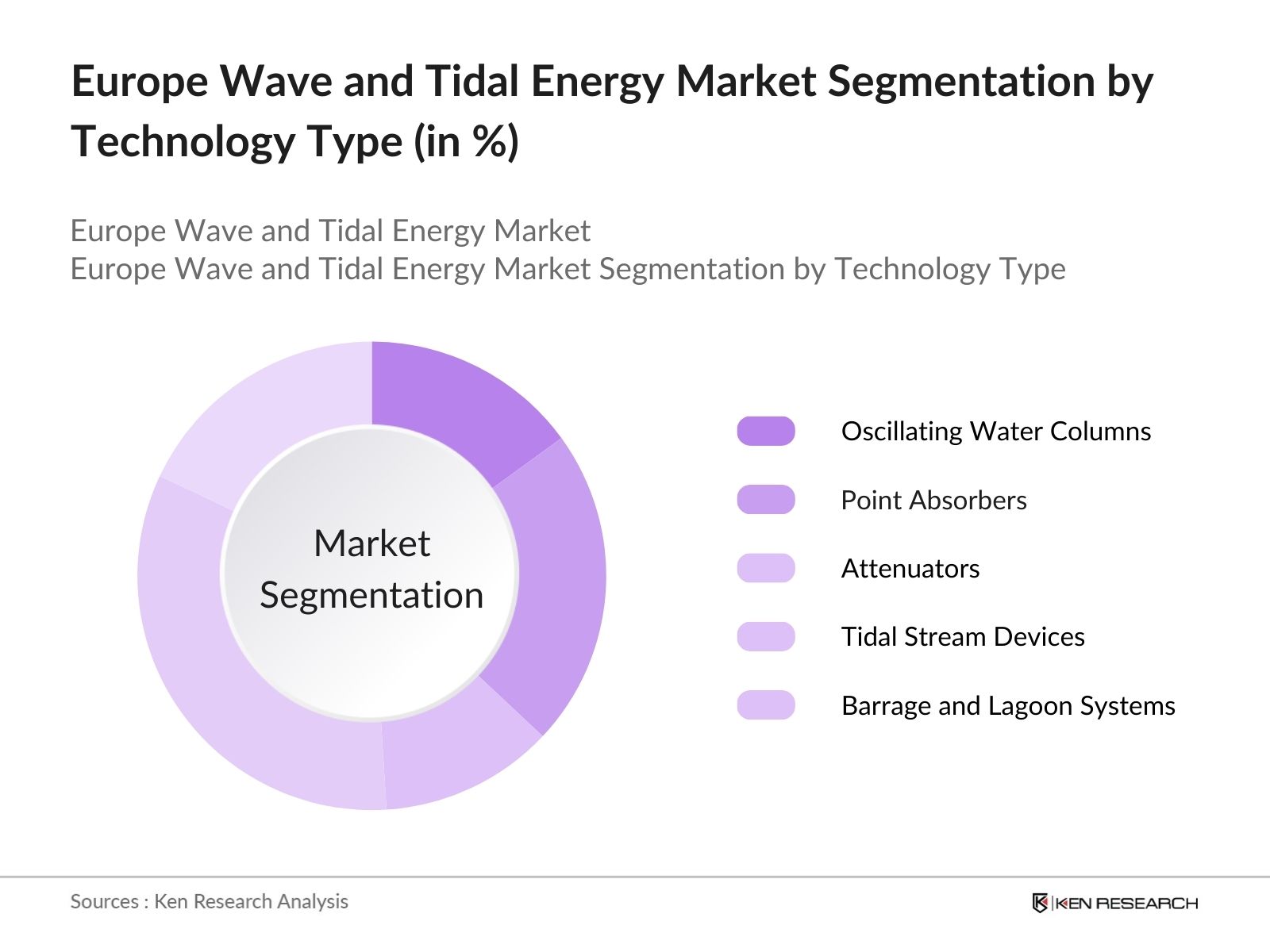
By Technology: The market is segmented by technology into oscillating water columns, point absorbers, attenuators, tidal stream devices, and barrage and lagoon systems. Tidal stream devices hold the largest market share within this segment, as they efficiently convert kinetic energy from tidal currents into electricity. The ease of implementation in coastal areas and scalability have led to their widespread adoption, particularly in the UK, which has extensive tidal resources.
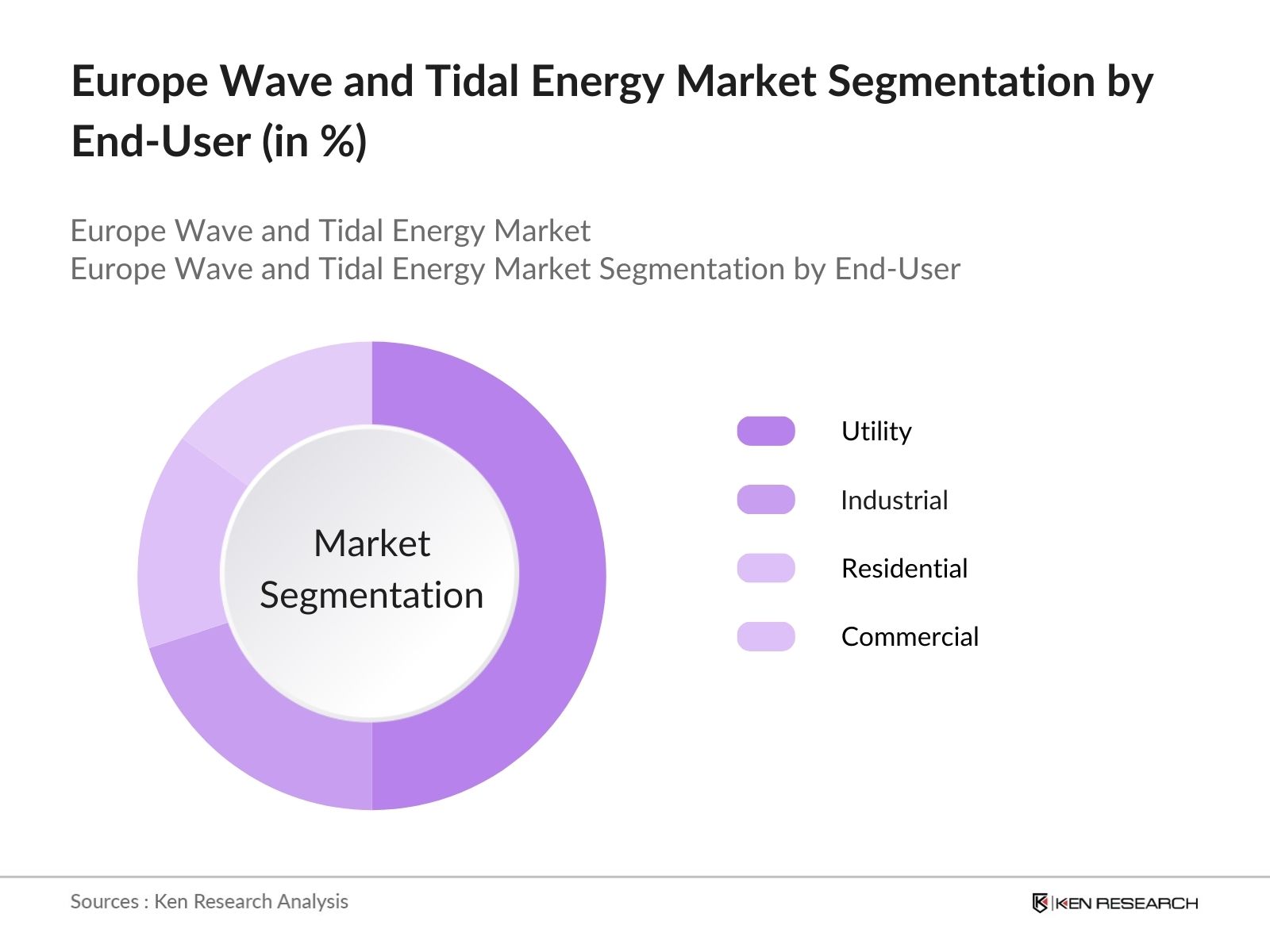
By End-User: The market is segmented by end-user into utility, industrial, residential, and commercial sectors. The utility segment dominates due to the large-scale power generation capacities required to meet national energy demands. Utilities have access to more substantial funding, making large tidal and wave energy installations feasible, especially in areas like France and Spain, where utility companies actively invest in renewable energy solutions to meet government mandates.
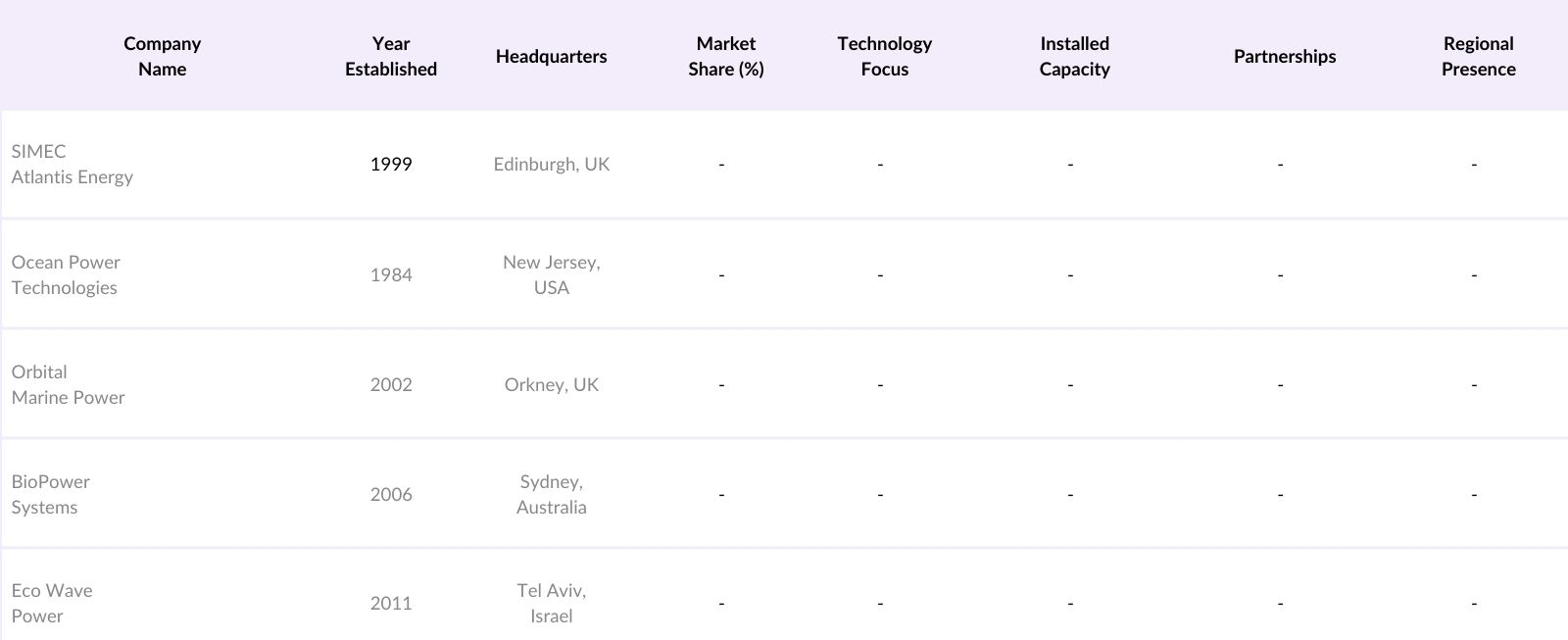
The market is led by a combination of established players and innovative startups. The dominance of companies like SIMEC Atlantis and Orbital Marine Power showcases the role of both established firms and emerging tech-focused players in this space.
Over the next five years, the European Wave and Tidal Energy industry is poised to expand, fueled by continuous innovation, supportive policies, and large-scale infrastructure projects. The increasing involvement of both private and public sector investments, along with technological advances, is expected to drive robust growth.
|
Technology |
Oscillating Water Columns Point Absorbers Attenuators Tidal Stream Devices Barrage and Lagoon |
|
End-User |
Utility Industrial Residential Commercial |
|
Installation |
Offshore Onshore |
|
Power Capacity |
Up to 10 MW 1050 MW Above 50 MW |
|
Region |
United Kingdom France Spain Portugal Rest of Europe |
1.1 Definition and Scope
1.2 Market Taxonomy
1.3 Market Growth Rate
1.4 Market Segmentation Overview
2.1 Historical Market Size
2.2 Year-On-Year Growth Analysis
2.3 Key Market Developments and Milestones
3.1 Growth Drivers
3.1.1 Increasing Investments in Renewable Energy
3.1.2 Favorable Government Policies and Subsidies
3.1.3 Technological Advancements in Energy Harvesting
3.2 Market Challenges
3.2.1 High Capital Costs
3.2.2 Environmental and Regulatory Constraints
3.2.3 Limited Technological Infrastructure
3.3 Opportunities
3.3.1 Expansion into Emerging Markets
3.3.2 Increasing Collaboration for R&D
3.3.3 Potential in Offshore Power Generation
3.4 Trends
3.4.1 Hybrid Energy Systems
3.4.2 Floating Tidal Energy Solutions
3.4.3 Use of AI in Energy Management
3.5 Regulatory Environment
3.5.1 EU Renewable Energy Directives
3.5.2 Environmental Impact Regulations
3.5.3 Financial Incentives and Grants
3.6 SWOT Analysis
3.7 Stakeholder Ecosystem
3.8 Porters Five Forces Analysis
3.9 Competition Ecosystem
4.1 By Technology (in Value %)
4.1.1 Oscillating Water Columns
4.1.2 Point Absorbers
4.1.3 Attenuators
4.1.4 Tidal Stream Devices
4.1.5 Barrage and Lagoon
4.2 By End-User (in Value %)
4.2.1 Utility
4.2.2 Industrial
4.2.3 Residential
4.2.4 Commercial
4.3 By Installation (in Value %)
4.3.1 Offshore
4.3.2 Onshore
4.4 By Power Capacity (in Value %)
4.4.1 Up to 10 MW
4.4.2 1050 MW
4.4.3 Above 50 MW
4.5 By Region (in Value %)
4.5.1 United Kingdom
4.5.2 France
4.5.3 Spain
4.5.4 Portugal
4.5.5 Rest of Europe
5.1 Detailed Profiles of Major Companies
5.1.1 SIMEC Atlantis Energy
5.1.2 Ocean Power Technologies
5.1.3 Orbital Marine Power
5.1.4 BioPower Systems
5.1.5 Eco Wave Power
5.1.6 Aquamarine Power
5.1.7 Wello Oy
5.1.8 OpenHydro
5.1.9 Minesto
5.1.10 Andritz Hydro Hammerfest
5.1.11 Voith Hydro
5.1.12 Seabased Group
5.1.13 CorPower Ocean
5.1.14 Magallanes Renovables
5.1.15 Verdant Power
5.2 Cross-Comparison Parameters (Revenue, Installed Capacity, Market Share, Technology Focus, Regional Presence, Partnerships, Project Pipeline, R&D Spending)
5.3 Market Share Analysis
5.4 Strategic Initiatives
5.5 Mergers and Acquisitions
5.6 Investment Analysis
5.7 Venture Capital Funding
5.8 Government Grants and Subsidies
5.9 Private Equity Investments
6.1 Environmental Standards and Compliance
6.2 Certification Processes and Licensing
6.3 EU Energy Policies and Regulations
7.1 Future Market Size Projections
7.2 Key Factors Driving Future Market Growth
8.1 By Technology (in Value %)
8.2 By End-User (in Value %)
8.3 By Installation (in Value %)
8.4 By Power Capacity (in Value %)
8.5 By Region (in Value %)
9.1 Total Addressable Market Analysis
9.2 Customer Cohort Analysis
9.3 Market Positioning Strategy
9.4 White Space Opportunity Analysis
In this phase, an ecosystem map of stakeholders within the European Wave and Tidal Energy Market is created through extensive desk research. Primary and secondary data sources are employed to determine the factors driving market trends, challenges, and opportunities.
Historical data on wave and tidal energy installations, revenue generation, and utility penetration are compiled. The market dynamics are assessed based on data from government reports, industry publications, and proprietary sources, ensuring the credibility of revenue estimates.
Market hypotheses are verified through interviews with industry professionals and consultations with experts from wave and tidal energy companies. This stage helps refine the market data and enhances accuracy in forecasting.
Final market estimates are validated by cross-referencing multiple data points. Direct insights from manufacturers and stakeholders ensure a comprehensive analysis, while robust data synthesis creates an accurate, actionable market report.
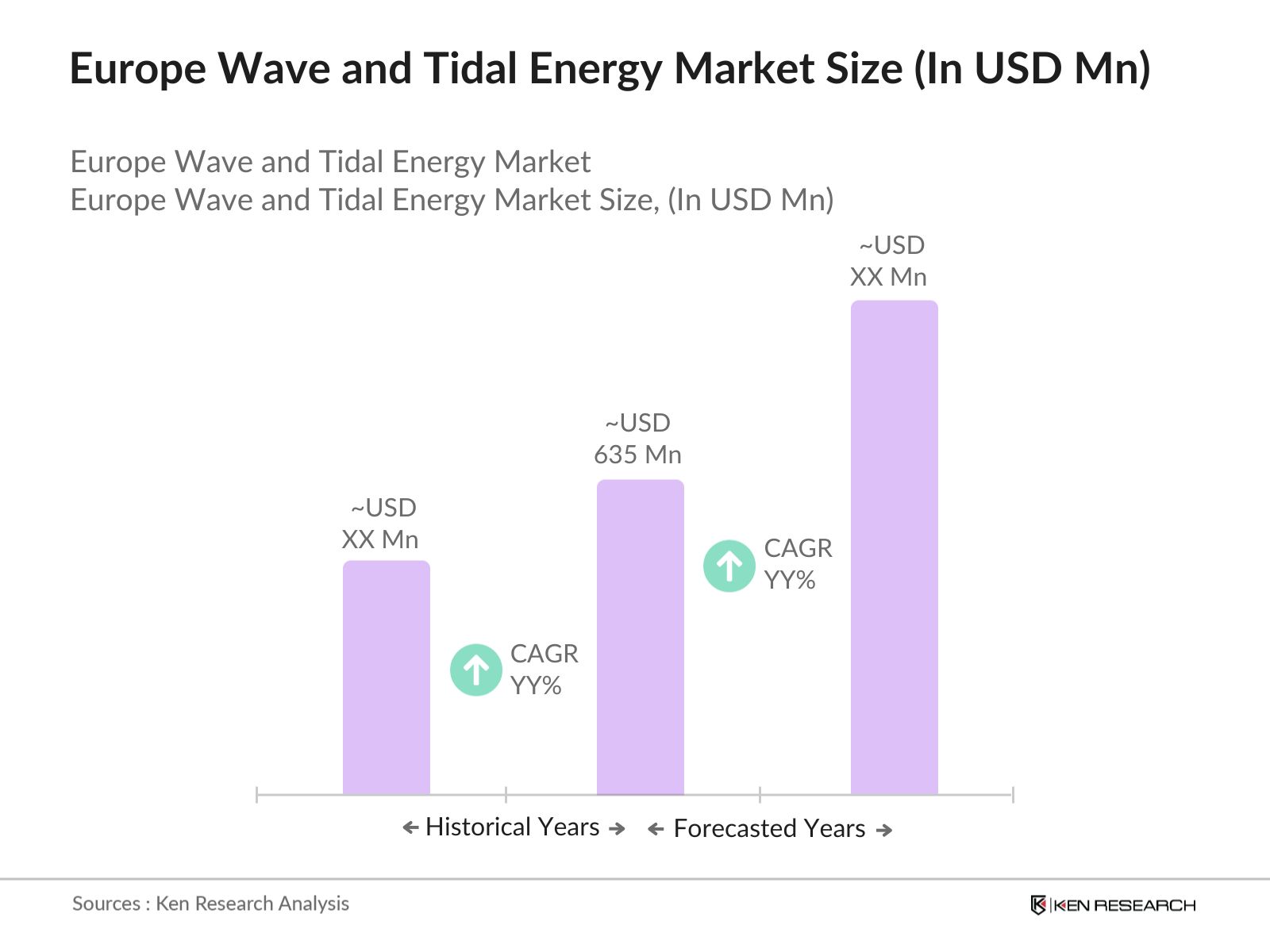
The Europe Wave and Tidal Energy Market is valued at USD 635 million, propelled by investments in renewable infrastructure and supportive government policies.
Challenges in the Europe Wave and Tidal Energy Market include high capital costs, regulatory compliance, and technological infrastructure limitations that may slow the pace of growth in the industry.
Leading companies in the Europe Wave and Tidal Energy Market include SIMEC Atlantis Energy, Ocean Power Technologies, Orbital Marine Power, and Eco Wave Power, each contributing significantly to innovation and project expansion.
Key growth drivers in the Europe Wave and Tidal Energy Market are government incentives, technological advancements, and Europes commitment to reducing its carbon footprint through renewable energy.

What makes us stand out is that our consultants follows Robust, Refine and Result (RRR) methodology. i.e. Robust for clear definitions, approaches and sanity checking, Refine for differentiating respondents facts and opinions and Result for presenting data with story

We have set a benchmark in the industry by offering our clients with syndicated and customized market research reports featuring coverage of entire market as well as meticulous research and analyst insights.

While we don't replace traditional research, we flip the method upside down. Our dual approach of Top Bottom & Bottom Top ensures quality deliverable by not just verifying company fundamentals but also looking at the sector and macroeconomic factors.

With one step in the future, our research team constantly tries to show you the bigger picture. We help with some of the tough questions you may encounter along the way: How is the industry positioned? Best marketing channel? KPI's of competitors? By aligning every element, we help maximize success.

Our report gives you instant access to the answers and sources that other companies might choose to hide. We elaborate each steps of research methodology we have used and showcase you the sample size to earn your trust.

If you need any support, we are here! We pride ourselves on universe strength, data quality, and quick, friendly, and professional service.