
Germany Plastic Lumber Market Outlook to 2030
Region:Germany
Author(s):Paribhasha Tiwari
Product Code:KROD7449
Region:Germany
Author(s):Paribhasha Tiwari
Product Code:KROD7449
December 2024
98
The Germany Plastic Lumber market is dominated by key international and local players that provide advanced solutions to the construction industry. The competitive landscape is shaped by the companies sustainability strategies, innovation in material recycling, and partnerships with government bodies for green infrastructure projects. Leading companies are also investing in R&D to improve the recyclability and durability of their products.
|
Company Name |
Establishment Year |
Headquarters |
R&D Investment |
Sustainability Practices |
Partnerships |
Product Range |
Certifications |
Global Reach |
|---|---|---|---|---|---|---|---|---|
|
Advanced Environmental Recycling Technologies |
1989 |
Arkansas, USA |
- | - | - | - | - | - |
|
Trex Company, Inc. |
1996 |
Virginia, USA |
- | - | - | - | - | - |
|
TimberTech |
1997 |
Illinois, USA |
- | - | - | - | - | - |
|
Polywood, Inc. |
1990 |
Indiana, USA |
- | - | - | - | - | - |
|
UPM ProFi |
1996 |
Helsinki, Finland |
- | - | - | - | - | - |
Over the next five years, the Germany Plastic Lumber market is expected to witness strong growth driven by increasing urbanization, infrastructure modernization, and the rise of eco-friendly construction materials. Government initiatives such as subsidies for sustainable building projects and stricter regulations on waste management will also propel the market forward. The continuous innovation in recycling technologies is likely to reduce production costs and improve the market appeal of plastic lumber as a sustainable alternative to traditional wood.
|
By Product Type |
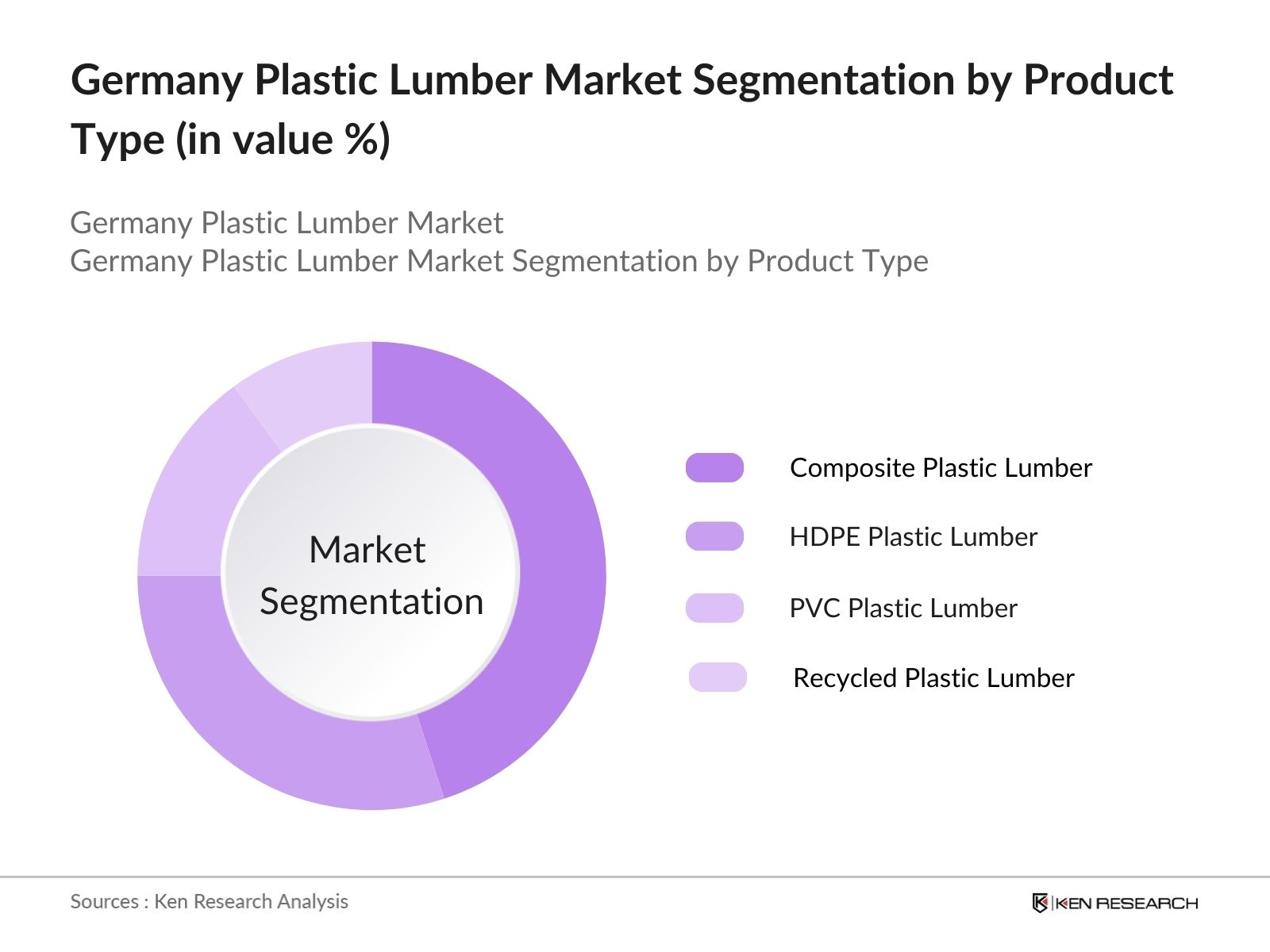
Composite Plastic Lumber HDPE Plastic Lumber PVC Plastic Lumber Recycled Plastic Lumber |
|
By Application |
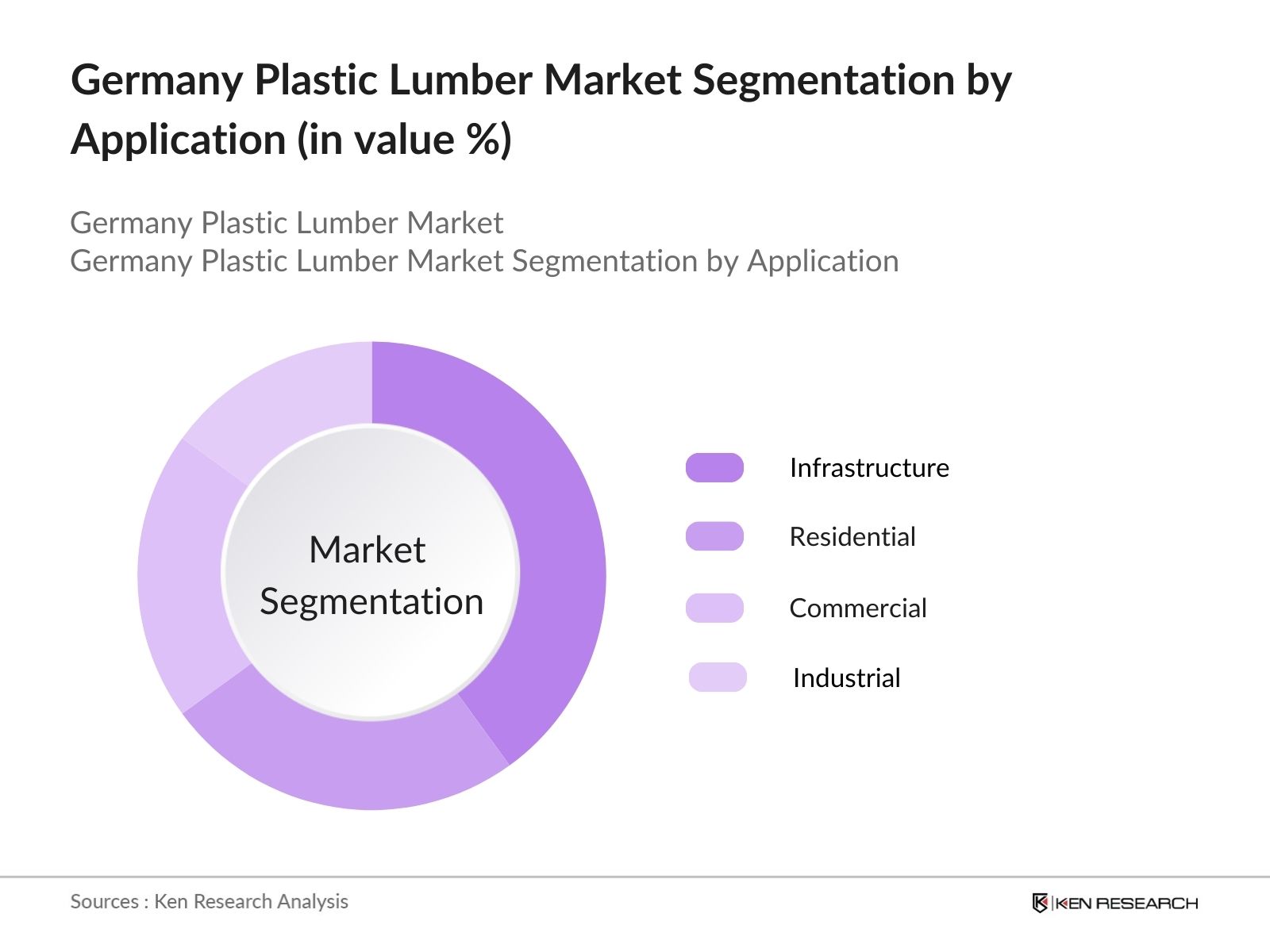
Residential Commercial Industrial Infrastructure |
|
By Processing Technology |
Injection Molding Extrusion Blow Molding Compression Molding |
|
By Material Source |
Recycled Plastics Virgin Plastics Mixed Plastics |
|
By Region |
Bavaria North Rhine-Westphalia Baden-Wrttemberg Lower Saxony |
1.1. Definition and Scope
1.2. Market Taxonomy
1.3. Market Growth Rate
1.4. Market Segmentation Overview
2.1. Historical Market Size
2.2. Year-On-Year Growth Analysis
2.3. Key Market Developments and Milestones
3.1. Growth Drivers
3.1.1. Sustainability and Environmental Regulations (Influence of Germanys sustainability policies on the adoption of plastic lumber)
3.1.2. Recycling Incentives (Government-led initiatives to promote recycled plastics in construction)
3.1.3. Durability and Longevity (Market shift towards low-maintenance materials in infrastructure)
3.1.4. Rise of Circular Economy Practices (Growth due to circular economy frameworks)
3.2. Market Challenges
3.2.1. High Initial Investment in Equipment (Capital intensity of manufacturing recycled plastic lumber)
3.2.2. Price Competitiveness with Traditional Lumber (Comparison with conventional wood prices)
3.2.3. Supply Chain Disruptions (Impact of global supply chain fluctuations on material availability)
3.2.4. Perception of Plastic-based Materials (Concerns over aesthetics and long-term performance)
3.3. Opportunities
3.3.1. Government Subsidies for Sustainable Construction (Potential grants for projects using eco-friendly materials)
3.3.2. Expansion into Urban Infrastructure Projects (Increasing demand in urban development)
3.3.3. Technological Advancements in Recycling Methods (Innovation in processing plastic waste for lumber)
3.3.4. Partnerships with Public and Private Sectors (Collaborations to boost market presence)
3.4. Trends
3.4.1. Increased Use of Recycled Plastics in Construction (Growing demand for plastic lumber in sustainable projects)
3.4.2. Adoption of Smart Manufacturing Technologies (Automation in production processes)
3.4.3. Innovative Applications in Residential and Commercial Projects (Emerging use cases in decking, fencing, etc.)
3.4.4. Rise of Modular Construction Using Plastic Lumber (Growth in prefab building components using plastic-based materials)
3.5. Government Regulation
3.5.1. Waste Reduction and Recycling Mandates (Germanys targets for reducing landfill waste)
3.5.2. Eco-certifications and Compliance Requirements (Certification standards for recycled plastic materials)
3.5.3. Green Building Policies (Impact of environmental building standards on plastic lumber adoption)
3.5.4. Public-Private Partnerships in Sustainable Infrastructure (Collaborations between government and industry players)
3.6. SWOT Analysis
3.7. Stakeholder Ecosystem
3.8. Porters Five Forces Analysis
3.9. Competitive Landscape Overview
4.1. By Product Type (In Value %)
4.1.1. Composite Plastic Lumber
4.1.2. HDPE Plastic Lumber
4.1.3. PVC Plastic Lumber
4.1.4. Recycled Plastic Lumber
4.2. By Application (In Value %)
4.2.1. Residential
4.2.2. Commercial
4.2.3. Industrial
4.2.4. Infrastructure
4.3. By Processing Technology (In Value %)
4.3.1. Injection Molding
4.3.2. Extrusion
4.3.3. Blow Molding
4.3.4. Compression Molding
4.4. By Material Source (In Value %)
4.4.1. Recycled Plastics
4.4.2. Virgin Plastics
4.4.3. Mixed Plastics
4.5. By Region (In Value %)
4.5.1. Bavaria
4.5.2. North Rhine-Westphalia
4.5.3. Baden-Wrttemberg
4.5.4. Lower Saxony
5.1. Detailed Profiles of Major Companies
5.1.1. Advanced Environmental Recycling Technologies, Inc.
5.1.2. Trex Company, Inc.
5.1.3. Plaswood Group
5.1.4. TimberTech
5.1.5. Fiberon
5.1.6. AZEK Building Products
5.1.7. CertainTeed
5.1.8. Beologic NV
5.1.9. BPI Recycled Products
5.1.10. Polywood, Inc.
5.1.11. Green Dot Bioplastics
5.1.12. Tangent Technologies, LLC
5.1.13. UPM ProFi
5.1.14. Plastic Lumber Company
5.1.15. Resysta
5.2. Cross Comparison Parameters (Product Range, R&D Investment, Sustainability Practices, Revenue, Global Reach, Certifications, Innovation Strategy, Manufacturing Capabilities)
5.3. Market Share Analysis
5.4. Strategic Initiatives
5.5. Mergers and Acquisitions
5.6. Investment Analysis
5.7. Government Grants and Subsidies
5.8. Private Equity and Venture Capital Investments
6.1. Environmental Standards and Compliance
6.2. Recycling and Waste Management Regulations
6.3. Certification Processes and Eco-labels
6.4. Building Code Compliance for Plastic Lumber Use
7.1. Future Market Size Projections
7.2. Key Factors Driving Future Market Growth
8.1. By Product Type (In Value %)
8.2. By Application (In Value %)
8.3. By Processing Technology (In Value %)
8.4. By Material Source (In Value %)
8.5. By Region (In Value %)
9.1. TAM/SAM/SOM Analysis
9.2. Customer Cohort Analysis
9.3. Marketing and Expansion Initiatives
9.4. White Space Opportunity Analysis
The first step involves identifying the critical variables impacting the Germany Plastic Lumber Market. This was achieved through in-depth desk research, analysis of environmental policies, and extensive study of market trends in the building materials sector.
This phase involved compiling historical data and analyzing the penetration of plastic lumber in the construction industry. Data sources included company financials, government regulations, and industry reports, which were used to construct an accurate market model.
Hypotheses around market trends, product segments, and growth drivers were validated through consultations with industry experts and key stakeholders in the plastic recycling and construction sectors.
The final output was derived by synthesizing the quantitative data with insights gathered from industry participants, ensuring an accurate, comprehensive analysis of the market, free of estimations or projections.
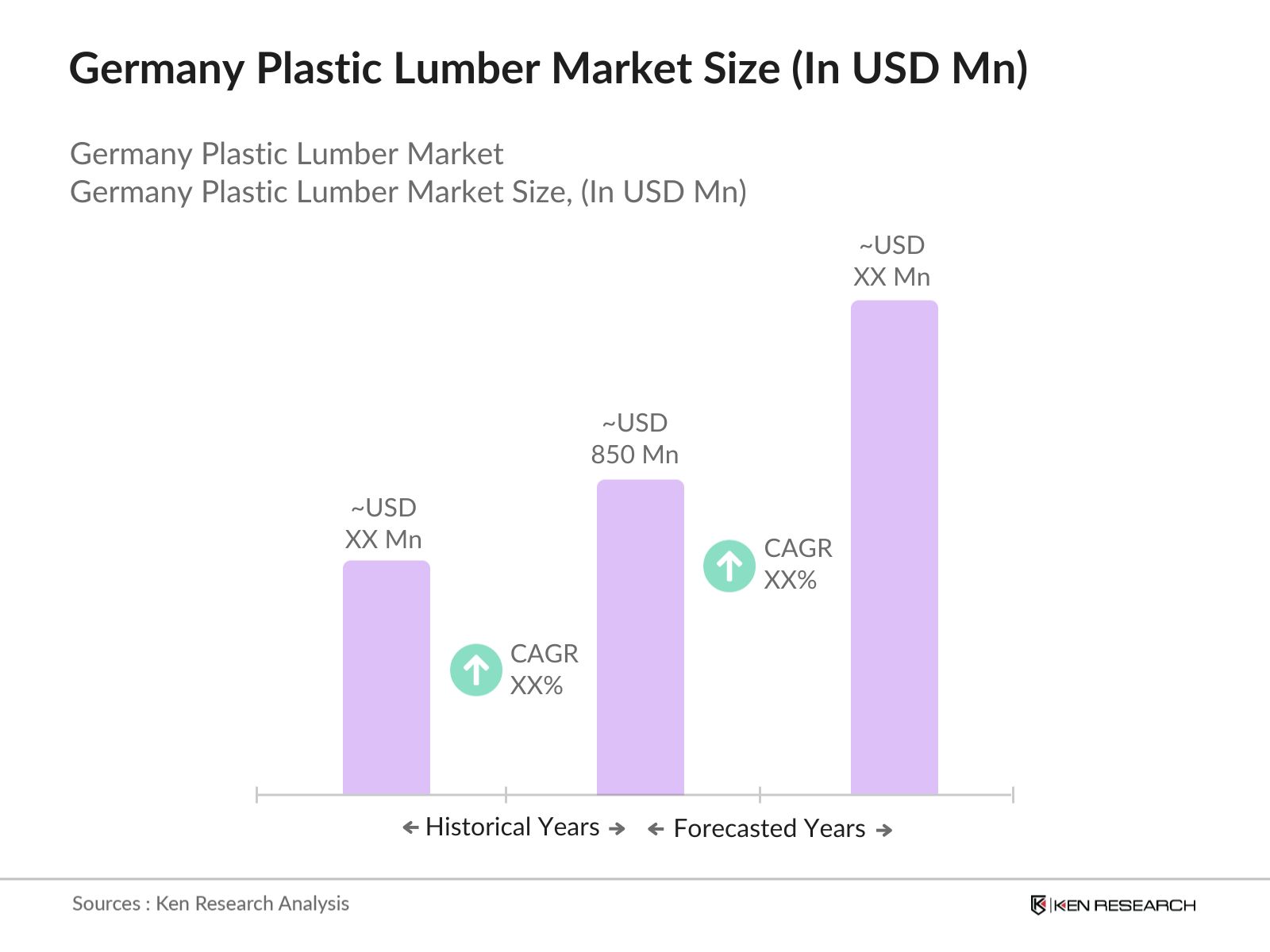
The Germany Plastic Lumber Market is valued at USD 850 million, driven by rising demand for sustainable building materials, supported by government incentives and public awareness of environmental issues.
Challenges in the Germany Plastic Lumber Market include high initial investment costs for advanced recycling technologies and stiff competition from traditional building materials like wood, which are still perceived as more aesthetic by some consumers.
Key players in the Germany Plastic Lumber Market include Advanced Environmental Recycling Technologies, Trex Company, Inc., TimberTech, Fiberon, and UPM ProFi. These companies lead due to their innovation in recycled materials and strong sustainability practices.
The Germany Plastic Lumber Market is driven by Germanys stringent environmental regulations, advancements in plastic recycling technology, and the growing demand for durable, eco-friendly building materials in both residential and infrastructure projects.

What makes us stand out is that our consultants follows Robust, Refine and Result (RRR) methodology. i.e. Robust for clear definitions, approaches and sanity checking, Refine for differentiating respondents facts and opinions and Result for presenting data with story

We have set a benchmark in the industry by offering our clients with syndicated and customized market research reports featuring coverage of entire market as well as meticulous research and analyst insights.

While we don't replace traditional research, we flip the method upside down. Our dual approach of Top Bottom & Bottom Top ensures quality deliverable by not just verifying company fundamentals but also looking at the sector and macroeconomic factors.

With one step in the future, our research team constantly tries to show you the bigger picture. We help with some of the tough questions you may encounter along the way: How is the industry positioned? Best marketing channel? KPI's of competitors? By aligning every element, we help maximize success.

Our report gives you instant access to the answers and sources that other companies might choose to hide. We elaborate each steps of research methodology we have used and showcase you the sample size to earn your trust.

If you need any support, we are here! We pride ourselves on universe strength, data quality, and quick, friendly, and professional service.