
Global 3d Food Printing Market Outlook to 2030
Region:Global
Author(s):Mukul Soni
Product Code:KROD6571
Region:Global
Author(s):Mukul Soni
Product Code:KROD6571
December 2024
97
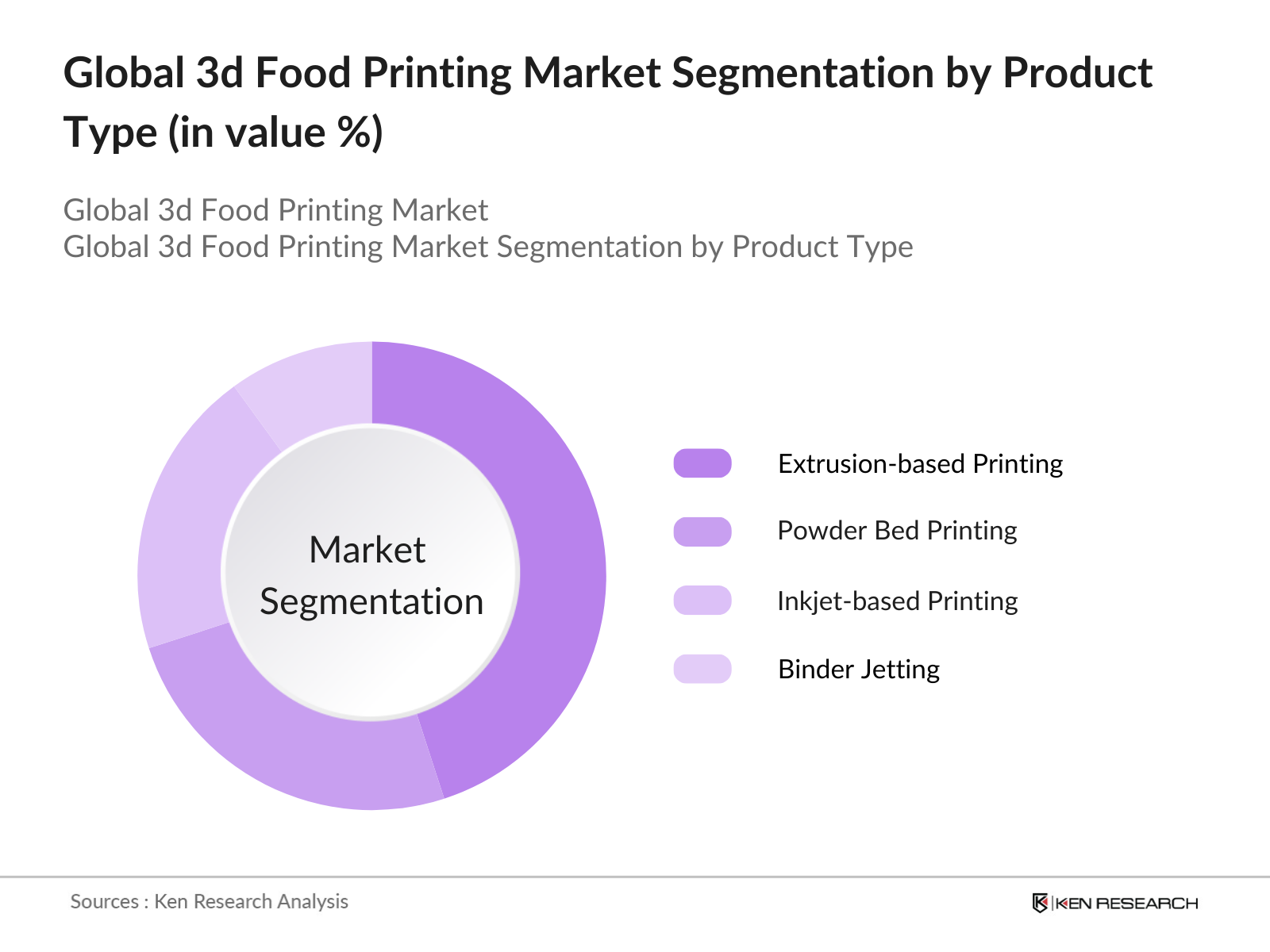
By Product Type: The 3D food printing market is segmented by product type into extrusion-based printing, powder bed printing, inkjet-based printing, and binder jetting. Extrusion-based printing currently dominates the market due to its flexibility in printing various food products, including dough, chocolate, and pureed foods. This method is widely preferred in commercial applications, as it allows for high customization in food textures and shapes, which is particularly valuable in the personalized nutrition and foodservice industries.
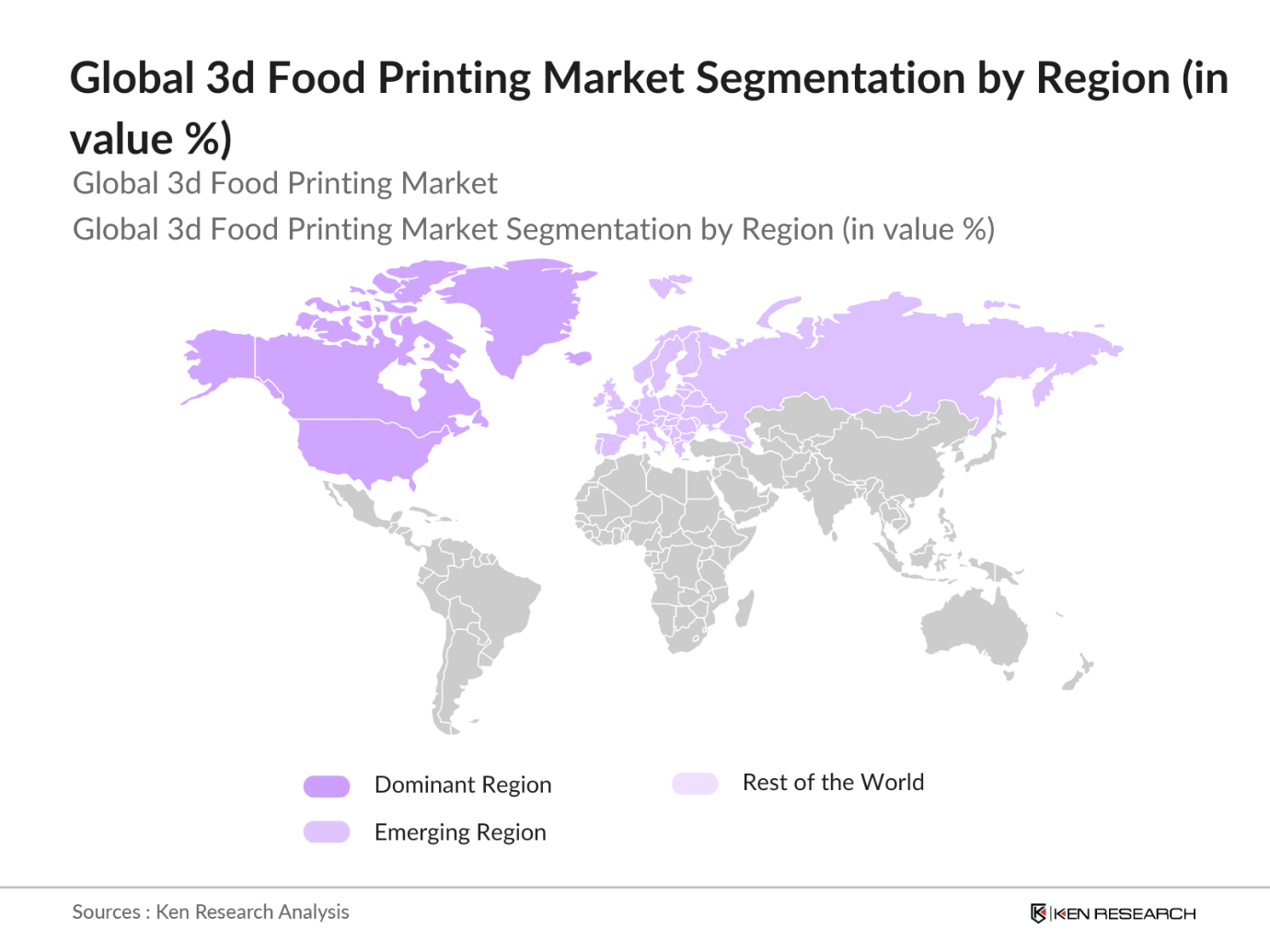
By Region: The global 3D food printing market is segmented into North America, Europe, Asia-Pacific, Latin America, and the Middle East & Africa. North America leads the market, driven by the rapid adoption of 3D printing technology in food customization and manufacturing, coupled with strong R&D initiatives. The United States, in particular, has seen widespread use of 3D food printing in high-end restaurants and space exploration projects, where printed foods are being tested for astronaut meals.
By Ingredient Type: The market is segmented by ingredient type into dairy products, fruits and vegetables, proteins (meat and plant-based), and carbohydrates (grains, pasta). Proteins dominate this segment due to the increasing demand for plant-based alternatives and high-protein diets. 3D food printers provide an innovative solution for printing protein-rich foods like meat substitutes, which cater to the rising global trend of veganism and the growing focus on sustainable food solutions.
The global 3D food printing market is dominated by both established players and innovative startups. These companies leverage their technological capabilities, strong distribution networks, and R&D investments to maintain a competitive edge. Leading companies focus on product innovation, partnerships with food manufacturers, and expanding their geographic presence to enhance market share.
Over the next five years, the global 3D food printing market is expected to witness significant growth driven by the increasing demand for sustainable food production, personalized nutrition, and the growing influence of plant-based diets. Technological innovations in food-grade printing materials, coupled with advances in automation and AI, will further enhance market growth. The development of new applications, particularly in healthcare and space exploration, is also expected to expand the markets reach.
|
Product Type |
Extrusion-based Printing Powder Bed Printing Inkjet-based Printing Binder Jetting |
|
Ingredient Type |
Dairy Products Fruits and Vegetables Proteins Carbohydrates |
|
End-User Application |
Residential Commercial Healthcare, Aerospace |
|
Technology |
Stereolithography (SLA) Selective Laser Sintering (SLS) Fused Deposition Modeling (FDM) Binder Jetting |
|
Region |
North America Europe Asia-Pacific Latin America Middle East & Africa |
1.1. Definition and Scope
1.2. Market Taxonomy
1.3. Market Growth Rate (Revenue Growth, Installations, Adoption Rate)
1.4. Market Segmentation Overview
2.1. Historical Market Size (Past Installations, Revenue, Market Penetration)
2.2. Year-On-Year Growth Analysis (Growth Drivers, YoY Adoption)
2.3. Key Market Developments and Milestones (Technological Breakthroughs, Major Product Launches)
3.1. Growth Drivers
3.1.1. Rise in Customized Nutrition Demand (Consumer Personalization, Nutritional Trends)
3.1.2. Advancements in Printing Materials (Ingredient Innovations, Food-Safe Materials)
3.1.3. Increasing Automation in Food Industry (Smart Kitchen Trends, Food Manufacturing Automation)
3.1.4. Sustainability and Food Waste Reduction (Circular Economy, Resource Efficiency)
3.2. Market Challenges
3.2.1. High Initial Investment and Maintenance Costs (CapEx, OpEx)
3.2.2. Limited Consumer Awareness (Market Education, Adoption Barriers)
3.2.3. Regulatory Complexities (Food Safety, Global Certification Standards)
3.3. Opportunities
3.3.1. Emerging Vegan and Plant-based Food Trends (Alternative Proteins, Plant-based Ingredient Usage)
3.3.2. Expanding Applications in Restaurants and Catering (Customized Menus, Precision Cooking)
3.3.3. Use of AI and Machine Learning for Recipe Development (Data-driven Recipe Customization)
3.4. Trends
3.4.1. Integration of IoT and Smart Food Technologies (Connected Devices, Real-time Monitoring)
3.4.2. Expanding Use in Space Exploration and Extreme Environments (NASA Partnerships, Space-friendly Food Technologies)
3.4.3. Growth of On-demand and Subscription Food Printing Services (Personalized Meal Kits, Custom Food Delivery)
3.5. Government Regulations
3.5.1. Food Safety Standards for Printed Foods (FDA, EU Regulations)
3.5.2. Nutritional Labeling Requirements (Nutritional Guidelines, Print Materials Compliance)
3.5.3. Environmental and Sustainability Policies (Packaging Waste Reduction, Resource Sustainability)
3.6. SWOT Analysis
3.7. Stakeholder Ecosystem (Suppliers, Distributors, Retailers)
3.8. Porters Five Forces (Bargaining Power of Suppliers, Threat of New Entrants)
3.9. Competition Ecosystem
4.1. By Product Type (In Value %)
Extrusion-based Printing
Powder Bed Printing
Inkjet-based Printing
Binder Jetting
4.2. By Ingredient Type (In Value %)
Dairy Products
Fruits and Vegetables
Proteins (Meat, Plant-based)
Carbohydrates (Grains, Pasta)
4.3. By End-User Application (In Value %)
Residential (Home-based Food Printing)
Commercial (Restaurants, Catering Services)
Healthcare (Hospital Meals, Nutritional Supplements)
Aerospace (Space Food)
4.4. By Technology (In Value %)
Stereolithography (SLA)
Selective Laser Sintering (SLS)
Fused Deposition Modeling (FDM)
Binder Jetting Technology
4.5. By Region (In Value %)
North America
Europe
Asia-Pacific
Latin America
Middle East & Africa
5.1. Detailed Profiles of Major Companies
5.1.1. Natural Machines
5.1.2. BeeHex
5.1.3. Choc Edge
5.1.4. 3D Systems Corporation
5.1.5. TNO (Netherlands Organisation for Applied Scientific Research)
5.1.6. Barilla Group
5.1.7. Print2Taste GmbH
5.1.8. ByFlow
5.1.9. Foodini
5.1.10. Biozoon GmbH
5.1.11. Nova Meat
5.1.12. WASP (Worlds Advanced Saving Project)
5.1.13. SMRC Ltd.
5.1.14. XYZprinting, Inc.
5.1.15. Dovetailed
5.2. Cross Comparison Parameters
Revenue
Headquarters
No. of Employees
Product Specialization
Market Penetration (Regional Footprint, Industries Served)
Technology Capability (Patent Holdings, Proprietary Technologies)
Strategic Partnerships
R&D Investments
5.3. Market Share Analysis
5.4. Strategic Initiatives (Partnerships, Acquisitions, Product Development)
5.5. Mergers And Acquisitions
5.6. Investment Analysis (Funding, Capital Expenditure Trends)
5.7. Venture Capital Funding
5.8. Government Grants
5.9. Private Equity Investments
6.1. Food Safety Certifications (Global Food Safety Initiative, HACCP Standards)
6.2. Compliance Requirements for Printed Food
6.3. Certification Processes (CE Marking, UL Certification)
7.1. Future Market Size Projections (Future Installations, Emerging Markets)
7.2. Key Factors Driving Future Market Growth
8.1. By Product Type (In Value %)
8.2. By Ingredient Type (In Value %)
8.3. By End-User Application (In Value %)
8.4. By Technology (In Value %)
8.5. By Region (In Value %)
9.1. TAM/SAM/SOM Analysis
9.2. Customer Cohort Analysis
9.3. Marketing Initiatives
9.4. White Space Opportunity Analysis
Disclaimer Contact UsThe research process begins by identifying key variables influencing the global 3D food printing market, including technology adoption rates, food safety regulations, and consumer preferences. Extensive desk research is conducted using secondary databases, industry reports, and proprietary sources.
This phase involves gathering and analyzing historical data on market penetration, sales figures, and technology adoption in the 3D food printing market. A detailed analysis of production capabilities and revenue generation is also conducted.
Industry experts are consulted via interviews and surveys to validate the hypotheses developed during the market analysis phase. Insights gathered from these consultations help refine market projections and provide a more accurate market outlook.
The final stage involves synthesizing the data collected from primary and secondary sources into a comprehensive market report. Data validation through direct engagement with 3D food printing companies ensures that the market analysis is accurate and reliable.
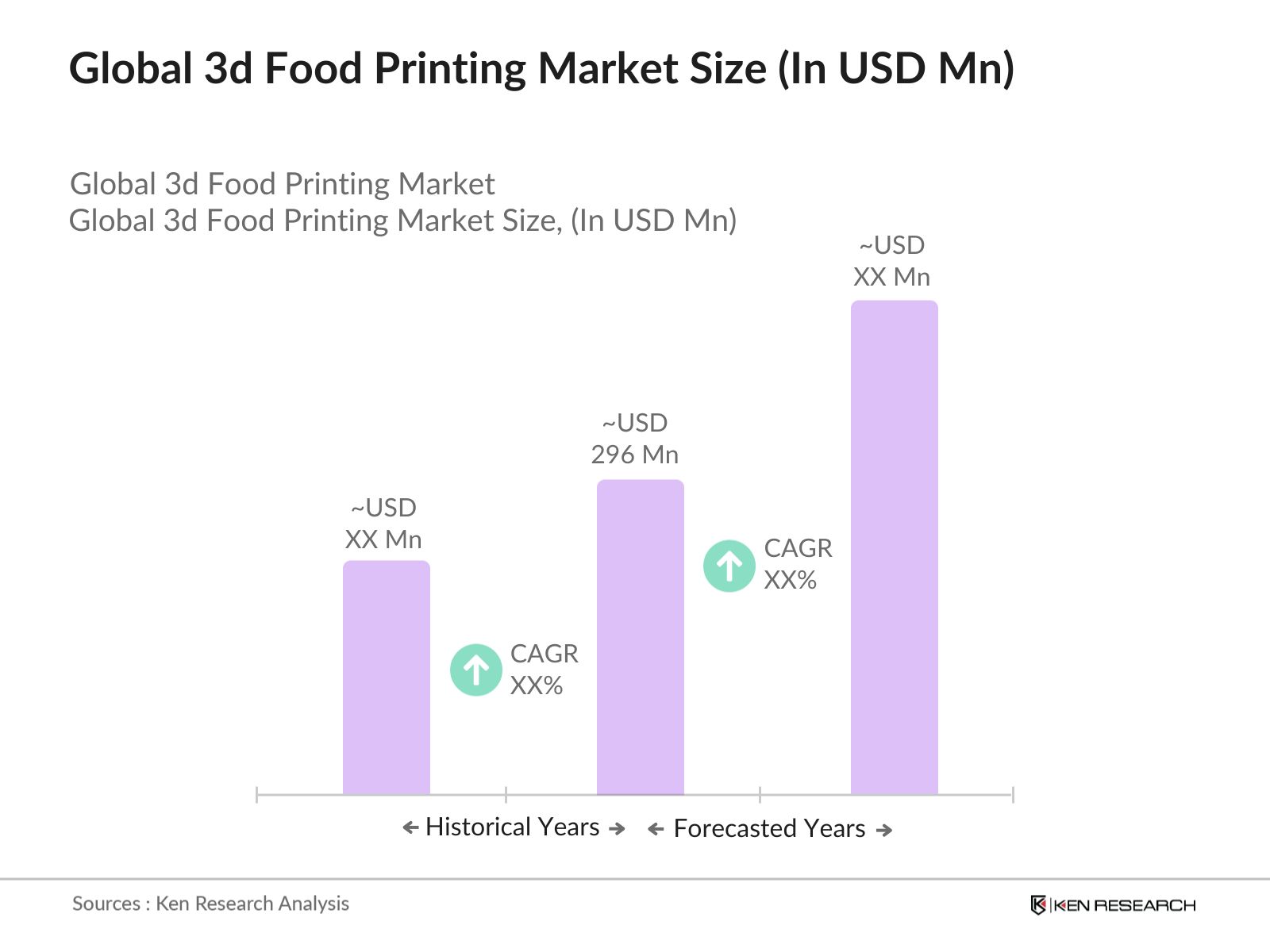
The global 3D food printing market is valued at USD 296 million, driven by technological advancements in printing materials and increasing consumer demand for personalized and sustainable food solutions.
Challenges include high initial costs for printers and materials, limited consumer awareness, and regulatory complexities related to food safety standards for 3D printed foods.
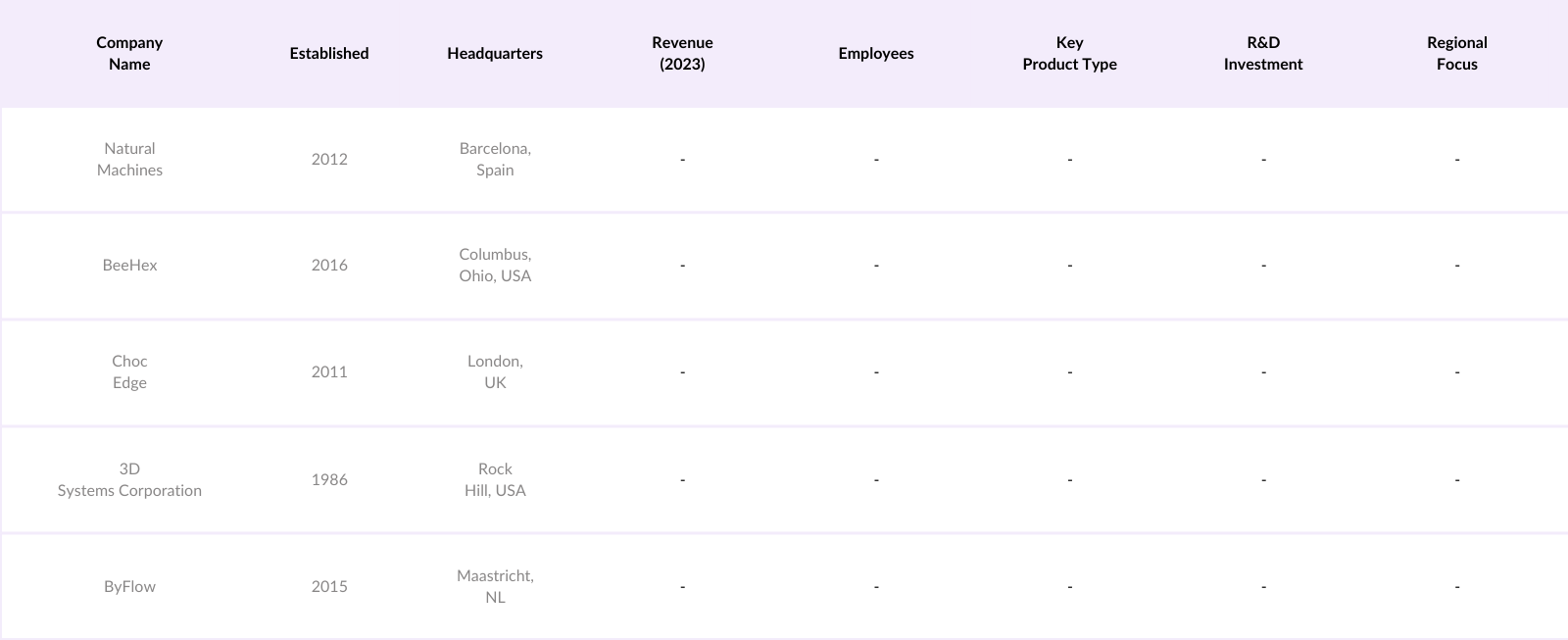
Key players include Natural Machines, BeeHex, Choc Edge, 3D Systems Corporation, and ByFlow, with these companies leading due to their technological innovation and strong industry partnerships.
The market is driven by growing consumer demand for personalized nutrition, advancements in printing technology, and the rising need for sustainable food production methods.

What makes us stand out is that our consultants follows Robust, Refine and Result (RRR) methodology. i.e. Robust for clear definitions, approaches and sanity checking, Refine for differentiating respondents facts and opinions and Result for presenting data with story

We have set a benchmark in the industry by offering our clients with syndicated and customized market research reports featuring coverage of entire market as well as meticulous research and analyst insights.

While we don't replace traditional research, we flip the method upside down. Our dual approach of Top Bottom & Bottom Top ensures quality deliverable by not just verifying company fundamentals but also looking at the sector and macroeconomic factors.

With one step in the future, our research team constantly tries to show you the bigger picture. We help with some of the tough questions you may encounter along the way: How is the industry positioned? Best marketing channel? KPI's of competitors? By aligning every element, we help maximize success.

Our report gives you instant access to the answers and sources that other companies might choose to hide. We elaborate each steps of research methodology we have used and showcase you the sample size to earn your trust.

If you need any support, we are here! We pride ourselves on universe strength, data quality, and quick, friendly, and professional service.