Global 3D Printing Market Outlook to 2030

Region:Global

Author(s):Rhythm Agarwal

Product Code:KENGR030

Published On

November 2024

Total pages

94

About the Report

Global 3D Printing Market Overview

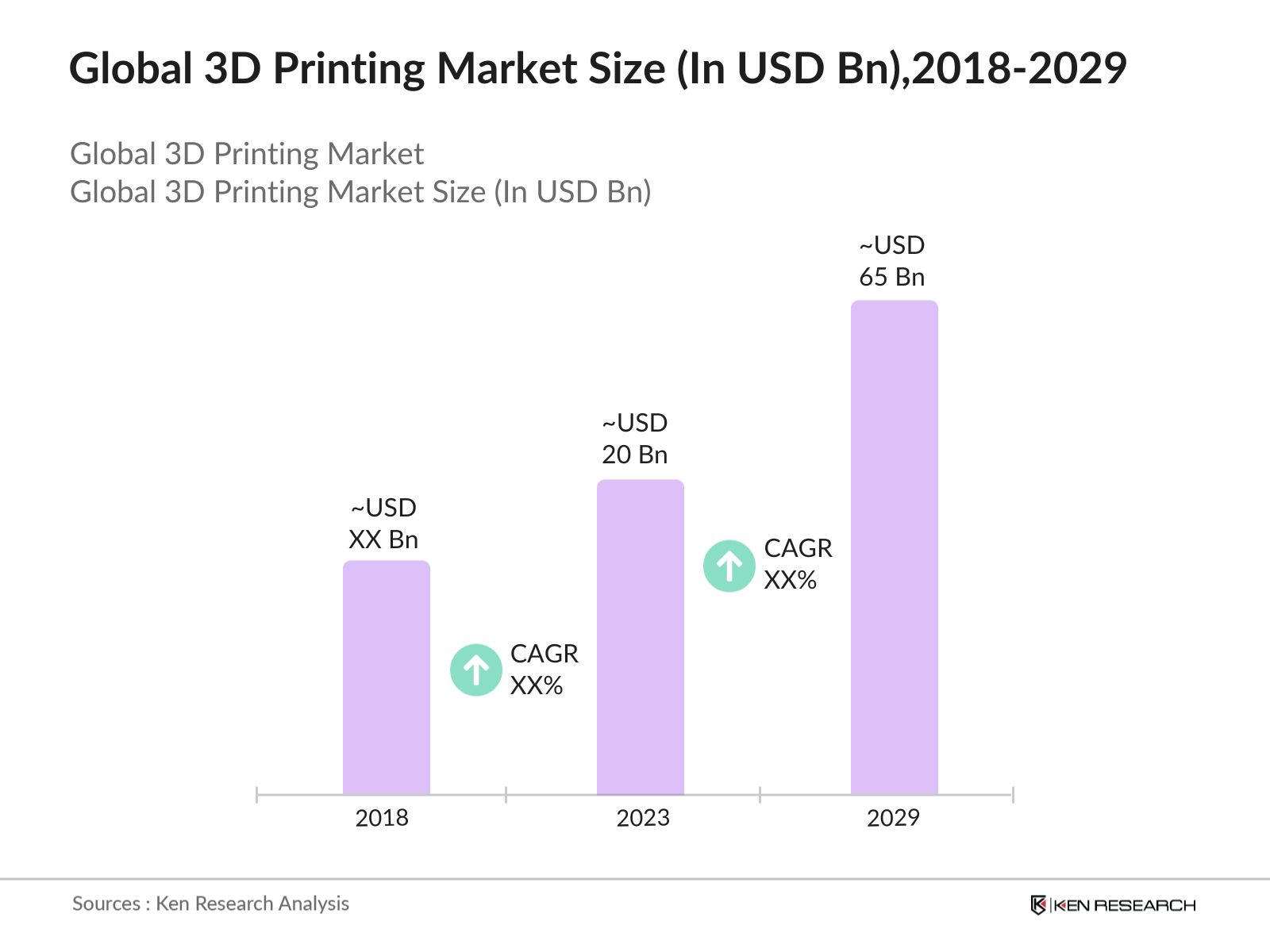
  • In 2023, the Global 3D Printing market was valued at $20 billion. The growth is driven by the increasing adoption of 3D printing technologies across various industries such as healthcare, automotive, aerospace, and consumer electronics. The ability to produce complex designs with precision and the reduction in production costs are key factors propelling the market forward.

market overviews

  • The market is dominated by key players such as HP Inc., Colibrium Additive, Proto Labs Inc, Stratasys Ltd. and Autodesk. These companies dominate the market due to their extensive product portfolios, continuous innovation, and strategic collaborations.
  • In November 2023, HP Inc. announced a strategic partnership with INDO-MIM to enhance its capabilities in metal additive manufacturing. This collaboration aims to advance the development and application of metal 3D printing technologies, enabling more efficient and innovative production solutions.

Global 3D Printing Current Market Analysis

market overviews

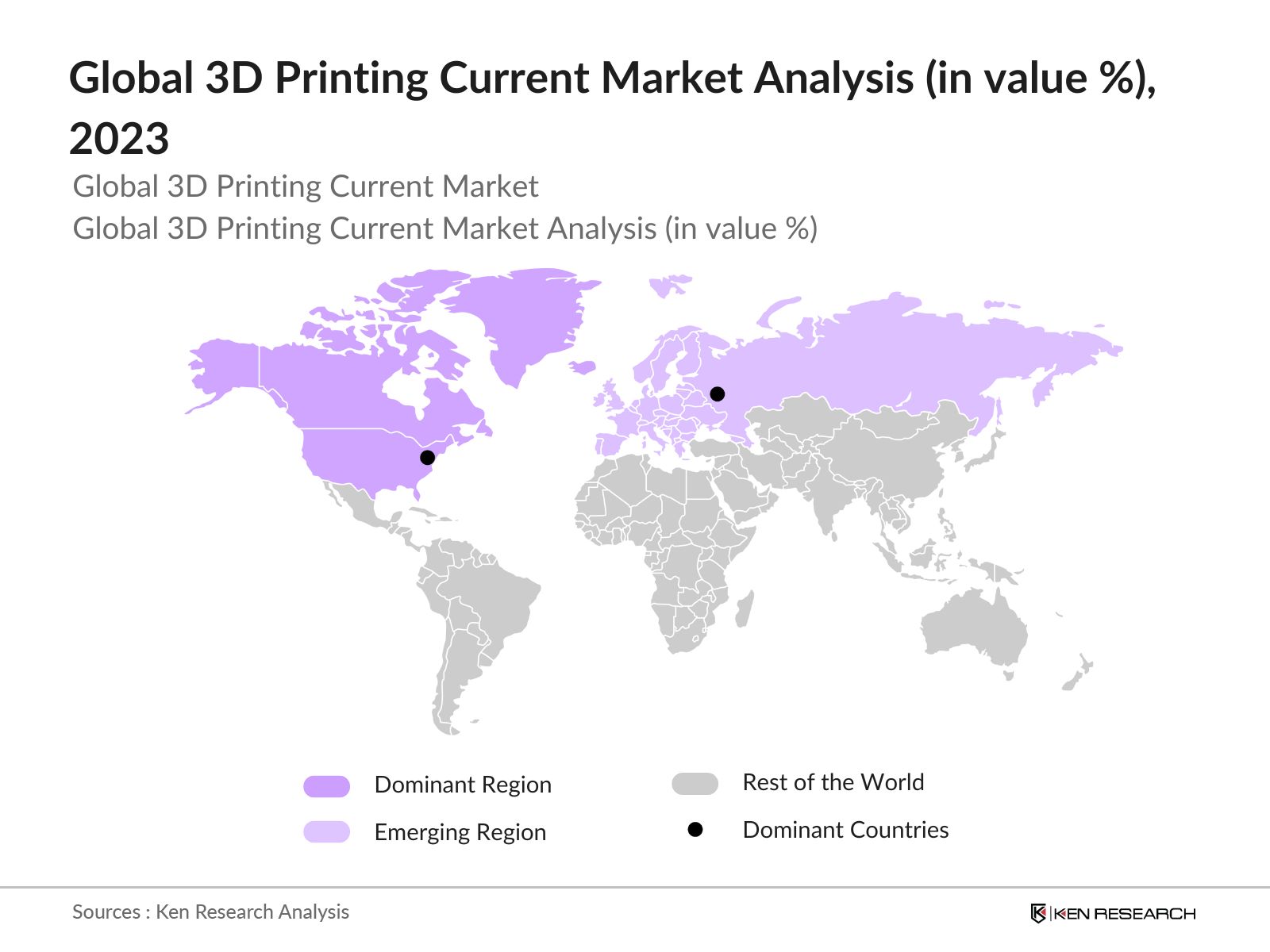
  • North America as dominant region: North America continues to lead the global 3D printing market, driven by technological advancements, a thriving industrial base, and substantial investment in research and development. The United States and Canada are at the forefront, with numerous startups and established companies pioneering innovative 3D printing solutions. Significant growth drivers include the strong presence of major aerospace, automotive, and healthcare industries that increasingly adopt 3D printing for rapid prototyping, custom manufacturing, and production of complex parts. In 2023, there were over 300 startups in the United States dedicated to 3D printing technologies and applications.
  • Europe as emerging region: Europe is emerging as a promising region in the 3D printing market, fueled by its strong engineering tradition, supportive regulatory environment, and strategic focus on Industry 4.0. Countries like Germany, the United Kingdom, and France are spearheading the region's growth through substantial investments in 3D printing technology, particularly in sectors such as automotive, aerospace, and medical devices. France's additive manufacturing sector generated $580 million in revenue in 2021, with significant contributions from public research institutions like the Commissariat for Atomic Energy and Alternative Energies (CEA) and the Centre National de la Recherche Scientifique (CNRS).
  • USA as dominant country: The United States stands out as the dominant country in the global 3D printing market, owing to its significant technological capabilities, innovative ecosystem, and comprehensive adoption across various industries. Key growth drivers in the U.S. include extensive R&D investments by both private and public sectors, leading to continuous advancements in 3D printing materials, software, and hardware. In 2023, USA accounted for 40% of global patenting activity in additive manufacturing (3D printing) and has been a leader in this field since its inception nearly four decades ago.

Global 3D Printing Market Segmentation

The Global 3D Printing market can be segmented based on several factors:

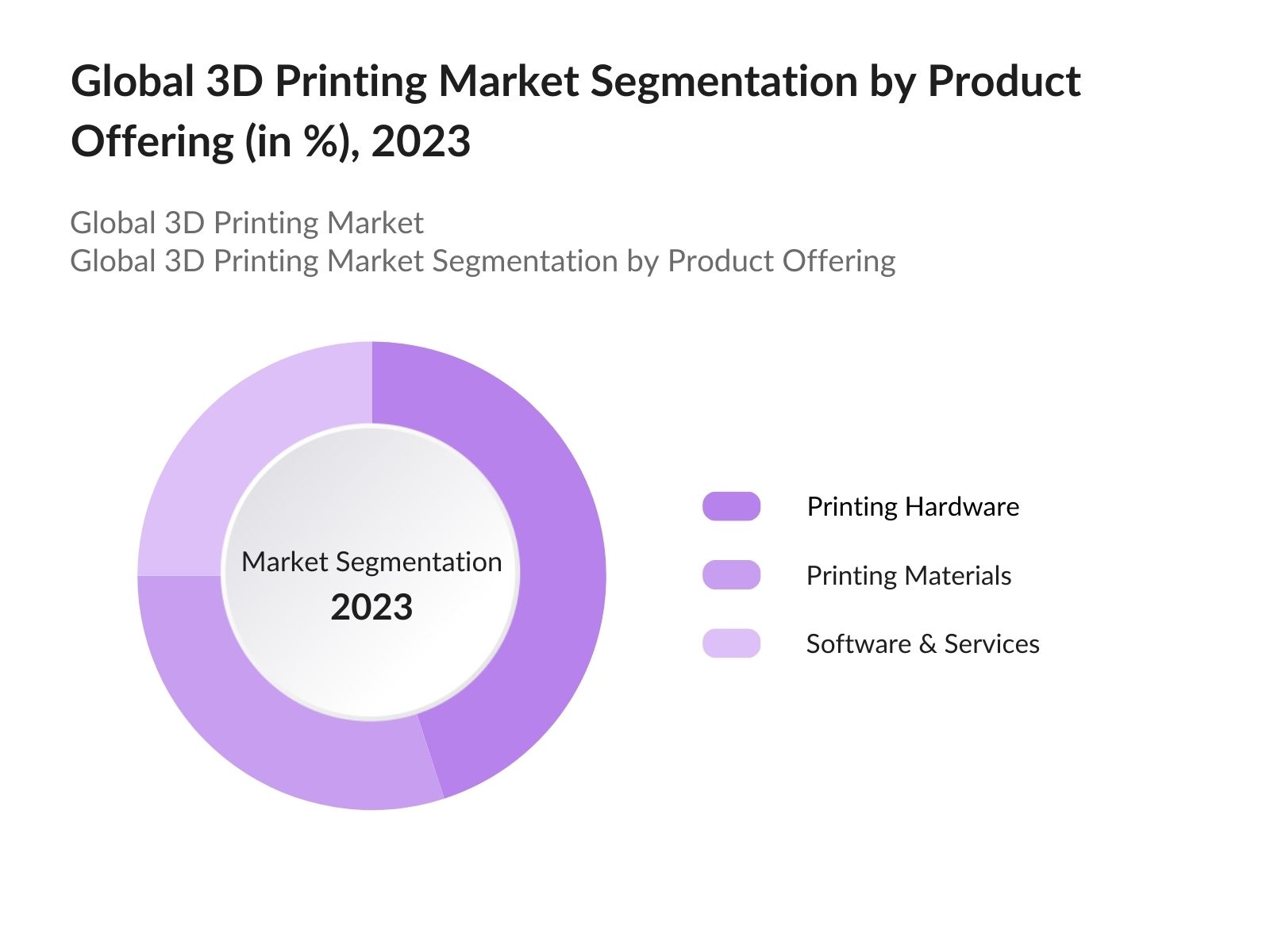
By Product Offering: Global 3D Printing market segmentation by product offering is divided into software & services, printing hardware and printing materials. In 2023, printing hardware dominates due to continuous advancements in printer technology, increasing affordability, and a rising demand for 3D printers in various industries. These developments have made 3D printing hardware more accessible and integral to both large-scale manufacturers and small enterprises.
market overviews

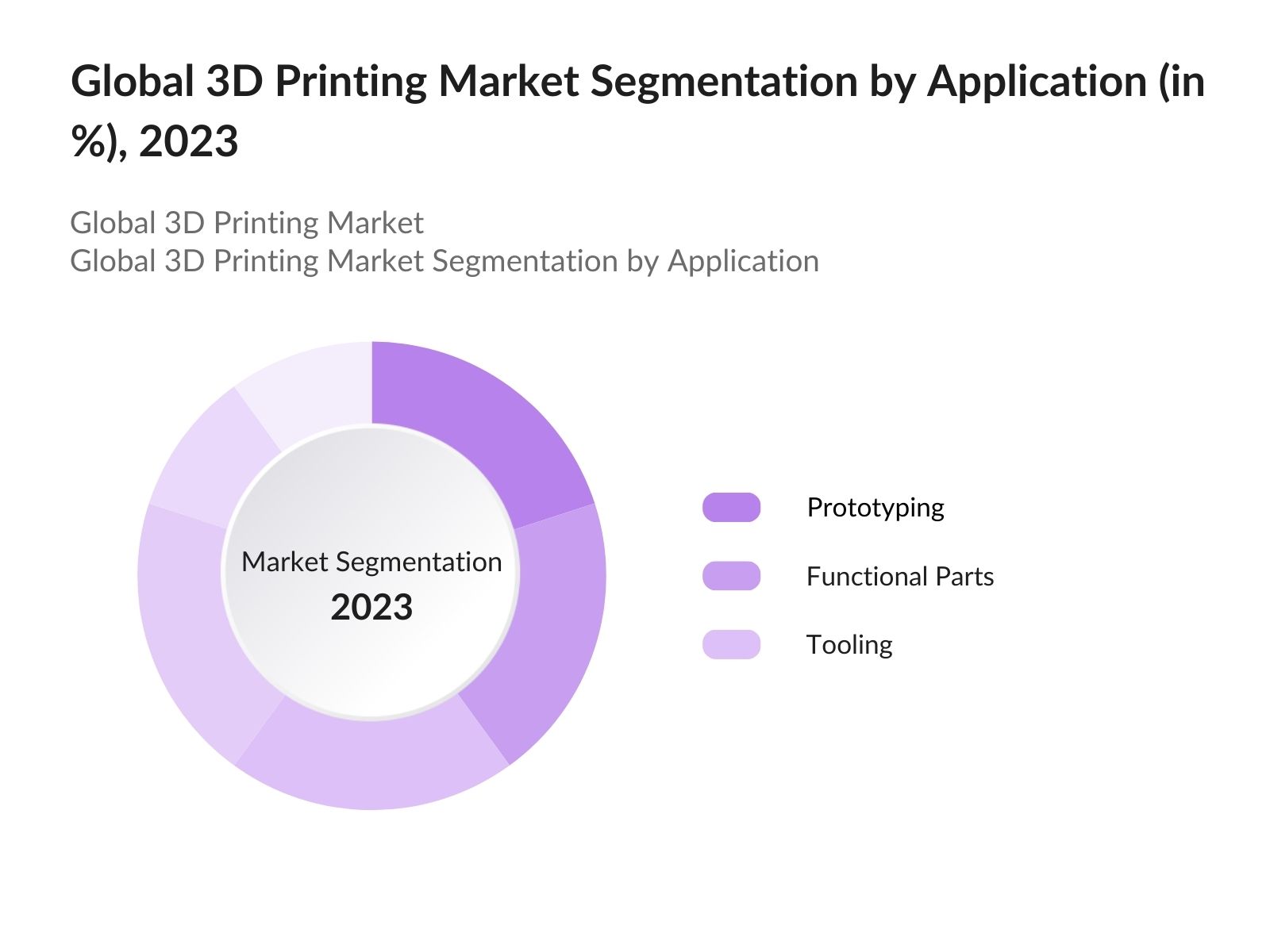
By Application: Global 3D Printing market segmentation by application is divided into prototyping, functional parts and tooling. In 2023, the prototyping led the market due to the need for rapid and cost-effective product development across various industries. Prototyping allows companies to quickly iterate designs, test functionality, and refine products before mass production, significantly reducing time-to-market and development costs.
market overviews

By End- User: Global 3D Printing market segmentation by distribution channel is divided into aerospace and defense, automotive, industrial manufacturing, consumer goods, healthcare and others. In 2023, aerospace and defense dominate due to the growing use of 3D printing for producing complex, lightweight components that enhance performance and reduce costs. The ability to create customized parts on-demand also plays a critical role in maintaining operational readiness and innovation in aerospace and defense applications.

Global 3D Printing Market Competitive Landscape

Company

Headquarters

Establishment Year

Geographical Presence

HP Inc.

Palo Alto, California, USA

1939

59

Colibrium Additive (formerly GE Additive)

Boston, MA, USA

GE (1893), Colibrium Additive (2016)

26

Autodesk

San Francisco, California, USA

1982

16

Stratasys Ltd.

Minnesota, USA & Rehovot, Israel

Stratasys Ltd. (2012)

11

Proto Labs, Inc.

Minnesota, USA

1999

7

3D Systems Corporation

Rock Hill, South Carolina, USA

1986

5+

  • Autodesk and Nemetschek Group Partnership: Autodesk and the Nemetschek Group have announced a strategic partnership in 2024, providing mutual access to their APIs and industry clouds. This collaboration will grant developers access to Autodesk solutions like AutoCAD, Revit, 3ds Max, Maya, Autodesk Forma, and Autodesk Construction Cloud, as well as Nemetschek's solutions including Allplan, Archicad, Bluebeam, Maxon One, and Vectorworks.
  • Stratasys Ltd. Partnership with Reseller Select Additive: In 2024, Reseller Select Additive has chosen Stratasys as its exclusive partner to offer polymer additive manufacturing solutions to hundreds of its customers. Stratasys is enhancing its product lineup by introducing high-definition printing to its SAF series and announcing an upgraded H350 printer.
  • Markforged, Inc. New Material Release: Markforged has introduced Vega in 2024, an ultra-high-performance material specifically designed for 3D printing aerospace components using the FX20 printer. This new material aims to meet the demanding requirements of the aerospace industry, providing enhanced performance and durability.

Global 3D Printing Industry Analysis

Global 3D Printing Market Growth Drivers:

  • Supply Chains Embrace 3D Printing for Decentralized Trades and Demand-Driven Production: The expanding recognition of supply chain significance, combined with additive manufacturing's ability to enable transparent trades and demand-driven production with shorter lead times, is driving growth in 2024. AM's high-speed production and customization capabilities mitigate overproduction, making it increasingly appealing across industries. For example, Airbus has successfully incorporated 3D printing into its supply chain management practices, reducing lead times, improving design flexibility, and achieving cost savings.
  • Expansion of 3D Printing Materials: The expanding range of 3D printable materials and design flexibility is fueling growth opportunities across diverse industry verticals with elevated demands for mechanical properties, precise shapes, and personalized preferences. In 2024, Massachusetts Institute of Technology (MIT) introduced a pioneering plant-derived 3D printable composite, blending synthetic plastic with cellulose nanocrystals (CNCs) from plants, promising sustainable production practices ahead.
  • End-User Preference for Sustainable 3D Printed Pieces: Sustainable benefits of 3D printed pieces are increasingly attracting end-users in 2024. Additive Manufacturing (AM) sources parts with almost no need for material removal and enables complex printings in a single part, generating fewer assemblies, stronger mechanical properties, and weight savings. This shift towards sustainability is aligning with the growing end-user demand for eco-friendly production methods.

Global 3D Printing Market Challenges:

  • High Costs of Machines and Materials: Despite some reductions, the high costs of 3D printing machines and materials remain a significant barrier. Material expenses, which can account for up to 70% of manufacturing costs, directly impact the overall cost-efficiency of 3D printing processes. Furthermore, the limited integration of 3D printing machines with broader production systems hampers consistent quality and productivity.
  • Qualification and Certification Processes: The adoption of 3D printing is hindered by stringent qualification and certification processes. These processes demand adherence to rigorous standards and regulations to ensure part quality and safety. Establishing international standards for 3D printing applications across industries is crucial for enhancing technology uptake and ensuring compliance.
  • Non-Technical Barriers: A significant non-technical barrier is the lack of understanding among manufacturers regarding the benefits of 3D printing. Design engineers often lack knowledge of effective 3D printing design strategies. To fully realize the advantages of 3D printing, manufacturers must leverage its unique capabilities, such as consolidating features and reducing parts count, rather than simply transitioning existing components to 3D printed formats.

Global 3D Printing Future Market Outlook

market overviews

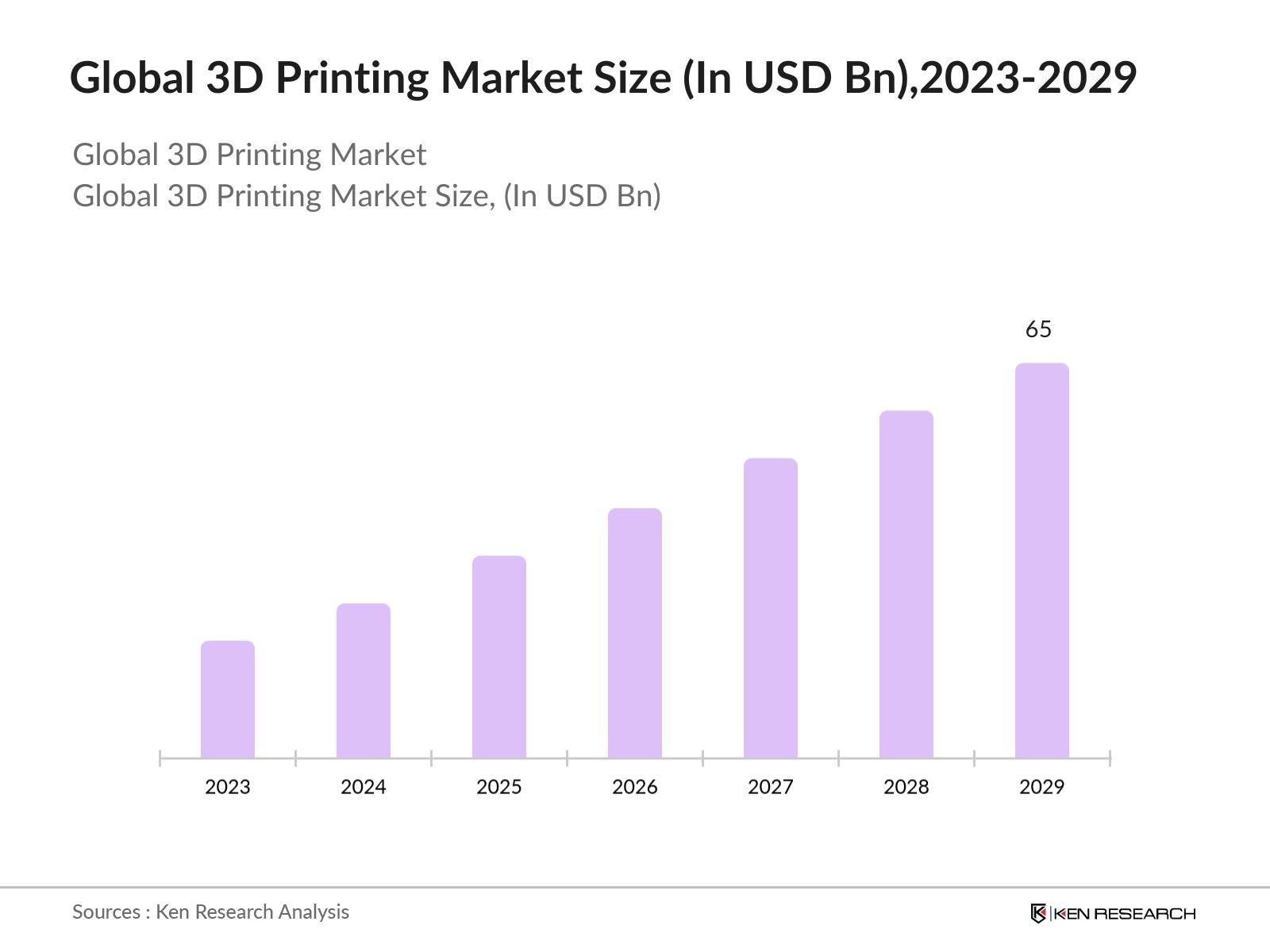
By 2029, the global 3D printing market is expected to reach USD 65 billion. Advances in materials science, improvements in printing speed and accuracy, and the expansion of 3D printing applications in industries such as construction and electronics will be critical factors driving this growth.

Future Market Trends

  • Increased Adoption in Mass Production: By 2029, 3D printing is expected to become a mainstream technology for mass production. Companies will increasingly use 3D printing for large-scale manufacturing due to its ability to produce complex parts with minimal waste. The automotive and consumer electronics industries will lead this trend, utilizing 3D printing to create customized products on a large scale. This shift is anticipated to reduce production costs and time significantly.
  • Advancements in Material Science: Future advancements in material science will play a crucial role in the growth of the 3D printing market. By 2029, new materials with enhanced properties, such as increased strength and biocompatibility, will be developed, expanding the applications of 3D printing in industries like aerospace, healthcare, and construction. These advancements will enable the production of more durable and functional end-use parts.

Scope of the Report

By Region

North America

APAC

Europe

Latin America

MEA

By Product Offering

Software & Services

Printing Hardware

Printing Materials

By Technology

Fused Deposition Modeling (FDM)

Stereolithography (SLA)

Selective Laser Sintering (SLS)

Digital Light Processing (DLP)

Laminated Object Manufacturing (LOM)

Electron Beam Melting (EBM)

Multi Jet Printing (MJP)

Direct Metal Laser Sintering (DMLS)

Others

By Application

Prototyping

Functional Parts

Tooling

By End- User

Aerospace and Defense

Automotive

Healthcare

Industrial Manufacturing

Consumer Goods

Others

Products

Key Target Audience:

  • 3D Printer Manufacturers

  • Healthcare Providers

  • Aerospace Companies

  • Automotive Manufacturers

  • Government and Regulatory Bodies (e.g., U.S. Department of Commerce)

  • Investments and Venture Capitalist Firms

  • Construction Companies

Time Period Captured in the Report:

  • Historical Period: 2018-2023

  • Base Year: 2023

  • Forecast Period: 2023-2029

Companies

Players Mentioned in the Report:

  • HP Inc.

  • Colibrium Additive (formerly GE Additive)

  • Autodesk

  • Stratasys Ltd.

  • Proto Labs, Inc.

  • 3D Systems Corporation

  • Materialise NV

  • Desktop Metal, Inc.

  • SLM Solutions Group AG

  • Markforged, Inc.

Table of Contents

1. Executive Summary

1.1 Global Additive Manufacturing Market

1.2 Global 3D Printing Market

2. Global Overview

2.1 Overview of Global Economics

2.2 Overview of Global Additive Manufacturing Industry

2.3 Global Additive Manufacturing (AM) Applications and Technologies

3. Global 3D Printing Market Overview

3.1 Global 3D Printing Market Ecosystem

3.2 Global 3D Printing Market Value Chain

3.3 Global 3D Printing Market 3D Printing Technology Assessment

4.Global 3D Printing Market Size (in USD Bn), 2018-2023

5. Global 3D Printing Market Segmentation (in value %), 2018-2023

5.1 Global 3D Printing Market Segmentation by Region (in value %), 2018-2023

5.2 Global 3D Printing Market Segmentation by Business Model (in value %), 2018-2023

5.3 Global 3D Printing Market Segmentation by Product Offering (in value %), 2018-2023

5.4 Global 3D Printing Market Segmentation by Technology (in value %), 2018-2023

5.5 Global 3D Printing Market Segmentation by Application (in value %), 2018-2023

5.6 Global 3D Printing Market Segmentation by End- User (in value %), 2018-2023

6. Global 3D Printing Market Competition Landscape

6.1 Global 3D Printing Market Share Analysis

6.2 Global 3D Printing Market Heat Map Analysis

6.3 Global 3D Printing Market Cross Comparison

6.4 Global 3D Printing Market Comparison Matrix

7.Global 3D Printing Market Dynamics

7.1 Global 3D Printing Market Growth Drivers

7.2 Global 3D Printing Market Challenges

7.3 Global 3D Printing Market Trends

7.4 Global 3D Printing Market Case Studies

7.5 Global 3D Printing Market Strategic Initiatives

8.Global 3D Printing Future Market Size (in USD Bn), 2023-2029

9. Global 3D Printing Future Market Segmentation (in value%), 2023-2029

9.1 Global 3D Printing Future Market Segmentation by Region (in value %), 2023-2029

9.2 Global 3D Printing Future Market Segmentation by Business Model (in value%), 2023-2029

9.3 Global 3D Printing Future Market Segmentation by Product Offering (in value %), 2023-2029

9.4 Global 3D Printing Future Market Segmentation by Technology (in value %), 2023-2029

9.5 Global 3D Printing Future Market Segmentation by Application (in value %), 2023-2029

9.6 Global 3D Printing Future Market Segmentation by End- User (in value %), 2023-2029

10. Analyst Recommendations

11. Research Methodology

11.1 Market Definitions and Assumptions

11.2 Abbreviations

11.3 Market Sizing Approach

11.4 Consolidated Research Approach

11.5 Understanding Market Potential Through In-Depth Industry Interviews

11.6 Primary Research Approach

11.7 Limitations and Future Conclusion

Disclaimer

Contact Us

Research Methodology

Step 1: Ecosystem Identification

Conduct a comprehensive analysis of the global and regional landscape of 3D printing products and services. This includes identifying key players involved in printers, materials, software, and services, thereby establishing a foundation for understanding market dynamics and competitive positioning.

Step 2: Stakeholder Engagement

Implement Computer-Assisted Telephone Interviews (CATIs) with key industry stakeholders to gather insights on their operational and financial performance. This includes assessing their product portfolios, geographical presence, value chain, technology offerings, target industries, and revenue streams, along with recent developments that add value to their operations.

Step 3: Market Evaluation Approach

Utilize both Bottom-to-Top and Top-to-Bottom methodologies to assess the overall 3D printing market. This involves validating findings through consultations with industry veterans, professionals, and end users, while also cross-referencing proxy variables to ensure accuracy in market trends and share analysis across various segments.

Frequently Asked Questions

01 How big is the global 3D printing market?

The global 3D printing market was valued at $20 billion in 2023, driven by its widespread adoption in industries such as healthcare, automotive, and aerospace.

02 Who are the major players in the global 3D printing market?

Key players in the global 3D printing market include HP Inc., Colibrium Additive, Proto Labs Inc, Stratasys Ltd. and Autodesk. These companies lead the market with their extensive product portfolios and continuous innovation.

03 What are the growth drivers of the global 3D printing market?

The global 3D printing market is driven by the adoption of 3D printing technologies in the healthcare sector, the expansion in aerospace and defense, and the integration of 3D printing in the automotive industry for prototyping and production.

04 What are the challenges in the global 3D printing market?

Challenges in the global 3D printing market include high initial investment costs, technical limitations, and material constraints. Regulatory and standardization issues also present significant hurdles for market expansion.

Why Buy From Us?

RRR
Refine Robust Result (RRR) Framework

What makes us stand out is that our consultants follows Robust, Refine and Result (RRR) methodology. i.e. Robust for clear definitions, approaches and sanity checking, Refine for differentiating respondents facts and opinions and Result for presenting data with story

Our Reach Is Unmatched

We have set a benchmark in the industry by offering our clients with syndicated and customized market research reports featuring coverage of entire market as well as meticulous research and analyst insights.

Research
Shifting the Research Paradigm

While we don't replace traditional research, we flip the method upside down. Our dual approach of Top Bottom & Bottom Top ensures quality deliverable by not just verifying company fundamentals but also looking at the sector and macroeconomic factors.

Insite
More Insights-Better Decisions

With one step in the future, our research team constantly tries to show you the bigger picture. We help with some of the tough questions you may encounter along the way: How is the industry positioned? Best marketing channel? KPI's of competitors? By aligning every element, we help maximize success.

Trust
Transparency and Trust

Our report gives you instant access to the answers and sources that other companies might choose to hide. We elaborate each steps of research methodology we have used and showcase you the sample size to earn your trust.

support
Round the Clock Support

If you need any support, we are here! We pride ourselves on universe strength, data quality, and quick, friendly, and professional service.

Why Client Choose Us?

400000+ Reports in repository
150+ Consulting project a year
100+ Analysts
8000+ Client Queries in 2022