
Global Algae Biofuel Market Outlook to 2030
Region:Global
Author(s):Yogita Sahu
Product Code:KROD11025
Region:Global
Author(s):Yogita Sahu
Product Code:KROD11025
November 2024
88
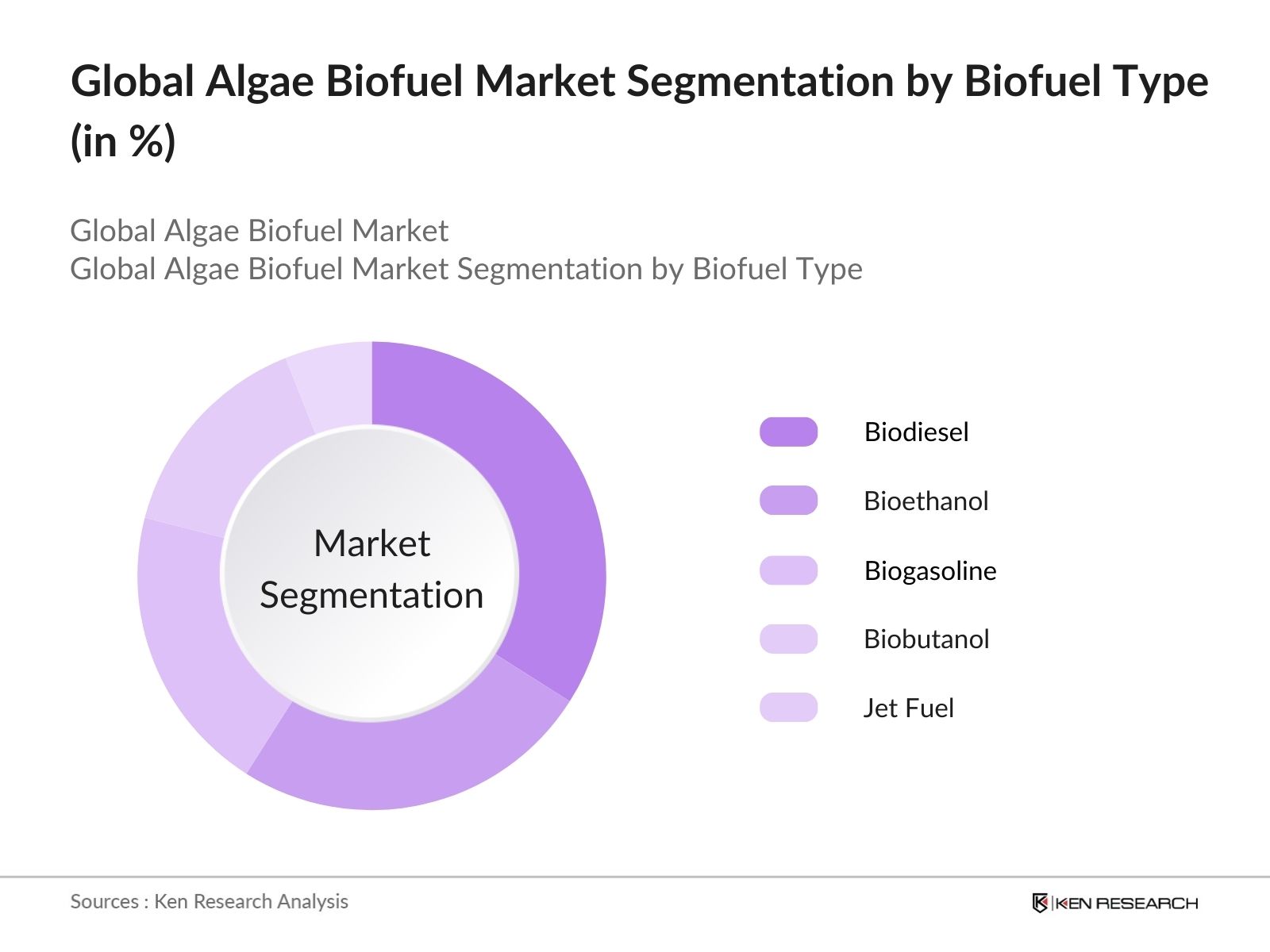
By Biofuel Type: The market is segmented by product type into bioethanol, biodiesel, methane, jet fuel, biobutanol, and green diesel. Among these, biodiesel holds the largest share in the market, largely due to its compatibility with existing diesel engines, reducing the need for modifications in infrastructure. The adoption of biodiesel is particularly strong in transportation and commercial applications where sustainability initiatives are prioritized.
By Application: The algae biofuel market is segmented by application into transportation, aerospace, and other applications. Transportation leads the market share due to global efforts to reduce carbon emissions from vehicles, making algae-based biodiesel an attractive option for sustainable mobility. Its higher energy yield compared to other biofuels also aligns well with the needs of the transportation sector.
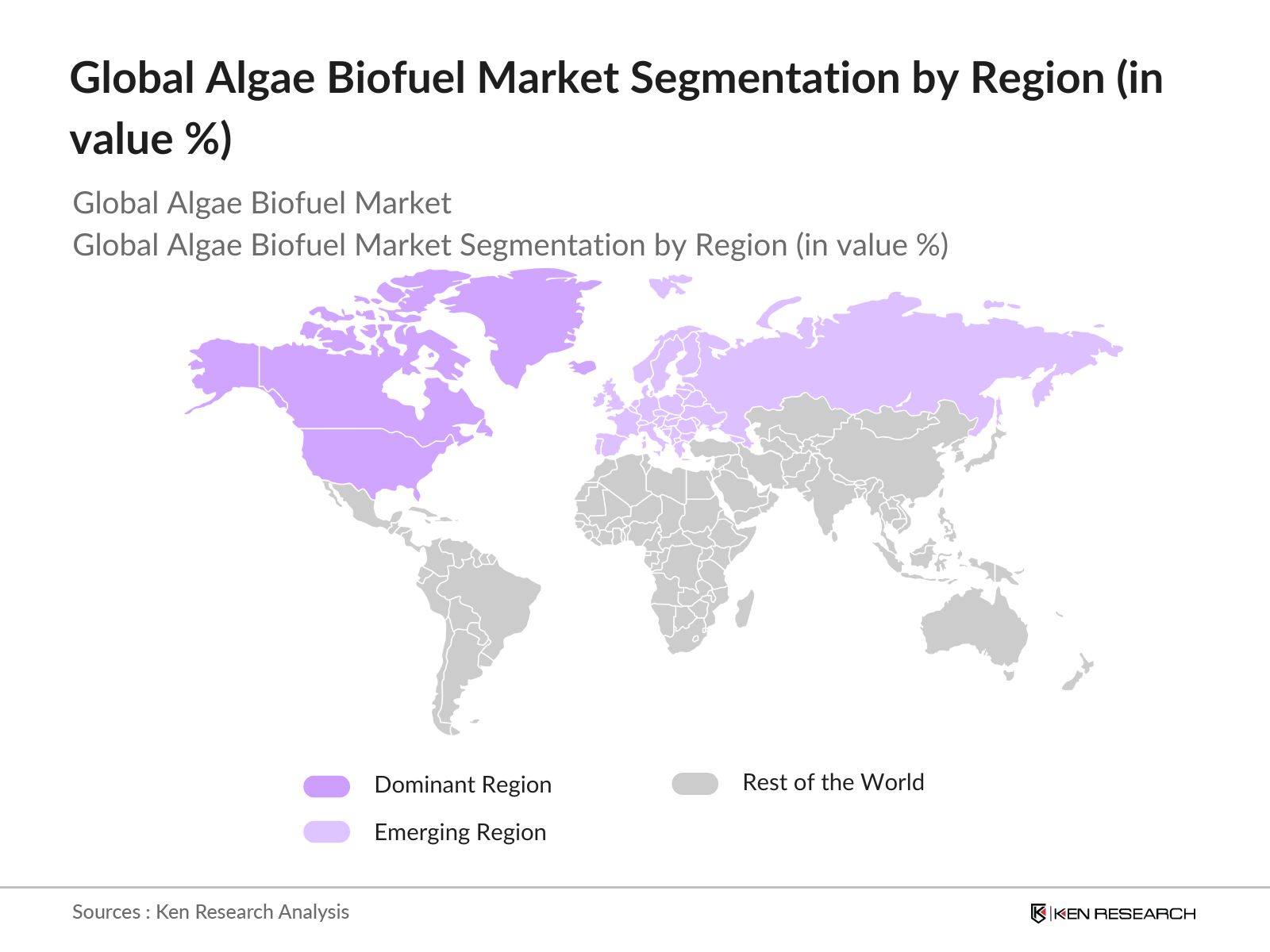
By Region: Regionally, the market spans North America, Europe, Asia-Pacific, Latin America, and the Middle East & Africa. North America dominates the market due to substantial government funding, favorable policies, and advanced R&D infrastructure, particularly in the United States. Europe follows, driven by stringent environmental regulations encouraging the adoption of renewable energy sources.
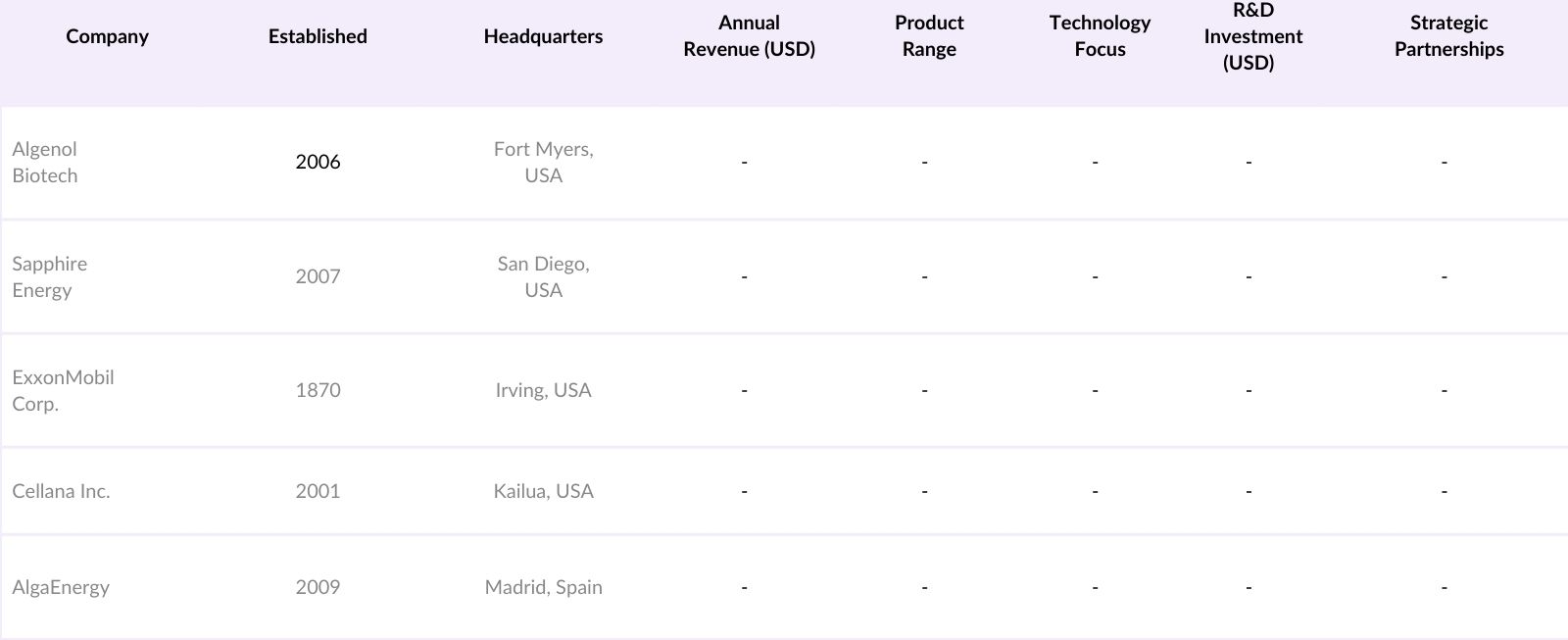
The market is characterized by a mix of established energy giants and specialized biotech companies focusing on algae technology. Companies like Algenol Biotech, Sapphire Energy, and ExxonMobil Corporation hold a significant presence, underscoring the consolidated structure of the market.
Over the next five years, the global algae biofuel industry is expected to witness robust growth fueled by advancements in algae cultivation technology, increasing demand for sustainable energy, and supportive government policies.
|
By Biofuel Type |
Biodiesel |
|
By Application |
Transportation |
|
By Algae Type |
Microalgae |
|
By Extraction Method |
Solvent Extraction |
|
By Region |
North America |
1.1 Definition and Scope
1.2 Market Taxonomy
1.3 Market Growth Rate
1.4 Market Segmentation Overview
2.1 Historical Market Size
2.2 Year-On-Year Growth Analysis
2.3 Key Market Developments and Milestones
3.1 Growth Drivers (e.g., depleting fossil fuel resources, government incentives)
3.2 Market Challenges (e.g., high production costs, technological barriers)
3.3 Opportunities (e.g., wastewater integration, emerging market expansion)
3.4 Trends (e.g., photobioreactor adoption, R&D investment)
3.5 Government Regulations (e.g., renewable energy directives, subsidies)
3.6 SWOT Analysis (Strengths, Weaknesses, Opportunities, Threats)
3.7 Stakeholder Ecosystem (e.g., energy companies, biotech firms)
3.8 Porter’s Five Forces Analysis (competition, supplier power)
3.9 Competitive Landscape (key players and strategies)
4.1 By Biofuel Type (e.g., biodiesel, bioethanol, jet fuel)
4.2 By Application (e.g., transportation, power generation, aerospace)
4.3 By Algae Type (e.g., microalgae, macroalgae)
4.4 By Extraction Method (e.g., solvent, supercritical fluid, enzymatic)
4.5 By Region (e.g., North America, Europe, Asia-Pacific, Latin America, MEA)
5.1 Detailed Profiles of Major Companies (e.g., Algenol Biotech, Sapphire Energy)
5.2 Cross Comparison Parameters (e.g., revenue, production capacity)
5.3 Market Share Analysis (e.g., leading players by region)
5.4 Strategic Initiatives (e.g., product innovation, partnerships)
5.5 Mergers and Acquisitions (e.g., market consolidation trends)
5.6 Investment Analysis (e.g., venture capital funding, grants)
5.7 Venture Capital Funding (e.g., notable funding rounds)
5.8 Government Grants (e.g., renewable energy support initiatives)
5.9 Private Equity Investments (e.g., strategic market entry funding)
6.1 Environmental Standards (e.g., sustainability goals)
6.2 Compliance Requirements (e.g., certification, production guidelines)
6.3 Certification Processes (e.g., biofuel quality standards)
7.1 Future Market Size Projections
7.2 Key Factors Driving Future Market Growth
8.1 By Biofuel Type
8.2 By Application
8.3 By Algae Type
8.4 By Extraction Method
8.5 By Region
9.1 Total Addressable Market (TAM), Serviceable Available Market (SAM), Serviceable Obtainable Market (SOM) Analysis
9.2 Customer Cohort Analysis
9.3 Marketing Initiatives
9.4 White Space Opportunity Analysis
The initial phase involves mapping all stakeholders within the algae biofuel market, supported by comprehensive desk research from secondary and proprietary databases. Key variables, such as product types, application areas, and geographic presence, are identified to inform further analysis.
Historical data is compiled and analyzed to assess market penetration rates, production capacities, and revenue generation. This step includes an evaluation of the technology adoption rate within the algae biofuel sector.
Market hypotheses are validated through interviews with industry experts representing biofuel producers, technology developers, and energy companies. These insights contribute to refining and corroborating the market data.
The final phase entails synthesizing insights from various algae biofuel producers to validate and complement data acquired through bottom-up approaches. This ensures a comprehensive and accurate depiction of the algae biofuel market.
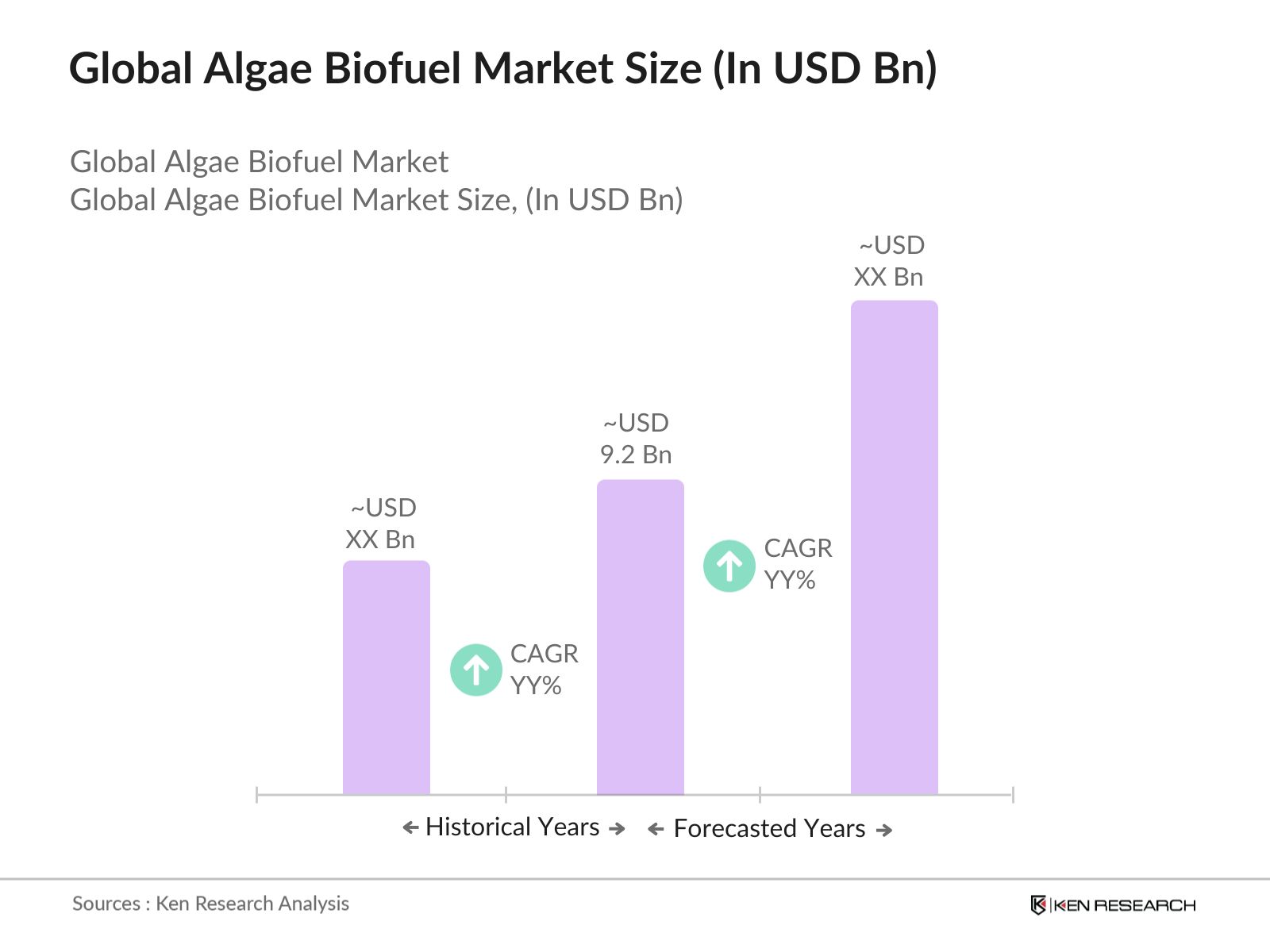
The global algae biofuel market is valued at USD 9.2 billion, driven by the rising need for sustainable and renewable energy sources that can support large-scale energy demands with a low carbon footprint.
Challenges in the global algae biofuel market include high production costs, technical complexities in large-scale algae cultivation, and competition from other renewable biofuel options that may be more cost-effective.
Key players in the global algae biofuel market include Algenol Biotech, Sapphire Energy, ExxonMobil Corporation, and AlgaEnergy, each leveraging strategic partnerships and high R&D investments to advance algae biofuel technology.
The global algae biofuel market is driven by the need for low-carbon fuels, government incentives, and the high energy yield of algae biofuels, which make them viable for sectors like transportation and aerospace.

What makes us stand out is that our consultants follows Robust, Refine and Result (RRR) methodology. i.e. Robust for clear definitions, approaches and sanity checking, Refine for differentiating respondents facts and opinions and Result for presenting data with story

We have set a benchmark in the industry by offering our clients with syndicated and customized market research reports featuring coverage of entire market as well as meticulous research and analyst insights.

While we don't replace traditional research, we flip the method upside down. Our dual approach of Top Bottom & Bottom Top ensures quality deliverable by not just verifying company fundamentals but also looking at the sector and macroeconomic factors.

With one step in the future, our research team constantly tries to show you the bigger picture. We help with some of the tough questions you may encounter along the way: How is the industry positioned? Best marketing channel? KPI's of competitors? By aligning every element, we help maximize success.

Our report gives you instant access to the answers and sources that other companies might choose to hide. We elaborate each steps of research methodology we have used and showcase you the sample size to earn your trust.

If you need any support, we are here! We pride ourselves on universe strength, data quality, and quick, friendly, and professional service.