
Global Automatic Pill Dispenser Market Outlook to 2030
Region:Global
Author(s):Sanjna
Product Code:KROD4604
November 2024
81
About the Report
Global Automatic Pill Dispenser Market Overview
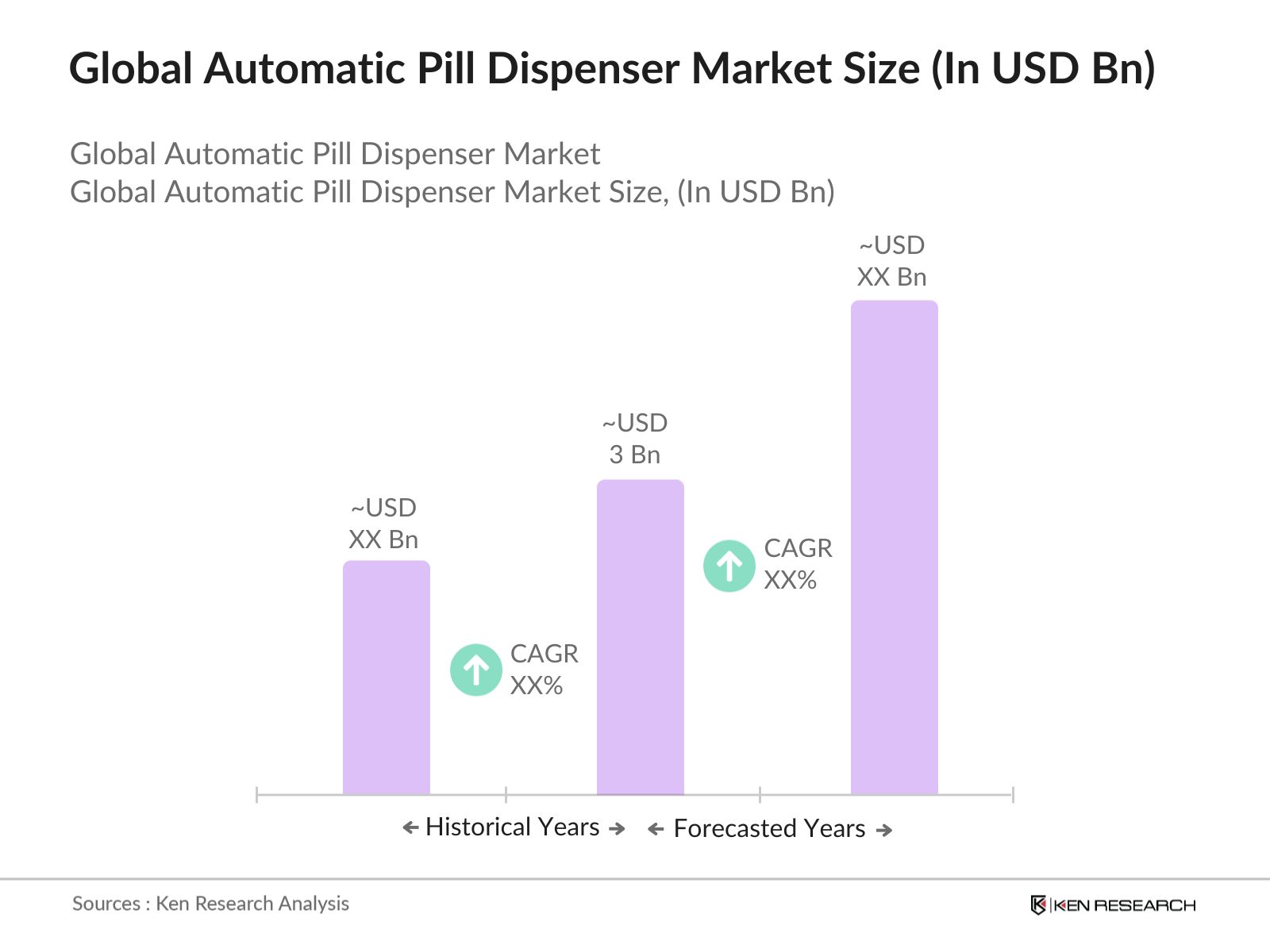
- The global automatic pill dispenser market is valued at USD 3 billion, based on a five-year historical analysis. This market growth is primarily driven by the increasing demand for medication adherence devices, particularly among the aging population and patients with chronic illnesses. Automatic pill dispensers are essential in managing complex medication schedules, ensuring that patients take their medication at the correct times, which reduces errors and improves health outcomes.
- Countries like the United States and Japan dominate the automatic pill dispenser market due to their advanced healthcare infrastructure, high adoption of home healthcare services, and a growing elderly population. The U.S. leads with its technological innovation and widespread use of connected medical devices, while Japans aging population makes it a significant user of such technology to reduce hospital visits and improve home-based care.
- The U.S. Food and Drug Administration (FDA) classifies automatic pill dispensers as Class II medical devices, which means they are subject to rigorous testing for safety and efficacy. As of 2023, the FDA introduced additional guidelines for IoT-enabled medical devices, emphasizing the need for strong cybersecurity measures and patient data protection protocols. These regulations are pivotal for ensuring that automatic pill dispensers comply with safety standards while addressing concerns about data privacy in the healthcare sector.
Global Automatic Pill Dispenser Market Segmentation
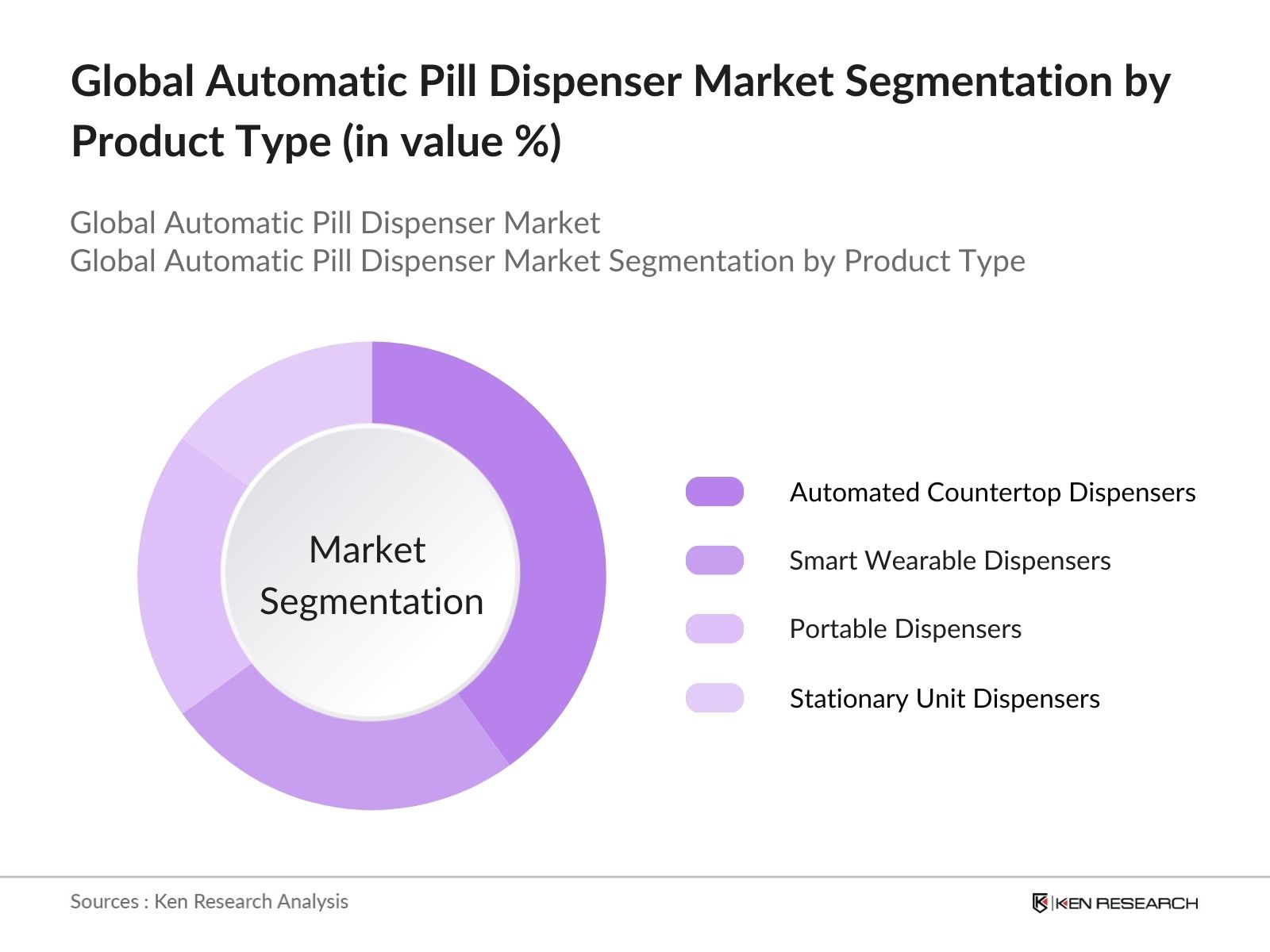
By Product Type: The automatic pill dispenser market is segmented by product type into automated countertop dispensers, smart wearable dispensers, portable dispensers, and stationary unit dispensers. Automated countertop dispensers dominate the market due to their widespread use in healthcare facilities and home care environments. These dispensers are favored for their ability to manage complex medication schedules, helping caregivers and patients alike ensure timely medication adherence. The integration of these dispensers with medication management software makes them highly efficient and user-friendly.
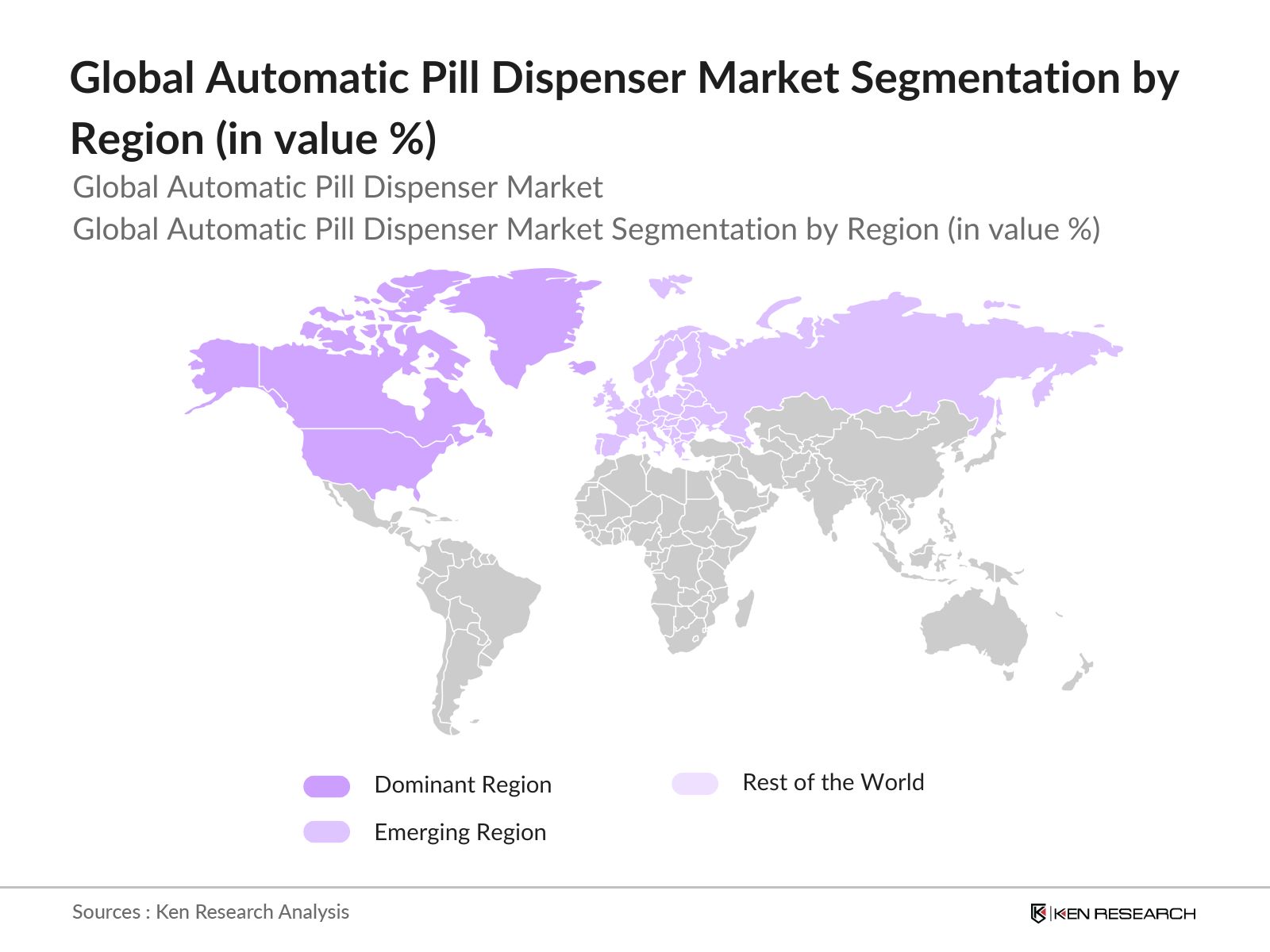
 By Region: The market is segmented by region into North America, Europe, Asia-Pacific, Latin America, and Middle East & Africa. North America holds the largest share in the automatic pill dispenser market due to the regions robust healthcare infrastructure, increasing prevalence of chronic diseases, and high adoption rates of innovative healthcare solutions. The growing elderly population in the U.S. and Canada further boosts the demand for automated medication management systems in this region.
By End-User: The market is segmented by end-user into homecare settings, hospitals & clinics, long-term care facilities, and rehabilitation centers. Homecare settings account for the largest share of the market due to the rising preference for home-based care, especially among the elderly population. Homecare settings provide a more cost-effective solution than hospital stays, and the growing demand for remote patient monitoring systems has boosted the adoption of automatic pill dispensers in this segment.
Global Automatic Pill Dispenser Market Competitive Landscape
The global automatic pill dispenser market is dominated by several key players, who have a strong presence due to their technological advancements, extensive product portfolios, and strategic partnerships with healthcare institutions. The competitive landscape in the automatic pill dispenser market reflects the consolidation of major players who focus on product innovation, strategic alliances, and geographical expansion. Companies like Philips Healthcare and Omnicell have a significant presence due to their wide product range and focus on IoT-enabled and cloud-connected systems, making them leaders in hospital and homecare segments.
|
Company Name |
Established Year |
Headquarters |
Market Share |
Technology Focus |
Key Product Lines |
R&D Investment |
Geographical Presence |
Strategic Partnerships |
Customer Base |
|
MedMinder Systems Inc. |
2007 |
Needham, U.S. |
15% |
- |
- |
- |
- |
- |
- |
|
Philips Healthcare |
1891 |
Amsterdam, Netherlands |
12% |
- |
- |
- |
- |
- |
- |
|
Hero Health Inc. |
2018 |
New York, U.S. |
10% |
- |
- |
- |
- |
- |
- |
|
Omnicell, Inc. |
1992 |
Mountain View, U.S. |
8% |
- |
- |
- |
- |
- |
- |
|
Baxter International Inc. |
1931 |
Deerfield, U.S. |
7% |
- |
- |
- |
- |
- |
- |
Global Automatic Pill Dispenser Market Analysis
Growth Drivers
- Aging Population (Growth in elderly care and assisted living facilities) As of 2022, there were approximately771 million people aged 65 or older, which accounts for nearly10%of the world's total population. As life expectancy increases globally, the demand for eldercare services is also growing. This has spurred the expansion of assisted living facilities, which is projected to grow to cater to the increasing elderly population. Many elderly individuals require multiple medications, which drives the demand for automatic pill dispensers to help with medication adherence and reduce the risk of errors.
- Rising Prevalence of Chronic Diseases (Impact of increasing medication adherence demand): In 2022, the World Health Organization (WHO) reported that over 420 million people worldwide were diagnosed with diabetes, and cardiovascular diseases caused nearly 17.9 million deaths annually. As chronic diseases become more prevalent, there is a heightened focus on medication adherence, particularly for conditions requiring long-term management. Automatic pill dispensers are increasingly employed to ensure accurate dosage at prescribed intervals, helping improve health outcomes for patients with chronic conditions.
- Technological Advancements (Integration of IoT and AI in medication dispensing)
The integration of IoT and AI in automatic pill dispensers has significantly advanced their functionality, allowing for remote monitoring and better adherence tracking. the number of Internet of Things (IoT) devices worldwide was projected to be around15.9 billion in 2023, with a large proportion used in healthcare applications. These technological advancements allow for real-time alerts to caregivers and healthcare professionals, facilitating better patient outcomes.
Challenges
- High Cost of Advanced Automatic Pill Dispensers: While automatic pill dispensers have proven to be an effective solution for medication management, the cost of advanced models remains a significant barrier, especially in developing regions. The average cost of an IoT-enabled automatic pill dispenser is approximately $200, according to consumer pricing analysis, which is unaffordable for a large portion of the global population, particularly in low-income countries where average per capita income remains below $2,000 annually in many regions.
- Lack of Awareness in Developing Regions: In regions such as Sub-Saharan Africa and South Asia, where healthcare infrastructure is still developing, there is a general lack of awareness regarding the benefits of automatic pill dispensers. According to the International Telecommunication Union (ITU), only 33% of the population in these areas had internet access in 2022, which limits exposure to information about new healthcare technologies. This digital divide hinders the adoption of advanced healthcare tools like automatic pill dispensers.
Global Automatic Pill Dispenser Market Future Outlook
Over the next five years, the global automatic pill dispenser market is expected to experience substantial growth driven by the rising aging population, increasing prevalence of chronic diseases, and the growing demand for home healthcare solutions. The introduction of advanced technologies such as IoT and AI in automatic pill dispensers will further enhance their efficiency and appeal. Additionally, the expansion of telemedicine services and remote patient monitoring is set to increase the adoption of these devices, particularly in regions with aging demographics and chronic healthcare challenges.
Market Opportunities
- Adoption of Telehealth Services: The global telehealth market experienced a surge as healthcare systems transitioned toward remote care during the COVID-19 pandemic. This growth creates an opportunity for automatic pill dispensers, as they can integrate with telehealth platforms to enable real-time medication monitoring, allowing healthcare providers to manage patients medication adherence from a distance. As telehealth becomes a regular feature of healthcare delivery, the integration of automatic pill dispensers with such platforms is likely to increase.
- Increasing Use of Smart Wearables for Medication Adherence: In 2022, over 500 million wearable devices were in use globally. These devices are increasingly being used in conjunction with automatic pill dispensers to monitor medication adherence, with smart reminders and real-time alerts. The trend of wearable tech adoption provides an avenue for the pill dispenser market to leverage the widespread use of these devices, especially among patients with chronic diseases who benefit from regular medication.
Scope of the Report
|
Segment |
Sub-segments |
|
Product Type |
Automated Countertop Dispensers |
|
Smart Wearable Dispensers |
|
|
Portable Dispensers |
|
|
Stationary Unit Dispensers |
|
|
End-User |
Homecare Settings |
|
Hospitals & Clinics |
|
|
Long-term Care Facilities |
|
|
Rehabilitation Centers |
|
|
Distribution Channel |
Retail Pharmacies |
|
Online Platforms |
|
|
Medical Supply Stores |
|
|
Technology |
Wi-Fi Enabled Dispensers |
|
Bluetooth-Integrated Dispensers |
|
|
Cloud-Connected Dispensers |
|
|
Manual Dispensers |
|
|
Region |
North America |
|
Europe |
|
|
Asia-Pacific |
|
|
Latin America |
|
|
Middle East & Africa |
Products
Key Target Audience
Pharmaceutical Companies
Medical Device Manufacturers
Hospitals & Clinics
Health Insurance Providers
Wearable Health Device Manufacturers
Healthtech Venture Capital Firms
Investors and Venture Capitalist Firms
Government and Regulatory Bodies (e.g., FDA, EMA)
Companies
Major Players in the Global Automatic Pill Dispenser Market
MedMinder Systems Inc.
Philips Healthcare
Hero Health Inc.
Omnicell, Inc.
Baxter International Inc.
Accu-Chart Plus Healthcare Systems, Inc.
e-pill Medication Reminders
Livi Health
TabTimer Pty Ltd
MedaCube
Lifeline Systems Company
Simple Meds
WestRock Company
McKesson Corporation
Cardinal Health
Table of Contents
1. Global Automatic Pill Dispenser Market Overview
1.1. Definition and Scope
1.2. Market Taxonomy
1.3. Market Growth Rate
1.4. Market Segmentation Overview
2. Global Automatic Pill Dispenser Market Size (In USD Bn)
2.1. Historical Market Size
2.2. Year-On-Year Growth Analysis
2.3. Key Market Developments and Milestones
3. Global Automatic Pill Dispenser Market Analysis
3.1. Growth Drivers
3.1.1. Aging Population (Growth in elderly care and assisted living facilities)
3.1.2. Rising Prevalence of Chronic Diseases (Impact of increasing medication adherence demand)
3.1.3. Technological Advancements (Integration of IoT and AI in medication dispensing)
3.1.4. Growing Home Healthcare Services
3.2. Market Challenges
3.2.1. High Cost of Advanced Automatic Pill Dispensers
3.2.2. Lack of Awareness in Developing Regions
3.2.3. Data Security Concerns (Regarding connectivity of devices with IoT)
3.3. Opportunities
3.3.1. Adoption of Telehealth Services
3.3.2. Increasing Use of Smart Wearables for Medication Adherence
3.3.3. Untapped Markets in Emerging Economies
3.4. Trends
3.4.1. Rise in Medication Management Software Integration
3.4.2. Customization in Medication Scheduling (Based on user habits)
3.4.3. Growth in Subscription-Based Dispenser Services
3.5. Government Regulation
3.5.1. FDA Regulations on Medical Devices (Compliance requirements for pill dispensers)
3.5.2. Medicare Reimbursement Policies
3.5.3. Global Data Protection Regulations (GDPR for IoT-enabled devices)
3.6. SWOT Analysis
3.7. Stakeholder Ecosystem
3.8. Porters Five Forces
3.9. Competitive Landscape
4. Global Automatic Pill Dispenser Market Segmentation
4.1. By Product Type (In Value %)
4.1.1. Automated Countertop Dispensers
4.1.2. Smart Wearable Dispensers
4.1.3. Portable Dispensers
4.1.4. Stationary Unit Dispensers
4.2. By End-User (In Value %)
4.2.1. Homecare Settings
4.2.2. Hospitals & Clinics
4.2.3. Long-term Care Facilities
4.2.4. Rehabilitation Centers
4.3. By Distribution Channel (In Value %)
4.3.1. Retail Pharmacies
4.3.2. Online Platforms
4.3.3. Medical Supply Stores
4.4. By Technology (In Value %)
4.4.1. Wi-Fi Enabled Dispensers
4.4.2. Bluetooth-Integrated Dispensers
4.4.3. Cloud-Connected Dispensers
4.4.4. Manual Dispensers
4.5. By Region (In Value %)
4.5.1. North America
4.5.2. Europe
4.5.3. Asia-Pacific
4.5.4. Latin America
4.5.5. Middle East & Africa
5. Global Automatic Pill Dispenser Market Competitive Analysis
5.1. Detailed Profiles of Major Companies
5.1.1. MedMinder Systems Inc.
5.1.2. Philips Healthcare
5.1.3. Hero Health Inc.
5.1.4. Accu-Chart Plus Healthcare Systems, Inc.
5.1.5. e-pill Medication Reminders
5.1.6. Livi Health
5.1.7. TabTimer Pty Ltd
5.1.8. MedaCube
5.1.9. Lifeline Systems Company
5.1.10. Simple Meds
5.1.11. WestRock Company
5.1.12. McKesson Corporation
5.1.13. Omnicell, Inc.
5.1.14. Baxter International Inc.
5.1.15. Cardinal Health
5.2. Cross Comparison Parameters (Company size, Technology portfolio, Regional presence, Revenue, R&D expenditure, Key partnerships, Market penetration strategies, Customer base)
5.3. Market Share Analysis
5.4. Strategic Initiatives
5.5. Mergers and Acquisitions
5.6. Investment Analysis
5.7. Venture Capital Funding
5.8. Government Grants
5.9. Private Equity Investments
6. Global Automatic Pill Dispenser Market Regulatory Framework
6.1. Medical Device Regulations (By region)
6.2. Compliance Requirements (Device labeling, software security, clinical testing standards)
6.3. Certification Processes (ISO, CE marking)
7. Global Automatic Pill Dispenser Future Market Size (In USD Bn)
7.1. Future Market Size Projections
7.2. Key Factors Driving Future Market Growth
8. Global Automatic Pill Dispenser Future Market Segmentation
8.1. By Product Type (In Value %)
8.2. By End-User (In Value %)
8.3. By Distribution Channel (In Value %)
8.4. By Technology (In Value %)
8.5. By Region (In Value %)
9. Global Automatic Pill Dispenser Market Analysts Recommendations
9.1. Total Addressable Market (TAM)/Serviceable Available Market (SAM)/Serviceable Obtainable Market (SOM) Analysis
9.2. Customer Cohort Analysis
9.3. Market Penetration Strategies
9.4. White Space Opportunity Analysis
Research Methodology
Step 1: Identification of Key Variables
In the initial stage, we mapped out all the major stakeholders in the global automatic pill dispenser market. Through rigorous desk research, we gathered detailed information from proprietary databases and industry sources to define the critical variables influencing the market.
Step 2: Market Analysis and Construction
We analyzed historical data and current trends in the market, evaluating the adoption of pill dispensers by product type, end-users, and geographical regions. The data was cross-verified with service quality and market penetration reports.
Step 3: Hypothesis Validation and Expert Consultation
We conducted interviews with industry experts, including manufacturers and healthcare providers, to validate the market assumptions. These consultations were key to understanding market drivers and refining our forecast.
Step 4: Research Synthesis and Final Output
In the final phase, we synthesized data from a bottom-up analysis, engaging with key players and conducting primary research to ensure a comprehensive, accurate, and validated market assessment.
Frequently Asked Questions
01. How big is the Global Automatic Pill Dispenser Market?
The global automatic pill dispenser market is valued at USD 3 billion, driven by increasing demand for medication adherence solutions, particularly among the elderly and chronically ill patients.
02. What are the challenges in the Global Automatic Pill Dispenser Market?
The primary challenges include high costs associated with advanced dispensers, lack of awareness in emerging markets, and data security concerns related to IoT-enabled devices.
03. Who are the major players in the Global Automatic Pill Dispenser Market?
Key players include MedMinder Systems Inc., Philips Healthcare, Hero Health Inc., Omnicell, Inc., and Baxter International Inc., each dominating due to their technological advancements and strategic partnerships.
04. What are the growth drivers of the Global Automatic Pill Dispenser Market?
Growth drivers include the rising aging population, technological advancements in IoT and AI, and the increasing adoption of home healthcare services for chronic disease management.
Why Buy From Us?

What makes us stand out is that our consultants follows Robust, Refine and Result (RRR) methodology. i.e. Robust for clear definitions, approaches and sanity checking, Refine for differentiating respondents facts and opinions and Result for presenting data with story

We have set a benchmark in the industry by offering our clients with syndicated and customized market research reports featuring coverage of entire market as well as meticulous research and analyst insights.

While we don't replace traditional research, we flip the method upside down. Our dual approach of Top Bottom & Bottom Top ensures quality deliverable by not just verifying company fundamentals but also looking at the sector and macroeconomic factors.

With one step in the future, our research team constantly tries to show you the bigger picture. We help with some of the tough questions you may encounter along the way: How is the industry positioned? Best marketing channel? KPI's of competitors? By aligning every element, we help maximize success.

Our report gives you instant access to the answers and sources that other companies might choose to hide. We elaborate each steps of research methodology we have used and showcase you the sample size to earn your trust.

If you need any support, we are here! We pride ourselves on universe strength, data quality, and quick, friendly, and professional service.