
Global Barefoot Shoe Market Outlook to 2030
Region:Global
Author(s):Shubham Kashyap
Product Code:KROD9620
December 2024
95
About the Report
Global Barefoot Shoe Market Overview
- The global barefoot shoe market is valued at USD 550 million, fueled by rising consumer demand for health-centric footwear, promoting natural movement and foot health benefits. This growth is supported by increasing awareness around wellness, particularly in North America and Europe, where the preference for minimalist, ergonomically designed shoes is prominent. Key factors include a growing focus on physical fitness and a shift towards eco-friendly materials in footwear manufacturing, positioning barefoot shoes as a preferred choice for health-conscious individuals globally.
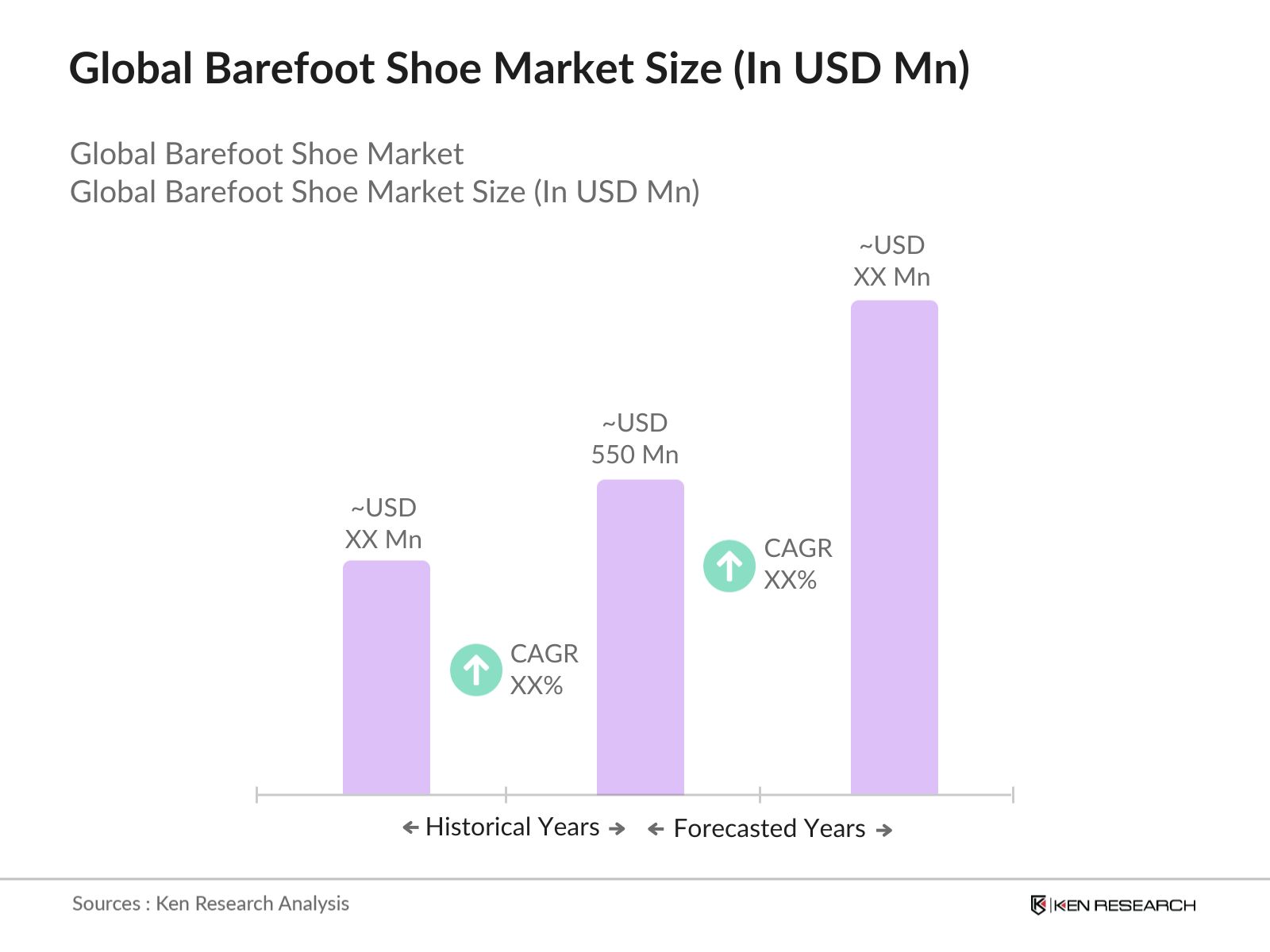
- Major demand centers for barefoot shoes include the United States, Germany, and the United Kingdom, where health awareness and lifestyle shifts towards minimalist footwear have gained traction. The U.S. leads due to a large base of active consumers seeking sustainable and functional footwear options. Germany and the U.K. follow closely, driven by their strong cultural focus on wellness, coupled with a high market acceptance for eco-friendly and health-oriented products.
- Government regulations on footwear materials have intensified, focusing on safety and consumer health. In 2024, the European Union and the United States implemented stricter guidelines on material compositions, impacting all footwear, including barefoot shoes. These regulations ensure non-toxic materials, safeguarding consumers from harmful chemicals.
Global Barefoot Shoe Market Segmentation
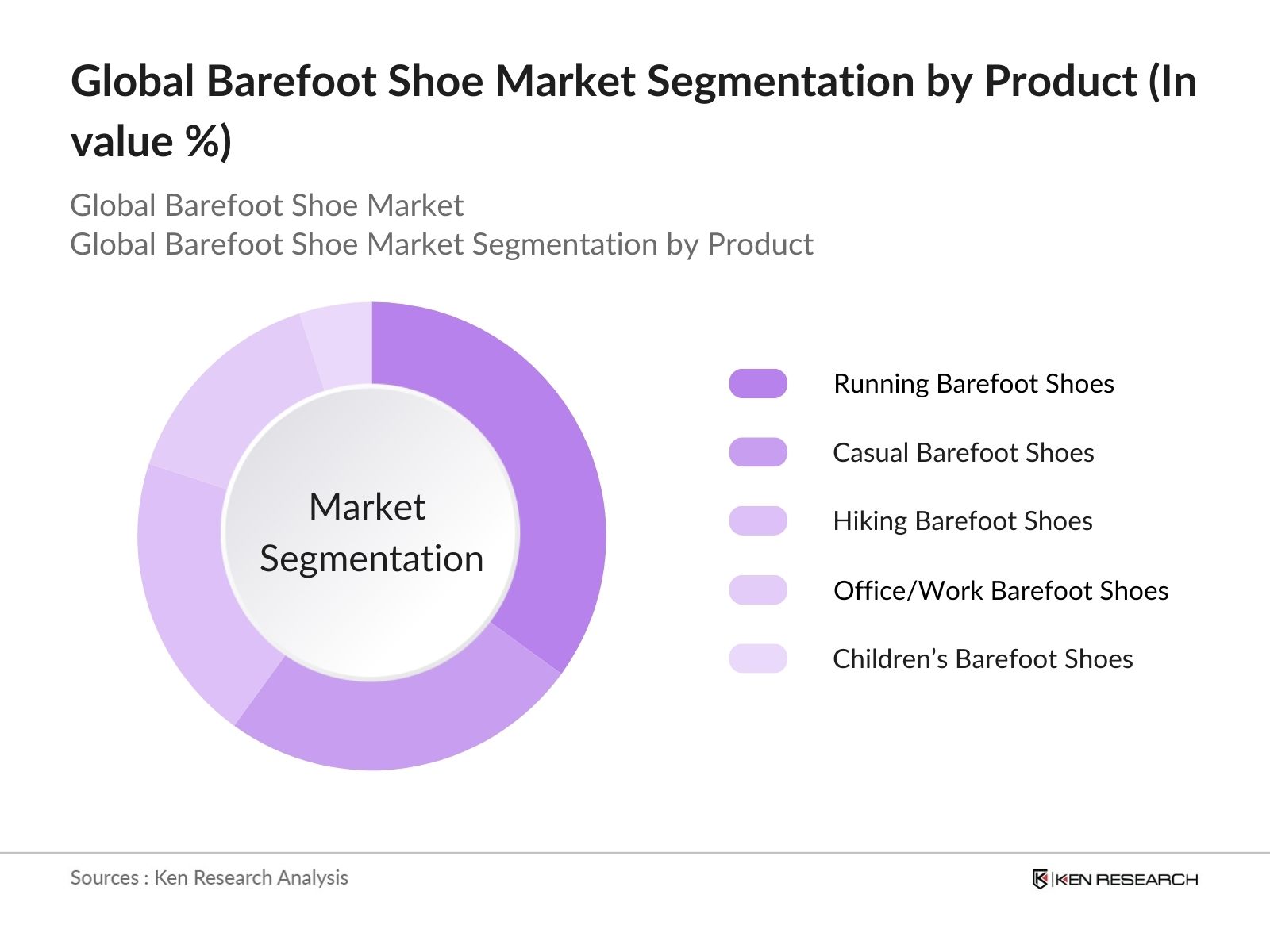
- By Product Type: The market is segmented by product type into Running Barefoot Shoes, Casual Barefoot Shoes, Hiking Barefoot Shoes, Office/Work Barefoot Shoes, and Childrens Barefoot Shoes. Running Barefoot Shoes hold a dominant share in this segment, attributed to their appeal among fitness enthusiasts who prioritize natural foot motion and reduced joint strain. These shoes lightweight design and flexibility cater to athletes and health-conscious individuals looking for an alternative to conventional running shoes.
- By Material Type: The market is segmented by material into Leather, Synthetic, Canvas, and Mesh. Leather barefoot shoes hold a significant market share, favored for their durability, natural comfort, and environmental benefits. Leather materials appeal particularly in colder regions, where long-lasting, eco-friendly footwear is highly valued. This trend reflects the broader consumer shift towards sustainable and premium materials in lifestyle products.
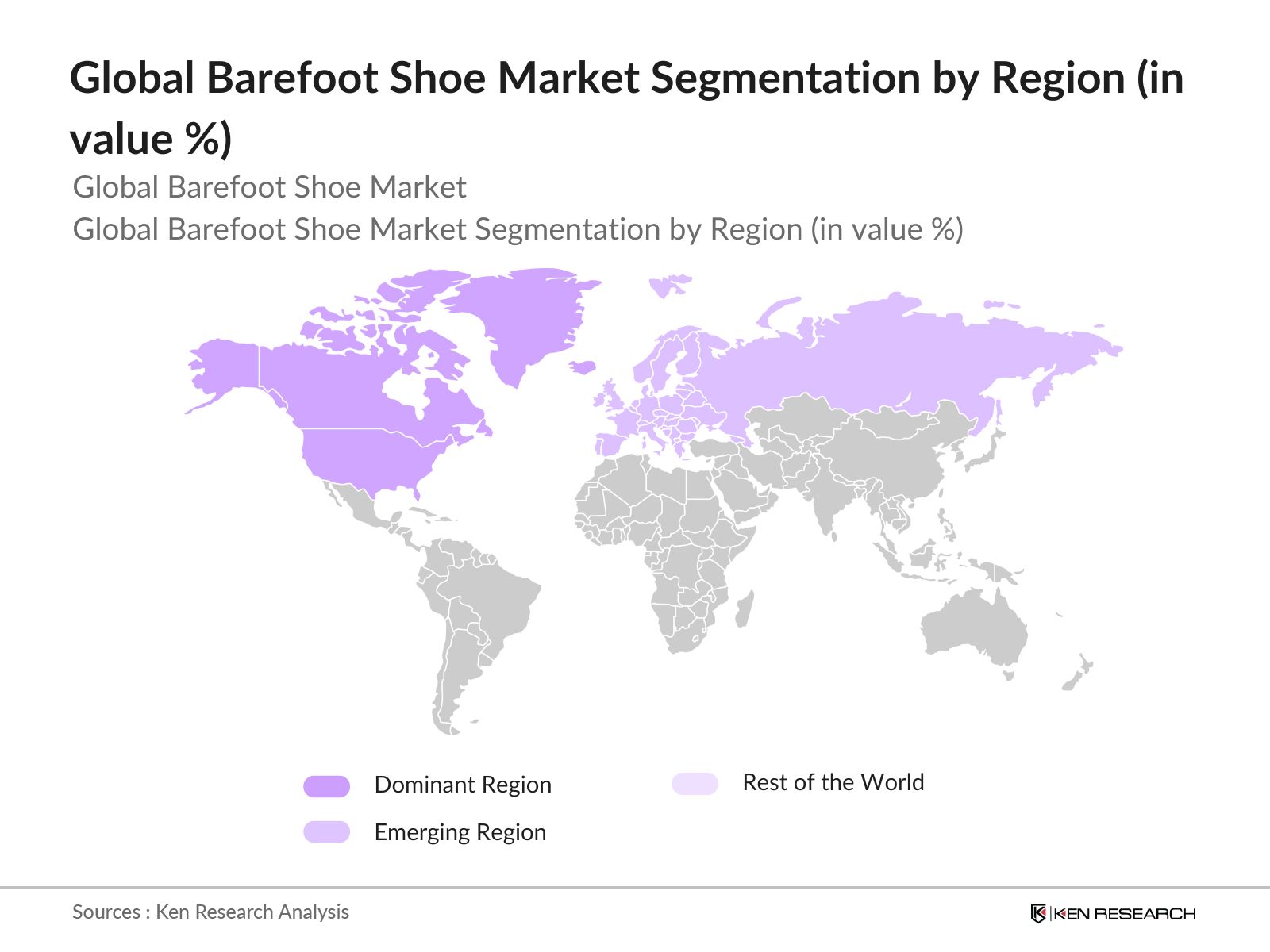
- By Region: The market is strategically segmented into key regions, each exhibiting unique dynamics and growth drivers. North America stands out as a significant market due to high consumer awareness regarding health and wellness, coupled with a strong presence of major barefoot shoe brands and a trend towards minimalist lifestyles. Europe follows closely, driven by increasing demand for sustainable and eco-friendly footwear, as well as a growing emphasis on outdoor activities and sports that promote natural foot movement. In the Asia-Pacific region, rapid urbanization, rising disposable incomes, and a burgeoning fitness culture are fueling market expansion, particularly in countries like China, Japan, and Australia.
Global Barefoot Shoe Market Competitive Landscape
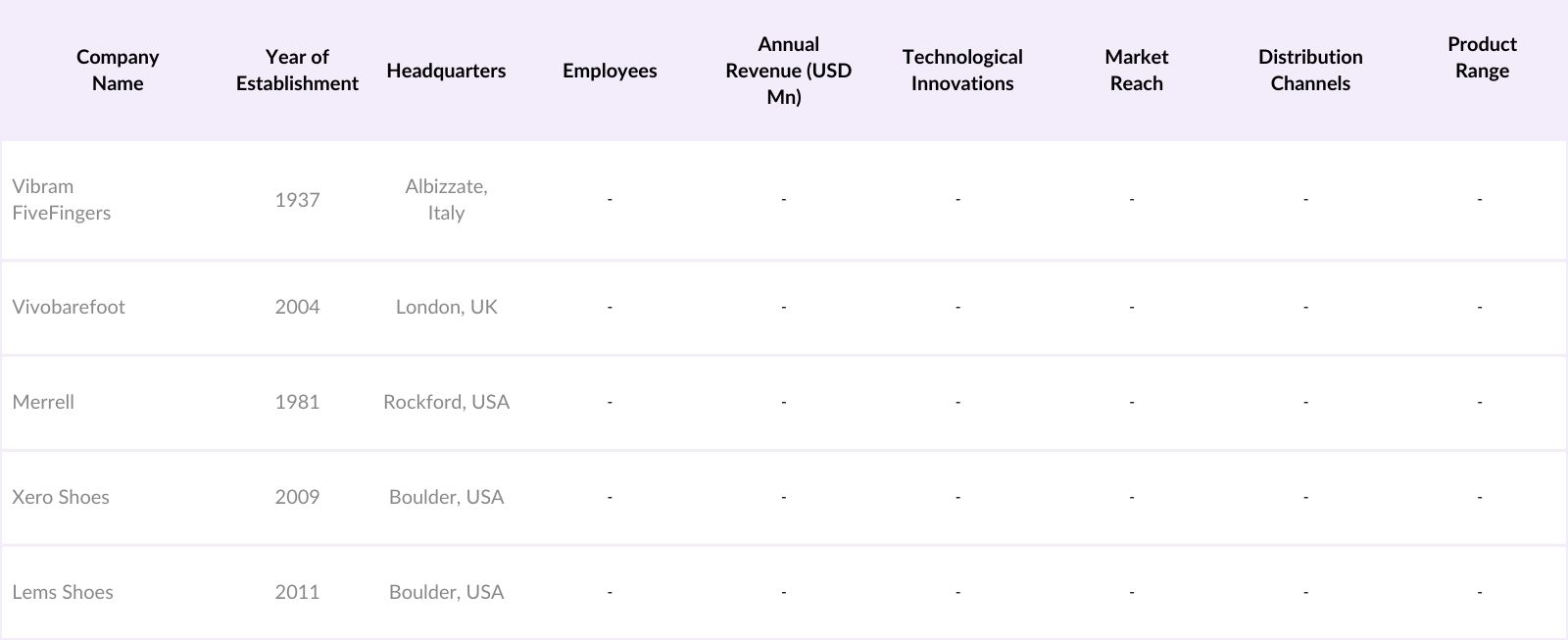
The global barefoot shoe market is characterized by intense competition, with numerous prominent companies striving to secure and expand their market share. These leading players are actively leveraging a variety of strategic approaches to maintain their competitive edge. One key strategy is product innovation, where companies continuously develop and introduce new designs, features, and technologies that enhance the functionality, comfort, and aesthetic appeal of barefoot shoes.
Global Barefoot Shoe Market Analysis
Growth Drivers
- Growing Demand for Natural Movement Footwear: The barefoot shoe market is experiencing significant demand as consumers prioritize natural movement in footwear, especially in developed economies. In 2024, physical activity participation rates surged, with more than half of adults in North America engaging in some form of regular physical activity, underscoring the shift toward natural movement products. Data from the World Health Organization indicates that physical inactivity has been recognized as a top risk factor for non-communicable diseases, further incentivizing the use of barefoot footwear for health benefits.
- Increased Focus on Health and Wellness: A notable increase in health and wellness spending is driving demand for footwear that supports foot health. In 2023, global spending on health and wellness exceeded USD 6 trillion, with consumers prioritizing products that enhance well-being, including footwear that encourages better posture and foot alignment. Government health agencies have also reported a substantial increase in recommendations for footwear supporting foot and joint health, contributing to market interest in barefoot shoes.
- Rising Awareness of Foot Health Benefits: Foot health awareness has been on the rise, with a growing number of podiatric studies highlighting the advantages of minimalistic footwear. In Europe alone, majority of health practitioners reported recommending minimalistic footwear in 2024 for foot strength improvement. Additionally, increased marketing campaigns by fitness brands have highlighted the muscular and joint benefits of barefoot shoes, attracting a substantial portion of health-conscious buyers.
Challenges
- Higher Production Costs for Sustainable Materials: The use of sustainable materials in barefoot shoe production often leads to significantly higher production costs compared to conventional footwear. These materials, such as recycled rubber, biodegradable fabrics, and plant-based alternatives, require advanced manufacturing technologies and processes that are more resource-intensive. For instance, the production of biodegradable rubber involves additional stages of refinement and quality assurance, which can increase costs substantiallycompared to standard materials.
- Limited Consumer Awareness in Emerging Markets: The barefoot shoe market faces a significant barrier in regions with limited awareness of minimalist footwear benefits. Educating consumers about the health advantages and unique features of barefoot shoes is crucial for expanding the market in emerging economies. This lack of awareness stems from insufficient marketing efforts, limited distribution channels, and a general preference for conventional footwear. Educating consumers about the health benefits of barefoot shoes, such as improved foot strength, posture, and natural gait alignment, is essential to unlocking potential demand.
Global Barefoot Shoe Market Future Outlook
The global barefoot shoe market is expected to grow steadily, driven by increasing consumer awareness around health-focused footwear and environmental sustainability. The rising demand for minimalist designs and natural movement footwear will continue to support market expansion. Additionally, partnerships with wellness influencers and increased online retail presence are expected to further propel market growth.
Future Market Opportunities
- Expansion in Sports and Fitness Sectors: With the global fitness industry growing rapidly in 2023, barefoot shoes present opportunities in sports and fitness markets. More than half of fitness professionals in North America and Europe advocate for barefoot footwear during strength training, citing enhanced proprioception and stability benefits. Additionally, athletes in specialized disciplines like yoga, pilates, and callisthenics are increasingly adopting barefoot shoes for improved balance and natural foot movement. This trend indicates a growing niche in professional sports and fitness sectors.
- Technological Innovations in Barefoot Shoe Materials: Ongoing innovations in footwear materials are bolstering barefoot shoe functionality and durability. In 2024, the development of biodegradable and highly flexible materials in footwear technology increased notably globally, according to industry production data. These materials are not only sustainable but also enhance the shoe's adaptability to various terrains, making them ideal for outdoor sports and adventure activities. These advancements appeal to eco-conscious consumers, highlighting sustainability without compromising on durability or performance.
Scope of the Report
|
By Product Type |
Running Barefoot Shoes Casual Barefoot Shoes Hiking Barefoot Shoes Office/Work Barefoot Shoes Childrens Barefoot Shoes |
|
By Material |
Leather Synthetic Canvas Mesh |
|
By Distribution Channel |
Online Retail Offline Retail (Brick & Mortar Stores) Specialty Footwear Stores Sports Stores |
|
By End User |
Men Women Children |
|
By Region |
North America Europe Asia Pacific Latin America Middle East & Africa |
Products
Key Target Audience
Investors and Venture Capitalist Firms
Banks and Financial Institutions
Health and Wellness Retailers
Barefoot Shoe Manufacturers and Distributors
Sports and Fitness Industry Associations
Government and Regulatory Bodies (The United States Environmental Protection Agency)
E-commerce and Online Retail Companies
Footwear Technology Innovators
Companies
Players Mentioned in the Report
Vibram FiveFingers
Vivobarefoot
Merrell
Xero Shoes
Lems Shoes
Feelgrounds
Wildling Shoes
Softstar Shoes
Joe Nimble
Altra Running
Freet Footwear
Skinners Technologies
Be Lenka
Splay Shoes
Sockwa
Table of Contents
01 Global Barefoot Shoe Market Overview
1.1. Definition and Scope
1.2. Market Taxonomy
1.3. Market Growth Rate
1.4. Market Segmentation Overview
02 Global Barefoot Shoe Market Size (In USD Mn)
2.1. Historical Market Size
2.2. Year-On-Year Growth Analysis
2.3. Key Market Developments and Milestones
03 Global Barefoot Shoe Market Analysis
3.1. Growth Drivers
3.1.1. Growing Demand for Natural Movement Footwear
3.1.2. Increased Focus on Health and Wellness
3.1.3. Rising Awareness of Foot Health Benefits
3.2. Market Challenges
3.2.1. High Production Costs
3.2.2. Limited Consumer Awareness in Emerging Markets
3.2.3. Market Competition with Conventional Footwear
3.3. Opportunities
3.3.1. Expansion in Sports and Fitness Sectors
3.3.2. Technological Innovations in Barefoot Shoe Materials
3.3.3. Partnerships with Health and Fitness Influencers
3.4. Trends
3.4.1. Sustainable and Eco-Friendly Barefoot Shoes
3.4.2. Customizable and Adjustable Designs
3.4.3. Growth in E-commerce Sales Channels
3.5. Government Regulation
3.5.1. Material Safety Standards
3.5.2. Environmental Impact Regulations
3.5.3. Import/Export Tariffs and Compliance
3.6. SWOT Analysis
3.7. Stakeholder Ecosystem
3.8. Porters Five Forces Analysis
3.9. Competitive Landscape
04 Global Barefoot Shoe Market Segmentation
4.1. By Product Type (In Value %)
4.1.1. Running Barefoot Shoes
4.1.2. Casual Barefoot Shoes
4.1.3. Hiking Barefoot Shoes
4.1.4. Office/Work Barefoot Shoes
4.1.5. Children's Barefoot Shoes
4.2. By Material (In Value %)
4.2.1. Leather
4.2.2. Synthetic
4.2.3. Canvas
4.2.4. Mesh
4.3. By Distribution Channel (In Value %)
4.3.1. Online Retail
4.3.2. Offline Retail (Brick & Mortar Stores)
4.3.3. Specialty Footwear Stores
4.3.4. Sports Stores
4.4. By End User (In Value %)
4.4.1. Men
4.4.2. Women
4.4.3. Children
4.5. By Region (In Value %)
4.5.1. North America
4.5.2. Europe
4.5.3. Asia Pacific
4.5.4. Latin America
4.5.5. Middle East & Africa
05 Global Barefoot Shoe Market Competitive Analysis
5.1. Detailed Profiles of Major Companies
5.1.1. Vibram FiveFingers
5.1.2. Vivobarefoot
5.1.3. Merrell
5.1.4. Xero Shoes
5.1.5. Lems Shoes
5.1.6. Feelgrounds
5.1.7. Splay Shoes
5.1.8. Wildling Shoes
5.1.9. Softstar Shoes
5.1.10. Joe Nimble
5.1.11. Altra Running
5.1.12. Freet Footwear
5.1.13. Vibrams USA
5.1.14. Skinners Technologies
5.1.15. Be Lenka
5.2. Cross Comparison Parameters (Revenue, Product Variants, Regional Presence, Brand Recognition, Customer Reviews, Eco-Friendliness, Customization Options, Warranty Periods)
5.3. Market Share Analysis
5.4. Strategic Initiatives
5.5. Mergers and Acquisitions
5.6. Investment Analysis
5.7. Venture Capital Funding
5.8. Government Grants
5.9. Private Equity Investments
06 Global Barefoot Shoe Market Regulatory Framework
6.1. Footwear Manufacturing Standards
6.2. Sustainability and Environmental Compliance
6.3. Health and Safety Standards for Footwear
07 Global Barefoot Shoe Market Future Size (In USD Mn)
7.1. Future Market Size Projections
7.2. Key Factors Driving Future Market Growth
08 Global Barefoot Shoe Market Future Segmentation
8.1. By Product Type (In Value %)
8.2. By Material (In Value %)
8.3. By Distribution Channel (In Value %)
8.4. By End User (In Value %)
8.5. By Region (In Value %)
09 Global Barefoot Shoe Market Analyst Recommendations
9.1. TAM/SAM/SOM Analysis
9.2. Customer Cohort Analysis
9.3. Targeted Marketing Strategies
9.4. White Space Opportunity Analysis
Research Methodology
Step 1: Identification of Key Variables
In this stage, we identify and map out the ecosystem of the barefoot shoe market, including consumers, distributors, and competitors. This is accomplished through comprehensive desk research and data collection from reputable industry databases, aiming to define the key metrics influencing market trends.
Step 2: Market Analysis and Construction
This step involves compiling historical data on the barefoot shoe market, assessing various market segments, and analyzing consumer preferences. This data helps construct a reliable base for revenue estimation and understanding product segmentation.
Step 3: Hypothesis Validation and Expert Consultation
Industry experts are consulted through a series of structured interviews to validate the hypotheses formed. These consultations provide valuable insights into current market dynamics, consumer behavior, and product demand, helping to refine our analysis.
Step 4: Research Synthesis and Final Output
The final phase involves synthesizing the gathered data into a cohesive report, verified by direct engagement with barefoot shoe manufacturers. This ensures the analysis is precise and validated, providing a well-rounded perspective of the barefoot shoe market.
Frequently Asked Questions
01 How big is the Global Barefoot Shoe Market?
The global barefoot shoe market is valued at USD 550 million, driven by a rising preference for health-focused footwear and eco-friendly choices among consumers.
02 What are the key growth drivers in the Global Barefoot Shoe Market?
Global barefoot shoe market growth in the barefoot shoe market is propelled by the increasing popularity of wellness and minimalist running, as well as advancements in sustainable materials used for footwear production.
03 Who are the major players in the Global Barefoot Shoe Market?
Leading players in the global barefoot shoe market include Vibram FiveFingers, Vivobarefoot, Merrell, Xero Shoes, and Lems Shoes, which dominate the market due to their strong brand reputation and diverse product offerings.
04 What are the major challenges in the Global Barefoot Shoe Market?
The global barefoot shoe market faces challenges like high production costs, limited consumer awareness in emerging markets, and strong competition from conventional footwear brands.
Why Buy From Us?

What makes us stand out is that our consultants follows Robust, Refine and Result (RRR) methodology. i.e. Robust for clear definitions, approaches and sanity checking, Refine for differentiating respondents facts and opinions and Result for presenting data with story

We have set a benchmark in the industry by offering our clients with syndicated and customized market research reports featuring coverage of entire market as well as meticulous research and analyst insights.

While we don't replace traditional research, we flip the method upside down. Our dual approach of Top Bottom & Bottom Top ensures quality deliverable by not just verifying company fundamentals but also looking at the sector and macroeconomic factors.

With one step in the future, our research team constantly tries to show you the bigger picture. We help with some of the tough questions you may encounter along the way: How is the industry positioned? Best marketing channel? KPI's of competitors? By aligning every element, we help maximize success.

Our report gives you instant access to the answers and sources that other companies might choose to hide. We elaborate each steps of research methodology we have used and showcase you the sample size to earn your trust.

If you need any support, we are here! We pride ourselves on universe strength, data quality, and quick, friendly, and professional service.