
Global Biological Treatment Market Outlook to 2030
Region:Global
Author(s):Sanjna
Product Code:KROD10886
Region:Global
Author(s):Sanjna
Product Code:KROD10886
December 2024
96
By Treatment Type: The biological treatment market is segmented by treatment type into aerobic treatment, anaerobic treatment, composting, and land treatment. Aerobic treatment is the dominant segment within this category due to its widespread application in municipal wastewater treatment. Aerobic treatment methods, such as activated sludge processes, are highly effective in removing organic contaminants from wastewater, making them a preferred choice for public utilities. In addition, advancements in aerobic technologies have made them more energy-efficient and cost-effective, which has further driven adoption rates globally. 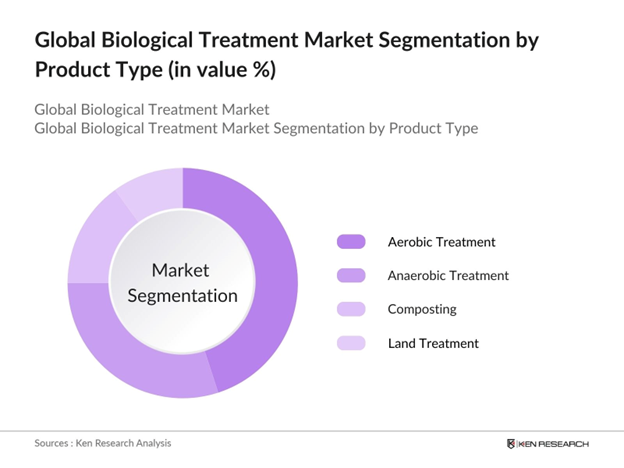
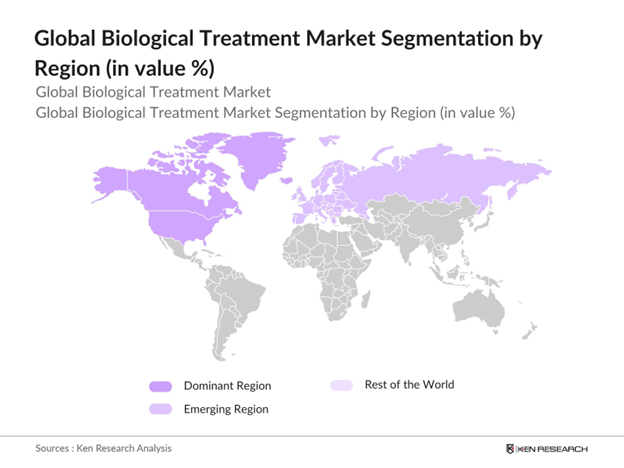
By Region: Geographically, the biological treatment market is segmented into North America, Europe, Asia-Pacific, Latin America, and the Middle East & Africa. North America dominates the market, driven by extensive regulatory frameworks and high investment in environmental technologies. The U.S., in particular, has an established biological treatment infrastructure and policies that mandate sustainable waste management practices.
By Application: The biological treatment market is segmented by application into municipal wastewater, industrial wastewater, and hazardous waste treatment. Municipal wastewater holds a dominant position in this category, primarily due to the necessity of managing large volumes of wastewater produced by urban populations. Governments worldwide have mandated strict treatment standards for municipal waste, driving demand for efficient biological treatment systems. Furthermore, as urbanization accelerates, municipalities are investing in advanced biological treatment systems to meet rising wastewater treatment needs, particularly in densely populated regions.
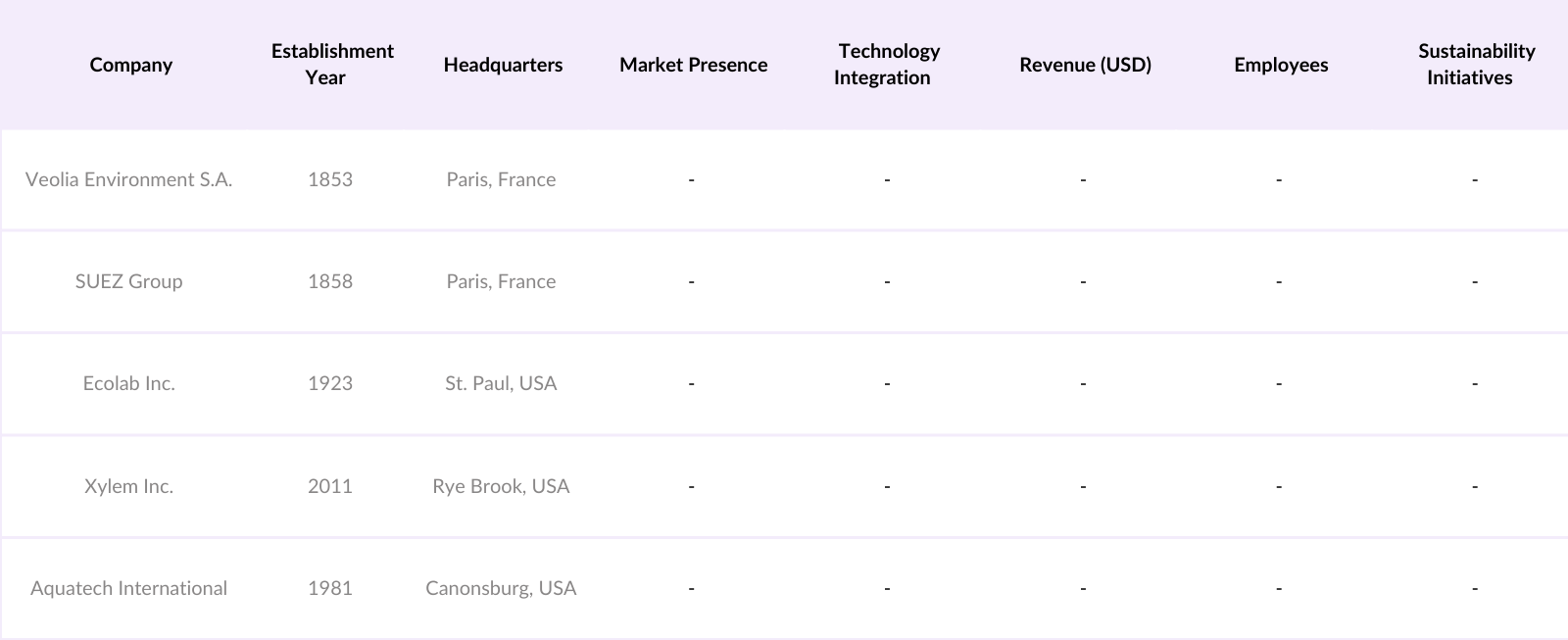
The global biological treatment market is dominated by key players specializing in advanced waste treatment technologies, including Veolia Environment S.A., SUEZ Group, and Ecolab Inc. This consolidation demonstrates the significant influence of these industry leaders, who leverage their extensive resources and established market presence to drive innovation and set industry standards. These companies play a pivotal role in shaping market dynamics, driving the adoption of sustainable waste treatment technologies worldwide.
Growth Drivers
Challenges
Over the coming years, the global biological treatment market is expected to witness substantial growth, driven by increasing regulatory pressure for sustainable waste management, advancements in biotreatment technologies, and rising environmental awareness. Key industry players are anticipated to invest further in R&D, focusing on the development of energy-efficient biological treatment solutions and expanding applications in both municipal and industrial wastewater management.
Market Opportunities
Scope of Report
|
Segments |
Sub-Segments |
|
By Treatment Type |
Aerobic Treatment |
|
By Application |
Municipal Wastewater |
|
By Technology |
Activated Sludge Process |
|
By Microbial Type |
Bacterial |
|
By Region |
North America |
1.1 Definition and Scope
1.2 Market Taxonomy
1.3 Growth Rate and Projections
1.4 Segmentation Overview
2.1 Historical Market Size Analysis
2.2 Year-On-Year Growth Analysis
2.3 Major Developments and Milestones
2.4 Market Forecast
3.1 Growth Drivers (Advanced Biological Technologies, Increased Environmental Regulations, Bioreactor Efficiency)
3.1.1 Increased Awareness of Environmental Sustainability
3.1.2 Rise in Industrial Wastewater Management
3.1.3 Technological Advancements in Bio-Treatment Processes
3.1.4 Adoption of Biological Treatment for Municipal Wastewater
3.2 Market Challenges (High Operational Costs, Technical Constraints, Strict Regulatory Compliance) 3.2.1 Complex Treatment Mechanisms
3.2.2 High Initial Investment Costs
3.2.3 Maintenance of Optimal Environmental Conditions
3.3 Opportunities (Emerging Markets, R&D in Biotechnological Processes, Rise in Decentralized Treatment Systems) 3.3.1 Adoption in Developing Economies
3.3.2 Strategic Partnerships in the Industry
3.3.3 Focus on Natural and Eco-Friendly Processes
3.4 Trends (Integrated Bioprocess Solutions, Advanced Bio-Augmentation, IoT in Biological Treatment) 3.4.1 Use of AI in Process Monitoring
3.4.2 Expansion of Microbial Treatment Applications
3.4.3 Growth in Bio-Membrane Filtration Systems
3.5 Regulatory Framework
3.5.1 Environmental Protection Standards
3.5.2 Government Incentives and Subsidies
3.5.3 Certification and Compliance Requirements
4.1 By Treatment Type (In Value %)
4.1.1 Aerobic Treatment
4.1.2 Anaerobic Treatment
4.1.3 Composting
4.1.4 Land Treatment
4.2 By Application (In Value %)
4.2.1 Municipal Wastewater
4.2.2 Industrial Wastewater
4.2.3 Hazardous Waste Treatment
4.3 By Technology (In Value %)
4.3.1 Activated Sludge Process
4.3.2 Bioreactors
4.3.3 Membrane Bioreactors
4.3.4 Trickling Filters
4.4 By Microbial Type (In Value %)
4.4.1 Bacterial
4.4.2 Fungal
4.4.3 Algal
4.4.4 Mixed Cultures
4.5 By Region (In Value %)
4.5.1 North America
4.5.2 Europe
4.5.3 Asia-Pacific
4.5.4 Latin America
4.5.5 Middle East & Africa
5.1 Key Company Profiles
5.1.1 Veolia Water Technologies
5.1.2 Ecolab Inc.
5.1.3 Suez Water Technologies & Solutions
5.1.4 Xylem Inc.
5.1.5 Evoqua Water Technologies
5.1.6 Aquatech International LLC
5.1.7 BioteQ Environmental Technologies Inc.
5.1.8 Calgon Carbon Corporation
5.1.9 Dow Water & Process Solutions
5.1.10 Kemira Oyj
5.2 Cross-Comparison Parameters (No. of Employees, Headquarters, Inception Year, Revenue, Market Presence, Innovation Index, Key Collaborations, Environmental Initiatives)
5.3 Market Share Analysis
5.4 Strategic Initiatives
5.5 Mergers and Acquisitions
5.6 R&D Investment Analysis
6.1 Global Environmental Standards
6.2 Permits and Compliance Requirements
6.3 International Standards and Certifications
7.1 Projected Market Size
7.2 Key Factors Impacting Future Market Growth
8.1 TAM/SAM/SOM Analysis
8.2 Customer Cohort Analysis
8.3 Innovation Opportunities
8.4 White Space Analysis
The initial phase involves mapping out the entire ecosystem of the global biological treatment market, including stakeholders like wastewater treatment facilities, government agencies, and technology developers. This foundational research relies on proprietary databases to pinpoint core variables influencing the market.
In this phase, historical market data is compiled to evaluate market trends, product penetration, and service adoption. A thorough analysis of market data is performed to ensure accuracy in projecting revenue and identifying market challenges.
Hypotheses about market trends are validated by consulting industry experts, using both interviews and surveys. These consultations provide direct insights from leading industry figures and validate assumptions made in the data analysis phase.
The final phase synthesizes collected data and insights into a structured report. Direct consultations with key players further validate findings, ensuring that the report provides an accurate and comprehensive view of the global biological treatment market.
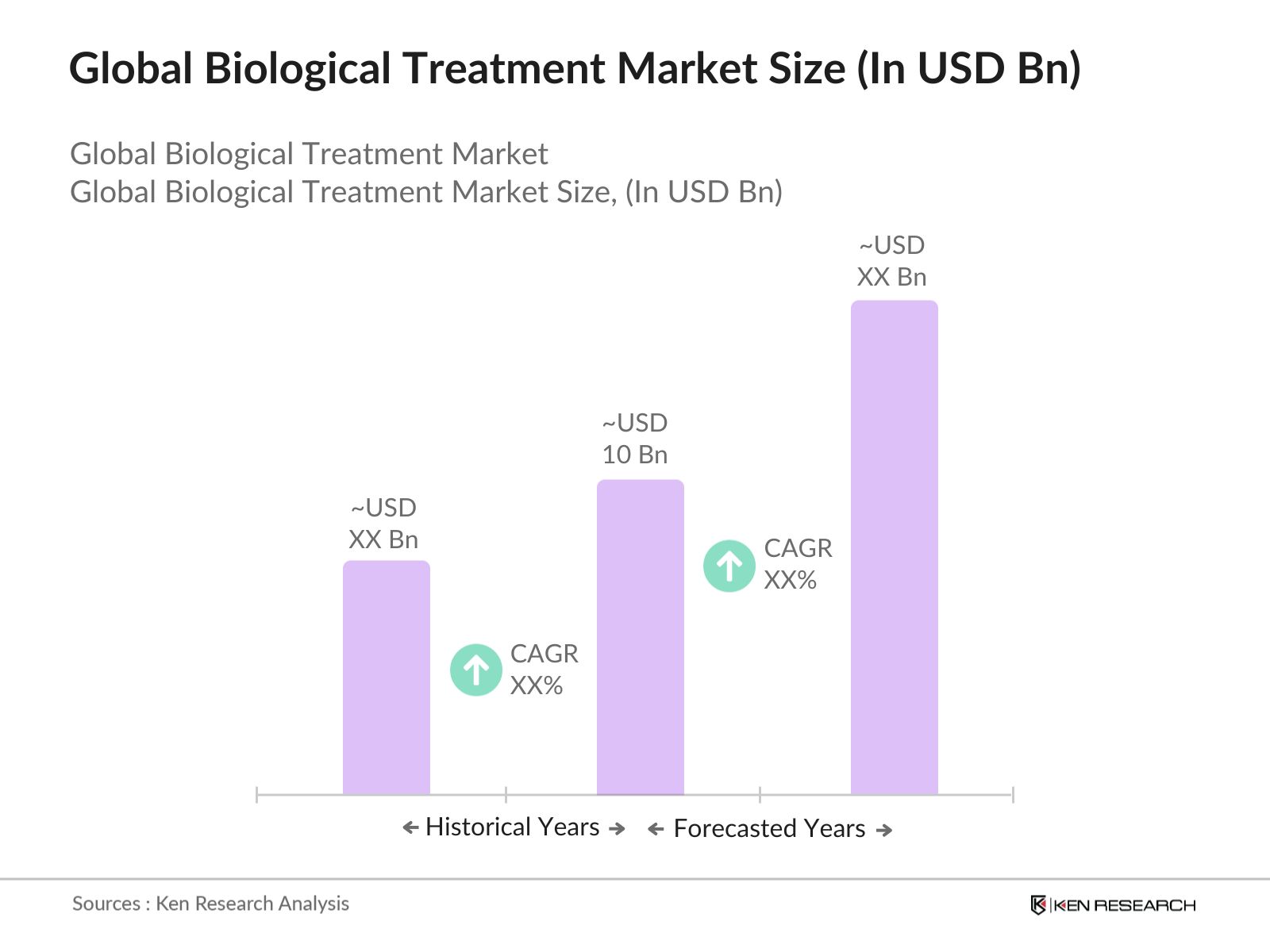
The global biological treatment market was valued at USD 10 billion, driven by stringent regulations and advancements in biotreatment technologies.
Challenges in global biological treatment market include high operational costs, regulatory compliance complexities, and technological limitations in treating certain types of industrial waste.
Key players in global biological treatment market include Veolia Environment S.A., SUEZ Group, Ecolab Inc., Xylem Inc., and Aquatech International, who dominate due to their established presence and technological innovation.
The global biological treatment market is driven by regulatory pressures for sustainable waste management, growing urbanization, and rising environmental awareness, which propel the adoption of biological treatment solutions.

What makes us stand out is that our consultants follows Robust, Refine and Result (RRR) methodology. i.e. Robust for clear definitions, approaches and sanity checking, Refine for differentiating respondents facts and opinions and Result for presenting data with story

We have set a benchmark in the industry by offering our clients with syndicated and customized market research reports featuring coverage of entire market as well as meticulous research and analyst insights.

While we don't replace traditional research, we flip the method upside down. Our dual approach of Top Bottom & Bottom Top ensures quality deliverable by not just verifying company fundamentals but also looking at the sector and macroeconomic factors.

With one step in the future, our research team constantly tries to show you the bigger picture. We help with some of the tough questions you may encounter along the way: How is the industry positioned? Best marketing channel? KPI's of competitors? By aligning every element, we help maximize success.

Our report gives you instant access to the answers and sources that other companies might choose to hide. We elaborate each steps of research methodology we have used and showcase you the sample size to earn your trust.

If you need any support, we are here! We pride ourselves on universe strength, data quality, and quick, friendly, and professional service.