Global Biopharmaceutical Market Outlook to 2030

Region:Global

Author(s):Kartik Upadhyay

Product Code:KENGR032

Published On

September 2024

Total pages

97

About the Report

Global Biopharmaceutical Market Overview

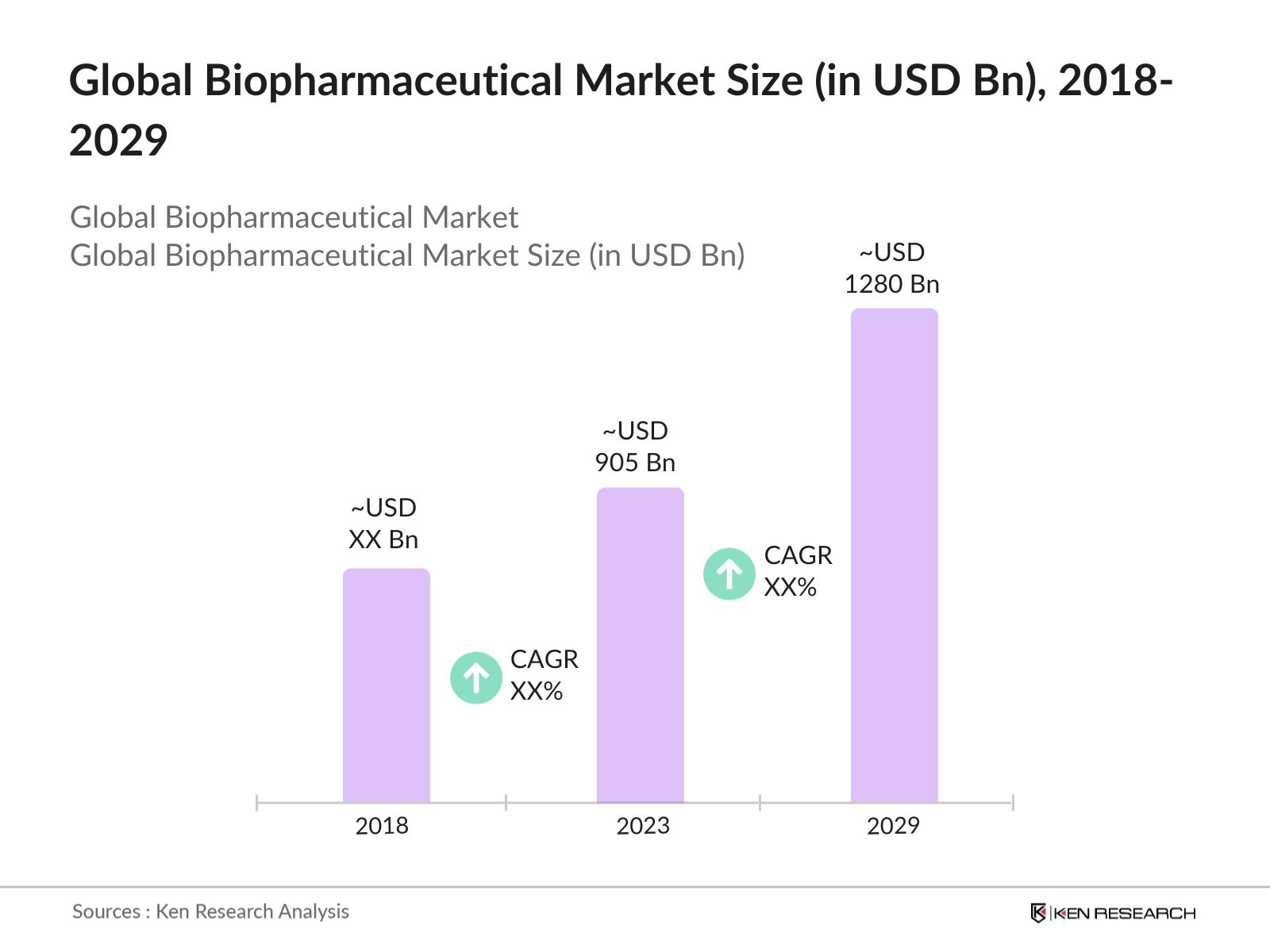
  • The global biopharmaceutical market was valued at USD 905 Bn in 2023, is driven by increasing prevalence of chronic diseases such as cancer, diabetes, and autoimmune disorders, which demand innovative therapeutic solutions. The rising geriatric population globally, advancements in biotechnology, and the increasing acceptance of biologic drugs have significantly contributed to market expansion. High investments in R&D by major pharmaceutical companies and favorable government policies also play a crucial role.

market overviews

  • Prominent players in market include Pfizer Inc., Roche Holding AG, Johnson & Johnson, Novartis AG, and Merck & Co. These companies dominate due to their extensive product portfolios, strong R&D capabilities, and significant market presence. For instance, Pfizer's diverse range of biopharmaceuticals and continuous innovation in gene therapy have cemented its position as a market leader. Roche, with its focus on oncology biologics, also holds a substantial market share.
  • In 2023, Pfizer announced the successful acquisition of Seagen Inc. for USD 43 billion, a move aimed at bolstering its oncology pipeline. This acquisition highlights the trend of large pharmaceutical companies investing heavily in biopharmaceuticals to enhance their product offerings and market position. The deal is expected to accelerate Pfizer's growth in the oncology sector, providing a broader range of cancer therapies and leveraging Seagens expertise in antibody-drug conjugates.

Global Biopharmaceutical Current Market Analysis

market overviews

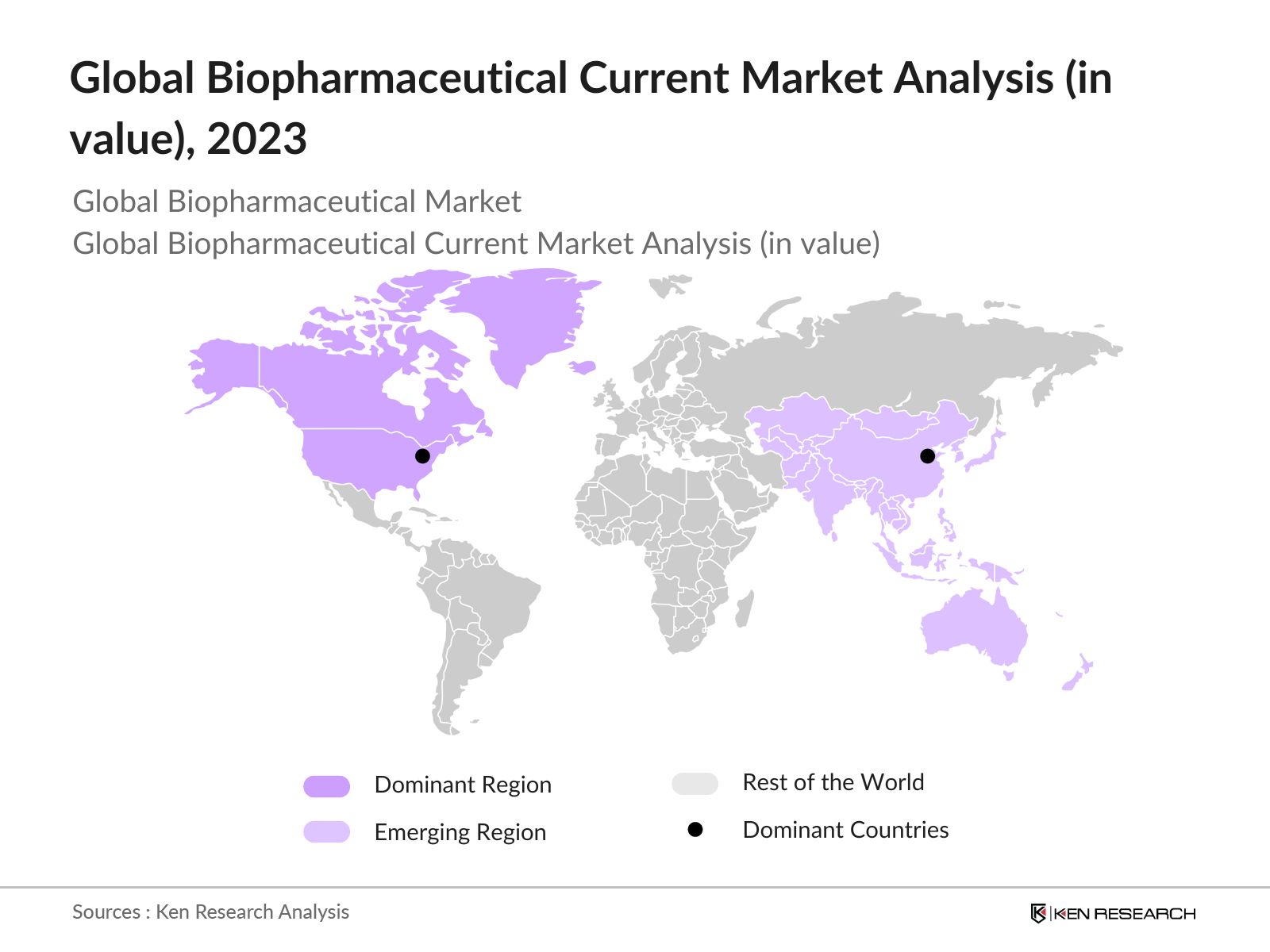
  • North America as dominant region: North America leads the biopharmaceutical market, driven by a strong healthcare infrastructure, extensive R&D capabilities with a USD 250 Bn budget in 2023, and the presence of major companies like Merck and AbbVie. Supportive government policies, including efforts by Health Canada and the NIH, further enhance growth. In May 2024, North America dominated global biotechnology investments, with 21 funding rounds totaling $2 Bn, including $300 Bn for Uniquity Bio and $225 million for AltruBio. The region's high adoption of advanced medical technologies, a large patient population, increasing chronic disease prevalence, and rising demand for personalized medicine are key factors contributing to its market dominance.
  • APAC as emerging region: The Asia-Pacific (APAC) region is emerging as a vital player in the global biopharmaceutical industry, driven by a rapidly growing population of 4.3 billion in 2023, rising healthcare expenditure, and a chronic disease prevalence affecting over 40% of the population. The region's supportive regulatory environment and significant government initiatives, such as Indias National Biopharma Mission and Chinas Made in China 2025 plan, boost local biopharmaceutical R&D. China and India are key hubs for clinical trials and manufacturing, due to their cost-effectiveness and skilled workforce.
  • USA as dominant country: The United States dominates the biopharmaceutical market, driven by advanced infrastructure, significant R&D investments, and a highly developed healthcare system. In 2020, U.S. medical and health R&D investments reached USD 245.1 billion, while healthcare spending increased by 4.1% in 2022, totaling USD 4.5 trillion.The presence of world-class biotechnology firms, cutting-edge drug discovery processes, and a supportive regulatory environment fosters innovation. High demand for advanced therapies and biologics, fueled by an aging population of 55.8 million in 2020 and rising chronic disease prevalence, further strengthens the U.S. market.

Global Biopharmaceutical Market Segmentation

The Global Biopharmaceutical Market can be segmented based on several factors:

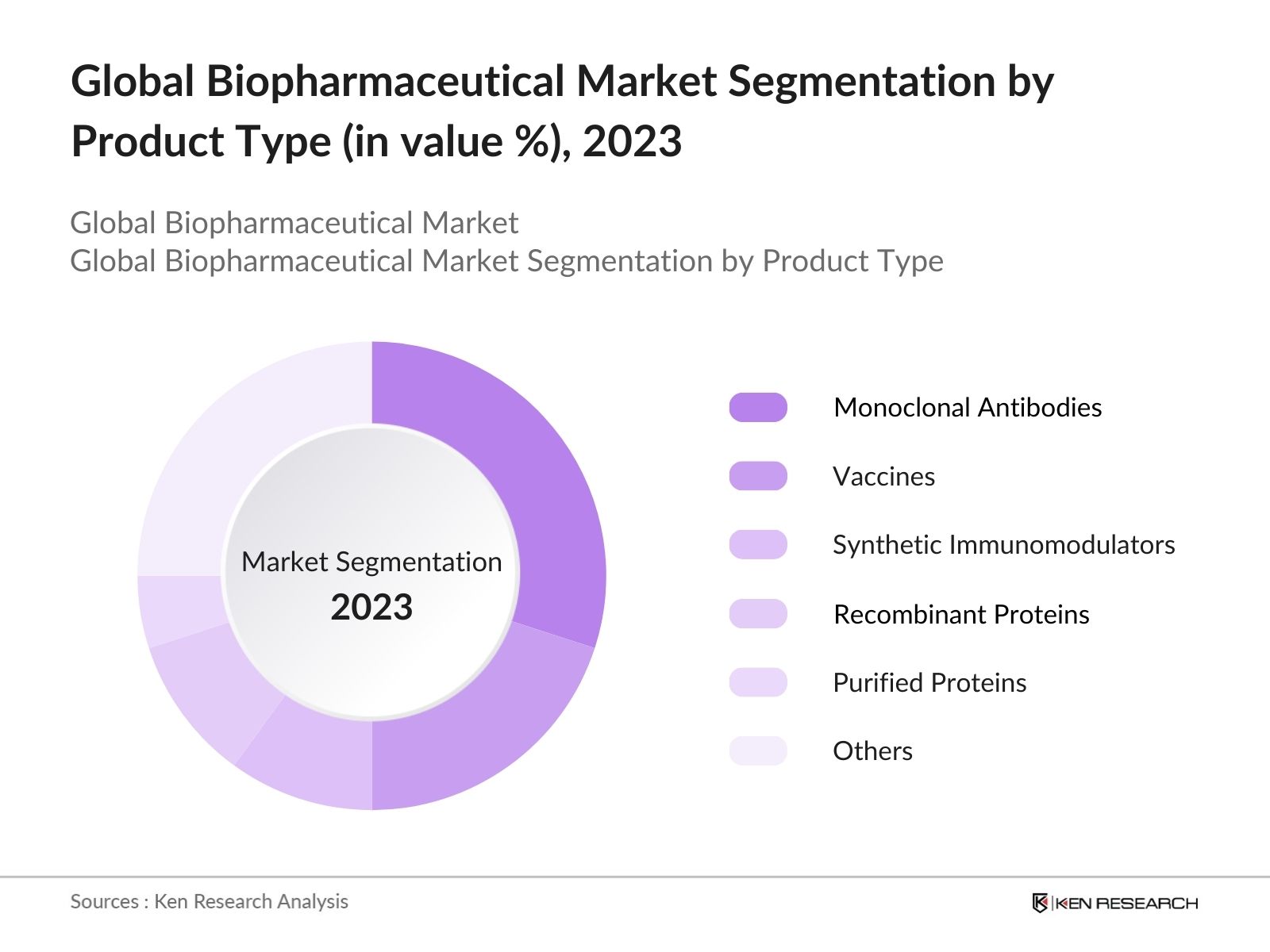
By Product Type: Global Biopharmaceutical market segmentation by product type is divided into monoclonal antibodies, vaccines, synthetic immunomodulators, recombinant proteins, purified proteins and others. In 2023, monoclonal antibodies lead the global biopharmaceutical market by value, driven by their effectiveness in treating diseases like cancer and autoimmune disorders. Their dominance is fueled by advances in antibody engineering, increased demand for targeted therapies, and the growing prevalence of chronic conditions.
market overviews

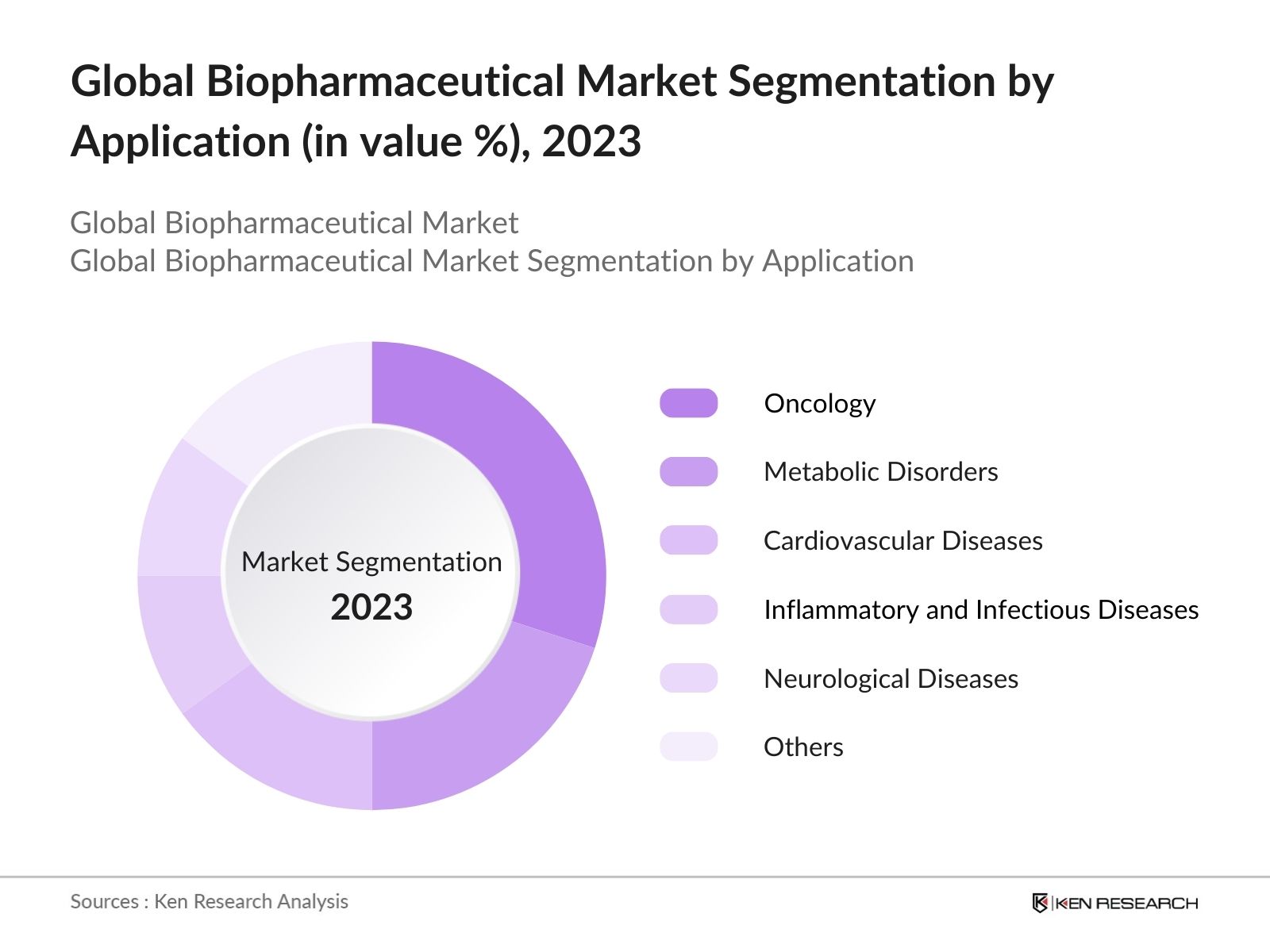
By Application: In the Global Biopharmaceutical market segmentation by application is divided into oncology, metabolic disorders, cardiovascular diseases, inflammatory & infectious diseases, neurological diseases and others. In 2023, oncology leads the global biopharmaceutical market by application, driven by the high prevalence of cancer and the need for advanced treatments. Significant R&D investments and advancements in therapies, including immunotherapy and personalized medicine, bolster this segments dominance.
market overviews

Global Biopharmaceutical Market Competitive Landscape

Company

Headquarter

Establishment Year

Geographical Presence

Pfizer Inc.

New York, United States

1849

120

Johnson & Johnson

New Brunswick, New Jersey, the US.

1886

60

F. Hoffmann-La Roche AG

Basel, Switzerland

1896

95

Merck Co. & Inc.

Rahway, New Jersey, United States

1891

100

Bayer AG

Leverkusen, North Rhine-Westphalia, Germany

1863

80

Abbvie Inc.

North Chicago, Illinois, United States

2013

70

Novartis AG

Basel, Switzerland

1996

130

Bristol-Myers Squibb Company

Princeton, New Jersey, USA

1887

40

Sanofi SA

Paris, France

1973

90

AstraZeneca PLC

Cambridge, UK

1999

125

  • Pfizers Strategic Advancements in Biopharmaceuticals: Pfizer has recently made significant advances in the biopharmaceutical industry. In May 2022, it acquired Biohaven Pharmaceuticals for $11.6 billion, gaining access to innovative migraine treatments like Rimegepant and Zavegepant. Pfizer also collaborated with Beam Therapeutics to leverage in vivo base editing technologies for treating rare genetic diseases. Additionally, the company is actively involved in clinical trials across oncology, infectious diseases, and autoimmune disorders, reinforcing its commitment to advancing medical science and expanding its therapeutic portfolio.
  • Johnson & Johnsons Cutting-Edge Research Collaborations: Johnson & Johnson, through its subsidiary Janssen Pharmaceutical NV, has recently entered into a discovery collaboration with Evotec SE. This partnership will utilize Evotec's TargetAlloMod platforms to explore and identify novel first-in-class treatments. The collaboration aims to advance the development of innovative therapeutic modalities, showcasing J&Js commitment to pioneering new treatment options and expanding its research capabilities in the biopharmaceutical sector.
  • Merck & Co.s Strategic Acquisition of Harpoon Therapeutics: Merck & Co. has successfully completed its acquisition of Harpoon Therapeutics, Inc., in a strategic move aimed at enhancing its portfolio and bolstering its position in the biopharmaceutical industry. This acquisition will allow Merck to expand its capabilities in developing innovative therapies, particularly in oncology, and strengthen its competitive edge in the rapidly evolving biopharmaceutical market.

Global Biopharmaceutical Industry Analysis

Global Biopharmaceutical Market Growth Drivers:

  • IncreasingPrevalence of ChronicDisorders: The increasing prevalence of chronic illnesses is significantly driving the demand for biopharmaceuticals. The United Nations projects that cancer cases will rise to over 35 million by 2050, up from an estimated 20 million in 2022, marking a 77% increase. Similarly, global cases of diabetes are expected to reach 1.3 billion by 2050. Cardiovascular diseases also contribute to the growing need for advanced biopharmaceutical treatments. These trends underscore the urgent demand for innovative therapies to address the expanding burden of chronic diseases.
  • Advent of the COVID-19 Pandemic: The pandemic had accelerated the growth of the biopharmaceutical market, as companies have invested heavily in research and development to develop effective treatments and vaccines. However. Post-pandemic, pharmaceutical companies have invested heavily in exploring biologics, for instance, Pfizer as of January 2024, had 112 drugs in pipeline, with 41 for phase 1, 34 for phase 2, 31 for phase 3 trials and 6 drugs for registration.
  • Increase in Regulatory Approvals: Regulatory loopholes that previously hindered drug development before the pandemic have now been addressed. The increasing number of regulatory approvals for both new and existing products aimed at treating various diseases is significantly contributing to the growth of the biopharmaceutical market. This improvement in regulatory processes is fostering innovation and accelerating the availability of new therapies.

Global Biopharmaceutical Market Challenges:

  • Cost and Complexity: The intricate nature of biopharmaceutical supply chains and operations presents a significant challenge, particularly with the introduction of new manufacturing technologies. This intricacy can place pressure on production schedules and elevate operational difficulties for companies in the industry. Moreover, facilities are costly to run, too, with long process durations, low yields, expensive raw materials, and, not least, the need for a team of highly skilled experts to operate them.
  • Intellectual Property Protection: The safeguarding of intellectual property holds immense importance for bio-pharmaceutical companies, and the intricacies and expenses involved in securing patents can be formidable. While recent regulations ensure a minimum protection period of 12 years, the development timeline for a biologic drug span over a decade before reaching the market. Consequently, the cost-benefit analysis for biologic manufacturers may sometimes be unfavorable.

Global Biopharmaceutical Market Government Initiatives:
  • U.S. Biopharmaceutical Manufacturing Innovation Institute: In 2023, the U.S. government announced a USD 2 billion investment in the Biopharmaceutical Manufacturing Innovation Institute. This initiative aims to enhance domestic biomanufacturing capabilities, reduce dependency on foreign supply chains, and foster innovation. The investment is expected to accelerate the development and production of biopharmaceuticals, ensuring a steady supply of critical therapies.
  • European Union's Horizon Europe Program: The European Unions Horizon Europe program, launched in 2021, includes significant funding for biopharmaceutical research and innovation. With a budget of EUR 95.5 billion, the program supports projects that address health challenges, including the development of new biopharmaceuticals. This initiative aims to strengthen Europes position as a leader in biopharmaceutical innovation and improve public health outcomes.

Global Biopharmaceutical Future Market Outlook

market overviews

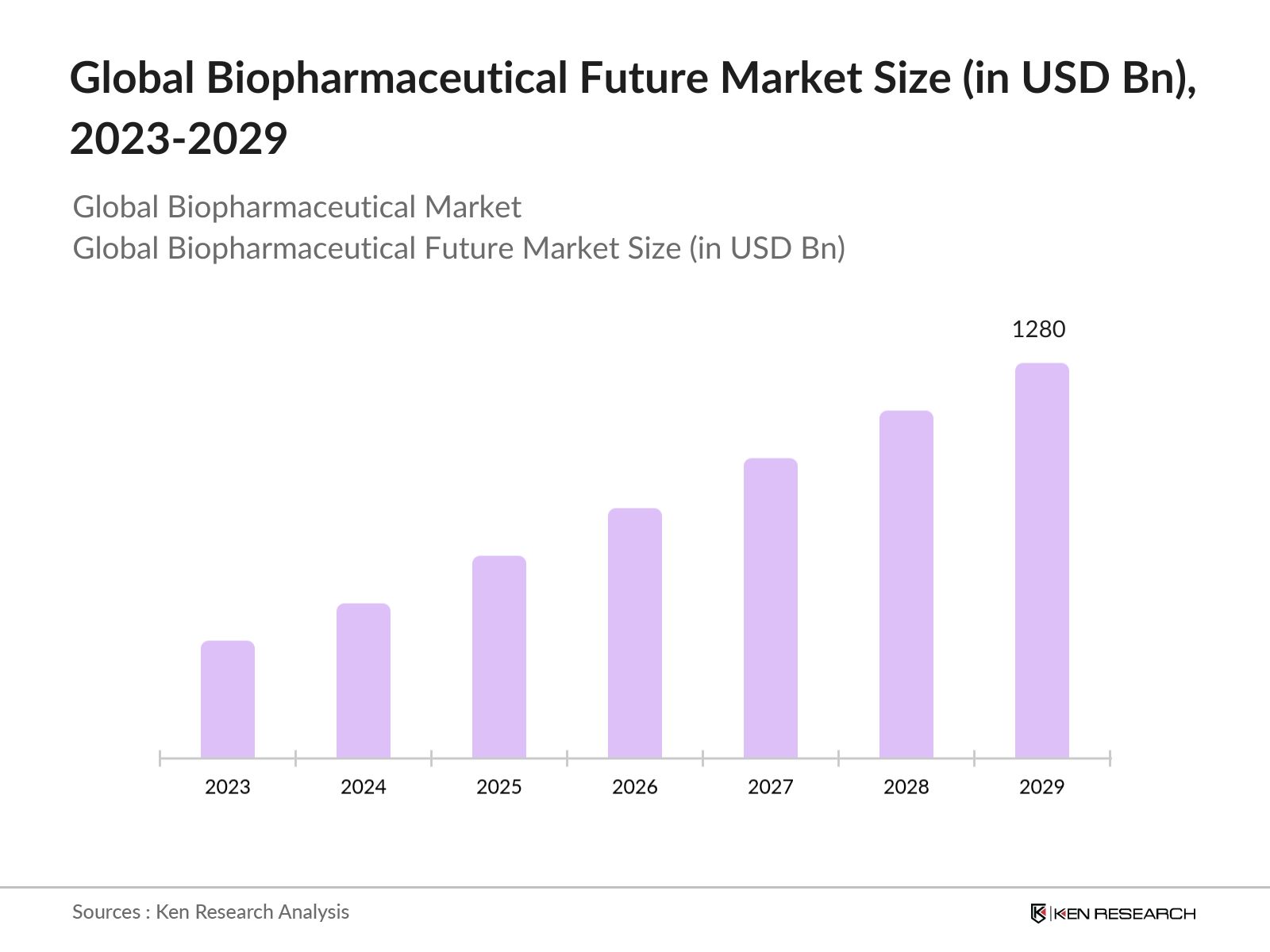
The Global Biopharmaceutical market is expected to reach USD 1280 Bn by 2029 driven by continuous advancements in biotechnology, increasing prevalence of chronic diseases, and substantial R&D investments. The market is expected to witness the introduction of innovative therapies, particularly in oncology and autoimmune diseases, propelled by technological innovations and personalized medicine. Government initiatives and favorable regulatory frameworks will further support market expansion, ensuring a steady supply of advanced biopharmaceuticals.

Future Market Trends

  • Rise of Personalized Medicine: The future of the biopharmaceutical market will be significantly influenced by the rise of personalized medicine. Advances in genomics and biotechnology will enable the development of targeted therapies tailored to individual patient profiles, leading to more effective and safer treatments. This trend is expected to drive the demand for biopharmaceuticals, particularly in the treatment of cancers and rare genetic disorders.
  • Expansion of Cell and Gene Therapies: Cell and gene therapies are set to revolutionize the treatment landscape for various diseases. With several products already approved and many more in the pipeline, these therapies will address unmet medical needs and offer curative potential for conditions previously deemed untreatable. The market is expected to see a surge in the development and commercialization of these advanced therapies.

Scope of the Report

By Region

North America

APAC

Europe

Latin America

MEA

By Product Type

Monoclonal Antibodies

Vaccines

Synthetic Immunomodulators

Recombinant Proteins

Purified Proteins

Other Product Types (Recombinant Growth Factors, Recombinant Hormones, Recombinant Enzymes and Cell & Gene Therapies)

By Application

Oncology

Metabolic Disorders

Cardiovascular Diseases

Inflammatory and Infectious Diseases

Neurological Diseases

Other Diseases (Hormonal Disorders and Autoimmune Disorders)

Products

Key Target Audience Organizations and Entities Who Can Benefit by Subscribing This Report:

  • Pharmaceutical Companies

  • Biotechnology Firms

  • Hospitals and Healthcare Providers

  • Biomanufacturing Companies

  • Healthcare Insurance Companies

  • Health Tech Companies

  • Banks and Financial Institution

  • Investors and VCs

  • Regulatory Bodies (FDA and EMA)

Time Period Captured in the Report:

  • Historical Period: 2018-2023

  • Base Year: 2023

  • Forecast Period: 2023-2029

Companies

Players Mentioned in the Report:

  • Pfizer Inc.

  • Johnson & Johnson

  • F. Hoffmann-La Roche AG

  • Merck Co. & Inc.

  • Bayer AG

  • Abbvie Inc.

  • Novartis AG

  • Bristol-Myers Squibb Company

  • Sanofi SA

  • AstraZeneca PLC

  • Takeda Pharmaceutical Company Limited

  • Eli Lilly and Company

  • Amgen Inc.

  • Novo Nordisk AS

  • GlaxoSmithKline PLC

Table of Contents

1. Executive Summary

1.1 Global Pharmaceutical Market

1.2 Global Biopharmaceutical Market

2. Global Overview

2.1 Overview of Global Economics

2.2 Overview of Global Pharmaceutical Industry

2.3 Global Pharmaceutical (Prescription Drugs, OTC Meds, Vaccines, Generics and others) Revenue

2.4 Global Biopharmaceutical Infrastructure

3. Global Biopharmaceutical Market Overview

3.1 Ecosystem

3.2 Value Chain

3.3 Case Study

3.4 Taxonomy

4. Global Biopharmaceutical Market Size (in USD Bn), 2018-2023

5. Global Biopharmaceutical Market Segmentation (in value %), 2018-2023

5.1 By Region (North America, Europe, APAC, Latin America and MEA) in value %, 2018-2023

5.2 By Product Type (Monoclonal Antibodies, Vaccines, Synthetic Immunomodulators, Recombinant Proteins, Purified Proteins, Recombinant Growth Factors, Recombinant Hormones, Recombinant Enzymes Cell & Gene Therapies and Other Product Types) in value%, 2018-2023

5.3 By Application (Oncology, Metabolic Disorders, Cardiovascular Diseases, Inflammatory & Infectious Diseases, Neurological Diseases, Hormonal Disorders, Autoimmune Disorders and Other Diseases) in value %, 2018-2023

6. Global Biopharmaceutical Market Competition Landscape

6.1 Market Share Analysis

6.2 Market Heat Map Analysis

6.3 Market Cross Comparison

6.4 Comparison Matrix

6.5 Investment Landscape

7. Global Biopharmaceutical Market Dynamics

7.1 Growth Drivers

7.2 Challenges

7.3 Trends

7.4 Case Studies

7.5 Strategic Initiatives

8. Global Biopharmaceutical Future Market Size (in USD Bn), 2023-2029

9. Global Biopharmaceutical Future Market Segmentation (in value %), 2023-2029

9.1 By Region (North America, Europe, APAC, Latin America and MEA) in value %, 2023-2029

9.2 By Product Type (Monoclonal Antibodies, Vaccines, Synthetic Immunomodulators, Recombinant Proteins, Purified Proteins, Recombinant Growth Factors, Recombinant Hormones, Recombinant Enzymes Cell & Gene Therapies and Other Product Types) in value%, 2023-2029

9.3 By Application (Oncology, Metabolic Disorders, Cardiovascular Diseases, Inflammatory & Infectious Diseases, Neurological Diseases, Hormonal Disorders, Autoimmune Disorders and Other Diseases) in value %, 2023-2029

10. Analyst Recommendations

Research Methodology

Step: 1 Hypothesis Creation:

The research team framed a hypothesis about the market through an analysis of existing industry factors obtained from company reports, magazines, journals, online articles, ministries, government associations and data from EMIS, WHO, among others.

Step: 2 Market Sizing:

The market size was estimated based on the Biopharmaceutical revenue of the major countries constituting a region and hence calculating regional revenue. The regional revenue of the 5 regions ((North America, APAC, Europe, LATAM, MEA) was then summed to arrive at the market size of the Global Biopharmaceutical Market.

Step: 3 Hypothesis Testing:

The research team then conducted CATIs with several industry veterans including decision makers from Abbvie, Amgen, Pfizer and others in the ecosystem to get their insights on market and justify the hypothesis framed by the team.

Step: 4 Interpretation and Proofreading:

The final analysis was then interpreted in the research report by our expert team.

Frequently Asked Questions

01. How big is Global Biopharmaceutical Market?

The global biopharmaceutical market was valued at USD 905 Bn in 2023, is driven by increasing prevalence of chronic diseases such as cancer, diabetes, and autoimmune disorders, which demand innovative therapeutic solutions.

02. What are the challenges in Global Biopharmaceutical Market?

Challenges in the global biopharmaceutical market include high development costs, regulatory hurdles, and supply chain issues. These factors can limit the entry of new players and affect the pricing and availability of biopharmaceutical products.

03. Who are the major players in Global Biopharmaceutical Market?

Key players in the global biopharmaceutical market include Pfizer Inc., Roche Holding AG, Johnson & Johnson, Novartis AG, and Merck & Co. These companies dominate due to their extensive product portfolios, strong R&D capabilities, and significant market presence.

04 What are the growth drivers of the Global Biopharmaceutical Market?

The global biopharmaceutical market is driven by the increasing prevalence of chronic diseases, advancements in biotechnology, and high R&D investments. The adoption of personalized medicine and government initiatives also contribute to market growth.

Why Buy From Us?

RRR
Refine Robust Result (RRR) Framework

What makes us stand out is that our consultants follows Robust, Refine and Result (RRR) methodology. i.e. Robust for clear definitions, approaches and sanity checking, Refine for differentiating respondents facts and opinions and Result for presenting data with story

Our Reach Is Unmatched

We have set a benchmark in the industry by offering our clients with syndicated and customized market research reports featuring coverage of entire market as well as meticulous research and analyst insights.

Research
Shifting the Research Paradigm

While we don't replace traditional research, we flip the method upside down. Our dual approach of Top Bottom & Bottom Top ensures quality deliverable by not just verifying company fundamentals but also looking at the sector and macroeconomic factors.

Insite
More Insights-Better Decisions

With one step in the future, our research team constantly tries to show you the bigger picture. We help with some of the tough questions you may encounter along the way: How is the industry positioned? Best marketing channel? KPI's of competitors? By aligning every element, we help maximize success.

Trust
Transparency and Trust

Our report gives you instant access to the answers and sources that other companies might choose to hide. We elaborate each steps of research methodology we have used and showcase you the sample size to earn your trust.

support
Round the Clock Support

If you need any support, we are here! We pride ourselves on universe strength, data quality, and quick, friendly, and professional service.

Why Client Choose Us?

400000+ Reports in repository
150+ Consulting project a year
100+ Analysts
8000+ Client Queries in 2022