
Global Cable Modem Termination System (CMTS) Market Outlook to 2030
Region:Global
Author(s):Shambhavi
Product Code:KROD8087
Region:Global
Author(s):Shambhavi
Product Code:KROD8087
December 2024
93
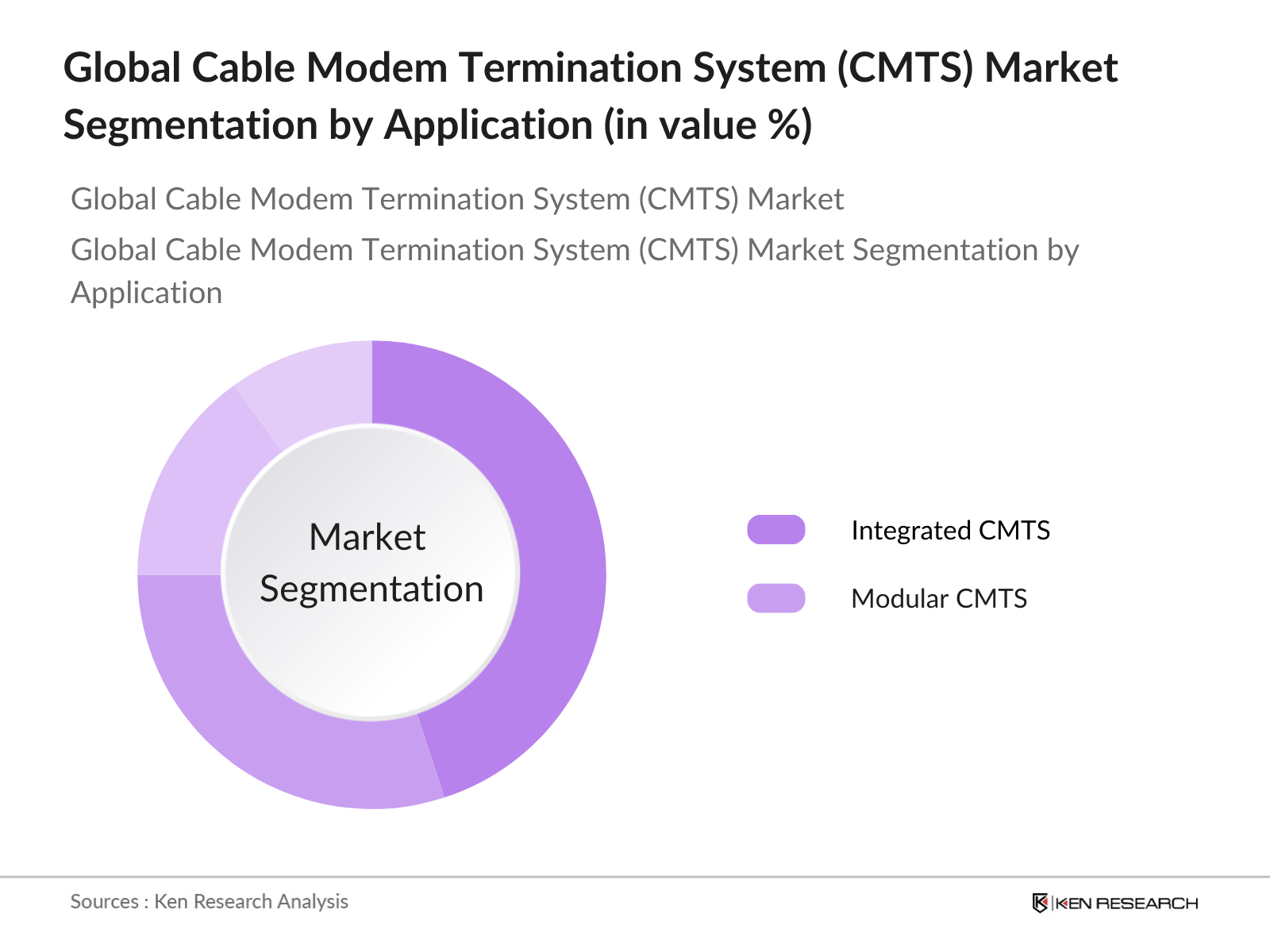
By Product Type The CMTS market is segmented by product type into Integrated CMTS and Modular CMTS. Integrated CMTS solutions have a larger market share due to their cost efficiency and ease of deployment. These solutions are especially popular among small to mid-size ISPs that prefer all-in-one systems, which simplify network management while offering high data throughput.
By Application The CMTS market is segmented by application into Residential Internet Services, Business and Enterprise Solutions, and Government and Educational Institutions. Residential Internet Services hold the dominant position, driven by the ever-increasing demand for streaming, gaming, and remote work applications. This segments growth reflects the global shift toward online services and digital transformation within households.
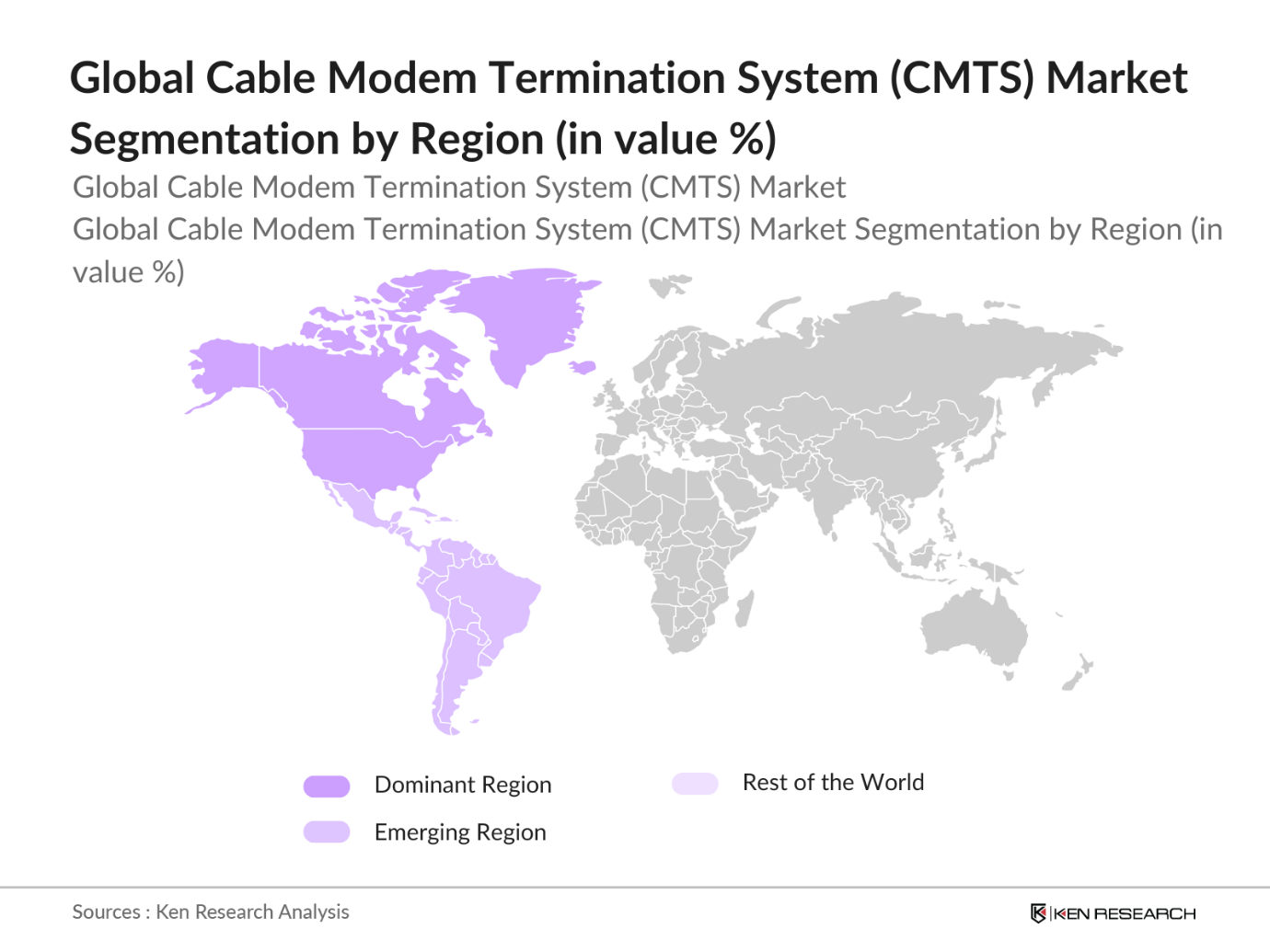
By region: North America dominates the CMTS market due to advanced internet infrastructure and high demand for high-speed broadband services. The United States alone has over 310 million internet users, driven by a large number of connected devices and content-heavy applications, including streaming and remote work. According to the Federal Communications Commission (FCC), investments exceeding USD 65 billion in broadband infrastructure expansion are underway, further increasing the demand for robust CMTS solutions. These efforts have helped CMTS providers in North America to serve a tech-savvy consumer base efficiently, giving them a significant competitive edge.
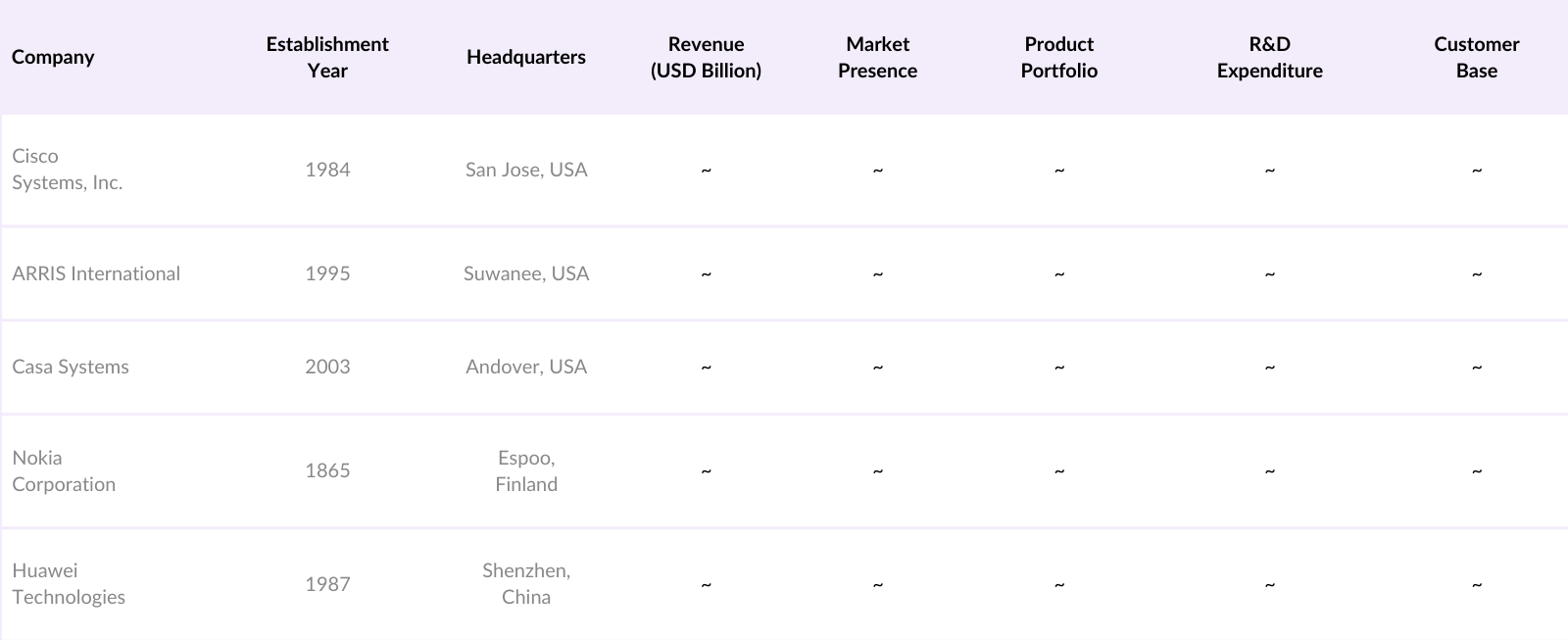
The competitive landscape of the CMTS market includes key players with extensive experience in broadband infrastructure and digital connectivity. Market leadership is concentrated among a few major players, with companies like Cisco and ARRIS dominating due to their advanced technological offerings and strong global distribution networks.
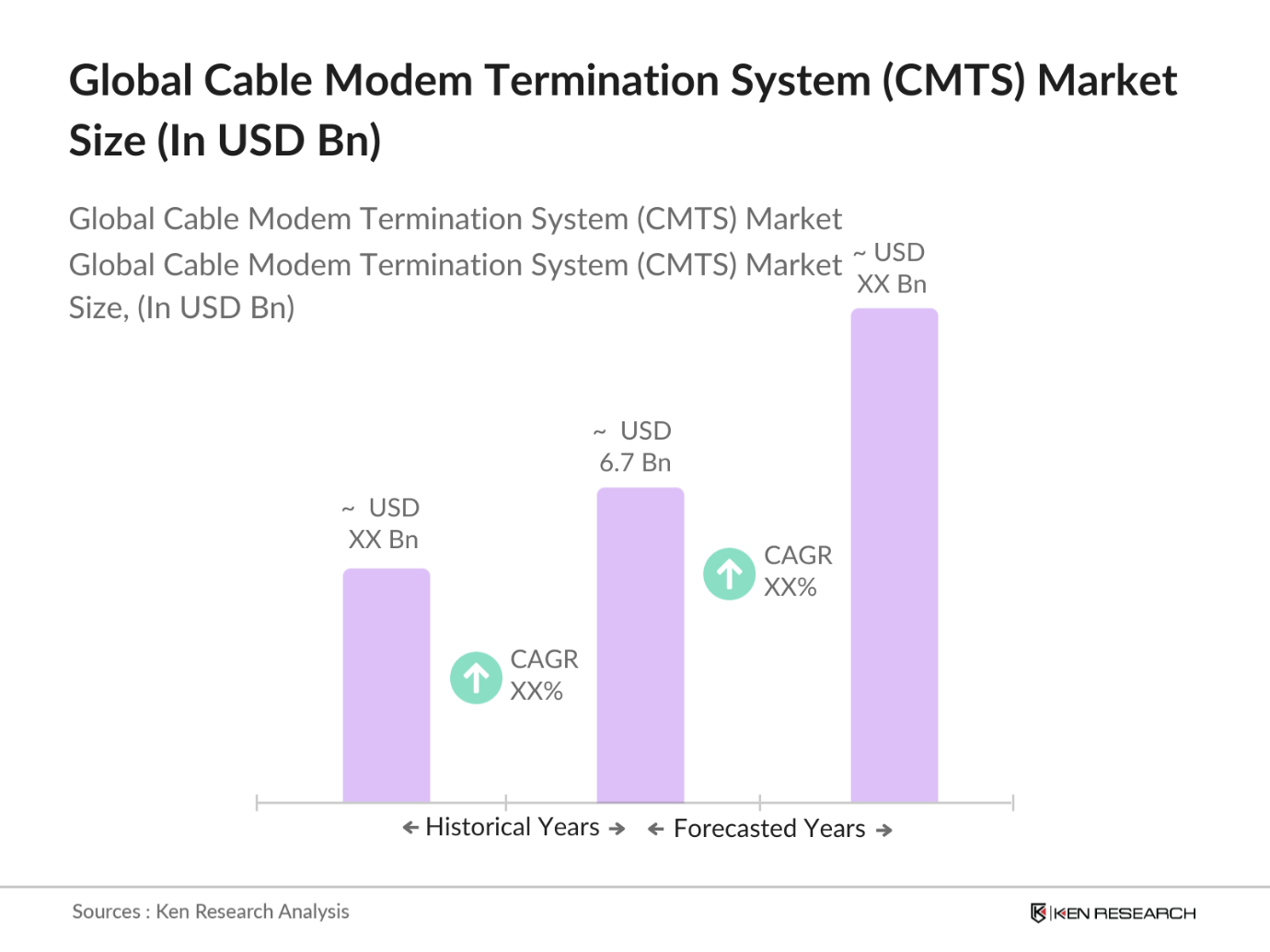
Over the coming years, the Global CMTS Market is set for significant growth, driven by increasing demand for high-speed broadband and advancements in DOCSIS technology. This growth is expected to be supported by ongoing infrastructure investments and the rollout of smart cities, which will drive further need for efficient data and network management solutions.
Emerging Markets in Digital Connectivity: In emerging economies, particularly in Asia-Pacific and Africa, digital transformation initiatives are fueling connectivity demand. According to the World Bank, internet penetration in sub-Saharan Africa is expected to rise from 30% to over 50% due to initiatives like the African Unions Digital Transformation Strategy. This growth creates opportunities for CMTS providers to tap into new markets, offering affordable connectivity solutions that align with the expansion of digital services
Expansion of IoT and Smart Home Devices: The increase in IoT devices, which surpassed 13 billion worldwide, enhances the need for robust CMTS solutions. Markets in North America and Europe are seeing high adoption rates of IoT applications in both residential and commercial sectors. The European Commission reports that IoT growth is expected to continue, pushing telecom providers to adopt CMTS systems that handle data traffic seamlessly. This growth offers CMTS providers an opportunity to expand their offerings to cater to IoT applications, especially within smart city projects.
|
Segment |
Sub-Segments |
|
By Product Type |
- Integrated CMTS |
|
- Modular CMTS |
|
|
By Application |
- Residential Internet Services |
|
- Business and Enterprise Solutions |
|
|
- Government and Educational Institutions |
|
|
By Technology |
- DOCSIS 3.0 |
|
- DOCSIS 3.1 |
|
|
- DOCSIS 4.0 |
|
|
By Deployment Type |
- On-Premise |
|
- Cloud-Based |
|
|
By Region |
- North America |
|
- Europe |
|
|
- Asia Pacific |
|
|
- Latin America |
|
|
- Middle East & Africa |
1.1 Definition and Scope
1.2 Market Taxonomy
1.3 Market Growth Rate Analysis
1.4 Market Segmentation Overview
2.1 Historical Market Size
2.2 Year-On-Year Growth Analysis
2.3 Key Developments and Market Milestones
3.1 Growth Drivers
3.1.1 Broadband Demand and Usage Patterns
3.1.2 Technological Advancements in CMTS
3.1.3 Increased Fiber and Cable Infrastructure
3.1.4 Government Support for Digital Infrastructure
3.2 Market Challenges
3.2.1 High Initial Infrastructure Costs
3.2.2 Integration Complexities with Legacy Systems
3.2.3 Cybersecurity Concerns in Network Infrastructure
3.3 Opportunities
3.3.1 Emerging Markets in Digital Connectivity
3.3.2 Expansion of IoT and Smart Home Devices
3.3.3 Demand for High-Bandwidth Applications
3.4 Trends
3.4.1 Growth in Virtualized CMTS Solutions
3.4.2 Increased Focus on Low-Latency Streaming
3.4.3 Migration to DOCSIS 4.0 Standards
3.5 Government Regulations
3.5.1 Broadband Standards and Compliance
3.5.2 Spectrum Allocation Policies
3.5.3 Incentives for Infrastructure Development
3.6 SWOT Analysis
3.7 Stakeholder Ecosystem
3.8 Porters Five Forces Analysis
3.9 Competitive Landscape
4.1 By Product Type (in Value %)
4.1.1 Integrated CMTS
4.1.2 Modular CMTS
4.2 By Application (in Value %)
4.2.1 Residential Internet Services
4.2.2 Business and Enterprise Solutions
4.2.3 Government and Educational Institutions
4.3 By Technology (in Value %)
4.3.1 DOCSIS 3.0
4.3.2 DOCSIS 3.1
4.3.3 DOCSIS 4.0
4.4 By Deployment Type (in Value %)
4.4.1 On-Premise
4.4.2 Cloud-Based
4.5 By Region (in Value %)
4.5.1 North America
4.5.2 Europe
4.5.3 Asia Pacific
4.5.4 Latin America
4.5.5 Middle East & Africa
5.1 Detailed Profiles of Major Companies
5.1.1 Cisco Systems, Inc.
5.1.2 ARRIS International
5.1.3 Casa Systems
5.1.4 Nokia Corporation
5.1.5 Huawei Technologies Co., Ltd.
5.1.6 Broadcom Inc.
5.1.7 Vecima Networks Inc.
5.1.8 Technicolor
5.1.9 Harmonic Inc.
5.1.10 Sumavision Technologies Co., Ltd.
5.1.11 WISI Communications
5.1.12 Teleste Corporation
5.1.13 ZTE Corporation
5.1.14 Advanced Digital Broadcast S.A.
5.1.15 Edge-Core Networks
5.2 Cross-Comparison Parameters (Market Presence, Revenue, Product Portfolio, Innovation Rate, Customer Base, R&D Expenditure, Distribution Channels, Regional Penetration)
5.3 Market Share Analysis
5.4 Strategic Initiatives and Partnerships
5.5 Mergers and Acquisitions Analysis
5.6 Investment Overview
5.7 Government Grants and Subsidies
5.8 Private Equity Funding
5.9 Venture Capital Involvement
6.1 Telecommunication Standards and Compliance
6.2 Certification and Licensing Requirements
6.3 Global and Regional Regulatory Impacts
7.1 Future Market Size Analysis
7.2 Key Drivers of Future Market Expansion
8.1 By Product Type (in Value %)
8.2 By Application (in Value %)
8.3 By Technology (in Value %)
8.4 By Deployment Type (in Value %)
8.5 By Region (in Value %)
9.1 TAM/SAM/SOM Analysis
9.2 Customer Cohort Analysis
9.3 Marketing Initiatives
9.4 White Space Opportunity Analysis
Disclaimer Contact UsThis phase involves defining the primary metrics for the CMTS market, including user demand trends, technological advancements, and regulatory influences. Extensive secondary research is conducted to outline these variables accurately.
We analyze historical market data and assess deployment trends for CMTS systems globally. This step leverages primary data from industry reports to validate our findings and enhance the reliability of the insights presented.
Key industry experts are consulted through structured interviews to validate our hypotheses and gain deeper insights into market dynamics and technology adoption trends. Their inputs play a critical role in refining our market data.
In the final phase, we consolidate the insights gathered to create a cohesive, data-driven analysis of the CMTS market. This synthesis is supported by case studies and real-world applications of CMTS solutions to verify the applicability of our data.

What makes us stand out is that our consultants follows Robust, Refine and Result (RRR) methodology. i.e. Robust for clear definitions, approaches and sanity checking, Refine for differentiating respondents facts and opinions and Result for presenting data with story

We have set a benchmark in the industry by offering our clients with syndicated and customized market research reports featuring coverage of entire market as well as meticulous research and analyst insights.

While we don't replace traditional research, we flip the method upside down. Our dual approach of Top Bottom & Bottom Top ensures quality deliverable by not just verifying company fundamentals but also looking at the sector and macroeconomic factors.

With one step in the future, our research team constantly tries to show you the bigger picture. We help with some of the tough questions you may encounter along the way: How is the industry positioned? Best marketing channel? KPI's of competitors? By aligning every element, we help maximize success.

Our report gives you instant access to the answers and sources that other companies might choose to hide. We elaborate each steps of research methodology we have used and showcase you the sample size to earn your trust.

If you need any support, we are here! We pride ourselves on universe strength, data quality, and quick, friendly, and professional service.