
Global Cannula Market Outlook to 2030
Region:Global
Author(s):Yogita Sahu
Product Code:KROD4622
October 2024
94
About the Report
Global Cannula Market Overview
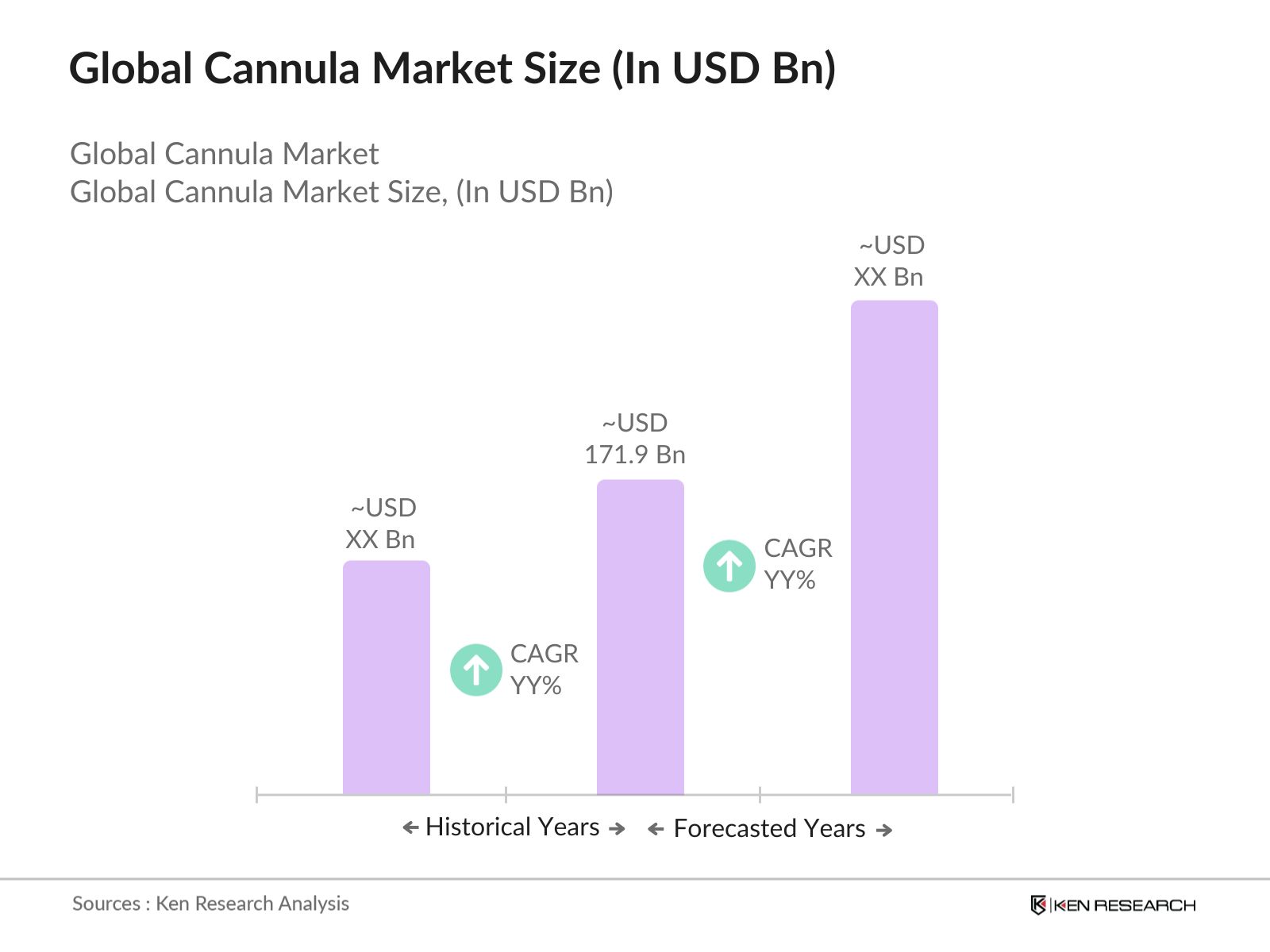
- The Global Cannula Market is valued at USD 171.9 billion, based on a five-year historical analysis, with strong growth driven by increasing demand for minimally invasive surgeries and the rising number of chronic conditions such as cardiovascular diseases and diabetes. Cannulas play a critical role in various medical procedures, particularly in oxygen therapy, surgery, and intravenous administration.
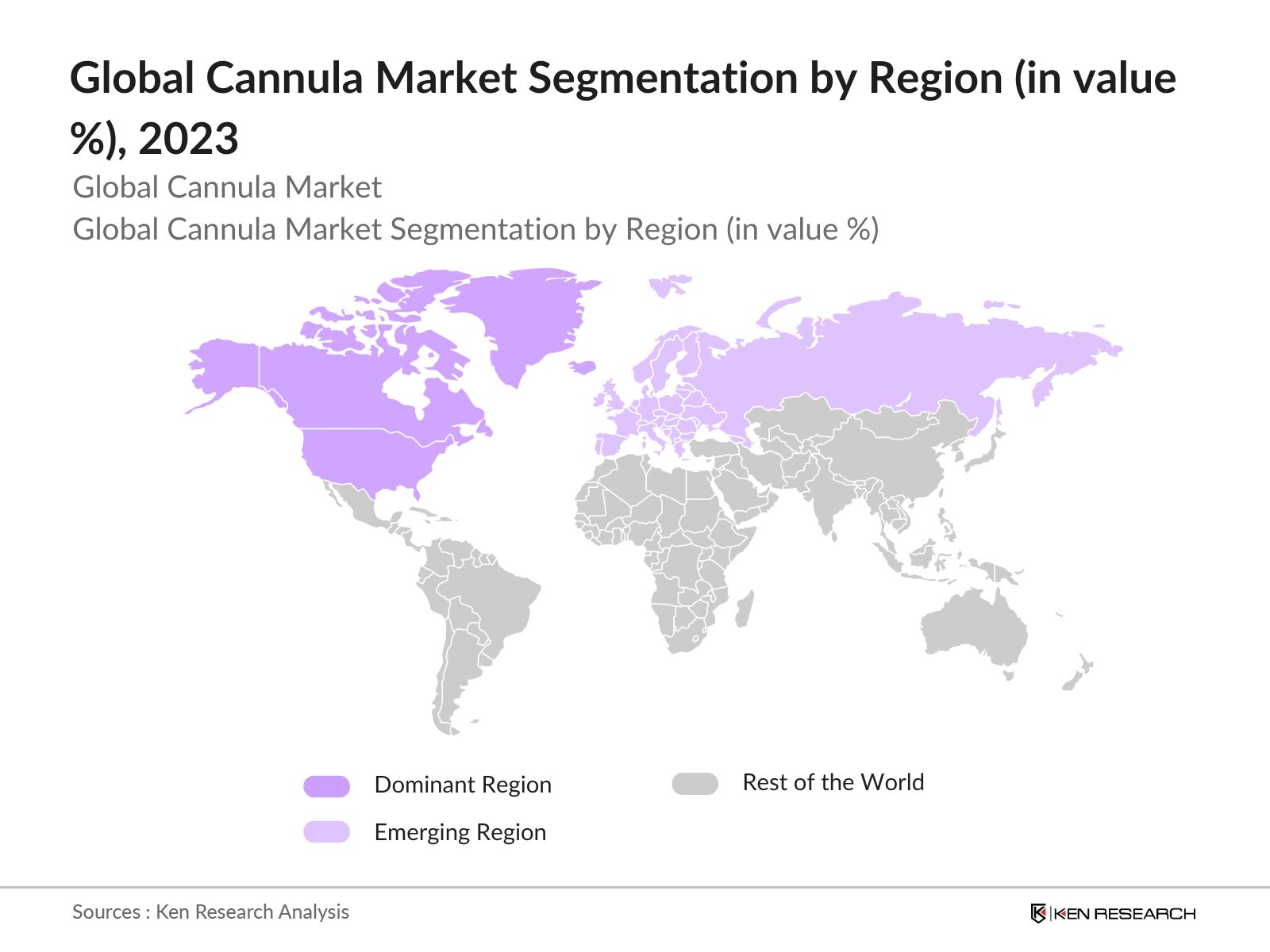
- North America and Europe are the key regions leading the cannula market due to their advanced healthcare systems, increased focus on surgical procedures, and the presence of major market players. The United States leads in technological innovations and regulatory approvals, while Germany and the United Kingdom represent markets in Europe due to their robust medical infrastructure.
- The U.S. government reauthorized the Medical Device User Fee Amendments (MDUFA) in 2023, which ensures faster review processes for critical medical devices, including cannulas. The U.S. Food and Drug Administration (FDA) has committed to reviewing more than 95% of all medical device applications within 180 days under this program.
Global Cannula Market Segmentation
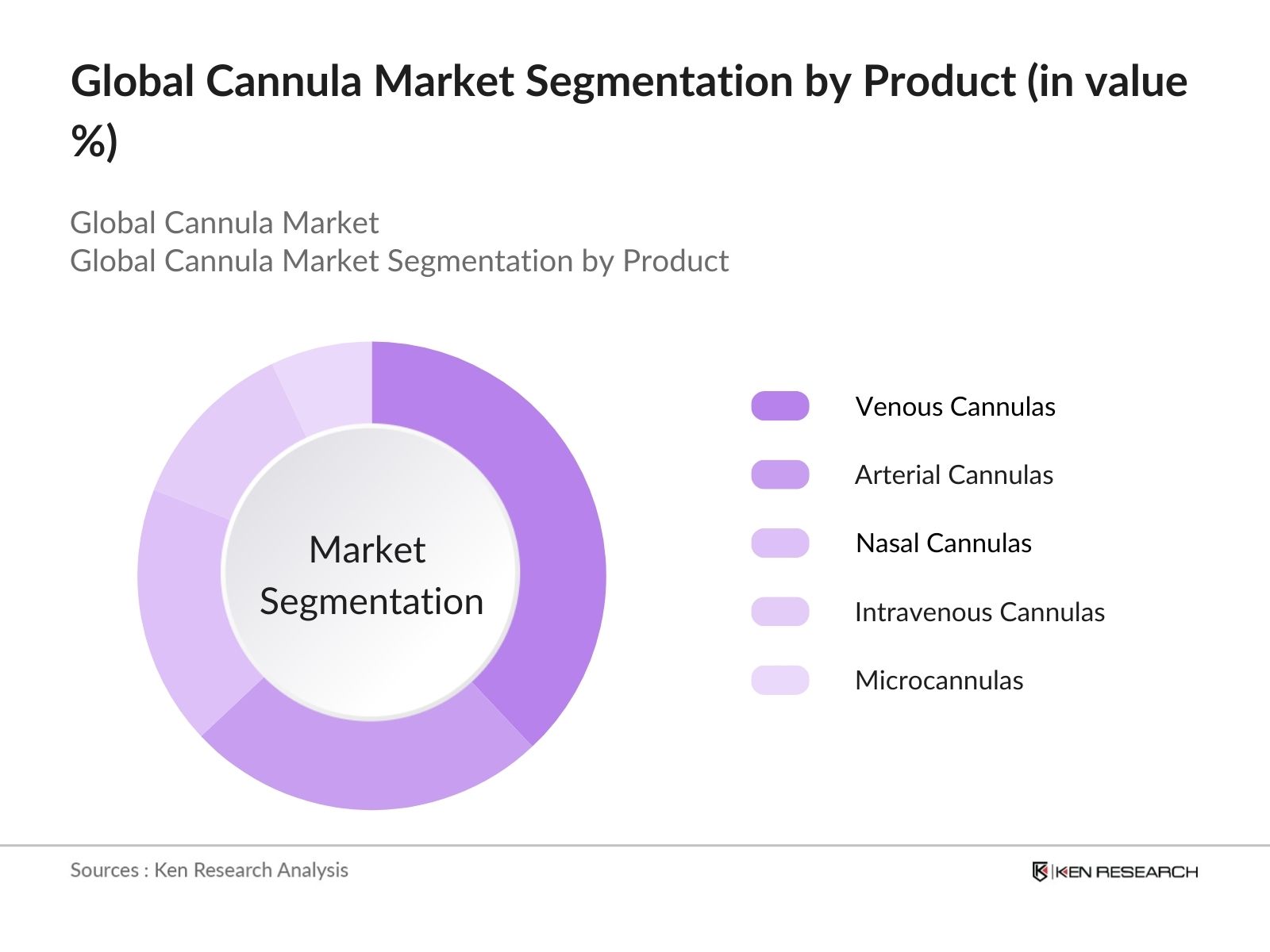
By Product Type: The market is segmented into venous cannulas, arterial cannulas, nasal cannulas, intravenous cannulas, and microcannulas. Venous cannulas have captured a dominant market share due to their critical role in cardiovascular surgeries and extracorporeal membrane oxygenation (ECMO) procedures. The increasing prevalence of heart-related diseases and advancements in cannula technology, such as flexible and durable materials, have further solidified their dominance in the market.
By Application: The market is segmented by application into cardiovascular surgery, general surgery, cosmetic surgery, oxygen therapy, and orthopedic procedures. Cardiovascular surgery is the leading application segment due to the high incidence of heart diseases, which has led to an increasing number of surgeries worldwide. The aging population and advancements in surgical procedures also contribute to this segments dominance, as cannulas are critical in procedures like open-heart surgery and ECMO therapy.
By Region: The market is segmented into North America, Europe, Asia Pacific, Latin America, and the Middle East & Africa. North America holds the largest market share due to advanced medical infrastructure and a higher adoption rate of new medical technologies. Europe follows closely behind, with countries like Germany and the UK leading due to their well-developed healthcare systems. Asia-Pacific, driven by increasing healthcare investments in China and India, is the fastest-growing region in the cannula market.
Global Cannula Market Competitive Landscape
The market is dominated by a few major players, including leading manufacturers like Medtronic, Teleflex, and Becton Dickinson & Company. These companies hold a market share due to their strong distribution networks, continuous product innovation, and extensive R&D activities.
|
Company |
Establishment Year |
Headquarters |
Key Products |
No. of Employees |
R&D Investment |
Global Market Share |
Manufacturing Facilities |
Revenue (2023) |
|
Medtronic |
1949 |
Dublin, Ireland |
||||||
|
Teleflex Incorporated |
1943 |
Wayne, PA, USA |
||||||
|
Becton Dickinson & Company |
1897 |
Franklin Lakes, USA |
||||||
|
Terumo Corporation |
1921 |
Tokyo, Japan |
||||||
|
Edward Lifesciences Corporation |
1958 |
Irvine, CA, USA |
Global Cannula Market Analysis
Market Growth Drivers
- Rising Incidence of Chronic Diseases: Chronic diseases, such as diabetes and cardiovascular conditions, are driving demand for cannulas used in treatment procedures. In 2024, over 537 million adults globally are living with diabetes, and this figure is expected to increase by 5 million annually. Additionally, cardiovascular diseases led to more than 17 million deaths in 2023, according to the World Health Organization (WHO). As more patients require regular medical interventions such as dialysis or intravenous (IV) therapies, the global demand for cannulas, especially venous and arterial types, continues to grow.
- Growing Investments in Healthcare Infrastructure: Increasing investments in healthcare infrastructure, particularly in emerging economies, are contributing to the growth of the cannula market. Indias healthcare spending reached $104 billion in 2023, driven by government initiatives to improve public healthcare facilities. Similarly, Brazil increased its healthcare spending to $45 billion in 2024, with a focus on expanding hospital infrastructure and medical supply chains. These investments create significant demand for medical devices like cannulas to equip hospitals and healthcare centers with essential tools for patient care and surgeries.
- Growth in Minimally Invasive Surgeries: Minimally invasive surgeries (MIS) are becoming more common, driving the use of advanced cannula devices. In 2024, it is reported that over 50 million minimally invasive procedures will be performed globally, particularly in the fields of orthopedics, cardiovascular, and gastrointestinal surgery. These procedures require specialized cannulas for precise access to targeted body areas. The increase in demand for MIS is driven by the advantages they offer, such as reduced recovery times, shorter hospital stays, and lower risk of infection, making cannulas a critical component in these surgeries.
Market Challenges
- Regulatory Hurdles and Compliance Costs: Regulatory requirements for medical devices, including cannulas, have become more stringent globally, increasing compliance costs for manufacturers. For example, the European Unions Medical Device Regulation (MDR) introduced in 2023 has imposed additional safety, efficacy, and documentation requirements, leading to significant delays in product approvals. The average time for new cannula products to gain regulatory approval in Europe has increased to over 18 months, compared to 12 months in 2020.
- Supply Chain Disruptions: Global supply chain disruptions, exacerbated by the geopolitical tensions, continue to affect the production and distribution of medical devices, including cannulas. In 2023, delays in the shipment of critical raw materials like stainless steel and medical-grade plastics increased production lead times by 30%. Manufacturers have reported difficulties in sourcing these materials, which has led to stock shortages in hospitals across regions such as Africa and Southeast Asia. This ongoing challenge impacts the availability of cannulas, particularly in regions that rely on imported medical supplies.
Global Cannula Market Future Outlook
Over the next five years, the Global Cannula industry is expected to show growth driven by the rising incidence of chronic diseases, advancements in cannula technology, and increasing demand for minimally invasive surgeries. The growing focus on disposable cannulas due to infection control concerns, particularly in emerging markets, is likely to fuel market expansion.
Future Market Opportunities
- Rising Adoption of Smart Cannulas: The adoption of smart cannulas integrated with IoT will increase by 2029, especially in advanced healthcare settings. These cannulas will allow continuous patient monitoring during surgeries and long-term medical treatments, reducing the need for manual interventions. Hospitals across developed regions such as North America and Europe will increasingly adopt smart cannulas to enhance patient care and optimize resource utilization. Over 1 million IoT-enabled cannulas are expected to be in use globally by 2028.
- Expansion of Cannula Markets in Emerging Economies: Emerging economies, particularly in Asia and Latin America, are expected to become major growth markets for cannulas over the next five years. By 2029, countries like India and Brazil will experience healthcare infrastructure expansion, increasing the need for medical devices like cannulas. Governments in these regions will continue to invest in public healthcare, creating new opportunities for cannula manufacturers to expand their presence and meet rising demand.
Scope of the Report
|
By Product Type |
Venous Cannulas |
|
Arterial Cannulas |
|
|
Nasal Cannulas |
|
|
Intravenous Cannulas |
|
|
Microcannulas |
|
|
By Application |
Cardiovascular Surgery |
|
General Surgery |
|
|
Cosmetic Surgery |
|
|
Oxygen Therapy |
|
|
Orthopedic Procedures |
|
|
By Material Type |
Plastic (PVC, Polyurethane) |
|
Metal (Stainless Steel) |
|
|
Silicone |
|
|
Composite Materials |
|
|
By End-User |
Hospitals |
|
Ambulatory Surgery Centers |
|
|
Specialty Clinics |
|
|
By Region |
North America |
|
Europe |
|
|
Asia Pacific |
|
|
Latin America |
|
|
Middle East & Africa |
Products
Key Target Audience Organizations and Entities Who Can Benefit by Subscribing This Report:
Medical Device Manufacturers
Hospital Chains and Healthcare Providers
Banks and Financial Institutions
Government and Regulatory Bodies (FDA, CE)
Venture Capital and Private Equity Firms
Oxygen Therapy Equipment Providers
Medical Technology Innovators
Companies
Players Mentioned in the Report:
Medtronic
Teleflex Incorporated
Becton Dickinson & Company (BD)
Terumo Corporation
Edward Lifesciences Corporation
Smith & Nephew
Boston Scientific Corporation
Conmed Corporation
LivaNova PLC
General Electric Healthcare
Nipro Medical Corporation
Getinge AB
Stryker Corporation
Fisher & Paykel Healthcare
B. Braun Melsungen AG
Table of Contents
1. Global Cannula Market Overview
1.1. Definition and Scope
1.2. Market Taxonomy
1.3. Cannula Types (based on usage: Venous, Arterial, Nasal, etc.)
1.4. Market Segmentation Overview
1.5. Market Penetration Rate (based on adoption rate in key regions)
2. Global Cannula Market Size (in USD Billion)
2.1. Historical Market Size
2.2. Year-On-Year Growth Analysis (absolute market growth, no percentages)
2.3. Key Market Developments and Milestones (new product launches, government policy changes, etc.)
3. Global Cannula Market Analysis
3.1. Growth Drivers
3.1.1. Increased Surgical Procedures
3.1.2. Aging Population (demographic data, healthcare expenditure trends)
3.1.3. Rising Prevalence of Chronic Diseases (diabetes, cardiovascular diseases, etc.)
3.1.4. Advancements in Minimally Invasive Surgeries
3.2. Market Challenges
3.2.1. Regulatory Constraints (compliance and certification requirements for medical devices)
3.2.2. Manufacturing Complexity (precision, material cost, etc.)
3.2.3. Volatility in Raw Material Supply (silicone, plastic)
3.3. Opportunities
3.3.1. Expansion in Emerging Markets (demand from APAC, Middle East)
3.3.2. Development of Advanced Cannula Designs (coating technologies, anti-thrombogenic materials)
3.3.3. Collaborations with Healthcare Providers (joint R&D, surgical equipment bundling)
3.4. Trends
3.4.1. Increasing Use of Disposable Cannulas (cross-contamination concerns)
3.4.2. Integration of Smart Cannula Systems (real-time monitoring of patients)
3.4.3. Rising Preference for Eco-friendly Materials
3.5. Government Regulation
3.5.1. FDA Approval Process (focus on new regulations for Class II and III devices)
3.5.2. EU MDR Guidelines for Cannula Devices
3.5.3. ISO Standards for Medical Equipment (ISO 13485)
3.6. SWOT Analysis (Specific to Cannula Manufacturers)
3.7. Stakeholder Ecosystem (Surgeons, Hospitals, OEMs, Suppliers)
3.8. Porters Five Forces (with specific reference to cannula markets supplier power, buyer power, etc.)
3.9. Competition Ecosystem
4. Global Cannula Market Segmentation
4.1. By Product Type (in value %)
4.1.1. Venous Cannulas
4.1.2. Arterial Cannulas
4.1.3. Nasal Cannulas
4.1.4. Intravenous Cannulas
4.1.5. Microcannulas
4.2. By Application (in value %)
4.2.1. Cardiovascular Surgery
4.2.2. General Surgery
4.2.3. Cosmetic Surgery
4.2.4. Oxygen Therapy
4.2.5. Orthopedic Procedures
4.3. By Material Type (in value %)
4.3.1. Plastic (PVC, Polyurethane)
4.3.2. Metal (Stainless Steel)
4.3.3. Silicone
4.3.4. Composite Materials
4.4. By End-User (in value %)
4.4.1. Hospitals
4.4.2. Ambulatory Surgery Centers
4.4.3. Specialty Clinics
4.5. By Region (in value %)
4.5.1. North America
4.5.2. Europe
4.5.3. Asia Pacific
4.5.4. Latin America
4.5.5. Middle East & Africa
5. Global Cannula Market Competitive Analysis
5.1. Detailed Profiles of Major Companies
5.1.1. Medtronic
5.1.2. Smith & Nephew
5.1.3. Teleflex Incorporated
5.1.4. Terumo Corporation
5.1.5. Edward Lifesciences Corporation
5.1.6. LivaNova PLC
5.1.7. Boston Scientific Corporation
5.1.8. Conmed Corporation
5.1.9. Becton Dickinson & Company (BD)
5.1.10. B. Braun Melsungen AG
5.1.11. Fisher & Paykel Healthcare
5.1.12. General Electric Healthcare
5.1.13. Nipro Medical Corporation
5.1.14. Getinge AB
5.1.15. Stryker Corporation
5.2. Cross Comparison Parameters (No. of Employees, Headquarters, Manufacturing Facilities, Revenue, R&D Investments, Distribution Networks, Global Market Share, Key Products)
5.3. Market Share Analysis
5.4. Strategic Initiatives
5.5. Mergers and Acquisitions
5.6. Investment Analysis
5.7. Partnerships with Healthcare Providers
5.8. Technological Collaborations
5.9. Venture Capital Funding
6. Global Cannula Market Regulatory Framework
6.1. Regulatory Pathways (FDA, CE Marking, etc.)
6.2. Compliance Requirements for Class I, II, and III Devices
6.3. Certification Processes (ISO, MDR)
7. Global Cannula Future Market Size (in USD Billion)
7.1. Future Market Size Projections
7.2. Key Factors Driving Future Market Growth (product innovation, geographical expansion, etc.)
8. Global Cannula Market Segmentation
8.1. By Product Type (in value %)
8.2. By Application (in value %)
8.3. By Material Type (in value %)
8.4. By End-User (in value %)
8.5. By Region (in value %)
9. Global Cannula Market Analysts Recommendations
9.1. Total Addressable Market (TAM) / Serviceable Available Market (SAM) / Serviceable Obtainable Market (SOM) Analysis
9.2. Customer Segmentation and Cohort Analysis
9.3. Strategic Marketing Initiatives (targeting new geographies or user bases)
9.4. White Space Opportunity Analysis
Research Methodology
Step 1: Identification of Key Variables
The initial phase involves constructing a detailed market landscape for the Global Cannula Market by identifying all key stakeholders, including manufacturers, healthcare providers, and regulators. Extensive secondary research from proprietary databases and industry reports is conducted to determine critical variables influencing market dynamics.
Step 2: Market Analysis and Construction
This phase includes the analysis of historical data to examine trends in cannula production and sales. The market penetration rate and product adoption in different regions are also assessed. Further, pricing trends and regulatory changes are studied to build a robust market model.
Step 3: Hypothesis Validation and Expert Consultation
In this phase, we conduct consultations with key industry experts, using surveys and telephone interviews. The insights gathered will help validate market trends and refine our understanding of product performance across different segments and regions.
Step 4: Research Synthesis and Final Output
Finally, the data is synthesized into a cohesive report, incorporating bottom-up and top-down market estimates. Engagements with key market players will further validate our findings, ensuring an accurate portrayal of the Global Cannula Market.
Frequently Asked Questions
01. How big is the Global Cannula Market?
The Global Cannula Market was valued at USD 171.9 billion, based on a five-year historical analysis, driven by the rising number of surgeries and increasing demand for minimally invasive procedures.
02. What are the challenges in the Global Cannula Market?
The main challenges in the Global Cannula Market include stringent regulatory frameworks for medical devices, rising raw material costs, and the complexity of manufacturing precision devices like cannulas.
03. Who are the major players in the Global Cannula Market?
Key players in the Global Cannula Market include Medtronic, Teleflex, Becton Dickinson & Company, Terumo Corporation, and Edward Lifesciences Corporation, which dominate due to their strong distribution networks and product innovation.
04. What are the growth drivers of the Global Cannula Market?
The Global Cannula Market is driven by the growing number of surgeries worldwide, the increasing prevalence of chronic diseases, and rising demand for disposable cannulas to prevent cross-contamination.
05. What are the future trends in the Global Cannula Market?
Future trends in the Global Cannula Market include the development of smart cannulas with integrated monitoring systems and the growing use of eco-friendly materials for disposable medical products.
Why Buy From Us?

What makes us stand out is that our consultants follows Robust, Refine and Result (RRR) methodology. i.e. Robust for clear definitions, approaches and sanity checking, Refine for differentiating respondents facts and opinions and Result for presenting data with story

We have set a benchmark in the industry by offering our clients with syndicated and customized market research reports featuring coverage of entire market as well as meticulous research and analyst insights.

While we don't replace traditional research, we flip the method upside down. Our dual approach of Top Bottom & Bottom Top ensures quality deliverable by not just verifying company fundamentals but also looking at the sector and macroeconomic factors.

With one step in the future, our research team constantly tries to show you the bigger picture. We help with some of the tough questions you may encounter along the way: How is the industry positioned? Best marketing channel? KPI's of competitors? By aligning every element, we help maximize success.

Our report gives you instant access to the answers and sources that other companies might choose to hide. We elaborate each steps of research methodology we have used and showcase you the sample size to earn your trust.

If you need any support, we are here! We pride ourselves on universe strength, data quality, and quick, friendly, and professional service.