
Global Cassava Starch Market Outlook 2030
Region:Global
Author(s):Shivani Mehra
Product Code:KROD10650
November 2024
93
About the Report
Global Cassava Starch Market Overview
- The cassava starch market is valued at USD 5.22 billion based on recent analysis, largely driven by increasing demand from the food and beverage industry. Cassava starch is favored due to its gluten-free properties and ability to be used as a thickener and stabilizer in processed foods. Additionally, its cost-effectiveness and abundant availability, particularly in developing regions, contribute to its growing adoption in industrial applications like textiles and paper production.
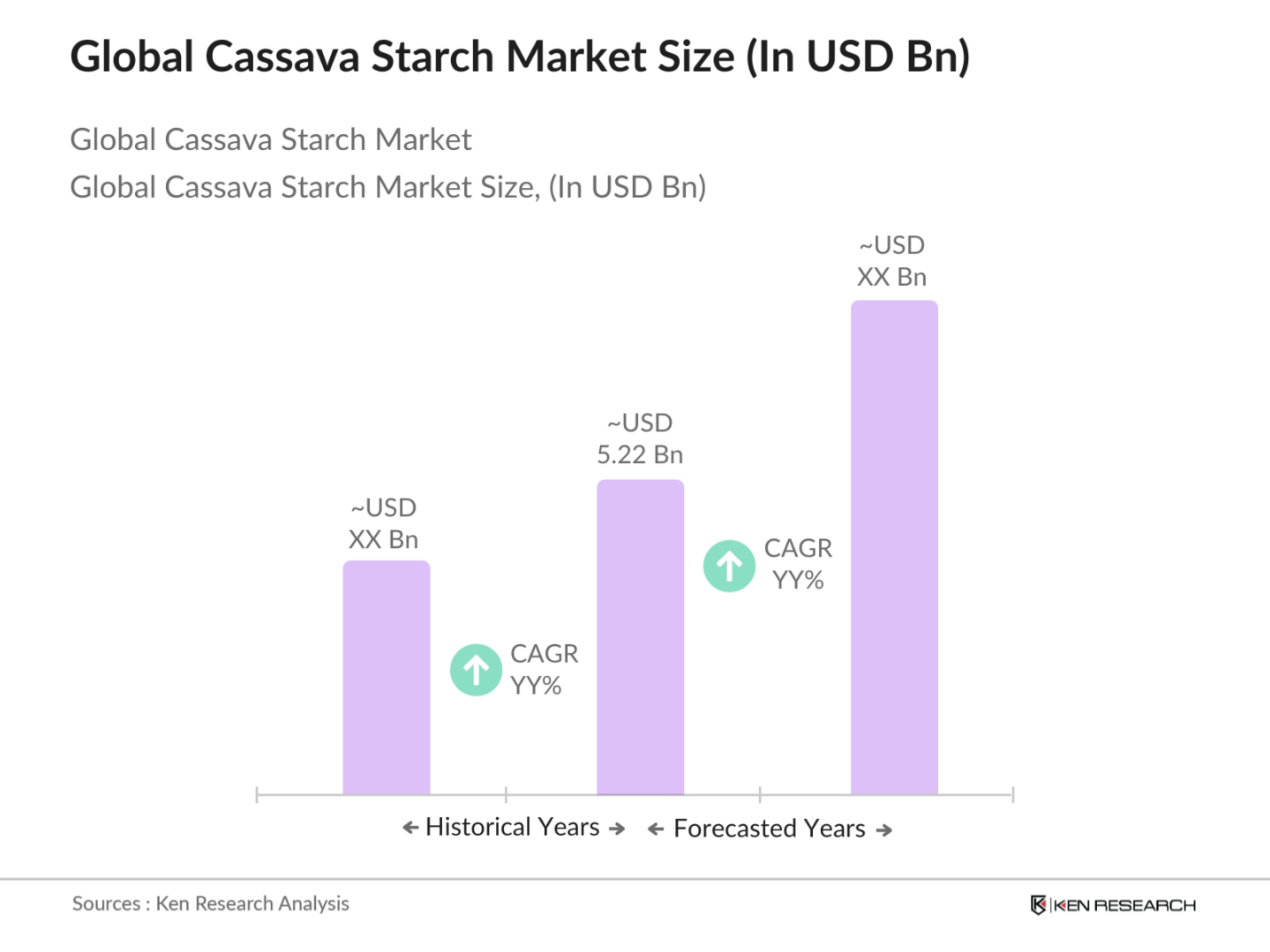
- Major countries dominating the cassava starch market include Thailand, Nigeria, and Indonesia. These countries lead the market due to favorable climatic conditions for cassava cultivation, large-scale production capacity, and government support for agricultural development. Thailand, in particular, benefits from advanced processing infrastructure, while Nigerias market dominance stems from being the worlds largest cassava producer.
- Governments in key cassava-producing countries are also offering tax exemptions or reductions on the import and purchase of cassava processing equipment. In 2023, Thailands Board of Investment introduced tax holidays and customs duty exemptions for companies investing in cassava starch production. This policy has encouraged local and foreign companies to set up processing facilities, enhancing the country's capacity to produce value-added cassava products and reducing dependence on exports of raw cassava.
Global Cassava Starch Market Segmentation
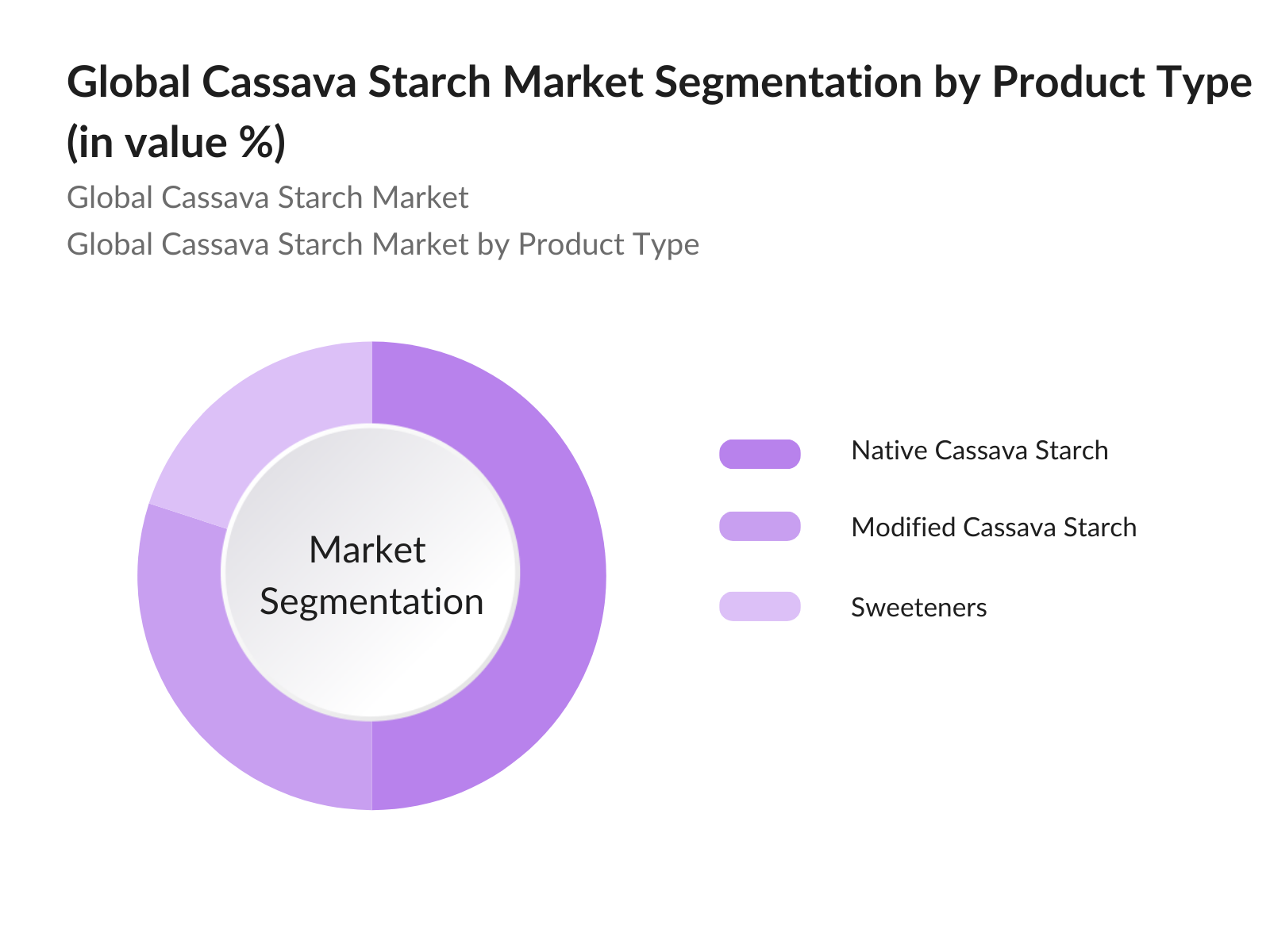
By Product Type: The global cassava starch market is segmented by product type into native cassava starch, modified cassava starch, and sweeteners (such as glucose syrup and maltodextrins). Native cassava starch holds the dominant market share due to its widespread use in food and beverage applications, particularly in developing regions where it is a staple ingredient in local cuisine. Furthermore, the ease of processing and lower cost make it the most commonly utilized form of starch across various industries.
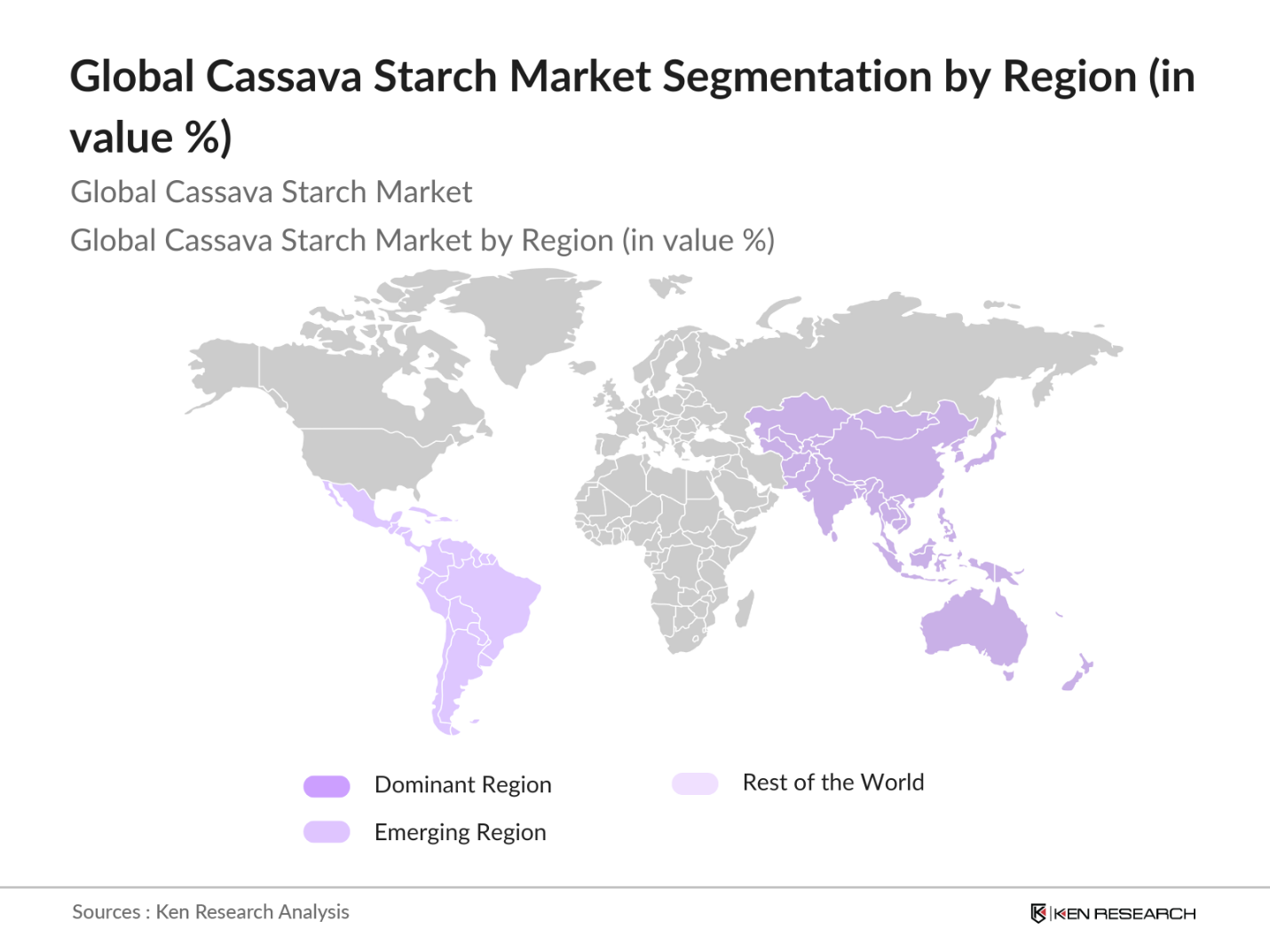
By Region: The market is regionally segmented into Asia-Pacific, Africa, Latin America, Europe, and North America. Asia-Pacific leads the global cassava starch market, driven by Thailands strong production capabilities and increasing demand in the food and beverage industry. Africa, with Nigeria as the largest cassava producer, shows significant potential due to government initiatives promoting cassava farming and its rising usage in local industries. Latin America, particularly Brazil, is also growing as a key region due to the expanding use of cassava starch in bioplastic production.
Global Cassava Starch Market Competitive Landscape
The global cassava starch market is dominated by a combination of regional and international players who have established significant production capacities and supply networks. The competitive landscape is shaped by factors like product innovation, strategic partnerships, and expansions into new markets. Companies are focusing on improving the quality and sustainability of cassava production, especially as industries like bioplastics and food packaging grow in importance.
|
Company Name |
Establishment Year |
Headquarters |
Key Parameters |
|
Cargill Inc. |
1865 |
Minnesota, USA |
|
|
Ingredion Incorporated |
1906 |
Illinois, USA |
|
|
Tate & Lyle PLC |
1921 |
London, UK |
|
|
Thai Flour Industry Co., Ltd. |
1985 |
Thailand |
|
|
PT Budi Starch & Sweetener |
1979 |
Indonesia |
Global Cassava Starch Market Analysis
Market Growth Drivers
- Rising Demand for Gluten-Free Products (Consumer Trends): The increasing prevalence of celiac disease and gluten intolerance is driving consumer demand for gluten-free products. Cassava starch, naturally gluten-free, is a preferred alternative in the food processing industry. For example, according to the World Health Organization (WHO), as of 2024, about 1 in 100 people globally have celiac disease, with a growing consumer base seeking gluten-free foods. This has resulted in a surge in the use of cassava starch in baked goods, snacks, and processed foods. Additionally, in regions such as Latin America, cassava-based products have gained substantial popularity due to consumer health awareness.
- Expanding Processed Food Industry (Industry Growth): The global processed food industry is expanding rapidly, with cassava starch being widely used as a thickening agent, stabilizer, and binder in products like soups, sauces, and snacks. According to the World Bank, global food manufacturing value-added output was recorded at USD 4.2 trillion in 2023. Developing regions, particularly in Southeast Asia and Africa, have witnessed significant growth in processed food industries, where cassava is a staple raw material. The cassava starch industry is therefore benefiting from this growth as demand for processed foods increases.
- Substitution of Synthetic Starches (Raw Material Substitution): The food industry is shifting towards using natural alternatives like cassava starch, replacing synthetic starches derived from petroleum-based products. This trend is gaining momentum due to rising concerns over the environmental impact of synthetic starches. The Food and Agriculture Organization (FAO) estimates that in 2023, about 20 million metric tons of synthetic starches were substituted with natural starches like cassava in key industries, including textiles and paper. Governments in developing countries are promoting natural starch production to reduce reliance on imports of synthetic substitutes.
Market Challenges:
- Volatility in Cassava Production (Agricultural Risks): Cassava production is highly sensitive to climate variability, with droughts and floods significantly impacting yields in major producing countries. In 2023, Nigeria, the largest global producer of cassava, faced a notable decline in output due to adverse weather conditions, as reported by the World Bank. Additionally, diseases like cassava mosaic virus continue to pose substantial risks to stable production levels. This instability in production directly affects the supply of cassava starch for industrial use, particularly in regions where cassava serves as a critical component of local food security.
- Competition from Other Starches (Competitive Pressures): Cassava starch faces competition from other starches, such as corn and potato starch, which are widely available and sometimes more cost-effective. In 2023, global corn starch production reached 73 million metric tons, compared to cassava starch production at 50 million metric tons, according to FAO. This competition pressures cassava starch manufacturers to innovate and differentiate their products in terms of quality and functionality, especially in developed markets where corn and potato starches dominate.
Global Cassava Starch Market Future Outlook
Over the next five years, the global cassava starch market is expected to experience significant growth driven by increasing industrial demand, rising consumption of processed foods, and advancements in processing technologies. The market is poised to benefit from the expanding use of cassava starch in bioplastics and the pharmaceutical sector, where natural ingredients are gaining popularity. The market will also be shaped by continuous improvements in farming techniques and government support in key producing countries like Thailand and Nigeria.
Market Opportunities:
- Increasing Use in Bioplastics (Industrial Applications): With the rising global focus on reducing plastic waste, cassava starch is emerging as a key ingredient in biodegradable bioplastics. According to the International Renewable Energy Agency (IRENA), in 2023, the global production of bioplastics made from natural starches, including cassava, is projected to reach 2 million metric tons annually. This growth is driven by stringent government regulations on single-use plastics and the demand for sustainable alternatives in packaging. The increased use of cassava starch in bioplastics offers a substantial opportunity for market expansion.
- Rising Investments in Cassava Processing Infrastructure (Market Investments): Governments in major cassava-producing regions are investing significantly in processing infrastructure to add value to raw cassava. In 2023, the Nigerian government allocated USD 50 million for the construction of new cassava processing plants to enhance local starch production capacity. These investments are designed to improve supply chain efficiency and reduce the country's reliance on raw cassava exports. The development of domestic processing capabilities is creating new market opportunities for cassava starch in both local and international markets, contributing to economic growth and industrial diversification.
Scope of the Report
|
By Product Type |
Native Cassava Starch Modified Cassava Starch Sweeteners (Glucose Syrup, Maltodextrins) Others (Thickeners, Binders) |
|
By End-User |
Food & Beverages Paper & Packaging Textiles Pharmaceuticals Others (Adhesives, Bioplastics) |
|
By Source |
Organic Conventional |
|
By Application |
Industrial Non-Industrial |
|
By Region |
Asia-Pacific Africa Latin America Europe North America |
Products
Key Target Audience
Food & Beverage Manufacturers
Pharmaceutical Companies
Paper and Packaging Firms
Textile Manufacturers
Bioplastic Producers
Government and Regulatory Bodies (e.g., FAO, USDA)
Investments and Venture Capitalist Firms
Starch Processing and Equipment Manufacturers
Companies
Players Mention in the Reports
Cargill Inc.
Ingredion Incorporated
Tate & Lyle PLC
ADM (Archer Daniels Midland)
Avebe U.A.
Emsland Group
Thai Flour Industry Co., Ltd.
Tereos Group
Global Bio-Chem Technology Group Company Limited
PT Budi Starch & Sweetener
Visco Starch
SPAC Starch Products (India) Ltd.
Roquette Frres
Vietnam Agritech Group Joint Stock Company
Chaiyaphum Plant Products Co., Ltd.
Table of Contents
01. Global Cassava Starch Market Overview
1.1. Definition and Scope
1.2. Market Taxonomy
1.3. Market Growth Rate
1.4. Market Segmentation Overview
02. Global Cassava Starch Market Size (In USD Mn)
2.1. Historical Market Size
2.2. Year-On-Year Growth Analysis
2.3. Key Market Developments and Milestones
03. Global Cassava Starch Market Analysis
3.1. Growth Drivers
3.1.1. Rising Demand for Gluten-Free Products (Consumer Trends)
3.1.2. Expanding Processed Food Industry (Industry Growth)
3.1.3. Substitution of Synthetic Starches (Raw Material Substitution)
3.1.4. Cassava as a Staple Food in Developing Regions (Geographical Dependency)
3.2. Market Challenges
3.2.1. Volatility in Cassava Production (Agricultural Risks)
3.2.2. Supply Chain Disruptions (Logistical Challenges)
3.2.3. Competition from Other Starches (Competitive Pressures)
3.3. Opportunities
3.3.1. Increasing Use in Bioplastics (Industrial Applications)
3.3.2. Rising Investments in Cassava Processing Infrastructure (Market Investments)
3.3.3. Growing Adoption in Pharmaceutical Industry (Industry Diversification)
3.4. Trends
3.4.1. Expansion of Organic Cassava Starch (Sustainability Trends)
3.4.2. Technological Advancements in Processing Techniques (Process Innovation)
3.4.3. Integration of Cassava Starch in Functional Foods (Health-Conscious Consumers)
3.5. Government Regulations
3.5.1. Agricultural Policies Supporting Cassava Cultivation (Agricultural Regulations)
3.5.2. Export Incentives in Key Producing Countries (Export Policies)
3.5.3. Quality Standards for Starch Production (Industry Compliance)
3.6. SWOT Analysis
3.7. Stakeholder Ecosystem
3.8. Porters Five Forces Analysis
3.8.1. Bargaining Power of Suppliers (Raw Material Control)
3.8.2. Bargaining Power of Buyers (Customer Demand)
3.8.3. Threat of New Entrants (Market Entry Barriers)
3.8.4. Threat of Substitutes (Alternative Starches)
3.8.5. Industry Rivalry (Competitive Intensity)
3.9. Competition Ecosystem
04. Global Cassava Starch Market Segmentation
4.1. By Product Type (In Value %)
4.1.1. Native Cassava Starch
4.1.2. Modified Cassava Starch
4.1.3. Sweeteners (Glucose Syrup, Maltodextrins)
4.1.4. Others (Thickeners, Binders)
4.2. By End-User (In Value %)
4.2.1. Food & Beverages
4.2.2. Paper & Packaging
4.2.3. Textiles
4.2.4. Pharmaceuticals
4.2.5. Others (Adhesives, Bioplastics)
4.3. By Source (In Value %)
4.3.1. Organic
4.3.2. Conventional
4.4. By Application (In Value %)
4.4.1. Industrial
4.4.2. Non-Industrial
4.5. By Region (In Value %)
4.5.1. Asia-Pacific
4.5.2. Africa
4.5.3. Latin America
4.5.4. Europe
4.5.5. North America
05. Global Cassava Starch Market Competitive Analysis
5.1. Detailed Profiles of Major Companies
5.1.1. Cargill Inc.
5.1.2. Ingredion Incorporated
5.1.3. Tate & Lyle PLC
5.1.4. ADM (Archer Daniels Midland)
5.1.5. Avebe U.A.
5.1.6. Emsland Group
5.1.7. Thai Flour Industry Co., Ltd.
5.1.8. Tereos Group
5.1.9. Global Bio-Chem Technology Group Company Limited
5.1.10. PT Budi Starch & Sweetener
5.1.11. Visco Starch
5.1.12. SPAC Starch Products (India) Ltd.
5.1.13. Roquette Frres
5.1.14. Vietnam Agritech Group Joint Stock Company
5.1.15. Chaiyaphum Plant Products Co., Ltd.
5.2. Cross Comparison Parameters (Market Share, Revenue, Production Capacity, Product Innovation, Sustainability Initiatives, Regional Presence, R&D Expenditure, Strategic Partnerships)
5.3. Market Share Analysis
5.4. Strategic Initiatives
5.5. Mergers and Acquisitions
5.6. Investment Analysis
5.7. Venture Capital Funding
5.8. Government Grants
5.9. Private Equity Investments
06. Global Cassava Starch Market Regulatory Framework
6.1. Quality and Safety Standards
6.2. Import-Export Regulations
6.3. Certification and Compliance Processes
07. Global Cassava Starch Future Market Size (In USD Mn)
7.1. Future Market Size Projections
7.2. Key Factors Driving Future Market Growth
08. Global Cassava Starch Future Market Segmentation
8.1. By Product Type (In Value %)
8.2. By End-User (In Value %)
8.3. By Source (In Value %)
8.4. By Application (In Value %)
8.5. By Region (In Value %)
09. Global Cassava Starch Market Analysts Recommendations
9.1. TAM/SAM/SOM Analysis
9.2. Customer Segmentation Analysis
9.3. Marketing Initiatives
9.4. White Space Opportunity Analysis
Disclaimer
Contact Us
Research Methodology
Step 1: Identification of Key Variables
In this step, we map out all the key stakeholders in the global cassava starch market ecosystem, including producers, consumers, and intermediaries. We use extensive desk research and proprietary databases to gather critical industry data, focusing on variables like production capacity, supply chain dynamics, and end-user demand.
Step 2: Market Analysis and Construction
We compile historical data on the global cassava starch market, focusing on key metrics such as production volume, consumption patterns, and trade statistics. This includes analyzing trends across major end-use industries, particularly the food & beverage and bioplastics sectors, to ensure accuracy in market estimates.
Step 3: Hypothesis Validation and Expert Consultation
Hypotheses regarding market trends and growth drivers are validated through expert consultations, utilizing in-depth interviews with industry practitioners from leading cassava starch producers and downstream industries. This feedback refines the market estimates and helps in understanding future market dynamics.
Step 4: Research Synthesis and Final Output
The final research phase involves synthesizing all collected data into a comprehensive report, ensuring accuracy by cross-referencing market estimates with industry benchmarks. Detailed insights from stakeholders are incorporated to provide a holistic view of the markets current status and future potential.
Frequently Asked Questions
01. How big is the global cassava starch market?
The global cassava starch market was valued at USD 5.22 billion, driven by its increasing use in processed foods, pharmaceuticals, and bioplastics industries.
02. What are the challenges in the global cassava starch market?
Challenges in the cassava starch market include agricultural risks due to changing climate conditions, competition from synthetic starch alternatives, and supply chain disruptions in major producing countries.
03. Who are the major players in the global cassava starch market?
Key players in the market include Cargill Inc., Ingredion Incorporated, Tate & Lyle PLC, Thai Flour Industry Co., Ltd., and PT Budi Starch & Sweetener. These companies dominate due to their global production capacities, strategic investments, and strong supply chain networks.
04. What are the growth drivers of the global cassava starch market?
Growth is driven by the rising demand for gluten-free and organic products in the food industry, increased usage in industrial applications like paper and bioplastics, and government support for cassava cultivation in countries like Nigeria and Thailand.
Why Buy From Us?

What makes us stand out is that our consultants follows Robust, Refine and Result (RRR) methodology. i.e. Robust for clear definitions, approaches and sanity checking, Refine for differentiating respondents facts and opinions and Result for presenting data with story

We have set a benchmark in the industry by offering our clients with syndicated and customized market research reports featuring coverage of entire market as well as meticulous research and analyst insights.

While we don't replace traditional research, we flip the method upside down. Our dual approach of Top Bottom & Bottom Top ensures quality deliverable by not just verifying company fundamentals but also looking at the sector and macroeconomic factors.

With one step in the future, our research team constantly tries to show you the bigger picture. We help with some of the tough questions you may encounter along the way: How is the industry positioned? Best marketing channel? KPI's of competitors? By aligning every element, we help maximize success.

Our report gives you instant access to the answers and sources that other companies might choose to hide. We elaborate each steps of research methodology we have used and showcase you the sample size to earn your trust.

If you need any support, we are here! We pride ourselves on universe strength, data quality, and quick, friendly, and professional service.