
Global Cat Litter Box Market Outlook to 2030
Region:Global
Author(s):Sanjna
Product Code:KROD10549
November 2024
96
About the Report
Global Cat Litter Box Market Overview
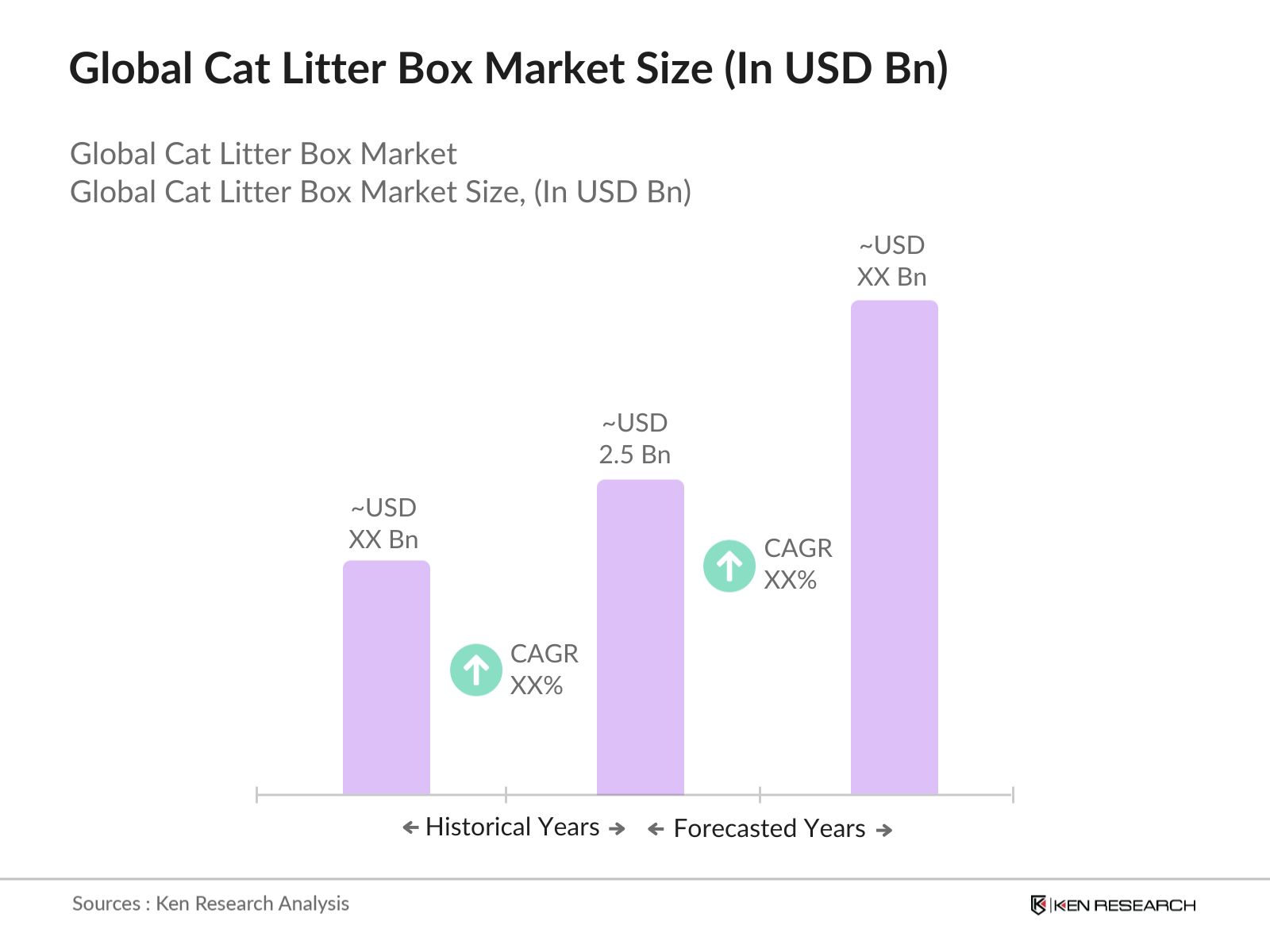
- The global cat litter box market is valued at USD 2.5 billion, driven primarily by the increasing trend of pet adoption, especially among urban households, and the rising awareness of pet hygiene. The demand for innovative, eco-friendly, and automated litter box solutions has grown significantly, fueled by technological advancements and heightened pet care awareness. This growth is further supported by the adoption of smart litter boxes, which align with the tech-savvy preferences of pet owners today.
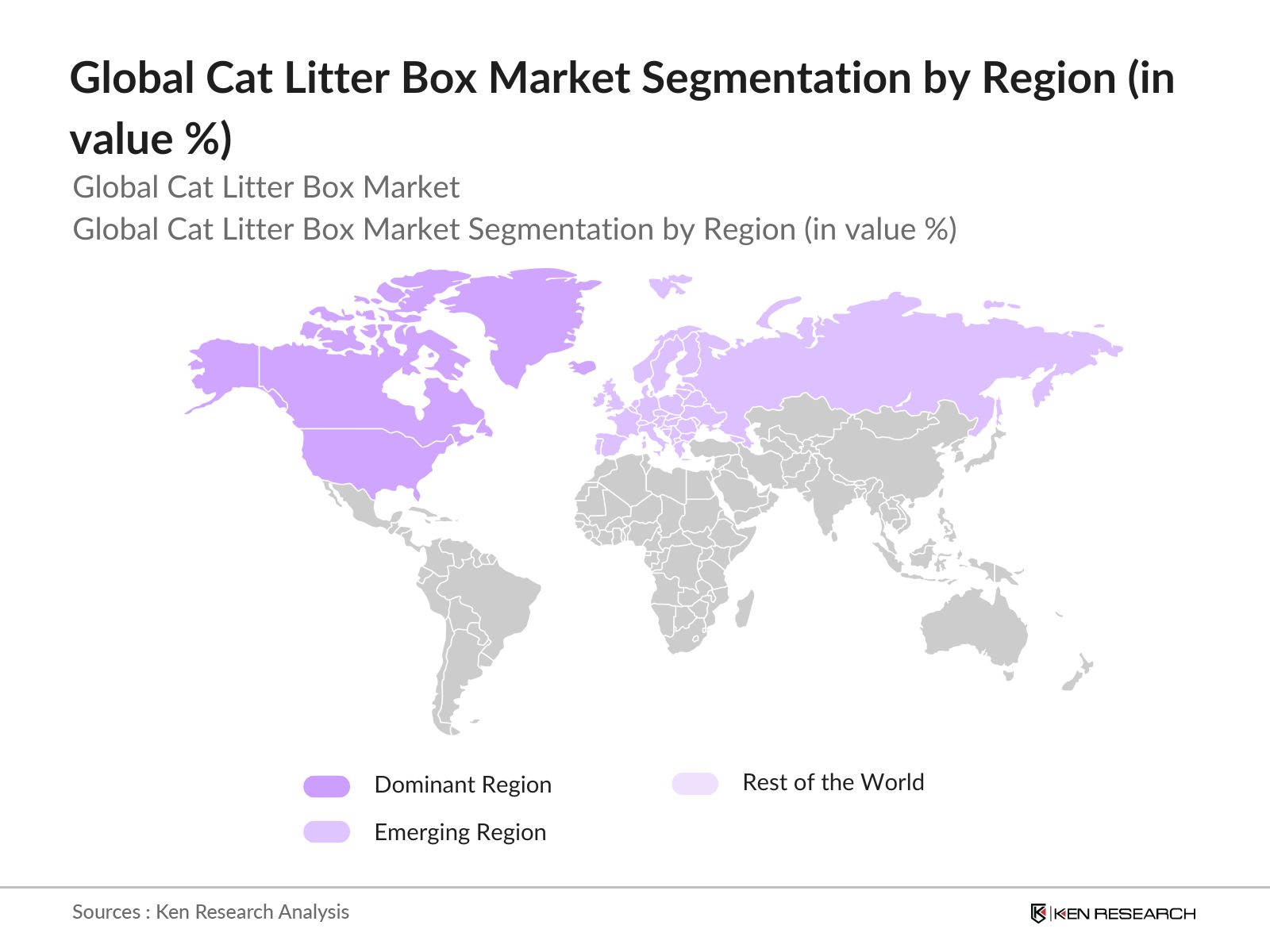
- Key regions that dominate the market include North America, led by the U.S., and Europe, with Germany and the U.K. standing out due to their high rates of pet ownership and disposable income. North America's dominance is attributed to advanced infrastructure for pet care, widespread acceptance of premium pet products, and a culture that promotes pet welfare. In Europe, factors such as increasing urbanization and a strong presence of established pet care brands play a significant role in market leadership.
- Regional compliance standards for pet care products are impacting product development, particularly in North America and Europe. In 2023, Canada updated its pet product safety standards, mandating that all litter boxes must adhere to strict durability and environmental impact guidelines. This regulatory environment is leading manufacturers to innovate with sustainable materials and safe designs, especially in regions where compliance is heavily enforced, thereby shaping the evolution of the cat litter box market.
Global Cat Litter Box Market Segmentation
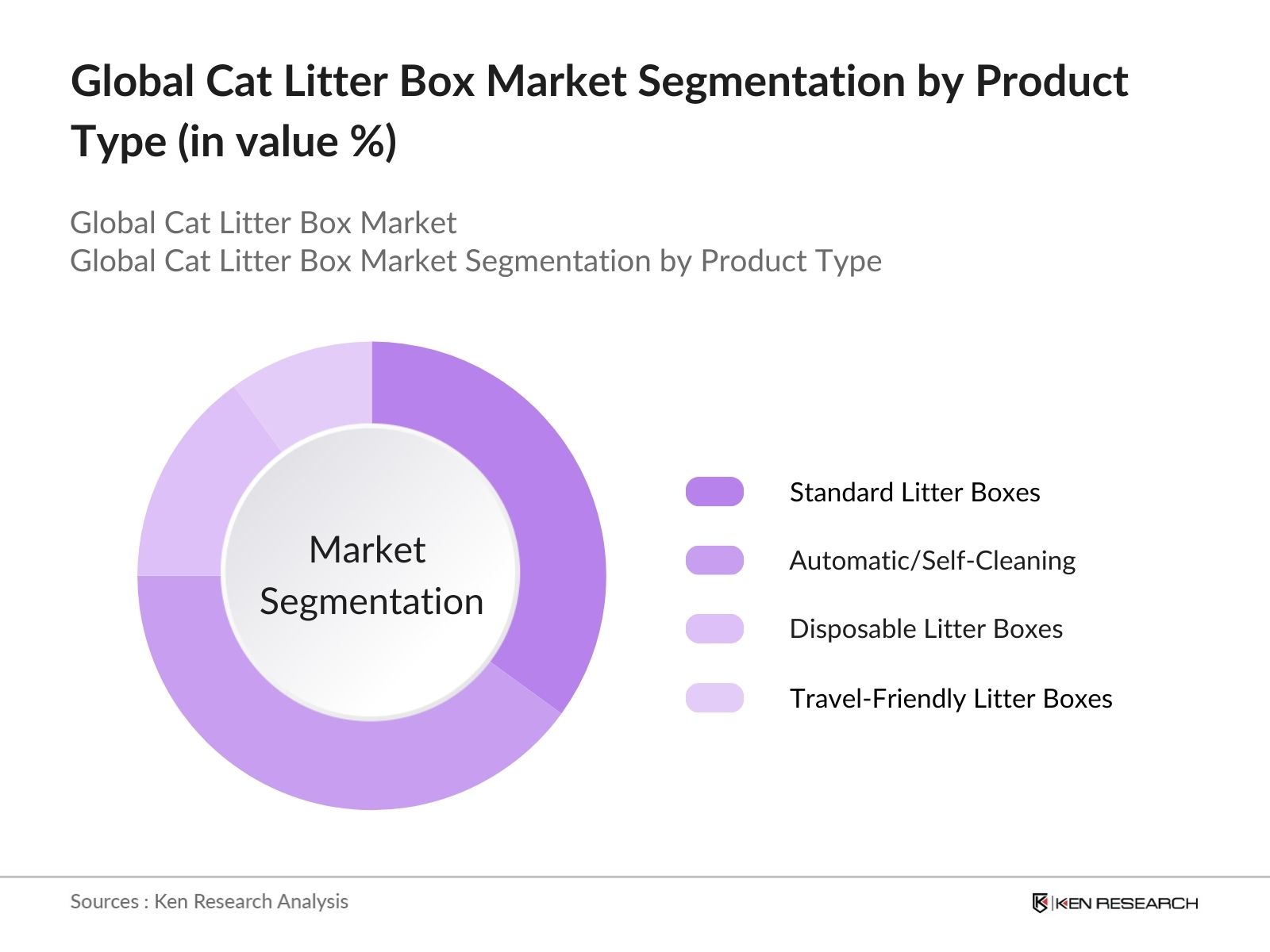
By Product Type: The global cat litter box market is segmented by product type into standard litter boxes, automatic/self-cleaning litter boxes, disposable litter boxes, and travel-friendly litter boxes. Automatic/self-cleaning litter boxes hold a dominant market share within this segment due to their convenience, reducing the need for daily maintenance and manual cleaning. These boxes appeal to consumers with busy lifestyles, offering time-saving features and enhanced hygiene, supported by brands like LitterMaid and CatGenie, which cater to the premium segment.
By Region: The regional segmentation includes North America, Europe, Asia Pacific, Middle East & Africa, and Latin America. North America leads in market share within the cat litter box market due to high disposable income levels, advanced retail infrastructure, and a well-established pet care industry. In the Asia Pacific, markets like Japan and South Korea are emerging due to increasing pet adoption rates and evolving lifestyle preferences that integrate pets as family members.
By Material Type: The market is segmented by material type into plastic, metal, biodegradable materials, and composite materials. Biodegradable materials are gaining prominence in this segment due to rising environmental consciousness and regulatory push toward sustainable products. These materials offer eco-friendly disposal options, aligning with consumer preferences for products that minimize environmental impact, and are primarily adopted by companies like Modkat and Van Ness that emphasize sustainability.
Global Cat Litter Box Market Competitive Landscape
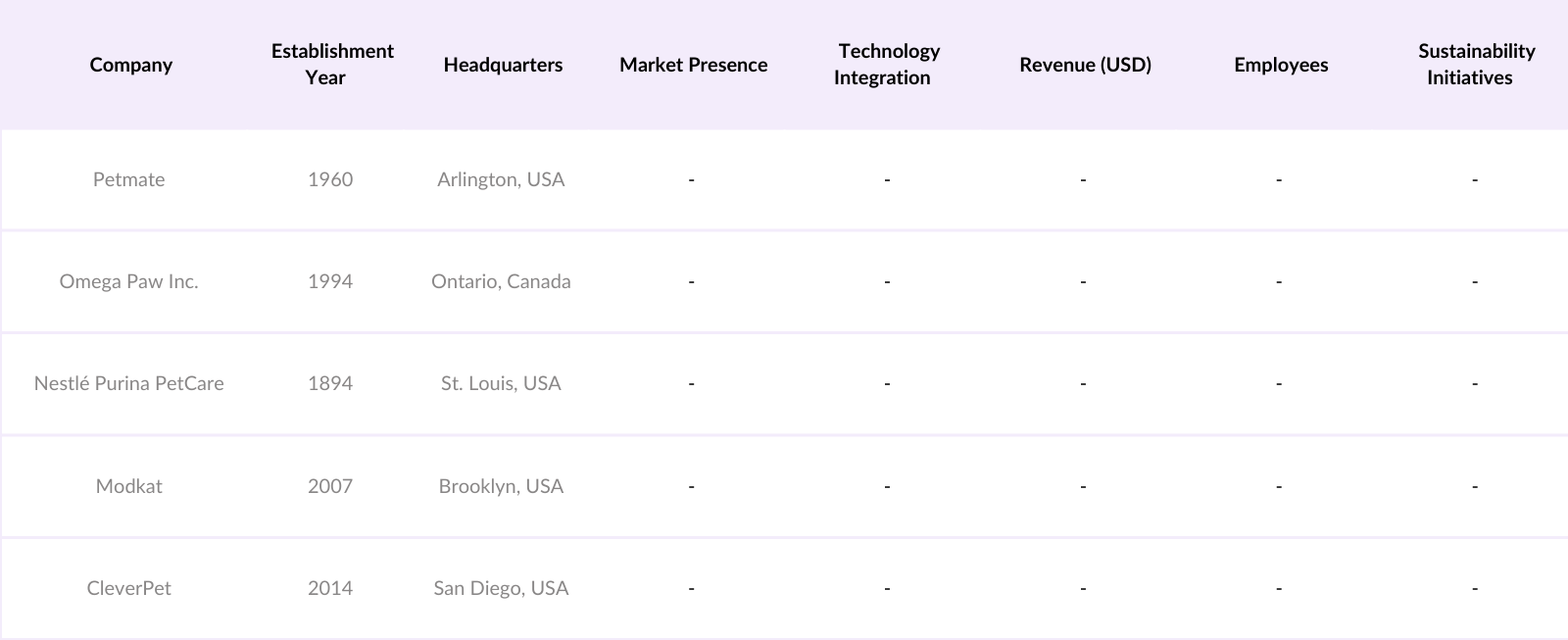
The global cat litter box market is dominated by a few major players, including Petmate and Nestl Purina PetCare, alongside emerging players such as Modkat and CleverPet. These companies benefit from their brand reputation, consistent innovation, and strategic partnerships, establishing them as leaders in the market. The competitive landscape highlights the influence of established brands that prioritize product quality, durability, and eco-friendly options.
Global Cat Litter Box Market Analysis
Growth Drivers
- Impact of Pet Humanization: The trend of pet humanization is increasingly influencing the cat litter box market, with pet owners prioritizing pet health and cleanliness. In 2024, the global population of pet cats is estimated to be over 130 million, with a large share in urban areas where hygiene concerns are more pronounced. This demand is further driven by the increase in single-person households, particularly in Europe and North America, where pet ownership has risen by approximately 10% between 2022 and 2024. These shifts are resulting in higher demand for advanced litter box solutions that cater to pet well-being.
- Growing Awareness of Hygiene Standards: Hygiene concerns are at the forefront of pet care in densely populated areas. In Japan and South Korea, nearly 90% of urban households with cats prioritize sanitation solutions, leading to increased purchases of specialized litter boxes designed for odor control and easy cleaning. In Europe, urban policies advocating for higher sanitation standards in pet care have further bolstered demand for litter boxes equipped with advanced hygiene features. This shift is mirrored in North America, where urban cat owners are actively seeking out products that support cleaner home environments.
- Influence of Urbanization on Pet Care Habits: Urbanization is changing pet care habits globally. In 2023, approximately 56% of the worlds population resided in urban areas, with pet ownership steadily rising among urban dwellers. This concentration has led to increased demand for litter boxes that cater to compact living spaces and enable convenient waste management. Countries in Asia-Pacific, like China, have recorded an 8% annual increase in urban pet adoption, which is expected to contribute to the uptake of convenient and compact cat litter solutions, highlighting the growing market potential for specialized urban-oriented pet products.
Challenges
- High Cost of Specialty Litter Boxes: Specialized litter boxes, particularly self-cleaning and IoT-enabled models, remain costly, limiting accessibility for some pet owners. Data from the European Pet Food Industry Federation reveals that 35% of pet owners in Europe cite high costs as a deterrent to purchasing advanced litter products, especially in regions where disposable income is stagnant. High pricing remains a challenge, with average costs for automated litter boxes reaching over 200 USD, deterring price-sensitive consumers in markets where economic constraints are more pronounced.
- Environmental Impact of Disposable Litter: Disposable litter, particularly clay-based and silica gel options, poses environmental challenges due to limited biodegradability. In 2023, over 4 million tons of cat litter waste were generated in the United States alone, of which a significant portion was not recyclable. As landfill regulations tighten, pet owners and manufacturers face pressures to shift toward eco-friendly alternatives. Waste management agencies are increasingly regulating disposal practices, further influencing consumer choices and placing a demand on manufacturers to innovate.
Global Cat Litter Box Market Future Outlook
Global Cat Litter Box Market is projected to witness substantial growth, supported by trends in smart pet care solutions, eco-conscious consumer preferences, and the rise in premium pet product demand. Technological advancements in automated litter boxes and the integration of IoT-enabled features are anticipated to boost market growth, particularly as consumers increasingly seek high-tech, convenient solutions.
Market Opportunities
- Increasing Demand for Eco-Friendly Materials: As environmental awareness grows, there is a significant shift towards eco-friendly litter products. In 2023, approximately 60% of consumers in North America expressed a preference for biodegradable litter options. The adoption of plant-based and other sustainable materials in litter production is accelerating, providing manufacturers with an opportunity to innovate and capture eco-conscious market segments. The market is witnessing an increase in R&D investments in eco-friendly materials, particularly in the U.S. and Europe, where green initiatives are being heavily promoted.
- Adoption of IoT-Enabled Litter Boxes: Smart litter boxes with IoT capabilities are gaining popularity, driven by technological advancements and growing disposable incomes. In 2023, the demand for IoT-enabled pet products grew by over 25% in developed markets, especially in North America, where pet tech innovations are widely adopted. These smart devices offer features like automated cleaning, real-time waste tracking, and health monitoring, catering to tech-savvy pet owners. The increased adoption rate indicates significant growth potential for smart, data-driven pet products in both developed and emerging markets.
Scope of the Report
Scope of Report Table (Segmentation Overview)
|
Segment |
Sub-Segments |
|
By Product Type |
Standard Litter Boxes Automatic/Self-Cleaning Litter Boxes Disposable Litter Boxes Travel-Friendly Litter Boxes |
|
By Material Type |
Plastic Metal Biodegradable Materials Composite Materials |
|
By Distribution Channel |
Online Retail Specialty Pet Stores Veterinary Clinics Supermarkets/Hypermarkets |
|
By Cat Size |
Small Cats Medium Cats Large Cats |
|
By Region |
North America Europe Asia Pacific Middle East & Africa Latin America |
Products
Key Target Audience
Pet Care Product Manufacturers
Pet Care Technology Companies
Pet Food and Accessories Companies
Smart Home Technology Companies
Eco-Friendly Product Advocacy Groups
Pet Health and Wellness Organizations
Investors and Venture Capitalist Firms
Government and Regulatory Bodies (EPA, FDA)
Companies
Players Mentioned in the Report
Petmate
Omega Paw Inc.
Spectrum Brands (LitterMaid)
Nestl Purina PetCare
Modkat
IRIS USA, Inc.
Van Ness Plastic Molding
Rolf C. Hagen Inc.
CatGenie
CleverPet
Table of Contents
1. Global Cat Litter Box Market Overview
1.1 Definition and Scope
1.2 Market Taxonomy
1.3 Market Growth Rate
1.4 Market Segmentation Overview
2. Global Cat Litter Box Market Size (In USD Million)
2.1 Historical Market Size
2.2 Year-On-Year Growth Analysis
2.3 Key Market Developments and Milestones
3. Global Cat Litter Box Market Analysis
3.1 Growth Drivers (Increased Pet Ownership, Rising Urbanization, Health Concerns)
3.1.1 Impact of Pet Humanization
3.1.2 Growing Awareness of Hygiene Standards
3.1.3 Influence of Urbanization on Pet Care Habits
3.1.4 Shifts in Consumer Preferences toward Convenience
3.2 Market Challenges (Cost of Specialized Products, Environmental Concerns)
3.2.1 High Cost of Specialty Litter Boxes
3.2.2 Environmental Impact of Disposable Litter
3.2.3 Limited Disposal Options for Non-Biodegradable Litter
3.3 Opportunities (Smart Litter Boxes, Eco-Friendly Products)
3.3.1 Increasing Demand for Eco-Friendly Materials
3.3.2 Adoption of IoT-Enabled Litter Boxes
3.3.3 Expansion in Emerging Markets
3.4 Trends (Automated Cleaning Solutions, Eco-Friendly Materials, Customizable Designs)
3.4.1 Rising Popularity of Self-Cleaning Litter Boxes
3.4.2 Preference for Sustainable Litter Materials
3.4.3 Increased Demand for Aesthetic and Functional Design Options
3.5 Government Regulations (Pet Care Standards, Waste Management Policies)
3.5.1 Environmental Protection Policies for Pet Waste
3.5.2 Industry Standards for Safety and Hygiene
3.5.3 Regional Pet Care Compliance Standards
3.6 SWOT Analysis
3.7 Stake Ecosystem
3.8 Porters Five Forces Analysis
3.9 Competitive Ecosystem
4. Global Cat Litter Box Market Segmentation
4.1 By Product Type (In Value %)
4.1.1 Standard Litter Boxes
4.1.2 Automatic/Self-Cleaning Litter Boxes
4.1.3 Disposable Litter Boxes
4.1.4 Travel-Friendly Litter Boxes
4.2 By Material Type (In Value %)
4.2.1 Plastic
4.2.2 Metal
4.2.3 Biodegradable Materials
4.2.4 Composite Materials
4.3 By Distribution Channel (In Value %)
4.3.1 Online Retail
4.3.2 Specialty Pet Stores
4.3.3 Veterinary Clinics
4.3.4 Supermarkets/Hypermarkets
4.4 By Cat Size (In Value %)
4.4.1 Small Cats
4.4.2 Medium Cats
4.4.3 Large Cats
4.5 By Region (In Value %)
4.5.1 North America
4.5.2 Europe
4.5.3 Asia Pacific
4.5.4 Middle East & Africa
4.5.5 Latin America
5. Global Cat Litter Box Market Competitive Analysis
5.1 Detailed Profiles of Major Companies
5.1.1 Petmate
5.1.2 Omega Paw Inc.
5.1.3 Spectrum Brands (LitterMaid)
5.1.4 Nestl Purina PetCare
5.1.5 Modkat
5.1.6 IRIS USA, Inc.
5.1.7 Van Ness Plastic Molding
5.1.8 Rolf C. Hagen Inc.
5.1.9 CatGenie
5.1.10 CleverPet
5.2 Cross-Comparison Parameters (Revenue, Regional Presence, Product Innovations, Number of Employees, Year Established, Market Share, Strategic Partnerships, Sustainability Initiatives)
5.3 Market Share Analysis
5.4 Strategic Initiatives
5.5 Mergers and Acquisitions
5.6 Investment Analysis
5.7 Venture Capital Funding
5.8 Government Grants
5.9 Private Equity Investments
6. Global Cat Litter Box Market Regulatory Framework
6.1 Environmental Standards
6.2 Compliance Requirements for Litter Material Disposal
6.3 Certification Processes for Pet Care Products
7. Global Cat Litter Box Future Market Size (In USD Million)
7.1 Future Market Size Projections
7.2 Key Factors Driving Future Market Growth
8. Global Cat Litter Box Market Future Segmentation
8.1 By Product Type (In Value %)
8.2 By Material Type (In Value %)
8.3 By Distribution Channel (In Value %)
8.4 By Cat Size (In Value %)
8.5 By Region (In Value %)
9. Global Cat Litter Box Market Analysts Recommendations
9.1 TAM/SAM/SOM Analysis
9.2 Customer Cohort Analysis
9.3 Marketing Initiatives
9.4 White Space Opportunity Analysis
Research Methodology
Step 1: Identification of Key Variables
In this phase, an ecosystem map was constructed encompassing the primary stakeholders within the global cat litter box market. Using secondary and proprietary databases, we identified the critical variables influencing market dynamics, ensuring a well-rounded approach to market analysis.
Step 2: Market Analysis and Construction
We compiled historical data on cat litter box sales, focusing on the influence of changing consumer preferences and product innovation. Our analysis emphasized the market penetration rate across different regions, utilizing extensive quantitative and qualitative data to provide a comprehensive market overview.
Step 3: Hypothesis Validation and Expert Consultation
Hypotheses were developed based on market data trends and were validated through interviews with industry experts and key stakeholders. These consultations provided practical insights into the market, allowing us to refine and validate our data and findings.
Step 4: Research Synthesis and Final Output
The final research phase involved collaborating with major manufacturers and retailers to gather detailed insights into product segments and sales trends. This engagement was essential to verify the accuracy of our data, resulting in a thorough, validated analysis of the global cat litter box market.
Frequently Asked Questions
01. How big is the global cat litter box market?
The global cat litter box market was valued at USD 3.5 billion in 2023, driven by the rising trend of pet ownership and innovations in automated and eco-friendly litter box solutions.
02. What are the key growth drivers in the global cat litter box market?
Growth in global cat litter box market is propelled by factors such as increasing pet ownership, heightened awareness of pet hygiene, and the adoption of smart litter box technologies that cater to modern lifestyles.
03. Which companies dominate the global cat litter box market?
Major players in global cat litter box market include Petmate, Omega Paw Inc., Spectrum Brands (LitterMaid), Nestl Purina PetCare, and Modkat, recognized for their product innovation and strong market presence.
04. What are the challenges faced by the global cat litter box market?
Challenges in global cat litter box market include the environmental impact of disposable litter, high costs associated with premium and automated products, and limited options for sustainable disposal methods.
Why Buy From Us?

What makes us stand out is that our consultants follows Robust, Refine and Result (RRR) methodology. i.e. Robust for clear definitions, approaches and sanity checking, Refine for differentiating respondents facts and opinions and Result for presenting data with story

We have set a benchmark in the industry by offering our clients with syndicated and customized market research reports featuring coverage of entire market as well as meticulous research and analyst insights.

While we don't replace traditional research, we flip the method upside down. Our dual approach of Top Bottom & Bottom Top ensures quality deliverable by not just verifying company fundamentals but also looking at the sector and macroeconomic factors.

With one step in the future, our research team constantly tries to show you the bigger picture. We help with some of the tough questions you may encounter along the way: How is the industry positioned? Best marketing channel? KPI's of competitors? By aligning every element, we help maximize success.

Our report gives you instant access to the answers and sources that other companies might choose to hide. We elaborate each steps of research methodology we have used and showcase you the sample size to earn your trust.

If you need any support, we are here! We pride ourselves on universe strength, data quality, and quick, friendly, and professional service.