Global Chocolate Market Outlook to 2030
Region:Global
Author(s):Dev
Product Code:KROD-040
Region:Global
Author(s):Dev
Product Code:KROD-040
June 2025
90
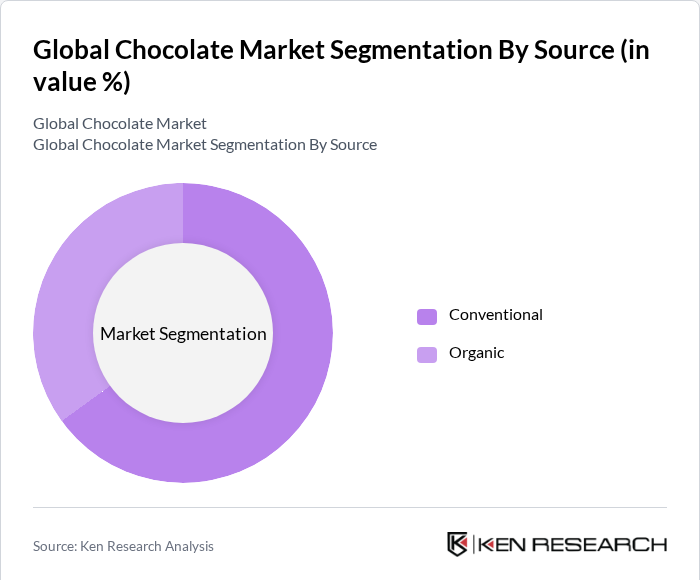
By Source: The chocolate market can be segmented based on the source of cocoa used in production, primarily categorized into conventional and organic sources. The organic segment has been gaining traction due to increasing consumer awareness regarding sustainable farming practices and health benefits associated with organic products. Organic chocolate is perceived as a premium product, attracting health-conscious consumers willing to pay a higher price for quality and sustainability. This trend is further supported by the growing number of certifications and labels that emphasize organic sourcing, which enhances consumer trust and brand loyalty.
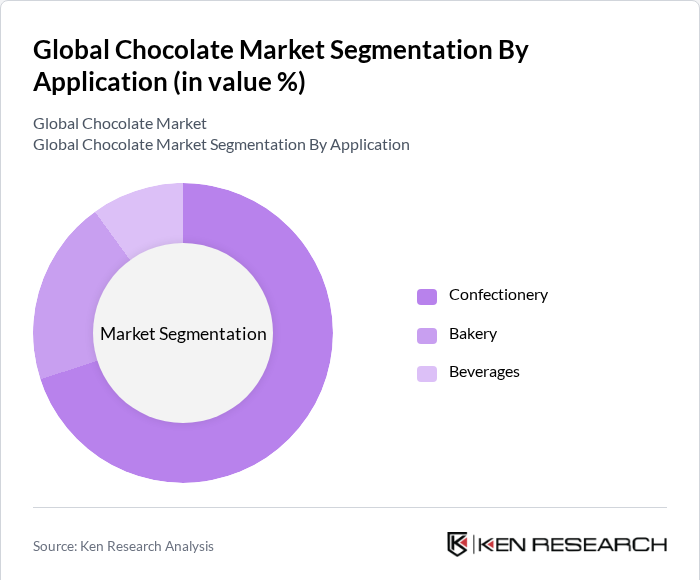
By Application: The chocolate market is also segmented based on application, which includes confectionery, bakery, and beverages. The confectionery segment dominates the market due to the high demand for chocolate bars, pralines, and seasonal products like Easter eggs and Christmas chocolates. This segment benefits from continuous product innovation, including the introduction of unique flavors and textures, which cater to diverse consumer preferences. Additionally, the rise of gifting culture during holidays and special occasions significantly boosts sales in the confectionery segment, making it a key driver of market growth.
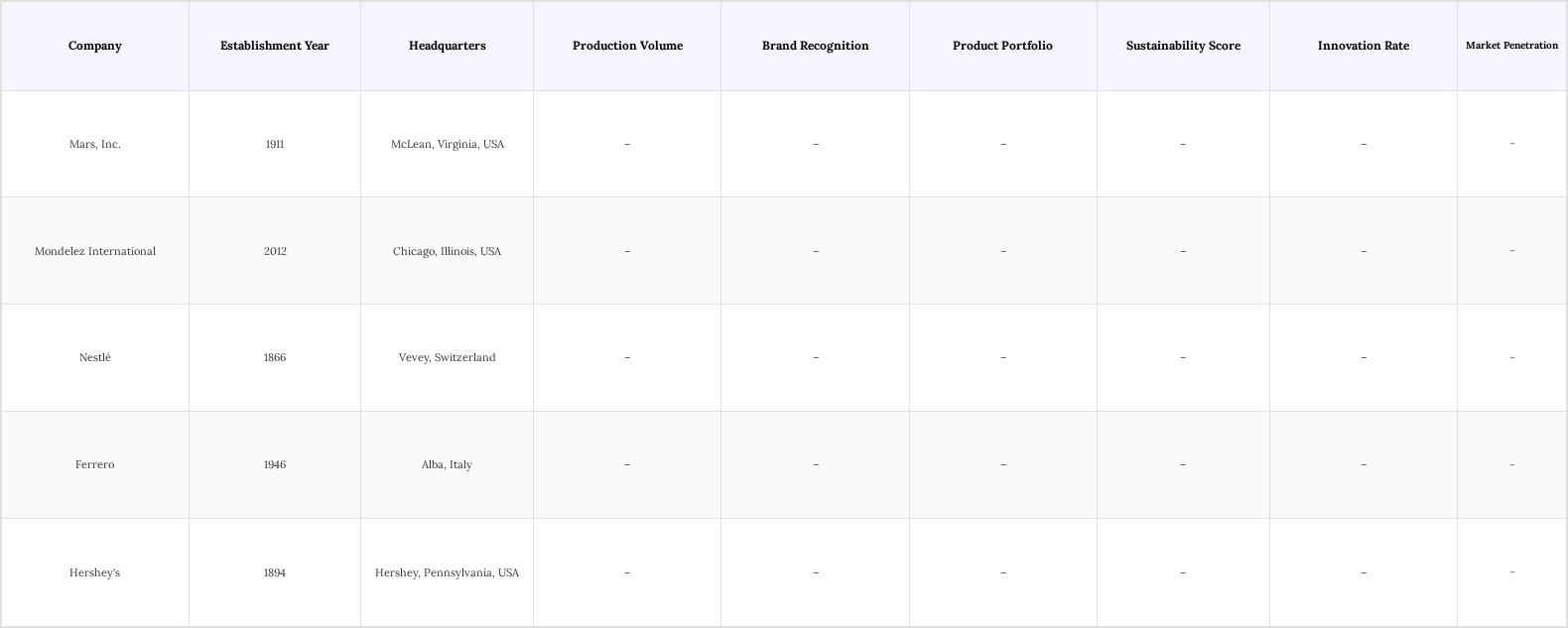
The Global Chocolate Market is characterized by intense competition among key players such as Mars, Inc., Mondelez International, Nestlé, and Ferrero. These companies dominate the market through extensive product portfolios, strong brand recognition, and innovative marketing strategies. The competitive dynamics are further influenced by the growing trend of health-conscious consumption, leading to the introduction of healthier chocolate options and sustainable sourcing practices.
The future of the chocolate market appears promising, driven by evolving consumer preferences and innovative product offerings. As health-conscious trends continue to shape purchasing decisions, the demand for organic and ethically sourced chocolate is expected to rise. Additionally, advancements in technology and e-commerce will facilitate greater accessibility to diverse chocolate products, enhancing consumer engagement. Companies that adapt to these trends and invest in sustainable practices are likely to thrive in this dynamic market landscape.
| By Source |
|
| By Application |
Confectionery Bakery Beverages |
| By Product Type |
Dark Chocolate Milk Chocolate White Chocolate Ruby Chocolate |
| By Distribution Channel |
Supermarkets/Hypermarkets Convenience Stores Online Retail Specialty Stores |
| By Region |
North America Europe Asia-Pacific Latin America Middle East & Africa |
| By Consumer Type |
Adults Children Health-Conscious Consumers |
1.1. Definition and Scope
1.2. Market Taxonomy
1.3. Market Growth Rate
1.4. Market Segmentation Overview
2.1. Historical Market Size
2.2. Year-On-Year Growth Analysis
2.3. Key Market Developments and Milestones
3.1. Growth Drivers
3.1.1. Increasing Consumer Demand for Premium Chocolate Products
3.1.2. Rising Health Consciousness and Demand for Dark Chocolate
3.1.3. Expansion of E-commerce Platforms for Chocolate Sales
3.2. Market Challenges
3.2.1. Fluctuating Cocoa Prices Affecting Profit Margins
3.2.2. Stringent Regulations on Food Safety and Quality
3.2.3. Competition from Alternative Snacks and Confectionery
3.3. Opportunities
3.3.1. Growing Market for Organic and Fair-Trade Chocolate
3.3.2. Innovations in Chocolate Flavors and Formats
3.3.3. Expansion into Emerging Markets with Untapped Potential
3.4. Trends
3.4.1. Increasing Popularity of Vegan and Plant-Based Chocolate Options
3.4.2. Rise of Artisan and Craft Chocolate Brands
3.4.3. Focus on Sustainable Sourcing and Eco-Friendly Packaging
3.5. Government Regulation
3.5.1. Compliance with International Food Safety Standards
3.5.2. Regulations on Labeling and Nutritional Information
3.5.3. Environmental Regulations Impacting Cocoa Farming Practices
3.5.4. Trade Policies Affecting Cocoa Import and Export
4.1. By Source
4.1.1. Conventional
4.1.2. Organic
4.2. By Application
4.2.1. Confectionery
4.2.2. Bakery
4.2.3. Ice Cream
4.2.4. Beverages
4.3. By Product Type
4.3.1. Dark Chocolate
4.3.2. Milk Chocolate
4.3.3. White Chocolate
4.3.4. Ruby Chocolate
4.4. By Distribution Channel
4.4.1. Supermarkets/Hypermarkets
4.4.2. Convenience Stores
4.4.3. Online Retail
4.4.4. Specialty Stores
4.5. By Region
4.5.1. North America
4.5.2. Europe
4.5.3. Asia-Pacific
4.5.4. Latin America
4.5.5. Middle East & Africa
4.6. By Consumer Type
4.6.1. Adults
4.6.2. Children
4.6.3. Health-Conscious Consumers
5.1. Detailed Profiles of Major Companies
5.1.1. Mars, Inc.
5.1.2. Mondelez International
5.1.3. Nestlé
5.1.4. Ferrero
5.1.5. Hershey's
5.1.6. CacaoCraft Co.
5.1.7. ChocoSphere Ltd.
5.1.8. SweetHarvest Chocolates
5.1.9. DivineCocoa Enterprises
5.1.10. Artisan Chocolate Collective
5.2. Cross Comparison Parameters
5.2.1. Market Share Analysis
5.2.2. Product Portfolio Diversity
5.2.3. Geographic Presence
5.2.4. Pricing Strategies
5.2.5. Distribution Network Efficiency
5.2.6. Brand Loyalty Metrics
5.2.7. Innovation Rate in Product Development
5.2.8. Sustainability Initiatives
6.1. Environmental Standards
6.2. Compliance Requirements
6.3. Certification Processes
7.1. Future Market Size Projections
7.2. Key Factors Driving Future Market Growth
8.1. By Source
8.1.1. Conventional
8.1.2. Organic
8.2. By Application
8.2.1. Confectionery
8.2.2. Bakery
8.2.3. Ice Cream
8.2.4. Beverages
8.3. By Product Type
8.3.1. Dark Chocolate
8.3.2. Milk Chocolate
8.3.3. White Chocolate
8.3.4. Ruby Chocolate
8.4. By Distribution Channel
8.4.1. Supermarkets/Hypermarkets
8.4.2. Convenience Stores
8.4.3. Online Retail
8.4.4. Specialty Stores
8.5. By Region
8.5.1. North America
8.5.2. Europe
8.5.3. Asia-Pacific
8.5.4. Latin America
8.5.5. Middle East & Africa
8.6. By Consumer Type
8.6.1. Adults
8.6.2. Children
8.6.3. Health-Conscious Consumers
9.1. TAM/SAM/SOM Analysis
9.2. Customer Cohort Analysis
9.3. Marketing Initiatives
9.4. White Space Opportunity Analysis
The initial phase involves constructing an ecosystem map encompassing all major stakeholders within the Global Chocolate Market. This step is underpinned by extensive desk research, utilizing a combination of secondary and proprietary databases to gather comprehensive industry-level information. The primary objective is to identify and define the critical variables that influence market dynamics.
In this phase, we will compile and analyze historical data pertaining to the Global Chocolate Market. This includes assessing market penetration, the ratio of marketplaces to service providers, and the resultant revenue generation. Furthermore, an evaluation of service quality statistics will be conducted to ensure the reliability and accuracy of the revenue estimates.
Market hypotheses will be developed and subsequently validated through computer-assisted telephone interviews (CATIs) with industry experts representing a diverse array of companies. These consultations will provide valuable operational and financial insights directly from industry practitioners, which will be instrumental in refining and corroborating the market data.
The final phase involves direct engagement with multiple manufacturers to acquire detailed insights into product segments, sales performance, consumer preferences, and other pertinent factors. This interaction will serve to verify and complement the statistics derived from the bottom-up approach, thereby ensuring a comprehensive, accurate, and validated analysis of the Global Chocolate Market.
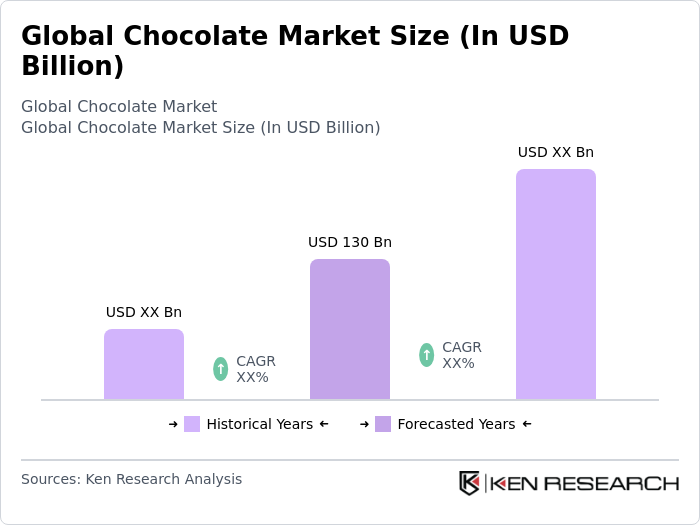
The Global Chocolate Market is valued at USD 130 billion, driven by factors such as increasing demand, technological advancements, and supportive government initiatives.
Key challenges in the Global Chocolate Market include intense competition, regulatory complexities, and infrastructure limitations affecting market dynamics.
Major players in the Global Chocolate Market include Mars, Inc., Mondelez International, Nestlé, Ferrero, Hershey's, among others.
The primary growth drivers for the Global Chocolate Market are increasing consumer demand, favorable policies, innovation, and substantial investment inflows.

What makes us stand out is that our consultants follows Robust, Refine and Result (RRR) methodology. i.e. Robust for clear definitions, approaches and sanity checking, Refine for differentiating respondents facts and opinions and Result for presenting data with story

We have set a benchmark in the industry by offering our clients with syndicated and customized market research reports featuring coverage of entire market as well as meticulous research and analyst insights.

While we don't replace traditional research, we flip the method upside down. Our dual approach of Top Bottom & Bottom Top ensures quality deliverable by not just verifying company fundamentals but also looking at the sector and macroeconomic factors.

With one step in the future, our research team constantly tries to show you the bigger picture. We help with some of the tough questions you may encounter along the way: How is the industry positioned? Best marketing channel? KPI's of competitors? By aligning every element, we help maximize success.

Our report gives you instant access to the answers and sources that other companies might choose to hide. We elaborate each steps of research methodology we have used and showcase you the sample size to earn your trust.

If you need any support, we are here! We pride ourselves on universe strength, data quality, and quick, friendly, and professional service.