
Global Close-In Weapon System Market Outlook to 2030
Region:Global
Author(s):Yogita Sahu
Product Code:KROD4273
Region:Global
Author(s):Yogita Sahu
Product Code:KROD4273
December 2024
98
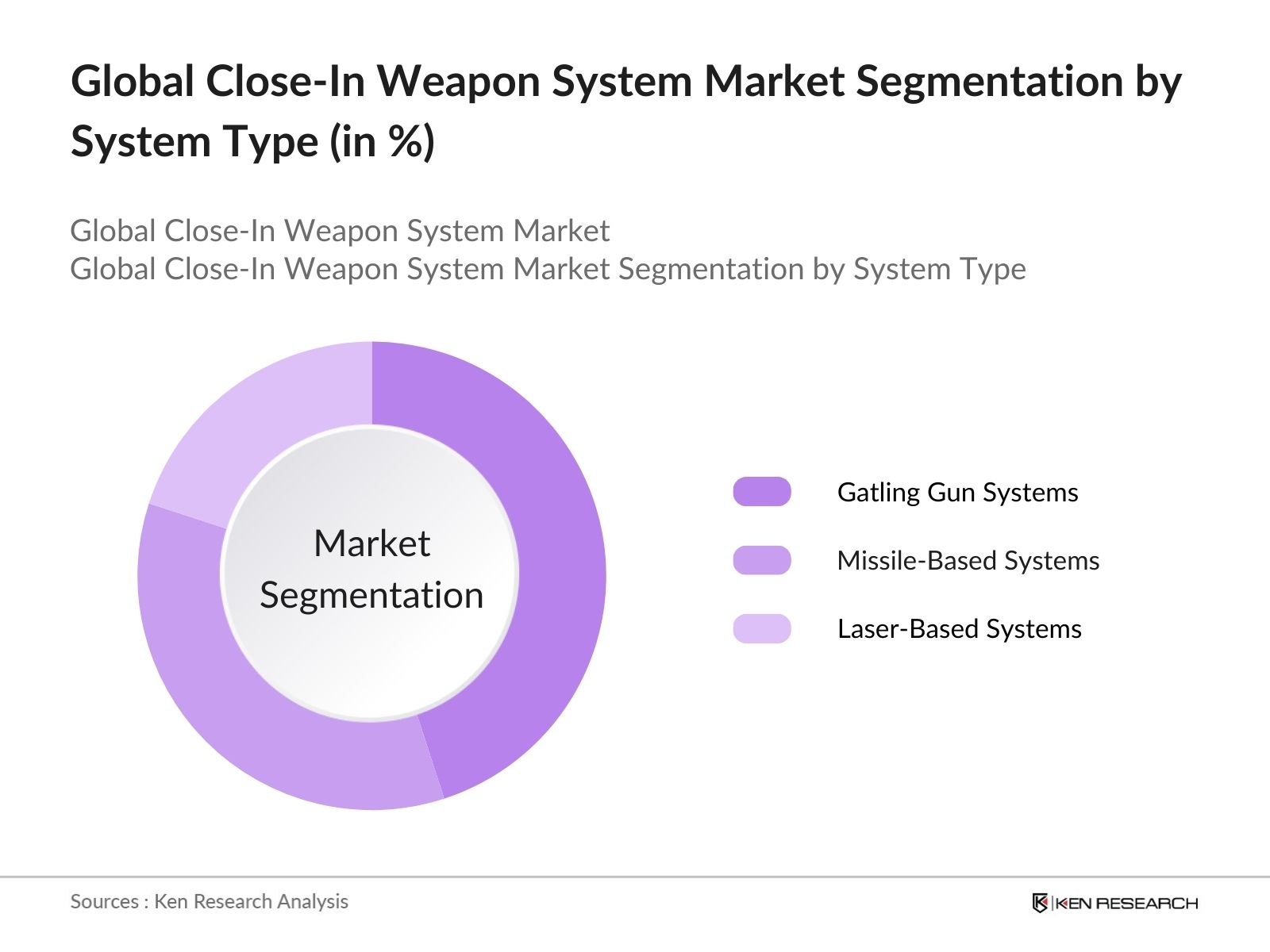
By System Type: The market is segmented by system type into Gatling Gun Systems, Missile-Based Systems, and Laser-Based Systems. Gatling Gun Systems dominate the market due to their established performance, high firing rate, and adaptability in intercepting aerial threats in naval and ground defense. Their reliability in intercepting short-range missiles and aircraft has made Gatling Gun Systems a preferred choice in multiple defense applications globally.
By Platform: The market is segmented by platform into Naval Platforms, Ground-Based Platforms, and Airborne Platforms. Naval Platforms hold a significant market share, primarily due to the importance of CIWS in defending naval fleets against aerial threats, such as anti-ship missiles. The need for rapid response in confined spaces and protection of high-value assets in waters has solidified the dominance of naval CIWS systems.
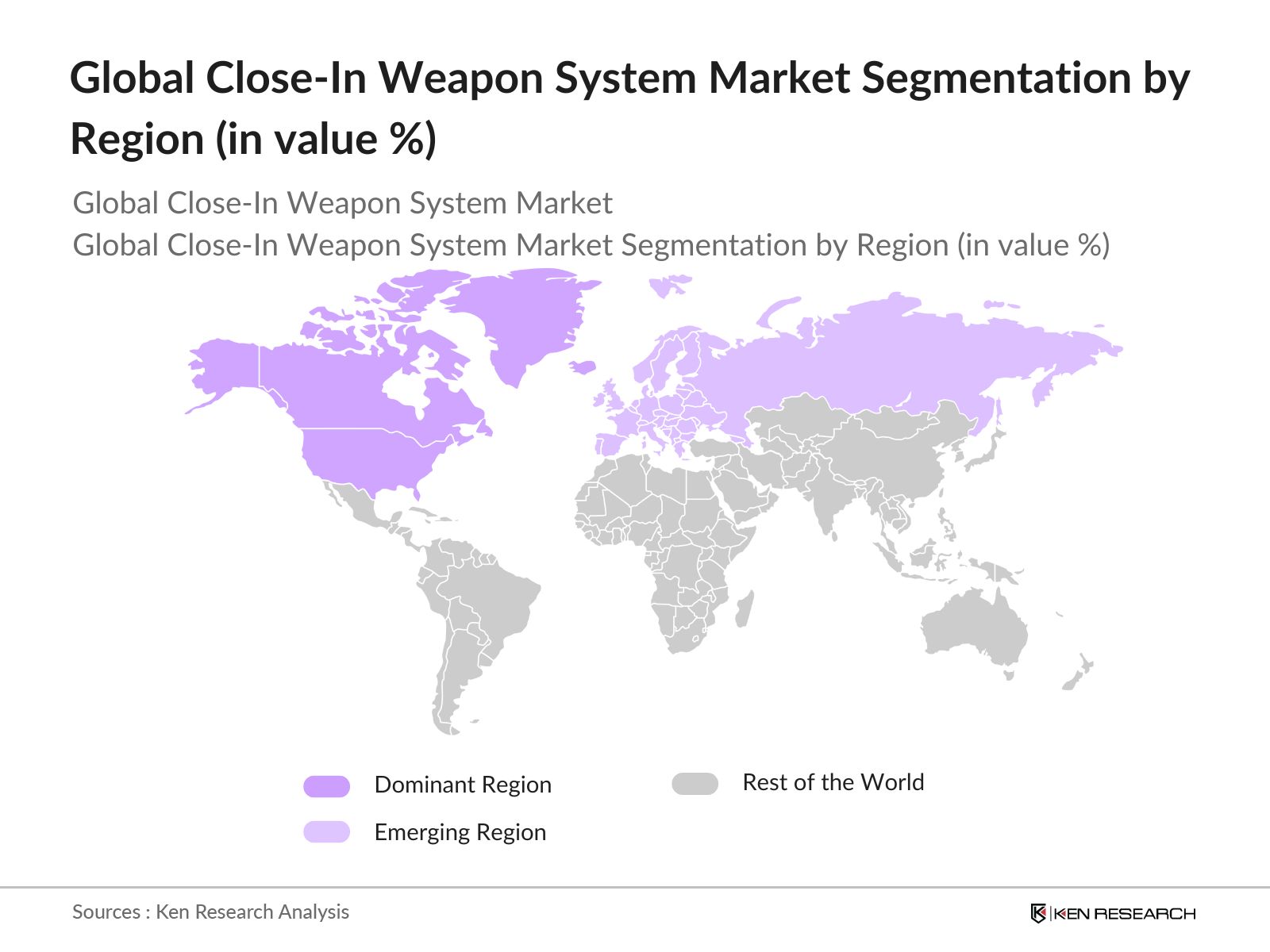
By Region: The market is divided by region into North America, Europe, Asia Pacific, Middle East & Africa, and South America. North America holds a substantial market share, primarily due to the U.S. Department of Defenses investment in advanced CIWS to safeguard military assets globally. Additionally, the regions focus on maintaining technological superiority in defense systems has driven high adoption rates.
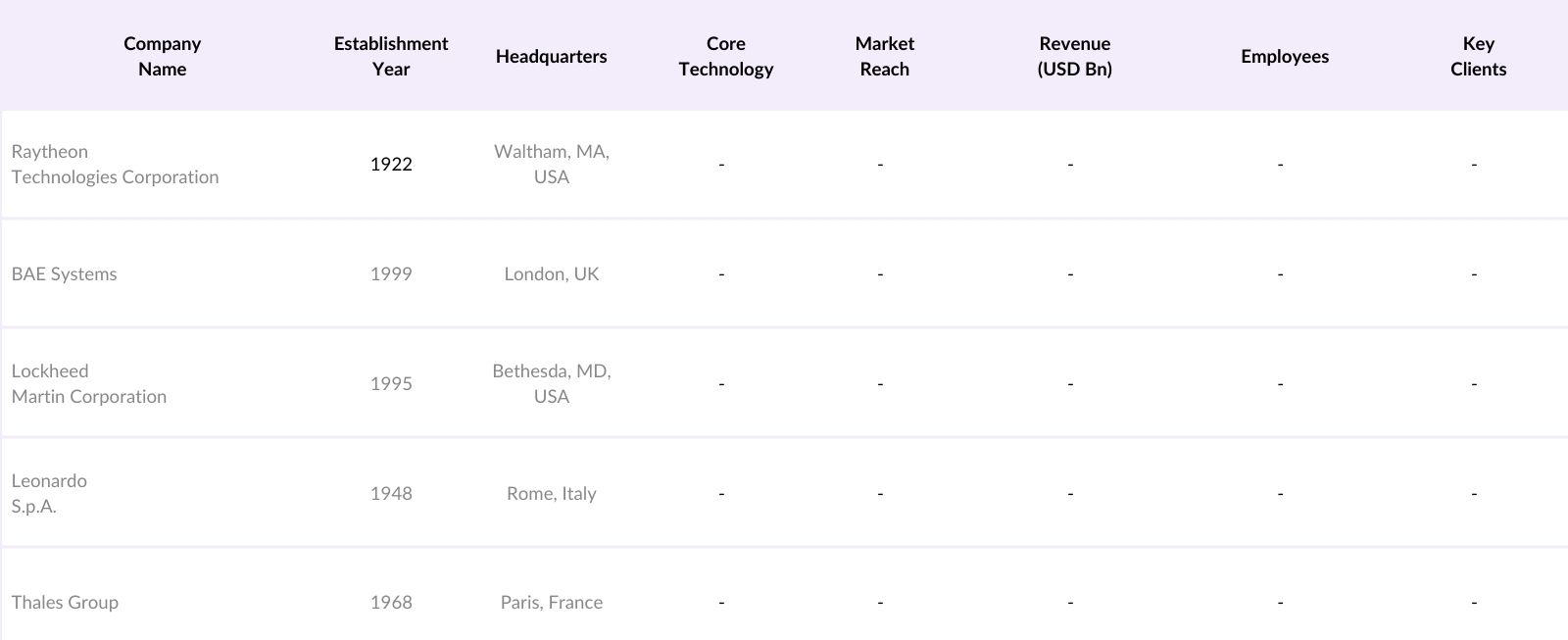
The market is characterized by key global players that dominate through technological expertise, strategic alliances, and defense contracts. Companies such as Raytheon Technologies and Northrop Grumman have a robust presence in the market, highlighting the competitive landscapes concentrated nature.
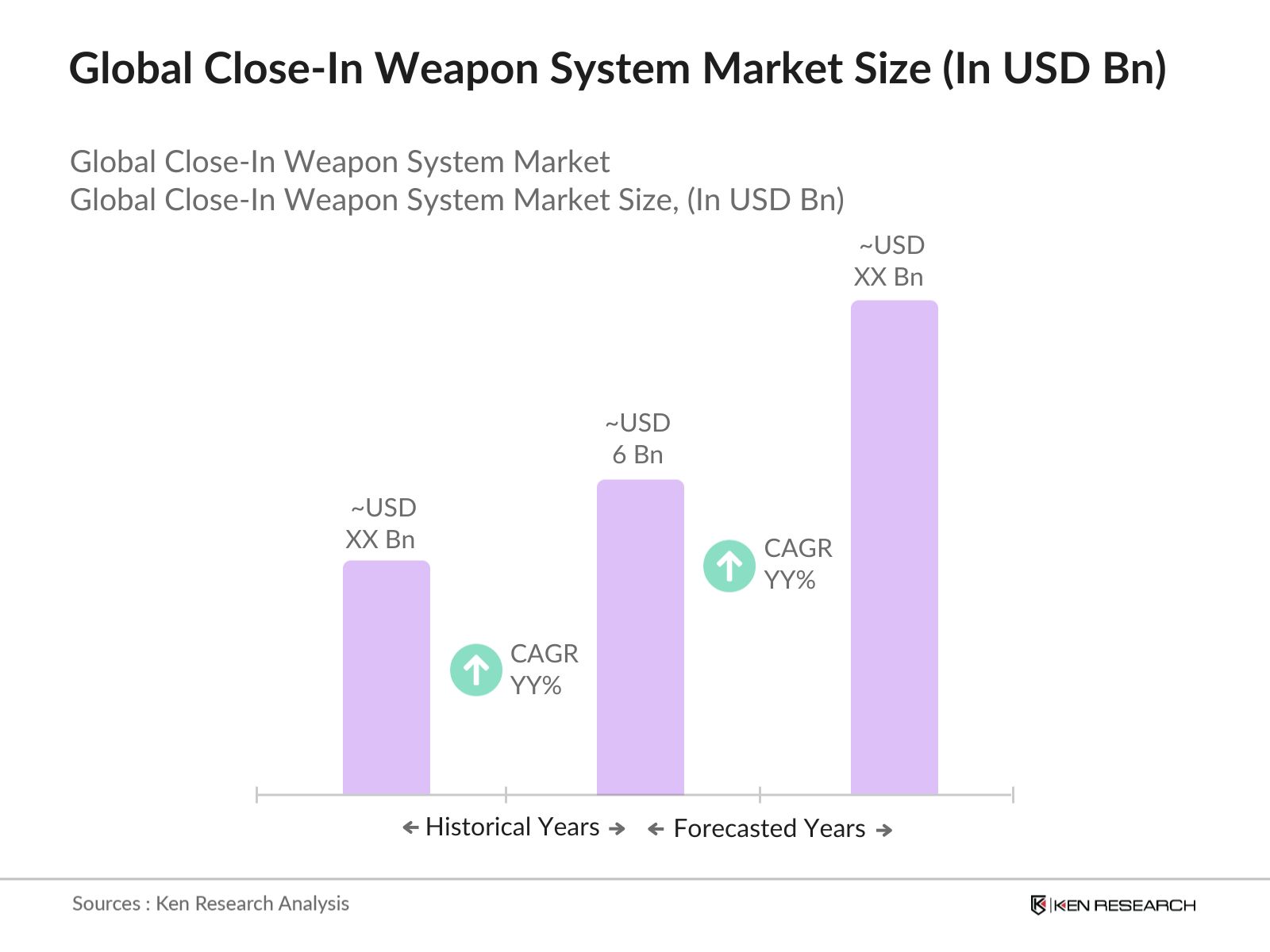
Over the next five years, the CIWS industry is expected to show strong growth, driven by continuous defense budget allocations, advancements in autonomous threat interception technologies, and growing demand for integrated systems across air, sea, and land platforms.
|
System Type |
Gatling Gun Systems Missile-Based Systems Laser-Based Systems |
|
Platform |
Naval Platforms Ground-Based Platforms Airborne Platforms |
|
Technology |
Radar-Guided Systems Electro-Optical Systems Infrared Systems |
|
Range |
Short-Range (1-10 km) Medium-Range (10-50 km) |
|
Region |
North America Europe Asia Pacific Middle East and Africa South America |
1.1 Definition and Scope
1.2 Market Taxonomy
1.3 Market Growth Rate
1.4 Market Segmentation Overview
2.1 Historical Market Size
2.2 Year-On-Year Growth Analysis
2.3 Key Market Developments and Milestones
3.1 Growth Drivers
3.1.1 Geopolitical Tensions (Defense Sector Demand)
3.1.2 Modernization of Military Assets (Upgrades in Naval and Ground Forces)
3.1.3 Rising Defense Budgets (Global and Regional)
3.1.4 Advancements in Targeting Technologies (Enhanced Accuracy)
3.2 Market Challenges
3.2.1 High Development and Maintenance Costs
3.2.2 Regulatory Constraints on Military Technology
3.2.3 Limited Adoption in Emerging Markets
3.3 Opportunities
3.3.1 Increased Demand for Autonomous Systems
3.3.2 Integration with Artificial Intelligence
3.3.3 Emerging Markets for Defense Systems (South America, Middle East)
3.4 Trends
3.4.1 Shift Towards AI-Enabled Systems
3.4.2 Preference for Multi-Layer Defense Systems
3.4.3 Rise of Laser-Based Defense Systems
3.5 Regulatory Landscape
3.5.1 Export Control Regulations
3.5.2 Environmental Compliance
3.5.3 Government Procurement Standards
3.6 SWOT Analysis
3.7 Stakeholder Ecosystem
3.8 Porters Five Forces Analysis
3.9 Competitive Ecosystem
4.1 By System Type (In Value %)
4.1.1 Gatling Gun Systems
4.1.2 Missile-Based Systems
4.1.3 Laser-Based Systems
4.2 By Platform (In Value %)
4.2.1 Naval Platforms
4.2.2 Ground-Based Platforms
4.2.3 Airborne Platforms
4.3 By Technology (In Value %)
4.3.1 Radar-Guided Systems
4.3.2 Electro-Optical Systems
4.3.3 Infrared Systems
4.4 By Range (In Value %)
4.4.1 Short-Range (1-10 km)
4.4.2 Medium-Range (10-50 km)
4.5 By Region (In Value %)
4.5.1 North America
4.5.2 Europe
4.5.3 Asia Pacific
4.5.4 Middle East and Africa
4.5.5 South America
5.1 Detailed Profiles of Major Companies
5.1.1 Raytheon Technologies Corporation
5.1.2 BAE Systems
5.1.3 Lockheed Martin Corporation
5.1.4 Leonardo S.p.A.
5.1.5 Northrop Grumman Corporation
5.1.6 Thales Group
5.1.7 Rheinmetall AG
5.1.8 Aselsan A.S.
5.1.9 General Dynamics Corporation
5.1.10 Rafael Advanced Defense Systems
5.1.11 Hanwha Defense
5.1.12 Kongsberg Gruppen
5.1.13 China North Industries Group Corporation
5.1.14 Naval Group
5.1.15 Saab AB
5.2 Cross Comparison Parameters (Headquarters, Inception Year, Revenue, Workforce Size, Major Clients, Market Share %, Core Competency, Innovation Level)
5.3 Market Share Analysis
5.4 Strategic Initiatives
5.5 Mergers and Acquisitions
5.6 Investment Analysis
5.7 Venture Capital Funding
5.8 Government and Defense Contracts
5.9 Private Equity Investments
6.1 Defense Export Controls
6.2 Certification Standards for Close-In Weapon Systems
6.3 Governmental Acquisition and Testing Requirements
6.4 Compliance with Environmental and Safety Standards
7.1 Future Market Size Projections
7.2 Key Factors Driving Future Market Growth
8.1 By System Type (In Value %)
8.2 By Platform (In Value %)
8.3 By Technology (In Value %)
8.4 By Range (In Value %)
8.5 By Region (In Value %)
9.1 TAM/SAM/SOM Analysis
9.2 Customer Cohort Analysis
9.3 Key Marketing Initiatives
9.4 White Space Opportunity Analysis
Disclaimer Contact Us
This phase involved constructing an ecosystem map encompassing major stakeholders in the CIWS market. Extensive desk research was conducted to capture industry insights and identify key variables that influence market growth.
We analyzed historical data on CIWS adoption rates, military budgets, and procurement patterns. This step enabled a clear understanding of revenue channels and identified dominant defense sectors for CIWS applications.
Market hypotheses were validated through interviews with industry experts and CIWS technology providers. This step provided insights into market demands, technological advancements, and operational needs from defense organizations globally.
The final step involved synthesizing data to provide a detailed, validated analysis of the CIWS market, ensuring accuracy and comprehensiveness in segment-specific details and market trends.
The Global Close-In Weapon System market is valued at USD 6 billion, driven by technological advancements and increasing defense expenditures.
Challenges in the Global Close-In Weapon System market include high development and maintenance costs, regulatory constraints, and limited adoption in emerging markets, which may restrict market growth.
Key players in the Global Close-In Weapon System market include Raytheon Technologies, BAE Systems, Lockheed Martin, Leonardo S.p.A., and Thales Group, known for their expertise and innovation in CIWS technologies.
The Global Close-In Weapon System market is propelled by increased defense budgets, technological advancements in autonomous systems, and the necessity for rapid-response capabilities across defense sectors.

What makes us stand out is that our consultants follows Robust, Refine and Result (RRR) methodology. i.e. Robust for clear definitions, approaches and sanity checking, Refine for differentiating respondents facts and opinions and Result for presenting data with story

We have set a benchmark in the industry by offering our clients with syndicated and customized market research reports featuring coverage of entire market as well as meticulous research and analyst insights.

While we don't replace traditional research, we flip the method upside down. Our dual approach of Top Bottom & Bottom Top ensures quality deliverable by not just verifying company fundamentals but also looking at the sector and macroeconomic factors.

With one step in the future, our research team constantly tries to show you the bigger picture. We help with some of the tough questions you may encounter along the way: How is the industry positioned? Best marketing channel? KPI's of competitors? By aligning every element, we help maximize success.

Our report gives you instant access to the answers and sources that other companies might choose to hide. We elaborate each steps of research methodology we have used and showcase you the sample size to earn your trust.

If you need any support, we are here! We pride ourselves on universe strength, data quality, and quick, friendly, and professional service.