
Global Copper Market Outlook to 2030
Region:Global
Author(s):Shambhavi
Product Code:KROD3037
November 2024
98
About the Report
Global Copper Market Overview
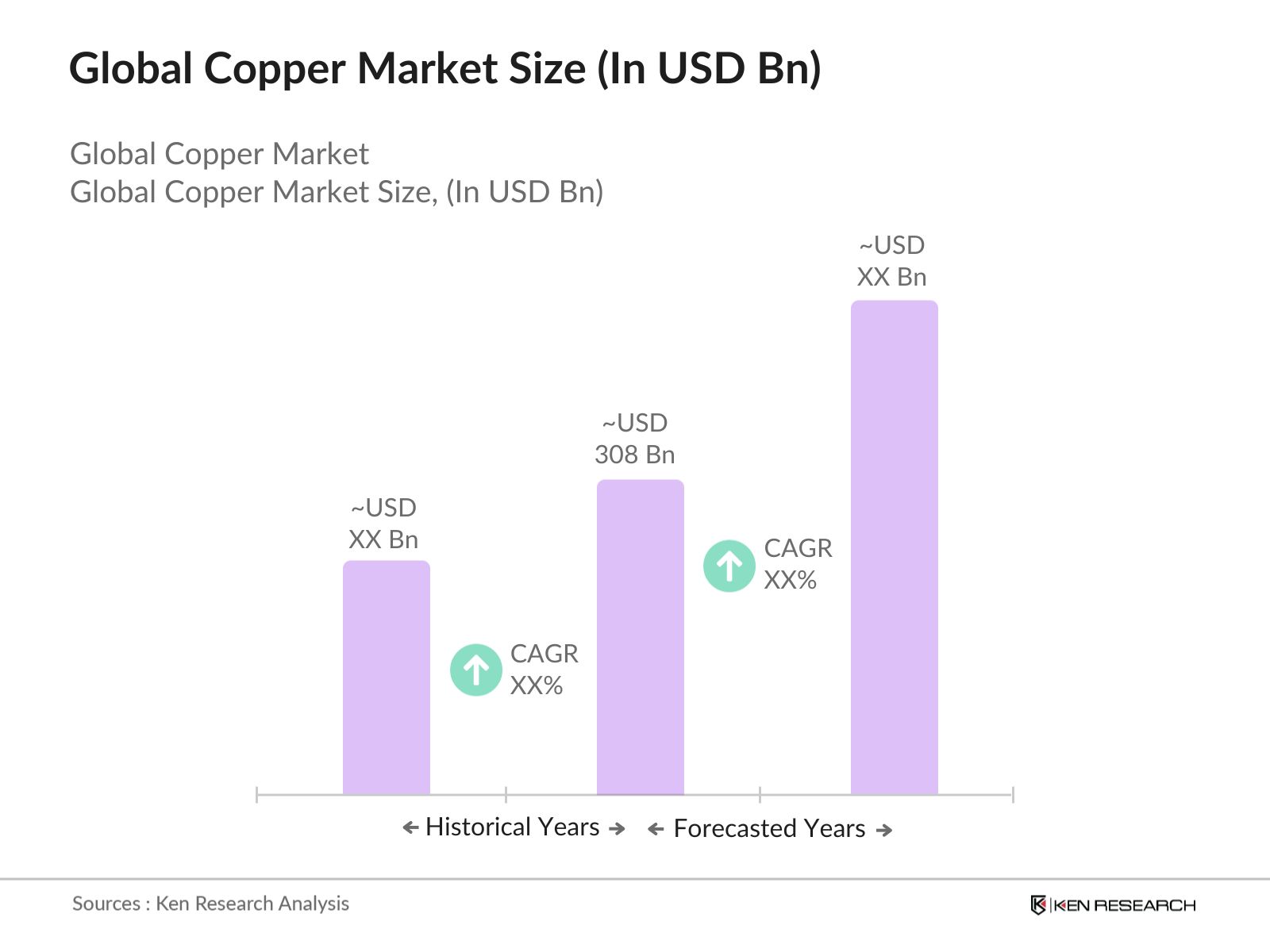
- The global copper market is valued at USD 308 billion, according to a comprehensive five-year historical analysis. This robust market size is driven by increasing demand across multiple sectors, particularly in infrastructure, electrical components, and renewable energy projects. The growing emphasis on sustainable energy solutions such as solar and wind power, where copper is integral due to its conductive properties, continues to support demand. Additionally, the rapid adoption of electric vehicles (EVs) has substantially bolstered copper consumption, particularly for charging stations and battery components.
- The global copper market is significantly influenced by major copper-producing countries such as Chile, Peru, and China. Chile holds a dominant position in the market due to its vast natural copper reserves and well-established mining infrastructure. The country's favorable government policies and investments in copper extraction have enabled continuous growth in production. On the other hand, China plays a critical role due to its large-scale consumption driven by its expansive manufacturing and construction sectors, where copper is heavily used in electronics, machinery, and electrical grids.
- Governments worldwide are implementing carbon emission reduction policies that directly impact the copper industry, particularly in smelting and production processes. In 2023, the European Union imposed stricter carbon limits under its Green Deal, affecting copper smelters in Europe. Smelting operations contribute significantly to carbon emissions, and new technologies such as hydrogen-based smelting are being explored to comply with these regulations.
Global Copper Market Segmentation
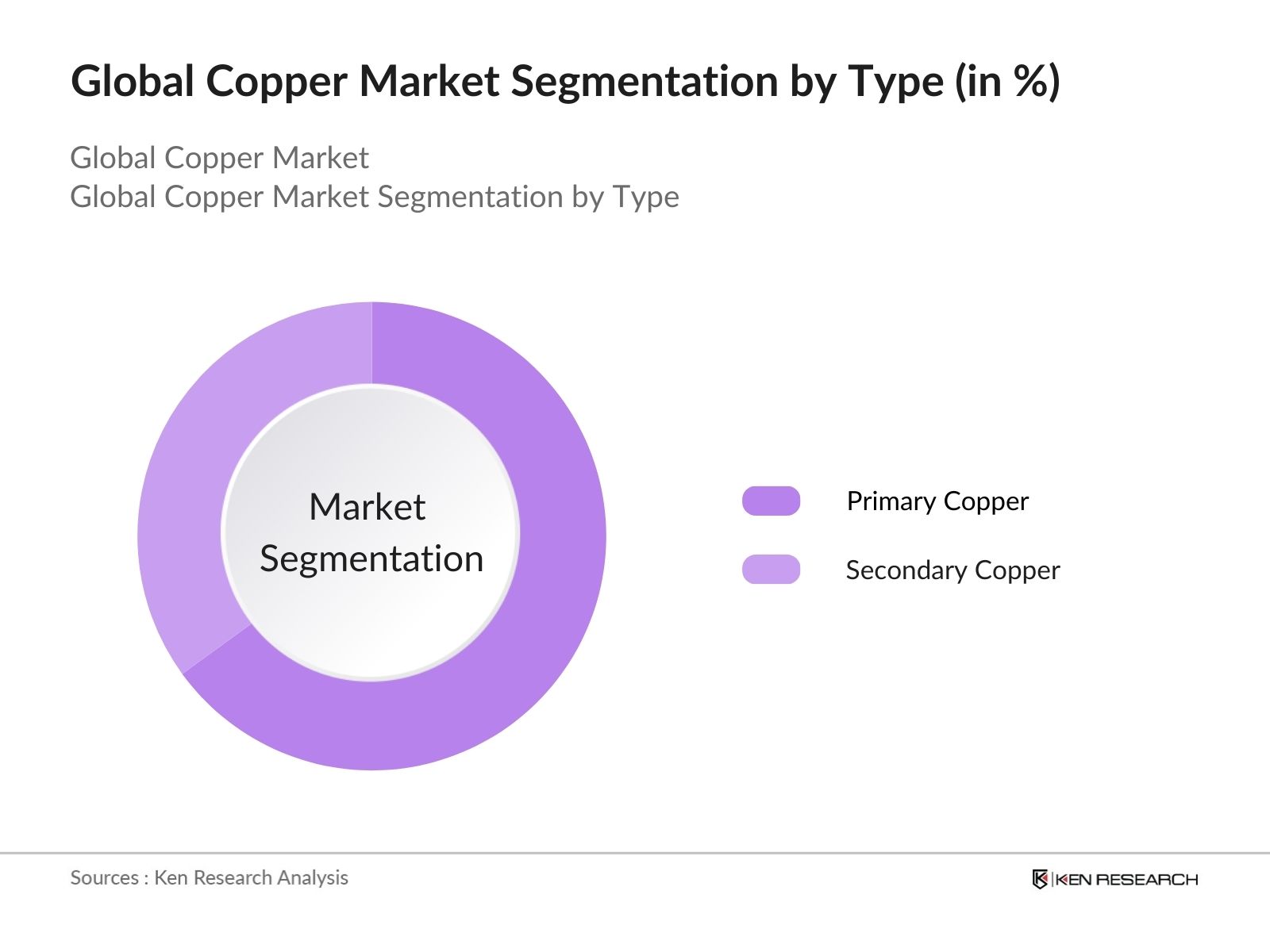
By Type: The global copper market is segmented by type into primary copper and secondary (recycled) copper. The market is dominated by primary copper, extracted directly from mined ores, has a dominant market share due to its higher purity and widespread application in industries requiring high-performance copper products, such as electrical wiring and telecommunications. Despite the growing focus on sustainability, primary copper continues to dominate as industries prioritize material quality and consistency for critical applications.
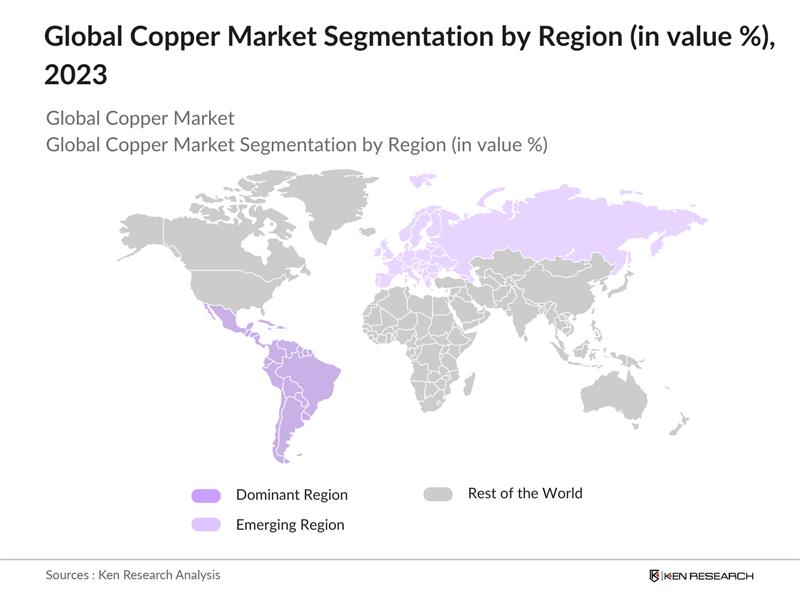
By Region: The global copper market is segmented by region into North America, Latin America, Asia-Pacific, Europe, and the Middle East & Africa. Latin America, particularly countries like Chile and Peru, leads the global copper market, thanks to its abundant copper reserves and strong mining infrastructure. The region's dominance is reinforced by ongoing investments in mining technologies and expansions of existing copper mines. Additionally, Asia-Pacific, led by China, plays a crucial role due to its massive industrial output and rising demand from the electronics and construction sectors.
By Application: The copper market is also segmented by application into electrical & electronics, construction, transportation, industrial machinery, and consumer goods. The electrical and electronics sub-segment leads the copper market due to copper's superior conductivity, which makes it essential for electrical wiring, transformers, and motors. The widespread electrification of transportation systems and smart grid installations further strengthen this segments dominance, as copper is critical for efficient energy transmission and distribution.
Global Copper Market Competitive Landscape
The global copper market is consolidated, with a few major players dominating the scene, leveraging their large-scale production capacity, geographical presence, and extensive distribution networks. Leading companies like Codelco, Freeport-McMoRan, and Glencore hold significant influence due to their strategic partnerships and investment in technology to enhance copper extraction efficiency. Meanwhile, firms like Jiangxi Copper and Antofagasta PLC continue to compete on the global stage by expanding their mining operations and focusing on sustainability practices to align with the growing demand for eco-friendly copper production.
|
Company |
Established |
Headquarters |
Production Capacity (Tons) |
Revenue (USD bn) |
Geographical Presence |
R&D Investment |
Sustainability Initiatives |
Market Share |
|
Codelco |
1976 |
Chile |
||||||
|
Freeport-McMoRan |
1912 |
USA |
||||||
|
Glencore |
1974 |
Switzerland |
||||||
|
Jiangxi Copper |
1979 |
China |
||||||
|
Antofagasta PLC |
1888 |
UK |
Global Copper Market Analysis
Growth Drivers
- Increasing Demand from Renewable Energy Sector: The global transition to renewable energy has significantly boosted copper demand, particularly in wind turbines and solar power infrastructure. According to the International Energy Agency (IEA), a single wind turbine contains around 3 to 4.7 tons of copper, depending on the size. Furthermore, photovoltaic solar plants require copper for wiring, transformers, and inverters. As of 2023, renewable energy contributed to 30% of the global electricity supply, with substantial growth in wind and solar power. The expansion of these sectors will drive copper consumption, as it is integral to energy-efficient systems.
- Expansion of Electric Vehicles (EVs): The electric vehicle market is a major copper consumer, with each EV containing approximately 80 kg of copper, according to the International Copper Association. Copper is essential in EV batteries, charging infrastructure, and electrical components. In 2023, global EV sales reached over 10 million units, reflecting growing adoption. The rapid expansion of EV charging stations, requiring between 0.7 to 8 kg of copper per charger, is expected to sustain copper demand. As countries push for electric mobility, copper usage in this sector will continue rising.
- Technological Advancements: Technological advancements in smart grids, data centers, and 5G networks have significantly increased copper demand. The deployment of smart grids, which rely on extensive copper wiring for efficient power distribution, is key to modernizing energy infrastructure. By 2023, the global smart grid market had grown rapidly, with the World Bank supporting projects in Asia and Africa. In parallel, 5G networks require dense copper cabling to support high-speed data transmission, leading to an uptick in copper consumption as nations continue to build advanced communication networks.
Market Challenges
- Price Volatility: Copper prices have experienced significant fluctuations in recent years due to global supply chain disruptions and changing demand. The London Metal Exchange (LME) reported an average price of $8,500 per metric ton in 2023, a drop from peaks during the post-pandemic recovery period. These fluctuations can make it difficult for industries reliant on copper to plan long-term investments. Price volatility is often driven by geopolitical tensions, changes in mining output, and macroeconomic factors, such as inflation, affecting the affordability of copper-based products.
- Environmental Concerns: Copper mining has significant environmental impacts, particularly regarding land degradation, water usage, and carbon emissions. In 2023, the United Nations reported that the mining sector accounted for 6% of global greenhouse gas emissions, with copper mining being a major contributor. As sustainability becomes a global priority, industries face increasing pressure to reduce their environmental footprint. Stricter environmental regulations and public opposition to mining projects in regions like Latin America have further constrained copper supply and challenged the industry's sustainability credentials.
Global Copper Market Future Outlook
Over the next few years, the global copper market is expected to experience steady growth driven by increasing electrification across various industries, especially with the global shift toward renewable energy sources. The development of electric vehicles, expansion of smart city projects, and rising demand for efficient power grids are anticipated to significantly increase copper consumption. Furthermore, the transition to a circular economy and the emphasis on sustainability will drive further innovation in copper recycling processes, enhancing the role of secondary copper in the market.
Market Opportunities
- Recycling Initiatives: Recycling copper presents a significant growth opportunity, with secondary copper production accounting for 30% of global supply in 2023, as per the International Copper Study Group. Copper is one of the most recyclable metals, with virtually no loss of properties during the process. Governments and industries are investing heavily in recycling infrastructure to reduce reliance on mined copper and promote sustainability. Countries like Germany and Japan are leading efforts in copper recycling, with innovative policies aimed at achieving a circular economy.
- Integration in Emerging Markets: Emerging markets in Africa and Southeast Asia present significant opportunities for expanding copper usage, particularly in infrastructure and industrial applications. The World Bank noted that as of 2023, sub-Saharan Africas infrastructure gap required an estimated annual investment of $100 billion. Copper demand is expected to rise as countries in these regions accelerate urbanization, electrification, and industrial growth. Efforts to improve power grids, water supply systems, and transportation networks will drive the need for copper, fostering economic development.
Products
Key Target Audience
Copper Mining Companies
Electric Vehicle Manufacturers
Renewable Energy Companies
Electrical and Electronics Manufacturers
Government and Regulatory Bodies (e.g., U.S. Environmental Protection Agency, Chinas Ministry of Environmental Protection)
Investors and Venture Capital Firms
Power Generation and Transmission Companies
Industrial Machinery Manufacturers
Companies
Major Players in the Global Copper Market
Codelco
Freeport-McMoRan
BHP Billiton
Glencore
Jiangxi Copper
Rio Tinto
Antofagasta PLC
Southern Copper Corporation
First Quantum Minerals Ltd.
Vale S.A.
Aurubis AG
KGHM Polska Mied
Hindustan Copper Limited
Zijin Mining Group Co.
Sumitomo Metal Mining Co., Ltd.
Table of Contents
1. Global Copper Market Overview
1.1. Definition and Scope
1.2. Market Taxonomy
1.3. Market Growth Rate
1.4. Market Segmentation Overview
2. Global Copper Market Size (In USD Bn)
2.1. Historical Market Size
2.2. Year-On-Year Growth Analysis
2.3. Key Market Developments and Milestones
3. Global Copper Market Analysis
3.1. Growth Drivers
3.1.1. Increasing Demand from Renewable Energy Sector (Copper usage in wind turbines, solar power infrastructure)
3.1.2. Expansion of Electric Vehicles (EVs) (Copper as an essential material for batteries and charging infrastructure)
3.1.3. Urbanization and Infrastructure Development (High copper demand in construction and transport networks)
3.1.4. Technological Advancements (Smart grids and 5G networks increasing copper wiring demand)
3.2. Market Challenges
3.2.1. Price Volatility (Impact of fluctuations in global copper prices)
3.2.2. Environmental Concerns (Copper mining impact and sustainability issues)
3.2.3. Regulatory Restrictions (Government policies on mining and exports)
3.3. Opportunities
3.3.1. Recycling Initiatives (Growth of secondary copper production through recycling)
3.3.2. Integration in Emerging Markets (Focus on expanding copper usage in underdeveloped regions)
3.3.3. Technological Innovations (Developments in copper alloy applications in various industries)
3.4. Trends
3.4.1. Rise of Sustainable Mining Practices (Eco-friendly extraction techniques)
3.4.2. Automation in Copper Mining (Use of AI and robotics in the extraction process)
3.4.3. Global Supply Chain Reshaping (Changes in copper sourcing due to geopolitical factors)
3.5. Government Regulations
3.5.1. Carbon Emission Reduction Policies (Impact on copper smelting and production methods)
3.5.2. Trade Tariffs and Import/Export Regulations (Influence of copper trade between nations)
3.5.3. Resource Nationalism (Government control over copper mining in key regions)
3.5.4. Environmental Protection Standards (Compliance with pollution and waste management laws)
3.6. SWOT Analysis
3.7. Stake Ecosystem
3.8. Porters Five Forces
3.9. Competition Ecosystem
4. Global Copper Market Segmentation
4.1. By Type (In Value %)
4.1.1. Primary Copper
4.1.2. Secondary Copper (Recycled)
4.2. By Application (In Value %)
4.2.1. Electrical & Electronics
4.2.2. Construction
4.2.3. Transportation
4.2.4. Industrial Machinery
4.2.5. Consumer Goods
4.3. By End-Use Industry (In Value %)
4.3.1. Power Generation & Transmission
4.3.2. Automotive
4.3.3. Renewable Energy
4.3.4. Telecommunications
4.4. By Process (In Value %)
4.4.1. Smelting
4.4.2. Refining
4.4.3. Electro-Winning
4.5. By Region (In Value %)
4.5.1. North America
4.5.2. Europe
4.5.3. Asia-Pacific
4.5.4. Latin America
4.5.5. Middle East & Africa
5. Global Copper Market Competitive Analysis
5.1. Detailed Profiles of Major Companies
5.1.1. Codelco
5.1.2. Freeport-McMoRan
5.1.3. BHP Billiton
5.1.4. Glencore
5.1.5. Jiangxi Copper
5.1.6. Rio Tinto
5.1.7. Antofagasta PLC
5.1.8. Southern Copper Corporation
5.1.9. First Quantum Minerals Ltd.
5.1.10. Vale S.A.
5.1.11. Aurubis AG
5.1.12. KGHM Polska Mied
5.1.13. Hindustan Copper Limited
5.1.14. Zijin Mining Group Co.
5.1.15. Sumitomo Metal Mining Co., Ltd.
5.2. Cross Comparison Parameters (Production Volume, Revenue, Market Share, Geographical Presence, Vertical Integration, Sustainability Efforts, Strategic Alliances, R&D Investment)
5.3. Market Share Analysis
5.4. Strategic Initiatives
5.5. Mergers and Acquisitions
5.6. Investment Analysis
5.7. Venture Capital Funding
5.8. Government Grants
5.9. Private Equity Investments
6. Global Copper Market Regulatory Framework
6.1. Environmental Standards
6.2. Compliance Requirements
6.3. Certification Processes
7. Global Copper Future Market Size (In USD Bn)
7.1. Future Market Size Projections
7.2. Key Factors Driving Future Market Growth
8. Global Copper Future Market Segmentation
8.1. By Type (In Value %)
8.2. By Application (In Value %)
8.3. By End-Use Industry (In Value %)
8.4. By Process (In Value %)
8.5. By Region (In Value %)
9. Global Copper Market Analysts Recommendations
9.1. TAM/SAM/SOM Analysis
9.2. Customer Cohort Analysis
9.3. Marketing Initiatives
9.4. White Space Opportunity Analysis
Disclaimer
Contact Us
Research Methodology
Step 1: Identification of Key Variables
The first step involved identifying key variables impacting the copper market, including demand drivers such as the electrification of industries, copper recycling trends, and technological advancements. We also evaluated external factors like regulatory frameworks and sustainability standards to understand their influence on market dynamics.
Step 2: Market Analysis and Construction
Next, we analyzed historical data on copper production, consumption, and pricing trends. We examined the roles of primary and secondary copper and mapped out supply chains from mining to manufacturing, considering geographical distribution and industrial applications.
Step 3: Hypothesis Validation and Expert Consultation
We consulted industry experts through interviews, obtaining insights into operational challenges, market trends, and the future direction of the copper industry. These consultations helped validate our hypotheses and ensure the reliability of our analysis.
Step 4: Research Synthesis and Final Output
The final stage involved synthesizing the findings into a comprehensive report, combining quantitative data with qualitative insights to provide an accurate and holistic view of the copper market, focusing on growth opportunities and potential challenges.
Frequently Asked Questions
01. How big is the global copper market?
The global copper market is valued at USD 308 billion, driven by expanding applications in renewable energy, construction, and electric vehicles.
02. What are the challenges in the global copper market?
The global copper market faces challenges such as price volatility, environmental concerns regarding mining practices, and regulatory hurdles in key producing regions.
03. Who are the major players in the global copper market?
Key players in global copper market include Codelco, Freeport-McMoRan, BHP Billiton, Glencore, and Jiangxi Copper, which dominate through their large-scale production capacity and geographical reach.
04. What are the growth drivers of the global copper market?
The global copper market is driven by rising demand from the electric vehicle industry, renewable energy projects, and the modernization of power grids, which all require significant copper usage.
Why Buy From Us?

What makes us stand out is that our consultants follows Robust, Refine and Result (RRR) methodology. i.e. Robust for clear definitions, approaches and sanity checking, Refine for differentiating respondents facts and opinions and Result for presenting data with story

We have set a benchmark in the industry by offering our clients with syndicated and customized market research reports featuring coverage of entire market as well as meticulous research and analyst insights.

While we don't replace traditional research, we flip the method upside down. Our dual approach of Top Bottom & Bottom Top ensures quality deliverable by not just verifying company fundamentals but also looking at the sector and macroeconomic factors.

With one step in the future, our research team constantly tries to show you the bigger picture. We help with some of the tough questions you may encounter along the way: How is the industry positioned? Best marketing channel? KPI's of competitors? By aligning every element, we help maximize success.

Our report gives you instant access to the answers and sources that other companies might choose to hide. We elaborate each steps of research methodology we have used and showcase you the sample size to earn your trust.

If you need any support, we are here! We pride ourselves on universe strength, data quality, and quick, friendly, and professional service.